Christopher Jackson hears from Malcom McDowell about his career in film
Malcolm McDowell is talking to me from what looks like a spacious octagonal attic, the dark at the window behind him shows no stars. He is wearing splendid Ronnie Barker specs and a black hoodie, his white hair tufted behind a domed forehead.
It’s not that far in the scheme of things from Christmas and he is immediately humorous about the predicament. “My God, I’ve seen enough of those. Here we go again!” Then he lets a pause go by which wouldn’t be out of place in a Harold Pinter play. “But the kids love it, don’t they?”
Here’s happy to discuss his work, and understanding when A Clockwork Orange (1971) immediately comes up: ”I am thrilled to talk to fans – about anything really, but especially that film which I suppose you might say is the jewel in the crown of my career.” He says this without a trace of pomposity, even somewhat humorously: he seems to be one of those rare actors who doesn’t necessarily consider himself the centre of the universe.
In the same vein he continues sincerely: “Without the fans, I wouldn’t have a career: neither would any of us. The fans are very important and I always have time to say hello to fans.”
But it’s A Clockwork Orange which has most endured, partly due to its sheer quality, and also because it’s the work of what we might call mid-period Stanley Kubrick, at a time when his films become scarcer and therefore more precious.
McDowell is exceptionally forthcoming and relaxed about talking about something which he will have been asked about numerous times. He will be no stranger to being asked about the scene where Alex and the droogs kicks the poor tramp. It is the film’s anarchic streak which has endured: its author, the polymathic Anthony Burgess, intuited that the brakes on traditional morality would been an outpouring of violence, which we see on our screens now day in day out.
But did McDowell ever meet Burgess? “After we shot the movie and it opened, I went during the first week of the opening to New York. That was when I met for the first time with Anthony Burgess who wrote the book.”
So he hadn’t ever met him set. McDowell says: “I’d never met him before – I wasn’t allowed to meet him. I guess Stanley didn’t want me to be influenced by the writer. Writers on film are really just complications we could do without.”
This is a lovely detail about Kubrick, who was famously meticulous in the compilation of his movies. What can certainly imagine that a literary titan on set might be one titan too many. It is a window to the hierarchy of the movies which may look topsy-turvy for Burgess fans.
Then McDowell launches into an astonishing anecdote: “I asked burgess in New York about the phrase ‘a clockwork orange’ and he came upon the title.”
I am craned forward, faintly astonished to be hearing this little piece of literary history unbidden. McDowell continues: “He told me he was in an East End pub in London and he was sitting next to a friend of his and they were chatting. Suddenly the door opened and this strange-looking guy comes in and his friend looked at him and said: “He’s as queer as a clockwork orange.’”
Many people think authors should look up in a deep trance from their desks to find inspiration, and perhaps that is sometimes the case. But McDowell’s anecdote reminds us they should also go down the pub.” Burgess said : ‘I just loved the sound of that phrase and I thought it would make a good title for a book some time.’ Which indeed it did.”
That’s some understatement but McDowell isn’t finished yet. He finishes: “So I said to Burgess: ‘Yeah but what does it mean? He said: “I don’t know. I think it just means look at this guy, he’s really strange and odd – as queer as a clockwork orange.”
Having changed my understanding of a small but important nook of 210th century literary history, McDowell finishes. “So there you are, you have it from the chief orange himself.”
It was Henry James who said a writer should be the sort of person who notices things. This can be the case. But young writers should know that what you really need to do is be able to identify a certain charge which useful things have – sometimes things will leap up and say they want to be a name in your novel, a setting, a scene – or perhaps a title to the book you may just get around to writing one day.
Stuart Thomson looks at the growing trend of the gig economy
There can often be an emphasis, especially at the start of a career, on getting a job. That role is seen as a foundation stone for building networks and experience. But is that right for everyone? Is there an alternative? Is a more flexible, freelance approach something to think about?
My own experience is of having worked for large legal and PR consultancies for my entire career until a few years back when I was made redundant. I am not the first and certainly not the last to find the whole experience shocking and, at times, distressing. It does lead to a period of reflection.
The obvious choice would be to simply look for a new role but there are alternatives. I chose to consider those in more detail. Choices about potential next steps do not exist in a vacuum. There are always financial requirements to consider potentially alongside caring responsibilities and other commitments. Those could be to spend time traveling or exercising, issues much more focused on personal needs. There are no right or wrong approaches. It is all down to the individual, but it is always considering what your priorities are.
I already had a company set-up for the communications training I deliver so I chose to go down a freelance and consultancy route. The aim is not to build a business and employ people but instead to engage in challenging projects and work with people I like. That means my ‘gig’ approach is a mix of short-term projects, longer-term consultancy, and membership of an in-house team. Alongside this I also hold voluntary positions for a Board and delivering mentoring which is very important to me.
This could be considered a ‘portfolio’ approach with a range of different projects on the go. That is not without its complications. Balancing the needs of clients and projects means that there is no typical working day and there are no fixed hours.
If you are considering making a similar career move, based on my two years as a freelancer, I would suggest the following:
1) Talk to others who have already made the move to freelancing and chat to them about their experiences. Otherwise, it will always seem like a hugely daunting prospect. People are always willing to chat because they remember what it was like for them.
3) Spend time getting your ‘credentials’ in place – it might be easy to try and crack on with reaching out to connections for work, but do you know what you are really saying to them? What is it that makes you different from others?
4) Materials – another important foundation would be to get a website up and running and for it to feature those clear ‘credentials’. Employers, customers etc need to see that you are serious.
5) Join networks – there are professional and work-related networks to join across sectors, nationally and internationally. Being a freelancer isn’t just about generating your own work, it can also mean working in partnership with others to deliver for a client or project. Those opportunities often come through networks.
The danger with being a freelancer is that you can sometimes feel quite isolated. When you engage with your network do not think of it as solely being about trying to generate new work, but also as time chat and not think about work. That is valuable time.
Being part of the great gig economy is not a panacea and it is not for everyone, but it is an option and maybe provides the flexibility that many are looking for. Think about the option.
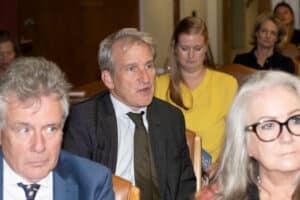
Tim Clark spoke about SEND education at the Guildhall at the launch of his third educational report which was attended by former schools minister Damian Hinds MP, Sir Bernard Jenkin and former chair of the Education Select Committee Neil Carmichael
My third educational report is on special needs (SEND). There is nothing in my report that is radical or revolutionary. Instead it’s an attempt to try and help policy-makers who understand what the issues are around delivery of special needs policy.
I was the head of two state schools. This is written from the point of view of people who have to deliver SEND education. There are issues around funding, delivery, working with external agencies and issues around the identification of special needs.
Tim Clark’s bi-annual Better Schools Report Event at Guildhall, London. 10.10.2024 Photographer Sam Pearce/www.square-image.co.uk
In my view the single best thing we can do to support children with SEND – and it happens to be the same thing which we can do to support children without special needs – is to provide every child with enough well-qualified, motivated, experienced teachers. The recruitment and contention crisis with teachers at the moment is the single biggest issue facing schools: not money, not curriculum, it is the difficulty of finding enough well-qualified, well-trained teachers.
I’ll use two statistics to prove this point. Last academic year 40,000 teachers – more than nine per cent of the workforce – quit for reasons other than retirement. Now this is made worse, because about 20 per cent of the workforce are over 50 and so are nearing retirement soon. But over nine per cent of the workforce walked out last year.
In the same timeframe, one half of all teacher training places were left vacant. If you put those two statistics together then that is a crisis. The current government and the previous government did not seize this issue with the urgency which it needs to be seized with.
The 2024 Conservative manifesto talked about offering bursaries, which may well attract new people into the profession. But we have a shortage of teachers – and in any case, there is plenty of evidence to suggest that money doesn’t retain teachers. If you look at the strikes last year, which were predominantly about money, one half of teachers didn’t even bother to vote in the ballot.
I’m not saying that teachers shouldn’t be paid more money – they absolutely should. But it’s not the key issue.
Tim Clark’s bi-annual Better Schools Report Event at Guildhall, London. 10.10.2024 Photographer Sam Pearce/www.square-image.co.uk
Meanwhile, what have the Labour Party promised? They repeatedly state that they will create 6,500 new teachers but they don’t say where they’re going to come from and they also don’t say how they’re going to be retained. That’s important because the other alarming statistic is that one third of teachers quit within five years.
We also need to look at the maths here. How far would 6,500 new teachers really get you? There are more than 20,000 schools in England. If you get 6,500 teachers that equates to one new teacher for every three schools. But then think of the 40,000 who have just left – that equates to almost two for every school.
In one sense, the number of teachers we have is not necessarily a crisis – the latest workforce report by the Department for Education says we have 300 more teachers this year than last year. The only problem is there are 74,000 more kids than the previous year.
That number also includes more overseas-trained teachers – that’s not necessarily a bad thing. What really concerns me is that that number also includes a huge explosion in unqualified teachers. When I was qualifying, I went the traditional route. In my day, they were talking about making the PGCE two years and nowadays there are many allowed to teach with very few qualifications at all.
We have got to resolve for the benefit of all children the recruitment and retention crisis. In our last two reports, we looked at how this can be resolved. The really good news is that this can be resolved at very little cost to the Treasury and the taxpayer.
To read Tim Clark’s report go to the following link:
World-renowned fashion designer Jimmy Choo came to London in the late eighties from his home in Malaysia. From his first workshop in the East End, Choo created a shoe brand which would be worn by countless celebrities including Princess Diana. Now, he has shifted focus to the next generation of fashion designers through his JCA London Fashion Academy in Hackney. There, students learn the ins and outs of the fashion world with a heavy emphasis on entrepreneurship. He now shares his journey with Finito World readers.
How did you get your start in fashion?
I guess it was meant to be I was born into a shoe-maker family, and that influenced my career path: I decided to follow in Since I was young, I knew I wanted to be a designer, so I moved to London to study at the Cordwainers Technical College and three years later, in the early 80s, I opened my first shop.
Do you have a favourite design?
I feel especially fond of the ‘Fetto’, which is a classic sling-back style that Princess Diana wore in the 90s. She wore her first pair to a performance of Swan Lake at the Royal Albert Hall in June 1997, just a few months before her death.
What was Diana like to work with?
She was always very kind to me – she cared so much about other people. That’s the sign of an admirable person – when they’re good to people when you don’t have to be.
How did your father help start your journey with shoes?
I was immersed in the shoe-making process from a young age, and it came naturally to me to take up my father’s passion. He taught me how to make a shoe and guided me to create my first pair when I was 11, which I know seems young but I was impatient to get started well before then. You have to remember that this was before Internet and mobile phones. We did everything with our hands. I’ve been doing it one way or another ever since. Now at the JCA London Fashion Academy, I want to give back a little of what I’ve learned.
Have you had any other mentors?
My father was my most important mentor, although I have been able to work with some incredible designers over the years who have supported me, and back in the 80s, I was awarded a grant and mentorship from the Prince’s Trust which was very valuable to me – and that’s why I’ve decided to return now to mentoring. I know its value, because I’ve experienced it for myself.
What advice would you give to a young person looking to enter the fashion world today?
My biggest piece of advice would be to never give up: you’ve got to learn how to tackle adversity because that’s definitely coming to you. We all have so much potential to create something extraordinary with our talents – and it’s that knowledge which should
So the future’s bright?
It is if you decide to pursue your vision. If you do that, then there will always be a great future ahead: but you have to take the plunge and decide to be true to yourself, and find the ideas that really belong to you.
In a special Finito World interview, the 2024 Masterchef champion Brin Pirathapan and Fortnum & Mason CEO Tom Athron are brought together on the third floor at the famous Piccadilly store
The real joy of networking isn’t to meet people for oneself: it’s introducing people to one another. When the opportunity came up to interview Brin Pirathapan, the brilliant Tamil Sri Lankan winner of 2024’s MasterChef, we put heads together at Finito, with help from Janine Stow at The Quorum Network, to decide what to do about it.
The answer came in a flash of inspiration: Fortnum & Mason is being altered by its brilliant CEO Tom Athron, and the third floor, formerly the menswear floor, is now set up for food experiences. There is a gin bar, and a cooking area where the store hosts masterclasses, as well as the beautiful Fortnum & Mason culinary products.
Once we’d decided that might be a good idea, we thought we’d go one further and interview Brin and Tom together and see whether anything came of it.
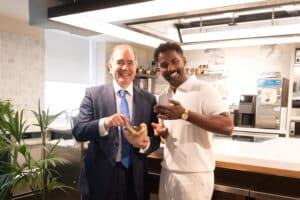
Brin Pirathapan, Masterchef winner, and Tom Athron, CEO of Fortnum & Mason interviewed by Chris Jackson, editor of Finito World in the Food & Drink Studio, Fortnum & Mason.. 19.6.2024 Photographer Sam Pearce
Brin is there as I arrive, looking resplendent in the sort of outfit which Federer used to wear at Wimbledon in his pomp. So I ask Brin if it was always food for him? “I have always loved food. I almost took it for granted because my parents always cooked so well. The table was always full of delicious Tamil Sri Lankan food.”
Perhaps unknowingly a standard had been set. “When I went to university,” Pirathapan continues, “there wasn’t really a conscious decision that I was going to learn to cook: it was just a thing that happened. I wasn’t willing to eat the same bland meal plan every day. But I didn’t have the funding or the finances to be going out for food all the time or to be buying the most expensive ingredients. That situation created the chef that I am today.”
Let’s be clear what this wasn’t: it wasn’t a decision not to have that Deliveroo. It was more financially constrained than that. “I never had to refuse to lazy route. I would cook instead of having a takeaway just because I had to: it was either that or cook boring meals. I never leant towards takeaways. I thought: ‘I can probably do it as nice or nicer myself and learn a new skill’.”
At that time, Brin can have had no way of knowing where it would lead. “Really, I like to eat!” he says simply. “I like nice food and I wanted to do it myself. It was essentially self-reliance and learning a skill. I started cooking for friends, when they came over for dinner. And they’d compliment me. I’d want to do more because it was nice when people said I’d done a good job.”
Brin Pirathapan, Masterchef winner, and Tom Athron, CEO of Fortnum & Mason interviewed by Chris Jackson, editor of Finito World in the Food & Drink Studio, Fortnum & Mason.. 19.6.2024 Photographer Sam Pearce
It seems as though we all need to find that thing in life where we feel there’s no particular ceiling: that we can continue to develop across the whole course of a life. “Something about food makes me want to learn more and more about it. You’d watch people on television or online and the chef has these intricate skills. And I wanted to know how to do that: I was so invested in it. So it probably comes back to just it being a pure passion that I wanted to be good at.”
But even here – he didn’t know how far it would take him; but he had found his passion. “I’d been a veterinary surgeon for a good few years, and I didn’t necessarily think food was ever going to give me a new career. But I think I knew that if I didn’t give MasterChef a go, I would never be able to make it a reality.”
It’s as if you find a thread in life – and it’s not that you’re pulling it, but it pulls on you and leads you on. “It seemed a bit unsafe. I’d been planning on working in veterinary. When you do that, at least by the age of 15 you’re already committing time; you’re committing your holidays to work experience you’re committing your evenings to studying. It’s quite hard when you are within those walls of a structured education and a structured career to dream outside, because it seems really unsafe. And let’s be honest, the food industry isn’t exactly the safest industry to be in. It’s tough – but MasterChef has given me the platform now.”
Brin Pirathapan, Masterchef winner, and Tom Athron, CEO of Fortnum & Mason interviewed by Chris Jackson, editor of Finito World in the Food & Drink Studio, Fortnum & Mason.. 19.6.2024 Photographer Sam Pearce
Brin has long been a fan of MasterChef so it was a huge thing to apply for the show. “I’ve watched it since I was a young age, and it’s made me the chef I am today. When I started the show, I was so worried about being knocked out in the first round. But my fiancé was very firm – she’d seen me moaning about my normal job.”
I say I find it hard to imagine being able to focus on cooking when the cameras are rolling. “It would have been impossible to play to the camera,” he says.
“Every dish I created I pushed myself to the absolute max – so timings were incredibly tight. Obviously within each cook, you need to have an interview with the judges too – other than that, there was no room for error, and I got used to the cameras being there. I needn’t to know there was no time left over for each cook – that there was physically and mentally nothing more that I could have done.”
Reminding myself of the formidable MasterChef judges John Torode and Gregg Wallace, I ask whether their verdict ever affected his concentration. “It’s hard – especially at the start. When they come round, all you’re thinking is: “Do they think I’m doing this wrong?” You start questioning yourself. But as you get to know them, they’re actually very good at calming you down and making sure you’re relaxed.”
I find it hard to imagine Torode or Wallace in calming mode. What stays with Brin is the long silence when the judges give their verdict. “From the first cook to the last, that silence when they are eating, to when they say their first words – that will haunt me. It was an eternity, and it never got easier.” It all came down to the last cook, and I think the way in which Brin approached the most important moment of his life speaks volumes about his character.
“I’d felt so proud to have just gotten to the final and I felt that no matter what, I now had a platform to make a new career in something I love. I wanted to show the judges what my journey in that competition had been – and what the competition had given me. So within every course, you could see multiple elements that reflected a certain dish or a certain opportunity we were given, or a restaurant we went into.”
It is that humility, combined with a willingness to learn which seems to mark out Brin: these traits, when they are combined, place no limits on a person’s potential development. There is throughout our conversation a sheer fascination with cooking – the timings, the sourcing, the service – everything. When we come onto Brin’s famous octopus dish, he is fascinating about the complexities of making the dish work.
“It’s a difficult meat to cook actually. It’s really easy to make an octopus tough and you want a good couple of hours, but in the MasterChef kitchen you only have an hour and a half. So, then you also add in the difficulty of cooking it within a pressure cooker, which can change its texture – and the thing about that is that it’s blind – you can’t see what’s going on inside.” I could listen for hours to anybody talking with passion about the detail of what makes them love it.
Brin continues: “Five extra minutes in a pressure cooker is probably the equivalent of a half an hour of standard cooking. So there’s a lot of margin for error and the texture is one of the main aspects in an octopus. It’s a little bit like a scallop. It’s really easy to get that texture wrong.” You can see why someone who can talk like this will have a long and exciting career: because they’re interested in the task itself, independent of any reward it may bring.
As Brin went through the competition, he kept his head down, until he found himself caught up in that iconic moment when the winner is about to be announced. “Throughout the entire process, I didn’t allow myself to look too far ahead. When I look back, I think one of the reasons [KL6] I did well was because I didn’t give myself the pressure of dreaming about winning. I was simply thinking of the need to execute everything to the best of my ability. So when they did call my name, it was more of a shock than I can ever imagine.”
And, of course, in that moment – even longer in reality than it looks on television, according to Brin – he was crossing over from one world into another, one of considerable opportunity.
Surveying the landscape of options now, Brin is characteristically level-headed and sensible: “I don’t think you have to win MasterChef and open a restaurant immediately. The food industry in 2024 is so much broader than what it was probably 20 years ago, which is so exciting for me because I think in my life I need variety anyway, to keep interested.
Private dining and supper clubs are really interesting to me. They’re the areas where I can show off and kind of going back to when my friends used to come to dinner. I’ve loved all the services that I’ve done throughout the show and any private dining I’ve done afterwards. So I want private dining to be a decent portion of what I do, and I’d also love to write a book.”
There is a sense then in which Brin is going full circle – or rather, moving forwards without forgetting where he came from. “The reason I want to write a book is because, going back to how I started cooking, you can cook amazing food without having to stretch your budget. And it can be very cost-effective. We’re at a time now where people are struggling, because ingredients are so expensive.
I want to bring that through in a book but also, I want to give that to people online because that’s how I learned. I would see these incredible chefs doing amazing dishes – all these techniques I’ve never seen and then I’d go read about it and work it out myself. So if that’s the way I learned I’d like other people to learn that way too. So creating that content online that’s going to be really accessible for people to go and do that themselves is going to have to be a large part of what I do as well.”
Brin Pirathapan, Masterchef winner, and Tom Athron, CEO of Fortnum & Mason interviewed by Chris Jackson, editor of Finito World in the Food & Drink Studio, Fortnum & Mason.. 19.6.2024 Photographer Sam Pearce
By this point Tom Athron has joined, and there is a period where the pair of them are introduced, and huddle together. I have a moment to consider the pair: the latest star in the world of cooking, and the CEO of a business which began in 1707. But I find that the two of them seem to fit in some way: that’s because Brin clearly has such respect for people and is so hungry to learn – and because Athron, as I shall discover when he sits down, is bent on driving Fortnum & Mason forwards towards the future.
Athron is immediately kind about Brin – and explains how right it is that they should be sitting next to one another. “When I joined – and my predecessor actually did the same thing – we’d been asking ourselves as a business some existential questions about what we want to be, what we want to stand for, and who we are. Over the last ten years or so, we’ve become less of a department store, and more of a business which sells extraordinary food and drink.”
For Athron, having Brin here is a moment to reflect on that journey: “Ten years ago, no one would have thought to bring a MasterChef winner into Fortnum’s. And yet now it seems an obvious place to spend a bit of time – whether it’s cooking in the food and drinks studio, or having lunch in our boardroom.” He gestures at the surrounding floor, as if to gauge the extent of the change.
“This whole floor used to be menswear,” Athron says. “But in our quest to become a food business, and to become famous for extraordinary food and drink, our thinking was that that menswear was probably a category of products as a retailer that’s too far out from that particular core. So it’s not that I want everything here to be food, but it needs to be sort of connected within concentric circles. And it just felt to me that menswear was a sort of a circle too far out.”
Once this decision was taken, Athron had 1000 square feet to play with, and had to decide what to do with it. “We had to think not so much as a retailer, but more as a brand-owner and content producer. We needed a space that was going to allow us to showcase our talents – and the talents of chefs around the country. We have 100 chefs who work in this building – but they’re all secreted away behind the walls in the kitchens, and nobody sees the mastery and the craftmanship which goes into making the food.”
So Athron is a MasterChef fan? “It is such a watchable, brilliant show,” he enthuses. “That’s because what you’re seeing is what used to happen behind closed doors. You never really saw the skill that goes into it. So what we wanted to do was create a space that allowed us to show off our mastery a bit and show off our craftsmanship. So again, I was just talking to Brin saying that, that this food and drink studio is glassed off, and that counter over there behind the pillar is actually a chilled top, which is brilliant for pastry work.
The idea is that if you’re a customer walking around in the morning, you probably will see chefs from the tea salon prepping food for that day on that counter. They might be making Scotch eggs or macaroons – and just showing customers a bit of the work that goes on here. a lot of the food that they buy here is actually made in Piccadilly – it’s not just brought in.”
The rise of online shopping, and of Amazon in particular, has taught many shops that they need to be offering experiences which sets them apart. “Our customers are looking for a bit of theatre,” Athron says. “Retailers don’t just exist to sell product. They exist to provide experiences. In here, we have our “Conversations With” series, and we’ll have 50 or so people in here in conversation about, say, Borough Market, and why that started and why tinned fish is the most incredible products that we should be all eating more of. We can do book launches, masterclasses, supper clubs, all sorts of things. It’s just brought the whole floor to life.”
Fortnum & Mason was founded in 1707 when Queen Anne was on the throne – and I wonder what it is she’d recognise about the business if she were permitted to walk through London today? “William Fortnum was a footman to the Queen, and he asked for permission to take the candles that had been melted down in St. James’s Palace, and took the wax away to reconstitute them as new candles – and he sold them on this very spot. And so we still sell candles to this day, largely as a nod to that, even though candles are probably a step away from food although I can actually make quite a strong connection to it.”
I ask Athron about this and he says: “One of the things that we do in the Food and Drinks studio, for example, is a masterclass on how to dress a table for Christmas. I’m interested in those concentric circles that sit around food. We want to make Fortnum’s joyous and I think food really lends itself to that. We are a luxury business, and aim to be at the pinnacle of food and drink – but I don’t think of luxury in the same way as Bond Street thinks about luxury.
We’re not exclusive: we’re warm and welcoming and friendly and inclusive. Quite soon after I joined, we had a chef down from Cumbria whose first course was this chicken wing. And it was a Korean chicken wing, and we had 100 people on the ground floor all eating chicken with their fingers – it was the world’s best chicken wing, but it was also just a chicken wing.”
Many customers at Fortnum & Mason love the packaging but Athron realises that what the packaging contains must make good on the promise of how the brand’s produce is presented: “We’re not a packaging business. We’re a food business and the most important thing to me is that the food justifies the label. And I would never want us to get into a situation where the label justifies the food.
When I joined, we brought in a new commercial director who’s responsible for all our buying and merchandising. I sent him a hamper to say: ‘Welcome to the job’. I thought I was going to get a thank you letter but actually he wrote to me to say the shortbread was overbaked. I remember thinking: ‘That’s exactly why you’re coming’. The food has to stand up to scrutiny.”
This new attitude to the business has enabled Athron to think creatively about where the brand is seen. We’ve got three shops in London in addition to the Piccadilly store: there’s one at Terminal Five at Heathrow, one of St Pancras and one at the Royal Exchange in the city. But we want to give people access to the Fortnum’s brand outside London. The online business is one way of doing that: another way of doing it is to show up in slightly unexpected places. So you might think that you know we should be at Glyndebourne or Ascot – and actually we are at Ascot. But we also like turning up at Glastonbury.”
Last summer, Fortnum & Mason did a pop-up in Watergate Bay in Cornwall. “We had this beautiful beach house, beautifully decked out with lots of things that you can buy – picnic equipment and rugs and all sorts of accessories. But in August, there was a storm and in conjunction with the high tide, it all got washed away.
We thought: ‘What are we going to do? Maybe we should just come back to London?’ But then we thought: ‘No. This is what a British beach holiday is like. What you do is you rebuild and then you sit there in the rain’. And we did. And actually, the weather was so good in September and October that we ended up extending the season. It was the best thing we ever did.”
During Athron’s tenure, the business has pivoted towards 70 per cent on the domestic side – a trend which, Athron says, was already in evidence before he came into the job. “Ten years ago, it was about 70 per cent international customers and 30 per cent domestic, although it depends a bit on the time of year: in the summer we tend to be much more international because it’s a big tourist influx into London, but at Christmas we’re much more domestic.
But we need to appeal to a domestic audience and if you do that, the international customers will come anyway. If I position to foreigners as a tourist brand, no one from Britain will ever want to come here; I want it to be the other way around.”
Brin Pirathapan, Masterchef winner, and Tom Athron, CEO of Fortnum & Mason interviewed by Chris Jackson, editor of Finito World in the Food & Drink Studio, Fortnum & Mason.. 19.6.2024 Photographer Sam Pearce
So what are the career paths for young people, looking to work at Fortnum’s? “You can you start in one of our restaurants or one of our shops. In fact, most people do that. My view is that the very best retailers in the country are typically those people who started stacking shelves. Providing careers to those sorts of people is hugely important. So you can start in the shop, or you can start in our cocktail bar.”
But there are office jobs as well. “There are lots of ways into the industry: buying and merchandising is a really good way and we have a lot of young people who want to get into social media marketing and actually we tend to find young people to do that for us because they are much more savvy about what works and what doesn’t work.”
Athron enjoys walking through the store in order to see how things are working: “We’re a small business and so we’re lucky in that respect. So you can definitely spot talent, and you can sort of move them through move them through the business. There’s a lot of what my dad used to call management by wandering about: in retailing and in restaurants you have to do that. If you do that, you spot mirrors that aren’t straight or shelves that are empty.”
So how does Athron manage his time as CEO? “It’s a constant juggle,” he says. “This is my first role as a CEO though I’ve been on an interim basis before but previously I’ve been a finance director. I was the CFO at Waitrose for many years and, and I knew what I needed to do and what I needed to spend my time on: it was quite defined.
Even though, as a CFO, you have a view across the whole business, my output was defined. The great thing about finance is that it works in a set rhythm, and you know what you need to be doing at any particular time of the year. With the CEO role, it’s different because you can apply yourself in any area, and so I have to make sure I’m giving equal airtime to the whole business, and not just gravitating towards the sparkly fun bits.”
It sounds rather similar to what one sees in politics when the Chancellor of the Exchequer becomes Prime Minister. “I do find that I go from a budget meeting into a meeting about what the summer campaign is going to look like, and into an ice cream tasting. And then back to what we’re going to do with the apprenticeship levy: each day is incredibly varied.”
Coming from the CFO side also means that Athron has to, in his own words, not to be too technocratic: “I’m married to an artist, who is creative and chaotic. So I spend quite a lot of time thinking about not trying to tidy everything up, but trying to give room for people to express themselves: that’s incredibly important in a business like this.”
Would Athron ever participate in MasterChef? “I wouldn’t! I watch it and of course I do what everyone does, which is to become an armchair expert, and say: ‘Well that’s never going to work, is it? Ultimately what Brin does is a creative endeavour, I think. When I cook, I follow a recipe and it’s a logical endeavour. And what will the future hold for Brin? “I’m self-taught and so I’ve still got gaps in my knowledge. I just want to continue to learn in years to come.
I need to make sure I’m I’ve learned enough and mature enough. If I start a restaurant, I want it to be the best. Now’s not the right time.” But happily, it is the right time for lunch – and I am pleased to see Tom and Brin head off for discussions which I suspect will prove fruitful for both of them. They certainly look like they have much to discuss – and more than that perhaps, work to do together.
I believe this will be an Indian century and if the UK is going to seize the opportunities that presents, we need to step up our engagement with India.
In my former role as MP for Barnet, I was privileged to represent a significant British Indian community. This has left me with an enduring enthusiasm for India.
The country has made phenomenal economic progress over recent years, with growth accelerated by reforms delivered by the Prime Minister Modi’s Government. It is already an economic superpower. It recently became the fifth largest economy in the world, and analysts predict it could overtake Germany and Japan to hit the third place spot by 2027.
India is well-positioned to take advantage of the growing realisation in the West that over-dependence on China poses serious risks our prosperity and security. The Covid pandemic starkly demonstrated the pressing need to diversify global supply chains and reduce reliance on China. That makes India a more important partner than ever before.
Our two countries clearly have much in common. English continues to be one of India’s most important official languages. The principle of rule of law is accepted, and the common law system in operation when India gained its independence remains in use.
Despite these positive legacies of empire, we should not be naïve about the colonial era. In their near 200 year involvement with India, the British authorities frequently adopted approaches which would be unacceptable in the modern era. Tragedies such as the 1919 killings at Jallianwala Bagh, when soldiers opened fire on a crowd of unarmed protesters, still cause pain and grievance even today.
But 77 years on from the departure of the British from India, the contested aspects of our shared past should not prevent us from capitalising on the huge amount that we have in common.
We should also remember that influence has never been a one way street between our two countries. We may have left India a rail network and a legal system, but they gave us the numerals we use today, including the crucial concept of zero.
Without Indian maths we might never have emerged from the Middle Ages in Europe. India’s massive cultural, mathematic and scientific influence on the world dates from as far back as the Greek and Roman era. There should be a much greater awareness of this, and I welcome William Dalrymple’s effort to put that right in his recent book “The Golden Road”.
A great asset in enabling us to connect with the subcontinent is the Indian diaspora community. Often described as our ‘living bridge’, this community is one of the most successful minorities in Britain. Numbering just under two million according to the 2021 Census, it has strikingly high rates of professional qualifications and employment, and has made a huge contribution to the UK’s culture, economy and public services. Not only did the community give us our first non-white Prime Minister, the NHS would probably collapse without its British Indian doctors.
British Indians have achieved an exemplary balance of integrating enthusiastically into UK society, whilst retaining a vibrant cultural and religious identity. This achievement is too often under-rated and overlooked.
There are risks to be managed and hurdles to surmount when doing business in India. Despite the improvements delivered by “Modinomics”, bureaucratic processes can still be cumbersome.
Even so, India-UK bilateral trade stood at £36.3 billion during the year 2022/23, an increase of 34.2% or £9.2 billion compared the previous year. Moreover, our universities have benefited from a rapid increase in overseas students from India.
A striking example of the two countries working together successfully was the partnership between Oxford University, AstraZeneca, and Serum Institute of India, which delivered a Covid vaccine in record time.
In conclusion, in a world which is becoming increasingly polarized and insecure, strengthening our ties with the planet’s biggest democracy should be a top foreign and trade policy priority.
If the UK wants to benefit from Indian prospects and potential over the coming years we need our Government to devote real effort to this. If we don’t put in that work, other western countries will be only too happy to get ahead of us in the queue.
We should deploy the networks of our Indian diaspora community as part of our outreach. We also need a pragmatic approach to visas, so our world class universities can continue to recruit talented Indian students.
And we should actively promote India’s place at the top table of world affairs. Chairing the G20 summit in 2023 was a pivotal moment when India stepped up and assumed a new leadership role in relation to the Global South. As a democratic country that shares so many of our values, far better that India, not China, takes on that mantle.
I was very struck by the nature of this video. It exuded confidence and, in fact, leadership. How was he able to do this? Although Cleverly admitted that it was disappointing for him personally, one had a sense in his concession video and throughout his leadership campaign that he wasn’t running solely out of personal motivation.
Speaking to a Finito event last month, he spoke movingly about his love of the Conservative Party, and recalled staying up late as a young man on General Election night, going through the constituency results. His immediate thought after losing this week was to remind the Party that ‘we’re all Conservatives’.
There was no hubris involved incidentally in Cleverly’s defeat, contrary to bogus media speculation. Speaking to members of his team, the instructions were quite clear on Wednesday: all the MPs who wanted Cleverly as leader were instructed in no uncertain terms to vote for him.
With surreptitious stupidity, a handful of MPs took the matter into their own hands, with the consequence that the membership will now not have a centrist candidate to vote for.
In the pub afterwards, Cleverly was reportedly somewhat subdued following the defeat – as who wouldn’t be. But campaign members said he gave each a big hug – as is his style – and thanked them meaningfully for their work.
Another campaign staff member recalled: “He is always like this. He always knows what to do – and power never changed him.” To rise so high, and to retain this core decency is a rare achievement – it is, in fact, worth more than the Conservative leadership, since it is to do with the inner being.
Another recalled starting out as a young political operative. She wrote hundreds of emails to MPs and politicians. Only one replied: James Cleverly.
I once asked the wonderful former Skills minister Rob Halfon which members of the then Cabinet were nice to their staff. He didn’t miss a beat in naming Cleverly and Mel Stride. It is unfortunate that the Conservative MPs, shark-like as always, failed to represent these two bastions of civility in the last two.
Sharks, of course, are unable to swim backwards, and I think there is now something of this trait about the Conservatives. They are rushing forwards on one-dimensional momentum, supposedly for a brilliant kill.
Will they hit the rocks? It seems more than possible. If they do, there seems a real possibility they’ll turn to Cleverly, just as they turned back to Sunak after the Truss fiasco. A list of history’s victors is also a list of those who were at one time or another good losers.
Either way, my suspicion is that Cleverly’s stature has risen irreversibly as a result of the past few weeks.
It was Theresa May who spoke of the Conservatives as the Nasty Party, and eventually became Prime Minister. If the British public were to decide that this new Conservative Party is a trifle abnormal, might not even knuckle-headed Conservative MPs revert to the man who told them so memorably to be normal all along?
Finito World meets Sheridan Mangal, a mentor with a particular line in career change mentoring
Can you talk a bit about your upbringing and early career choices and how they shaped your work as a mentor for Finito?
Born in 1961, I am what many would refer to as a baby-boomer, but also first Uk-born from the ‘Windrush’ generation. Raised in East London, progressing through primary and secondary school was a bumpy ride, but was equally the origin of my developing interests and ambitions. Once I realised that being a striker for Chelsea FC required some football talent, I turned my attention elsewhere…the City.
So how did you make your way in your chosen field?
After doing well at Brooke House Secondary, the intent of a temporary summer job prior to sixth form education turned into a permanent career decision. A City opportunity arose and at 16 years wrapped in sharp suit, my 16 year career at the London Stock Exchange began. This presented many challenges regarding steep learning curves, but also the unpleasant social ills of the time that crept into the workplace. After some years and despite the work experience gained, It is here that I always felt few steps behind those entering via the graduate intake.
Notwithstanding the lack of confidence, I pressed on, supported by great parents. Effectively, they were my first mentors. As my career progressed, the challenges persisted, but maturity, experience and simultaneous education enabled a response mechanism and positioned me as source of advice for others following.
This triggered my interest in mentoring. After many years of alliances with youth charities, schools and colleges, often deploying self-designed initiatives, my interest has never waned. Hence, my involvement with Finito, where I can draw on many personal and professional experiences that equate with entry-level candidates as they build and apply their career plans.
Did you have a mentor growing up or early on in your working life?
Apart from parental guidance, I had no mentor as such. Indeed the concept of mentorship was unfamiliar and unrefined compared to today. I often say my professional navigation of financial markets through the 70s, 80s and 90s was predominantly by combat rather than design: responding to ad-hoc opportunities as opposed to proactively seeking the next logical step.
Against this backdrop. I can certainly appreciate the benefits of guidance from someone who has already travelled my journey. It would have saved some considerable pain, particularly at the junctures of indecision and plain fear. The anxiety was debilitating. Hence, I am here today with Finito, offering my stories and knowledge that I trust can be useful to those who are apprehensive, lacking direction or facing obstacles that appear insurmountable.
You’ve worked for a long time in the financial and hedge fund sectors. What is it you think that mentees ought most to know about those sectors?
Understanding the dynamics of the securities industry is crucial. Heavily regulated and often driven on market sentiment, the financial markets space is broad and deep, with a variety of instruments and strategies for those of low to high risk appetites.
As an entrant, my advice would be to know the target sector’s current and emerging states and trends. This includes the leaders and their respective strengths, the established and rising boutiques and the general issues the chosen sector is facing.
This is particularly so with asset management. The adoption of AI and algorithmic strategies is pervasive as is the growth in passive investing. Regarding employment, candidates must be aligned with entry programmes including ‘off-cycle’ routes.
Mentees should also ensure applications focus on value offered at the earliest opportunity, from the perspective of the employer. Furthermore, the objective shouldn’t be for a particular role, but to just get into the industry or sector and navigate to where your developing strengths are needed.
It’s astonishing to see your passion for the law come through on your CV. What is it that drives your passion for the law and your desire to keep on learning?
Further to my active interest in financial markets, I have always held a curiosity for the legal implications and general application of the law.
Quite late in my career, I decided to take this further and embark on my legal qualifications while working, culminating in my bar exams during Covid. There were several drivers; my increasing interest in commercial law, unpicking an issue with legal reasoning and the gravitas of becoming a lawyer. More importantly, proving to myself that I could actually do it was the strongest motivation.
The distillation of a problem into a legal case, concurs with my pattern of detailed thinking regarding outcomes, the inherent dependencies and viable strategies. Indeed I am always curious about a variety of subjects, incidents and histories, some exciting and astonishing, many quite dull, but revealing.
Nonetheless, I have a constant thirst for learning, teaching and testing myself, albeit through new formidable social and business challenges ….or simply the latest FT cryptic crossword while on the 0659 from Eastbourne to Victoria.
You’ve been doing a lot of mentoring for Finito. What’s the most common mistake you’re seeing when it comes to young people when they choose their career paths and start out on their career journeys?
I have been mentoring for over 20 years, recently with Finito. Socially, I remain active volunteering within the context of addressing youths within or vulnerable to negative lifestyles.
Concurrently, due to my varied experience and knowledge areas I am seen as a source for career advice. Within both settings however, there are similarities. Mentees often are unaware of their real value to an employer. Moreover, they know their abilities, but cannot translate them into something compelling for an employer. This shortfall often arises when networking and when writing to recruiters.
For example, the narrative is often, “I am good at workflow mapping as seen on project x”. This is incomplete. There needs to be the outcome in terms of “and this helped the company to achieve a faster compliance process”. Another mistake is goal-setting that tends to be too narrow.
Despite the submission of numerous applications, the candidates perceived success is the ideal one or two employers and/or seeking a post that is far too sophisticated for an entry-level candidate. This can dilute the positives and motivation for alternatives.
Career change mentoring is a huge growth area for Finito at the moment. What’s your sense on why that is, and what sorts of trends are you typically seeing in this area?
I look at my experience, having traversed financial markets, teaching/lecturing and the law. Also, the voluntary aspects, including mentorship. Many changes in focus, that draw on different skillsets.
The bridges I have had to cross have not always been a choice, and the mix of excitement and trepidation was often difficult to grasp and manage guidance at these moments is invaluable.
In my view, career change mentoring is a growing need due to the pace at which industries are changing. This stems from changing work patterns, the abundance of AI architectures and the shift to platform based solutions.
The heavy reliance on social and professional digital media, with the near constant stream of opportunities being delivered to subscribers, also raises awareness of alternatives outside the current environment.
Many candidates, young and more experienced are attuned to a better work-life balance and as such, are less hesitant to take a leap of faith and restart with something new. This is especially so for those wanting to start their own enterprise.
Naturally, we also have to accept, sometimes we make the wrong decision or it just doesn’t work out. Hence, change is necessary.
Who are your heroes who have most inspired you in your career?
These come from several perspectives. Generally I would call on historical figures who despite immense social challenges, took the helm and instigated positive change.
This served as a character building platform for fearlessness and pushing through. Career-wise, there were those with similar backgrounds to mine, that blazed a trail; footballer Viv Anderson playing for England in 1978 (one year after I began my City career), Baroness Patricia Scotland becoming Attorney General in 2007. Also Sir Damon Buffini in the 1990s, as a major force in Private Equity.
The underlying inspiration from these figures was collectively, their talent, drive and belief in achieving success.
As a child (when I was allowed to stay up late!), I was amazed by Sir Patrick Moore’s knowledge of the cosmos. He spurred my interest and explained things that were literally ‘out of this world’, many topics of which I have yet to grasp. His ‘Sky at Night’ TV program was my introduction to independent learning i.e. not connected with the school curriculum, where I would read and enquire. Since then I have remained constant learner.
What single thing do you most wish you’d known at the start of your working life?
A career does not always progress in an ordered, linear fashion. Hence, I have to refer to my cub scout days here and their mantra of “Be prepared”. This infers the need to plan, become aware, to investigate and know the prevailing narrative.
Rather than just reacting or more accurately, panicking when opportunities come knocking, concentrate on being ready to act and assist. The journey may start, but know that the destination could change, many times.
My time at the Stock Exchange entailed a variety of unrelated posts, successful and failed projects, plus the interaction with all types of personalities. Thereafter, more of the same, including redundancy, international assignments and freelance consulting.
A career-cocktail with no prevailing recipe. If I could speak to my younger self, I may indeed champion many cliches; “Think like there is no box”, “Know your value”, etc. etc.
Essentially, my advice would be to expect the unexpected from your preferred industry or alternative, but be ready and resilient through preparation. Further. encourage creativity and have the requisite knowledge and skills ready for deployment.
Enjoyed this article? See our other mentor interviews:
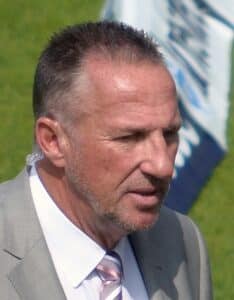
In person, Ian Botham is utterly solid, calling to mind a rugby prop forward more than England’s greatest cricketing all-rounder. Botham is a famous wine enthusiast, and hunched over his lunch as if he could easily eat one’s own meal as well, it would be a lie to say one can’t see that he’s enjoyed himself from time to time.
Botham is one of those very few sportsman whose achievements carry across the generations. Sport is really to do with the dramatic maximisation of the present moment: we are rarely quite so conscious of life as when we watch closely to see whether a ball has nicked a bat. Especially because there is so much of it, little sticks in the mind.
1981 and All That
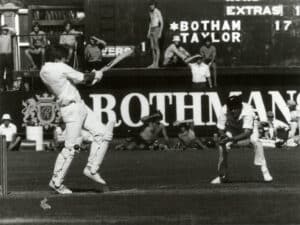
Something about Botham did: it was to do with the fearlessness with which he played the game, allied always to a certain laddish humour which is still in evidence today. Especially Botham is known for the Ashes in 1981 now forever known as Botham’s Ashes, when Botham’s swashbuckling 149 not out at Headingley began an unlikely set of events. Not until 2005 would cricket come alive in this country to anything like the same extent.
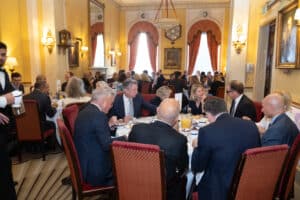
When we think back on that Test match, It should really be Bob Willis’ test, since it was Willis, who died of cancer in 2019, took 8-43 to bowl out the Australians. Willis hangs over lunch, since Botham is here to raising money for the Bob Willis Fund which raises money for better prostate cancer research.
Botham tells a wonderful anecdote about that storied day in 1981: “Australia needed a 130 to win. The Australians were 50-1. Bob comes on, and turns to Briers [Mike Brearley, the then England captain] and he said: ‘Any chance I could have a go down the slope with the wind?’ He steamed in and took 8-53.”
This led to an amusing administrative issue over the unexpected celebrations which Botham, as the world knows, enjoyed more than anyone. “We had this young lad – Ricci Roberts, a 140year-old: he was over from South Africa as a runner. I said to him: “Look we haven’t got any champagne, because obviously thought we weren’t going to win the game.” The Australians thought they would. I said to Ricci: “Go and knock on the Australians door, and be polite and just say: ‘Could the England boys have a couple of bottles of champagne, please?” He did exactly that, but added on the end: ‘Because you won’t be needing them’.”
The Australians may not have reacted well. Botham continues: “Ricci came through the door horizontal. He had one bottle in each hand and he didn’t spill a drop. Ricky Ricci went on to be Ernie Els’ caddie in all Ernie Els’ major wins. That was down to what we taught him – and how Bob taught him to pour a pint.”
The Two Geoffreys
At Lord’s, alongside the extraordinarily likeable Geoff Miller, Botham gave a jovial tour through his career, joking that Geoff Miller was ‘the livelier of the two Geoffreys I played with’ referring to his long-running grudge against Geoffrey Boycott, who Botham famously ran out in Christchurch in 1978. On that famous occasion, Boycott was batting at his usual glacial pace when the situation required runs. Botham picks up the story: “I was asked by Bob, who was then the vice-captain, to run him out and I said: “I’m playing my fourth game and he’s playing his 94th.” Bob replied: “If you don’t do it, you won’t play your fifth.”
It is impossible to not feel nostalgic about the fun of those times. Botham has come along way. In fact, when Botham recalls his upbringing, as is usually the case with the extraordinarily successful, his story comes into focus in all its glory and improbability: “My father was in the services in the Navy and was serving in Northern Ireland on active duty. When his wife Marie, my Mum, was due to give birth, they sent us over to Heswall in Cheshire.”
Crunch Time
The family then moved down to Yeovil and Botham, having shown exceptional sporting prowess, had a difficult decision to make by the age of 15. “I had to make a choice between soccer and cricket. Crystal Palace offered me an apprenticeship. I had just signed at 14 with Somerset – I registered with them and when it came to the decision, I sat down with my dad. He said: “You are by far a better cricketer”. I listened to him – for once.”
Botham then transferred to Lords for a year and half, before being called back to Somerset at 18. It didn’t work out too badly, did it? Botham smiles: “Not too bad.”
Botham recalls his first Test match. “The way they did it in those days – well, let’s just say it wouldn’t happen nowadays. You’re driving down a motorway. At three minutes to 12 you turn into a layby and switch the radio on and wait for the 12 O’Clock News. And the England team to play Australia is…And I thought: ‘Yes, I’m in’.”
That sent Botham up to Trent Bridge, where another lovely anecdote occurs. “We lined up at the start of the game and it was the Queen’s Jubilee. The Queen went down the England line, and wished me luck on my debut. Then she went over to the Australia line, and came to DK Lillee [the great Australian fast-bowler].
Dennis pulled out of his back-pocket an autograph book. “Ma’m, would you sign this?” She said: “I can’t do that now.” But clearly the Queen had remembered the encounter. Botham continues: “When Lillee got home from the tour six or seven weeks later, through the letterbox there came this envelope with the Royal seal and there was a picture of the Queen. It now sits on his mantelpiece.”
Merv the Great
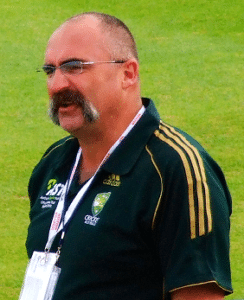
It’s a lovely story – and the more time you spend in Botham’s spell, the more the stories keep coming. Merv Hughes also gets the Botham treatment. “In 1977-78 we toured Australia, one of my first tours. We were sponsored by a company called JVC Electronics. They decided in their infinite wisdom that on the rest day morning at about 10 o’clock – when most of us had only been in bed 10 minutes – we’d go to a shopping mall in north Melbourne to mingle. None of us were particularly excited about that prospect.”
So what did Botham do? “I hid behind this tower. This young lad came up in a tracksuit and said: “Good day, Mr Botham. Mate, I want to be a fast bowler have you got any advice for me?” I wasn’t feeling great so I said: “Mate, don’t bother – go and play golf and tennis.”
Fast forward to 1986: the first test at Brisbane. Botham recalls: “Merv Hughes makes his Ashes debut in that game. In Brisbane, you could see this little black line, that in about 30 minutes became a thunderstorm – hailstones the size of golf balls. Hughes bounces it in, then the gigantic hailstones. Merv wasn’t happy as I’d hit him for 22. We weren’t going to play anymore, the ground was covered with these golf balls.
One of the lads brought me a beer. Merv comes out and I say: “Congratulations on your first Ashes.” He said: “You know we’ve met before.” I said: “No. Where?” “At the shopping centre in Melbourne.” I was that kid who came running up to you, and you told me not to be a fast-bowler but to play tennis and golf.” He said: “What do you reckon now?” I said: “I was bloody right.”
Beneath the swagger of the public persona, there is his immense generosity as a philanthropist and his life as a family man. His grandson, James, is following in Botham’s footsteps as a sportsman. Botham speaks with evident pride: “He’s had a couple of years with injuries. His confidence is back – he played very well against South Africa at Twickenham. James was born in Cardiff and said: ‘I’m playing for Wales’. He’s got a task on his hand and we’ll see.”
A Decisive Difference
But it’s the philanthropy which really brings a tear to the eye. “I’m very proud of it,” says Botham. “In 1977, I was playing against the Australians and stepped on the ball and broke a couple of bones in my foot. In those days you didn’t stay with the England squad, you got sent back to your mother county. Mine was Somerset. So I get to Musgrove Park Hospital in Taunton, the club doctor’s waiting for me. To get to the physio department you had to go past the children’s ward.”
This turned out to be a fateful walk since it would change many peoples’ lives. “You can see children who are obviously ill – tubes sticking out, and their feet up. There were four lads sitting round the table playing on the board games. I said: “Are these guys visiting?” He said: “No, they’re seriously ill.” I said: “But they look fine.” He replied: “You’ve got eight weeks of intensive treatment to get it right for the tour. Those four lads in all probability will not be there when you finish your treatment. True enough at the end, all four of them had passed away.”
It made a deep impact on Botham who found he couldn’t stand by and do nothing. “What the hospital used to do was give them a party, whether for one of their birthdays or for Christmas. And they were so drugged up with painkillers. As I was leaving the hospital, I said: “Is there anything we can do to help?” He said: “Well, you’ve now seen four parties. We don’t get any funding for those.” I said: “I’ll stick my hand up and pay for the parties.”
By mid-1984, Botham wanted to do something more substantial. “I was flicking through a magazine which someone had left on the train – a colour supplement. There was an article about a certain Dr Barbara Watson, who lived on the south coast. Every summer she would get on the train and go to the most northerly part of the UK, John O’Groats and meander back. I thought: “Right, I’m going to do a sponsored walk. I’m going to do John o’Groats to Land’s End. My geography wasn’t great. 400 miles to the English border, then 600 miles to the Land’s End.”
It was a huge learning curve for Botham who had never walked like this before, but he managed to do the walk in 33 days. “You couldn’t do PayPal: you had to physically collect. By the end of the walk we got over £1million. That was used immediately to build a research centre outside Glasgow.” Then the conglomerates came behind us. “When we started the walk, there was a 20 per cent chance of survival for kids with leukaemia – a few years ago we announced it is now 94 per cent.”
It’s an astonishing story of how something so innocent as being good with a bat and ball and can lead with the right heart and mindset to genuinely consequential change. Botham’s is a reminder to us all to start with what we’re good at – but to keep an eye out for what we might do for others along the way.
I am sometimes asked about why I left the BBC. I remember the corporation went through this spasm of asking themselves how to attract the young. If you watch the news, by and large you’re over 60. The same is true of the Today programme.
The editor of the 6 O’Clock News was thinking about how we get more young people. Do we need younger presenters? Or do we need old people like me talking about young people’s issues? This was at a time when LPs were making a comeback. We sent a young reporter down to Oxford Street, and said to a teenager, holding up an LP: “Hello, I’m from the Six O’Clock News. Do you know what this is?” The teenager replied: “Yes, it’s an LP. What’s the Six O’Clock News?”
Thinking back to January 2021, I can’t forget the day after the inauguration when Joe Biden was finally President. Washington DC that day was less the elegant neoclassical city that most people remember from the Capitol through to the Supreme Court and the great museums that go to down the Mall. It was a garrison town, the place was absolutely sealed off. There were rolls and rolls of barbed wire because of what had happened on January 6th. I will never forget the shock of that.
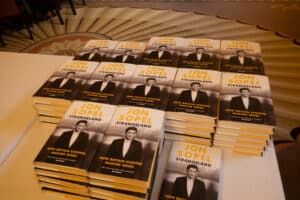
Jon Sopel book launch in aid of Hospice UK and hosted by Finito at The East India Club, London. 17.9.2024 Photographer Sam Pearce / www.square-image.co.uk
January 6th is also inscribed on my mind. I’ve been in situations where I’ve faced greater personal danger, when you’re in a warzone and you’ve got a flat-jacket one, and there’s incoming fire. But I’ve never seen a day more shocking than January 6th when the peaceful transfer of power hadn’t happened. I went on the 10 o’clock news and the mob still had control of Congress and Joe Biden’s victory still hadn’t been certified. That’s the starting point for my new book Strangeland: I wonder how safe our democracies are. My experiences in America made me realise that we cannot be complacent in the UK.
Another thing happened the day after January 6th. The Capitol had been sealed off by razor wire and I went as close as I could, and went live on the 6 O’Clock News. There were lots of Trump supporters around and they heckled me throughout so that the anchor Sophie Raworth had to apologise.
It soon morphed into a chant: “You lost, go home! You lost, go home!” I was trying to figure out what that meant. At the end of my live broadcast I said to this guy: “What on earth does this mean?” He poked me in the chest and said: “1776.” I thought: ‘Do I explain that my family was in a Polish shtetl at that stage?”
Peter Hennessey, the great chronicler of government in the UK, talks of the good chap theory of government – you rely on people to do the right thing otherwise the system falls apart. I came back to the UK at the beginning of 2022 after eight years in America. The first election I voted in was 1979. For the next three years I knew three prime ministers: Margaret Thatcher, John Major and Tony Blair. In 2023 we had three in one year – that’s a reminder of the volatility of the times we live in. In many ways in 2016 – with Brexit and with Trump – the world jumped into the unknown.
Jon Sopel book launch in aid of Hospice UK and hosted by Finito at The East India Club, London. 17.9.2024 Photographer Sam Pearce / www.square-image.co.uk
It’s always seemed to me that the Labour Party finds power a really inconvenient thing to happen. They much prefer it when they’re forming Shadow Cabinets and discussing the National Executive. Then you’d get pesky people like Tony Blair who come along and remind them it is about power. The Conservative Party was always the ruthless machine of government: there is an element in which the Conservative Party is in danger of going down the Labour Party route. It was the Conservative Party membership, for instance, who gave us Liz Truss, the patron saint of our podcast The News Agents. We launched in the week she became Prime Minister – and my God, she was good for business.
What would Britain look like if there were 10 years of Starmer? He’s done the doom and gloom, and how everything is the Conservatives’ fault. That’s fine – but so far, he’s not set out what the future is going to look like under him. Is it Rachel Reeves’ vision of the growth economy? Or is it Rayner’s vision of increasing workers’ rights. I think Starmer is an incrementalist and simply doesn’t know. If he has any sense at all he will look at the centre of political gravity in the electorate and go for growth because that’s what the country needs.
Jon Sopel book launch in aid of Hospice UK and hosted by Finito at The East India Club, London. 17.9.2024 Photographer Sam Pearce / www.square-image.co.uk
Hospice UK do the most amazing work. The book I’ve written Strangeland deals with the challenges facing Britain at the moment. Hospice UK do the most amazing work. Strangeland deals with some of the huge challenges facing the . Hospice care is one area where something urgent needs to be done.