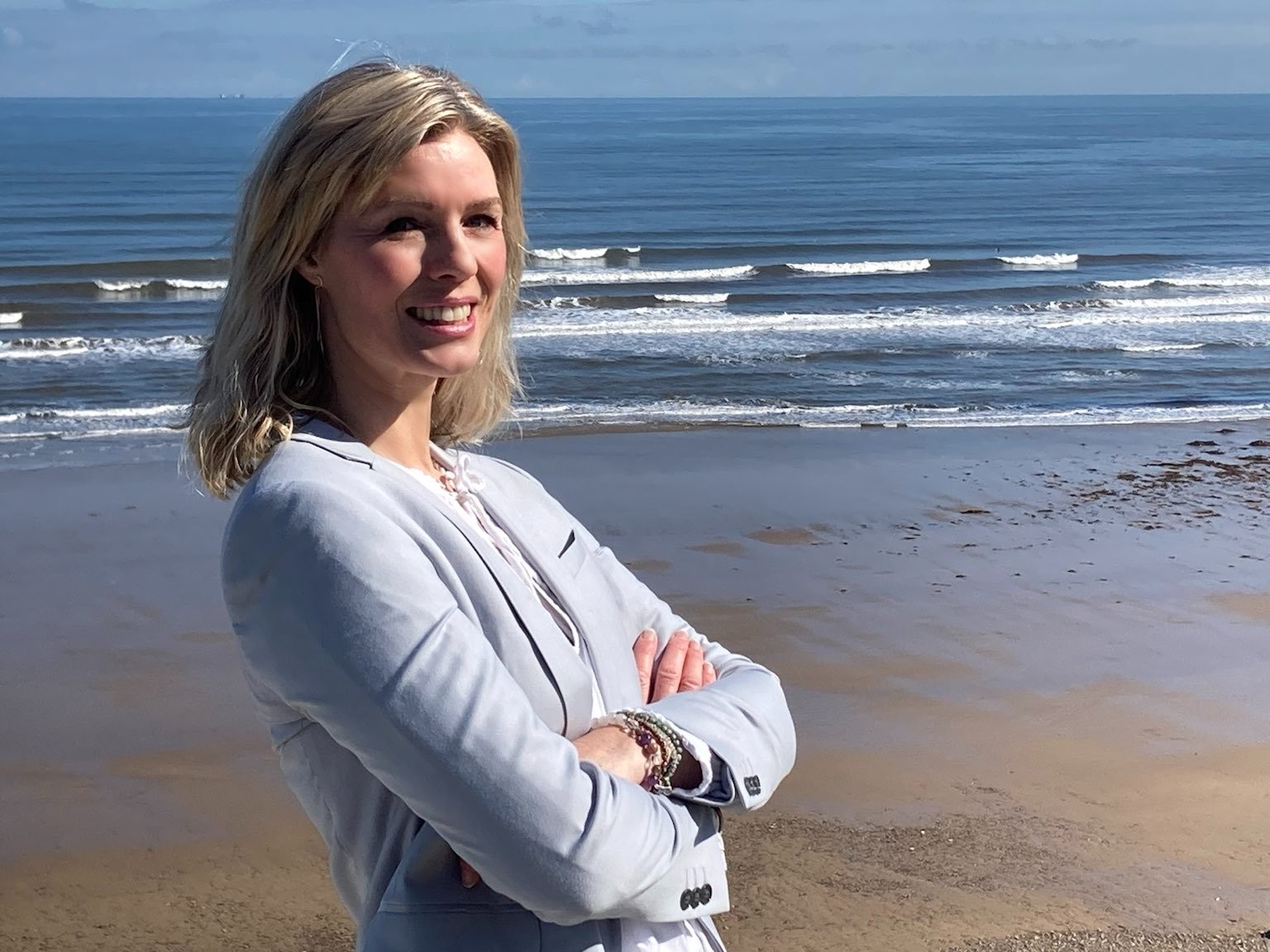
In my role as CEO of CEO Sleepout UK – a charity whose mission is to unite business leaders around a call to end homelessness for good, I see all kinds of leaders who want to make a difference, who want to see a fairer, more equitable society, and a kinder, more compassionate world.
They come to a CEO Sleepout for one night, sleeping out on the hard ground, braving the noise and cold at Lord’s Cricket Ground, or Emirates Old Trafford in Manchester, or St James Park in Newcastle (and many more venues across the UK) – and we unlock a deeper understanding of what it means for a person to be homeless.
My message for each and every business leader or exec who takes part is that they have an immense power and the opportunity to use it to help create the world they want. They can choose to lead with purpose.
Leading with purpose means bringing your personal values, particularly those that relate to environmental and social responsibility to the heart of the organisation and embedding them with baked-in policies, procedures and activities that allow them to live and breathe through everything you do.
This type of leadership – or stewardship – means you assume responsibility for your patch and to make sure that it leaves a robust and thriving footprint that enriches society rather than depletes it.
So why is it so crucial that we see leaders with purpose emerging now? I always make a point of letting my business audiences know that it’s fantastic to enjoy the fruits of their hard work, blood, sweat and tears – and savour every success. But I ask them to challenge the definition of success: if success has come off the backs of low-paid workers, or at the expense of the environment, then can you really call it success?
Leaders like Dan Price, the CEO who cut his pay by a million dollars so all workers could make at least $70,000 per year is one of a cohort of leaders demonstrating a collaborative version of success – success that returns value to a number of stakeholders: the workforce, the families of those workers, the community, society and the environment.
Right now, we’re seeing a convergence of market forces conspiring to make a step-change in the way we do business. Of course we have the global climate emergency, but the pandemic has also highlighted the question of front line workers, who are traditionally the lowest paid, but are now more highly valued than ever before. We’re also seeing global growth rates peaking and AI on the cusp of obliterating a swathe of traditional jobs.
All this is taking place as a new generation – the first to be digital native, comes to the fore. Young people born between 1995 and 2000 (Gen Z) make up 25 per cent of the workforce. They are natural problem-solvers. They are socially conscious and values-orientated having grown up with the world’s problems, causes, disruptions and social movements surging through their veins via the device at their fingertips.
Coming of age during the global financial crisis of 2008, Gen Z has a healthy dose of scepticism when it comes to how businesses interact with society. They have higher expectations for the businesses they support and work for than any previous generation.
Gen Z is already spending and their spending power is growing rapidly:. They are looking for leaders who model honesty, accessibility, accountability and transparency. This means our leaders must use the power they have to rise to this opportunity. Young people are a vital market force driving a fairer, more equitable and more sustainable world.
The UK is home to a high concentration of world-leading universities. Our venerated institutions offer higher education qualifications from bachelor’s and master’s degrees to PhDs that are designed to equip the country with a skilled workforce as well as produce researchers to contribute to the advancement of academic knowledge and the betterment of society.
Yet the idea that students and staff at these establishments aren’t getting “a fair deal” is never far from the headlines. So when did the pursuit of higher education and academia become part of the industry-speak of cost-benefit analysis, and what might be the long-term ramifications?
On the surface the shift can largely be attributed to the introduction of tuition fees in 1998. Over the next two decades fees snowballed and now top £9,000 a year with maintenance grants largely converted into loans.
One increase after the Browne Review in 2010 led to large scale protests, some of which turned violent. Despite the unpopular nature of tuition fee policy, there are no signs that it will be reversed any time soon.
The commercialisation can be seen in how universities have become increasingly reliant on international students who pay much higher fees than their UK counterparts. In 2017−18, 14.4 per cent of undergraduate students and 35.8 per cent of postgraduate students were from outside the UK, according to a 2019 study from Universities UK.
In 2017−18, the total reported income of UK higher education institutions was £38.2 billion. £21.1 billion of this was related to teaching activities (fees and grants from government). Thus government sees universities as a prudent investment, even though government expects that only 25 per cent of current full-time undergraduates who take out loans will repay them in full, according to the Commons Library. The value of outstanding loans at the end of March 2020 reached £140 billion. The Government forecasts the value of outstanding loans to be around £560 billion by the middle of the century.
Continued government investment is in part down to the fact that the higher education sector has tangible benefits to the economy. In 2014–15, universities across the UK generated £95 billion in gross output for the economy. The UK university sector contributed £21.5 billion to GDP, representing 1.2% of the UK’s GDP. The sector also supported more than 940,000 jobs in the UK.
The pandemic has further brought university finances into mainstream conversations and thrown more attention on the matters affecting their performance for both academics and for their fee-paying students.
The government paid out £2.6 billion in tuition fees early instead of a multi-billion bailout for universities that the institutions requested in May 2020. Then in December 2020 and February 2021 new funding worth £20 million and £50 million respectively was announced. This is expected to indirectly support industry revenue growth in 2020-2021.
Universities pivoted to remote learning as government restrictions were implemented in March 2020. However, whilst there has been consistent coverage of the dissatisfaction of students with remote learning, both student applicant and UCAS acceptance numbers have hit record highs.
Indeed, according to Ibis World “rising unemployment and increased competition in the jobs market in the short term as a result of the economic effects of the COVID-19 (coronavirus) pandemic is expected to drive a higher number of both young and mature applicants to enter higher education.”
The pandemic has brought about serious concerns about mental health on university campuses. In 2017−18, around two-thirds (65.5%) of UK higher education institutions had an annual income of £100 million and yet a lack of funding for services means vulnerable and struggling students are not adequately supported on many campuses. Students feel that their high fees are not being fairly exchanged for academic teaching and students services such as counselling. The pervasive feeling amongst students is that they feel ever-more neglected by the onset of remote learning.
Students are not the only ones, however, that feel disaffected by the increasing commercialisation of higher education. There are around half a million staff employed at UK higher education institutions.
Career trajectories of academics often involve precarious nine-month contracts with staff usually moving around many different institutions in their working life. The University and College’s (UCU) decision to partake in a series of strikes over pensions has left a bitter divide between students paying for teaching they feel they are not receiving, and academics that feel that the commercialisation of institutions has left them short-changed too.
David Mathews outlined in a report for Times Higher Education the issue of academics no longer being able to spend enough time on their research and how this will put the industry in trouble.
Mathews argues that the essence of academia is to be given the time and resources to think deeply about a subject and hopefully as a result contribute to the wealth of recorded knowledge upon it. Yet he states that “progression in academia is often progression away from why you got into it in the first place” as those that climb up the ladder from junior scholars to professors end up doing more admin and management work than actual research or even teaching.
A 2020 report produced by Bethan Cornell at the Higher Education Policy Institute (HEPI) shows that 67 per cent of PhD students want a career in academic research but only 30 per cent stay in academia three years on. Some of the report’s findings support the idea that the long hours dedicated to activities other than research and precarious work contracts are among the factors limiting retention of academics.
Among the PhD students that were interviewed included one quoted as saying that “the requirement to move around in pursuit of short term postdocs is terrible for social and family life”. Another claimed they did not wish to pursue a career in research and teaching as “the academic culture will be detrimental to my mental health.”
Nick Hillman, the Director of HEPI, said that postgraduates are “crucial to the whole country, as postgraduate students provide the pipeline for academic, commercial and charitable research. If we are to cure diseases, improve productivity and improve people’s lives, that is likely to come via original research. So it is vital that, as a society, we look after our researchers”.
As with many industries, the higher education job market has been in flux and left many employees and those trying to break into the sector in an anxious state. However, Professor Charles Stafford, Vice Chair of the Appointments Committee at LSE, argues that although the academic job market has been affected by the pandemic it is important for academics and those looking to enter the field to understand the situation in their own subject area, and not to over generalise the situation.
Stafford also stated that the increase in student numbers may correlate to an increase in teaching based rolls, though it is too early to see any conclusive data confirming that this will be a long term trend.
Whilst the commercialisation and industrialisation of academia has clear drawbacks, there are also arguments for stronger links between industry, universities and government – as the collaboration between pharmaceutical company AstraZeneca, Oxford University and the NHS has shown in the successful roll out of a covid vaccine.
Chief knowledge officer of Times Higher Education, Phil Baty, states in a November 2020 report on university-industry collaboration that universities “cannot fulfil their limitless potential without collaboration – collaboration between institutions, with industry and across borders […] In particular, partnerships between universities and industry will be vital as nations seek to rebuild their economies after the devastation of the pandemic – reskilling the workforce and rebooting the knowledge economy.”
So it’s clear that universities have a role to play – but equally there is an urgent need for these institutions to adapt both to continue to attract students and to make sure that staff are retained. As former Chicago mayor Rahm Emanuel put it: “Never let a crisis go to waste.”
Sir David Lidington, the former de facto No. 2 in the May administration, talks about how a history degree has helped him in his political career
Certain traits define an aptitude for elected politics, and I’ve tended to find they can be aided by a study of history. One useful aptitude would be fascination with human beings – what makes them tick, and how power is exercised. Secondly – regardless of whether you come from the left, right, or center – almost everyone I’ve met in politics starts with a commitment to changing things for the better in their country. To do that, it helps to know what injustices have existed in the past.
There’s a third thing, and I would say it also separates the natural politician from the civil servant: a certain zest for the theatre. Politics involves a willingness to take risk, and to be prepared to stand on the stage at the end, and not know whether you’ll have a standing ovation or a bag of rotten tomatoes slung at you. The natural civil servants shy away from that but what’s interesting is you sometimes see a politician who’s really a civil servant – and then a mandarin who’s really a politician. The thespian is striving to get out there.
The wonderful thing about history is that it trains the imagination: when you start to really delve into history – and read deeply as well as widely in a particular era – you find people in the past had various assumptions and moral codes that can be very different from how we operate today. For example, for people living in 1800 or 1850 the idea that there was going to be this industrial revolution, and transformative migration of people to cities, and a growth of urban conurbations – that’s something which some might have predicted, but by no means everyone. Training of the imagination is important.
History also teaches you how to use and assess evidence. Particularly in postgraduate study, you have to go back to original source material and assess the reliability of it. You look at state papers, which by and large deal with high politics and the people at the top. But if you go to legal records, there you find out about yeomen and merchants – the people who went on Chaucer’s pilgrimage to Canterbury all crop up as plaintiffs or defendants.
Another applicable aspect of history was borne in on me when I was Europe Minister. I visited about 40 countries from Russia and Turkey, to the South Caucasus and Iceland. If you want to understand today’s political outlook you have to understand what happened in the past. What are the demons they still fear? What are the experiences that have shaped the outlook of a particular society today?
For instance, I have long felt that the tension that has always existed between the UK and the EU derived in large measure from contrasting experiences and lessons in the mid- 20th century. For most of Europe this was a period of disaster when national institutions all failed in the face of tyranny, invasion and ethnic hatred. From the EU perspective, therefore you have to build up those institutions to stop anything happening again.
Another example would be China. I remember a few years ago, I met Xi Jinping’s number two, and he started out with this recital about the Opium Wars and how China had been attacked in the 19th century because it was weak and the European powers had exploited her. Hearing that, I began to understand why they see the world as they do today. They feel a need to put right the century of humiliation and to restore China’s place as a global power. One needn’t necessarily agree with that – but you have to understand how the other side thinks.
So history is a real asset in politics because you learn how human beings interact with each other, how relationships and power is mediated through institutions, and what lies behind the motivation of countries and individuals. How a Tudor court operates is good for understanding all about access in No.10 Downing Street. Now you have your special advisers rather than Grooms of the Stole or royal pages. Think about Elizabeth I. Who was it who could actually get in to see the monarch and be sure you got your bit of paper in front of her? Likewise, today – who can get something in the prime minister’s box? Patterns reproduce.
One of the most difficult things for government or for the man or woman who’s prime minister is finding time to regenerate yourself and your government while in office. There are always things pressing in. For me the great prime minister of the 19th century was Robert Peel: he was prepared to change his mind when the facts had changed. If you look at how he moved on Catholic Emancipation and on the Corn Laws and trade you can see that he took decisions based on what he thought was right for the country even at the fatal cost to his own political fortunes. Disraeli was vastly entertaining, but Peel was the greater man and the greater prime minister.
David Lidington was deputy prime minister under Theresa May and is now Knight Commander of the Order of the Bath
Read Sir David Lidington’s advice on handling the stress of a high-pressure job here
All organisations come with their own jargon, language, and structures. Understanding all that can be a full-time role. Public affairs can play a critical role, but it may not be talked about or can be a small part of a larger practice area. So, what it is all about and why should you take it seriously?
The work a public affairs team focuses on involves influencing public policy outcomes. That means fundamentally knowing their way around policy making including politics, politicians, and Parliament. They are the people who know how government works.
The foundation of any good public affairs operation should be to use the information, insight and intelligence gathered to play an active role in an organisation’s operations.
An effective public affairs team, for instance, uses their political knowledge and understanding to inform an organisation’s assessment and management of risk. Politicians and government can bring attention to an issue but, crucially, also have the power to inflict operational damage.
But it is not all down beat, good political insight can bring potential market and commercial opportunities with government as well.
The public affairs operation may stand alone or can sit within a wider communications department which may itself be called external affairs. It can be part of a marketing function. For other organisations, it reports into the head of legal. There is no right or wrong organisational structure as long as its voice can be heard. It should all be about the constructive role it plays and how best it can engage and feed into the work of other parts of the organisation.
In particular, that means having a role in the wider reputation management of an organisation. Having a strong reputation is critical with a range of audiences, not least political ones. Developing a strong reputation takes time, effort and resources and the public affairs team should have a critical role. Not least, it needs an organisation to consider all aspects of its delivery against the standards expected of itself. That can mean difficult and challenging conversations but unless any gap between ‘saying and ‘doing’ is removed then there is a potential for reputational damage.
Any public affairs role is also well positioned to help grow a reputation through, for instance, thought leadership which can be tied into political and policy development. There are obvious ways in which a public affairs team can work closely with different parts of an organisation.
Let’s take the HR function, for instance. Public affairs may have a role in the internal communications of an organisation so there is a direct relationship with HR. Public affairs will be very aware of the need for employees to act, sometimes vocally, as champions for an organisation. They are your best advocates. Employee relations and governance are also critical elements of an organisation’s reputation.
Government and politicians always want to know how well run any organisation is, but employee relations are often an area where a ‘say-do’ gap can emerge, and rhetoric and reality diverge.
So, whilst HR and public affairs fulfil different roles they often need to work together. This can also happen if something goes wrong. If someone on the management team were to misbehave then HR obviously needs to lead but the communications and reputation management are critical as well.
So, what about the skills needed to be part of a good public affairs team? Firstly, it is about being a policy navigator and understanding how policy is made and what the processes are, as well as the audiences.
Secondly, you need to be a strategy developer – that is, able to develop a public affairs strategy, pulling in the information and knowledge needed to do so. Thirdly, it helps to be a communications expert. That will include, everything from message development through to being able to work with the channels needed to get out to audiences.
Other things are important too. You need to be an audience engager, and have the ability to know and understand stakeholder audiences so that you can identify what drives them, how to communicate with them and how to work with them over a potentially prolonged period. It’s also key to be a risk analyser, and possess the ability to consider a raft of information, as well as knowing and understanding politics, to identify potential risks. But also, how they should be addressed as well.
That’s not all. You also need to be a networker – both inside and outside of the confines of work. It also helps to be a partnership developer, with the ability to work with a range of audiences, outside of politics as well, to build appropriate coalitions of interest.
So look out for the public affairs in your organisation, you may wish to work with them. They can be hugely useful.
Melanie Walker discovered the world of art at a young age, but it took the pandemic for her to return to her first love of drawing. She worked in luxury fashion with big names, including Victoria Beckham, Roland Mouret, and Jonathan Saunders for fifteen years. Now, she has turned her attention back to fine art, launching a new website to promote and sell her works. We spoke with Walker about her passion for art, her time in the fashion industry, her unique style, and how young people can get a start in the industry.
“When I was at school, I always loved art, and I always loved to draw. In my A-level art, I then had an opportunity to think ‘what do I want to do next’, and I’d heard about art foundation courses. I applied to Wimbledon College of Art, and I got a place on their foundation course, which was phenomenal. And really, that was the first time in my life where I felt like I was surrounded by like-minded people. I loved school, I found academia okay, but my strengths were always in the arts. So suddenly to be surrounded by so many like-minded people who loved creativity, who loved visual arts, it was just fantastic,” Walker says.
Though Walker had a passion for fine art, she feared that it would be a solitary career, so she decided to go into fashion, specialising in the subject in college.
“I then had a deferred entry from school to go and study History of Art at Nottingham University,” Walker says, “I chose that, and I went to Nottingham University after my foundation course, and then very, very quickly, I realised I had made the wrong decision.”
At Nottingham University Walker found that art history has more to do with the people in the paintings than how they were actually created, which is what she was interested in. So she took a year out to reapply.
“I ended up going to Bristol UWE and started studying fashion design there for three years,” Walker says, “And that summer that I took out I did an incredible summer course out in Florence, which was at the Charles Cecil studios. And that was phenomenal. It really trains your eye and it’s an intensive drawing school right back to plumb line drawing from Leonardo da Vinci. So that for me was a phenomenal experience where I was solely life drawing.”
After leaving Nottingham, Walker was determined to make the most out of her time at Bristol. She left with a first and quickly found an internship with Roland Mouret. There, she got her first real taste of the fashion industry working on their development team.
“I could see everything from the start of the conception of a dress, right through from development to production, and then on to sales, and then shipping. We had in-house press as well. So for me, as a youngster coming out of university, that was a phenomenal experience,” Walker says.
Walker worked in development with Mouret for three years. She enjoyed her first job outside of university, but she realised that she was missing the design aspect of her work, so Walker decided to change course.
“I decided to leave there, and I freelanced for a while with Jonathan Saunders, who’s a print designer, helping him out on development and production. And then I got my first design job, which was with FREDA at Matches,” Walker says, “So I freelanced on the two jobs for a while, and then they became too much. I chose the Head of Design role at Matches designing for FREDA purely because it was a design post. So then I worked there full time for a year as a designer.”
Throughout her years working in fashion, Walker kept up with Mouret. When she was ready for a change, he was there to help her into the next step of her journey with Victoria Beckham.
“I remember I saw him at a show one year and I said, ‘you know, I think I’m looking to move on’, and it was he who put me in contact with Victoria Beckham. I helped Victoria set up her label, and I ended up working there for, gosh, I think it was nine and a half years,” Walker says, “I was building the team, working with her, starting from such a small unit. It was an amazing experience, incredible experience. I’ve never been in a company that grew so quickly, and I felt like I was really being challenged, I learned so much.”
Many people face the same uncertainties in university that Walker faced at Nottingham, and a shift in direction during study is often stigmatised. Walker credits her conviction of will and the support of her parents with making the transition from art history a smooth one.
“I think my parents were perhaps concerned how I would earn money in fashion, just because it was such an alien area for them. But they were both extremely supportive, and I think that’s what enabled me to have the confidence. And I felt so strongly about it. It’s difficult when you’re young, you know, you have to get into an environment and understand whether it’s the right thing for you, but I really, really knew after a term that it was not the right area for me, and I really missed creating and making that tangible art, essentially -whether it’s drawing or whether it’s making clothing. So for me, it was a no brainer, and thankfully, I had the support of my parents to make that that change,” Walker says.
Walker’s time in the fashion industry led her to many amazing experiences and opportunities, but it also left little time for her passion of life drawing. After fashion, she went into consulting, which allowed her to make time for her children and her art.
“For me, life drawing, and drawing of the figure has been something that I’ve always loved. But once you get out into the work environment, I always found it so difficult to get to any life drawing classes. The hours in fashion are very long, I would be working late into the night most often, and I could never really make the classes,” Walker says, “So it was always just a hobby that I’d sort of parked to the side. Once I left Victoria Beckham I was consulting, and I have three kids now. So for me consulting was a way that I could work near my children, and fit work into my family lifestyle, it’s been great.”
Walker’s style is characterised by minimalistic, thoughtfully placed lines which imply the full shape of a figure while leaving some to the imagination. When she does use colour, it is usually only a splash to emphasise the most important elements of her artworks.
“I’ve always loved a pure line,” Walker says, “I’ve always been immediately drawn to really minimal charcoal sketch. So if you can imagine all of Picasso’s drawings that he does of a minimal bird or a figure, if I’m in an exhibition, I go straight to those. There’s also Giacometti – he creates phenomenal sculpture, but also really beautiful quick line sketches of figures or portraiture. So for me, it’s always been something I’ve been quite obsessed with. And I think it’s so beautiful when you see an image that is just drawn, and it’s the right line. It’s hard to do, but when it works, I think it’s really beautiful.”
Now, Walker is focusing on her new art venture, but she did give some insightful advice for young people hoping to break into the fashion industry.
“Don’t be shy about approaching people. If you’re trying to get an internship, write to ten different brands that you love, ask if there are any internships or apprenticeships open and be prepared to graft – you have to work really hard – be prepared to do anything from making the coffee, taking out the bins, or whatever might need to be done. I think if you’re open minded, and you work hard, and you have a good attitude, you turn up on time, anything’s possible,” Walker says, “I think people think that the fashion world is elite, and it’s a closed book, and you have to know somebody. But more often than not, it’s really easy to find email addresses on websites and just write to brands and ask if they have any openings, don’t be afraid to chase. And now that we have platforms like Instagram, it’s much easier to be able to reach people.”
A degree can go a long way towards success in fashion, but according to Walker, it is not the be-all and end-all you might find it to be in other professions. Rather, opportunities may come from internships, or simply talking to the right people and demonstrating passion.
“I think degrees are fundamental, to learn technical skills of making clothing and to progress as a designer, but they do not prepare you for the outside world in the fashion industry. So I think an apprenticeship is equally valuable. So for example, if you come out of school or art college, and want to gain an apprenticeship within a design studio, and then grow within that, that’s equally valuable. But a BA course or an MA obviously is held in high regard, and you do learn a lot on those courses. But I think gaining internships and insights into companies and experience is invaluable as well,” Walker says.
Go to www.melaniewalkerillustration.com/pages/portfolio
There’s a famous quote by Zhou Enlai, who was asked in conversation with Henry Kissinger in the 1970s, what he thought of the French Revolution: “Too soon to say,” was his reply.
That’s the case with Covid-19 too. We are only just beginning to understand how it may have affected us in a multitude of ways – and most particularly in education. The only way to find out is to talk to people on the front lines. One of those is Ji Li, the likeable and articulate CEO of Plum Innovations, which has been busy throughout the pandemic enhancing its tech offer to its primary school clients.
In conversation, Li is knowledgeable and relaxed, and I can see immediately why schools would find him a helpful support in their busy lives. So what trends is he seeing? Li explains the shift towards flipped learning. “Flipped learning isn’t a new concept,” he says, “it began back in the 1990s. It’s to be contrasted with traditional learning where you go to classrooms; teachers tell you what you need to know, and you memorise that input. Flipped learning makes for a more collegiate approach”
Li’s own education back in China followed this approach: “When I was studying secondary school in China we were writing notes, and memorising everything,” he recalls.
With the increasing prominence of flipped learning, we’ve begun to alter the role of the teacher: the solitary sage at the front of the class has now become a kind of trouble-shooter.
Is there a danger of going too far and having teachers with too little influence? Li is philosophical: “I think there’s a sweet spot. There’s a role for the teacher to lead and to guide – but each pupil should have their own freedom to find the right way too. There are two extremes and we need to be in the middle.”
That might be said to echo Aristotle’s famous notion of the ‘golden mean’ where wisdom is found somewhere in the centre. This common sense approach turns out to be crucial to Li’s philosophy of how technology should be approached in the school setting. “Technology shouldn’t dictate to teachers; instead technology must evolve according to user experience,” he explains. “As a sector, we can’t define how teachers should teach; we need teachers to come up with that. Once that happens, then the tech sector needs to facilitate their approach and make life easier for teachers.”
One leitmotif of our conversation is Ji Li’s love of the sector he works in – and he clearly instinctively understands teachers, and is extremely eager to help.
“We make sure software and technology are being used, and working for teachers,” he says, passionately. “In my role, I see first hand how technology stops working, and how sometimes it works really well.” So how do you introduce new technology to a school and effect change? “A new system will often engender different workflow and have a different user interface. The school staff might find that difficult to get used to – or perhaps they’ll be too busy to obtain the right familiarity with it. If they struggle, they’re perhaps more likely to fall back on how things were before, because they know how to use it,” he adds.
That, of course, is where Plum comes in. Li explains that his work has become more complex since the pandemic with the shift to remote-working. “Before the pandemic everything took place within the building where the school was located. Since the pandemic, with teachers not fully back to school, and with the continued relevance of flexible working, that’s shifted the landscape of IT support –and of edtech in general. So we’re no longer looking at hundreds of computers inside one building, but at diverse settings. That’s a challenge for the sector, and it’s a challenge for Plum.”
Traditionally, of course, flipped learning has been used in higher education and doesn’t apply so much to the primary schools which form the majority of Li’s clients. However, there’s an interesting development at the primary level too. “With the lockdown, we’ve definitely seen an increased involvement from parents,” he tells me. “Teachers want to teach most of the contents of their classes, but at home parents can be very helpful to reinforce learning, and help with certain projects – especially with DT and science projects.”
Home-working means that the sector now needs to deal directly with third parties on behalf of schools. Li explains how this plays out: “You use your home connectivity for work now, and that includes teachers. So far we don’t need to contact the home broadband services not yet, but if there’s an issue with one of our clients we’ll always help them to troubleshoot it if it’s a wifi issue. If they say at home, “Nothing’s working” then that usually tells us it’s a fundamental issue, but we want the best for our clients so we’ll talk to third party vendors – we know the technical terms and so we’re happy to do that.”
There’s another area in which Li is prepared to go the extra mile – in talking to parents on behalf of schools. That issue arose, he says, time again during the pandemic: “We never say, ‘That’s not our issue’. We talked to parents a lot when we implemented Google classrooms. The parents had their accounts; the schools had theirs, and so we helped schools to train parents, in order to smooth that transition.”
Talking to Li, I have sense that he’s good at his job precisely because he respects his clients. He also takes a lively interest in education techniques. He tells me also of the parallel shift towards blended learning – a mix of online and offline – which is also set to have a big impact on the sector. “Before the pandemic, schools did almost everything offline. When lockdown came, we entered the most extreme version of online learning. Blended learning seeks a return to balance. The technologies of the future will evolve based on user requirements. Schools will adjust to what pupils need and we’re able to create a balance.”
Of course, the most important aspect of Li’s work is communicating. Without listening in the first place he wouldn’t be so well-placed to implement relevant technologies, and if he weren’t able to communicate, he wouldn’t be able to fix problems. “Communication is a massive part of it,” he agrees. “We are lucky to work in the education sector, where staff and teachers are eager to learn. In terms of technical language, some staff are tech-savvy and others are less confident are less confident in technology.”
Again, Li reverts naturally to his love of the sector. But beyond his natural empathy with teachers and other education staff, I also detect a passion for education. He takes a keen interest in educational trends, and speaks with real knowledge and insight about them. Further, his knowledge takes on an international dimension, which stems to some extent from his Chinese upbringing.
“The UK is always at the forefront of education technologies,” he says. “The UK has a history of leading the way.”
The transition has also been propelled by the increase in multi-academy trusts these past years, which has created a necessity for cloud-based learning platforms. “When everybody was working at one school that was one thing,” Li recalls. “Now, with many teachers working across many sites, that introduces the importance of the cloud, as it’s the most effective way to work.”
So flipped learning and blended learning turn out to be profoundly interlinked. As Li puts it: “In the future students will have paperwork to complete – handwriting and artworks and so forth. That’s important. But certain work they can produce online, as part of flipped learning. They can use online platforms to do research and then in class the teachers continue the learning journey with them.”
We’re full of buzzwords for the future: AI, drones, all manner of tech. But the future often happens more subtly than that. Talking to Li, you realise that the future is made not by big headlines, but quietly, almost imperceptibly by intelligent, thoughtful people – people, in fact, just like him.
Christopher Jackson is News Director of Finito World
‘Tis the season of goodwill and sumptuous gift goody bags. In mine, following a Winter Wonders Christmas Party at Taj Hotels, there was an invitation to afternoon tea. This was to be no ordinary tea but a festive production of Baubles and Ballerinas!
We arrived at Taj Hotels and began to take off our coats, until we were ushered to our seats which were specially reserved in the centre of the grand conservatory. My guest elected to keep on her coat as it was still cold, and the sleet and snow outside hadn’t fully melted. It was a pretty scene outside with the twinkling lights contrasting with the daylight fast turning to dusk.
There were a few diners occupying other tables after late lunches. Our thoughts turned to tea. The place setting was beautifully embroidered and the napkin holder the size of a giant ring. After a pause, the waiter brought us the menu and offered us a glass a water. A few minutes later, we were invited to select our tea leaves, English breakfast and Earl Grey were the order of the day. Two pots arrived. I requested milk. We noticed that there were no teaspoons and elected not to make a fuss.
It reminded me of Ted Gladdish, a former client and old friend of mine who used to collect teaspoons wherever he went. I didn’t know about his habit, until after he died. I visited his home to pay my respects to his fiancé only to find picture frames with teaspoons all over his walls. I recognised some from my own office and always wondered why we were running short. My guest surreptitiously stirred with her fork. No-one but me noticed.
Taj Hotels provided us a selection of themed teas, including The Indian Jamsine, Festive Vegetarian and Festive Afternoon Tea. We decided not to be adventurous. The two tea stands arrived consecutively. I had gestured to my guest that we should only begin devouring once each item could be tasted in unison.
The presentation was stunning, favourites included festive egg mayonnaise and mustard cress pinwheel; rosemary roasted beef roulade turnover; honey glazed turkey and cranberry sandwich; thyme roasted chicken mousse, open face pie and smoked salmon, cream cheese and caviar open sandwich.
Suddenly there was a crescendo in the music which had morphed from Asian beat to The Nutcracker and two ballet dancers appeared En Pointe in pastel shades of blue. A few pirouettes later, we applauded. They were working while we were munching spiced mixed fruit scones with cranberry jam and clotted cream.
After the entertainment, it seemed like a good moment to have a mini break before turning to the beautifully decorated and delicate patisseries, each one more tempting than the other. Santa’s parcel was a chocolate mousse, cherry with chocolate sponge. The pistachio roulade was made with Armagnac and milk chocolate crémeux. Gingerbread cheesecake hastily followed before the Christmas ornament, which was a strawberry bakewell tart and eggnog mousse. The final cake was a beautiful dark hot chocolate shaped, rocky road brownie with marshmallows and candies.
Our waiter returned to enquire whether we would like a repeat cake stand. I politely declined and then remarked: you cannot be serious. Apparently other guests before us had requested further supplies.
So there you have it, Tajness. Taj is legendary. They go out of their way to make you feel welcome. Everybody smiles. Service is important. They want you to remember the Taj experience. We really did. On the way out, I had forgotten about the teaspoons.
The first casualties of wars are often the young soldiers who have been sent to fight them. Next, the civilians who can’t or refuse to leave the conflict zone and get caught up in the fighting, or who, in the case of Russia’s utterly senseless assault on Ukraine, are deliberately and callously targeted with horrifying brutality. These tragic losses are vividly and heartbreakingly visible, and displayed in daily media for all to see, but as ordinary civilians swap work-clothes and laptops for fatigues and weapons, there is another casualty that rarely comes into view until long after the smoke and dust has cleared, the diplomacy done and armistice agreements are signed.
In Ukraine, with the vast proportion of the remaining population focusing all of its efforts on repelling the invasion, this casualty is nothing other than all the things they were doing and all the progress they were making before they were invaded.
When the fighting eventually stops, there will be obvious and immediate priorities for the government of Ukraine: the resumption of vital supply chains to deliver food and potable water to the population; re-establishing essential services such as power and sanitation; supplying medical aid to those in desperate need; and shelter for those without it. Essentially, the most urgent objective will be the relief of immediate suffering and with most of the world on its side, we can reasonably expect that many nations will help to deliver the aid and assistance that Ukraine will need.
Next comes an assessment of the damage, and the beginning of a lengthy journey of post-conflict repair and reconstruction, starting with vital infrastructure that has been purposely and cynically targeted by Russian military commanders, such as hospitals, schools and emergency services. Then important cultural institutions such as government buildings, museums, libraries, and churches. At the same time, people’s homes must be rebuilt, hopefully, but not necessarily in the same place that they were before, and so the list goes on. All this will take place throughout a period of unimaginable grieving.
If the Ukrainian people take on this enormous and daunting task with the same heroic determination that they have now become famous and admired for, and that has inspired the world during the past months, then we can be sure that this process will not stall, but it will still take time. To understand the level of destruction in parts of Ukraine that has been savagely meted out by Russia we could compare with Hamburg in WWII which was also badly damaged by extensive bombardment. Hamburg took more than 40 years to rebuild.
With so much that has been turned to rubble as a direct consequence of Vladimir Putin’s vicious shelling of civilian infrastructure, rebuilding Ukraine will likely take decades. National treasures such as the Mariupol theatre which has been completely destroyed, and is likely the site of an unthinkable civilian massacre, are works of architecture that take many years to complete at the best of times. But it won’t be the best of times, because there will be so many wounds to heal, and so many lost to mourn.
As I boarded a flight from Bucharest to Paris today, there were many Ukrainian passports in the queue. Special announcements were being made to inform them of arrangements to meet them at Charles de Gaulle airport, and I wondered how long it would be before they would be able to return to their homes, or if they ever would. I noticed that there were few adults amongst the groups and many children: presumably many of their parents had stayed to fight. Then I wondered, what were they all doing before all this? What is it that won’t happen anymore because of this?
It is astonishing to think that an advanced and civilised nation, that was peacefully pursuing its interests in areas of science, medicine, technology, art and business, has now been reduced to the task of primary construction. Many important projects and initiatives will now stall and be delayed, perhaps indefinitely. For example, in 2020 a national poll showed overwhelming support for the legalisation of medical cannabis to relieve a range of conditions from chronic pain to post traumatic stress disorder. 2022 was the year that legalisation was set to take place, and this was firmly prioritised in President Zelensky’s government agenda. Medical cannabis has also proven life-saving for children suffering with rare forms of intractable epilepsy for which existing treatments are ineffective.
In the worst cases this condition can be fatal, although this is rare but that is exactly the point: the social agenda of Ukraine has progressed so far since gaining independence from the Soviet Union in 1991, that by 2022, the business of politics and government was even able to help tiny minorities of the Ukrainian population who would otherwise suffer. When the many are able and determined to look after the needs of the few, that is when a nation has reached the higher apex of progress and civilisation. We might also ponder that medical cannabis is still illegal in Russia.
So, the question is how long will it be before Ukraine can reach that point again? Russia’s barbaric invasion has caused obvious damage and unforgivable casualties that are all too glaringly obvious to see, but the enduring damage of Putin’s crimes will run deep for years, and probably decades to come. By the time the houses are rebuilt, cinemas are open and actors once more tread the boards of Mariupol theatre, children who were about to be saved in 2022 may no longer be here to see it.
Jonathan Cathey is a marketing and branding consultant
A creative working environment should recognise the abilities and contribution of everyone. Sadly, despite what they may say, not all organisations live up to the high standards they claim to live by. But don’t give up on them. Instead, think about how to encourage change.
Starting a new job is always accompanied by a high level of excitement and expectation. For those entering the world of work for the first time, there is trepidation but enthusiasm as well and, for most, a real willingness to get involved.
Most organisations appreciate that input and drive, but some seem less willing to make the most of the opportunities. Certainly, there can be structures and hierarchies that prevent voices being listened to but, more often than not, it is about the people.
Having such a closed mind goes against every leadership book you read or podcast you listen to, but it still happens. The closed mind might be a result of a fear of being made to look bad, a poor personal relationship or, more simply, intransigence on their part. An undying belief in ‘the way we’ve always done things’ should not be underestimated. So those with a closed mind either don’t listen or don’t recognise the contributions that come their way. They simply end up being dismissive.
If you are faced with such a situation then do not downgrade your expectations.
The initial knee-jerk reaction is to look for a new job. That is certainly one option but not one that guarantees success. It is a cliché to say that the grass is not always greener but that definitely applies to the work environment. All roles and employers have their challenges.
Instead, your best option, and one that may help you in the longer-term, is to stay and fight to be heard. If you can be successful, then opening up the organisation will not only be hugely rewarding personally but will enable you to make an impression which can only help in your career. Whatever the challenge is, consider your strategy and what it should include:
Are there any champions you can look to work with? You don’t have to do this alone.
Try to work with and not against people, so recognise their opposition but try to address it.
Always be clear on the benefits and try to use real life examples or information rather than relying on instinct.
Are there internal teams that can help, such as HR?
Do you understand the structure of the organisation so that you know who to talk to?
Remember, there is nothing wrong with applying some pressure and many will thank you for it. Many employers often know when there are closed minds and are looking for ways to change. You are providing the constructive encouragement they need.
Communication is critical. Issues often arise and closed minds take root when the communication is poor. Instead of organisations being able to deal with problems they don’t because the right people are not made aware.
The input could be for a piece of client work, internal practices or focused on something more structural. The same lessons and thought processes should apply, regardless.
So do not give up and simply look to move on. Rather, make every effort to help open the closed minds.
New research from the financial tech company Tide shows that art universities produce more start-up businesses than other institutions.
By using data from the Higher Education Statistics Agency (HESA), they were able to see that the top start-up producing university in the UK is the Royal College of Art. 1,665 graduates have started their own businesses since the 2014/2015 academic year.
While having a high number of start-ups tends to be associated with the tech industry, arts-focused universities actually produce more start-ups, due to artists frequently being self-employed. The trend towards the creative industries continues, with Kingston University coming in second on the list. Their focus on business, engineering, and many types of art including fashion and design makes graduates from Kingston more likely to start their own businesses than those from other institutions.
Third on the list, Falmouth University has fostered creativity and helped their students translate their ideas to the real world of business through their Launchpad programme, which focuses on giving entrepreneurial students access to the market through mentorship and networking opportunities.
Having a high number of start-ups coming out of a university is a good sign, and due to the freelance nature of many creative careers, this seemingly unlikely pattern is actually not that unusual. However, although arts-focused universities produce the most start-ups, these are not always the most financially successful.
Aside from the number of start-ups a university produces, Tide also looked at the value of a university’s intellectual property. They found that Oxford University tops that list, having produced intellectual property valued at £213 million since 2015. Oxford also has the highest number of patents, with 3,086 granted over the five-year period. Most of these innovations came from the prestigious university’s tech and healthcare developments.
The Institute of Cancer Research has seen graduates produce £208 million in intellectual property over the last five years. This remarkable number can be explained by the high value of developments in the fight against cancer.
At £64 million, the University of Sheffield has proved that accelerator programmes can directly lead to increased student success. Their Pre-accelerator programme helps students generate, develop, and sell their start-up ideas with a focus on getting products through to the investment stage.
Tide’s research shows not only that the creative industries are large producers of start-ups, but also the value that can be created when creative instruction is coupled with mentorship and networking programmes which allow students to get their ideas onto the market. While the highest-value start-ups are still based in tech and healthcare, design, fashion, and other creative courses can create lucrative start-ups when students are given the opportunity to take their ideas to the next level.