Category: Features

  • Review: Dinings SW3

    Patrick Crowder

    If you are looking for a world-class Japanese culinary experience in the heart of London, it is in your best interest to take a stroll down Walton Street, nestled between Chelsea and Knightsbridge. Since 2017, Dinings SW3 has produced an authentic Izakaya-style experience under the leadership of head chef Masaki Sugisaki.

    An Izakaya is, in a way, the Japanese take on the pub; an informal restaurant and bar with good food where many people go for after-work drinks. While Dinings would not be considered informal by most, it is certainly a place where you can go with no fear or expectation of pretension. The main restaurant formerly served as an artist’s studio, and remnants of the past can be seen in the form of neon lips on the wall and an intricate historical fireplace dating back to the 1500s.

    The restaurant also features an even more private section upstairs called the Kurabu. It is carefully furnished with comfortable and elegantly upholstered seats and perfectly set up to accommodate your needs, whether that be a company event or an intimate outing. It is known that celebrities choose Dinings not only for the exceptional quality of food and service, but also because they are unlikely to be recognised and bothered in such a hidden away space.

    Dinings

    The food and drink at Dinings are of the highest quality, and the nature of the dishes shows that they are not afraid to place their locally sourced ingredients front and centre. Fitting their style of mixing traditional Japanese cuisine with European dishes, our first dish was truffle-topped sea bass carpaccio. The delicate fish mixed with the earthy truffle created a wonderful combination, especially when paired with Dinings’ own 78 Kin Daiginjo sake. For those who are more accustomed to European wines than sake, Dining’s offering is a great place to start due to the sake’s mild yet familiarly floral taste.

    Dinings Yellowtail

    Even something as simple as a tuna roll is done to the nines at Dinings. This dish is a tuna tour de force, incorporating all cuts of the fish including the belly of the tuna highly sought after for its buttery, mild flavour. For those who do not share my love of fish, Dinings offers a number of vegetarian options including miso aubergine. This baked aubergine, marinated in and then topped with both light and dark miso sauce, quickly won the favour of our table and was a true highlight of the meal. If wagyu beef is more your speed, Dinings has you covered with a truly unique take on slider burgers. No matter your palate, Dinings SW3 will have an option for you of the highest quality. This place is something special, and once you’ve experienced the exemplary cuisine and service of Dinings SW3 you’ll find it extremely difficult to stay away for long.

  • Arts universities produce the most start-ups, study shows

    New research from the financial tech company Tide shows that art universities produce more start-up businesses than other institutions.

    By using data from the Higher Education Statistics Agency (HESA), they were able to see that the top start-up producing university in the UK is the Royal College of Art. 1,665 graduates have started their own businesses since the 2014/2015 academic year.

    While having a high number of start-ups tends to be associated with the tech industry, arts-focused universities actually produce more start-ups, due to artists frequently being self-employed. The trend towards the creative industries continues, with Kingston University coming in second on the list. Their focus on business, engineering, and many types of art including fashion and design makes graduates from Kingston more likely to start their own businesses than those from other institutions.

    Third on the list, Falmouth University has fostered creativity and helped their students translate their ideas to the real world of business through their Launchpad programme, which focuses on giving entrepreneurial students access to the market through mentorship and networking opportunities.

    Having a high number of start-ups coming out of a university is a good sign, and due to the freelance nature of many creative careers, this seemingly unlikely pattern is actually not that unusual. However, although arts-focused universities produce the most start-ups, these are not always the most financially successful.

    Aside from the number of start-ups a university produces, Tide also looked at the value of a university’s intellectual property. They found that Oxford University tops that list, having produced intellectual property valued at £213 million since 2015. Oxford also has the highest number of patents, with 3,086 granted over the five-year period. Most of these innovations came from the prestigious university’s tech and healthcare developments.

    The Institute of Cancer Research has seen graduates produce £208 million in intellectual property over the last five years. This remarkable number can be explained by the high value of developments in the fight against cancer.

    At £64 million, the University of Sheffield has proved that accelerator programmes can directly lead to increased student success. Their Pre-accelerator programme helps students generate, develop, and sell their start-up ideas with a focus on getting products through to the investment stage.

    Tide’s research shows not only that the creative industries are large producers of start-ups, but also the value that can be created when creative instruction is coupled with mentorship and networking programmes which allow students to get their ideas onto the market. While the highest-value start-ups are still based in tech and healthcare, design, fashion, and other creative courses can create lucrative start-ups when students are given the opportunity to take their ideas to the next level.

    Credit: https://www.tide.co

  • Economist Roger Bootle on the positive side of AI

    The chair of Capital Economics has an optimistic view about the impact of Artificial Intelligence

    It seems strange to recall now that before the ghastly Covid pandemic descended on us there was a massive obsession in the media and elsewhere about Artificial Intelligence and robots. The conclusion was fundamentally negative. Most people argued that this great technological improvement was going to bring some form of impoverishment: basically, we were all going to lose our jobs.

    I got stuck into reading it all – and found that most of it was written by non-economists. I discovered they had their economics upside down and it was time for an economist to get to grips with it all, which I did. My take on the subject was fundamentally optimistic, so my book stands out from others on the subject.

    You’ve got to start with the history and the technological improvements which have been going on for ages. Since the Industrial Revolution, we’ve had a wave of improvements which have knocked out various jobs and skills, and in some cases industries. Others have sprung up to take their place. For me, the question was why should AI be any different?

    When you got down to the specifics what the pessimists focused on was that essentially there were going to be no areas where human beings will be able to compete with robots. They say that AI will be different as past machines had to be operated by human beings. I looked at that and thought: ‘That’s bunkum.’

    For a start the capability of robots is massively exaggerated in the literature put out by the enthusiasts. Every time I go through an airport, I chuckle at the AI-enabled automatic passport machines. When they work, they’re fine: rows and rows of officials guiding you here and there. When they don’t work, humans come into play. If we go onto robots, they’ve been going on in industry for forty or fifty years but the idea of the omni-capable robot is a long way off. They don’t have sufficient manual dexterity; they can’t plump a cushion or tie a shoelace.

    Of course, those shortcomings could theoretically just be temporary. But more important is the question of what you think human beings are. I quote someone as saying in my book that “the human brain is just a computer which happens to be made of meat.” I think that’s fundamentally wrong. There’s something about the way the human mind works which is very different from the way a computer works: we use instinct and make great jumps which a computer can’t make.

    The central thing is that human beings are social creatures and like to relate to other human beings. They’re naturally suspicious of machines and sympathetic to other humans.

    Take medicine as an instance. Not only is there room for great advances in record-keeping but also in diagnosis and some people suggest this will lead to the redundancy of medical professionals and surgeons. This is complete and utter nonsense. Human beings needs to interact with and trust other human beings. You’re not going to go along to an AI surgery and hear a robotic voice say, “You’ve got to have your leg chopped off” – and just go, “Okay.” We’ll need to have human beings intermediating between us and the robots and AI.

    At the moment, robotic surgery has bought some terrific advances but what it hasn’t done is make surgeons redundant. What it has done is make surgery much more accurate, reliable and quicker and potentially have it done at remote distances. I see a whole range of jobs where humans beings will want to interact with other human beings. There’s one thing which robots will never be better at than robots – and that’s being human.

    Of course, that doesn’t mean we’re not seeing the more menial tasks removed in favour of robots doing more. Checkout tills are still a nuisance at the moment, but they will get better. Translation is another interesting one. When these translation apps first started they were useless; now they’re not bad. Google Translate does a pretty reasonable job. Basic accounting and basic legal services are also possible.

    It won’t undermine the need for labour for people at the bottom of the heap. It’s the clerical positions which will change – people doing admin and clerical type jobs. I suspect they’ll be replaced. But overall, I see it as something which will massively increase productivity over time.

    Roger Bootle is the Chair of Capital Economics

  • Ten Thousand Hours: Psychologist Natalia Ramsden

    Experienced psychologist and founder of SOFOS Associates Natalia Ramsden says that it’s time for a proactive approach to cognitive health.

    I’m a psychologist by background. I did some clinical stuff very early on when I first graduated, and there I saw a lot of trauma and PTSD. Then when I worked in public service I saw a lot of people dealing with substance abuse and victims of domestic violence, so it was my job to then rehabilitate them back into the workforce. I’m always very drawn to the intimacy of an individual, which is probably why I ended up in this one-to-one role rather than a large public health policy role or something like that. I think that the unique complexity of what makes each individual them is quite a driver and an attraction for me.

    SOFOS is a brain optimization practice, and I believe we were the first one in the UK. We work with individuals to improve brain health and enhance cognitive function, so we’re purists in that way – we just focus on the cognitive piece. There were a couple of things that came together at the moment SOFOS was born. Firstly, I had a career in consulting, working with senior executives, CEOs, and boards. We would look at intelligence, measure it, and factor it into our judgments around executive capability or their likelihood of success, but we didn’t do anything in terms of cognitive development. Alongside that, you had some really remarkable developments in the world as a whole. The tech world made some major leaps and bounds, and in the scientific community we started to really understand things around Alzheimer’s, dementia, and what prevention might look like, and we started to understand a little bit more about neuroplasticity and how the brain changes. With all of these things coming together, I wondered if we were to take a healthy, high performing population and apply some of these learnings, would we get an enhancement effect? This marked a crossroads from development being quite traditional and really needing a shake up, to applying the innovations coming out in the scientific community to the executive world, leading to a great deal of benefit for individuals and the companies they work for.

    We’ve got a pretty stressed out workforce. I think that’s clear across any level of an organisation in any industry that you’re in, and I think that there is a huge cognitive demand on us. We live dynamic, complex, multifaceted lives where we work and have families and have interests, so I think the increased cognitive load is something that is very real. Before Covid, I think our clients were looking for a way to boost their brains, to get an edge, and to be better. Whilst that’s still true post-Covid, I think some of the drivers have changed. People are more interested in sustaining their performance in the long-term, and they’re thinking about their wellbeing, happiness, and performance all together as one rather than separating things like work, nutrition, and fitness.

    In terms of interventions to improve cognitive health, it’s very broad. You have everything from simple, straightforward stuff such as what you eat, your sleep quality, how much you exercise, and managing stress levels, all the way through to some of the most cutting-edge innovations including neurofeedback, brainwave training applications, hyperbaric oxygen therapy, nootropics, and different supplements that have been found to have an effect on cognitive performance. There’s so much coming out, and it’s coming at pace. It’s been remarkable to see that research really speed up.

    I did an MBA not that long ago, and I don’t recall there being any content addressing the cognitive side of things, and I’d like to see higher education give students the resources to improve the way their hardware functions. We send people off to MBA programmes and we teach them how to put together balance sheets, write up their profit and loss statements, and put together marketing strategies, but actually all of that is resting on their cognitive functions. So why aren’t we talking to these individuals about what they can do to enhance their cognitive function? Why aren’t we talking to them about managing stress levels and what high cortisol as a result of stress does to their brains? It impacts memory, it impacts the ability to make decisions, and it impacts the ability to think strategically, and these are abilities that we all need. Teaching people how to do, say, an accounting course doesn’t have the same value if they’re not cognitively able. I’d like to see everyone, and certainly people in the education system have that information provided to them. You aren’t stuck with what you’ve got – everyone should know that there are lots of things they can do to enhance their ability and intelligence.

  • Georgina Badine: Exploring university options

    Finito World’s own Director of Admissions Georgina Badine has studied in Geneva, Paris, and London. Through her experience, she explains the myriad options available to prospective university students.

    Firstly, I can compare Paris where I studied at the Sorbonne to Imperial College, which is very different. The Sorbonne was very structured, and challenging the lecturers wasn’t really welcome. Whilst it was very competitive, it was a lot more formal than in the English system. In the English system we worked a lot more in groups, and while you had the lectures you also had the seminars, whereas in Paris, it tended to be just more lectures. It was a less open forum than in the British system.

    On top of that, in the French system you might study economics or finance, for example, and then go on to work for a bank. The English system is much more flexible in that you could study history, or politics, or literature, and then you could go on and work in finance or another field. In terms of the way you study, there’s a lot more group work and flexible thinking in the UK. In the US it’s another completely different system, even when you’re applying. The essay is a lot longer, and that surprises a lot of UK students. Here it tends to be a very concise personal statement, and then it could depend on A Levels or to whichever level you’ve studied, and then you get a contextual offer. In the US, people tend to do advanced placement and the application process is much more rigorous.

    The class sizes in the US are much larger in the US as well, depending on the college there could be 600 people in a lecture. However, you do have much more campus life in the US. In the UK it really depends on where you are studying, but if you study in London, you don’t really have much of a campus. You’re kind of right in the middle of the city, whereas if you were to go to Scotland or something like that you might have more of a campus life. Those are just a few differences between France, the US, and the UK, but if you look at Switzerland it’s a completely different system altogether. Switzerland employs something called the elimination process, in which they’ll tend to eliminate about 30% of the intake during the first year. In contrast, the entry requirements are quite easy, but then they start to eliminate people. Unfortunately that drives like a lot of bad behaviour because some people then get so competitive that they will give you the wrong information on purpose, which is really horrible. That’s the main reason why I chose not to go to university in Switzerland.

    When attempting to navigate all of the different systems with all of their distinct traits, as well as complex application processes, it helps to have someone helping you who’s been through it. That can be someone like an older sibling or someone like a Finito mentor. That’s why I get a lot of people coming to me and saying, “Can you help my son or daughter? They want to apply to uni, but they don’t know what they’re doing.” It helps to have an older sibling who’s gone through it, but if you don’t have that, it’s all about being well connected and knowing someone somewhere in your network. I think there’s a real gap in the market here for people to actually help others because currently I don’t think there’s much guidance available. Schools need to prepare their students better for that. The process goes like this: What would you want to study? Why are you choosing that particular course? And what system do you think will fit you best as a student? The answers to these questions will vary from person to person, but anyone who can answer all three honestly and confidently is on the right track.

  • The Finito World Guide to Ivy League Universities

    Patrick Crowder

    The US group of universities known as the Ivy League is world renowned for the history, high academic standard, and excellent experience offered by the institutions which fall under the Ivy League umbrella. They are among the oldest schools in the nation – in fact, many of them predate the nation – but they continue to attract students from around the world.

    In the UK, there is a growing interest in attending American university, with one in five school leavers reporting that they have their eyes set on a US institution. To help our readers navigate the complicated world of US unis, we’ve prepared this ranked guide of the Ivy League schools. It is important to note that these institutions have been competing, in some cases, for more than 300 years. Each has its own strengths and weaknesses, and often finding the best fit will come down to personal preference. For example, someone who likes living in the city may find the quiet town of Hanover lacking and choose Columbia University over Dartmouth as a result. Alternately, a nature-lover might choose Dartmouth over the University of Pennsylvania in bustling Philadelphia. At the end of the day, these are all excellent institutions, and we hope that this guide helps you on your higher education journey.

    1.     Harvard University – Cambridge, Massachusetts
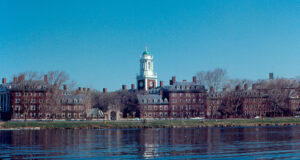
    Harvard University is one of the most prestigious within the Ivy League

    Average Undergraduate Tuition: $55,587
    Acceptance Rate: 5%
    Top Majors: Law, Economics, Medicine, Engineering

    With a history dating back to 1636, Harvard University is the oldest university in the US, predating the founding of the country by 140 years. Harvard is perhaps most famous for its stellar reputation in the fields of law and medicine, but it is also worth noting that the Harvard School of Divinity is widely considered to be the world’s most respected theological programme. Harvard students are known to be extremely driven and hardworking, and that’s no surprise considering the school’s extremely low acceptance rate, but Harvard also offers ample opportunity for students to explore the City of Cambridge and Boston as a whole. A historical city which feels more like an oversized town than a sprawling metropolis, Boston is a place to explore the history of the nation and enjoy the rich culture embodied by the Boston Symphony Orchestra, the Museum of Fine Arts, and Fenway Park.

    2.     Yale University – New Haven, Connecticut
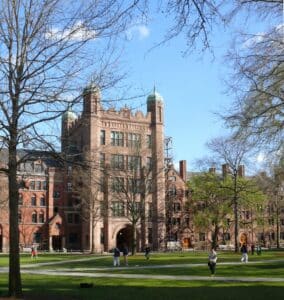
    Ivy League

    Average Undergraduate Tuition: $59,950
    Acceptance Rate: 6.5%
    Top Majors: Economics, History, Political Science

    Yale is often seen as the Ivy League school with the heaviest focus on the arts, and for good reason – Yale’s art, film, dance, and music courses are among the best in the world. Since 1701, Yale University has provided the highest level of instruction to History, Social Science, Engineering, and Mathematics students, but their offering doesn’t stop there. If a student’s interests cannot be contained by a single traditional programme, Yale also offers multidisciplinary programmes. The city of New Haven is not as large or bustling as Boston or Manhattan, but there is a good amount of culture and nightlife to be found near Yale. Crime in the city can be a problem, but the vast majority of Yale students have no issue and rapidly adjust to life in New Haven. Yale is also home to the world famous Whiffenpoofs, so if a cappella singing appeals to you, it’s worth checking out the longest-running a cappella group in the US.

    3.     University of Pennsylvania – Philadelphia, Pennsylvania
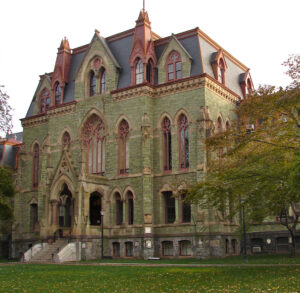
    Ivy League

    Average Undergraduate Tuition: $61,710
    Acceptance Rate: 9%
    Top Majors: Finance, Registered Nursing, Philosophy

    The University of Pennsylvania is known for its work hard/play hard attitude, but don’t let the active social lives of the students distract from their tireless work to maintain the institution’s reputation as a top research university. Founded in 1740 by Ben Franklin (who was also no stranger to the party life) the University of Pennsylvania is best known for the Wharton Business School, which is one of the best in the country. Wharton often overshadows the university’s other offerings, though the School of Engineering and Applied Science and the School of Nursing are also highly respected. The university’s location in Philadelphia will give students the chance to feel the weight of the history surrounding them each time they walk down the street. Bars, museums, and music halls offer great places for a night out, and PennU’s sprawling campus can often feel like a city of its own. While UPenn is still highly selective, it does sport a higher acceptance rate than other Ivy League schools, and extracurricular activities are considered more heavily when making admission decisions.

    4.     Princeton University – Princeton, New Jersey

    Ivy League

    Average Undergraduate Tuition: $56,010
    Acceptance Rate: 5.6%
    Top Majors: Social Sciences, Engineering, Economics

    Princeton University is one of the finest of the Ivy League schools, with a world-renowned reputation for International Relations and Public Affairs, and the humanities in general. Princeton’s alumni, among other prominent figures, include the US Presidents Woodrow Wilson, James Madison, and John F. Kennedy. Founded in 1746, making it one of the oldest universities in the country, Princeton offers students the unique opportunity to become accustomed to thesis writing through the Junior Project, which is completed under the supervision of a faculty member. The application process and requirements for Princeton are notoriously difficult, placing much more emphasis on pure academics than extracurricular activities. While the university campus spans more than 600 acres, the town of Princeton, New Jersey is much more suited to nature lovers than city-dwellers. While the town is not large, with a population of around 30,000, there are good restaurants to be found, and downtown Princeton offers opportunities to see a bit of history while visiting the shops. It is recommended to drive, as while there is public transport, having a personal vehicle is far more convenient if you plan to leave town.

    5.     Cornell University – Ithaca, New York

    Ivy League

    Average Undergraduate Tuition: $61,015
    Acceptance Rate: 10.7
    Top Majors: Computer Science, Biology, Labor and Industrial Relations

    Cornell University may have the highest acceptance rate of the Ivy Leagues, but that does not mean that the quality of instruction is second class. Since its foundation in 1865, Cornell students have had the opportunity to study under Nobel laureates, Pulitzer Prize winners, and other major leaders in fields ranging from Agriculture to Industrial and Labour Relations. Greek life is a large part of life at Cornell, but if joining a fraternity or sorority doesn’t appeal to you, there are many other extracurricular activities including the Glee Club, Kung Fu, and Archery. The city of Ithaca is fairly small, and though it does contain some solid restaurants and nightlife, you will almost certainly want to be comfortable driving a car as the small town can be isolating to those accustomed to the big city.

    6.     Columbia University – Manhattan, New York
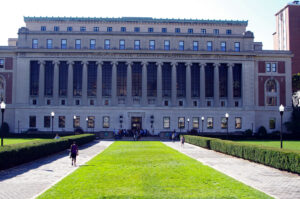
    Ivy League

    Average Undergraduate Tuition: $63,530
    Acceptance Rate: 6.7%
    Top Majors: Political Science, Computer Science, Engineering

    Originally founded by King George II in 1754, Columbia University can now be best defined by the cutting-edge research taking place there. Home of the Pulitzer Prize, Columbia’s humanities courses are well-respected, however the long-standing engineering programme is the most famous and prized course. Columbia’s application process is heavily academic, however they value a well-rounded student over one who excels in only a few areas. The core curriculum at Columbia also seeks to expose students to diverse ideas far beyond the confines of their chosen field of study. Columbia’s location in Manhattan comes with all of the advantages and drawbacks of living in New York. For those who crave the big city life and the wealth of opportunity which comes with living in such a major financial and cultural hub, Columbia is an ideal choice, however factors such as cost of living and fast-paced lifestyle should be carefully considered. Students at Columbia will not need a car, as public transport is well established in Manhattan.

    7.     Dartmouth College – Hanover, New Hampshire
    Ivy League

    Average Undergraduate Tuition: $60,870
    Acceptance Rate: 9.2%
    Top Majors: Biological Sciences, Engineering, Social Sciences

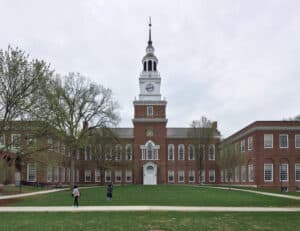
    Founded in 1769, Dartmouth College has the history one would expect from an Ivy League institution while maintaining the new ideas present at more modern schools. A great example of this is their flexible “D Plan”, which is a schedule consisting of four 10-week terms per year. This means that students have time to take advantage of internships which run during normal university times, and Dartmouth’s many study abroad opportunities. The Thayer School of Engineering is one of the oldest schools of its kind in the country, and it offers a dual-degree programme allowing students from other universities to attend. Greek life is a huge part of Dartmouth’s tradition, and students from the many fraternities and sororities flock to the great outdoors available in Hanover. Hanover is a small town, but what it lacks in bright lights and vibrant nightlife it makes up for with its beautiful hiking trails, rivers, and opportunities for outdoor sports. If living near nature interests you, Dartmouth is the place to be; the College even owns its own ski hill!

    8.     Brown University – Providence, Rhode Island
    Ivy League

    Average Undergraduate Tuition: $62,304
    Acceptance Rate: 7.7%
    Top Majors: Applied Mathematics, Economics, Computer Science

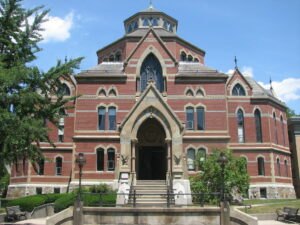
    Brown University takes a different approach than other Ivy League schools, in that students are not locked in to one field of study, and the school has no strict majors. The “Open Curriculum” programme at Brown allows students to combine classes from different fields to tailor their experience to their own specialisation, though they must complete at least one “concentration” to graduate. Brown was founded in 1764 on the novel idea that students of all religions were welcome to attend, and that open attitude is still present in the university’s philosophy today. Brown’s eight-year Program in Liberal Medical Education is highly regarded and is an excellent way to work towards an MD, and extracurriculars including sailing, journalism, and martial arts provide an effective way for students to take a break from their studies while also bettering themselves. Located in Rhode Island’s capital Providence, students at Brown have ample opportunity to explore a lesser-known city which nonetheless features excellent restaurants, an active nightlife, and the historical architecture of College Hill.


  • Ian Walmsley on his role as Provost of Imperial College London

    Patrick Crowder

    Many students make their way through university without coming into contact with any of the people in charge, and the roles in university management can be difficult to understand. We spoke with Ian Walmsley, who serves as Provost of Imperial College London, to help explain the duties of top university officers. After a long career in physics, he’s now in charge of Imperial’s academic vision and the delivery of that vision. His experience also helped him face the unknowns of maintaining academic excellence during the pandemic.

    “My job as Provost is to make sure the academic mission is delivered to high quality. To that end, I oversee all of the faculties and have to interpolate between them. I work with all of the Student Support and the Student Educational Services, I work very closely with the Student Union, and I work with HR and Finance to make sure the resources are allocated in order to deliver that mission. So it’s partly setting the vision for what the academic trajectory is going to look like, and then it’s working with the deans, the Vice Provost, and all of the heads of service to make sure that’s properly delivered,” Walmsley says.

    Though the President and Provost model is becoming increasingly popular in the UK, some readers may be more familiar with Chancellors and Vice-Chancellors. While quite similar, the role of Vice-Chancellor is more of an all-rounder compared to that of Provost, who focusses mainly on academic delivery. Walmsley explains how this comparatively new system is taking hold, and the advantages that it brings.

    “The President and Provost model is, in fact, very much an American model. In its sort of full-blown American form, one might roughly say that the President is responsible for the outward facing things; selling the university, raising the brand, fundraising, alumni, etc. while the provost is responsible for the academic mission. That includes all the education, research, innovation, activities, setting the budgets to enable that, and allocating resources. The UK has sort of adopted that model, but the Vice-Chancellor model is much more prevalent. The Vice Chancellor model, I think, grew more from a provost-like activity, but recently they’ve had to do a lot more outward facing activities because there’s a lot more work with government, there’s a lot more work with alumni, and there’s a lot more work with donors,” Walmsley says, “So the UK has evolved a little more toward the American model, and I think at Imperial we have a system that looks perhaps as most like the American one as any in the UK. That’s partly because first president who worked under that model was from the US, so she understood what that was model was about.”

    As Provost, Walmsley was tasked with what at the time seemed impossible: how to deliver an excellent academic product during the pandemic. All universities faced this same challenge, some more gracefully than others, but it took a keen sense of vision to make it work.

    “The pandemic was a hugely stressful time for everybody, especially for students, and the students have been really resilient in coming through that. But with that in mind, everybody pulled together in a very positive way to make sure that our education was still being delivered to the students, students were still being supported, and the calibre of what we were providing was absolutely top notch. And I think that got recognised – we ended up getting a number of awards, Times University of the year, University of the Year for Student Experience, our NSS scores went up dramatically, and we got the Queen’s anniversary prize, partly for research that helped inform how the pandemic was managed at a national and indeed international level, and partly about how we delivered our educational mission as well. The Imperial name synonymous with high calibre research and world leading education, I think, improved dramatically,” Walmsley says.

    It is evident that university administrators at the top levels, while often overlooked, do play a vital role in the continuing success of a university, and when hard times come, it’s up to them to rally the team and come up with quick, effective solutions.

    “There were various ways in which we supported students at home. Part of that might have been providing IT equipment if they needed it, in certain cases, and a more general one was that some of our laboratory technicians were very creative,” Walmsley says, “They came up with ways in which they could construct laboratory experiments, pack them in a box, send them off to students and students could do that work at home. And that lab in a box concept was a highly original one that came from our community members who were really thinking about how to support students in those circumstances.”

  • Class Dismissed: Gabriele Finaldi

    The director of the National Gallery on NFTs, opportunities in the art world, and the dignity of work in an interview by Christopher Jackson.

    What’s your favourite picture in the National Gallery?

    I think my favourite picture changes all the time, and when you when you mentioned favourite pictures, suddenly, what came to my mind was that very beautiful Zurbarán still life of the cup of water on a plate with a rose, which was a picture that was acquired when I was a curator here in the mid 90s. It’s a picture that you feel you’re growing with. It’s a picture that artists have always been very, very interested in actually since it came into the public domain having come into the gallery, and it’s so interesting to see many artists responding to the quietness and the intensity of that painting.

    How did you find your passion for art?

    I took on a fourth A-level when I went to school, which was art history, and I didn’t know anything about it. I was very fortunate to go to school in Dulwich, where you have the Dulwich Picture Gallery. Our first art history class took place in the gallery in front of the Rembrandt gallery window, and I thought, “this is wonderful!”

    At that point, how much did you know about the opportunities in the art world?

    I had no idea that there were jobs in museums or that there were jobs in teaching, or even what art history really was, but that first art history class really opened up a whole new horizon. And then I was able to go to university and study art history. I was very committed and very focused, and I’ve been very fortunate to be able to carry on working in the museum profession ever since.

    Do you need an MA as well as a BA, or to earn a PhD to find a place at the National Gallery?

    Not necessarily. I mean, more people are doing art history at a higher level, so there are many more PhDs in art history than there were when I was a 20-year-old. But I think there are still lots of other areas within museums, whether it’s press or design, or even people who have an interest in art but have a specialisation in human resources, for example. There’s always work to be done in museums and in the cultural sector.

    How do you feel about NFTs?

    I’m not so sure about the NFT phenomenon, and I don’t really think there’s one that’s for us. I do think the National Gallery has become more and more interested in the intersection between historic art and the kind of vision that contemporary artists have, and I certainly wanted to extend and enrich that relationship.

    What role does the National Gallery play in inspiring new artists?

    There are a lot of contemporary artists coming to the National Gallery talking about pictures and actually responding to works in the National Gallery in their own work, and I think it’s very exciting that this is a living collection. It’s one that’s throwing up questions about art, about life, about society. In a sense, the whole of life is in the National Gallery, and it’s only natural that contemporary artists should be taking an interest in what’s shown here.

    Who do you see as the great artist of work?

    I take occasion of the fact that we’re here in the Winslow Homer exhibition, he’s an artist who highlighted work, particularly in the pictures of the fisherfolk women who stay at home while the fishermen go out in their boats to face danger and the risk of not returning. It just gives you a sense of the impressive human qualities of people in the past. There’s this dignity of labour, the dignity of work, and I think that comes across very strongly.

  • The importance of personal branding

    Stuart Thomson


    Standing out from the crowd is important at any stage of a career but it is best to get into good habits early on. Thinking about your personal branding should be one such early consideration.

    Looking ahead to the key issues for 2023, Isabel Berwick highlighted the importance of personal branding on Working It. I would wholeheartedly endorse that and would encourage those at the start of the career to think about the what that means from them.

    There is a disputed story that when former Conservative Minister and challenger to Margaret Thatcher, Michael Heseltine, was still at university, he mapped out his future career on the back of an envelope.

    But planning your career and personal branding a little different. Personal branding focuses on how you market yourself and your career as a brand. This means thinking about having an image or a position that distinguishes you from others.

    Personally, I have tried to carve out a position in public affairs and communications by focusing on writing and speaking about key issues and trends. This built on my academic background but was also, luckily, something that I have always enjoyed. But when I spoke on a panel about this approach, I was roundly condemned by one of the participants for being too inspired by the US. Which I thought was actually a good thing… So, always be prepared for some to sneer if this is an approach that you choose to adopt.

    The options for developing a personal brand are large. You can use social media, personal websites, LinkedIn and so many other tools to broadcast your messages but also engage. Dialogue can be even more important than broadcast. It is not just about the written word either. A focus on images and video might be the most effective for you.

    To start with, think about:
    ·      Who it is you are trying to speak to through your personal branding? Who is your audience? It is potential employers? Potential customers? Think about what will resonate with them.
    ·      What unique talents are you trying to demonstrate? Do you have a particular interest you wish to explore? Is there an emerging issue that you can become an absolute expert in that can set you apart?

    Once you have considered what your brand is, how you stand out from others, then you need to be:
    ·      Motivated – a personal brand takes time and effort to develop and implement, it is not a quick fix.
    ·      Consistent – that brand needs to be in everything you say and do, across every communication channel
    ·      Proactive – look for ways to demonstrate your brand for instance by reacting to news stories on the issues involved. Also, think about how you can consistently stretch and build your network. Look to reach out to relevant contacts.
    ·      Authentic – if there is ever a feeling that you are pushing your own brand for selfish reasons then it will not resonate with your audience.

    There are some fantastic examples of those who have built personal brands in a variety of walks of life – Richard Branson, Stormzy, Idris Elba, Jamie Oliver, Lizzo, Steven Bartlett, Beyoncé. Take a look at what they have done and see what might work for you. Also look at existing operators in your own chosen field as well. Those with strong personal brands do not always have to be high-profile.

    Always remember that a personal brand is not just for a New Year’s resolution, if you adopt a long-term approach from the outset then it can help build a career and you stand out in a crowded marketplace.

  • How to be A Sommelier

    By Costeau

    Years ago Costeau was fortunate to meet the legendary sommelier Georgios Kassianos, the so-called Godfather of Cyprus Wine. He took me through all the things you must do when gauging a vintage: how to swill the glass, how to check for sugar and salt content, and then how to taste it properly.


    Then came the coup. “Now, once you’ve done all that,” he said, “nobody can tell you whether you’re right or wrong.” I found that liberating, feeling that it effectively meant that my ignorance in the matter of wine didn’t matter at all.


    And yet, Kassianos’ assessment, if it’s true, hasn’t stopped the profession of the sommelier from growing up over the years. It’s both an interesting, and reasonably lucrative profession with the median salary in the US being $62,000.


    Gabriel Veissaire is the head sommelier at the Le Meurice in Paris and couldn’t be more enthusiastic about the route he’s taken. So how did it begin? “I interned to a supervisor who was awarded the title of “Meilleur ouvrier de France”,” he tells me “I had the chance to travel all over the French vineyards with him. It’s a profession that is above all one of humility and curiosity.”


    So what attracts him to it? “It’s a passion above all which brings together a certain history of the vineyard, the mystical character of the vine which is the oldest plant in the world, the complexity of the soil and the geology where the vine grows, the oenological techniques and the principle of alcoholic fermentation and the microbial world and above all the pleasures that can be derived from the wine and food match.”


    That sounds like more than enough to keep you going for a very interesting career.


    I decide to talk to other sommeliers, and ask James Shaw, the sommelier at the Conrad St James in London, how a typical day goes: “It often starts by checking in with social media and seeing what everyone has been drinking the night before – always good to keep a finger on the pulse. Once I’m in the building, I will prepare our ‘wine of the day’ for our team briefing – it’s something we do each day to share the stories and styles of each of the wines on our list.” Then people arrive. “Once we are in service, it is full theatre time where we look to share the great stories behind the bottles, pour tasters for our guests to try and explain the thought behind our pairing recommendations.”


    It can sometimes be a hard road being a sommelier. Shaw recalls: “I left a background of Chemistry and Physics to work with food and wine, my parents thought I was nuts, but now that they have seen how far I have gone in my career they’re glad they supported my change in direction. I don’t think I was really aware of what it entails, but wouldn’t change a thing.”


    So what’s Shaw’s advice to young people thinking of entering the profession. Shaw is clear: “Taste, taste, taste and taste some more. Taste with others, discuss and don’t be afraid to follow your instincts over what feels right to you.


    Nadia Khan, the Head Sommelier of the Adam Handling Restaurant Group, notes the importance of setting aside time to think ahead: “Between the two services (lunch and dinner) I will dedicate some time meeting with suppliers and producers, tasting and talking about new wines and projects. This keeps me constantly informed and engaged with the wines from around the world, always training my palate and developing my knowledge.”


    So what talent is required to make it as a sommelier? Khan recalls: I think I have always had a discerning taste and smell. And, with time, experience and constant training, I have developed an analytical consideration, which now enables me to judge a wine after just two or three sips. I would say it’s a natural flair that I’ve applied to experience and knowledge.”


    So what would Khan recommend to young people thinking of becoming a sommelier. “I can advise that it will take time and a lot of hard work but nothing is more rewarding than making your passion what you do every day,” he explains. “Being a sommelier means that you can constantly learn and develop your expertise, whilst still having that incredible interaction with guests which often makes it all worthwhile.” Costeau will drink to that.