Category: Features

  • Stuart Thomson: Don’t Be Afraid To Ask Questions in the Workplace

    Stuart Thomson


    We all want to learn by receiving feedback on our work but sometimes that just isn’t enough. But rather than simply being grateful for the words of advice, we should challenge more and ask questions.


    Learning from others is how many of us develop skills and progress in our chosen profession. The idea that you are briefed to deliver a piece of work, deliver that work and then receive feedback on it is a cornerstone of the workplace. It is how everyone from interns and trainees upwards get better at their jobs and progress. Even when you reach ‘the top’, the idea that the best leaders still listen and learn from feedback features in any good management or leadership book.


    But that approach often fails to recognise that the person giving the brief or the feedback is any good at doing so. They may never themselves have been given any particular instruction and are instead relying on their similar experiences of 20 or more years before.


    You should always be prepared to ask questions designed to help you deliver better quality work. Questions are completely acceptable at each stage:

    ·      Briefing – think about whether you are receiving the information you need, everything from context through to delivery date.

    ·      Drafting – it is useful to have opportunities to ask questions as your work develops rather than have to wait until the endpoint. The process should be an iterative one.

    ·      Feedback – the days of the red pen used liberally to change words, phrases, sections or scribble indecipherable comments may not be as much a thing of the past as one would hope. When the feedback is not clear then questions are essential.


    Some questions may seem silly to the person you are asking them of. But that is their problem, not yours. You need to ask the questions that help you to learn and understand, not what they think you need to help you.


    The questions should ideally not cover the same sort of ground every time. You should consider different aspects of your work. That approach would be more constructive from your perspective and has the added benefit of not unnecessarily antagonising the person you are working with.


    With questions though should come close attention and good listening on your part. Going over the same ground each time simply because insufficient attention was paid will not be forgiven.


    If, however, you find yourselves revisiting the same territory for most work then that may betray a deeper, underlying problem. Either you are not learning from what you are being told or the explanations provided are of a poor quality. In these sorts of circumstances, it would be beneficial to seek the input of others.


    Personally, I take notes at every stage. It is useful to refer back to feedback received and it is doubtful that you will remember everything discussed. It also means that if you are ever challenged on any aspect of the work then you have a record to fall back on. Recollections of what was asked for can, for instance, easily vary.


    A good workplace should encourage a challenging and questioning approach. An organisation can learn as much as any individual can. If the approach is more ‘command and control’ then I would question its approach and consider whether it was the type of place I wanted to work? Whether it was the type of place that I could really develop myself and my skills?


    So, don’t be afraid to hold back but do remember that asking questions is about people as much as it is direct learning.


  • Study reveals most in-demand finance careers

    Finito World

    Auditing is the most desired finance career, according to a study by CMC Markets. The study, which analysed Google search data and Indeed job listings, found that the banking sector in particular is seeing a high number of searches.

    ‘Actuary’ is the second most searched term on the list, and it is the only insurance related career to make it to the top ten. There are currently 1,030 actuary jobs on Indeed, compared to 785 auditor positions.

    In third place lies corporate banking, with 166,600 searches and 3,748 Indeed job listings. Searches for bank teller jobs numbered 43,250, but only 35 bank teller jobs are available on Indeed.

    Forensic accounting and compliance officer roles saw a similar amount of interest, however there are 6,685 compliance officer roles in the UK as opposed to only 64 forensic accounting openings.

    Michael Hewson, chief market analyst at CMC Markets explains the importance of tracking interest within the finance industry.

    “Despite the scarcity of jobs in some industries, it seems that there is a noticeable interest within different sectors of the finance world.,” Hewson says, “It is interesting to see that a large proportion of this number is made up of searches related to the banking sector. As a whole, financial careers are being searched for 2,935,840 times per month on Google. This number is definitely something to keep an eye on as people may look to seek new opportunities in 2023.”

  • Opinion: Job-seekers need to embrace this period of change

    Finito World


    It was Ernest Hemingway who said in respect of bankruptcy that it happens ‘bit by bit, then all at once’. Societal change can sometimes seem similar. 2022 has felt like a fast forward button pressed on our lives: everything appears to be occurring helter-skelter, and at breakneck pace.

    The state of play geopolitically has been accelerated by Vladimir Putin’s tragically stupid invasion of Ukraine. This, in turn, has sent the economy spiralling, as inflation has gripped the UK, partly due to the legacy of Covid-19, and partly due to successive administrations’ failure to produce a plausible and independent energy policy.

    The economic turmoil has been exacerbated by an incompetent Bank of England interest rate response, which piled on unnecessary pressure on homeowners. Add in a dicey shift to the Truss administration, and the death of a beloved monarch, and the world looks very different at the finish of 2022 to what it looked like at its start.

    But what period of history is without turbulence? In truth, no age is without its anxieties and shocks, its disasters and its queasiness.

    Besides, political turbulence always has an inner meaning. To take a historical parallel: when Joseph Chamberlain and Winston Churchill were tearing apart the Conservative Party over the question of free trade, in a way which might remind us of the 2022 summer battle between Liz Truss and Rishi Sunak, few could have known that this would lead to the redistributive Asquith pre-war administration, and the beginning of the birth of the welfare state. One order was ceding to another: and that would mean, in time, opportunity for workers previously undreamed of.

    Similarly, as Keir Starmer’s Labour Party seeks to pivot – not always convincingly – to the right, and as sizeable swathes of the Conservative Party argue for higher taxes, and not, as used to be Thatcherite orthodoxy, a smaller state, then it can seem as if some new alignment is struggling to be born. It will have its opportunity alongside the uncertainty.

    That’s because turbulent periods always house creativity – and creativity leads to economic activity. The period in the leadup to the Asquith administration saw an enormous amount of invention from air conditioning (1902), to radar (1904), radio broadcasting (1906) and the electronic washing machine (1907). Even World War One engendered numerous inventions we still use today from daylight saving time to Kleenex, zippers and even sanitary pads.

    Ingenuity and perception sharpens in times of crisis. Most economists agree that technology is inherently deflationary insofar as it saves business costs and reduces labour requirements. It was recently noted by chief executive of Ark Investment Management, Cathie Wood that in 2022 companies are rapidly increasing innovation across a range of areas including adaptive robots, autonomous mobility, blockchain, gene editing, and neural networks. And these technologies, once they are introduced and widely adopted, will either lead to jobs, or free up human capital for further invention.

    The world, especially as it is portrayed by today’s media, might be full of vicissitudes, crises and sudden shifts, there are in reality certain constants which don’t get reported.

    The first is human creativity. Consider this array of geniuses in the 20th century: the Wright Brothers, Amelia Earhart, Albert Einstein, Marie Curie, Charlie Chaplin, Sir Timothy Berners-Lee, TS Eliot, Igor Stravinsky, Pele, and Nelson Mandela. All were undeterred by the grim news of the day, and of course, another list might be compiled at will – and another and another – until it filled up the whole of this explanation simply with the names of high achievers – without even enlarging on the actual content of their exploits.

    Now consider that they all operated in the same centuries as Nazism, Stalinism, Maoism, and numerous genocides and disasters.

    That brings us to the second reason for optimism: opportunity. While opportunity isn’t evenly distributed across society at any one time – an inequality which has led us to create the Finito bursary scheme – its overall quantity is clearly on the increase as education broaden, and as the standard of living rises.

    These considerations ought to buttress job seekers against despair and make us realise that however the economy or the world might look at any one time, the next development is round the corner, and it’s just as likely to be a good one as a bad.

  • A Letter from Cyprus: Sophia Petrides

    Sophia Petrides

    Relocating can be a breath of fresh air, literally and figuratively. After decades of battling through the commute into the City of London, elbowing my way through the crowds of financiers and brokers, I find myself savouring the relaxed mood that blows in with the warm sea breeze here in Cyprus. However, don’t mistake Cyprus for a quiet business destination because nothing could be further from the truth. We just do things differently here. Or at least, we used to. As a coach this is something I love to pass on to my clients – that you don’t have to be stressed and work 24/7 to produce great results. As the economy here booms, we all need to remember that. It could be the key to ongoing success.


    There is a joke you might know about a big shot from Silicon Valley who complains about an Italian restaurant in Rome for opening 5 minutes late. The angry millionaire tells the owner “The USA dominates the world because we always open on time!” and the restaurant owner replies “So what? We Romans used to dominate the world, but then we discovered if you make tomato sauce like mama, the world will come to you… and wait for you to open.” The moral of the story is quality and high performance don’t mean re-creating someone else’s recipe for success. It’s about finding your own path. So, what is the right path for booming Cyprus?


    Finding the right path for Cyprus is more complex than it sounds. The Migration Department reports circa 9,000 relocations from international companies. This is reflected in our economic growth – GDP is forecast to grow by around 3.3% this year. Property prices have risen faster than GDP on average over the last 5 years and students and young executives are finding it hard to afford rent or affordable houses, particularly in the booming area of Limassol. We are resilient people, but now is the time for leadership to reduce the problems other boom countries within the EU have experienced before us.

    Despite a slowdown in property investment since the abolition of the so-called Golden Passport route to citizenship last year, in 2022 the government introduced more favourable tax benefits for foreign companies to set up their headquarters in Cyprus and have also introduced “The Digital Nomad Scheme” enabling people to enjoy our beautiful weather and quality of life, while working for companies operating outside the country. The scheme aims to transform our business ecosystem by attracting talented individuals and entrepreneurs. This is hugely positive but begs the question of Cyprus – the last nation in the EU to set a minimum wage – how do we make sure homegrown talent benefits from the boom? (Because most young Cypriots report they can’t afford the rising rents or a night out with friends in downtown Limassol). If we learn from EU countries that experienced similar recent booms – in Central and Eastern Europe – two things become clear.

    Firstly, company leaders need to focus on talent retention, because there is already a shortage of young local talent in our cities, and that will only get worse as more companies arrive. Holding onto the best new local hires and managing local talent will offer cost benefits over recruiting from outside Cyprus. Training and coaching, reduces staff turnover dramatically (studies show 30-50%) – so coaching for emerging Cypriot professionals should help to encourage them to build careers here, not leave for destinations where rents are cheaper to make their wages go further.

    Secondly, if we want our young people to benefit from these opportunities, we need to invest in mental fitness and resilience. Young workers aged 18 to 30 are perceived to be under almost twice as much pressure as their more senior peers, being more likely to suffer from stress and worries about debt or struggling to pay their bills. If we want to avoid a brain drain of young talent moving to cheaper parts of the EU, leaders need to offer coaching programmes that prioritise wellbeing, resilience, and mental health at work, in addition to talent retention programmes and rewarding loyalty with competitive salaries.

    There has never been a more exciting time to live and work in Cyprus, but leading effectively through rapid growth – and change – means learning from previous EU regional booms to avoid storing up problems for ourselves in the future. That’s how we do things in the more relaxed, older and wiser cultures of the Mediterranean, isn’t it?


    Sophia Petrides is a Finito mentor

  • Diary: Toby Young on journalism, diversity-crats and not oversleeping

    Toby Young


    Journalism is a great career for someone in their twenties and thirties, but it’s a very people are given proper employment contracts by newspapers with pension benefits and healthcare. So once you’re in your forties and you’re married and have a family, and mortgage contributions to make it’s a less attractive profession. Some people combine it with doing other things. Others use it as a springboard into marketing and PR.


    Something I found unsatisfying about being a journalist is that there’s not much sense of progression. If you’re a reporter or a columnist, you’re doing the same thing day in day out for decades at a time. Unlike an architect where you can look back and say: “I built that” with journalism there’s sometimes a lack of a cumulative sense of achievement. If you’re on the editorial track, and you shin up the greasy pole and become editor-in-chief, that can be a different thing though.


    One time I had to interview the film director James Ivory. I overslept and I got woken by the publicist about half an hour after it was meant to have started. The publicist said: “That’s not a good enough excuse to keep him there!” “Well what should I say?” “Car crash!” When I got there he quizzed me in great forensic detail about my car crash. He obviously knew it was a lie. I thought at the end of it he might hire me as a screenwriter so great was my imaginative capacity.


    I’ve always had an entrepreneurial streak. I set up my first magazine in primary school, so when I set up The Modern Review when I was 27 in 1991, I was able to say I’d been in the publishing business for 20 years. I eventually got involved in education and set up four schools, and then more recently The Free Speech Union. Setting up schools and institutions gives you a sense of leaving something behind. You have to think much more commercially if you start things, and if there’s a market for it, and if so, how to reach that market.


    As British universities have admitted more and more students and grown in size, they’ve attracted left-wing academics with a sense of social mission who want to change the world by evangelising and converting them to the cause of social justice. It’s a generational shift. Most academics were radicalised in the 1960s, or those who weren’t have hand-picked their successors. As these resources have grown, more has been spent on diversity-crats. As tuition fees have gone up, students have become more and more demanding that they be looked after by university administrators.


    The Free Speech Union is often contacted by students and academics who have got into trouble for exercising their lawful right to free speech – sometimes quite bad trouble. So a good example is Timothy Luckhurst, who’s the head of South College at Durham, which is the equivalent of an Oxbridge college, for inviting Rod Liddle to speak. He was placed under investigation, and the Free Speech Union had to look after him. Durham is one of the worst offenders, and we’re often contacted from people like Oxford and Cambridge. On the other hand, we don’t get too many inquiries from Birmingham, and only a few from Exeter.

    One of the reasons to be cautious about how quickly the spirit of liberty can be restored is it was revealed to be in a very decrepit state during the last two years. It was surprisingly easy for the government and various public health agencies, civil servants and the BBC to persuade people to exchange their liberty for safety, much more so than it had been in the Asian flu in the 1950s. That was true not just of Britain but of most liberal democracies. Today, when we look at the Draconian lockdowns in China, and people streaming from their windows for help, we think that’s what tyranny like, but two years ago people did the same. That was a sobering moment.


    Toby Young founded the Free Speech Union

  • Socca Bistro: Ronel Lehmann Reviews an Energetic Dining Experience

    Sock it to them: Ronel Lehmann Reviews Socca Bistro


    Our dinner was booked at Mark’s Club, but my host informed me that the establishment was closed for a private event. I am not a member of any club. Instead, he had selected Socca Bistro in Mayfair which had recently opened. As I entered the lobby from the street, I struggled to hand over my coat and umbrella amid the onslaught of other guests arriving at the same time. The cupboard which intended to house personal effects was totally unfit for purpose and inadequate for the number of diners. It is best not to arrive there with a coat or briefcase and the freezing temperatures outside dictated queuing in an open doorway.


    The main brasserie was a hive of activity, and I was led to the rear of the restaurant into a private area and a corner table. My host warmly greeted me. He was already drinking tap water and I followed suit. Breads were served, two kinds of focaccia and a type of sourdough. No olive oil or butter was provided. For a while we both ate our bread and drank water.


    I noticed that there was a speaker immediately above our heads. Regular readers will know that I hate having to battle trying to have a decent conversation when music is blaring. I did ask the waiter to reduce the sound levels. He kindly obliged and for a short while we could hear each other.

    However, it was too good to be true and the volume increased again, so much so, I had to request another waiter to do something about it. I apologised to my host for making a fuss, until I was told by a member of management that the music is the result of seeking to create ambience in the restaurant. I thought to myself, I was enjoying the atmosphere without needing the insane music. We elected not to move table away from the by now very loudspeaker.


    This was supposed to be an early supper. I looked at the menu. Nothing caught my fancy. In fact, everything was fancy. There was a bold notice stating ‘Please always inform your server of any allergies or intolerances before placing your order. Not all ingredients are listed on the menu, and we cannot guarantee the total absence of allergens’. I wondered whether they might show similar tolerance for noise.


    My eye finally rested on Provençal Beef Cheeks and Sand carrots.  I asked if it was served with mashed potato. As it wasn’t, I asked for a side of Dauphinoise Potatoes to help soak up the gravy of the beef, however there was a lot of added cream with the gratin. There was only one single solitary carrot resting on the top of the cheek or two cheeks.


    My host ordered Steak with Galician Fillet Steak with Maitre D’Hotel Butter and additional sauce which did eventually arrive after further reminder. He too ordered the Dauphinoise Potatoes. It was comfort food after a cold windswept and rainy day.


    Two glasses of the house red wine, topped up for a third time from the 2017 Chianti Colli Senesi, Riserva, Bichi Borghesi, Tuscany, Italy which perfectly accompanied to our main courses.


    We didn’t order a starter nor a dessert. I did look at the puddings. Once again, they seemed rather fanciful. This didn’t feel like an establishment to linger in, although the staff were clearly extremely attentive and keen that we partake in a digestive before leaving.


    The rigmarole of finding my coat and umbrella in the cupboard was endured by me alone as my host decided to take air in the street and then walk me to my car. As I drove home, I thought: “Wouldn’t it be easier to be a member of a club?” At least I could hear myself think about it.


  • The cost of office miscommunication

    Patrick Crowder

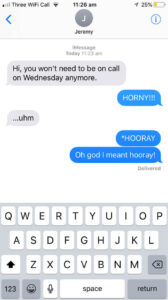
    We’ve all done it. Missent emails, unfortunate autocorrects, and missed messages seem to be a natural by-product of the way that we communicate at work. These small gaffes are usually harmless, but some can cost employees their jobs and the respect of their colleagues, as well as costing businesses large sums of money.

    To see the common ways we miscommunicate at work, the telecommunications company TollFree Forwarding surveyed 1,000 employees about their workplace blunders.

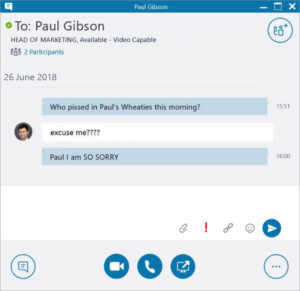
    A slight autocorrect error.

    Office miscommunications are often not as humorous as the example above – and some can be costly. A study from the Independent Director Council found that large companies (over 100,000 employees) lose about $62m (£45,640,990) per year because of miscommunications.

    Stephen Hart, CEO and founder of the B2B credit/debit fee comparison toll Cardswitcher explains how simple miscommunications can cause chain reactions leading to serious issues.

    “Say your customer service team isn’t passing on customer feedback. Well, that’s going to cause problems for your sales, who don’t know how to tweak their approach. And your business development team, who won’t know how to improve the business. And your marketing team, who won’t understand your customer base,” Hart says, “Bad communication has a tendency to cause compound issues and spread to other business areas.”

    When it comes to remote communication, mistakes are common. 56% of employees surveyed said that they had sent a work-related email or text to the wrong person at some point in their careers. 70% of men surveyed admitted to miscommunicating at work, which is 21% more miscommunication than the women surveyed reported.

    These sorts of miscommunications can have social consequences, and may even lead to termination.

    While many managers will laugh off truly accidental miscommunications, if the message sent is offensive or sexual in nature then employers are usually within their rights to fire the employee who sent it. Tom Simeone, who is an attorney and adjunct law professor, explains.

    “Many employment contracts state that an employee can only be fired for “good cause.” Some contracts then go on to define a good cause, but others do not. So, insulting a manager, for example, could be grounds for termination, if the employer desired.”

    Miscommunications are not always accidental, nor do they always happen through remote communication. Sometimes, an office dynamic can lead to employees being afraid to speak up or voice concerns. Tracey Julien, who is VP of marketing at the retirement planning company Guided Choice explains how this situation occurs.

    “Many employees feel intimidated and even too embarrassed to ask their manager a question to clarify what is being asked of them. This is probably one of the easiest issues to combat and yet it still occurs time and again,” Julien says.

    Steven Hart suggests a way to combat miscommunication called “the daily stand-up”. These short meetings ask employees to answer three questions; What did you do yesterday? What did you do today? And what impediments or problems do you have?

    Hart explains how this practice can boost productivity.

    “The communication and productivity benefits are immense,” Hart says, “If someone is planning work that will disrupt someone else’s, you learn about it at the start of the day and can mould your day around it. Another huge benefit is that it highlights problems, issues, and impediments so someone can address them before they start causing problems.”

    Simple, mostly harmless miscommunications happen to us all, but it is important to address the roots of more serious miscommunication before it reaches dangerous levels. If businesses want to increase productivity and avoid social problems among employees, miscommunication is a top item to address.

    https://tollfreeforwarding.com

  • Interview with Simon Giddins: ‘the man you go to if you have a problem the police can’t fix’

    Interview with Simon Giddins: ‘the man you go to if you have a problem the police can’t fix’

    Alice Wright meets Simon Giddins – the man you go to if you have a problem the police can’t fix 

    “Imagine, someone has just destroyed your life in an instant, you’ve been scammed of your life savings, you’re sat there looking at the computer screen with your bank statement. All you feel is that nausea, that shock, your skin is prickling with cold sweat, you don’t know what to say. You phone the police, expecting a police car to come roaring down your driveway with blue-lights and people with notebooks. But nobody is coming to help you.”  

    Simon Giddins, a personable but mysterious figure, can only be described as having walked off the set of a TV adaptation of Arthur Conan Doyle’s Sherlock Holmes. However, Giddins sees himself more in J.B Priestley’s Inspector Goole, who he says is  ‘the bastion for those without hope, which very much goes to our core values. We see people from all levels of society and try to help – we provide solutions to situations, and as a company, fight their corner.’ 

    To meet him in person Giddins, who is the Managing Director of Blackstone Consultancy, a private intelligence and security consultancy is an exciting mix of anecdotes and vaulted secrets. His clients number among the richest and most powerful people from around the world; a little black book no one will ever get their hands on. When I name a handful of famous figures from billionaires to well-known politicians he’s prepared to play a long a little. ‘Yeah, most of those,’ he smiles.  

    Giddins holds all the expected credentials, an illustrious career in the armed forces, a degree in Terrorism Studies and a former deputy directorship of special projects for Aegis Defence Services.  

    So how has business been since the world was swallowed by the pandemic? Business is booming, and Blackstone’s agents were given licence to travel since their clients are ‘part of the critical national infrastructure.’ During the lockdown the company has professionally developed now housing two Chartered Security professionals: to put that number into context, there are only 160 such individuals in the world. 

    Even though official crime statistics stopped being published in March, Blackstone’s estimates that crime has gone up by 47% with cybercrime in particular having gone through the roof. ‘At the start of the lockdown we were seeing a lot of cybercrime using NHS messaging, asking people to buy tests or give personal data’ says Tom Tahany, an operations manager at Blackstone, who joins us for the interview. Giddins adds that ‘there has been a lot of sexploitation.’  

    ‘Economically’, Giddins continues, ‘we are about to hit a wall, especially when furlough ends’. ‘As always we are ambivalent on political matters, but when furlough ends we will see an influx of business. Especially with the police’s attention diverted elsewhere in enforcing restrictions. Further to this, the more demonstrations we have – for example, anti-lockdown protests – police resources are diverted and crime then spikes.’  

    I’m interested to know what advice Giddins and Tahany would give to sixth formers or undergraduates that may be interested in a career that does not usually feature at the average university careers fair. Giddins emphasises that the perception is that they would want to recruit big guys with military credentials, but the reality is the needs of the industry and his clients are ‘so vast’ and ‘that’s why organisations like ours look for extra curriculars alongside academic achievement. And ask “how are you adapting those skills?”. Tahany, for example, is a qualified rugby referee, where he learnt to deal with big towering units of men in high intensity situations. While the company is interested in those with academic achievement, the particular field of study is unlikely to be the deciding factor on a candidate’s recruitment.  

    Blackstone’s are also advocates for diversity in the industry, particularly with regards to gender and background. Tahany, who joined as an analyst – but is now an operations manager – is from neither a police nor a military background. Giddins says: ‘For me as the business owner, I don’t subscribe to only recruiting from ex-military or ex-police because then you only have those ex-military or ex-police views.’ ‘The security industry is a bit monolithic,’ he continues ‘populated by fat, old white men who do have gender bias. We, however, don’t gender classify.’  

    Although this may not sound particularly progressive by the standards of some sectors, in this industry it’s a revolutionary approach. ‘Attitudes towards women in society particularly concern me,’ continues Giddins. ‘One in three women are harassed or stalked in their life. They have unwanted attention or are placed in situations where they feel uncomfortable.’  

    And when Giddins discusses diversity it’s more than mere talk. The Company is committed to young individuals seeing this as a viable career option. Giddins himself mentors two young individuals around the ages of 18-20 from underprivileged backgrounds each year.  

    Tahany, a popular figure from Channel 4’s Hunted, has been at Blackstone’s for two and a half years. He credits his practical experience on the show as well as his educational background as having led him to such an exciting profession. Shortly after joining, he found himself running surveillance teams in the Baltic nations. He tells me being an analyst is varied work, including conducting due diligence and background work on an individual globally, conducting data scrapes of an individual’s online footprint and advising them about where they are over-exposed or perhaps looking into the current risk situation of an individual travelling to Singapore or Hong Kong.  

    So it’s varied work? ‘We are involved in everything’, Giddins agrees, ‘from finding very unique items that are taken, such as unique jewels, to cars. Recently we investigated the theft of a £780,000 car – it was recovered. We also help small businesses, entrepreneurs and family-run companies. With these, we’re seeing a growth of ‘insider’ threats, theft from employers, lots of low-level fraud, even disgruntled household staff posting embarrassing images of client homes, causing reputational damage.’   

    The insider threat has increased since the first lockdown, as people have been working from home. People working for large organizations in their remote offices are having their information stolen by competitors. ‘But it goes beyond this,’ Giddins warns, ‘to the national level: rogue nation states, the Russians, the Chinese. It’s in their interest for them to sidle into organisations, and commit commercial espionage.’ This is happening in medical research, pharmaceutical organisations, universities and future tech companies. ‘It’s really exposed out there at the minute, and we’re very vulnerable. We have this view that the government will somehow protect us, but they won’t.’  

    Tahany agrees ‘Everything you’ve ever said, everything you’ve ever done, is becoming more and more exposed.’ The analysts, the more junior members of a team, will explain to second-generation multi-millionaires the risks they take with social media. Although he doesn’t think it’s credible to ask young people to not use social media, he advises that ‘it’s just about being sensible, about being mindful of what you’re posting and where. From a retrospective reputation perspective, but also to protect yourself from malicious actors such as fixated individuals.’    

    So should we be learning more future-facing skills like coding and data scraping rather than Pythagoras? Giddins isn’t about to take a swipe at the education system, ‘I would be very reticent to comment on what people should teach because it’s part of a very established syllabus.’  For Giddins it is about the act of learning itself, and how you apply knowledge.  

    — 

    Simon Giddins is the Managing Director of Blackstone Consultancy, a private intelligence and security consultancy. He read Terrorism Studies at the University of St Andrews, spent 15 years in the British Army and worked as deputy director of special projects for Aegis Defence Services, managing private and government clients internationally. He is a member and advocate of the Security Institute and was awarded the Freedom of the City of London in October 2015.  

    Tom Tahany studied Modern History at UAE before gaining his Masters in Intelligence and International Security from King’s College London. He has a background in private intelligence and investigations as well as featuring on the Channel 4 programme ‘Hunted’. Tom is also a qualified rugby referee, and continues to referee matches for England Rugby.   

  • What can Vincent Van Gogh teach us in our careers?

    By Christopher Jackson


    To say it’s Vincent Van Gogh season in London might be to overstate the case: it always is. Every day people come from all over the world to see Sunflowers in the National Gallery – that great tour de force which reinvents the colour yellow for all time.

    The artist’s fame would have seemed odd to his contemporaries, especially those who knew his eccentric habits in Arles, in southern France towards the end of his life. There was a time when Vincent Van Gogh couldn’t get anyone to look at his paintings. Today, it’s hard to get in front of one long enough to have a proper look without a tourist straying in to spoil the view.

    But great fame is often reductive: in loving his pictures so much, we’ve tended to simplify him. We attribute his current reputation to ‘madness’ – as if Starry Night were primarily an expression of insanity. It’s true that Vincent struggled all his life with what we would probably label today ‘bipolar disorder’, but the truth is that Vincent was always sane when he was painting, and that painting was in fact his best method of staving off episodes which occurred throughout his life. These were frequent and he was heartbreakingly honest about them in letters to his brother Theo: “It appears that I grab dirt from the ground and eat it, although my memories of these bad moments are vague,” he once confided.

    It is an arresting image: the great painter literally eating the earth. It might even serve as a metaphor of his achievement: Vincent was always imbibing real life, insisting on it to an unusual extent. His is a world of peasants and down-and-outs: he might be the only great painter in history whom it’s impossible to imagine as a courtier.

    If you look at the popular image of the artist, you could almost imagine that Vincent is a completely separate case, someone we can’t expect to learn from at all, because we are not mad and he was. But his greatness cannot in the end be assigned to insanity, but instead to skill, vision and application. This means that we have more to learn from Vincent and his methods than we might think: this is true if we want to work creatively, but true also no matter what we wish to do with our working lives.

    The first thing we mustn’t do is think him a uniquely hopeless case as a man in order to consider him a uniquely remarkable artist. As the pandemic has brought into focus, the world is always liberally stocked with mental ill-health. We might be deluding ourselves if we consider ourselves well, and Vincent not. It may even be that the reverse is the case more than we might realise or wish.

    Secondly, we mustn’t forget how much hard work underpins Van Gogh’s achievement. The popular caricature of Vincent’s life still seems to invite us to imagine the world binary, divided between the sane and the insane. In actual fact, his life increasingly makes me think that we are instead divided between those who are committed and those who are not.

    With all this in mind, I have come to the Courtauld Institute to see a remarkable exhibition housing 27 Vincent self-portraits collected together across two rooms. The Institute has spent a fortune renovating itself, and emerged on the other side of £57 million in expenditure looking almost identical to what it looked like before.

    Anyone who wishes to get upset about this financially alarming decision however, can seek solace in being restored to one of the great collections of the world. Among them is Vincent’s famous Self-portrait with Bandaged Ear, which he made after the terrible and incomprehensible incident in Arles which most people know about: after experiencing increasing tension in his friendship with Paul Gauguin, he cut off his own ear and delivered it to a prostitute with a cryptic note attached.

    The exhibition may be said to build towards this picture as towards a crisis. But there is another way of looking at it: here, spanning over a decade of helter-skelter work, is a celebration of the joy of discovery. We might be disinclined to cut off our own ear, but we should certainly leave open the possibility that there is an activity waiting for us in life which we can grow into over time: a room we might walk into without ceilings or impediments where we might become more and more richly ourselves. By that measure this exhibition is extraordinarily valuable: it shows the sheerness of Van Gogh’s application to the art of painting and might even unlock something within ourselves.

    The early pictures, drawn in his native Holland, are sombre affairs compared to what he would later produce. As such, they are a very precise measure of how far he would develop. By the vigour and the colour they lack, these pictures imply both an openness to doing things in a different way and also state an uncompromising desire to make his craft secure before he did branch out. The dominant influence here is Rembrandt. Here again there is a lesson which might apply to other disciplines: seek the best in what you wish to do, learn from it respectfully, and only then stake out new territory.

    There’s another lesson, stemming from the fact that so many self-portraits exist. Vincent was a little unnerving as company, partly due to his physical appearance which was by no means prepossessing, and partly because of his unpredictability. As a result, throughout his short life, he found it difficult to find models willing to sit for him. The only model always willing to do so was himself.

    This points to his resourcefulness and to his determination. In his letters to Theo – some of the loveliest documents in the history of art – we get a lot of detail about materials Vincent is buying. Here again, he is always sensible with money, frugal with what he’s able to afford, and a fortunate beneficiary of his brother’s generosity. Unfortunately, because Theo’s letters weren’t kept, and Vincent’s were, we rarely get a sense of Theo’s view of Vincent, though what we do know points to fraternal adulation. But this absence further augments the sense of Vincent as a man alone.

    The Courtauld exhibition shows that Vincent always left himself free to experiment, without ever losing the intensity of work ethic which always marks out his pictures. He studied his own face from every angle. He told us his every mood. By the end of this exhibition, we feel we know him. It’s this intimacy – together with the perennial simplicity of his signature – which makes us comfortable (think Don Maclean’s song of the same name) enough just to call him ‘Vincent’. We do not call Cezanne ‘Paul’ or still less Monet ‘Claude’. Vincent is touching in a way few great artists are. One of his virtues was always humility. It’s this which has brought him so many posthumous champions. Knowing what it was to be despised, he never despised anyone. He is always in the trenches of life with us. It is difficult to think of another artist who cared so much for the downtrodden and the outcast.

    In these self-portraits we see always the same determined mouth, the slightly watery eyes, the hooked and even austere nose, and the receding hairline. But this is where the similarities between each picture end. Given that the same subject recurs throughout, it is an exhibition so various in its mood and techniques as to cause astonishment.

    The main reason for this versatility is that Van Gogh had made himself open to the gigantic discovery of the age, Impressionism, and then moved swiftly forward, making out of it a unique and wholly personal achievement.

    But here again we must be careful. The truth is that in a pre-Internet age, Vincent never could have discovered Impressionism without having been immersed in the art world through Theo’s work as an art dealer. He couldn’t google Seurat; he had to meet Seurat.

    In actual fact, if we might look at the matter objectively Vincent made all the right moves, which makes his achievement no accident at all. In fact, he often foresaw in his letters that his victory would have to be posthumous. There was a worldly, even calculating side to him at odds with the stock image of the freewheeling madman.
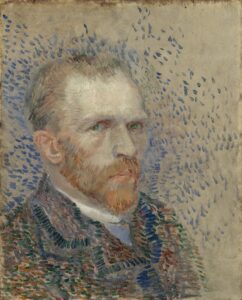
    Other lessons can be found in his life. He moved away from a career in the priesthood to which he was unsuited, though he took what he had learned there – the importance of the numinous in life – and applied it to his art. Nothing was ever wasted. He then applied himself with rigorous dedication to painting, and connected himself in that world, making sure that he was working not according to some outdated understanding of his craft but to its latest developments.

    As he carried out all this he was frugal, careful, and utterly committed. He also had an unfailing instinct for the next subject, and was prepared to subject himself to upheaval in order to pursue those instincts to their logical conclusion. The most famous example of this is his decision to leave Paris and move down to Arles in southern France.

    He did so because he craved another light. It was a masterstroke – when what Vincent calls that ‘high yellow note’ has entered his pictures, we feel he has come home somehow. It looks like something which had to happen. But this again is an illusion: he made it happen. Again, because his life ended tragically, we forget that he was possessed of exceptional self-reliance to have got as far as he did.

    Of course, a more organised person would have found somewhere less depressing than Arles to settle. It’s true that it had a few places going for it – the old Roman amphitheatre and some decent museums in towns nearby. But one senses that almost anyone else would have pressed on to Italy – or to Tahiti, as Gauguin did and follow their decision to relocate to its logical conclusion and find their way to a more appealing town.

    It was his hyperactive fascination with what he saw which made him stay. The fields, the café, his chair, his room: these were enough for him, because he realised that just by going to Arles he had learned to see things in a way which nobody before him had been able to do.

    No-one has seen like that since – and it must be that no artist has communicated to so many people with such immediacy. In fact, his work has the immediate comprehensibility of photographs: it is mass art in the way in which magazines are. And yet it stands up.

    This is abundantly clear at the blockbuster Vincent Van Gogh: the Immersive Experience now touring the world where huge crowds, including children, experience Vincent ‘interactively’. At times the exhibition – as in its roomful of sunflowers – feels somewhat gimmicky, but sometimes it astonishes.

    The centrepiece of the exhibition is a vast, almost cubist cinematic experience, where we see the familiar story of Vincent’s life written in subtitles while music contemporary to Vincent’s life plays and his paintings are shown in detail on large screens. The fascination of the show is that it’s impossible to see all of it at one go, and we’re reminded of what a complicated thing a life is, and especially a creative life like Vincent’s.

    But the principal reflection is this: it’s very hard to imagine a show on this scale for any other artist dead or alive. Picasso, perhaps. Hockney, just maybe. But in each case, I doubt that their work and life has the deep appeal of Vincent. Picasso is at heart too grotesque and misogynistic; Hockney’s work is probably not quite good enough, especially in the last 20 years or so.

    What accounts for this? It is that Vincent truly loved the world and truly loved all people. In his life, he imagined creating an artists’ colony alongside Gauguin and others where the world would be righted. Sometimes, Vincent had little self-awareness: he had neither the organisational skills, nor the money, nor really the personal magnetism, to make such a thing happen.
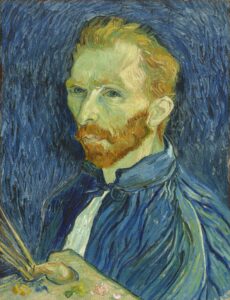
    But it happens today at any Vincent exhibition where people gather in a kind of loose arrangement of fascination, seeing the world again through his eyes. Of course that arrangement dissolves swifter than Vincent had in mind when he imagined a colony of artists. But it is something – more than something.

    And with every passing year we need to understand that Vincent’s popularity isn’t a quirk of madness. It was because his life in its way was exemplary, and there is much we can learn from him.


    Van Gogh. Self Portraits runs at the Courtauld Institute until 8th May 2022
     

  • Study shows best, worst countries to freelance

    Patrick Crowder

    The freelance life is longed for my many, achieved by some, and not desired at all by others. If you like structure, stability, and clearly set tasks, then freelancing is probably not for you. However, if you wish to benefit from the creative freedom, variable schedule, and healthy work-life balance that freelancing can provide, then it is important to know what opportunities await you around the world.

    The financial tech company Tide has drawn up a list of the top ten countries for freelancers based on a variety of factors: cost and speed of broadband, legal rights for freelancers, cost of living, gender pay gap data, searches for freelance work and availability of co-working spaces per 100,000 people, and the happiness index.

    Singapore won the top spot on the list due to fast, affordable internet and numerous co-working spaces, though it leaves a bit to be desired in the cost of living and happiness index departments. New Zealand came in a very close second, with its advantages being strong legal protections for workers, a good happiness index score, and equality of pay.

    In third place, Spain is much more affordable than the other top countries and has a low gender pay gap. However, it may not have the same breadth of opportunity in the freelance sector as other countries.

    The rest of the list is fairly close-matched, with the main deterministic points being cost of living and searches for freelance jobs. In order, Australia, Denmark, Canada, Switzerland, Lithuania, Sweden, and Ireland make up the remaining seven spots. 

    Tide also found the worst countries for freelancing. Japan had the lowest score due to few legal protections for workers, low interest in freelancing, and a problematic gender pay gap in many industries. China was named second-worst due to a poor happiness index score and little interest in freelance work, though it is affordable. Italy was next, primarily due to slow internet speeds and weak legal protections in the country.

    The Netherlands showed the highest interest in freelancing, with 1,305 searches made for freelance workers per 100,000 people. Denmark took the top spot on the happiness index, and India was first for affordability.

    Wherever you choose to work in the world, freelancing is never free of its faults, but for many, the freedoms afforded to freelancers outweigh the instability that they can sometimes face. Additionally, one of the lower-ranked countries on this list could end up being the perfect fit for you depending on your field and preferred style of living and working. Therefore, take this as a guide to assist in your research, not determine your future home. By recognising the advantages and disadvantages of each location and comparing them to what your personal preferences and expectations are, you may be able to find your dream freelance destination.


    Read about how Georgia Heneage navigated the world of freelancing during the pandemic here