Category: Features

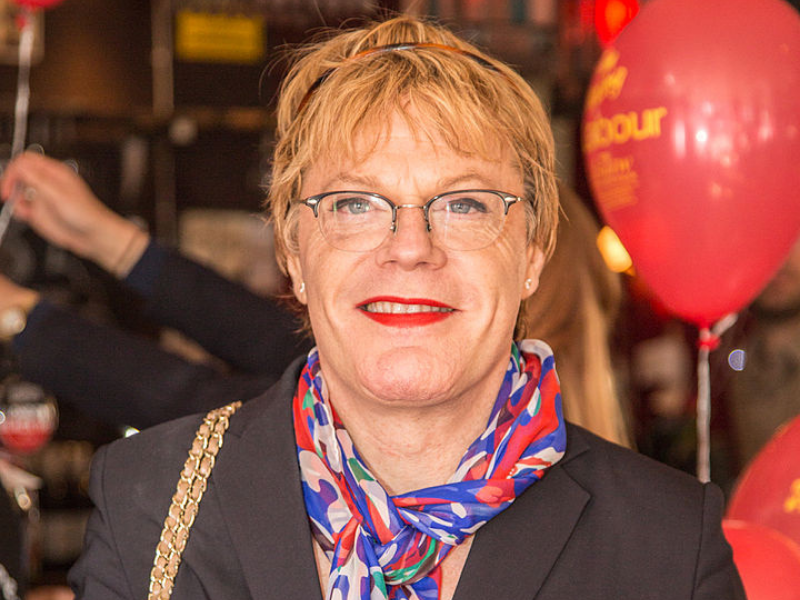
  • Diary: Eddie Izzard on pronouns, working with Judi Dench and the plight of the street performer

    Diary: Eddie Izzard on pronouns, working with Judi Dench and the plight of the street performer

    It all started when I went on Sky’s Portrait Artist of the Year. They said: “What would you like? What pronouns?” So I was there, wearing a dress and makeup and I said: “Well, she/ her.” It was a bit like: ‘Would you like a cup of tea? Coffee? Latte?” It wasn’t set up in a big way. I wasn’t there saying: “Look, it’s in the contract, you’ve got to do this.” So they decided to do that – and when it came out there was quite a firestorm. In Britain and America, in two days everything had changed. Now I’m very happy I’ve been promoted to “she”: it’s a great honour. Some people are grumpy about this but I have given 35 years notice. 

    None of this formed any part of Six Minutes to Midnight, which I filmed with Judi Dench and released earlier this year. That was some time before the pronoun thing kicked off. I feel it’s a tripping hurdle for us, for anyone who’s trans. People get quite militant, maybe on my behalf and I say: “Look, everyone should calm down. People call me ‘he’, people call me ‘she’. It doesn’t really matter because I am gender fluid.” What’s more important is to ask whether my comedy’s good enough? Is my drama good enough? With my marathon running, am I raising enough money? Doing things in French and German, is that inspiring enough? 

    Judi Dench had a sweepstake on set about whether her wobbly tooth would fall out. I did the mathematics involved, but I never gamble because I know what the odds are! Judi doesn’t do ceremony – she’s just another person, chatting with the other girls. She said we treated her well, and it was a wonderful experience. 

    With the whole pronouns thing, at first I thought it might change my acting career. But I’ve just done something for a Netflix show up in Manchester, and there were no problems: some people were calling me ‘he’ on set, others ‘she’. I think if I were a hunk or something like that, it would be a problem, but because I’m hopefully a more versatile, quirky actor I have to create my own area. 

    Going forwards, I want to do as many films as I can. I want to set up my own films, as I did with Six Minutes to Midnight, and keep giving myself a good role, as Clint Eastwood did. I’ve got to pull more stories out of me and direct them as well. But if a by-election comes up that’s a good fit for me – or, failing that, the next election if I get chosen and win it. 

    London has made it very hard for street performers. I came from that – and it’s the reason I can do what I do – and play the Hollywood Bowl and Madison Square Gardens and the other big places. We set up the Street Performers Association in the mid-eighties in order to fight against the rules preventing people from performing. Sadly, organisations tend to look down on street performers. I think they see us as riff-raff but street performers have been doing it for years, way back to Punch and Judy and the time of Samuel Pepys, and beyond that.

    Westminster Council, in particular, is making it very tough. They did this thing where they said, ‘Let’s hear your views’. So we put forward our views and then they just ignored them all and carried on doing what they’re doing. 

    It’s also a question of language. Buskers tend to be musicians with a passing audience – and we’re street performers who actually get an audience, do a show and then the audience dissipates which is a slightly different thing. But really we’re all working together. If something goes slightly wrong, the council seems to be saying: “Well, everyone’s banned from playing here”. Police often end up having to marshal street performers: it’s just the wrong way of doing things. 

    What I find tricky with the Labour Party is when, as people who are like-minded and really on the same team, we all spend a lot of time arguing. It becomes very tiring because we keep going round the houses. Do I want to be prime minister? What I want to do is to get Keir Starmer to be prime minister, or help whoever is the leader of the Labour Party – and I am a good fighter. 

    Six Minutes to Midnight starring Eddie Izzard, Judi Dench, Carla Juri, James D’Arcy and Jim Broadbent is out now

    Photo credit: By Giuseppe Sollazzo – https://www.flickr.com/photos/puntofisso/17123311876/, CC BY-SA 2.0, https://commons.wikimedia.org/w/index.php?curid=40679228
  • Secretary of State Gillian Keegan on Sir Keir Starmer, Rishi Sunak and how Shirley Williams wrecked the education system

    Gillian Keegan


    I spent most of my career in business and am a bit of a Johnny-come-Lately to politics; I got elected at the age 49. I am the first former apprentice to be Education Secretary – and I’m also the only degree level apprentice in the House of Commons.

    25 years ago, growing up on the outskirts of Liverpool in Knowsley, there weren’t that many opportunities. For me, an apprenticeship was a golden ticket; I was so delighted at the time. But it’s been quite a shock at the Department for Education when everyone looks down on you as if you’ve come up with soot on your face.

    I’m sometimes asked who was the person who most destroyed the education system and I’d say Shirley Williams. I was on a trip with a Lib Dem MP, going to St Mungos to visit a homeless shelter; we were on a Public Accounts Committee together. She spent the entire train ride telling me how fantastic Shirley Williams was, and all about the comprehensive system. Having been a beneficiary of this system, where 92 per cent of students were without any qualifications, I was confused by her enthusiasm. Then I found out on the return journey that her education consisted of the International School of Brussels and Roedean; she’d never been anywhere near a comprehensive school.

    That’s the whole point: theory and practice are very different. Rishi Sunak understands that and it’s one of things which makes him a fantastic prime minister. He has the most extraordinary talent; he’s very detailed and strategic and kind. I look at him and think that he’s got that stardust, and a lot of space to grow: I think he will be a world statesman.

    Rishi is very encouraging but also gets things done. Look at the Windsor Framework: when you consider the column inches which were devoted to this, and the question of whether it was any good or not, and whether it was practicable: he got it through. Look at the way he’s handled the health unions and the teaching unions.

    Education will be a big part of the story we tell to the electorate next year, when it comes to our achievements over 13 years. In 2010, we inherited a lot of problems in our education system. The attainment of children wasn’t up compared with other countries; for instance, in the PISA rankings the country had fallen back nine points over the 13 years of the Labour government. That’s quite a lot. We had fewer schools deemed ‘Outstanding’.

    We also did a lot in childcare in our budget earlier this year. In 13 years of Labour government, all Labour introduced was 12 and a half hours for three and four year olds. That was it. Since then we’ve introduced 30 free hours, and now we’re doing nine months to five years, which leaves Labour nowhere to go.

    You’ve also got to look at what Michael Gove and Nick Gibb did in setting up academies; they’ve transformed academic outcomes and opportunities for kids. Having grown up in Knowsley, I know there are large numbers of very bright children who don’t get the chance to go to an outstanding school or to university. Social mobility is not a slogan with me.

    We’ve also done a lot to be proud of when it comes to universities, and in relation to skills. That’s a nice thing about my current role: it’s where I started as a skills and apprenticeships minister. I can now get stuff through which I wanted to do then and which everyone overruled me on at the time.

    One such thing is medical apprenticeships. I started to think: “How do we get parents to want their children to do apprenticeships?” I thought about what parents want for their children: they want their kids to have a good profession and a stellar career. When it comes to medical apprenticeships for 18 year olds, the courses are five years long. That means you can come at 18 and be a doctor in five years. It’s the sort of thing which shows you that this is a government focused on delivery.

    From my seat on the front bench I have a good view of the Leader of the Opposition. The only time Sir Keir Starmer has ever energised a room is by leaving it. It’s quite a good vantage point on the front bench. I think: “You’re making a massive miscalculation. What are you going to say when we deliver all this!” Margaret Thatcher always used to say, if you’re not ten points behind then you’re not doing enough. This is going to be a historic fifth term.


    Gillian Keegan was talking at the In and Out Club 


  • Photographer Rankin on how Bjork gave him his start in the industry

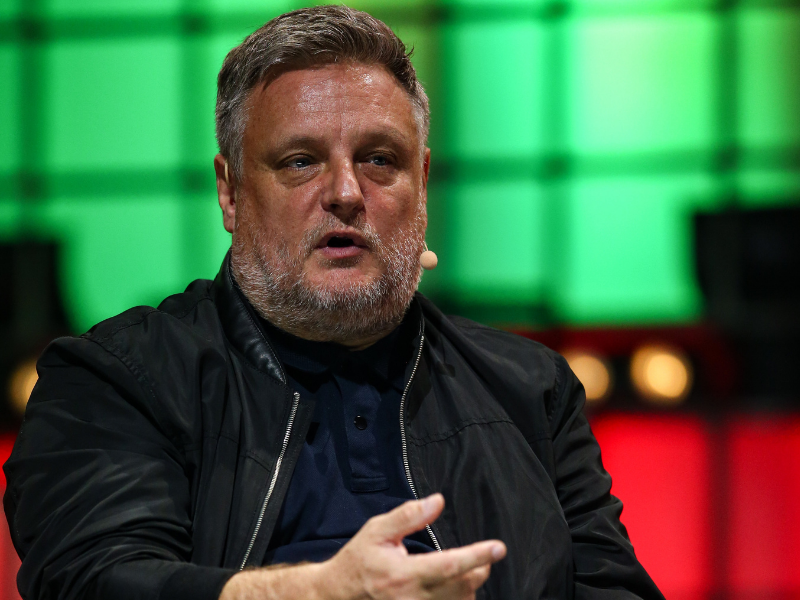
    Photographer Rankin on how Bjork gave him his start in the industry

    by Christopher Jackson

    For anyone looking to be famous, one possible route seems to be to truncate your name into a snappy word: the strategy has worked for Beyoncé, Banksy, Madonna and plenty of others. Perhaps in a busy world we don’t have time for multiple syllables anymore. Were Warhol alive today he might just be Andy. 

    The photographer Rankin is shorthand for John Rankin Waddell: as the founder of Dazed and Confused the globally distributed magazine, photographer of Kate Moss and Her Majesty Queen Elizabeth II, and with long ties to the music industry, the 54-year-old photographer is now at the summit of his profession. 

    So how did he get started? His early education looks at first inauspicious:  Rankin studied accounting at Brighton Polytechnic, before dropping out in order to study photography at Barnfield college in Luton. He subsequently relocated to the London College of Printing. In time, his reputation as a fashion and music photographer grew. 

    But he really owes his start, he tells us to Icelandic pop star Bjork: ‘Bjork was brilliant. It was literally my first ever shoot for a record label. She’s one of the most era-defining musicians because aesthetically she’s so unique and original, and she’s very in control of her image.”

    What did he learn from her? “What I loved about her was that she just let me do my thing. I have to be honest; there was a moment in the shoot where I was trying to do something that was a bit derivative of another photographer, and she gave me the confidence to just not do it. She was like, ‘You don’t need that shot, stick to what you’re doing’.”

    So did that make a difference in terms of his subsequent career? “She kind of set me up in a way, because very few people have ever surpassed her collaborative approach.” Collaboration is a leitmotif in Rankin’s career. It was only upon meeting Jefferson Hack at London College of Printing that he felt able to launch Dazed and Confusedin 1992. 

    Fast forward to 2021, and Rankin is still productive – and still collaborating. His latest book How to Die Wellis produced in partnership with Royal London, the UK’s largest pensions company. So how does he think this book will help people in these death-conscious times? “Death scares people, and that discomfort is the main barrier to talking about it,” he says. “The hardest part is getting started, but once you push through the fear – those conversations become a lot easier.”

    This tracks with my own encounters with those who’ve been around death a lot – from nurses and doctors to undertakers and funeral directors, they seem not to have the expected heaviness, but instead a certain lightness of being. 

    So has compiling the book helped Rankin face his own mortality, and the mortality of his loved ones? “Making this book has definitely helped me to deal with my own grief, as well as confront the idea of dying,” he admits. “And it’s so important that we do, because having these kinds of discussions means that when the time comes, our loved ones are prepared.”

    It’s been an extraordinary time. For over a year now, we look at our media and see the death toll writ large. 

    Have we become a morbid society? “I’m not sure the pandemic has made us, as a society, any better at having these conversations. The shock and size of the grief has been overwhelming,” Rankin says. “I think it’s going to take a long time for people to process what has happened. But it has certainly presented us with the undeniable reality of death.”

    And yet How to Die Wellisn’t a serious book by any stretch of the imagination – it’s full of anecdotes, lightness of touch, and charm. 

    How did he go about compiling the book? “We interviewed a broad selection of people who shared their experiences of grief – and also told us what they’d like their funeral to look like. There were some absolute corkers. From unusual song choices, to outrageous outfits, to hilarious last words. Death is just like life: there are ups, downs, laughs, lots of crying – and more than a few funny bits.”

  • Meredith Taylor on Oppenheimer: “a fraught epic”

    Meredith Taylor

    At a time when the world has been holding its breath over the escalation of hostilities between Russia and Ukraine, a haunting vision of the future hangs over this fraught epic about the man who invented the iconic bomb that ended World War II.

    English director Christopher Nolan frames his feature through a stimulating Washington based court investigation as Oppenheimer’s florid life and times flash back urgently forward to a needling score – from Cambridge to Leiden and then California and finally Los Alamos in New Mexico – providing thrilling social and political insight into the final stages of the Second World War.

    Cillian Murphy is screen dynamite as Robert Oppenheimer, a Jewish scientist from New York, who was seen as a hero to many but later vilified as a threat to his country for questioning America’s arms race bravado with his learned opinions in those turbulent times. Based on the Pulitzer Prize-winning biography American Prometheus: The Triumph and Tragedy of Robert Oppenheimer, Murphy leads a cast who each pull their weight in this mighty masterpiece that mesmerises for over three hours, the final segment is the most riveting and allows the stern but softly spoken Murphy to expose the soulful side of this conflicted but brilliant man.

    Hoyte van Hotel’s coruscating cinematography is impeccable in vivid colour and black and white, the 15/70mm print showcasing Nolan’s most impressive film to date.

    Oppenheimer serves both as a densely plotted character study and a simmering slice of history that also delves into the brutal tactics of the McCarthy era, but never at the expense of some dry humour and a wise perceptive overview from Tom Conti’s ageing Albert Einstein as the father of scientific breakthroughs. Meanwhile in the Los Alamos labs a selection of topflight theoreticians cut through the science by simply dropping marbles into jars to illustrate the difference between uranium and plutonium as fusion bomb components.

    Performance-wise Downey is outstanding as Strauss, a major player in the Atomic Energy Commission and a monstrous ego; Matt Damon is masterful as Major Leslie Groves, in charge of security at the Manhattan Project; Emily Blunt (a steely Kitty) and Florence Pugh (a sensuous Tetlock) play the feisty women in Oppenheimer’s life and Jason Clarke’s Roger Robb (Special Council to the AEC) could put any cross-examiner in the shade. Gary Oldman gets a surprisingly powerful cameo as President Truman “people will remember who dropped the bomb, not who built it”.

    Director/Writer: Christopher Nolan | Cast: Cillian Murphy, Emily Blunt, Matt Damon, Robert Downey Jr., Florence Pugh, Josh Hartnett, Casey Affleck, Rami Malek, Kenneth Branagh, Benny Safdie, Jason Clarke | 180′

  • Dinesh Dhamija: Air India: a Country’s Reputation on the Line

    Dinesh Dhamija


    The news that Air India will buy 250 Airbus aircraft and 220 Boeing jets, worth a total of $70 billion, is excellent news for passengers to India and for the country itself.

    The company has had a torrid time in recent years: Since the early 2000s Air India has suffered from chaotic management and customer service, terrible punctuality and ticketing.

    Some travel agents expressly advise their clients not to use it.

    Most recently, two separate incidents of drunken idiots urinating on fellow passengers created a scandal known as ‘pee-gate’, which Air India compounded by trying to shampoo it under the carpet, so to speak.

    Originally founded in the 1930s by Tata, Air India was nationalised in 1953 then re-privatised in 2022 by its founders.

    Whether public or private, many airlines are proxy embassies in the sky, flying their country’s flag, representing its values, and projecting soft power. If India is going to fulfil its potential as a respected major economy, Air India needs to up its game.

    This giant order for new aircraft is a good start. UK Prime Minister Rishi Sunak, French president Emmanuel Macron and US president Joe Biden have all praised the deals, with thousands of jobs and billions of dollars flowing into the British, French and American economies, earning their gratitude.

    For me, it feels particularly close to home, because airlines have been central to my personal and professional life for decades.

    First, I met a beautiful young woman called Tani who had been selected from thousands to work as a stewardess for Air India in the 1970s – a job of exceptional glamour and prestige.

    We married and had two children.

    Then we started a travel agency specialising in long-haul flights and – as ebookers.com – built it into a multinational business with thousands of employees and offices across Europe. For years, I tried to sign a deal with Air India, to become its preferred UK agent. It never happened (I did a deal with Nepal Airlines instead). The airline represented India in a diplomatic sense, as a reliable, established and secure company with a strong reputation. So, it’s been painful to watch the company’s many struggles and self-inflicted wounds. If a visitor to India has a shockingly bad experience on the national airline, before they’ve even reached the country, what kind of an impression does that create?

    I’m hopeful that this latest infusion of capital and brand-new fleet of the latest aircraft shows that Air India will follow Emirates, Etihad, Qatar Airways and Singapore Airlines into the 21st century world of exceptional customer service, clean, fuel-efficient, comfortable aircraft, reliable punctuality and advanced digital administration.

    It would be great to have an airline to feel proud of, to look up above the West London skies and see its familiar red tailfin with the golden sun motif and look forward to my next flight back to Mumbai or New Delhi.


    Dinesh Dhamija founded, built and sold online travel agency ebookers, before serving as a Member of the European Parliament. His latest book, The Indian Century, will be published later this year.

  • Mohamed Amersi: “We ignore the Middle East at our peril”

    Russia is today’s global hotspot but we ignore the Middle East at our peril, according to businessman and philanthropist Mohamed Amersi

    Russia’s invasion of Ukraine has galvanised the international community and triggered a combination of diplomatic condemnation and economic sanctions, unprecedented in recent years.

    Seen from a UK perspective, the response to Russia’s actions has been swift and strong. It has re-energised NATO and united the EU whilst giving Britain an opportunity to show it can still play a leading role on the world stage in the post-Brexit era.

    But, despite the formidable international coalition ranged against Russia, we should not make the mistake of thinking that the rest of the world sees the conflict in exactly the terms that we do.

    In the Middle East, the situation is more nuanced. On February 28th, four days after the invasion, the Arab League, which represents 22 Arab states, issued a statement that failed to condemn Russia and was lukewarm towards the Ukrainian cause. The UAE abstained when the first UN Resolution condemning Russia’s invasion was proposed.

    Responses have hardened since then, but nevertheless there remains a body of opinion that the West is guilty of double standards and hypocrisy. Critics ask: are Russia’s actions in Ukraine so different from the wars waged by the US and Britain in Iraq, Afghanistan and Libya?

    If there is to be a diplomatic reset what does that mean for the Israel-Palestine question or the conflict in Yemen and Libya? Why was the same approach not applied to refugees fleeing devastation in Syria, Iraq, Yemen and Afghanistan? Sceptics argue say that countries of the Middle East are often used as a playground to settle scores by the use of proxies and ask whether there are parallels with Ukraine.

    During my career as a lawyer, financier and entrepreneur, I visited all but one of the 22 countries in the Middle East and Africa (MENA) region. I am concerned that the region is so little understood by the new crop of parliamentarians, even though it is gripped by huge geo-political issues which will return to centre stage and ultimately have as great an impact as Russia’s invasion of Ukraine.

    Sadly, this attitude is not confined to backbench MPs who may not be primarily focused on international affairs. It also appears to be shared by Boris Johnson’s government.

    Earlier this year, he abolished the Middle East and North Africa portfolio held by James Cleverly and made him minister for Europe and North America instead. Despite mounting tensions and ongoing wars in the region, the Government does not seem to believe it needs a dedicated MENA minister, merging the role with others in the department. It is too early to tell whether splitting the Middle East role amongst three Ministers will prove more engaging than having a single Minister, given that conflicts in the MENA region are all inter-connected.

    That smacks of a “Little Britain approach” and it makes no sense. The potential for further conflicts in the Middle East should alone be enough to make it a key area of foreign policy for the Government. But, in addition, the region is crucial to its ambitions of promoting a ‘Global Britain’ in the post-Brexit trading world.

    With its long history in the region, the UK has relationships which could give it an advantage over other trading blocs, but only if they are deployed judiciously. Yet the Conservative Party currently has no group representing its interests in the region.

    The Conservative Middle East Council (CMEC), which was established in 1980, disaffiliated from the Party in 2019, having stayed from its founding principles to foster better understanding of issues in Palestine and the wider Middle East. Instead, it has become closely aligned to certain Gulf States, raising funds from unknown donors; organising junkets; and receiving payment for its services.

    In 2020, I was asked to discuss the establishment of a new organisation fully affiliated to the Conservative Party with the objective of promoting understanding and cooperation between the party and the countries of the MENA region.

    My vision for Conservative Friends of the Middle East and Africa (Comena), is as a friendship group which organises exchange visits, lectures and cultural events to promote greater understanding of the region and stronger ties with members of the Arab Diplomatic Corps in London, opinion leaders across the Arab world and with the MENA diaspora in the UK.

    The vision embraces the entire MENA region, rather than ignoring North Africa and the Levant. No funding or funders would be allowed to dictate the agenda and the group would exert a positive influence through mutual understanding, co-operation, and dialogue. Promoting peace and prosperity throughout the region would be our goals.

    More than 100 parliamentarians, diplomats and Middle East experts expressed interest in membership, subject to its affiliation with the party and complying with its constitution. The UK needs to re-set its relationships in the Middle East and Comena could give this vital work fresh impetus because it would be a new organisation, focused on the region’s future, not its past.

  • Review of Asteroid City: “a film with nothing to say about employability – or anything else”

    Christopher Jackson

    How would you feel, I wonder, if you were a Hollywood star and not in the new Wes Anderson movie? Given the sheer number of stars in this film, it would feel like a grim sidelining. Asteroid City, like his previous movies, boasts an ensemble cast to the point where you can’t quite consider the characters as characters but as the next example of apparently stratospheric celebrity who is seemingly prepared to rush to Mexico, where the film was shot, upending all else, to speak one or two lines of gratuitous whimsy.

    What strange creature, I began to wonder, holds this sort of power over Hollywood’s leading actors? But the film’s director Wes Anderson seems unprepossessing enough. One suspects mysterious forces are in play.

    Asteroid City stars, for instance, Adrian Brodie, Jason Schwartzman, Scarlett Johansson, Tom Hanks, Edward Norton, Rupert Friend, and Margot Robbie.

    But does this, I wonder, represent a slight dip in Anderson’s ability to pull in stars? The Royal Tenenbaums (2001) starred: Danny Glover, Gene Hackman, Anjelica Huston, Bill Murray, Gwyneth Paltrow, Ben Stiller, Luke Wilson, and Owen Wilson.

    This sort of casting matters because it makes story secondary to celebrity and art subordinate to fame. As a result, this is a film which tells us more about making films than it does about life. All Anderson’s films are about celebrity if only because every frame of them is populated by famous people: that makes them meta narratives about our obsessions. As such, they’re a pretty good yardstick of how we live now – and that can be both good and bad.

    Whimsy, my dictionary tells me, is a 17th century coinage emerging out of the now-forgotten word ‘whim-wham’. It feeds into the idea of caprice, a word which emanates from the Italian ‘capriccio’ – a work of art where a mixture of real and imaginary elements are in play.

    It is Anderson’s achievement to have come up with a cinematic language of whimsy which keeps large numbers of people engaged. This form of story-telling – now that he has come up with it – can seem easy to do. First, find a location, and make the set as unsettling as a Magritte painting. Then assemble a cast of characters whose inner life is mysterious but hinted at in tics or oddities. After that, not much needs to happen – and in fact, it would be hard to identify any real dramatic arc in any of his films. Really, they lack meaning.

    This used to be considered a sign of artistic failure but in our times it passes as seriousness. Whimsy obviates the communication of shared human problems since it is too restless to concentrate on anything which matters. This is one of the reasons why Wes Anderson’s films have nothing to say about employability, or indeed anything else. It is art for art’s sake taken to the nth degree.

    How does he get away with it? Firstly, he speaks to the contemporary moment. These films do reflect us back at ourselves in all our disjointedness and uncertainty. Secondly, the films work very well aesthetically – they are beautifully wrought.

    Asteroid City takes place in the middle of the desert where the Junior Stargazer/Space Cadet convention is taking place; the year is 1955. The usual case of misfits assemble. Scarlett Johansson plays an actress Midge Campbell of the Hollywood Golden Age who is nevertheless non-specifically adrift. In fact, everyone is non-specifically adrift. Jason Schwartzman is also in attendance playing war photojournalist Augie Steenbeck. Augie is travelling with his three daughters but their car breaks down. It is typical of these movies that the car mechanic – a walk-on part – needs to be played by a household name in the shape of Matt Dillon.

    He calls his father-in-law, Stanley, who quite naturally needs to be played by Tom Hanks. Since it doesn’t matter what happens in a Wes Anderson movie because we don’t care at all about the characters, the film might perhaps have continued in this vein. Instead, the stargazing is interrupted by an alien visiting. The government is alerted and a lockdown ensues.

    It is remarkable just how undramatic the alien moment is – in fact, the arrival of an alien doesn’t seem concerning or particularly strange in the context of the broader Anderson method. Nor would it seem odd if an apricot began talking and if Scarlett Johansson fell in love with it. This is the licence of caprice – you can do anything.

    But these films bump up in the end against reality. We must concede that apricots don’t talk, and Scarlett Johansson tends not to fall in love with apricots. More broadly, people don’t think, behave, or talk as they do in Wes Anderson movies. These movies are therefore false – and not the less so because they are good light entertainment.

    Why are they so popular? It is that the modern world makes us long to escape into fantasy. But in doing that we don’t really escape – we are looking at ourselves. In that sense – and in that sense only – Anderson has created a sort of realist mirror: he reflects our restlessness and our confusion back at us.

  • Stuart Thomson on unleashing the power of autonomy in the workplace

    Stuart Thomson

    In any role, one essential question to ask is: ‘How much autonomy do I have?’ That will tell you a lot about your role, prospects and the type of organisation you work for. That one question can set you on an important future path.

    The question of autonomy in any workplace will tell you about the level of independence and self-governance that you can enjoy in your role. It is also provides an indication about your role in decision-making processes.

    The challenge

    Any employer should be able to give a good answer about autonomy. If they can then it says a lot about the consideration that has been given to granting employees the freedom to make choices. How much they are allowed to exercise their judgment and under what circumstances. How much ownership they have over their own work. It demonstrates that they know and understand how autonomy works at all levels and how it can benefit an organisation as well as an individual.

    Are you there to play a role in a system or a process or are you able to push boundaries? There will, of course, be limits but if an organisation is looking to deliver a service to clients, develop new products or seek to be innovative then a role for autonomy is critical.

    Autonomy allows individuals to have some control over their tasks, schedules, and approach to their responsibilities.


    A more autonomous approach means that line managers are not constantly keeping a check or exerting high levels of micromanagement.

    It is the type of question that should be asked in any interview. It can help you decide whether it is an organisation you really want to commit to.

    The benefits

    What does it deliver for you and the organisation you work for?

    1)    Increased motivation – a higher level of autonomy increases personal accountability and also motivation among employees. There is a feeling that ‘we are all in this together’.

    2)    Delivery of new ideas – autonomy provides the space to enhance creativity and innovation. When an individual knows that they are not going to face criticism for exploring new ideas or taking risks then it builds an environment that supports innovation.

    3)    Improved job satisfaction – having control over work tasks and a working day can lead to higher levels of job satisfaction. An individual is often better able to recognise their own strengths, and weaknesses, so can align their work with them.

    4)    Building your own path – going a step further, recognising those very strengths and weaknesses, fosters a path of continuous professional development and learning. That helps individuals and organisations.

    5)    A thirst for new challenges – with the skills in place, individuals feel better able to face new challenges and take on more responsibility. The path is one towards building and equipping the leaders of the future.

    There are studies that have shown that autonomy delivers improved productivity. Many organisations have a productivity challenge so autonomy is one way of addressing that.

    What do you need?


    Autonomy in a role is beneficial but always consider the support mechanisms that go with it. You will still need guidance, feedback, and a supportive work environment. Can you rely in a line manager to provide that or is there a risk of being cut adrift? You also need to think about how much autonomy you feel comfortable with at the stage of your career. There is no one fixed level, it can vary over time. With autonomy comes responsibility that you need to take ownership of.

    You may wish for a work environment in which you are respected enough to enjoy autonomy and that should be on offer. But autonomy can increase over time and a supportive environment is needed. Autonomy can help you to use your unique abilities to contribute to the success now and in the future of an organisation

  • Dinesh Dhamija: Indian billionaire snaps up London mansion for £113 million

    Dinesh Dhamija

    Signalling a changing of the guard in London’s headiest property markets, Indian billionaire Ravi Ruia has bought the £113 million Hanover Lodge in Regent’s Park from Russia’s Andrey Goncharenko.

    Among the highest prices ever paid for a London house, the transaction demonstrates that wealthy Indians are now serious rivals to the Russian and Middle Eastern buyers who have dominated upscale purchases in recent years.

    The Ukraine conflict has wiped out much of the Russian interest (although Goncharenko is apparently not on the sanctions list). Fellow Russians such as Roman Abramovich, who owned Chelsea Football Club, and his associate Alexander Frolov, who owned a £15 million apartment in Knightsbridge, have beaten a hasty retreat.

    More than £18 billion worth of Russian assets in the UK were seized following the invasion of Ukraine, along with at least 102 properties adding up to further billions.

    With the international community turning its attention and favour to India, as it seeks to isolate Russia, London’s property agents are eagerly looking towards Mumbai and Delhi, anticipating a new wave of buyers for the vast stock of grand homes left by the Russians.

    This newfound appetite for London real estate could herald a stream of investment in other British assets, as the prospect of a trade deal between India and the UK draws closer and Indian investors identify more opportunities. Indian PM Narendra Modi’s Make In India programme has spurred the country’s manufacturers and exporters into action.

    Hanover Lodge spans 2,400 square meters of prime central London real estate, complete with a gym, sauna, gallery and swimming pool which can be converted into a ballroom. It was completed in 1827 and designed by John Nash, the architect of Buckingham Palace and other British gems, including Clarence House – also owned by the Royal Family – Marble Arch on the corner of Hyde Park, and the Brighton Pavilion.

    For the Mumbai-based Ruia, whose Essar conglomerate spans steel, oil, gas, power, shipping and logistics, employs 7,000 people and turns over $13 billion a year, the purchase will provide a suitably grand location from which to entertain. Hanover Lodge once belonged to the French ambassador to Britain and later to Conservative peer Raj Kumar Bagri before he sold it to Goncharenko in 2012.

    London is now home to more than a dozen billionaires of Indian heritage, including GP Hinduja, Lakshmi Mittal and Sri Prakash Lohia, each of whom has acquired vast mansions at the very top end of the scale. GP Hinduja paid £350 million for the Old War Office in Whitehall and then spent a further £900 million renovating the building and converting it into a sumptuous hotel and apartments, expected to have a price tag of £100 million each.

    So Ruia will have no trouble locating friendly faces, with mansions just as fabulous as his.

    Dinesh Dhamija founded, built and sold online travel agency ebookers, before serving as a Member of the European Parliament. His latest book, The Indian Century, will be published later this year.


    Photo credit: Spdugun67 under Wikipedia Commons Licence 4.0

  • Buddhdev Pandya on the crucial question of AI and healthcare

    Buddhdev Pandya


    The concept of Artificial Intelligence, known as AI, is now a major point of discussion in the healthcare sectors and also the users of NHS. The world of artificial intelligence is a field of computer science that focuses on the development of intelligent machines and systems capable of performing tasks that typically require human intelligence. AI is based on the concept of creating computer systems that can learn, reason, problem-solve, and adapt based on data and experience.

    At its core, AI is built on algorithms and mathematical models that enable machines to process and analyze data, recognize patterns, make predictions, and take actions or make decisions. These algorithms can be designed to mimic human cognitive processes, such as perception, reasoning, learning, and problem-solving.

    Among its key components and approaches are Machine Learning, which involves machines learning from data and improving performance without being explicitly programmed. There is also the potential of Deep learning models, which can handle complex data, such as images or natural language, by hierarchically learning representations of the data. This is known as Natural Language Processing (NLP).

    One of the most valuable assets of AI is the ability of machines to understand and interpret visual information from images or videos. This enables machines to recognize objects, detect patterns, and extract meaningful information from visual data.

    Most of us are familiar with Robotics, which is also based on computer technology enabling machines to perceive and interact with their environment, make autonomous decisions, and perform physical tasks.

    Overall, AI is a multidisciplinary field that combines computer science, mathematics, statistics, and cognitive science to create intelligent systems that can simulate human intelligence and perform tasks that were traditionally exclusive to humans. AI has the potential to significantly benefit the patient experience in hospitals.

    The most important focus for any patient is the anxiety due to the delay in accessing a consultant and the expectations regarding the efficiency of the diagnostic process and follow-up care. The essence of the process is effective and simplified communication, as well as the quality of care. We have been accustomed to being seen by a medical professional face to face, which has a huge feel-good factor and instils confidence in the establishment.

    Many users of our NHS services are sceptical of the changing culture of making appointments to see their GP and feel disfranchised when contacted by various support staff from the surgery or hospital outpatient department.

    It is important to realize that we are already witnessing the computerization of medical records and the appointment system to ensure more efficient management of these processes. Patient records are shared digitally, allowing the entire medical record to be accessed during consultations instead of waiting for physical transfers between the GP surgery, testing laboratories, radiologists, and hospital consultants.

    This is all part of the early introduction of the AI system, which is now being taken to a more advanced level for its use in diagnostic, treatment, and aftercare programs. AI can be incredibly useful in monitoring regional health conditions and analysing the responses of local GPs, even though it may sometimes cause discomforting thoughts. It is an asset, a complementary process with the ability to aid in the surveillance and early detection of disease outbreaks, track the spread of infectious diseases, and identify potential health risks in specific regions.

    As technology updates with medical knowledge, it becomes more efficient at interpreting medical data, such as patient symptoms, test results, and medical histories, to support healthcare professionals in making accurate diagnoses and treatment recommendations. The cumulative data can also help provide more accurate evidence-based guidelines and suggest appropriate courses of action.

    As we age and learn more about various conditions, advancements in AI technology would be able to provide us with early warnings of health risks and the early stages of these conditions.

    AI is increasingly used in various medical fields for surgeries and life-saving procedures. Robotic surgery is one application known for its use in assisting surgeons in performing minimally invasive surgeries with enhanced precision and control. AI, radiology, and imaging are already used as aids in disease detection and diagnosis, improving accuracy and expediting the diagnostic process.

    Similarly, AI is enabling early detection of heart conditions and assisting in cardiac procedures.

    Robotic equipment is used in various surgical procedures across different medical specialties. For example, Robotic-assisted Surgery such as the da Vinci Surgical System is commonly used.

    Other areas such as the removal of the prostate gland for the treatment of prostate cancer, hysterectomy for the removal of the uterus, colorectal surgery involving the colon and rectum, removal of the gallbladder (cholecystectomy), and hernia repair. Robotic systems are used in orthopaedic surgeries to improve precision and accuracy, as well as in spinal procedures, such as spinal fusion or minimally invasive surgeries. Robotic guidance can be used for precise localization and navigation in neurosurgical procedures, including brain tumour removal or deep brain stimulation. Other surgeries include Bariatric Surgery, Thoracic Surgery, and Urological Surgery.

    It’s important to note that the application of robotic equipment may vary between hospitals and surgical teams, and the specific procedures performed using robotic technology can expand as advancements continue in the field of robotic surgery.

    Overall, AI in medicine complements healthcare professionals by providing additional insights and assistance. However, it’s crucial to emphasize that human expertise and decision-making remain vital, as AI is designed to augment rather than replace medical professionals in providing optimal patient care.

    Many of us may find ourselves watching a screen with soothing voices tailored to our moods to compensate for the absence of GPs, making it difficult to access face-to-face appointments. Who knows, a well-designed robotic nurse with a soothing voice accompanied by our preferred music may appear to gather our vital medical details and prescribe the appropriate dosage.

    And then, robotic vehicles with four wheels could deliver medicine from the pharmacists to our doorsteps, similar to the delivery of groceries from a local store.

    Many individuals with severe disabilities or those living alone can be monitored and supported in various ways using AI technology, which holds significant promise in these areas. However, it’s important to note that AI should always complement human expertise rather than entirely replace it.

    The adoption of technological advances in clinical management depends on the resources available to the NHS and the development of skills among clinicians and other associated staff. The new generation is becoming more accustomed to technology as their lives revolve around laptops, tablets, and mobile devices. However, we must also empower the older generation and those facing social and economic disadvantages to ensure they are not left behind. It is essential to urge those responsible for planning well-being strategies for the community to make a serious effort to provide adequate resources and support the “third sector,” as well as charities, to compensate for the lack of accessibility to education and necessary skills.

    Society should never hinder innovation and research in science and technology related to our health or any aspects of the environment. The evolution of science is a natural phenomenon that progresses towards greater sophistication. It is in our human nature to explore more and more in order to gain benefits. The key is to ensure that we find ways to understand its intricate functioning and structures to manage and utilize them to our advantage.


    Buddhdev Pandya MBE is founder and chief editor of a medical journal, Swasthya for healthcare professionals. He served as Director of British Association of Physicians of Indian Origin, British International Doctors Association and British Indian Psychiatrists Association