Category: Features

  • Looking to retire? Avoid the UK, says new research

    Finito World

    A new study has determined which countries have the highest retirement age increase based on OECD covering 2000-2020.

    The UK places 22nd on the list with a 4.45% increase during this period, whilst the USA ranks 28th with a 4.01% increase during the same period
    Several other western nations feature in the top 30, including Australia, the United States and Canada.

    The research, conducted by AgeCalculator.com, reveals that The UK has seen the twenty-second highest increase in its retirement age over the last 25 years.

    The study analyzed OECD data regarding retirement age in all countries available from 2000 to 2020, to discover which citizens have seen the highest increase.

    Bulgaria takes the top spot with a 13.26% increase in the country’s average retirement age between 2000 and 2020. This results from the average retirement age among men and women in 2000 being 56 years old; in 2020, it went up to 63.

    Second is Estonia, with an increase of 11.93%, while its neighbor, Latvia, ranks third with a 10.57% increase. Respectively, these countries had a retirement age of 58 and 59 in 2000 and 65 in 2020.

    Further down on the list is New Zealand, the only non-European country in the top 10. The nation comes in fourth place with a 9.84% retirement age increase as well as highest retirement age on the list. Records show that the retirement age increased from 61 to a whopping 67 years old in 2020.

    Hungary closes the top five with an 8.56% increase.

    Two more eastern European countries follow closely: Romania is sixth with an 8.42% increase, and Slovenia is seventh with an increase of 8.35%. Portugal, The Netherlands, and Lithuania round up the top 10.

    A spokesperson for AgeCalculator.com commented on the findings: “The trend of retirement age increasing across many nations reflects a complex interplay of various factors. Some of these include the extension of people’s life expectancy, which has increased thanks to medical advancements, economic pressures that translate into people not being able to retire comfortably because of the rising cost of living, and shifting demographics, such as declining birthrates and aging populations.

    “It is interesting to see how the data shows European countries among those with a steadily increasing retirement age, with a particular focus on eastern European countries, as shown in the top 10. The first Western European country is Portugal, followed by The Netherlands in eighth place, and we have to look even further down, in 15th place, to find another Western country, Italy.”


    For more information go toagecalculator.com

  • Meet the Mentor: presentation coach Merrill Powell

    Finito World meets Merrill Powell, who does important work, using her television background to prepare candidates for interview. 


    You’ve had a long and varied career in television. Can you talk a bit about your career, and how you use that experience to help mentees today?


    All the skills I learned in television can be passed onto Finito candidates and, believe it or not, they are absolutely relevant for whatever job a candidate is applying for. The prime one is to be able to make points succinctly so that you say what you want to say, clearly – and, above all, concisely. A couple of minutes of TV time is a long time for the viewer, but not for the speaker! The skill is to hold the attention of the listener and to make the points you need to make in a short time.

    Another important point to understand is that you will never have enough time to say all you want to say, so you must learn to prioritise the important points. It’s a discipline that is particularly useful with so much in the business world happening on Zoom. I should also say that at Finito we work as part of a team, therefore if a candidate needs extra help in a particular area, another mentor will let me know so that I can focus on the weakest areas. That gives comprehensive training and practice. All of which allows the candidates to grow in confidence and self-belief. The most watchable people on television are those who are so experienced that they look relaxed, it isn’t an easy job but they make it look easy. It’s the same with an interview. The better prepared, the greater the chance of not letting nerves overtake you.


    Presentation seems to be partly down to how we dress, and partly to do with our speech and manner. What factors are you especially looking at when a candidate first comes to you for mentorship and advice?

    Zooms can be unforgiving, and people can become very slack about how they present themselves often being at home.   I notice if someone is slouching, chin cupped in hand, too relaxed, or sloppy. All negatives. When I am mentoring I prepare for the Zoom as I hope a candidate will. I look smart, notes ready, background prep done,  proper chair and I sit up. In other words I am ready for business.  One candidate seemed barely awake so I asked if she was alright. “Oh yes, sorry,” came the reply, ‘but I had a glass of wine before we started.”Not a Finito candidate I should say, but it shows how not to treat a Zoom. You can give yourself an edge by making sure you look groomed, are alert and ready to take the meeting/interview very seriously.

    I am very straightforward – and strict – when I’m mentoring. If a candidate has annoying habits such as constantly playing with their hair, chewing a pencil or letting their eyes wander everywhere I say so, because those irritants are highlighted on Zoom. I must say so as it’s part of the preparation, which is to showcase the best of yourself and it often needs a third party to spot improvements which need to be made.

    You have one chance to get it right, so be prepared. I’m there to help you get it right, to showcase your talents, make sure you are on top of the job description and are able to articulate why you are the right person for the position.

    What are the most common mistakes which prospective candidates make when it comes to presenting themselves at interview?

    The most common mistake anyone makes during any kind of interview or presentation is to speak too quickly. Speaking slowly and clearly is essential and very few manage it without training. The brain often works faster than the mouth so the result is a waterfall of words rushing out as speech struggles to keep pace with thought.

    Clarity of communication is essential, particularly in a remote interview.  Most personal touches are absent – handshake, eye contact, body language, natural energy. These are important nuances that create a sense of the person you are speaking to in a physical meeting. Therefore, other ways need to be found to create an authentic and complete portrait of the candidate – that is through words and the skilful use of articulating experiences, ambitions, and understanding.


    Obviously preparation is very important, but how can candidates protect themselves from being overprepared and too robotic during an important interview?

    Preparation is essential. I never worry that someone will be over-prepared. That’s because preparation is necessary to best showcase personal talents, experience and ability in a concise, cogent way. The one way to ensure that the candidate is never robotic is to ban written notes. Reading out prepared answers is a disaster. Bullet point reminders can be useful but each answer should be straight from the head and heart, not learned, which means they are slightly different each time therefore authentic. It’s all about building confidence.


    You’ve been extremely active with Women2Win helping female candidates through the arduous process of winning seats. Can you talk a bit about how the presentational skills required for major roles are changing during the social media age?

    It has been a huge privilege training political candidates standing for public roles such as Police Crime Commissioners, Councillors, MPs. They all begin from the same position: asking people to vote for them. To win that vote, they must have appeal to the electorate. As we would say, it’s about winning hearts and minds. That means asking for trust, having integrity and empathy as well as intelligence and the ability to work extremely hard. If you are asking people to trust you with their future and the future of their families, look as if you deserve and can carry that trust. You must know your area so that the constituents don’t have to, because you are there to serve them.

    The greatest modern change and challenge has of course been social media and I think many of my colleagues would agree that nowadays any public servant can be subject to terrible online trolling. A robust character is therefore probably more essential now than ever before. There are many skills required to take on a public role but again it remains imperative that candidates  present their arguments cogently and persuasively.

    Social media equally offers wonderful, cheap and easy opportunities to connect with all levels of the community. It has transformed communication. Whether it’s about a local area forming a group to complain about potholes or rubbish collection, or Coronation celebrations, everyone can have a voice. The candidate has to be completely conversant with all means of communication. It’s a huge job. I expect to see many Finito students stepping up later in life!


    Zoom interviews are an increasing trend. What are the pitfalls with Zoom, and conversely what are the opportunities?


    During lockdown Zooms took off. I was able to train remotely scores of candidates without any of us leaving home. That also meant that a huge amount of research and mentoring happened without any travel costs incurred. That is a huge consideration for so many where high travel costs can often limit ambitions. It enabled many to be trained online who previously could not have afforded travelling to training centres.

    We all discovered how to communicate easily with the outside world and the benefits were enormous. Our parameters changed for good. But there are also pitfalls to Zoom: there will always be those personal meetings that can only happen in an office where ideas spark because of proximity. We must never underestimate the exponential value of personal interaction. It’s healthy for humans to mix too. The challenge with Zoom is to try to make an impersonal tool personal, to learn to use it to show what kind of human being you are. That’s much harder on Zoom than in person.

    My aim is to build confidence in a candidate so that they feel sure-footed enough in their answers to let their own personality, their own unique selling-point, shine through.


  • India Heads Global Growth League

    Dinesh Dhamija

    Cementing its place at the peak of global economic performance, India appeared in Franklin Templeton’s latest survey as the least likely of all major countries to suffer recession in 2024, with a zero per cent chance.

    By contrast, Germany seems almost certain to plunge into recession, with a 73 per cent likelihood, followed by Italy on 63 per cent and the UK on 53 per cent. Canada (50 per cent) and the United States (45 per cent) are on a knife edge, while Australia (40 per cent), France (35 per cent) and South Africa (30 per cent) are all in areas of concern.

    The emerging economies of China (15 per cent), Brazil (10 per cent) and Indonesia (2 per cent) fare best in this analysis, other than India, with Japan and South Korea (both 15 per cent) forming an Asian bloc of positive prospects. Nothing in life is ever guaranteed, however, so despite such high confidence, some Indian
    commentators are more cautious. “Recession risks may reappear in 2024 due to…rising food and energy prices amidst lingering geopolitical tensions,” wrote Dr Kembai Srinivasa Rao in the Times of India. He nevertheless predicts growth of 7 per cent for 2024 and 6.5 per cent in 2025, far above that of most other economies.
    What worries many economists in India, as in the rest of the world, is supply chain disruption from the Ukraine and Gaza conflicts, as we have seen in the Gulf of Aden, with attacks on commercial shipping. An escalation of the situation in Taiwan is also on economists’ radar, adding to the drumbeat of negativity against China on security and trade.

    As the Times newspaper pointed out in a recent editorial, India’s elections later this month promise to deliver a new mandate for Narendra Modi, giving him the freedom to act more decisively in foreign and economic affairs. The Times predicted that he would use this freedom to cement ties with the United States and Europe, while reducing dependency upon Russian energy and countering Chinese influence in Asia. This may be wishful thinking, but it allies with the thesis in my latest book ‘The Indian Century’ that India has a large and growing role to play in global affairs, just as China’s economic star is fading, Russia has become an international pariah and Europe is suffering a demographic timebomb of an ageing population and stagnant growth.

    By 2028, India is expected to have more than 600,000 High Net Worth Individuals, giving it the fourth largest private wealth market in the world. The value of the country’s stock market, meanwhile, overtook Hong Kong’s in January 2024 to become the world’s fourth-largest, worth more than $4 trillion. By the end of the decade, that figure is predicted to reach $10 trillion. There are always doubts about economic forecasts, but in the case of India, right now, there are remarkably few.

    Dinesh Dhamija founded, built and sold online travel agency ebookers.com, before serving as a Member of the European Parliament. Since then, he has created the largest solar PV and hydrogen businesses in Romania. Dinesh’s latest book is The Indian Century – buy it from
    Amazon at https://www.amazon.co.uk/dp/1738441407/

  • Friday poem: Omar Sabbagh’s ‘Searching the Horizon’

    Searching The Horizon


    I opened my eyes and my eyes opened

    the light that helped them first to arise;

    and it was as though a window had forged another window,

    working and sculpting the light to show

    the drama of sight – how a new horizon

    glanced at me, gently, knighting me with angles,

    the emanations in a cool and slaking breeze,

    and the unmastered day ahead, like a slave still

    to each refraction of hope, each ghost

    on its way to becoming the fuller filled-out flesh

    it wants to be. Lit now, gripped by delight,

    I walk among the staple daily shadows

    and feel each one sundered below my stepping feet,

    the horizon busied now with its batch of unhurt children.


    Omar Sabbagh


  • Music review: Tallulah Rendall’s Love Carries Me Home

    Christopher Jackson

    Tallulah Rendall’s new album Love Carries Me Home is a beautiful work in many different ways: it arrives as a charmingly produced book with a CD on the inside sleeve, though it is also possible to listen to much of the work on Spotify and iTunes. The book itself consists of a helpful introductory essay by Rendall herself outlining the origins of the album which came out of a particularly difficult period during which a relationship ended, her father John sadly died, and she was also experiencing professional difficulties arising out of the impact of Covid-19 on her industry.

    The voice that emerges in this essay is of a gentle soul, capable of challenging herself to forge growth out of adversity. Rendall recalls:

    Part of my journey of Lockdown was a relationship that completely broke my confidence…yet through determined commitment, I found my way to defy the doctrine that I had begun deeply to believe; to break through the belief that I am not good enough, I am not worthy of love or care…At the time of writing what I didn’t realise was how embedded in our culture the ‘I Am Not Good Enough’ culture actually is.

    It is this last observation which, I think, sets Rendall’s creativity apart: the songs become a sort of raft which we might all climb aboard and this is possible because she has made the generous observation that her own afflictions might be used as a way of assuaging those of others. Rendall understands that art begins with an acknowledgement of our vulnerability – and that this condition is also an opportunity. This album finds her time and again equal to the task of turning the pain of life into something which gathers up that pain into new musical forms.

    The book itself prints the lyrics alongside excellent photography of Tallulah making the book a lovely object to own. In the lyrics themselves there is often the umistakeable note of an earned wisdom as in the song ‘I Am Not Good Enough’:

    We can barricade our hearts with all the armour that we grow

    Hide away from the pain, but our hearts will never know

    The beauty of life, that is wanting us to know and say to ourselves

    That I am loved and I, I am enough just as I am

    The world appears to be at a hinge point in relation to the eternal questions of religion and materialism. In these songs, the structures of Western society are revealed to be an insufficient basis on which to build a valid and meaningful life. Rendall’s vocals remind me a bit of Joni Mitchell, swooping and diving through subtle and patient melodies: she is reassuring us that it is worth the effort to reexamine ourselves.

    Of course, it’s not strictly true to say that we are enough just as we are and can sit back smug in that knowledge: Rendall in fact doesn’t think this at all. In another track ‘Be A Little Kinder’ she urges us to take the stuff of ourselves forwards into better versions of ourselves. The simplicity of the message works since it is obviously true, and always has been. Its urgency and its importance is that it is being communicated to a world in far too much of a hurry, and which too often seems to forget what once was known to almost everyone.

    In a world where everything comes to us in a packaged and predictable way, listeners will feel this album as a genuinely authentic contribution. It is very much deserved that this new multiform release has been endorsed by the likes of Shirley Bassey and Jools Holland, and there are signs that she will reach a considerable audience. Let’s hope so – the world needs voices like this.

    For more information go to tallulahrendal.com

  • Tracey Jones: Mind Management Mentorship for our Next Generation

    Tracey Jones

    Why is ‘introspective reflection’ critical for our society? And more importantly, our education system.

    As we are aware the mental health crisis among younger generations, including children, teenagers, and young adults, is a serious and growing concern in many parts of the world, supporting our younger adults and our society as a whole is becoming even more prevalent.

    We seem to have lost the ability to use our critical thinking skills and creativity especially when it comes to the emotional problem solving which enables us to deal with setbacks.

    I believe it involves addressing the challenges posed by traditional systems and embracing innovative approaches to learning.  Encouraging students and adults to think independently and analytically preparing them to tackle real-world challenges and adapt to a rapidly changing global landscape.

    A study in ‘active people HR’ stated that almost half (45%) of businesses offering tech roles claim that candidates applying for entry-level positions lack core technical skills, despite holding a relevant degree, and more than a quarter (26%) think they lack soft skills, according to new data.

    By embracing these strategies such as introspective reflection, educational systems can evolve to better support the next generation, equipping students with the skills, knowledge, and mindset needed to thrive in the 21st century. Building the capacity to learn these skills will inevitably have a knock-on effect to our economy.

    What do I mean by introspective reflection? It refers to the process of looking inward, examining one’s own thoughts, feelings, and experiences in a deep, contemplative, non-judgmental manner. It involves self-examination and self-awareness, where individuals reflect on their values, beliefs, goals, and actions to gain insight into themselves and their lives.

    Navigating complexities of introspective reflection is the main part of my work, where individuals can often reach a tipping point of burnout and struggle with diverse life transitions. Whether stemming from work-related challenges, media exposure, financial changes, selling a business, or transitioning from a specific career. Providing support during these critical moments brings me a profound sense of harmony as I impart knowledge and wisdom, empowering individuals to introspect, realign, reassess, and ultimately progress equipped with a stronger toolkit.

    Through creating an awareness and teaching people the ‘how’, individuals can better understand their emotions, motivations, and behaviours, leading to increased self-awareness and personal growth. Enabling people to elevate emotional literacy which in turn lowers stress and anxiety. Learning key pieces of information about themselves enables individuals to make greater informed decisions.

    Understanding the mind in this way can indeed contribute to creating a stronger and more cohesive society and it can help individuals navigate conflicts more effectively. By understanding cognitive biases, emotional triggers, and communication patterns, people can approach disagreements with greater understanding and seek constructive solutions.

    On a visit to Nepal last summer, I was grateful to have spent 9 days within the Kopan Monastery where I often watched Buddhist monks engage in a unique form of debate known as  “Monastic Debate”. This practice involves rigorous intellectual exchanges where monks engage in respectful argumentation to explore and deepen their understanding of Buddhist teachings and philosophy.

    Monks present and defend their viewpoints, challenge each other’s assertions, ask probing questions, and engage in critical analysis. The atmosphere is one of mutual respect, seeking truth, clarifying concepts, and sharpen one’s own understanding.

    The practice of debate also encourages active listening, empathy, and understanding of differing viewpoints. By engaging in respectful dialogue and considering diverse perspectives, monks cultivate compassion, tolerance, and open-mindedness, which are essential qualities for building strong relationships. Whilst I would watch these debates, it made me highly aware that we could learn so much from these ancient traditions.

    By exploring the depths of our minds and mastering techniques to strengthen our resilience and maintain equilibrium in times of hardship, we set out on a quest to comprehend a new language – the intricate dialect of our individual minds. Consider the transformation that could unfold if we were to systematically enhance social and emotional learning from early childhood to university, nurturing deeper understanding and wisdom each passing year within the educational framework. In the span of two decades, such dedication would undoubtedly shape a profoundly altered society.

    This form of understanding does require, patience and discipline. I feel that too often in today’s fast-paced society, where 10-second social media reels dominate our screens and attention spans, the virtues of tolerance and patience are facing unprecedented challenges. The constant barrage of quick, flashy content has created a culture of instant gratification and impatience, making it increasingly difficult for individuals to practice empathy, understanding, and restraint in their interactions with others.

    As we scroll through an endless stream of bite-sized information and entertainment, our ability to engage in deep reflection and thoughtful dialogue is eroded. The pressure to keep up with the rapid pace of online discourse can lead to snap judgments, and a lack of willingness to listen and consider differing viewpoints.

    By consciously choosing to disconnect from the relentless buzz of 10-second reels and instead engage in meaningful, face-to-face interactions, we can begin to rebuild our capacity for empathy, tolerance, and patience. It is through these deliberate acts of introspection and self-awareness that we can reclaim our ability to navigate the complexities of modern life with grace and understanding.

    As we worked through a pilot last year within schools for our Personal Growth Programme for 16–24-year-olds, we came across resistance from some of our teachers. The resistance being, “we don’t have time to work through the programme, we have so much to do”.  They understood the need for such a programme, however, teachers found themselves ensnared by the pressures of preparing students for statutory exams.

    The relentless focus on academic achievement leaves little room for nurturing essential soft skills and well-being techniques in the classroom. As teachers strive to meet rigorous curriculum requirements and ensure that students excel in standardised tests, the vital aspects of emotional intelligence, resilience, and mental well-being often take a back seat.

    The limited time and resources available are stretched thin, leaving educators grappling with the challenge of balancing academic rigor with the holistic development of their students. In this environment, the crucial task of equipping young minds with the tools to navigate life’s challenges and thrive beyond exam halls becomes a daunting and overlooked endeavour.  Whilst working through the pilot this was evident to us within the schools that we worked in. We were also made aware by one teacher that our platform needed to be more TikTok style to engage the young students. However, we decided not to go down this path as our programme is an in-depth transformational programme.

    We believe that wisdom and knowledge cannot be taught in 10 second bite size reels. It can create an awareness of a subject matter; however, the PAL programme is called ‘Preparation for Adult Life’. It does what is says on the tin. To work through the programme takes patience, time and reflection utilising our very own ‘introspection reflection education model’.

    The platform has over 400 minutes of content combining a whole host of methodologies that will support young adult in preparation for the workplace. Enabling them to build empathy, resilience, communication skills. We delve into their values and beliefs enabling them to understand themselves on a much deeper level. We were also proud to have worked alongside the ILM (Institute of Leadership and Management) bringing the age level of certification down from 18 to 16 years old.

    What surprised us whilst working through this pilot was that many of the educators wanted to personally work through the programme themselves and as a result we rewrote parts of it, created a new platform and made it more adult centric. This programme is called ‘Preparing to Lead Oneself’ (PGP Personal Growth Programme) we are currently piloting this version with over 100 educators. The feedback after 8 weeks within one establishment is “ I’m already seeing a shift with the mindset and language with our staff’.

    As we reflect on the impact of these pressures within our young adults and educators, it becomes evident that a shift in educational priorities is imperative to foster a generation equipped not only with academic prowess but also with the essential life skills needed to flourish in an ever-changing world. This is why collaboration among communities, schools, families, and policymakers is crucial in tackling the mental health crisis impacting today’s society.


    For more information go to: https://tjlife.net/
     

  • News: Barristers and judges have the largest gender pay gap, new study says

    Finito World


    A new study has named the occupations with the largest gender pay gaps in the UK. Barristers and judges have the largest gender pay gap, according to a new study. Financial managers and directors have the second largest gender pay gap.

    Personal injury experts at Claims.co.uk examined data from the Office for National Statistics (ONS) to discover which occupations have the largest gender pay gaps. They collected the male and female median hourly earnings and calculated the differences in pay for each occupation, thus determining which ones have the largest gender pay gap percentage.

    Barristers and judges are at the top of the ranking, with the largest gap between male and female hourly earnings. Female barristers and judges earn an astonishing £8.31 less an hour than their male counterparts, meaning they are paid 29.1% less than men in this occupation.

    Financial managers and directors are close behind in second place, with women being paid approximately £11.56 less an hour than men in the same occupation. This leaves female workers in this occupation being paid a staggering 28.8% less than their male equals.

    The occupation with the third largest gender pay gap is web design professionals, where women are paid £6.32 less an hour than men, or 27.7% less than their male counterparts.

    Production, factory and assembly supervisors take fourth place, where female workers earn 26% less than male workers, or £4.46 less an hour. Assemblers of vehicles and metal goods are in sixth place. Female assemblers earn £3.74 less an hour, equating to 23.5% less than male assemblers.

    Meanwhile, Vehicle technicians, mechanics, and electricians have the sixth largest gender pay gap, with women being paid £3.28 less an hour, or 22.4% less than men. In seventh place is education managers, where women earn 22% less than men, which is equal to £6.03 less an hour.

    Similarly, female nursery education teaching professionals also earn less than their male counterparts – 21.2% less to be exact – placing them eighth. That is equal to women earning £5.10 less an hour than men in this occupation.

    Production managers and directors in construction are in ninth place, with female workers earning £5.03 less an hour than men – this equates to women being paid 21% less than men in the same occupation.

    Tenth place goes to newspaper and periodical journalists and reporters. Female journalists and reporters earn 20.6% less, or £4.32 less an hour than males.

  • As the House of St Barnabas closes we look at the future of Private Members’ Clubs

    Costeau reports on how the cost of living is affecting one of Mayfair’s oldest institutions: the Private Members’ Club

    As Costeau walks into 5 Hertford Street, he receives that jolt of self-importance which he has learned to distrust: there is a sense, which surely must be foolish, that one has somehow arrived. Isn’t that Robin Birley sitting over there? Didn’t that tall chap used to chair the Conservative Party? And I seem to remember that woman has a title which she only uses when she comes in here.

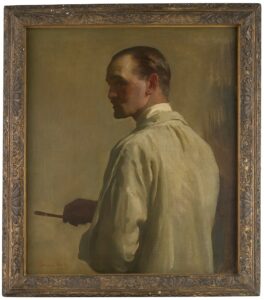
    Of course, 5 Hertford Street has an immaculate aesthetic, the bloodline of which one might trace back past Robin Birley, through his father Mark Birley – also the founder of Annabel’s and a myriad others – back to his father Sir Oswald Birley, the middling portrait-painter. Part of its pleasure is the sense of a very plush warren, where some of the most important meetings are taking place in some attic or anteroom whose existence you certainly wouldn’t intuit in the foyer.

    Oswald Birley, Self-Portrait


    Even so, as nice as it all is, the suspicion remains that people join Private Members’ Clubs not just because they’re convenient, but also to say they’ve joined them. There is perhaps a certain commercial power to saying to a prospective client: “Let’s meet at my club.” This sentence alone suggests the existence of disposable income, and therefore success.

    When I speak to an ultra-high-net-worth individual who seems to be a member of almost all the clubs of London, including Alfred’s where the Dover sole is especially to be recommended. “This is my kitchen,” he says, with a gesture at the whole of Mayfair, not referring to one of these clubs, but to all of them.

    The job opportunities in these places mirror those in the broader hospitality industry, marrying up the possibilities of working in a Michelin Star dining setting with working in a luxury hotel. One manager tells me candidates wouldn’t stand a chance of success without “discretion, presentability and perhaps a quiet enjoyment of the finer things in life” – even if you are serving people who are experiencing those finer things and not experiencing them yourself.

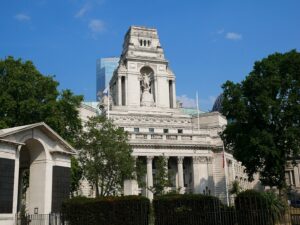
    The expansion in these clubs these past years has meant that it is possible, if you have the income, to be never far from a possible exclusive spot. If you’re somewhat exhausted after a meeting with your banker in the City, then for five years or so it’s been possible to swing by Ten Trinity Square. Here you enter a world of wood-panelled comfort: an experience which ought to rub away at the fact of having spent the morning in a financial institution discussing the interest rate.

    While Ten Trinity Square is still relatively new, one of the features of the world of private members’ clubs is to feel a connection with the city’s past – and especially with its aristocratic past. In Home House, there is the magnificent staircase by Robert Adam, spiralling up towards a skylight. The dining room offers expansive views of Portman Square as you eat what may be the best cuisine in the city.

    Ten Trinity Square, the go to club for the City


    But perhaps there is an increasing sense of disconnect in today’s cost of living crisis. Pampered luxury isn’t always the best look when, a few streets away, others are struggling to make ends meet. If joining one of these clubs is tantamount to admitting to a spare £5,000 a year, one may sometimes wonder if that money might not have been better spent. Many of the members of these clubs publicly remind the outside world that they’re engaged on extensive charitable works after all.

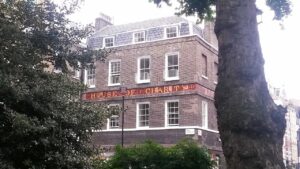
    Perhaps this is why I was rather fond of the House of St Barnabas just off Soho Square where the food was so reliably bad as to salve one’s conscience. I say was because news has now reached me that the club has sadly closed, but I think there is much other clubs can learn from the attempt. In the House, the coffee possessed the unmistakeable tang of Nescafé Instant, the pizza – one of the few things on the menu – tended to almost laughably inedible, and even the nibbles could reliably bring on any number of gastric illnesses.

    But there was method in this madness, since the place doubled up as a homeless charity. The club’s website tells visitors that the House is on a mission to change the conversation around homelessness, broadening the definition away from rough sleeping to encompass the 104,510 households currently in unsuitable accommodation.

    The House of St Barnabas sadly announced its closure in January 2024


    Chief Executive Rosie Ferguson explained in the club’s 2023 Impact Report: “Private member’s clubs have existed for centuries. They have often acted as exclusive spaces for the elite, an environment created in order to give wealthy people their own networks and careers, and their exclusivity has been at odds with diversity, inclusion and social progress.” This is an important document – one searches in vain for evidence of 5 Hertford Street’s social impact report. That’s not to say Robin Birley doesn’t do any good – most people do – but The Guardian has reported that staff were lobbying in 2019 for a living wage, with porters paid £8.50 an hour. This report may need to be taken with a pinch of salt, since it was written by that scourge of the right, the left-wing commentator Owen Jones who might be said to have a certain predisposition to paint Birley et al. in a negative light.

    But it does make one wonder a bit about the ultimate purpose of these places, even as one always enjoys dining at them. One also can’t help but feel that their original historical intention has been slowly mutated by a failing politics.

    These clubs originally emanated out of the coffee shops, and were places of political debate: one has an image of William Pitt the Younger holding court at White’s or Charles James Fox issuing his latest opinions at Brooks’s just down the road. This was not an undebauched time, especially not for Fox who, being the Boris Johnson of his day, was as dedicated a philanderer as he was an orator. But nobody doubts they had concrete matters to discuss.

    William Wilberforce, who was in the Pitt set, extricated himself from the club scene after his conversion and the result, after a long period of attrition in Parliament, was the expedition of the abolition of the slave trade. One wonders whether the House of St Barnabas, with its impressive Employment Participation Programme, where 95 per cent of participants have completed the course, might have marked a new seriousness of purpose more suitable for these times. The club had worked with 42 employers, partnering with Bafta 195 and Nimax Theatres. Let’s hope that despite its failure it has some sort of legacy.

    Similarly, there has been a marked rise in the women’s only private members’ club, with the Allbright leading the way. This is named after the first female US Secretary of State Madeleine Allbright who once remarked: “There’s a special place in Hell for women who don’t help each other.” Notable members include actress Olivia Wilde, filmmaker Gurinder Chadha, and the business woman Martha Lane-Fox.

    All of this shows that the sector is shifting, and that the opportunities for a meaningful career are broadening. This is now an area where you can work in a thoughtful environment as much in the service to ideals, as in the service to ultra-high-net-worth individuals whose opinions you might not agree with. Obviously, if the coffee had been better at the House of St Barnabas that might have helped with the membership numbers; but equally, it might not be an idea for 5 Hertford Street to do a bit of visible giving back to the community.

  • Peter Jackson’s Beatles film Get Back as a study in workplace toxicity

    Christopher Jackson


    The data is mixed as to whether The Beatles have broken through to the younger generation. The band which used to make a habit of being number 1, is currently listed as the 93rd most streamed artist on Spotify, with 20 million followers. This pales somewhat predictably when set against the sort of numbers totted up by Taylor Swift (83.23 million), and who recently made headlines by greedily having the whole of the top 10 to herself; The Weeknd (79.04 million) and Ed Sheeran (76.60 million).

    Of bands people over the age of 35 will likely remember from their youth, the best performing are Coldplay, who are 12th on the list with 58.54 million, and Elton John who is 21st with just over 50 million listeners.

    However the available statistics on the Beatles, while they testify to the fact that Beatlemania itself happened over half a century ago, do show that the band’s popularity endures among the young, with over 30 per cent of downloads coming from 18-24 year olds.

    These statistics seem to assure the Beatles continuation in the culture well into the 21st century. This will include not just the music but movies, and therefore Peter Jackson’s epic three-part series Get Back.

    The film follows the Fab Four as they record an album which would become Let It Be , the last album the band would release, and  a few songs from Abbey Road, which was the last album the group recorded. As the pair meet in Twickenham it seems possible that they will shoot a new film of some kind, but as the hours go by, it becomes clear that nobody has a clear idea of what the film might entail and so it is abandoned in favour of the famous concert on the roof at 3 Savile Row. This would turn out to be the band’s last live performance.

    That’s because in this film, all isn’t quite well with the Beatles. We, the viewers, know that the band is in fact close to its terminus: the break-up which coincided with the end of the 1960s and brought that colourful epoch to its conclusion.

    In fact, in places the film turns out to be a study in workplace toxicity. Though there are passages where the magic of music-making makes you feel, though you know differently, that the band could continue, the air of tension is at other times unmistakeable.

    The dynamic of the four feels dictated throughout by Paul McCartney, sometimes to a surprising extent. We often think of John Lennon as the leader of The Beatles but there appear to have been a few factors which worked against Lennon being in charge by this point in their careers.

    The first is that Lennon at times seems disengaged. Whereas Linda McCartney accompanies Paul to the studio only occasionally, and always seems a straightforward and optimistic presence when she does, Yoko Ono accompanies John throughout, sometimes maintaining what must have been an unnerving silence and at others screaming into a microphone in an alarming way.

    One might add that it might have been especially alarming on the ears of the man who wrote ‘Yesterday.’ Even so, despite the difficulty, one notes throughout a certain tenderness, which feels heartbreakingly residual, about the way in which Lennon and McCartney look at each other, and converse. It suggests, even as that friendship is unravelling, a profound connection based on having journeyed through strange seas of song together for so long.

    But something else is clear. McCartney, certainly at this stage, and perhaps throughout, is in a leadership position because his talent feels of another kind. Lennon’s was always the stronger personality, but McCartney is the one with the preternatural gift, the writer of the melodies which we still sing around the piano today. It is notable that McCartney wrote without much input from Lennon: Hey Jude, Yesterday, Yellow Submarine, When I’m Sixty Four, and in this film he is seen writing Let it Be. These songs are standards in a way which Lennon’s songs aren’t: they have their origins sometimes in music hall or in jazz. They have a capacity to endure in any setting which you cannot say songs like ‘Strawberry Fields Forever’ or ‘I am the Walrus’, so tethered to the unusualness of Lennon’s personality, really have.

    Genius of McCartney’s kind creates imbalance. In this film it is shown in the way in which McCartney seems to be working on a huge number of songs. By my count he is writing more or less simultaneously: Let it Be, I’ve Got a Feelin’, Oh Darling, Let it Be, Maxwell’s Silver Hammer, Her Majesty, The Long and Winding Road, Get Back, She Came in Through the Bathroom Window, Carry That Weight, around half of which are songs now of lasting fame, and the other half of which are musically interesting. Lennon, by contrast, is working on Across the Universe, Don’t Let me Down, Dig a Pony, Polythene Pam, an early version of what would become Jealous Guy, and has the riff for what would become I Want You (She’s So Heavy). These songs are slight by comparison with what McCartney is working on, as well as fewer in number.

    Meanwhile, George Harrison is working on I Me Mine and Old Brown Shoe and has the bones of a song which would in time become a standard, Something. One sees here the ludicrousness of Harrison’s position: Harrison is writing a song which will reverberate forever yet there is a clear assumption that his songs are unlikely to be included in any significant number.

    McCartney is not only ahead as a composer but as a player of instruments. It was Lennon who was once asked if Ringo Starr was the best drummer. When he replied, “He’s not even the best drummer in the Beatles” he was referencing McCartney. Likewise you sense that McCartney can also play guitar better than Harrison. This knowledge leads him to micromanage and makes you realise that the band can’t function really as a team anymore.

    But there’s a paradox here because McCartney’s talent, as we know from the comparative decline of the post-Beatles years, also feels oddly dependent on the Beatles, and so you feel there is more at stake for him in wanting the band to remain together. At one point he plaintively tells everyone: “We can sing together when we’re older.”

    Ringo Starr meanwhile is worth watching closely throughout the film as he remains unobtrusive and popular. He is in fact an exemplary study in how to handle workplace toxicity.

    At times the juxtaposition between McCartney’s gifts and the others can be almost ludicrous. While the others are talking at one point, we see McCartney in the background writing Let It Be. Nobody looks up to tell him how good it is. Either they are inoculated to his genius by long exposure to it, or they do notice and suppress some feeling of envy.

    Sometimes, you feel that the horsing around is irksome to McCartney as it takes him away from the heavier workload caused by his own prolific nature. Yet he takes part anyway, as he senses that whatever else he will go on to do with his abilities, The Beatles will be the end of something important: you can taste his fear throughout.

    Then beautifully all this disappears in the final episode which deals with the rooftop concert. Here we see the Beatles perform Get Back, Don’t Let Me Down, I’ve Got a Feeling, One After 909 and Dig A Pony. We get a glimpse of the typical pedestrians on the streets of Mayfair towards the end of the 1960s: most are positive about the concert but enough people in the area have issued complaints to mean that a pair of bobbies, who seem young enough to be alive today, are sent over to ask them to turn the sound down. At one point he mutters: ‘They’re disrupting all the local business.”

    The scene is a fascinating snapshot of the police in the 1960s. On the one hand one can see the powerlessness of law enforcement in the face of global celebrity; it is all told beautifully in the delighted smile McCartney gives at the beginning of Don’t Let Me Down when he turns around to see the police have joined him on the roof: this is what he wanted.

    During the concert one feels drawn particularly to Lennon; in fact, power somehow seems to devolve to him during the live performance. Public charisma and private force of character seem to be very different things.

    What is it that enables someone to have sufficient confidence to insist on their idea of music before allcomers? As we watch Lennon, we see two things. First he is proclaiming the idiocy of the homogeneity of anything establishment. Much of the film shows us how absolutely victorious he had been in pushing back against the dullness of the post -War settlement. Many of the pedestrians are dressed in styles which emanated out of the Swinging Sixties which they themselves had to a large extent brought about. Meanwhile, everybody else has to accept their presence.

    But I don’t think Lennon would have got so far with all this if he hadn’t also had positives to offer. Throughout the songbook, love is always being proclaimed. It is the sadness of this film that that ideal couldn’t prevent the break up of a band whose music still matters today.


  • Sir Terry Waite: Maths is important – but we can’t afford to forget the lessons of history

    Sir Terry Waite

    I have been observing the government’s education priorities, which currently place particular importance on maths. It is important that we focus on this subject, of course, but we shouldn’t do so at the expense of others: most importantly we are almost at the point where we begin to find that history doesn’t matter – and yet, of course, it matters very much.

    That’s because you have to know where you have come from, and what has happened in the past. For instance, I have just been reading about and understanding the Churchill family. If you do that you discover that John Churchill, the first Duke of Marlborough, was an extraordinary general – perhaps the most famous in Europe, in the pre-Napoleon era. He was instrumental in winning the Nine Years’ War against King Louis XIV. If you read about Marlborough’s command of his troops, you see an almost exact parallel with his ancestor Sir Winston Churchill who would play such a prominent role as Prime Minister during the Second World War. History is full of such lessons, and we can learn from these links and correspondences.

    Our problem appears to be that we don’t take the trouble to learn from history – and especially the past mistakes that have been made. In a society which seems not to place sufficient value on history, we tend to carry on regardless, creating havoc, misery and mayhem in so many parts of the world. Unfortunately, we have arrived at this rather stupid idea that aggression and warfare is going to resolve our problems. It doesn’t resolve our problems; it increases them. When you consider the suffering and disaster that is continually being meted out to millions of people, you realise we need more politicians and people in positions of leadership who have this understanding.

    This is not to say that this kind of historical awareness alone will solve matters. It is extremely complicated to know how to deal with international conflict and to know what structures both domestically and internationally might be required. It goes without saying that if we don’t give some thought to that, then we are heading straight into the abyss. By that light, history isn’t just a mere curiosity – it calls to us with urgent importance.

    Russia-Ukraine remains a very difficult situation. I think we should be making active attempts to seek a negotiated agreement but it is extremely difficult when you have a person such as Vladimir Putin in charge. The fact is, he has committed himself and if he fails, he may well recognise that he will follow the destiny of previous leaders who overreached. Russia has a history of getting rid of its leaders: if you are a leader in Russia it’s unwise for you to go to the top floor of any apartment and keep well away from the windows.

    In a sense it’s not only that Putin is fighting this war, he is also fighting for his life. When someone fights for their life they become desperate and this fact alone will make a negotiated settlement extremely difficult. But this doesn’t mean this goal should not be worked towards. We need the best brains to help resolve this particular issue – not just for humanitarian reasons, but also because of the scale of what might go wrong if we don’t. Of course, for a long time now, there has been the threat of nuclear warfare over our heads and though it would be extremely stupid for that to happen, if we have to admit the possibility then that increases the urgency of the need to find a resolution.

    We have a lot facing us in the future. If I might conduct some basic mathematics, since I’m 84, I am old enough now to say I’ve only got a few years left. Much of this will be for future generations to know – and I hope that they will have both maths and history at their disposal in order to meet these many challenges.