Category: Culture

  • Friday poem: Omar Sabbagh’s ‘Searching the Horizon’

    Searching The Horizon


    I opened my eyes and my eyes opened

    the light that helped them first to arise;

    and it was as though a window had forged another window,

    working and sculpting the light to show

    the drama of sight – how a new horizon

    glanced at me, gently, knighting me with angles,

    the emanations in a cool and slaking breeze,

    and the unmastered day ahead, like a slave still

    to each refraction of hope, each ghost

    on its way to becoming the fuller filled-out flesh

    it wants to be. Lit now, gripped by delight,

    I walk among the staple daily shadows

    and feel each one sundered below my stepping feet,

    the horizon busied now with its batch of unhurt children.


    Omar Sabbagh


  • Music review: Tallulah Rendall’s Love Carries Me Home

    Christopher Jackson

    Tallulah Rendall’s new album Love Carries Me Home is a beautiful work in many different ways: it arrives as a charmingly produced book with a CD on the inside sleeve, though it is also possible to listen to much of the work on Spotify and iTunes. The book itself consists of a helpful introductory essay by Rendall herself outlining the origins of the album which came out of a particularly difficult period during which a relationship ended, her father John sadly died, and she was also experiencing professional difficulties arising out of the impact of Covid-19 on her industry.

    The voice that emerges in this essay is of a gentle soul, capable of challenging herself to forge growth out of adversity. Rendall recalls:

    Part of my journey of Lockdown was a relationship that completely broke my confidence…yet through determined commitment, I found my way to defy the doctrine that I had begun deeply to believe; to break through the belief that I am not good enough, I am not worthy of love or care…At the time of writing what I didn’t realise was how embedded in our culture the ‘I Am Not Good Enough’ culture actually is.

    It is this last observation which, I think, sets Rendall’s creativity apart: the songs become a sort of raft which we might all climb aboard and this is possible because she has made the generous observation that her own afflictions might be used as a way of assuaging those of others. Rendall understands that art begins with an acknowledgement of our vulnerability – and that this condition is also an opportunity. This album finds her time and again equal to the task of turning the pain of life into something which gathers up that pain into new musical forms.

    The book itself prints the lyrics alongside excellent photography of Tallulah making the book a lovely object to own. In the lyrics themselves there is often the umistakeable note of an earned wisdom as in the song ‘I Am Not Good Enough’:

    We can barricade our hearts with all the armour that we grow

    Hide away from the pain, but our hearts will never know

    The beauty of life, that is wanting us to know and say to ourselves

    That I am loved and I, I am enough just as I am

    The world appears to be at a hinge point in relation to the eternal questions of religion and materialism. In these songs, the structures of Western society are revealed to be an insufficient basis on which to build a valid and meaningful life. Rendall’s vocals remind me a bit of Joni Mitchell, swooping and diving through subtle and patient melodies: she is reassuring us that it is worth the effort to reexamine ourselves.

    Of course, it’s not strictly true to say that we are enough just as we are and can sit back smug in that knowledge: Rendall in fact doesn’t think this at all. In another track ‘Be A Little Kinder’ she urges us to take the stuff of ourselves forwards into better versions of ourselves. The simplicity of the message works since it is obviously true, and always has been. Its urgency and its importance is that it is being communicated to a world in far too much of a hurry, and which too often seems to forget what once was known to almost everyone.

    In a world where everything comes to us in a packaged and predictable way, listeners will feel this album as a genuinely authentic contribution. It is very much deserved that this new multiform release has been endorsed by the likes of Shirley Bassey and Jools Holland, and there are signs that she will reach a considerable audience. Let’s hope so – the world needs voices like this.

    For more information go to tallulahrendal.com

  • As the House of St Barnabas closes we look at the future of Private Members’ Clubs

    Costeau reports on how the cost of living is affecting one of Mayfair’s oldest institutions: the Private Members’ Club

    As Costeau walks into 5 Hertford Street, he receives that jolt of self-importance which he has learned to distrust: there is a sense, which surely must be foolish, that one has somehow arrived. Isn’t that Robin Birley sitting over there? Didn’t that tall chap used to chair the Conservative Party? And I seem to remember that woman has a title which she only uses when she comes in here.

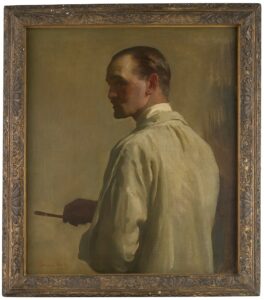
    Of course, 5 Hertford Street has an immaculate aesthetic, the bloodline of which one might trace back past Robin Birley, through his father Mark Birley – also the founder of Annabel’s and a myriad others – back to his father Sir Oswald Birley, the middling portrait-painter. Part of its pleasure is the sense of a very plush warren, where some of the most important meetings are taking place in some attic or anteroom whose existence you certainly wouldn’t intuit in the foyer.

    Oswald Birley, Self-Portrait


    Even so, as nice as it all is, the suspicion remains that people join Private Members’ Clubs not just because they’re convenient, but also to say they’ve joined them. There is perhaps a certain commercial power to saying to a prospective client: “Let’s meet at my club.” This sentence alone suggests the existence of disposable income, and therefore success.

    When I speak to an ultra-high-net-worth individual who seems to be a member of almost all the clubs of London, including Alfred’s where the Dover sole is especially to be recommended. “This is my kitchen,” he says, with a gesture at the whole of Mayfair, not referring to one of these clubs, but to all of them.

    The job opportunities in these places mirror those in the broader hospitality industry, marrying up the possibilities of working in a Michelin Star dining setting with working in a luxury hotel. One manager tells me candidates wouldn’t stand a chance of success without “discretion, presentability and perhaps a quiet enjoyment of the finer things in life” – even if you are serving people who are experiencing those finer things and not experiencing them yourself.

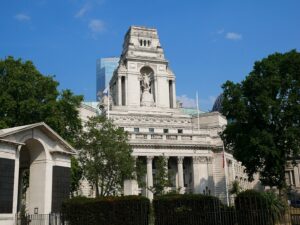
    The expansion in these clubs these past years has meant that it is possible, if you have the income, to be never far from a possible exclusive spot. If you’re somewhat exhausted after a meeting with your banker in the City, then for five years or so it’s been possible to swing by Ten Trinity Square. Here you enter a world of wood-panelled comfort: an experience which ought to rub away at the fact of having spent the morning in a financial institution discussing the interest rate.

    While Ten Trinity Square is still relatively new, one of the features of the world of private members’ clubs is to feel a connection with the city’s past – and especially with its aristocratic past. In Home House, there is the magnificent staircase by Robert Adam, spiralling up towards a skylight. The dining room offers expansive views of Portman Square as you eat what may be the best cuisine in the city.

    Ten Trinity Square, the go to club for the City


    But perhaps there is an increasing sense of disconnect in today’s cost of living crisis. Pampered luxury isn’t always the best look when, a few streets away, others are struggling to make ends meet. If joining one of these clubs is tantamount to admitting to a spare £5,000 a year, one may sometimes wonder if that money might not have been better spent. Many of the members of these clubs publicly remind the outside world that they’re engaged on extensive charitable works after all.

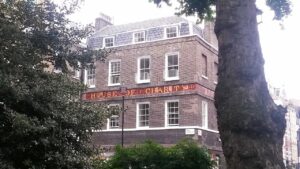
    Perhaps this is why I was rather fond of the House of St Barnabas just off Soho Square where the food was so reliably bad as to salve one’s conscience. I say was because news has now reached me that the club has sadly closed, but I think there is much other clubs can learn from the attempt. In the House, the coffee possessed the unmistakeable tang of Nescafé Instant, the pizza – one of the few things on the menu – tended to almost laughably inedible, and even the nibbles could reliably bring on any number of gastric illnesses.

    But there was method in this madness, since the place doubled up as a homeless charity. The club’s website tells visitors that the House is on a mission to change the conversation around homelessness, broadening the definition away from rough sleeping to encompass the 104,510 households currently in unsuitable accommodation.

    The House of St Barnabas sadly announced its closure in January 2024


    Chief Executive Rosie Ferguson explained in the club’s 2023 Impact Report: “Private member’s clubs have existed for centuries. They have often acted as exclusive spaces for the elite, an environment created in order to give wealthy people their own networks and careers, and their exclusivity has been at odds with diversity, inclusion and social progress.” This is an important document – one searches in vain for evidence of 5 Hertford Street’s social impact report. That’s not to say Robin Birley doesn’t do any good – most people do – but The Guardian has reported that staff were lobbying in 2019 for a living wage, with porters paid £8.50 an hour. This report may need to be taken with a pinch of salt, since it was written by that scourge of the right, the left-wing commentator Owen Jones who might be said to have a certain predisposition to paint Birley et al. in a negative light.

    But it does make one wonder a bit about the ultimate purpose of these places, even as one always enjoys dining at them. One also can’t help but feel that their original historical intention has been slowly mutated by a failing politics.

    These clubs originally emanated out of the coffee shops, and were places of political debate: one has an image of William Pitt the Younger holding court at White’s or Charles James Fox issuing his latest opinions at Brooks’s just down the road. This was not an undebauched time, especially not for Fox who, being the Boris Johnson of his day, was as dedicated a philanderer as he was an orator. But nobody doubts they had concrete matters to discuss.

    William Wilberforce, who was in the Pitt set, extricated himself from the club scene after his conversion and the result, after a long period of attrition in Parliament, was the expedition of the abolition of the slave trade. One wonders whether the House of St Barnabas, with its impressive Employment Participation Programme, where 95 per cent of participants have completed the course, might have marked a new seriousness of purpose more suitable for these times. The club had worked with 42 employers, partnering with Bafta 195 and Nimax Theatres. Let’s hope that despite its failure it has some sort of legacy.

    Similarly, there has been a marked rise in the women’s only private members’ club, with the Allbright leading the way. This is named after the first female US Secretary of State Madeleine Allbright who once remarked: “There’s a special place in Hell for women who don’t help each other.” Notable members include actress Olivia Wilde, filmmaker Gurinder Chadha, and the business woman Martha Lane-Fox.

    All of this shows that the sector is shifting, and that the opportunities for a meaningful career are broadening. This is now an area where you can work in a thoughtful environment as much in the service to ideals, as in the service to ultra-high-net-worth individuals whose opinions you might not agree with. Obviously, if the coffee had been better at the House of St Barnabas that might have helped with the membership numbers; but equally, it might not be an idea for 5 Hertford Street to do a bit of visible giving back to the community.

  • Peter Jackson’s Beatles film Get Back as a study in workplace toxicity

    Christopher Jackson


    The data is mixed as to whether The Beatles have broken through to the younger generation. The band which used to make a habit of being number 1, is currently listed as the 93rd most streamed artist on Spotify, with 20 million followers. This pales somewhat predictably when set against the sort of numbers totted up by Taylor Swift (83.23 million), and who recently made headlines by greedily having the whole of the top 10 to herself; The Weeknd (79.04 million) and Ed Sheeran (76.60 million).

    Of bands people over the age of 35 will likely remember from their youth, the best performing are Coldplay, who are 12th on the list with 58.54 million, and Elton John who is 21st with just over 50 million listeners.

    However the available statistics on the Beatles, while they testify to the fact that Beatlemania itself happened over half a century ago, do show that the band’s popularity endures among the young, with over 30 per cent of downloads coming from 18-24 year olds.

    These statistics seem to assure the Beatles continuation in the culture well into the 21st century. This will include not just the music but movies, and therefore Peter Jackson’s epic three-part series Get Back.

    The film follows the Fab Four as they record an album which would become Let It Be , the last album the band would release, and  a few songs from Abbey Road, which was the last album the group recorded. As the pair meet in Twickenham it seems possible that they will shoot a new film of some kind, but as the hours go by, it becomes clear that nobody has a clear idea of what the film might entail and so it is abandoned in favour of the famous concert on the roof at 3 Savile Row. This would turn out to be the band’s last live performance.

    That’s because in this film, all isn’t quite well with the Beatles. We, the viewers, know that the band is in fact close to its terminus: the break-up which coincided with the end of the 1960s and brought that colourful epoch to its conclusion.

    In fact, in places the film turns out to be a study in workplace toxicity. Though there are passages where the magic of music-making makes you feel, though you know differently, that the band could continue, the air of tension is at other times unmistakeable.

    The dynamic of the four feels dictated throughout by Paul McCartney, sometimes to a surprising extent. We often think of John Lennon as the leader of The Beatles but there appear to have been a few factors which worked against Lennon being in charge by this point in their careers.

    The first is that Lennon at times seems disengaged. Whereas Linda McCartney accompanies Paul to the studio only occasionally, and always seems a straightforward and optimistic presence when she does, Yoko Ono accompanies John throughout, sometimes maintaining what must have been an unnerving silence and at others screaming into a microphone in an alarming way.

    One might add that it might have been especially alarming on the ears of the man who wrote ‘Yesterday.’ Even so, despite the difficulty, one notes throughout a certain tenderness, which feels heartbreakingly residual, about the way in which Lennon and McCartney look at each other, and converse. It suggests, even as that friendship is unravelling, a profound connection based on having journeyed through strange seas of song together for so long.

    But something else is clear. McCartney, certainly at this stage, and perhaps throughout, is in a leadership position because his talent feels of another kind. Lennon’s was always the stronger personality, but McCartney is the one with the preternatural gift, the writer of the melodies which we still sing around the piano today. It is notable that McCartney wrote without much input from Lennon: Hey Jude, Yesterday, Yellow Submarine, When I’m Sixty Four, and in this film he is seen writing Let it Be. These songs are standards in a way which Lennon’s songs aren’t: they have their origins sometimes in music hall or in jazz. They have a capacity to endure in any setting which you cannot say songs like ‘Strawberry Fields Forever’ or ‘I am the Walrus’, so tethered to the unusualness of Lennon’s personality, really have.

    Genius of McCartney’s kind creates imbalance. In this film it is shown in the way in which McCartney seems to be working on a huge number of songs. By my count he is writing more or less simultaneously: Let it Be, I’ve Got a Feelin’, Oh Darling, Let it Be, Maxwell’s Silver Hammer, Her Majesty, The Long and Winding Road, Get Back, She Came in Through the Bathroom Window, Carry That Weight, around half of which are songs now of lasting fame, and the other half of which are musically interesting. Lennon, by contrast, is working on Across the Universe, Don’t Let me Down, Dig a Pony, Polythene Pam, an early version of what would become Jealous Guy, and has the riff for what would become I Want You (She’s So Heavy). These songs are slight by comparison with what McCartney is working on, as well as fewer in number.

    Meanwhile, George Harrison is working on I Me Mine and Old Brown Shoe and has the bones of a song which would in time become a standard, Something. One sees here the ludicrousness of Harrison’s position: Harrison is writing a song which will reverberate forever yet there is a clear assumption that his songs are unlikely to be included in any significant number.

    McCartney is not only ahead as a composer but as a player of instruments. It was Lennon who was once asked if Ringo Starr was the best drummer. When he replied, “He’s not even the best drummer in the Beatles” he was referencing McCartney. Likewise you sense that McCartney can also play guitar better than Harrison. This knowledge leads him to micromanage and makes you realise that the band can’t function really as a team anymore.

    But there’s a paradox here because McCartney’s talent, as we know from the comparative decline of the post-Beatles years, also feels oddly dependent on the Beatles, and so you feel there is more at stake for him in wanting the band to remain together. At one point he plaintively tells everyone: “We can sing together when we’re older.”

    Ringo Starr meanwhile is worth watching closely throughout the film as he remains unobtrusive and popular. He is in fact an exemplary study in how to handle workplace toxicity.

    At times the juxtaposition between McCartney’s gifts and the others can be almost ludicrous. While the others are talking at one point, we see McCartney in the background writing Let It Be. Nobody looks up to tell him how good it is. Either they are inoculated to his genius by long exposure to it, or they do notice and suppress some feeling of envy.

    Sometimes, you feel that the horsing around is irksome to McCartney as it takes him away from the heavier workload caused by his own prolific nature. Yet he takes part anyway, as he senses that whatever else he will go on to do with his abilities, The Beatles will be the end of something important: you can taste his fear throughout.

    Then beautifully all this disappears in the final episode which deals with the rooftop concert. Here we see the Beatles perform Get Back, Don’t Let Me Down, I’ve Got a Feeling, One After 909 and Dig A Pony. We get a glimpse of the typical pedestrians on the streets of Mayfair towards the end of the 1960s: most are positive about the concert but enough people in the area have issued complaints to mean that a pair of bobbies, who seem young enough to be alive today, are sent over to ask them to turn the sound down. At one point he mutters: ‘They’re disrupting all the local business.”

    The scene is a fascinating snapshot of the police in the 1960s. On the one hand one can see the powerlessness of law enforcement in the face of global celebrity; it is all told beautifully in the delighted smile McCartney gives at the beginning of Don’t Let Me Down when he turns around to see the police have joined him on the roof: this is what he wanted.

    During the concert one feels drawn particularly to Lennon; in fact, power somehow seems to devolve to him during the live performance. Public charisma and private force of character seem to be very different things.

    What is it that enables someone to have sufficient confidence to insist on their idea of music before allcomers? As we watch Lennon, we see two things. First he is proclaiming the idiocy of the homogeneity of anything establishment. Much of the film shows us how absolutely victorious he had been in pushing back against the dullness of the post -War settlement. Many of the pedestrians are dressed in styles which emanated out of the Swinging Sixties which they themselves had to a large extent brought about. Meanwhile, everybody else has to accept their presence.

    But I don’t think Lennon would have got so far with all this if he hadn’t also had positives to offer. Throughout the songbook, love is always being proclaimed. It is the sadness of this film that that ideal couldn’t prevent the break up of a band whose music still matters today.


  • Ronel Lehmann reviews Jeremy King’s new restaurant Arlington: “an inspirational overcoming of adversity.”

    Arlington Restaurant Review: A Delightful Dining Experience with Jeremy King, by Ronel Lehmann


    When Karin Stark, wife of the late Dave Allen, described how life was without her comedian husband, she movingly said: “It’s like being a very long way from home.” Those words always struck a chord with me. To an avid restaurant goer, it felt the same, only this time on a happier occasion to be greeted by Jeremy King in his new abode, Arlington in St James’s.

    I had to research whether there had ever been a battle of Arlington. Indeed, there had, at the time of the American Civil War. The Arlington National Cemetery is also the final resting place for many of the United States’ greatest heroes, including more than 300,000 veterans of every American conflict, from the Revolutionary War to Iraq and Afghanistan.


    The reason for my own sudden conflict was learning that my own Editor had wanted to visit Arlington and write a review, and I had unintentionally usurped him.

    My marketing director guest had arrived just before me, although I wasn’t late, and she was by then well tucked into a small table facing other diners. I had the window outside view, although I was totally focussed on the dazzling finish of the interior, with its new tablecloths, black furniture, polished steel, mirrors, lighting and framed prints.

    The menus arrived and felt immediately comforting. It was a Monday lunch, the start of a new week and we both decided to decline wine. For our starters, we ordered Plum Tomato and Basil Galette and the Spinach and Ricotta Tortelloni. I felt the infusion of wild garlic in the tortelloni which was served warm.

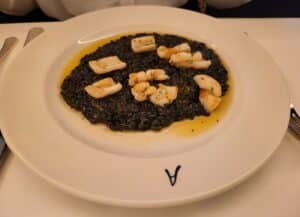
    The main courses of Risotto Nero and Chicken Milanese, Rocket, Parmesan followed suit. My own chicken was beautifully flavoursome. If I am honest, I struggled to finish the huge portion. It was at that moment that I noticed the teeth of my guest opposite. Her mouth had turned completely black. I felt that I needed to do the honourable thing and gently alert her. She was shocked and her white serviette also began to turn black as she delicately wiped her mouth to try and remove traces of the squid ink. At moments like these, we could only laugh together, as I thought that Dracula had arrived.


    After the drama of the risotto, we decided to pass on the puddings but enjoy an expresso coffee with some chocolate truffles. Readers will know that I have a sweet tooth and my big eyes noted the temptations of Cappuccino Crème Brûlée, Mousse aux Deux Chocolats, Hokey Pokey Coupe, Treacle Tart with Cornish Clotted Cream, Scandinavian Iced Berries with White Chocolate Sauce, Tarte Tatin with Cinnamon Ice Cream and Rhubarb Crumble with Custard.

    Leaving the restaurant was a bit like old times. You feel valued and don’t receive such a personal and caring gratitude expressed like it anywhere else. Jeremy and I reminisced about what happened to him before. I told him that he was inspirational overcoming adversity and making such a grand return. His long-standing commitment and service to his diners is legendary.

    As I walked away, I remembered Dave Allen again. He once said “You wake to the clock, you go to work to the clock, you clock-in to the clock, you clock out to the clock, you come home to the clock, you eat to the clock, you drink to the clock, you go to bed to the clock, you get up to the clock, you go back to work to the clock… You do that for forty years of your life and you retire — what do they fucking give you? A clock!”


    I hope the King of Arlington continues to reign over us and never retires.

  • The Poet at Work I: Tishani Doshi

    The Poet at Work I: Tishani Doshi

    As the government seemingly reduces the importance of poetry on the national curriculum, by making its study optional at the GCSE level, Finito World is introducing this regular series aimed at illustrating the utility of poetry, and examining the relationship between literature and the workplace. Poets are asked to produce a poem which speaks to what our first featured poet, Tishani Doshi, calls ‘ideas of work, leisure, community, labour, decoration, and poetry and the space we create for it all. ‘ After we produce the poem, we then give the reader a Q & A touching on the life of the poet and their relationship with work.


    Tishani Doshi is a poet and novelist born in what was then Madras in 1975. She has built an international reputation on the back of her poetry and novels – for which she has won many awards, including the Eric Gregory Award and the Forward Prize for Best First Collection. Her novels have also been critically acclaimed. Her most recent Small Days and Nights has been shortlisted for the Tata Best Fiction Award 2019 and the RSL Ondaatje Prize 2020.


    In ‘Postcard from Work’ readers will immediately be relieved by the exotic colours – ‘the yellow trumpet flowers’ and the ‘sunbirds…diving in and out of this den of gold.’ It is a poem which begins in a blaze of light. It is a piece ostensibly about work, but where little work is done – except the perhaps more vital work of paying tribute to the natural world, and mulling our place in it. Sometimes the best we have to offer our masters is to take a mental holiday from the tasks they have set us to do.


    Doshi knows that we were not born only to consider ‘the price of milk’ but to find ways of being which let death know we mean to ‘hold on.’ Work has to be done – and someone has to do it, and that will mean taking a break from dreaming. Doshi zooms out to show us what tasks lie unfinished around the narrator: we might be in a seamstress’ (‘someone else will tend the hem’) or even at a vet (‘someone else will pry open the dog’s jaw’). All our leisure, the moments we snatch, must be supported by drudgery elsewhere. Doshi also makes her living as a dancer, and her poems always have something of dance about them – they are miracles of rhythm and movement, and full of a joy which does what poetry should do: her poems are the antidote we didn’t know we needed until they came our way.


    Postcard from Work 


    Forgive me, I have been busy 

    with the yellow trumpet flowers.

    They dance uselessly, slivers

    of rapture. I know the dishes

    need washing but the sunbirds

    are diving in and out of this den

    of gold. Their dark purple wings

    are soft nets, intimate with the leaves.

    Beaks poised to receive nectar. There are 

    days I neglect my beard. I grow tired 

    of digging. I imagine someone else

    will tend the hem, the torn sleeve.

    Someone else will pry open 

    the dog’s jaw for his evening pill. 

    Our throats are in constant need

    of shelter.


    I’ve sublet a room   

    to a poet who does not know 

    the price of milk but is ready 

    to lay down her spear and surgical

    instruments, to worship the roots

    of this labyrinth. If there is rain

    and soil, onions will grow. After 

    a day in the field, the poet and I 

    sit around a fire to sing. It is a way 

    of letting death know we mean to hold

    on. The threshold stays warm. We flick

    at night with a fly-brush, cheat insects

    of their audience with a chorus 

    resurrected from silence. Think 

    of the performance of this lament

    as our hunger, of the armchair

    in the corner, our repose. 

    Underneath, is a footstool 

    that hides.


    What is the interplay in your life between dance and poetry? Is it an entirely fruitful one or can it be said to be in any way antagonistic?


    Poetry came first, but in a way, poetry only came into being once I had dance. They’ve never been antagonistic, unless you count yearning for one, while you’re engaged in the other? But that feels such a natural way of being in the world. Both require a kind of vulnerability and strength – the making of your own vocabulary. When I’m in a lazy mode, which is my most natural way of being, I wonder at both the worlds of poetry and dance, the capabilities we don’t imagine for ourselves. 


    How do you find the business side of your writing life? Many writers I know struggle with invoices/tax/the admin of it all? But then I think that can also be a cliché and many writers be surprisingly scrappy and hard-headed?


    I studied business administration and communications before ditching it for poetry, so I can get around economics and accountancy alright, but that’s not to say I thrill in it. I move in waves. Sometimes I’m terribly productive about everything – to-do lists and all. Other times I want to be left alone to watch the flowers. 


    The UK government has recently said that poetry should be optional at the GCSE level – a significant demotion in its importance on the curriculum. What is your view on that and what do you feel the impact will be?


    One of my first jobs was to teach an introduction to poetry and fiction class to students at Johns Hopkins University. It was a required class, most of my students were pre-med or engineering. I like to think as a result that in future dentist waiting rooms, there may be a volume of Elizabeth Bishop lying around, or that someone designing a bridge might dip into the poems of Imtiaz Dharker for inspiration. I don’t know what the UK government’s motivations for demoting poetry are, but I hope usefulness was not a factor. Everything is connected. I can’t imagine any kind of life that doesn’t need the intuition and imagination of poetry.


    What sort of role does poetry have in India – does the government encourage it sufficiently or is there tension in your country also on that score?


    Well, our current prime minister unfortunately published a volume of poems, called A Journey.  Historically, tyrants have had a thing for poetry (see Mao, Nero, Stalin, Mussolini Bin Laden), which gives poetry a bad rep. Poetry as I remember it in school was rather fossilized and distant. I think at the college level, there have been serious efforts to rejuvenate and decolonize the syllabus. In schools, I fear they may still be standing up in front of classrooms with hands clasped, reciting “charge of the light brigade.”  


    Was there a particular teacher when you were younger who turned you onto poetry?


    Yes. Her name was Cathy Smith Bowers. I took one of her classes as an undergraduate in college, and it changed my life. 


    What’s your favourite poem about the workplace?


    I read this as a work poem, because I love my work, and my work is poetry.


    Love is a Place by EE Cummings 


    love is a place
    & through this place of
    love move
    (with brightness of peace)
    all places

    yes is a world
    & in this world of
    yes live
    (skilfully curled)
    all worlds
  • Meredith Taylor reviews E.1027 – Eileen Gray and the House by the Sea

    Meredith Taylor

    Eileen Gray (1878-1976) was a creative genius and the first woman to conquer the world of architecture at a time when men controlled it all. This new film reflects on Gray’s impressive career and her stunning modernist house on the Cote d’Azur and will appeal to cineastes and lovers of art and design alike.

    Unfolding as a stylish hybrid documentary E.1027 is a filmic journey into the emotional world of Eileen Gray, who was born into a large family in County Wexford, Ireland before moving to London where, after being presented as a debutante, she studied Fine Arts at the Slade and was later drawn to furniture design and architecture although her career languished in the shadows at a time when the profession was dominated by men.

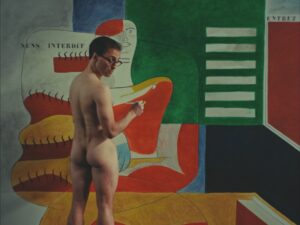
    In the 1920s women architects found themselves confined to designing interiors and Gray broke the mould by moving to the South of France where she found a plot of land on the water’s edge in Roquebrune – Cap Martin and fulfilled her dream of having a modernist house on the Riviera.  A self-confessed bi-sexual she lived there with her younger lover, the editor-in-chief of the journal ‘Architecture Vivante’ Jean Badovici. The two crossed paths with fellow architect Le Corbusier who comes off the worse for wear in Swiss filmmaker Beatrice Minger’s take of events. He is seen an arrogant and rather self-regarding character who muscles into Gray’s world by decorating E.1027 with his own murals.

    Eileen Grey – the house at Roquebrune – Cap St Martin

    Minger’s film takes us into Gray’s inner circle, a tightly knit coterie of designers that included Fernand Lager, Corbusier and his wife Yvonne. Early on Gray in the film counteracts Corbusier’s theory that a house is ‘a machine for living’  considering it more spiritual than that: ‘A place you surrender to, that swallows you up. A place you belong to”.

    Gray and Jean Badovici dedicated themselves to building the E.1027 in the Roquebrune-Cap-Martin location between Monaco and Menton in 1925. Due to its rocky, cliff-hanging location, wheelbarrows had to be used to transport materials on site. Gray named the house: E for Eileen 10 for John Badovici but their idyll came to a close two years later when Gray sensed the winds of change: “I like doing things but I don’t like possessing them”. She had already bought another plot of land inland and her attention moved on to design a place in this  even more remote location.

    The film then broadens its focus onto ‘Bado’ and Corbusier’s relationship, with the French architect claiming Gray’s scheme for the house was copied from his own pen design. Marking the territory he built his own wooden Cabanon alongside a little bistro near to E.1027. But the Second World War put an end to the rivalry when the German Nazi soldiers occupied the Roquebrune house riddling the walls with bullets.

    In the title role Natalie Radmall-Quirke smokes her way through this intimate portrait of the artist who appears both a victim of her deep emotions and the driving  force behind her lover Badovici – in one scene a graceful dance is testament to their feelings for each other. After leaving the house Gray was forced to contend with Corbusier’s arrogance, although he appears to redeem himself by trying to find a buyer for the Roquebrune house, eventually it was sold to Swiss artist Marie Louise Shelbert who misguidedly thought Corbusier was the architect. Gray organised a funeral for Badovici but no one came.

    Family money and her strong work ethic clearly allowed Gray to remain financially independent all through her life although there is never any mention of commissions outside her own designs: many of her schemes never left the drawing board until later recognition, and although her furniture now sells for astronomical prices: her chrome Adjustable Table. E.1027 is one of the flagships of modern classics in furniture history (www.smow.fr/eileen-gray/adjustable-table-e-1027.html )The famous house had a less illustrious ending. In a final interview Gray finally appears in her nineties, emerging as an appealingly decent woman without a shred of ego.


    E1027 – Murals by Corbusier


    EILEEN GRAY AND THE HOUSE BY THE SEA which will celebrate its world premiere at CPH:DOX 2024 (March 13-24, 2024) in Copenhagen as part of the INTERNATIONAL COMPETITION programme.


  • Ronel Lehmann on 2Veneti: “right up there with the best”

    Ronel Lehmann on 2Veneti


    As I was making my way to join a senior colleague in this Wigmore Street restaurant, my thoughts abruptly turned to a breaking news alert on my mobile phone that a new satellite is now able to detect emissions of methane, an invisible yet potent gas that is dangerously heating the planet.

    It reminded me that the day before I had succumbed to a Jerusalem Artichoke Velouté at Coq d’Argent, a French restaurant perched high up in the heart of the city. The significant side effects of dietary inulin fibre apparently is a contributory factor and the cause of flatulence.

    To my abject horror, I noticed that my host had one of her two wrists in plaster. The greeting at 2Veneti is “Magna e Tasi, Bevi e godi” which translates to “Eat and shush, drink and enjoy.” Although I was immediately made to feel at home, I was concerned about whether I would be required to cut up her food as clearly operating with one hand in 2Veneti was going to be challenging. There was real trattoria décor and character in the restaurant which filled up quickly with the lunch service.

    Although we were supposed to be working afterwards, the owner charged our two glasses of wine to accompany our meal. My colleague enjoyed a glass of Lugana di Sirmione. Avanzi. 2022 Veneto, Turbiana grape, which she remarked was rounded with a pleasant generous velvety taste. From lake Garda I myself enjoyed the Bardolino Chiaretto. Cavalchina 2022 Veneto which was a Light pink Bardolino, Provence in style, smooth and elegant.

    A bread basket of focaccia was served and it was light, airy and Moorish. My colleague began by ordering Carpaccio di Manzo con maionese al Parmigiano e tartufo nero, beef carpaccio with parmesan mayonnaise and black truffle whereas I chose the vitello tonnato, thinly sliced veal with tuna, capers, mayonnaise and pickled onion. Both starters were delicious and beautifully presented.

    As the plates were cleared, I noticed that my colleague was managing to eat the food very respectfully. I asked the owner about the name 2Veneti. He responded that there were two original partners from Venice, hence 2Veneti. A simple and plausible explanation which made perfect sense.

    The ravioli del plin con fonduta di formaggi arrived. This was baby ravioli filled with beef and cheese fondue. I decided not to have the black truffle sauce and was encouraging the waitress to provide additional aged Parmigiano-Reggiano which she readily obliged.

    My colleague enjoyed a plate of gnocchi di patate fatti in casa con radicchio e formaggio Monte Veronese, a wonderful homemade potato gnocchi with radicchio and Monte Veronese cheese.

    No Italian meal is without a resplendent bowl of zucchini, and we shared a giant helping together. The pudding menus arrived, and we decided to share a pistachio and vanilla ice cream.

    When you think of the great Italian restaurants in London, you might be minded to mention The River Café, Sartoria and Santini. 2Veneti is right up there with the best. The service is welcoming, friendly and efficient. Regulars in Marylebone and Mayfair will tell you it is a best kept secret. I cannot wait to try the other dishes when I return. Hopefully the satellite picked up the heat of our smiling faces as we returned to the office.

  • Friday poem: ‘Plan of Attack’ by Jude A. Jung

    Plan of Attack


    Best in these short days, where silence is,

    and darkness lasts, to create little beginnings,

    like the rustle of the mouse in the hedges.

    Winter requires circumspection: small songs

    can give immense colour to what has none.

    Your masterpiece, that might be for spring:

    to sketch it now is better than a fast intention

    begun bleakly, which will reek of your rushing,

    and have a sort of odour of winter’s despair,

    a too rapid response to the exhaustion

    which happens when the light isn’t here.

    An auspicious day is coming soon.

    Patience, then. Stretch the canvas, don’t mark it.

    Be alert. This is the world about to undarken.

  • Friday poem: Omar Sabbagh’s ‘The Ghost’

    The Ghost


    In the corner of the room

    a cheap white frame; the picture inside

    shows an aged man, minted there

    with a brimming sense of achievement, calmed

    by a certain slow and quiet pride.

    My daughter kisses the picture

    now and then, scurrying to that small corner

    whenever trouble threatens.


    The man there has seen it all before,

    how each one of us holds his own white sky,

    letting it fold upwards into each one of his own dark eyes;

    how each one of us elides the fateful missive sent

    him, an opened secret from above or below;

    how each one of us living speaks

    in stillness to himself as though he were a ghost

    already, a spirit seeking to prick the fabric

    of the world he’s left behind,

    hoping to needle the place it was that long ago

    he’d signed with departure.


    And between the two,

    this framed wiseacre and my daughter,

    I see my life past each day’s silent slaughter

    turn in style between white and grey,

    framed by the two known sides of love.


    Omar Sabbagh