Category: Culture

  • Independent Thought, Have we Lost the Habit: Long Read

    Christopher Jackson looks at the question of whether we inhabit an age of consensus – and asks whether there’s anything we can do about it


    Our cities are so far advanced down a misguided aesthetic that even revolutionary projects must be undertaken in bad architecture. Michaela Community School is located opposite Wembley Park tube station. Adjacent to a ring road, its surroundings feel like a testament to generations of bad urban planning linked to the demands of the car. Despite this you somehow suspect that Michaela Community is revolutionary before you’re even through the gates.

    Even amid the squalor, banners proclaim central Michaela precepts: ‘Work Hard’, ‘Be Kind’, ‘Top of the Pyramid’. It also reminds you of its excellent results: “Ofsted rated Outstanding. Over 75% to Russell Group Universities including Oxbridge, LSE and Imperial.” These messages feel somehow incongruous when set alongside the mess we have made of this part of North London.

    Inside the impression of difference sharpens: you know straightaway this isn’t a normal school. You are greeted by examples of the children’s excellent artwork, including portraits of David Cameron, Queen Elizabeth II and Boris Johnson. Newspaper clippings detail the visits of dignitaries and interviews with Michaela’s Headmistress Katharine Birbalsingh, Britain’s so-called ‘strictest headmistress’. Lauded by the right, and despised by the left, Birbalsingh has done a difficult, almost unprecedented, thing: she has acquired fame as a teacher.

    As I am escorted up to see her, I am aware of a mood in her administrative team which doesn’t usually accompany my visits to schools. It is, in fact, the sort of awe which surrounds rock stars and Cabinet ministers. And yet the respect surrounding the headteacher has a distinctive strain often absent in those other cases: it is genuine love and respect.

    In place of the usual din of schools – places which are usually full of vaguely located cries, as in a shopping centre – at Michaela there is only the hush of concentration. Famously, Birbalsingh has created a regime where there’s no talking in the corridors and students regularly submit to having their mobile phones put in storage to aid their learning.

    As I walk on up to Birbalsingh’s office, I walk past a group of children moving between lessons. They remind me of contented nuns and monks shuffling through a cloisters. One looks up at me and offers a wry smile. In the context, it’s subversive – a moment of independence within a strict regime.

    I will find I like the school a lot. What has been achieved here is beyond doubt. But I think afterwards about that boy with the smile. It feels emblematic of the independent streak.


    Blair and his Heirs


    Independent thought, it might be said, hasn’t had a particularly illustrious 25 years. It is now a quarter of a century since Tony Blair came to office and proclaimed a new dawn. You can look at Blair’s government in a number of ways. It might be considered a ratification of Thatcherism insofar as Labour altered Clause Four, making the party far friendlier to business. It can be remembered for its miserable foreign wars. It can also be seen as a period of devolution away from Westminster, with results which we’re seeing today in Scotland and Northern Ireland.

    But in spite of the controversies, Blair’s electoral success was so great that, in ways we might not appreciate, we still live in the aftermath of that 1997 landslide, and his subsequent victories in 2001 and 2005.

    That’s because large majorities are reflections of consensus. In 2010, David Cameron’s Coalition government adopted a strong dose of Blair’s Europhilia (with a few concessions to his backbenchers), and continued New Labourish policies when it came to the academisation of schools, international aid, civil partnerships, an interventionist foreign policy, and many other areas. The similarity between the two culminated in the spectacle of Blair and Cameron – alongside Blair’s predecessor John Major – campaigning together on the same losing side in the 2016 referendum. Furthermore, the three of them argued for the same Covid restrictions in March 2020.

    This has left a gap into which some conservatives – including the likes of Peter Hitchens, Toby Young and Douglas Murray – have been arguing for things outside the Blairite consensus. For Hitchens, the Conservatives’ failure to promote a return to grammar schools is a particular point of criticism, as is the laxity of the police. For Young, lockdown was an outrage perpetrated against the great tradition of English freedom. For Murray, the Blair-Cameron axis is wrong over immigration, and was deservedly repudiated in 2016. All three of them would argue that there are far too many woke MPs, some of whom nominally belong to the Conservative Party, but who aren’t really conservatives at all.
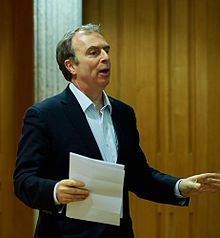
    Most heretically of all, each of these thinkers would reserve the right to subject the climate change orthodoxy to proper scrutiny, if only because questioning things is in the British political tradition, not to mention the broader scientific tradition. Whether we agree with all this or not, each of these writers reads today bracingly if you grew up under the Blair consensus: they read like people thinking for themselves.


    Past the Age of Consent?


    Consensus is, of course, not a bad thing per se. We have, for instance, been governed by a consensus that murder is a punishable crime for millennia to no-one’s disadvantage but murderers. Likewise, our shared consensus that Shakespeare is a great playwright has preserved Shakespeare, and is another example of what might be called profitable consensus. When Tolstoy cantankerously announced towards the end of his life that Shakespeare was no good, he was thinking independently, but not particularly well. There is a distinction then to be made between useful polemic which ultimately turns out to be true, and wilful contrarianism, which causes a lot of noise and misleads a lot of people.

    But despite these reservations, it must be admitted that consensus sometimes feels flabby. When too many people have arrived at the same conclusions it might be that those conclusions are dated, or have lost some spark.

    So which kind is the the Blairite consensus? There are some warning signs which stretch beyond Tony Blair’s own personal unpopularity. It certainly isn’t quite as popular as its holders would wish, or suppose. This fact was made clear to Remainer voters in the 2016 election: it turned out that a surprising number of people in the country were, while being ostensibly civilised, quietly thinking the unthinkable: that the Blairite worldview might be wrong somewhere at its Europhilic core.

    But what really brought the question of independent thought into sharp focus was the Covid-19 pandemic. Whether lockdown might be deemed an overreaction or a wise necessity, it forced government into our lives like it has never been before and this in turn raised considerable questions around how we receive and sift data, what is true and what is false, and above all, what our personal relationship is with the notion of government interference.

    It brought to the fore the whole question of statistical modelling and for some thinkers has ramifications not just for how we tackle the spread of viral disease, but also for the broader way in which we use scientific data. “The models were completely wrong,” the economist Roger Bootle, another independent thinker of the right, tells me. “And it’s the same in relation to the climate models – although not to quite the same extent, because the most unpredictable thing about the Covid-19 models was human behaviour, and that has slightly less bearing on the climate change models.”

    But the fact remains: by 2022, a generation of professionals in senior positions had come to maturity thinking and feeling roughly the same things about most things. If their worldview is wrong at all, then remarkably few ramifications have come their way: on the contrary, they have usually found their sense of consensus ratified by professional success. Lockdown caused the consensus-bearers no harm since, financially, little can. Lawyers and accountants remained for the most part in spacious housing doing jobs which it is possible, and in many cases enjoyable, to do from home. Doctors were designated key workers and spared the strains of home schooling.

    Even so, there are some warning signs that what the consensus bearers have been thinking and feeling might be wrong after all. If we look at inflation or high energy prices, the dubious tactics of Extinction Rebellion, the increasing extremism of wokeism, the long waiting times on the NHS, the former Chancellor Rishi Sunak’s tax rises to pay for lockdown, and the relatively settled landscape post-Brexit, there is a sense that there might be value in listening to voices, from both left and right, that lie outside the consensus. We might not change our minds on policy but we’ll certainly learn something about how to think.

    The question is not just: “Who is right on these issues?” It is also: “What does independent thought look like in this day and age? And who has a motivation to practice it?”


    An Audience with Katharine the Great


    To promote independent thinking, what kind of education system do we need?

    For the right, Birbalsingh has arrived as a kind of saviour in this realm, seeming to embody some better method. Of course, as the writer of Ecclesiastes understood, there is nothing new under the sun: her new way of doing things is tethered to the old. Put simply, Birbalsingh argues for the importance of promoting knowledge of a shared cultural tradition in order to foster the independence of thought which might ultimately free us of what she views as the groupthink of wokeness.

    When I sit down with Birbalsingh at Michaela Community, I tell her that the place reminds me of grammar schools. She doesn’t find it a helpful comparison. “There are a couple of grammar schools round here,” she admits. “But they take the top slice. Any good teacher knows that it’s really complex when teaching the bottom sets. If you’ve only got the top students, you don’t have to think about learning in the same way. When you have a great cognitive diversity you have to do more.”

    In this sentence, ‘more’ means strictness and standards. I wonder aloud whether there’s any danger about the regime, and whether it might over time create conformity instead of individual inspiration? I tell the story of my old English teacher at Charterhouse, Philip Balkwill, who was famous for his eccentricity. In one English lesson, he came in, played Beethoven’s 9th symphony and then left the room without explanation.

    Birbalsingh is amused, but not especially impressed: “The thing is, you can only do that kind of thing when you’ve got a selective intake. If you do that in an inner-city school, the kids will all just be laughing and jumping around and running out of the lesson. And then you say, “Well, what have you achieved?” You’ve just created chaos. The kids have just lost all respect for you and you will find it very difficult to build up your resilience again.”

    Here then is one obstacle to independent thought: it can’t be something you do overnight. You’ve got to lay the groundwork with discipline first. I mention that Balkwill’s lessons for me operated on a kind of time bomb. I came to realise years later that he was talking about the porousness between disciplines and how music and literature might be interconnected.

    Birbalsingh laughs: “The fact that you only realised that ten years later: that’s ridiculous. Teaching is about making things explicit. He was doing things like that for himself and so that he could say to himself: “I’m the most amazing teacher.” He liked being eccentric. In the end, how much did he really teach?”

    I say that it felt like being bequeathed a certain permission to roam freely across intellectual disciplines. Birbalsingh doesn’t think that approach will generally work: “You need to realise that the kids here have no idea who Beethoven is unless we teach them that. Once I gave an assembly about Beethoven’s Fifth, as I wanted them to at least recognise the tune which you hear all the time. I was talking about how it was difficult for them growing up in a time of grime and drill.

    The worst for me when I was growing up was Kylie Minogue and how everyone was scandalised by her shorts. I put a picture of Beethoven up on the slides. Later when I was having lunch with the kids, I realised they thought Kylie Minogue and Beethoven were contemporaries because I hadn’t made it clear. They don’t know that there’s music from the 16th, 17th, 18th, 19th century and how it’s changed. When they learn music here we start with A, B, C, D.”

    She continues: “What you mightn’t realise is just how impoverished some children are and that’s what an inner city school is. Those antics of your teacher you described are not helpful.” I think again of the boy smiling in the corridor. I agree with Birbalsingh, and yet some small part of me wants to retain the idea of another approach. I find that Mr Balkwill’s lessons can’t be so instantly jettisoned. Something would be lost.


    Uncle Toby


    Sometimes of course having a good education culminating in all the expected excellent results might not be a spur towards independent thinking: in fact, it might lead you up too obvious a career ladder meaning precisely the opposite – that you never have to think for yourself at all. It used to be that a dose of failure did a little good.

    I talk to that noted independent thinker Toby Young – so much a bugbear of the left, that he seems to exist in a permanent ferment of being cancelled and recovering from his latest bout of cancellation. He tells me about his somewhat chequered early education: “I initially failed all my O Levels, and went to two different comprehensives. I retook and got three Cs, which was enough to scrape into the sixth form of William Ellis. I did well enough to apply to Oxford. I didn’t meet the conditional offer, but was sent an acceptance letter by mistake. When that was pointed out to me, they then offered me a place – it was an unconventional route.”

    Young, who would go on to set up The Modern Review, The Spectator Online and, in 2020, The Daily Sceptic, credits the entrepreneurial side to his upbringing. “My father was one of the people behind the Open University. He created over 50 organisations of one kind or another during his life. A couple of those got torched in David Cameron’s Bonfire of the Quangoes. He was a lifelong socialist and one of this country’s first sociologists in addition to running a Research Institute in Bethnal Green, he implemented these institutions. That gave me confidence.”

    Young was then exposed to the left-of-centre culture of Oxford, before relocating to America, and landing among the uber-left campus life at Harvard. This was the era when Alan Bloom published his famous Closing of the American Mind, a sort of prophetic cri de coeur about the encroachment of what we would now call ‘wokeness’ onto campuses.

    Young recalls: “Within my year group at Brasenose [at Oxford] studying PPE, we had the full gamut from a Monday Club tubthumper to a member of the revolutionary Communist party and every shade in between – and there were only ten students.” And in the US? “At Harvard, there was nothing like that range of opinion even in the entire government department, which encompassed hundreds of students. The main debate was between two types of liberalisms – Nozickian and Rawlsian liberalism – that was the extent of the disagreement, and Nozickians were a real minority!”

    This sounds like the sort of landscape which Katharine Birbalsingh, in her different way, is committed to pushing back at. Young agrees: “I’m a big fan of Michaela – it’s incredible. In Michael Gove’s wildest dreams I don’t think he’d’ve anticipated the free schools programme would have given birth to such a perfect embodiment of what he views a school to be.”

    So is the encroachment on independent thinking less to do with some sort of Blairite inheritance, and more to do with groupthink migrating from America to this country? Young replies: “I certainly think that as British universities have admitted more American students and grown in size, they have attracted left-wing academics with a sense of social mission who want to change the world by converting and evangelising. But it’s partly a generational shift; most of these people were radicalised in the 1960s. You gradually see more of a left-wing imbalance in the professoriat.”

    This mindset in turn has infiltrated, or so the argument goes, every strata of society, achieving numerous coups: it captured most of the major cultural institutions; the BBC; and even large swathes of the Conservative Party. In response to the professional calamity which can sometimes assail those who speak up against this consensus, Young founded the Free Speech Union in 2020.

    I ask Young about the future of independent thought and he initially strikes a surprisingly optimistic note: “The curious thing is that even though all our main cultural institutions – the BBC, heritage institutions, performance arts companies, the National Theatre – they’ve all been captured by this rather small-minded illiberal ideological cult, at the same time you’ve had right-of-centre figures winning elections. The professions and the educated elite are beholden to this woke cult, but it hasn’t filtered down to ordinary people.”

    This, in Young’s view, is a sign that most people still retain the habit of thinking independently. “There’s a disconnect,” he explains. “You see that in the way in which the trans lobby has got into trouble by trying to give trans women access to women’s changing rooms in department stores without trying to persuade the public it’s the right thing to do. That’s proved quite unpopular and authoritarian. All is not lost.”

    Even so, he also issues a note of caution. “One of the reasons to be doubtful about how quickly the spirit of liberty can be restored is that it was revealed to be in a very decrepit state during the last two years. It was surprisingly easy for the government and various public health agencies, civil servants and the BBC to persuade people to exchange their liberty for safety and much more so than it would have been in the Asian flu in the 1950s. That was true not just of Britain but of most liberal democracies.”

    Of course, we must be careful here not to attribute all independent thought to lockdown sceptics. For instance, the vaccines – not to mention the inventive way in which those vaccines were rolled out – arguably constitute a greater example of initiative than anything shown by those who stood from the touchlines arguing against lockdown.

    But Young, Murray and Hitchens aren’t arguing against science. What they would say is that science has become dangerously allied to politics, that it is poorly reported leading to a bogus consensus (usually in the direction of the exaggeration of danger), and that an atmosphere of intolerance has grown up around some of the conclusions it has arrived at. Clinchingly, they would simply defend their right to ask questions about it.


    A Question of Method


    So how would Young go about teaching independent thought? “I’ve been wondering whether, under the guise of teaching schoolchildren how to debate, you could teach them some critical thinking skills,” he replies. “It’s extraordinary when you argue with young people how often they fall back on what they think of as the trump card of their own lived experience. It doesn’t matter if you present them with data that contradicts their claim.”

    I ask for examples. “Let’s say you’re arguing with a young black student about whether or not Britain is an institutionally racist country,” Young says. “You could point out, for example, that more black boys go to university from underprivileged backgrounds than do white boys. Or you could cite the fact that Indians on average earn more than white Britons.

    You could also point to the success of boys of African heritage at university and in the professions. There’s actually all sorts of evidence that not being born with a white skin isn’t an insurmountable handicap in this country. You could present that case as reasonably and calmly as possible but they could just say: “That’s not my experience, but you’re a white man and from my point of view, that’s bollocks.” Nearly all children nowadays fall back on this Megan Markle ‘my truth’ trump card.”

    So what do we do? Young has clearly been thinking deeply about this: “It would be really helpful to teach children why that isn’t a knock-down argument, and why it isn’t a trump card. It’s also important for them to know why data is more important than anecdote and how you can merge lots of different people’s lived experience to come up with a more objective balanced view as to what the collective experience is.”

    Does he think the teaching profession will be able to do this? Young isn’t sure. “Teachers these days are shy of challenging emotional impassioned teenagers – particularly if they’re members of disadvantaged groups. In taking that stance, they allow these irrational ideas to flourish.”

    So would that require some kind of shift in the curriculum? “The main thing we need to do is to teach them the rudiments of how to build an argument, recognise a good from a bad argument, and teach what the most common logical fallacies are. Those analytical skills would mean you’d develop a bullshit detector.”


    Avenging Angel


    It’s interesting that Young’s background is predominantly entrepreneurial and I begin to wonder whether I’m really talking to a journalist or to an entrepreneur. Is there something about being an entrepreneur which fosters independent thought? To find out, I talk with James Badgett, the CEO and founder of the enormously successful Angel Investment Network. Badgett, 40, isn’t just a well-known entrepreneur in his own right, but, given the unique nature of his business, also the centrepoint of a vast amount of economic activity.

    So does he feel that as an entrepreneur he’s under greater pressure to think independently? “It’s quite straightforward. When I wake in the morning, first I have to check I’m okay. Then I have to make sure my team is okay. You can’t lie to yourself as a business-owner because you’ll get found out. That means that if the government tells you to work from home, or if The Guardian tells you leaving the European Union is a disaster, or if Greta Thunberg tells you the planet is about to burn – you have a responsibility to go away and check if those things are actually going to happen.”
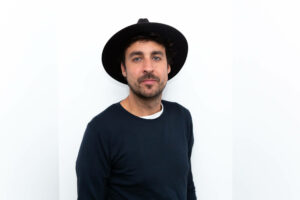
    Badgett is known for holding unpopular opinions, but he views it as important for his many businesses to make sure he holds firm. “I think I’ve got to the point now where almost any view I hold isn’t held by the majority,” Badgett says. “I’ve grown used to people thinking I have an unusual take but I’m not going to stop saying what I think.”

    Badgett’s success can partly be attributed to an ability to cut through the range of information he receives in order to decide on the right strategy for his businesses. He tells me of his dislike of corporate settings: “You just feel yourself become cretinised when you sit in these big firms.

    You ask for the coffee, and sit back and feel somehow flattered to be in there – and I think that happens to a lot of people who become quite limited in their outlook. They’ve first become too comfortable. But I’ve learned that in business you’ve got to be careful not to fall for all that. You have to remain rooted – and you have to surround yourself with the right people.”

    He is sceptical of anyone too who “suggests strategies which are easier to say than to do” and is always creative in the way he runs his companies. Badgett has a Nepalese office of the Angel Investment Network, and realised before the pandemic that it would be affordable for the company to have a top chef cook for his workforce and that it would also be a great boost for the company. “I went ahead and did it – though I expect the BBC would have told me it was impossible.”

    Like Young, Badgett opposed lockdown in March 2020, and also counts himself a climate change sceptic. “One thing I disagree with in relation to Greta Thunberg is this elevation of the child to the level of sage. She’s still very young and her predictions are likely to be wildly inaccurate just as Dr Niall Ferguson’s were during Covid-19.”

    I ask Badgett whether he thinks we need to do more in education to teach commercial acumen. “The truth is that most people walk into working life absolutely financially illiterate and what you’re seeing today is the effect of a woke university system on the workplace,” he replies. “Basically, people don’t have the skills by which to sift information or to judge what’s true and what’s false – what is theory, and what is fact. What I think does happen though is that people who run businesses become more attuned to that – again, if you don’t your business will go under.”

    Whether one agrees with Badgett or not, he is a reminder that the ability to think independently as a society must be tied to a greater commercial sense.


    Approaching the Source


    If independent thought is under threat then there are a number of clear possible reasons for it. One is the influence of American wokeism on our university system as outlined by Young. Another might be the impact of the Blair-Cameron axis. A lack of commercial acumen is another: some have noted that epidemiologists were more likely to make gloomy predictions about coronavirus since, being in the pay of the government, they didn’t have to live with the commercial ramifications of those predications.

    But most people accept that the media, and the way in which we receive our information, also impacts our ability to make up our own minds effectively on important issues.

    One person well-placed to consider these matters is Sir Bill Wiggin MP, who represents North Herefordshire. He has spent 20 years in Parliament, and has had a front row seat on the way in which reality can be distorted by the media – and how this causes both misery for beleaguered MPs and confusion in the electorate who are often unable to find their way to primary source material.

    After years in the public eye, Wiggin says he’s become acutely aware of what journalism is and how it should be read. “When you read the newspaper, you’ve got to be careful,” he explains. “I’ll read whatever’s lying next to me – but I don’t read it believing it to be the gospel. I’m happy to read The Sun, The Guardian or The China Daily but I’m always reading it in a certain way with the awareness that they will have an agenda.”

    And what, in Wiggin’s opinion, is their agenda? “It’s quite simple really, it’s trying to outrage you or to terrify you.” So what would Wiggin’s advice be to people in respect of reading the mainstream media? “Don’t base your life on a publication: be broader than that. You need to be. And also realise that this sensationalism is driving all aspects of the media. For example, I get The Daily Express online. It has wonderful headlines: “Brexit delivers huge increases in British business.” Two days later it will say: “Brexit cuts British business”. They’re playing us! We’ve got to stop thinking that journalism is a Christian and pure-spirited thing. It’s as commercial as Star Wars.”

    I mention to Wiggin that I value the way in which my history degree gave me a habit of going to the primary source in order to assess the events of the past.

    Wiggin agrees but worries that these skills are being lost in the contemporary media maelstrom: “Today, The Guardian and the BBC are going to the source for you. When you watch the news tonight, you will see Vladimir Zelensky make an announcement about how Russians are losing in Ukraine, and the newsreader will say: “Now, we go to our Ukraine correspondent.” I want to hear from Zelensky not your correspondent! Then you might cut to another correspondent or expert: it was second hand when you got it from the BBC – now it’s third hand.”

    The Mp also points out that we tend to practice critical thinking better in other areas of our lives: “Anyone reading this article will know that if they go to a football match, what they see is different to what they read about it afterwards: but they don’t apply those lessons to their politics. Soak it up but don’t close your mind. When you read that x is wicked or that y is good a little voice in your head should say: “Well, that’s what it says here”. You shouldn’t be prepared to die in a ditch according to what you’ve read.”


    Good Humours


    One notable thing is that some right wing thinkers often seem to injure their case with a certain cantankerousness which somehow makes their case less persuasive. Of course, there might be mitigating circumstances. Most of them haven’t been listened to throughout their professional lives, and must feel a sense of mounting frustration at always feeling in the right and then watching governments continually make catastrophic moves.

    Although Peter Hitchens can be funny, it is probably the case that there has rarely been a less Christian-sounding Christian in the public sphere . There can sometimes be a sense of infinite probity about his public persona which feels somewhat tiring – reading him sometimes, one feels that nobody could manage long in his ideal state. One would want to be free a moment, like that boy in the Michaela Community corridor. There is a frequent note of exasperation – a sense of being almost tired of being so in the right – which makes one want to lodge objections, and which has probably led to his ideas being infrequently taken up by government.

    This brings me to Armando Iannucci and the importance of comedy in the realm of independent thinking. John Cleese recently observed that there is no such thing as a ‘woke joke’, but it seems to me that there are still vestiges on the left which are able to raise that profound laugh which lets you know an independent truth has been arrived at.

    Iannucci has always been able to do this – most notably in The Thick of It and Veep – those superb comedies which could only have been written by a unique cast of mind. Sure enough, Iannucci has been in fine form during the pandemic having penned an epic poetic satire on the first years of the Johnson administration called Pandemonium. We need only read its opening page to know that this is a voice of the left which is hardly caught up in groupthink:


    Tell, Mighty Wit, how the highest in forethought and,
    That tremendous plus, The Science,
    Saw off our panic and Globed vexation
    Until a drape of calmness furled around the earth
    And beckoned a new and greater normal into each life
    For which we give plenty gratitude and pay
    Willingly for the vict’ry triumph
    Merited by these wisest gods.


    It is worth noting how the big laugh comes from the line ‘that tremendous plus, the Science’ – the same Science which is in its way is poked at, and queried, by Young, Hitchens, Badgett and others. Here it is being mocked too. Blairism itself was full of those ‘tremendous pluses’, whose validity we were never meant to query.

    Pandemonium mocks Johnson, Matt Hancock, Tory donors, and Dominic Cummings. It suggests again that this era of consensus needn’t necessarily be worried at in a misanthropic spirit. It might be done with wit and laughter too. It is an enduring fact that many of the great thinkers of the 1930s – one thinks of George Bernard Shaw and Ezra Pound – fell for Stalinism and Nazism respectively. It took Charlie Chaplin and PG Wodehouse to laugh them out of town.

    Iannucci doesn’t extend his mockery to the Labour Party in the poem – and perhaps it would have been a better poem if he had. Bu one leftist intellectual who is prepared to query Starmerism – currently a kind of low energy Blairism – is the philosopher and poet Tariq Ali. Ali has just published – to the right’s dismay – a book attacking the legacy of Winston Churchill called Winston Churchill: His Crimes, His Times.

    For Ali, the habit of consensus thinking began further back in time during the post-War period: “I would refine the analysis slightly,” he says, when I describe the theory of the Blairite consensus. “The post-War consensus which was more or less agreed by Labour and the Tories after the Second World War, was that we have to go down the social democratic route. In Britain, this consensus was implemented and never altered in any meaningful sense, until it was broken definitively by Margaret Thatcher.”
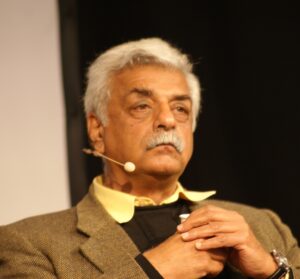
    For Ali this is all bound up in the Churchill cult which began at that time, and has been continued by Johnson. Interestingly, Ali says that he prefers reading thinkers like Peter Hitchens to those on the centre right. “Obviously Peter and I won’t agree on most things but I have some respect for him. There is a degree of honesty and integrity in Peter which I don’t find in liberal writers. Look at the stand he’s taken on Julian Assange. I am amazed he’s still a columnist on The Mail on Sunday: it’s much sharper than things I read in The Guardian.”

    It’s this which often marks out independent thinking: integrity and the desire to conduct our thinking for the right reasons. And what does Peter Hitchens say in return? “I think Tariq Ali is a valuable independent voice because I think freedom dies without dissent. He’s undeniably intelligent, and undeniably thoughtful. I disagree with him profoundly on many things, and have done so publicly on such matters as the nature of Fidel Castro’s Cuba.”

    And what has it been like when they have sparred? “He has responded courteously, as a civilised person should, though he should have a higher opinion of The Mail on Sunday, which has a strong record of independent thinking. I think we both come from an era when an opponent was not necessarily an enemy. I also suspect him of having a sense of humour.  I wouldn’t say this feeling has anything to do with my own Marxist past. Most of my former comrades dislike me personally, though I can’t be bothered to return the compliment.”

    So perhaps the surest route to independent thinking is an education like that offered by Birbalsingh at Michaela Community, but with just that hint of a smile offered by that boy in the corridor, and by Philip Balkwill back at Charterhouse in the 1990s.

    But we also need much more: better commercial education as suggested by the examples of Toby Young and James Badgett; a deeper awareness of the need to go to the primary source as espoused by Wiggin. We also need Tariq Ali’s perspective of the deeper past.

    But it is Armando Iannucci’s ability with a joke which can sometimes seem most pertinent. It is this which verifies where we really stand on an issue, and which clears the decks and allows us to think clearly about problems.

    I didn’t tell Birbalsingh about another one of Philip Balkwill’s lessons. He would show us Beyond the Fringe and the great sketch where Peter Cook plays Arthur Streeb-Greebling who has spent his life ‘underwater teaching ravens to fly’. It was the silliest thing I’d ever heard – and it made me want to watch more. ‘Is it difficult to get ravens to fly underwater?’ asks Dudley Moore. “I think here difficult is a very good word,” Cook replies.

    The same is true in the realm of independent thinking – but as the problems of the world mount, and the implications of groupthink become clearer, this is increasingly a conversation we need to have as a society.


  • Nick Cave and the Bad Seeds’ ‘Wild God’: ‘a song of planetary importance’

    Nick Cave’s Unique Journey, Christopher Jackson

    It used to seem to me that rock and roll was a young man’s game, possessing within it the iron law of inevitable decline. It went like this. After the euphoria of one’s ‘breakthrough’ there would be a period of ‘maturity’, usually conducted in one’s late 20s (a point in life when nobody can really be said to be mature).

    Around this point, various complications would arise as part of the rock star’s grim pact with the genre: drugs, band break-ups, and, in many instances, death. But as all this unravelling occurred, the fan could at least look back on that sunny time before the alcohol had really kicked in and listen to the first fine careless rapture of the early hits.

    This does, of course, happen – but it is a lie to say it has to happen. In fact, the only reason it occurs so often is because the conventions of the industry lead to self-destruction, and because fame puts the famous person in a false relation to other people, and therefore to the universe in general. Not many musicians, asleep as to the impact of all this harm, are able to go against the herd and dilute their ego sufficiently to lead a normal, productive life.

    A rock star is therefore a curious and often unhappy specimen. On the one hand they are full of marvellous inspiration, walking around in privileged access to the fine substances of music. At the same time, their lives can seem predictable, rote, and mechanistic. Though they can do something which millions would love to be able to do, and have an infinite art potentially before them to explore, they are more likely than a whole range of other people – plumbers, lawyers, accountants and so forth – to self-destruct in completely appalling ways.

    But it’s not all doom and gloom. Fortunately, several examples run in the opposite direction, and so it turns out that rock stars don’t have to die young, or decline. They can grow, mature, alter and reach enlightenment.

    So how might that happen? The first important hurdle is not to die young and if that is achieved, then it also helps if one’s initial period of great fame subsides a little. In the marvellous cases of Bob Dylan and Leonard Cohen, longevity eventually created the conditions for a productive old age. It is good when stadiums cede to arenas, and the rock star’s sense of proportion will be improved by the arrival on the planet of billions of people who have little inkling of their former importance.

    The rock star with ambitions to be fruitful beyond their fifties will also be helped by mortality, that universal corrective to pride. In the case of Dylan and Cohen, the presence of death directed them away from their celebrity back towards themselves – into that deeper sense of fragile life where art comes from. The results were astonishing: ‘Murder Most Foul’, “You Want it Darker”, “Mississippi”, “Samson in New Orleans”, “Standing in the Doorway”, to name only a few. In each of these songs, and in many others, we can feel the necessity of the creative process: the impression is of music as an expression of an entirely healthy approach to life.

    Cave has followed a similar progression to these masters, but with the release of his new song ‘Wild Gods’ it even seems to me that he is surpassing them, entering some new circle of higher life all his own.


    For those who don’t know his work, Nick Cave and his band the Bad Seeds have been around since 1983, and for many years produced intelligent albums with a post-punk sound. Right from the beginning, Cave was different to his peers. He has always admitted religious imagery to his work: ancient wisdom has long since coursed through his lyrics, meaning that the vying sounds of the contemporary city – drums and electric guitars – were always juxtaposed with an intellectual inheritance of sacred books stretching back thousands of years.

    It is not too much to say that two kinds of time have always inhabited his work: the urgency of the present moment rushing over, or contending with, the permanence of ancient thought.

    Even before his recent run of magnificent albums, his work was hugely valuable. He has always been one of a small number of songwriters who bestows immense care on his language, and who understands that songwriting is a symbiotic form whereby what is said must be profoundly intertwined with musical texture to form a viable unity.

    Cave’s fame arrived in a less intrusive fashion than Dylan’s, and maybe than Cohen’s, but a drug problem arose in the form of heroin addiction nonetheless. Fortunately the rehab which Amy Winehouse said she would never attend was attended by Cave and he has for some time been ‘clean’. All this will seem relatively predictable so far.

    But the usual and expected arc towards septuagenarian mellowness was in this case bucked by a terrible and unthinkable event: the death of his 15-year-old son Arthur on 15th July 2015 after a fatal fall off a cliff in Brighton.

    It is not surprising to find that Cave was altered irrevocably by this appalling event, as would be the case with anyone. The astonishing thing is the direction in which it altered him, and the authenticity with which he communicated his pain – and, crucially, all that he had learned from his pain. He has given bulletins from his zone of suffering via every avenue available to him: in songs of ever-increasing beauty and glory; in his online community The Red Hand Files, a project of enormous spiritual generosity; in ceramics; and in his peerless book Faith, Hope and Carnage (2022), which takes the form of a series of conversations with the journalist Sean O’Hagan.

    Nick Cave’s news is not what one might have expected: not only has Arthur’s death not been all bad, sometimes it has been the cause of immense blessings which he wouldn’t want to be without.

    The aftermath of Arthur’s death is described in hallucinatory detail in Faith, Hope and Carnage, and it would be a hard-hearted person who could read of what happened without feeling all at once a love and sympathy for Cave and his wife Susie. In time, Cave would keep going as an artist. Some of Skeleton Tree (2016) was retrospectively rewritten to take into account the loss of Arthur, but most of the album had been written beforehand.

    His first full foray into post-grief creativity came with Ghosteen (2019), which was followed by Carnage (2021), which is not a Bad Seeds album, since it is the work solely of Cave and Bad Seeds member Warren Ellis, a very important person in Nick Cave’s Unique Journey.

    It is possible now at a certain distance of time from Arthur’s death to allow oneself to feel that Cave was well-placed to make some good out of a situation which would have been a purely negative experience in those who lack his spiritual and musical resources. This is the man who said in ‘Mercy Seat’ (1988) that he wasn’t afraid to die, and who vaguely entertained the idea of an interventionist God in 2011’s ‘Into My Arms’. The words which open that song – probably still his most popular – look now as if they were written epochs ago, out of a provisional soul:

    I don’t believe in an interventionist God

    but I know darling that you do.

    What is important in these lines is the sense that the connection with the lover is so strong that her faith has to impact on him, and be shared in some way. Cave has distanced himself from this song, the main reason being that he now does believe in an interventionist God. Arthur’s death either introduced something new into the equation, or else it accelerated a process which was already under way in him.

    For Cave, as is the case for many of his contemporaries, the Bible has never been a book to be roundly mocked or cheerfully ignored: it has always been a vital part of his toolkit as a songwriter, conferring also a set of obligations on him as a man. But it is one thing to play with religious imagery, and quite another to believe that the imagery may stand for a truer reality than the one we generally appear to inhabit.

    Why did Arthur’s death make Cave reassess his attitude to religion? Surely there could be no clearer exhibition of the futility and randomness of life than this poor boy’s accidental end? Curiously, the exact opposite proved to be the case. What seems to have happened is that Arthur’s death over time simply did not present itself to Cave as conclusively bad news: in fact, it told a completely different story.

    After the terrible months which followed Arthur’s departure, the Caves became aware of Arthur as a living presence within their lives. Arthur seemed – and many grieving people find the same about their loved ones – an acutely living force. Some will simply call him mistaken in this, but the art testifies, as we shall see, to the vivid nature of this experience. If we listen to these albums, we will see why these suspicions and experiences sent Cave back towards the eternal questions in a wholly altered state.

    The profound pain of Arthur’s death triggered a mysterious metamorphosis which somehow made it impossible for Cave to sing those lines from ‘Into My Arms’. They simply weren’t true for him anymore. One way to look at life is that if we really pay attention, it has a way of continually disabusing us of pessimism: it seems too solicitous of our attention for that. We are too free, too blessed, too tangible, and just too hopeful to feel futile or accidental.

    The Cave family soon found that life has a curious way of offering up peace. True, it very often does this in the most peculiar ways – in half-seen fragments, in whispered rumours, and in fleeting correspondences. But it seems it does do this, and it certainly did so for the Caves.

    When the death of a loved one happens, our capacity for paying attention ramps up. It is perhaps rather like the experience of watching a crunch moment in a tennis match, when, knowing what’s at stake, we receive a heightened awareness of where the ball is landing in relation to the line and what strategies are really being attempted by both players.

    We know a crisis is nearing for one player, and a triumph for the other, and this focuses our attention. In our actual lives, grief cajoles out of us a new level of interest in things, because pain is such a jolting thing and we really want to know why it happened, and we really want it to go away.

    This has to be utterly crushing in the first instance; we are face-to-face with certain facts about the universe which we are completely out of tune with in the seeming comfort of our modernity. To be blindsided by our lack of belief in immortality would be shock enough in itself. But there is a parallel shock which has nothing to do with the physical facts of death: it is the sudden realisation that we have been living in misshapen ways. In Cave’s case this process would lead to the absolute transformation of his art.

    ‘Wild God’ again makes it clear that this process is of enormous creative value. It is not too much to say that in Cave the redemptive possibilities of art have now taken on stupendous proportions, giving the listener access to a world of delight amounting to revelation. As we shall see, this song has such power within it that it can instantly render us taller, and far more likely to be equal to our own situation, whatever circumstances we might find ourselves in.

    Of course, it is quite clear that the previous albums Ghosteen and Carnage are the products of the same mind and heart as the person who wrote, say, The Boatman’s Call (1997) on which album ‘Into My Arms’ appears; there is a thread of personality running through all these songs. But in truth the similarities now feel superficial: the ruction of 2015 was great and that made the subsequent flowering so extraordinary as to make one feel that Cave is now a quite different person altogether. Dante called this ‘la vita nuova’ – the new life. It is this altered state which Cave has been giving expression to over the past four or five years.

    Ghosteen was the first part of a process of reconciliation to the grief-world which Cave was so suddenly thrust into. That album may be understood as a form of waking up – of coming into fuller consciousness. To listen to these songs, which have the flavour of something completely fresh and new, is like seeing the most lovely field of flowers growing out of terrain which one had thought utterly scorched and given over to hopelessness.

    Soon the flowers grow in such abundance that one cannot seriously entertain a set of circumstances where the original devastation didn’t happen. In this instance, what happened to Arthur came to seem necessary. Its essential purpose would remain hidden (though it seems unlikely that any such purpose must include Cave’s new songs) but he was now not in doubt that Arthur’s death was asking to be understood as some form of gift – counterintuitive as that might seem.

    What has followed has been a journey with numerous staging-posts, and it would require a more detailed study than this to do justice to that journey. But Cave has given us the myth-making of ‘Spinning Song’ and the magnificent yearning of ‘Waiting for You’. He has found Arthur speaking through him in ‘Ghosteen Speaks’ assuring the mourning father of his substantiality and his generous proximity: “Look for me/I am beside you.”

    By the time of ‘Wild God’ this yearning feels as though it has in some way subsided to be replaced by an absolute joy at what each moment of life can offer. It is important to remember that this later development has also been caused by the beautiful figure of Arthur and surely continues to contain him: I am sure Cave shall never write another note of music which isn’t in some way a message to Arthur (or a message from him), and which doesn’t also relate to his other dead son Jethro who he tragically lost in 2022.

    2024 finds Cave sufficiently strong in himself to bring in a vast system of myth and thought, which is of overwhelming truth and beauty, and goes beyond his previous work. This is not in any way to denigrate those beautiful previous albums: it was all a natural process and Cave has given us a profound testament to that process – a sort of map of the grieving and hopeful heart.

    Suspicions have been crystallising in Cave these past years. In ‘Hand of God’, the opening song on Carnage, we feel as in no music I can think of since Bach, the astonishing otherness and strangeness of religious experience – the way it can arch down on you, pinning you to itself and refusing to let you go. This sense of being tied to an experience which turns out to be good for you beyond your wildest imaginings pervades that album.

    It all leads to the tremendous revelation in ‘Balcony Man’ that ‘this morning is beautiful and so are you’. What we have here is the successful arrival of the outside-inside life where the external beauty of the world is married to the inner joy of love and the world returns to a state of order which must have seemed absolutely impossible in the aftermath of Arthur’s death.

    And so to ‘Wild God’. I hope the reader will forgive a small personal anecdote in order for me to illustrate its potential power. I put this song on iTunes in my car, just before the daily struggle of getting my children’s seat belts on. This meant that in the grapple for order, the song almost entirely passed me by, and yet once it had played out, and the children were safely strapped in, I found myself pausing in complete surprise once the song was finished, open-mouthed.

    I was suddenly aware that the music had rushed in to alter me entirely even though I thought I hadn’t been paying attention. This song has enormous capacity potential to change us in ways we do not yet know.

    It begins with a shadow of itself – like a radio trying to tune up. It is as if the song begins with a floating representation of its own birth. We are then ushered into the territory of fairytale, told in Cave’s crooning tones, one of his abiding strengths, and which will always be a form of loving homage to Elvis Presley:

    Once upon a time a wild god zoomed

    All through his memory in which he was entombed

     
    It was rape and pillage in the retirement village

    But in his mind he was a man of great virtue and courage


    These confident stanzas open up onto the many ways in which we make ourselves inadequate vessels or receptacles for the true energy of life. Our own wild search for truth might land on the wrong things leading to a completely false image of ourselves: we think our happiness is to be found in power over others, in money, or in sexual conquest. When we live by these precepts, the divine – or ‘the wild god’ – has nothing to attach itself to. In this song, not only do we feel that as a lack but the ‘wild god’ does too.

    This state of affairs, where there is no reciprocity between human beings and the forces which created them, will in turn lead to the rule of ego, and all the typical tropes of unhappy humanity: a world of ‘rape and pillage’ and in the next stanza ‘a dying city’. The evidence for this state of affairs is so wide-ranging as to feel dominant nearly all of the time. Put simply, no polity on earth bears very close inspection precisely because of this constant misfiring in human beings.

    But the wild god doesn’t give up its search. In this song, it never once relents in its desire to find people with whom its energies can fuse in order for the world to fulfil its purpose. For ourselves, our own search is almost wholly blind and usually presents as chronic dissatisfaction and frustration at the incomplete state of things.

    Luckily, our own quest also has its own inviolable energy: all of us walk around knowing deep down that we can do much better with ourselves and wanting that to be so. Yet we are inadequate to the task of making ourselves suitable: and so as a general rule, nothing very interesting happens to people. We are asleep, and so we can’t fuse with the wild god. This dismays the wild god, who, according to Cave, is constant in his own desire for a better world:

    So he flew to the top of the world and looked around

    And said where are my people to bring your spirit down?

    The wild god then is a sort of stray divinity in search of activation. But in our current condition – perhaps the same condition Cave was in before Arthur’s death – we’re no good to him, and so nothing ever detonates. Instead we’re mechanistic and caught up in rote aspects of life, making a mess even of our blessings – or as Cave says in the second verse, ‘making love with a kind of efficient gloom.’ In other words, we are perpetually committing a complete inversion of our purpose: we ought to be efficiently grateful, kind, loving and honest. Instead, we use our capacities for the wrong ends: to be gloomy, sullen, acquisitive, angry, ungrateful and many other regrettable things.

    And yet according to this song, we know deep down that we’re getting it wrong, that somehow we’re in a dense confusion. We might be caught up in the most heinous disaster and we might not know how to get out of it but most of us keep getting up in the morning, refusing to give up. Funnily enough, the way out into clarity and truth turns out to be simple:

    And the people on the ground cried when does it start?

    And the wild god says it starts with the heart, with the heart, with the heart

    This is very beautiful and true: the repetition of the word ‘heart’ reminds us of the need for discipline and the virtue of repetition when it comes to improving our relationship with life. The Desert Fathers, for instance, used to repeat the same short prayer: “O God, do not leave me. I have done nothing good in your sight, but according to your goodness, let me now make a beginning of good.” I think Cave is saying that you can say this and not mean it and it won’t get you very far at all. But if you say these things ‘with a heart’ astonishing things can happen.

    This is a definite first step: the realisation that our goal is in front of us and, in fact, not intellectually complicated at all: there’s no need to turn over half a library to find it. In fact, such a plan would almost certainly make matters worse given the sort of books which are usually found in libraries nowadays. Instead, what’s required is to find the affections behind things and to unite ourselves with them in a completely reciprocal spirit.

    But this work, though it isn’t hard as to the mind, is very hard as to the will, and accordingly cannot be undertaken in the course of a spa weekend. It is endless and you have to enter into it for the long haul. What Nick Cave is proclaiming here is the difficult nature of correcting wrong life – as I take it he has been doing – and introducing instead better patterns of behaviour:

    And the people on the ground cried when does it end?

    The wild god says well it depends, but mostly never ends

     ‘Cause I’m a wild god flying and a wild god swimming

    And an old sick god dying and crying and singing

    Bring your spirit down

    At this point – Bring your spirit down – the choir joins in, and the song is completely transformed – and if you’re listening with attention, your world will be too. What has happened in the realm of this song is that there has been an infinitely delightful fusion between the wild god and the individual, whether it be us or Nick Cave. It is similar to the famous picture by Michelangelo on the Sistine Chapel ceiling, where Adam and God’s fingers touch, bequeathing a sort of Big Bang energy, mirroring the start of life itself. This instead is the creation of a new self.

    It was Emmanuel Swedenborg (1688-1772) who argued that as you get more remote from the source of creation, a sort of density arises and that it is our duty to cut through all that fog and activate our innermost being in harmony with causational love. At the same time, we might reach a lasting understanding that love is the organising principle behind life, the basis on which things exist at all.

    By this interpretation, human beings are unique because they can give back testimony of lower realms – in this song, the realms of ‘rape and pillage’. If we do this then we show ourselves to be integral to the universe since we are launching a crucial process of reconciliation which augments the overall level of love. Whether or not this is actually going on in life or not, each reader will have to decide for themselves, but something of that nature is happening in this song: from this point on, everything awakens into the most marvellous consciousness. It is not too much to say that the whole world wakes up.

    It was the 20th century Armenian philosopher and mystic G.I Gurdjeff who once observed that if 200 people were to wake up then there would be no more war. This song shows you what can happen if one person does – but I hope its implications will be broader than that and cause a chain reaction in many people who will feel immediately that a song of this power has to have some true foundation.

    It is comprehensible why a song like this should have come into being in this way. If there is any hope for humanity at this point it might well be for people with considerable audience like Cave to undergo just such a transformation as the one we can see he has undergone. This is because only celebrities can communicate in the numbers needed to remake the world.

    On the day after I first heard this song, the annual madness of the Oscars was occurring: another terrible round of backslapping whose cringeworthiness seems to increase like some graph charting doom every year. But it occurred to me that I can imagine Nick Cave attending the Oscars (perhaps he was even invited), though I find it difficult to conceive of him enjoying the experience. Even so, he comes out of that milieu of celebrity, where huge numbers of people will listen to what he has to say.

    All of which makes the last two minutes of this song potentially of planetary importance. We see how it might go if humanity really were to change and wake up, how the chain reaction might occur, and how a new understanding might move through every country and political system (the ‘flames of anarchy’ as well as the ‘sweet, sweet tears of liberty’). These astonishing moments are also a call to every listener to join Nick Cave in this journey.

    What would that entail? It would entail an end to every form of dullness and unthinking life, a new form of alertness to goodness, beauty, truth and so on. This will seem so gigantic to many as to be unfeasible, but it is also true to say that if we cease to hope for something like this to happen then the likely result is extinction for the species.

    Nick Cave is casting a very wide net here. Crucially, he tells us that it might be especially your moment to join with the wild god, ‘if you’re feeling lonely and if you’re feeling blue’. Not everyone knows as Cave does what it is like to lose a child (let alone two), and so he is talking here from knowledge of the darkness. This makes the call of this song all the more authentic.

    By the end of the song, Cave is wholly united with the ‘great, big, beautiful bird’ of the wild god. Everything foolish and wrong-headed has fallen away and Cave announces himself a wild god. He doesn’t do so with any arrogance or dogmatism. He has made this announcement to the world in the most superb and nuanced art imaginable. He is telling us that our predicament isn’t hopeless, and that there is a moment, which is now, when justice might suddenly swerve in, love rise up, and truth suddenly live in the corridors of power.

    Many people will say that none of this is likely to happen and they may be right. But such people wouldn’t have been able to imagine such a song as this, and shouldn’t have any decision-making power. In fact they don’t because they have closed themselves off to miracles, of which this song is just one of many.

    In fact, what this song shows is that we all do have that opportunity to decide a new course of action. This capacity lies lodged within us, waiting for the prompt of a voice, an utterance, a sight, or a song just like this, sent to change you while you’re ineptly strapping your children into their car seats. That’s when the world can sometimes change – just when you thought you weren’t paying attention. Fortunately someone else was – and the moment you get wind of that, things start to get interesting.

  • Exclusive: Thom Yorke and Stanley Donwood on their new art show

    Christopher Jackson is impressed with the art of Thom Yorke and Stanley Donwood at Tin Man Art

    The Internet may have wrecked the opportunity for tactile nostalgia. When Radiohead’s OK Computer came out in 1997, I experienced it on CD and part of that experience was to be confronted with the physical object itself in the shape of the artwork. There was nothing quite like the album cover – allusive, weirdly beautiful – to prepare you for the album itself.

    Had the Internet not been invented I’d probably have kept my CDs and be able to find the cover. Now I have to google it. Alternatively, I can look at the new pictures of Stanley Donwood and Thom Yorke, which have been showing at a two part exhibition ‘The Crow Flies’ at Tin Man Art.

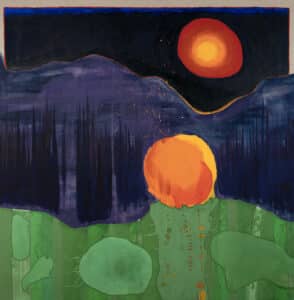
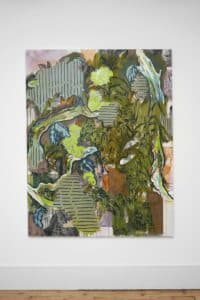
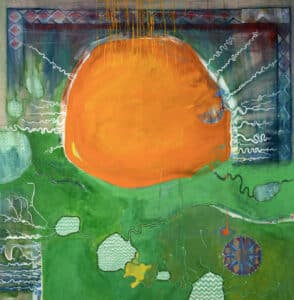
    These works have been done in collaboration and are remarkably good. The first picture which catches my eye is ‘Let Us Raise our Glasses To What We Don’t Deserve’ – which sounds perhaps unsurprisingly like a Radiohead song title. This shows what might be a sun dominating the canvas, with tendrils coming out of it. Beneath it, a green world told in oil paint seems to be mapped in some way: patterns recur as if they have been pinned down as having special significance. The effect of the oil is to create the memory of its application: it feels as though we can see its movement into place on the canvas.

    Let Us Raise Our Glasses To What We Don’t Deserve

    “That was what I found incredibly exciting. It just stays active for so long,” says Yorke in the catalogue accompanying the exhibition. He draws a lesson about the similarity between oil painting and music: “I became so conscious of the fact that the two processes are almost exactly the same.”

    The first thing you sense with these works is that a lot of thought has gone into it – that there’s some been some heavy-lifting behind the scenes. Donwood tells me: “Our aim is to make work that functions, that does what it is supposed to do, what we intend it to do. Which is, in essence, to convey meaning. Although what that meaning actually is must remain unclear. It’s necessarily quite vague, otherwise we would just write slogans on billboards and leave it at that.”

    I mention that there is a playfulness to ‘Let us Raise our Glasses…’ and Donwood agrees: “One of the influences in these works was the way that Mediaeval paintings have no sense of perspective – if something is not important, it’s small, if it’s vital and interesting, it’s huge. This idea of representation is kind of funny to us, because we’re used to perspective and photography, so to us it looks playful, but it’s just another way of looking at things. All painting is play to an extent; it’s something all children can do, and some children just don’t stop doing it.”

    These pictures therefore provoke a range of responses – and you know you’re in the presence of exciting art when it’s making you smile at the same time as it’s making you think.

    The large sun in ‘Let us Raise our Glasses’ cannot help but evoke climate change – the psychological nature of a hot day has changed these past years to become a cause for foreboding.

    Would Donwood and Yorke shy away from having these works incorporated into that conversation? “Not for a moment. It’s hard just to get up in the morning without thinking about our rapidly changing climate, and that’s putting it incredibly mildly,” says Donwood. “Everything that we rely on, not just for our amazingly comfortable way of life – clean water, electricity, somewhere to live, safety, freedom from harm – all of these things – everything, absolutely everything is at enormous risk from the breakdown of the patterns of climate that have made civilisation possible. There’s no way anything can happen without the menacing spectre of annihilation looming over us.”

    Yorke is also comfortable with these sorts of interpretations: “I’m completely incapable of creating anything without a kind of narrative.” But he adds a post-modernist twist to this, explaining how narrative is rarely linear – and more than that, that the viewer will make their own narratives independent of the artist’s intention. “I see narrative happening in different kinds of ways. You make associations because you need to make associations,” he says.

    Their art, then, is about freedom – it strikes me as an exciting moment in the history of art where the initiative is seized back from the photograph. Yet there’s a paradox here too, because by working in collaboration each has surrendered what we have come to think of as the freedom of working individually.

    I ask whether there is a competitiveness at work here, but in asking the question realise that I have underestimated the long history of working in bands which Yorke has had, and how genially Donwood has fitted in with that ethic. “Not really,” Donwood explains. “We used to take turns at a canvas until one of us ‘won’ it; which is to say that one of us would have the better way of continuing with whatever was emerging, but for these paintings we’ve worked together on the pictures at the same time, and we realised quite quickly that each of us had ingredients which we were more suited to using, techniques of painting or ways of depicting images, but this time these energies were complimenting rather than battling against each other. Neither one of us could have made these pictures alone.”

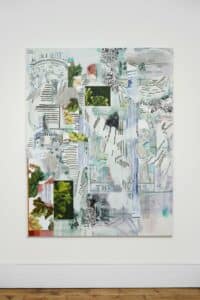
    I say that I particularly like the picture ‘Membranes’ where the main portion of the canvas is taken up with what might be intertwining rivers – or alternatively may be, as the title suggests, a landscape plucked out of the land of the very small – the universe of the cell or the subatomic particle.

    Bob Dylan once said that all his songs ultimately meant: “Good luck, I hope you make it.” In these pictures there is a gallant sense of mysteries being mapped. Donwood tells me about its genesis: “These paintings were made in two sessions; the first from some time in 2020 (I forget exactly when, but it was back in that strange lacuna which was entirely coloured by the coronavirus) until early in 2022, and the second from early 2023 until the summer of the same year,” he recalls. “The first series became a sort of collection of navigational aids, a set of maps or diagrams of somewhere that had never existed and never would. The second were, perhaps accidentally, some kind of depiction of what you might find if you followed those maps.”

    Membranes


    So how did’Membranes’ evolve? “It wasn’t planned in any way – none of these paintings were – but it became a sort of deluge, a flooded landscape, a floodscape really, a rushing tumult that was in the process of swallowing everything it could. Or at least, that’s one way of looking at it. At the same time it’s a huge sound, an immense outpouring of volume that drowns out everything else that might be heard.”

    That reminds us that music is never far from the pair’s collaboration: it is inwoven both in the context of their friendship and in their methodology. But Yorke and Donwood differ here too: “Obviously Thom is a musician and perhaps less obviously I am most definitely not. I can’t play music and I don’t begin to understand it, but I can listen to it, and I have always listened to it. It’s always affected how and what I draw and paint.”

    Yorke’s music continues to mature – in 2023, he debuted a new band in collaboration with Johnny Greenwood and Tom Skinner called The Smile. Their debut album is A Light for Attracting Attention. Do they listen to music while they paint? “The results of making art while listening to classical music are completely different to what they would be if you were listening to jazz, or heavy metal, or someone telling you a story. While we were making these pictures we listened to the music that was being made, the music that would be on the record that would be inside the sleeve that had the artwork we were making printed on it – so we heard a lot of The Smile. But it wasn’t finished music because it was being made at the same time as the pictures, so neither were finished but both were on that trajectory. We also listened to quite a lot of techno.”

    For Yorke, something of the process of The Smile has found its way into these paintings: “Because it is a three piece, things would happen extremely fast and you didn’t really know what it was until you came back. It’s very fast. It’s very fluid.”

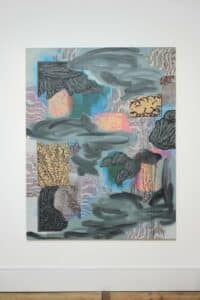
    One example of this is the magnificent picture ‘Two Moons’, where I find myself particularly drawn to the sparks which fly out of the moons, suggesting some sort of charge or quickening energy. I ask whether Donwood and Yorke painted these works quickly to capture a rapid creativity or whether the process was more careful than it might appear.

    Donwood is enthusiastic: “This, like all of these paintings was one that revealed itself as it came into being. I didn’t know what would happen; I didn’t know there would be sparks, but right at the end of making the picture it was very obvious that it needed that explosive energy – but just enough, not too much. Any more would have ruined it. It was, counter-intuitively, a really careful and considered action, but one that had to look fast and energetic.”

    Two moons

    I suggest to Donwood and Yorke that the hardest thing about abstract art is to know when it’s finished – when you’re in a process of complete invention, there is no natural moment to finish as there is when you’re seeking to render a literal description of the world. “This is something very difficult – or more precisely, very nearly impossible – to explain,” Donwood admits. “Mostly because I don’t understand it myself; I know for sure when a picture isn’t finished, when it needs more, or when it needs change. But I frequently don’t know what that ‘more’ or ‘change’ is, so there’s necessarily a lot of experiment, much trial-and-error. Mostly error. It’s very useful not to work alone because a second opinion is fantastically helpful when you’re a bit lost.”

    This then is another instance where collaboration can free you of the bafflement which accompanies creativity. “I think it’s a question of balance in the picture – I can’t define what that balance is, but it’s probably something like the difference, when you’re out on the world, perhaps away from everything, between a view that excites your senses and a view that means nothing that doesn’t register as ‘a view’.”

    So what has been achieved here? I think it’s the transmutation of the seen world into something which answers to the complexity of our experience. Take for instance ‘Somewhere You’ll Be There’, where we find a sense of the earth’s upwards force and the volcano-like shapes themselves seem to undergo a metamorphosis into figures – ghosts even.

    Donwood explains: “The notion of inanimate objects or landscape features coming to life is something I am fascinated by. Sleeping giants below the hills, being watched by trees, your surroundings reassembling themselves while your back is turned – I love these ideas. The ghostliness of our surroundings, a kind of hauntology of everyday life… In many pictures that we’ve made there are eyes where perhaps they shouldn’t be. It’s also startling how two simple marks can give such a sense of watchfulness and of a kind of life to almost anything.”

    Somewhere You’ll Be There

    This is marvellous – and speaks to a joy in the work which we might not always feel we’re hearing on a Radiohead album. I ask the pair whether they’re happy during and after painting, or should we be thinking more in terms of struggle and surmounting obstacle? “I don’t think anyone should be thinking too much in terms of struggle or of surmounting obstacles! Life is hard enough as it is, no? But as to whether I feel happy, that’s kind of a little too far in the other direction. There’s definitely a form of satisfaction when a picture is finished, and there’s certainly a kind of joy when everything is going well. This is always tempered with the frustration, misery and sometimes acute depression and what feels like depthless melancholy when things are going awry. I guess it’s the same for all work of this type. Swings and roundabouts, hey?”

    Yes, but after all that fluctuation in experience, it seems that, if we’re lucky, the artist gets us to a worthwhile endpoint which is the picture itself. I hope these pictures will continue to attract viewers and critical attention; they certainly deserve to.


    As the Crow Flies: Part II is at Tin Man Art from 6th December to 10th December


  • Friday art essay: Impressionism at 150

    Christopher Jackson


    If you go to the National Gallery in London and visit, say, Room 32, where Mannerism is represented, there’s a good chance you’ll have it more or less to yourself. The same will likely be true if you walk past all those Renis and Guercinos and into Room 33, where Chardin’s Card-Players typically hangs. Things will likely get a little more crowded as you swing by the great British landscape painters in Room 34 – JMW Turner and John Constable.

    But something will happen as you enter Room 35: that’s because you’ve entered a room full of Impressionism. Come rain or shine, this will be the busiest part of the gallery. You probably won’t have Cézanne’s views of Mont Sainte-Victoire or any of the many Monets to yourself for very long, and you won’t have Vincent Van Gogh’s Sunflowers to yourself at all. Something has happened: you have crossed over.

    Why is Impressionism, which loosely speaking turns 150 this year, such a big deal? None of the painters, with the possible exception of Vincent, had a natural talent to equal Rembrandt. I don’t think any of them create awe in the viewer as Turner does. If you want the oddities of daily life, you’ve got other Dutch painters like Hendrick Avercamp and Johannes Vermeer. For spiritual power, nothing beats Piero Della Francesca. But if the numbers tell the truth, something about these pictures makes us need them more than all of them put together.

    One possible explanation is that they’re closer to us in time. The Impressionist movement was a response to the great essay ‘The Painter of Modern Life’ written by Charles Baudelaire in 1860, and which created a huge impact at a time when reading was the primary mode of entertainment. In this, the poet pleaded with artists to show the distinctive beauty of the modern world. The paintings in the Louvre, he says:


    …represent the past; it is to the painting of modern manners that I wish to address myself today. The past is interesting not only for the beauty extracted from it by those artists for whom it was their present, but also, being past, for its historical value. It is the same with the present. The pleasure we derive from the representation of the present is due not merely to the beauty with which it can be invested but also to its essential quality of being present.


    It is this ‘essential quality of being present’ which I think makes the crowds in the National Gallery flock in such numbers to these pictures.

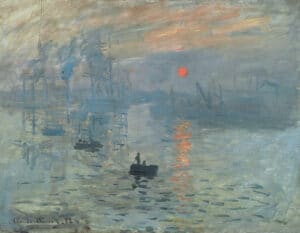
    Admittedly the modern world meant something rather different in 1874 to what it means today, but still there is a sense in which these essentially secular images of pleasure and leisure chime. Though they might be low on depicting things like computer modems or airports, nevertheless they feel psychologically similar in some way to our own lives: they somehow have a legacy in us. It was the critic Louis Leroy who said after the first Impressionist exhibition in a somewhat derogatory way that the artists in the exhibition seemed intent on creating an ‘impression’ – by which he really meant a sketch:


    Impression I was certain of it. I was just telling myself that, since I was impressed, there had to be some impression in it — and what freedom, what ease of workmanship! A preliminary drawing for a wallpaper pattern is more finished than this seascape.


    This is the authentic note of the misfiring critic, who doesn’t even know that they have missed the main point, and so must satirise in a self-admiring vacuum. What Leroy failed to understand was that the world was now in a state of permanent psychological revolution, and that it would from now on move inexorably in the direction of hurry. We still live like this – dimly aware, even as we dash to the next meeting, that we have not enough time.

    The eye too is in a hurry, never still, blinking continually, and alert to the latest shift. It too makes impressions. It was the Australian critic Clive James who towards the end of his life recalled his early time in Florence and the sight of the Bardi spire rising up over the medieval streets: “Glimpses are all you ever get,” he wrote. Leroy misunderstood that when it came to Impressionism, glimpses were being elevated to the realm of permanent art.

    In doing all this, as Leroy also missed, a new attitude towards light was established and I think this is what really makes these pictures so exciting, and which gives them their addictive charge. Of course, all paintings have something to do with light: whenever you’re painting anything at all, you’re painting that – otherwise you wouldn’t be in the privileged position of being able to see.

    But Impressionism – and this is especially true of Claude Monet (1840-1926) – seems to mark a new kind of interest in light. Monet looks on water in a way different to the way in which, say, Leonardo da Vinci gave it his intention: in his Water Lilies, he wants to break it down, and consider what constitutes reflection and what amounts to water – and crucially, what that elusive entity light has to do with that relationship.

    It is often said that Impressionism was the natural offshoot of photography. And so it was. But people rarely say how that relationship worked: the invention of the camera made people realise that the act of seeing was a more complicated business than had been supposed. The photographic image felt too clinical. Really, it was a kind of abstraction and this sent artists back to themselves.

    If this amounted to a sort of crisis, it was a very exciting one. The sense of juxtaposition between a photograph’s verdict and the human eye’s experience meant that artists were suddenly compelled to consider the constituents of the world. They were helped in this by the way in which science had developed, especially with John Dalton’s discovery of the electron, and its secret and peculiar mystical vibrations.

    But we tend to view Impressionism through a particular lens: we know that it would lead in time to the further fragmentation of Cubism and Abstraction. This in turn reminds us that Impressionism could easily have been a boring philosophical development – as did in fact happen to its successors. We do not flock to the work of Georges Braque – in fact, if it comes to that, I don’t think we really flock to Picasso. It’s all too intellectual and young artists should note how it is no coincidence that in avoiding this, the Impressionists have endured in a way the others haven’t.

    But critics of the time did notice, with considerable prescience, the philosophical radicalism of Impressionism, if they usually failed to note the extent to which this was an underpinning and never intended to distract from the pleasure given to the viewer. The critic Theodore Duret wrote of Monet that he was “no longer painting merely the immobile and permanent aspect of a landscape but its fleeting appearances which the accidents of atmosphere present”.

    This might have been true but it was a merely incidental truth. A sheer love of looking is what makes Impressionism so popular: it is full of an infectious enthusiasm for the visible world. The Impressionists knew that what they saw, faithfully interacted with, was enough. As Monet put it, with his legendary cantankerousness: “Everyone discusses my art and pretends to understand, as if it were necessary to understand, when it is simply necessary to love.”


    Given all this, what contemporaries noted was that new aspects of life had been incorporated as subject matter by this new movement. Most of the references to classical mythology which had characterised the Impressionists’ great predecessor Jean-Auguste-Dominique Ingres (1780-1867) were gone (though they recur occasionally in canvases like Manet’s ‘Olympia’), so were the grand battles and historical scenes preferred by Eugène Delacroix (1798-1863).

    Instead, the Impressionists depicted life’s intimate unfolding: in time they would give us the look of a haystack (Monet), an afternoon lazing by the Seine (Seurat), women bathing (Dégas), ballet-dancers practising their moves (Dégas again), a pair of boots (Vincent), and of course, a vase of sunflowers (Vincent). The gaze had been shifted temporarily away from the reconstruction of events theological and historical. Viewed in that way, and given what happened next, Impressionism is so valuable as a period in art history as it is a brief interregnum of actually looking at the world, rather than thinking about it in paint. This journey towards intellectual painting is already at its starting point in Cézanne’s cerebral canvases.

    We tend to encounter Impressionism in grand art galleries with the best gilt picture frames round the pictures, and so we forget that these painters had a certain humility about their relationship to nature – though Monet certainly cannot have been called humble towards other people. In the way in which they faithfully set down what they saw, they were everymen – though in many cases everymen who happened to be geniuses. The artist beginning today could do a lot worse than look not towards the next fad but to what really lies outside their window for the inspiration that really counts.

    The other thing we miss – and again it’s because reputation can sometimes intervene between us and what a painter’s real intentions are – is the wonderful oddity of some of the people knocking around Paris in the 1860s and 70s. For instance, the first Impressionists exhibition took place in the studio of a magnificent photographer called Nadar, who deserves an article in his own right.

    He was not just a magnificent and original photographer but also an early enthusiast for ballooning; I think he was probably a fairly peculiar character in the best sense. But all the Impressionists had their unusualness from Monet’s ill temper to Renoir’s flightiness and indecision – not to mention Van Gogh’s occasional tendency, attributable today to bipolar disorder, to hug random people in the street.


    We think of success as somehow preordained once it has happened, but it rarely looks like that at the time: actually it looks improbable for the reason that it’s usually unlikely to happen. Next time you see someone tinkering away at a picture or an invention with a look of concentration on their face, you may not be looking at someone slightly bonkers, but at a historical figure.

    When it comes to Impressionism, the plight of women is another interesting one. The National Gallery of Ireland is this summer celebrating the 150th anniversary of the first Impressionist exhibition with Women Impressionists, a show which lasers in on four women artists integral to Impressionism – Berthe Morisot (1841-1895), Eva Gonzalès (1849-1883), Marie Bracquemond (1860-1914), and Mary Cassatt (1844-1926). All but Eva Gonzalès exhibited at Impressionist exhibitions, of which there were eight over the following 12 years.

    It’s worth going to Dublin for – here are the women who broke free from being painted to doing the actual art. Morisot is easily the best known today – and in fact that was also the case in 1874, in that she was the only female artist to be featured in that first show at Nadar’s studio.

    Throughout the Dublin exhibition we find images of maternal intimacy and gentleness. In Morisot’s work we are shown domesticity as it hasn’t been shown since Vermeer. But while Vermeer’s paintings sometimes point a lesson, or suggest an allegory, these are completely shorn of any morality: here we see, as in Cottage Interior, the quiet of the typical household shorn of explanation. This is just a girl in a beautifully lit interior, with a garden outside, some food on the table: life is like this, it seems to give such few directives. We live amid quiet mystery and many of Morisot’s paintings testify to this.

    This sense of a welcoming simplicity repeats in the other female impressionists in the show. In Mary Cassatt’s drawings we can see that the love of Japanese prints wasn’t confined to Vincent Van Gogh – it was as much a fad of that time as primitivism would be at the start of the 20th century. My favourite picture of hers is Summertime where the water seems thicker, gloopier even, than it does in a Monet where we can hardly tell what is water and what is light. And yet on certain summer days, when it’s really hot, we find ourselves more conscious of the shade and the shadows, since we seek them out.

    Summertime, 1894. Oil on canvas, 39 5/8 x 32 in. Daniel J. Terra Collection, 1988.25.


    The Dublin exhibition confirms that Impressionism is still very much alive: it’s not really an aspect of art history at all, but part of our living reality. Today we find young artists falling over themselves to create gimmicks, and sustain an Instagram-driven brand: perhaps there are ways to build a brief career in that line, but it is impossible to create true art without reference to what is before our eyes in the universe itself. Impressionism is so valuable because it provides us with this encouragement. It sometimes seems behind us; really, it’s the way forward.


  • Steve Brill’s The Death of Truth: Unveiling the Web of Lies

    Book Review of The Death of Truth by Steve Brill, Finito World


    Dustin Thompson was living in Columbus, Ohio and getting along more or less fine in the pests control industry when the pandemic came along. As Covid took hold, he lost his job which led to a notable increase in time spent online. Eventually, he would be among those who perpetrated the 6th January Capitol Riots. His weapon? A coatrack.

    It’s a weird image – and perhaps it fits somehow with the sorts of weird states we can get ourselves into when we try to twist reality. Steve Brill’s book is an examination of how we got here, and it’s no surprise at all to find that the Internet is to blame. Specifically he notes that Section 230 – a 1995 law in the US allowing internet providers to police their own platforms and granting them immunity over content, no matter how far-fetched – was a landmark moment which nobody much noticed at the time.

    So what can be done? Brill suggests that Section 230 – and presumably similar provisions globally – be amended to take into account dangerous algorithms. He also argues for the scrapping of online anonymity, as well as an end to partisan primaries, which he argues create an atmosphere of resentment, which itself leads to misinformation. Of course, the title is a bit misleading in that truth itself, if it is true, can’t actually die: what happens is that individuals become severed from it en masse. Perhaps there’s hope there – and also in this authoritative and well-written book.

  • Photo essay: Career Insights from the Wildlife Photographer of the Year Awards 2024

    Insights from the Wildlife Photographer of the Year Awards 2024, Christopher Jackson


    At Finito, it is one of the most regular things we hear on the wish list from our young candidates: I want to do something to help the planet. This is always wonderful. Very often, when the wish is first formulated, it amounts to the shape of an intention, and the candidate’s journey is to find out more about what career possibilities really lie ahead.

    These can be both exciting, and perhaps a little bewildering, in their abundance. There are people out there who work in nature documentaries, who earn their living studying lion population numbers, who work for the Natural History Museum as curators, marketers, or social media experts. There are lawyers who specialise in environmental issues, and entrepreneurs who are exploring every kind of business to tackle climate change. Our concern for the planet rightly proliferates across the whole of society.

    In a sense, this is the economy now – it might even be that there will be very few jobs soon which don’t help the planet. And yet, though it’s often important to delve deeper into the sort of thing we’d actually like to do, at Finito we have tended to find that the intention is so strong that a candidate who wants to work in this area will always find a way to succeed.

    The reason for this is because the motivation is there. And the motivation is there because the natural world is always reminding us of its beauty and its fragility.

    The Wildlife Photographer of the Year, the world-famous exhibition from the Natural History Museum, has been going since 1965, and this year is returning to the Dorset Museum & Art Gallery. It consists of over 100 photographs which together form an impressive catalogue of the natural world. This is our planet, our only home. Quite frankly, it’s a knockout on every conceivable level.

    Sometimes we see nature as vaguely comical as in Zeyu Zhai’s lovely image of a sea bird scarpering across shallows with prey dangling from its beak.

    At other times, it is full of a kind of critical dynamism: we see Max Waugh’s water buffalo, with one alert eye, splashing through water: we don’t know if it is fleeing a predator, or seeking food – but we know that his life is a struggle and that it will need that alertness every second of its life. Meanwhile Amit Ashel’s pair of fighting mountain ibexes show that a sort of balletic grace – and an astounding fearlessness regarding heights – can show itself in the fight for a mate.

    What it is doing all this for is, of course, the mystery. How do caribou know when to begin their great migration across Canada and Alaska and how do hungry wolves know they are about to embark on it? How do bears know that after hibernation there will be grass in the uplands but critical body mass to be earned from the salmon in the streams who are coming there in droves to mate? They are not told it – but they know it. Everything is in exquisite balance; it couldn’t be better.

    The glory of nature is a universal experience. Today the competition receives entries from over 90 countries. It is remarkable to consider that every second we are alive this kind of beauty is happening in every hidden square inch of the world: mountain, or ocean depth, or cave recess. If this heartening knowledge isn’t a sound basis on which to build a career, I don’t know what is. And you can also be a wildlife photographer too.

    Zeyu Zhai
    Amit Eshel
    Max Waugh


    Mike Korostelev
    Isaac Szabo
    Solvin Zanki. Two-coloured mason-bee (Osmia bicolor), the bee is building its nests in a empty snail shell. The bee provisions the snail shell with chewed balls of pollen and nectar and seals it with a layer of debris.


    Olivier Gonnet
    Alex Mustard


  • What the architect Frank Lloyd Wright teaches us about adversity in our careers

    Christopher Jackson


    When we look at the famous or the successful, graciously hosting television cameras in their comfortable homes, it is easy to assume that they have found themselves inoculated from what Hamlet calls ‘the shocks and arrows of outrageous fortune’. There is the sense that all that is difficult or troubling has been brought to heel somehow.

    One early example of this genre concerns the architect Frank Lloyd Wright approached in 1953 with the reverence with which someone in medieval England might approach a King by NBC Chicago’s Hugh Downs. This interview is in many respects a ridiculous affair. Wright is treated – and clearly regards himself – as not just a great artist but a seer and a sage.

    He may well have been all those things, but he is also plainly a self-regarding one. Throughout the interview, he sits with a large book inexplicably on his lap, like some vast Bible, which the viewer is invited to assume must be a compendium of his drawings. His answers are philosophical and one can never be sure if he is definitely looking Downs in the eye – certainly the impression is that Downs has come to Parnassus to address a higher form of life.

    Many will perhaps agree with Frank Lloyd Wright’s estimation of his own abilities while thinking he could have been more modest about them. Wright is one of those few architects who we can certainly say changed architecture, though it could sometimes be a bit tiresome to hear him point this fact out so often. It suggested perhaps that he had something to hide, and I think he did: his moral self, which was, biographers agree, by turns slippery, cunning, abusive, untrustworthy and arrogant.


    This queasiness one feels about Wright is something we need to get out of the way before we discuss his genius, which is far more interesting and surprising than the news that well-known people often behave badly.

    More interesting – and it is especially worth considering for anyone who happens to YouTube the NBC Chicago interview – is Wright’s vulnerability, arising out of a lifelong familiarity with tragedy. In fact, looked at closely, Wright’s career involved a regular collision with adverse circumstances – some of them fairly typical and at least one of them unthinkable, which we shall come to in a moment. A book published in 1993 The Seven Ages of Frank Lloyd Wright, written by Dennis Hoppen, observed that Lloyd Wright had a remarkable ability to absorb reversals and over time convert them into new periods of creativity.

    It is this which makes Wright worth studying. The patrician who was never short of a word of self-praise ought not detain us. These traits probably had to do with a difficult upbringing: trauma created a sort of outer person which was secondary to the much more interesting inner creative life by which he really lived.

    In interview, we meet this outer self; in his work the far interesting central force. Regardless, his life has a fascinating rhythm to it: Hoppen’s book shows that Wright experienced surges of creativity which were routinely checked by disaster. But these disasters seem to have gone deep into him, and by some mysterious creative process, engendered over time great leaps forward in his art.

    Wright would often state that he didn’t decide to be an architect, his mother made that decision for him. She declared while Frank was still in the womb that he would grow up to create beautiful buildings and was so proactive in what was then a distant likelihood as to adorn his nursery with pictures of the great English cathedrals. Wright would later make it clear that he didn’t think anybody had taught him architecture telling Downs with his usual slightly prim arrogance:


    I’m no teacher. Never wanted to teach and don’t believe in teaching an art. Science yes, business of course..but an art cannot be taught. You can only inculcate it, you can be an exemplar, you can create an atmosphere in which it can grow. Well I suppose I, being an exemplar, could be called a teacher, in spite of myself. So go ahead, call me a teacher.


    Wright’s initial degree was in civil engineering but his ambition was to make it to Chicago; in fact, he left university just before completing his qualification. He may not have felt he needed a teacher. But a mentor, one feels, can be a quite different thing and in Louis Sullivan, of the firm Adler & Sullivan, that is what Wright found in spite of his own irascibility and the perennial failure to get on with people which would often crop up in his career.

    Though Wright would make a habit of disparaging his contemporaries, Sullivan would be remembered fondly by Wright – though by no means so fondly as to make anyone think Wright himself was anything other than number one, or in his own confident estimation, “the greatest architect who ever lived, or will live.”

    The trouble with Wright’s arrogance is that the architecture does tend rather to bear out his own high assessment of himself. Even as a young man he had already by 1900, almost single-handedly, invented prairie architecture, with a series of four houses which showed a completely undaunted sense of the possibility of American architecture, and by association American life. The European ideal, from Wright’s perspective, was all very well, but the greatness of European art had been arrived by being true to the history and values of that continent. Mightn’t something new be possible in this vast country?

    And if something was possible, then what distinguished the American case from the European? The first thing was the sheer size of the country and therefore the space assigned to each individual. Europeans, and especially British people, have long since found themselves living on top of one another. Any visitor to the towns of America feels how different the demographics are: we feel the country’s enormity, its abundance, and tied to these things, the sense that Americans can live differently, which of course means in different buildings. Prairie architecture was Wright’s first attempt to be true to what now seems to us a fairly obvious reality. Many of these houses still stand today as he always said they would.

    The great innovation here is the horizontal line which mirrors the great outstretched nature of America. For Wright, European architecture was pre-democratic or even anti-democratic and characterised by boxed rooms, which are ideal for establishing hierarchical systems. One thinks of the servants’ quarters, or the cut-off luxury of, say, the master bedroom in a typical European castle. Wright’s houses are different: the open floor plan which would go onto dominate, in another setting, office life, is really his invention.

    But these insights were built on a deeper intuition which had to do with the need to respect landscape, making Wright the purveyor of what he called organic architecture. This meant that his architecture was meant to embody the essence of the land. Most famously, he once expounded his views on hilltop or hillside architecture: “No house should ever be on a hill or on anything. It should be of the hill. Belonging to it. Hill and house should live together each the happier for the other.”

    Wright’s architecture belongs to the land – and he accentuated this idea by building often in stone and wood. The prominent central chimneys in these houses are intended to relate to the human heart – and there is perhaps the sense that Wright’s buildings correspond not only to the landscape they’re in but to human beings themselves: they are, perhaps, attempts to create functional counterparts to the American soul.


    It all amounted to a great vision of democracy by a man who in his life was actually rather authoritarian. It is possible to find a contradiction in his life between his sense of himself as the isolated Great Man, and his oft-stated belief that American architecture cannot thrive unless it takes into account its founding principle of democracy.

    These promising – indeed, exceptional – beginnings were soon to be upended by unthinkable tragedy. Wright, though married, had conducted a controversial affair with a married woman – and the wife of one of his clients – Mamah Borthwick. The press got wind of it all, and Wright built Taliesin in its the first incarnation in order to shield Borthwick from the press. Then on August 15, 1914, Julian Carlton, a male servant from Barbados, set fire to Taliesin, and then murdered seven people, including Borthwick and her two visiting children. It is hard to imagine what this must have been like for Frank Lloyd Wright, who happened to be away on business. But in time his reaction was remarkable:


    There is release from anguish in action. Anguish would not leave Taliesin until action for renewal began. Again, and at once, all that had been in motion before at the will of the architect was set in motion. Steadily, again, stone by stone, board by board, Taliesin the II began to rise from Taliesin the first.


    It is a splendid lesson about how to deal with setback: creatively. As Taliesin II was rebuilt, Lloyd Wright was working on a new phase in his career, when he accepted a commission to design the Imperial Hotel in Tokyo. This looks so different as to not seem to be from the hand of the same architect, but of course it’s in a different country and Wright was committed to an architecture which, to a near obsessive degree, took into account place.

    Wright had thought through the viability of the structure – although sometimes this has been exaggerated a little. The structure did survive the Great Kantō earthquake of 1st September 1923 which and Baron Kihachiro Okura sent Wright the following telegram:


    Hotel stands undamaged as a monument of your genius hundreds of homeless provided by perfectly maintained service congratulations[.] Congratulations[.]


    Wright being Wright, he wasn’t about to keep this telegram from the press and the story did a fair amount to embellish his legend. In actual fact the central section had fallen through, and several floors bulged. It certainly wasn’t the least damaged building the earthquake.


    But Wright had moved onto another phase, which is sometimes characterised as ‘monumentality’. His block houses such as Ennis House fall broadly into this category. One wonders whether in their scale and grandeur they reflect a growing awareness of America’s imperial destiny: they feel like houses which belong to a powerful people, and in the wake of the First World War, where American involvement had decisively tipped the scales towards the Allies, America’s self-image had shifted. It would be the world power, and here was the architecture to prove it.

    But further disaster was round the corner, in the shape of another fire at Taliesin. On April 20th 1925, Wright noticed smoke billowing from his bedroom, and though on this occasion he was on site and able to call for help quickly, it was a night of high winds, and Taliesin II was destroyed along with much of the superb art collection which its owner had acquired while working in Japan. But again he was undaunted and took this loss as inspiration for Taliesin III which still stands today:


    And I had faith that I could build another Taliesin! A few days later clearing away the debris to reconstruct I picked up partly calcined marble heads of the Tang-dynasty, fragments of the black basalt of the splendid Wei-stone, Sung soft-clay sculpture and gorgeous Ming pottery turned to the colour of bronze by the intensity of the blaze. The sacrificial offerings to — whatever Gods may be. And I put these fragments aside to weave them into the masonry — the fabric of Taliesin III that now — already in mind—was to stand in place of Taliesin II. And I went to work.


    There is something magnificent about the simplicity of that sentence: “And I went to work”. In its confident forward movement we get very close to the essence of the man. From here, Wright would go on to his so-called ‘desert architecture’ phase – it was a difficult time for Wright personally and financially and he was forced to take on smaller projects such as Ocotilla and San Marcos in the Desert. This must have been relatively humbling, and of course the 1929 Great Depression was round the corner to humble him further.

    By 1929, he could have been forgiven for thinking he’d had a life entirely comprised of setbacks. This huge decline in productivity led to another fallow period and then a period of low cost architecture characterised by his Usonian houses – small houses very private from the front and open at the back usually aimed at the middle class. The first such house is usually considered to be the Herbert and Katherine Jacobs First House.

    Though this house, with its horizontality, and little carport, was perhaps a rather humbling project for a man to undertake who considered himself the equal, and indeed the superior, to the architects who made the Pyramids, Wright couldn’t quite refrain from couching it in the grandest terms possible: “The house of moderate cost is not only America’s major architectural problem, but the problem most difficult for her major architects.

    As for me, I would rather solve it with satisfaction to myself and Usonia than build anything I can think of at the moment.” Usonia, incidentally, was Wright’s somewhat ludicrous term for America, but these houses are extremely beautiful and subtle. They feel as though they contain an earned wisdom. Indeed, perhaps as one looks at the wonderful Usonian houses, one can reflect that humility wasn’t a bad thing for Frank Lloyd Wright to get to know a little.

    But humility wasn’t to be for the architect in the long run. The second half of his life contains fewer setbacks and much of his greatest work, especially the magnificent Fallingwater was still ahead of him, and that superb office space the Johnson Wax Headquarters, with its famous lily pad columns. Wright always said that it increased productivity.

    As impediment fell away, and a greatness exactly like the one imagined for him by his mother was assured, Lloyd Wright settled into the grand and arrogant persona which Hugh Downs would come to visit in 1953, some six years before his death. But what’s more interesting than the man at the summit he became is the way in which he surmounted so many obstacles to get there.


  • An interview with incredible artist Diana Taylor: “Young artists shouldn’t get caught up in trends”


    Diana Taylor graduated with an M.F.A Painting from the Slade School of Fine Art in 2010. She studied B.A (Hons) Fine Art at Bath Spa University College and graduated in 1999. In 2011 she was awarded the Abbey Scholarship in Painting at the British School at Rome. Residencies in 2011 and 2012 include Centre of Contemporary Arts, Andratx, Mallorca and East London Printmakers. A sense of journey, both physically and through memory, and the relation this has with mass-produced images, which travel our own consciousness, are central to her practice. We caught up with her at her new exhibition ‘Borrowed Time’. at Bobinska Brownlee New River


    I really love the new stuff. How did these paintings come about?


    The new paintings began with Gustav Dore’s illustrations of Dante’s Divine Comedy. The illustrations were made in the 19th century as woodblock prints and the Divine Comedy was written in the 14th century. The book I chose the images from was published in the 1970s and my manipulations from analogue to digital were made this year so there’s oscillation between temporalities within my work. I selected small areas of several illustrations and manipulated them within Photoshop by cropping, enlarging and lowering the resolution.

    I also turned the document into bit map format to screen-print them. I always enlarge the images in screen-printing too so the image is reduced in quality even further. So, what was a woodblock print has gone through a digital process into a mechanical method of screen-printing and that’s how the paintings usually begin. There are varying levels of detail and zooming in for those images.


    So there’s a digital element and then you set to work as a painter?


    I then began painting imagery from my various illustrated books of plants and botanical illustrations some of which were important to Morris’s archive- a 16th-century Gerard’s Herbal. From my PhD research on William Morris I’ve become increasingly interested in the botanical illustrations that he was using, but I also have a real love for early print and that’s why I refer to it often within my work. My love of gardening and my interest in plants as therapeutic and medicinal has steered these new works.

    However, there’s also a more serious concern with climate change, and the idea of plants growing and becoming threatened, or in decline, started mirroring my painting process which is one of building up and breaking down the image. These new paintings in my solo show at Bobinska Brownlee gallery, ‘Borrowed Time’, therefore, are about the things that I am thinking about, looking at and doing in my everyday life- which is what my paintings are generally about anyway. The title refers to concerns in a climate crisis and also to my method of appropriation- borrowing images which already exist, to create new works.


    Has your method of composition been relatively fixed and stable over your career, or is that evolving?


    My method of composition tends to change however over the past 10 years I’d say I’ve been very much focused on using a portrait format and working on a similar size and often it’s because I want to have some kind of composition which involves cascading, a kind of cascade down the painting and alludes to the idea something falling and things falling apart. The composition is not fixed. However, I always use fragments within my work and I’m interested in the composition as appearing unfinished.

    There’s something about the tension between something that’s finished and unfinished, that interests me, so the work oscillates between many dichotomies such as fast and slow painting, graphic and gesture, old and new references, art and craft et cetera yet these binaries are always symbiotic which is why I’ve converged them because they need to be together.


    Was it always art for you? Did you ever consider some other path in life?


    Yes, it was always painting for me. My granny was a painter and I always loved drawing and painting there was never any question that I wanted to do something else, although at one stage I wanted to be an air hostess just because I love travelling so much. But I realised I could travel and do my painting and I could be an artist, and make money from selling my work and teaching, which is something I also enjoy.


    Did you have any mentor in art?


    I had several brilliant art teachers throughout my education who have inspired me and taught me so much.  I think that’s why I love teaching so much because I want to be able to give back what I also experienced in my educational journey.


    Who are your heroes in art history who have helped you on your journey?


    I think my heroes in art history include Bernini whose work blew me away in Rome. But, in modern history, I love Sigma Polke, Robert Rauschenberg, Lee Krasner, Eduardo Paolozzi, and many others. Contemporary painters I love are Amy Sillman, (I love her writing too), as well as Michael Williams, Charlene Von Heyl, Christopher Wool amongst a load of others.


    What are your tips for young artists about the business side?


    I’d say for young artists it’s just important to stay focused on being true to yourself and not getting caught up in any trends. You kind of have to be thick-skinned and resilient as an artist and to stay resolute. I find a strong daily meditation practice has helped me to stay resilient and grounded as it can be so difficult to persevere when it seems at times like not much is happening in your career.


    Galleries seem to take large percentages from artists – is that something you think will change over time?


    I don’t think the 50% commission is likely to change although I’ve no idea really on this aspect of the art world- as long as the Gallery can continue to put on ambitious exhibitions and bring their collectors to the shows then it’s a really good way for an artist to get exposure.


    What’s your experience of art fairs?

    As a visitor to art fairs, I find them quite overwhelming as there’s so much work to see but I do visit some of the bigger fairs such as Frieze so they’re understandably overwhelming but it’s a good way to get an idea of what’s going on globally in the art world. That said it’s an odd way of looking at art because you’re hardly even giving the work any time at all. It’s just a glance and then moving on to the next thing.

    Has the conversation around NFTs affected you at all, or do you think that was just a fad?


    I’m not that interested in NFTs. Although I think they could be good for some artists I have zero interest in turning my work into an NFT. I think something is lost in the reproduction of a painting or work that has a haptic quality like my textiles- it’s the aura that Walter Benjamin spoke of, so an NFT for me is kind of dead and it kills the work of the hand. However, I’m sure there’s some really interesting work out there that I haven’t seen so we’ll see how far it goes.


    Borrowed Time ran from 18th April-5th June at Bobinska Brownlee New River. For more information go to: www.dianataylor.co.uk

  • Book review: Say More: Lessons from Work, the White House and the World by Jen Psaki

    Finito World


    Jen Psaki has become a Democratic sage by virtue of having served in both the Obama and the Biden administrations, the latter for 16 months. In today’s polarised America, it was never expected to be a pro-Trump memoir, and it isn’t – but it also has a certain nuance which can be missing from the typical score-settling memoir. We get some vignettes of life at the top of politics. Barack Obama proves relaxed about her taking on the role of Director of Communications and then needing to go on maternity leave. Joe Biden is surprised to hear that he doesn’t help the grieving family members as much as he hopes to when he tries to relate their loss back to the loss of his own son Beau. ‘I thought I was helping them’. At one point, John Kerry makes a gaffe and Psaki learns the importance of quick feedback: it’s often better to speak your mind on the spot, than to pause and let a matter linger. At another point she observes, “Advising someone is not the same as appeasing them.” I suppose this is true, though, like a lot of the wisdom in this book, bordering on the obvious. Nevertheless, it’s worth a look.

  • Film Editor Meredith Taylor reviews new Donald Trump film The Apprentice: “A compulsive portrait of toxic narcissism”

    Meredith Taylor


    Dir: Ali Abassi | Script: Gabriel Sherman | Cast: Sebastian Stan, Jeremy Strong, Maria Bakalova, Martin Donovan, Catherine McNally, Charlie Carrick, Ben Sullivan, Mark Rendall, Joe Pingue, Jim Monaco, Bruce | Biopic Drama, 120′


    “You’re either a killer or a loser” is the advice a young Donald Trump (Sebastian Stan) gets from his acerbic mentor Roy Cohn (Jeremy Strong) in this polarising political biopic written by journalist Gabriel Sherman and directed by Iranian-Danish filmmaker Ali Abassi (Border) and Holy Spider (who is now perhaps best known for his involvement in The Last Of Us).

    Cohn, the lawyer responsible for putting the Rosenbergs on the electric chair and a key figure in the McCarthy witch hunts, offers up three key bits of business advice during The Apprentice – an entertaining romp that zips briskly through its two hours running time sketching out Trump’s early career as an eager apprentice trained under the high-flying lawyer, and eventually trumping him in a tale of machiavellian morals, ethics and business acumen.

    There are elements of poetic licence at play here: in other words Sherman plays slightly fast and loose with the facts in fleshing out Trump’s backstory. The result is a fairly even-handed feature that on the one hand sees the US former president as cold-eyed and devious, but on the other opines that these are the very tools of the trade for those wanting to get on in big business – or politics, for that matter. Crucially it also highlights the recent concept of the truth being a construct open to individual perception.

    The focus narrows in on Trump from a broad brush opening outlining the corruption of the Nixon years and the inherent dishonesty that is now rife in all circles of power, not least in America. It contrasts the ‘losers’ (those on welfare) with the killers, the ‘unscrupulous’ hard-working income generators during the Reagan presidency that led to the phenomenon of ‘corporate greed’.

    The Apprentice sees Trump starting out during the 1970s working for his property magnate father, Fred Trump (Martin Donovan). Dressed in a suit Donald is tasked with doing the rounds to collect rents. One disgruntled tenant throws a pan of boiling water in his face, another swears at him. The family business comes then under fire from a civil rights action alleging discrimination against Black tenants. Cohn wins the case, as his lawyer, with Trump senior claiming: “How can I be racist when I have a Black driver?”

    But Donald is determined to make it alone and sets his sights on transforming the downtrodden area around Grand Central Station where he vows to make a success in a project of urban regeneration involving the dilapidated Commodore Hotel, bringing jobs, European tourists and a facelift for Manhattan.

    Family wise we also meet Donald’s kindly mother Mary Anne (Catherine McNally), and his brother Freddy (Charlie Carrick) a failed pilot with emotional problems: Fred admits to having been tough on his boys. But Donald is hellbent on success and soon bonds with Cohn after a chance meeting at a fancy Manhattan nightclub frequented by the top flight business community. Working together they soon go from strength to strength in a business alliance with Trump styling himself in the same vein as Cohn with his fast-talking intransigence. His transformation into fully fledged killer who lives by his own standards happens almost overnight and feels a little too fast even given the film’s ample running time. But Stan grasps Trump’s essence charting his character’s transformation from reasonable business man to self-seeking  hardliner.

    Trump soon becomes a man who takes his own advice often rubbing Cohn up the wrong way, while at the same time chosing to turn a blind eye to his ‘strange way of life’ and hedonistic habits. Trump’s puritan background sees him gradually distancing himself from the lawyer who berates him for his lack of financial probity. Their relationship eventually sours during the AIDS crisis, although Trump offers an olive branch in the finale.

    The marriage to Ivana Zelnickova, against Cohn’s advice, is handled deftly and with some humour. Trump follows Ivana to Aspen to clinch their romance then falls flat on the ice after claiming to be a good skier. The Czech model is a little too sweet and sympathetic despite her purported savvy business sense, but Trump soon tires of her, claiming to find their home life ‘more like coming home to a business partner than a wife’. A shocking episode sees him beating Ivana, but whether this has a factual basis, despite his widely reported misogyny, is uncertain. Stan’s Trump may polarise public opinion in coming across as too likeable but this is surely the essence of a maverick who can charm as well as chastise and here he gives a compelling performance.

    With a killer score of hits that just reeks of the ’70s and ’80 and a scuzzy retro texture this is an compulsive portrait of toxic narcissism even more relevant now than it was back in the day.


    PHOTO CREDIT: Cannes Film Festival 2024 Première