Category: Culture

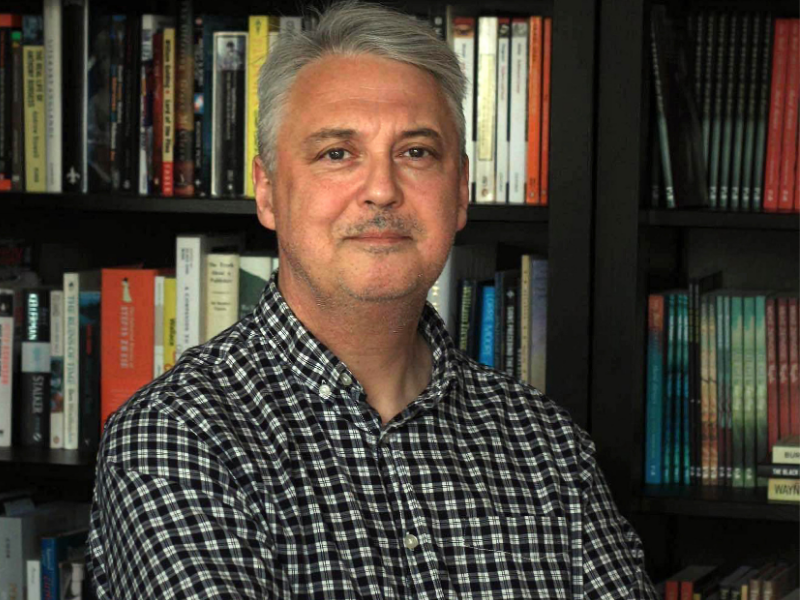
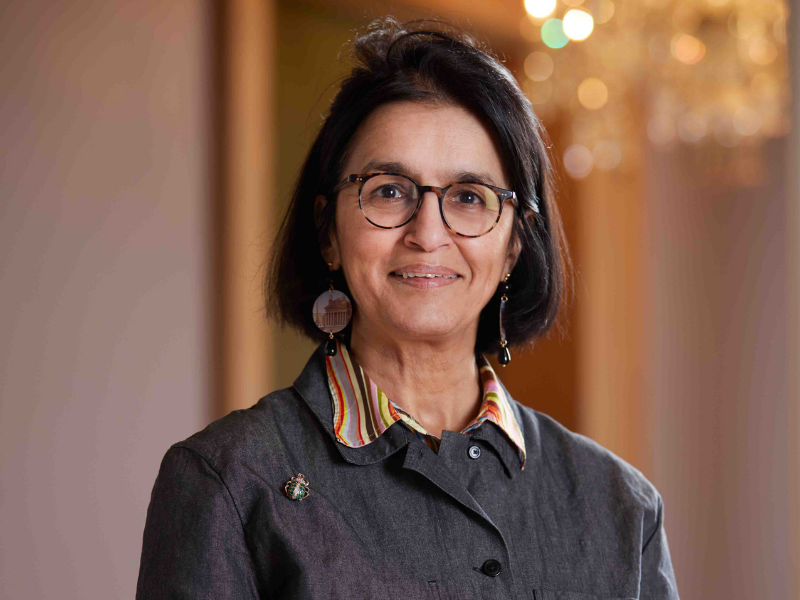
  • Q & A: Grange Park Opera CEO Wasfi Kani

    Q & A: Grange Park Opera CEO Wasfi Kani

    Can you tell us about your reaction to the Covid-19 pandemic at Grange Park opera and how you sought to navigate the last year?

    Exactly a year ago (and a week beforethe Government announced a belated lockdown) we cancelled the 2020 Season. When I’d finished faffing around doing refunds, it immediately struck me that people were allowed to go to work, if they couldn’t work from home and why shouldn’t we create new performances . . . but film them. Thus, we created the Found Season involving 108 artists in 15 new events, eight filmed from the stage of the Theatre in the Woods. Other appearances included Bryn Terfel, Roderick Williams performing Schumann, piano virtuoso Pavel Kolesnikov playing Chopin and Beethoven and a pas de deux from English National Ballet.

    Covid-19 has actually given us a unique opportunity to share the magic of great musical experiences – which are original, stimulating and food for the soul – with as many people as possible around the world. After the Found Season, we have created the Interim Season – employing more artists.

    How many people do you employ at Grange Park? 

    During the season we employ 350-400. The core team is only 14. Well, it was 14 until all this happened.

    Did you take advantage of the government furlough scheme?

    Yes

    Did you benefit at all from the DCMS’ funds for charities? 

    No, we didn’t apply for it! This was because I thought smaller charities with less access to London wealth should get the money. Little did I realise that it was a free for all. Some classical music agents applied for money and got it! Yet a singer who has earned £55k pa has no access to any money.

    Overall, do you feel the Government response was satisfactory?

    If you mean the Government response to the pandemic overall, I would say it was catastrophic (a) locking down so late in March (b) not having any checks on arrivals in the UK … there were 15k per day UNTESTED in any shape or form (c) eat out to help out (d) locking down in November . . . opening for two weeks partly . . . then allowing anyone to do anything over Xmas. I could go on and on.

    Questions must be asked why so many people have died in the UK. And it isn’t over.

    Tell us about your work with the Romanoff Foundation.

    This is a new collaboration. Normally there would have been fascinating talks about the two Russian operas in this year’s season (Ivan the Terrible, The Life and Death of Alexander Litvinenko) but uncertainty is limiting what we can do.

    Just how terrible was Ivan the Terrible?

    Well, he loved his son. And he was probably damaged by his own lack of a father figure – his father died when Ivan was 3. I’ve been studying a long history of Russia and it seems that what happened before Ivan was there were bunches of gangs going round Russia proclaiming ownership of territories. Ivan tried to unify the country but at a cost to its people and long-term economy.

    Has your audience become more global during the pandemic?

    Our extensive filmed output has had 120k views. Some are in far-flung corners. However, when they will be able to get on a plane and visit the Theatre in the Woods . . . who knows??

    Owen Wingrave sounds a fascinating project. Do you think you might continue to explore film as an avenue post-pandemic?

    On Saturday 20 March we launched another filmed opera: Ravel’sL’heure Espagnole – filmed in a clock shop in Kensington. I am already planning more for the autumn. It’s a great way to keep close to the Grange Park Opera family.

    What do you think we most miss about the live experience?

    Feelings. Having a collective emotional experience.

    Is there anything about the online music experience that is superior that you’ll want to keep once we’re all fully vaccinated?

    I’ve been listening to a lot of the oldies playing the piano – Michelangeli, Lipatti and so on. 

    People are fed up of looking at screens. They are flat. That says it all.

    It’s fascinating to see that you worked in the City designing computer systems – did you miss music during that time? Is there tension between the businesswoman and the artist in you?

    While I was in the City, I continued to have an active music life, playing the violin in orchestras and chamber music. I used to practice in the lunch break. I know some of my computer colleagues thought I was a bit nuts. 

    Do you have any mental health concerns about people in the arts? In what ways have you reached out to support artists, musicians and those in your sector affected by the pandemic?

    We have an Artist in Need fund and have distributed nearly 200k and our filmed projects are often the only performance work that an artist has been offered for a year. Even someone like Simon Keenlyside whose diary is absolutely full. Empty diary. One cancellation after another. What does it do to your mental health? Artists have to learn to live with rejection so some will be more resilient than others.

    What would be your Desert Island Discs?

    • Michelangeli playing something
    • Brahms string sextet – either of them
    • Rimsky Korsakov Scheherazade
    • Verdi Don Carlo
    • Wagner Tristan

    It’s a secret. I’m waiting for the phone call.

    Goethe, looking back on his life, made a good and bad column. Totting it all up, he decided that music was what made the difference and had made his life worth living. Is there a listening experience that really changed you?

    I love music – it gives my life another dimension. And I have a bond with people who feel similarly. Those that don’t . . . I want to open that door. The greatest gift of my life is being able to play a Mozart string quartet.

    Was there a music teacher who really had an impact on you?

    Probably my first piano teacher Gillian Stacey. She died about a year ago and I saw her in hospital the week before.

    What character traits do you particularly look for in young employees?

    Hard work. I don’t want to see them waiting for 5.30 and rushing out of the door. 
  • The Poet at Work IV: Omar Sabbagh

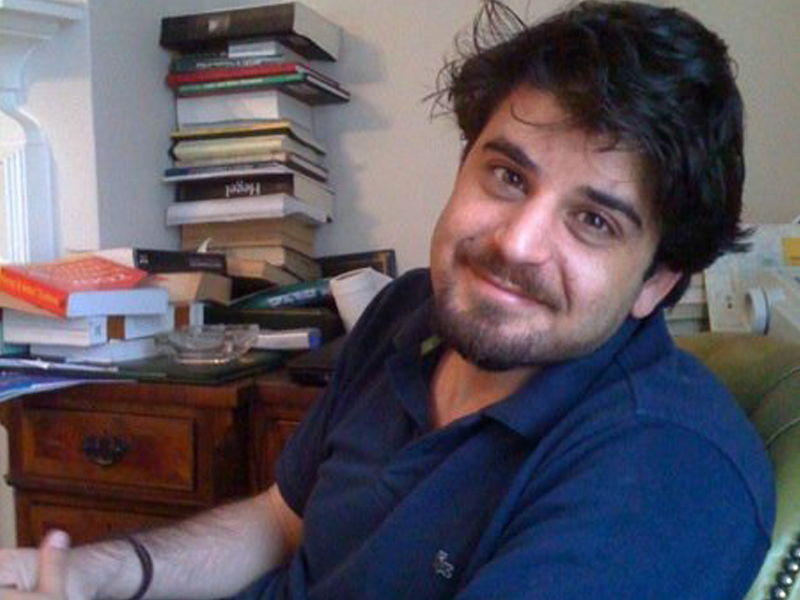
    The Poet at Work IV: Omar Sabbagh

    In the latest in our series focussing on poetry and the workplace, Omar Sabbagh discusses how his work as a university professor has impacted on his creativity

    As a university teacher I am fortunate in the kind of work my profession demands.  My vocation as a writer, critical or creative, is where my personal hopes and projects and overall wished-for trajectory lie with most force. But I have often been inspired to write from out of the milieu of my day-job.  

    Working in education educates the educator, you might say, in more ways than in just the way any work educates.  In a sense, this has always been part of academic professions: a lecture and its reception can spur a new inkling for an academic article, or lead to a new insight.  There are, in fact, many examples in my own life-experience of this happening. Here, for example, is a poem written quite swiftly after teaching a class on Plato:

    White Noise

    Strange to say it, but I’ve a nose for such things,

    Smelling the whiteness, greenness, and so on…


    I teach Plato, for instance, and the platonic folly

    Of seeing that you see, the light, the lightest worry,


    And I dance across the stage of the dapper class

    Raging wrongs, kinds of error, lessening in kindness,


    And I dance like the eye does / like the other one,

    Too, where two eyes make one, make two, make


    That seam that seams like with like, with unlike.

    And with unlike, I teach my pupils to grow, blacker


    And blacker, till they return to their origin of white.

    I’ve a nose for such things, though it’s strange to say it.

    And the white noise, and the white noise muddles along

    To the middle of the flesh that meets the dark laughter.  


    Work comes bearing gifts.  And you don’t have to have enjoyed Seamus Heaney’s ‘Digging’, to know that cultivating work with the pen can be just as nourishing as agriculture. But at the same time, one can also recognize the truth in the old romantic myth of ‘the tree of idleness.’  

    The romantic notion here is that truly creative work is not actually ‘work.’  That artists are born not made.  Under this mythography, the muse visits capriciously and the poet must be readied for that caprice.  And to be readied for that caprice means not to be doing anything else but waiting.  There is probably truth to this because idleness, rather than rigorous diligence, allows for more contingencies to pile up, and then for those to become actuated.  

    I’ve often found there’s a delayed reward to work. Often you read around a topic to seemingly little effect at the time.  But ten years later you might happen to be working on something to which the older work suddenly contributes, leading to its success.  I think this lesson is applicable in all our work lives.  If you work in a company which involves, say, the cultivating of contacts it can happen that eight years later, three companies on, perhaps the fortuitousness of having cultivated certain relationships which bore no profit whatsoever at the time, becomes in hindsight the centre of a sudden present success.  Scientists also find that a play of the imagination – whereby inventions and hypotheses are made without any immediate fruit – can later turn out to be the source of a new technology or line of research and development.  

    Play is at the heart of progress of whatever sort – and imagination is constructive, not merely fanciful. It is part of seeing well, and that’s just as relevant to an Einstein or a Keynes or a Bill Gates, as to people like me. In an essay criticizing quantitative trends in the adjudication of the fruitfulness of ‘academic’ work, Stefan Collini writes:

    Publication in the humanities is, therefore, not always a matter of communicating ‘new findings’ or proposing a ‘new theory.’  It is often the expression of the deepened understanding which some individual has acquired, through much reading, discussion, and reflection, on a topic which has been in some senses ‘known’ for many generations.[1]

    I like the way Collini correctly highlights that ‘newness’ is not a given, or even something immediately at hand.  

    My poem ‘More’ was also written very swiftly. The poem opens up into another way in which work might impact on writing – how one’s marriage, and the relationship of your spouse to work, might alter what you write.  It doesn’t have much to do with gender in this case, but rather with the interface of different temperaments – the idle (myself) and the industrious (the beloved in this poem).  And I suppose the moral of this poem is that those who won’t countenance the felicities of idleness, may end up feeling more fruitless than they otherwise would.  In this sense, idleness may seem from the poet’s perspective like a kind of health-giving temperance – a living with the let-live.  


    More


    For Faten


    You look to a spot that’s taken by a star

    Because there’s so much more

    You could be doing,


    And so much more, the air above, beneath your

    Wings; and more – in lists I cannot bring

    To cornicing, polish, finishing.

    You’ve a dark-browed hunger more

    Like anger – but possessed, too

    At times, of a simpler, lighter hue;


    But when the missed ambition strikes

    You look at me, busied in my blue

    Music, and decide to mar


    The day with your temper: tics,

    My love, I’ve gotten used to.


    Omar Sabbagh is a widely published poet, writer and critic.  His latest books are: Reading Fiona Sampson: A Study in Contemporary Poetry and Poetics (Anthem Press, 2020); To My Mind or Kinbotes: Essays on Literature (Whisk(e)y Tit, 2021).  Morning Lit: Portals After Alia is forthcoming in early 2022 with Cinnamon Press.  Currently, he teaches at the American University in Dubai (AUD), where he is Associate Professor of English.


    [1]Stefan Collini, ‘Against Prodspeak: “Research” in the Humanities’, in English Pasts: Essays in History and Culture, Oxford: Oxford University Press, 1999, p. 243.

  • Founder of the Blue Pencil Agency Sara Sarre: “Writing is a gift”

    Founder of the Blue Pencil Agency Sara Sarre: “Writing is a gift”

    Editor, writer and founder of the Blue Pencil Agency Sara Sarre speaks to Georgia Heneage about the bureaucracy of the publishing industry, the personal events which led to her first novel and buckets of advice to budding young writers.

    The publishing industry has changed

    An artist is a rule breaker, boundary pusher, and brave commentator on the state of society; art is a dangerous craft which should challenge the status quo. These have been the governing principles of the arts sector for centuries. “Learn the rules like a pro, so you can break them like an artist,” said Pablo Picasso as he transformed traditional portraiture into strange, abstract shapes. Banksy- an artist whose work is almost self-consciously defined against the commercial art world- argues that artists should “think outside the box, collapse the box, and take a f**king sharp knife to it.”

    The fact that the term ‘Creative Industries’ was first coined by New Labour in 1998 shows how even in its inception the industry was born out of economic interests. And the fact that the artists themselves were not beneficiaries of the employment boom which ensued- and led to more jobs in areas like marketing and sales- is even more telling. 

    Despite what Banksy says, the freedom of the artist to work against the commercial, money-oriented mainstream seems to be the luxury of a bygone era. No longer can artists bend the “rules” towards their own craft, as Picasso said. The rules now exist as binding mantras which keep artists under the bureaucratic grip of the industry, and it’s now near impossible for artists to have complete freedom over the direction their art takes.

    This prioritising of profit as the capitalist edge of the arts sector has inflected the publishing industry in the UK. Sara Sarre, whose work as an editor, writer and founder of literary consultancy Blue Pencil Agency has given her an insight into the rotten core of the publishing industry, says the problem is that it has become prescriptive and books now have to have a marketing hook over and above all else.

    “Twenty years ago the publishing industry started to change,” says Sarre. “Editors once nurtured young writers, and it was all about what a writer had to say. Now the sales team have far more power than editorial.

    “Writers are now more concious of the market; a lot of authors are getting out there not because they are brilliant writers but because they have brilliant concepts. You really have to consider your audience and understand that this is a business”.

    It was from this recognition of the power imbalance in relationships between writers and publishers that Blue Pencil Agency was founded: “I set it up really to help writers edit their own work and get to a stage when an agent would then have a look at it”, says Sarre. The agency is focused on bringing back that element of nurture which she believes should be the bedrock of every literary relationship.

    Covid-19:  are we seeing the best of our time?

    It has become somewhat of a post-pandemic truism that great art (in particular great literature, because of its unique medium) is born from worldwide catastrophes- the war, the depression, the bubonic plague. The events of the past year will no doubt be no different.

    But, like post-war literature, it may take decades for works to emerge which reflect quite literally on the pandemic. Sarre says that though BPA have received lots of submissions inspired by the pandemic, “as a literary subject, at the moment everyone’s avoiding it. I don’t think anyone wants to hear or read it because we’re still in the middle of it: it’s hard to reflect on because we don’t really know the outcome yet”.

    Like the book market as a whole, Blue Pencil Agency’s business has soared since Covid. Sarre jokes that agents and editors have developed a regularly-discussed “submission fatigue” because of the sheer amount of material which has been created over lockdown.

    One of the more negative aspects of Covid on the literary world has been that it’s made an already saturated market almost unbearably impenetrable, especially for young writers. According to Sarre, there’s a lot of good writers not getting published just because of the sheer amount of material being generated at the moment.

    The spirit of youth: what advice does Sarre have for emerging writers?

    Despite the overloaded market, Sarre is adamant that now is a “very good time to be a young author”. The phoenix-like literary moment of Sally Rooney’s Normal People was pivotal for young writers, and Sarre says there’s since been a massive wave of fresh young voices.

    So for those budding young authors out there just starting to dip their toes in what can feel like a challenging sector to breach, what are Sarre’s nuggets of wisdom?

    • Learn to write for a readership rather than yourself. “Writers love to write for themselves because it can be a really cathartic process, and writers are specific types of people. There’s almost a masochistic element to it.” But readers are the most important thing: “Go and stand in a bookshop and ask yourself where you want to be in that bookshop. You are writing for a public, not for yourself.”
    • Empathy, tenacity and imagination. “Empathy: you have to be able to put yourself in the shoes of the character. Tenacity: you’re going to be turned down again and again. Imagination: having the ability constantly invent worlds that are not similar to your own (or are).”
    • “Learn to read as a writer; we all read for pleasure, but part of being a writer is understand how particular writers work.”
    • Show not tell: Sarre says that though a lot of journalists make good writers because of their professional ability to tighten language to a wordcount, they are “the worst” in terms of telling a reader something, rather than showing them. ‘Showing’, says Sarre, is letting your characters and the events of the story do the work; if you’re ‘telling’, the writer is doing the work, and therefore the reader is not.
    • “Learn the technical side of writing, such as tone of voice and narrative distance. They are your tools.” Sarre says she found her creative writing MA unhelpful in this respect, but recommends looking at useful online tools or short courses where you can learn the basic skills.
    • Story over style: Sarre says the problem with many first-time writers is the tendency to prioritise descriptive writing over the sheer weight of a good story. “Each paragraph each scene each chapter has to move the story forward. That took me a while to understand.” Though literature in the past had more freedom to subjugate narrative for style, nowadays everything has become focused on the story. This is partly a result of a culture where immediacy is everything: “If it doesn’t hook us straight away, we’re onto the next thing”.

    ‘Writing is a gift- it has to be’

    Last week, Sarre published her novel Mothering Sunday under her pen name Sara James. It tells the story of a young mother who has to give up her child. The reception, she says, has been unexpectedly “fantastic”, and the book has taken on “a life of its own”.

    Did her own principles of writing and her perspective as an editor come into play? “Definitely. Being an editor taught me to write- you learn to avoid all those typical mistakes that every author makes.”

    Sarre’s book, though, seems to have bucked the trend she herself identified: that in tailoring one’s work towards a particular commercial readership, a writer inevitably loses a sense of the autobiographical.

    Mothering Sunday sprung (albeit subconsciously) from deeply personal experiences. “It’s a young woman’s story with an older woman’s perspective”, Sarre ruminates. “My mother abandoned my brother and sister for a short time. The ripple effects of that decision were huge; the whole family never got over it.

    “Everyone one of us, including my mother- who died quite young I think as a result of the stress- suffered.” Then, when Sarre got pregnant as a student, her sister’s response was to give it up for adoption. “Though I didn’t marry the father, I wanted to keep my child and now he’s very much a part of my life.”

    It’s a book for mothers. And though she wrote for her reader, which is clearly why the book has been such a commercial success, the process of writing was indeed “healing” for Sarre, who felt like she was “bringing out into the air” an issue which lay at the core of her wider family.

    Sarre’s next book, however, has nothing to do with her own life. “I’ve learnt to write for the reader, and I now know my audience- or I’ve been told my audience by my publisher- which is women.

    “You take what you know- what you’ve learnt, what you’ve lived- into the work. But one of the biggest steps I’ve made as a writer is understanding that it’s not for you. It’s a gift; it has to be. It’s your responsibility to take your reader on a journey away from the world they know and into another. By doing that, you let go of your own fears.”

  • Axel Scheffler: ‘Arts education in schools isn’t priority anymore’

    Axel Scheffler: ‘Arts education in schools isn’t priority anymore’

    The great illustrator talks to Iris Spark about his journey to success

    Fame has its peculiar pockets. The man I’m talking to could walk down any street unmolested and you wouldn’t recognise his voice, which comes in polite and clipped, but surprisingly thick, German. But his name is one of the most ubiquitous on the planet. You’d have to look to a certain former President, and his co-author Julia Donaldson to find someone with comparable name recognition. 

    At 63, Scheffler is best-known as the illustrator of The Gruffalo and its sequel The Gruffalo’s Child. The first alone has sold 13 million copies in 59 editions worldwide, and has been made into a film. It’s a favourite book of Michelle Obama – and just about every parent.

    Did his parents encourage him in his chosen career? At first, there was friction. “They weren’t artistic,” he explains. “My father was a businessman and my mother was a housewife. So yes, my father considered me a hopeless case when it came to anything to do with numbers and business. But they were fine in the end.”

    Did they know before they died how successful he’d been? “They saw the beginning of it, yes. The Gruffalo was beginning to be successful before they went.”

    Scheffler talks to me over Zoom from his studio in the house he shares with his wife and 13 year old daughter. I can see books ranged beyond him, and everything lit by an appealing skylight. 

    He looks the epitome of established success – and is. But Scheffler had to find his own way, independently from what his family expected of him. “I always liked drawing,” he recalls. “I could see I had friends who liked my drawings and made them smile – but it took me a while to see that this was my profession. At arts college I found that illustration was what I could do; I knew that by my late twenties.”

    What distinguishes Scheffler is the memorability of his illustrations. The illustration of the Gruffalo itself is a magnificently weird creation, full of an outlandish comedy which is only hinted at in Donaldson’s poem. The books simply wouldn’t exist as they are without Scheffler’s ability to delineate absurdity. 

    And yet they’re also essentially inclusive, creating the illusion that anyone might have a go. That makes him a wonderful person to come into schools and give talks (“If someone says to draw a cow or a dolphin or whatever, I can do that, I’ve been doing this a long time!”) but there’s a quiet professionalism beneath the humour. 

    How long does it take him to do a double-page spread? “If everything goes well, I will do it in a day and a half or two days but normally I’m not happy! It might depend how much detail I have to do. If there’s a sky or not, or whether I’m using watercolours with colour pencils on top, but a double spread in two days is possible. I hope my publishers won’t read this!”

    For a moment, I’m in his world – briefly aware of the technical skill involved. Is he a great gallery-goer? “I’m sad that there were a few exhibitions I wanted to see when corona came. I wanted them extended but I don’t think there’s a direct link to me.”

    I ask if he sees positives in the NHS art in the windows now. He is immediately enthusiastic: “I think it’s lovely – especially the chalk drawings on the pavement round here in Richmond. It’s very touching, something which has been around for so long – chalk on a pavement or a wall. It’s very nice and retro.”

    There’s a generosity about Scheffler – a love of children. He continues, almost wistfully. “I don’t know whether there are numbers on whether Covid-19 has made children more creative but it would be a good thing if that was the case. Arts education in school isn’t priority in this country anymore, and it’s good if children can create.”

    Scheffler’s seems such a one-off career that it seems hard to imagine how it could ever be repeated. But does he have any advice for the younger generation? “I would say it’s not always the first choice you make which is the right thing for you. The situation has changed for young people compared to what people grew up with in the mid-80s. This concept of a job for life is under question, and in some ways it’s harder now to do what I did. But hopefully there will still be authors and will be illustrators. My advice is to be open and try.”

    Photo credit: Martin Kraft

  • ‘A terrible limbo’: the quagmire the music industry is in

    ‘A terrible limbo’: the quagmire the music industry is in

    Georgia Heneage

    With Rishi Sunak’s announcement of the Budget comes a beacon of hope for the struggling arts and culture sector. In what he calls “a historic package”, Sunak has pledged a £400 million bonus to help keep afloat gigs, theatres and galleries and his Covid Recovery Fund, which has so far supported over 3,000 organisations, will be increased to £1.87 billion.

    “This industry is a significant driver of economic activity, employing more than 700,000 people in jobs across the UK”, says Sunak. “I am committed to ensuring the arts are equipped to captivate audiences in the months and years to come.”

    The Chancellor’s words are music to sore ears; an industry which is financially reliant on live events, the music sector has been hard hit by the pandemic. The sector generates £5.2bn a year for the economy, £2.7bn in exports and sustains 210,000 jobs.

    But eight in every ten pounds of the average musician’s income comes from live performances; recording revenues have drastically dwindled in the digital age. Musicians receive next to nothing from Spotify plays, and live gigs and festivals have provided the backbone of their income over the past decade.

    Even before the pandemic, the industry was under close inspection by the government because of the poor financial model used by streaming services like Spotify. A poll by Musicians’ Union last year found that eight out of ten musicians (82%) earn less than £200 each year from online streaming: 92% said streaming made up less than 5% of their yearly salary and half that their income from recorded music had declined over the past decade. Sunak’s financial offering pales in comparison to the huge deficit which faces thousands of struggling musicians, venues and organisations.

    With such a small fraction of money made from streaming and a greater financial emphasis on live performance, it is no wonder that musicians have suffered over the past year. There’s a glint of hope for live performers in the rapid vaccine roll-out but it will take decades for the industry to recover from the covid shock. There’s been little to no activity in the music industry since the first lockdown in March, apart from a select few big names at well-established records labels, like Laura Marling or Dua Lipa.

    As usual, the hardest hit have been the least known. This has halted the emergence of new talent – the veins of the UKs globally-renowned music scene – many of whom are scouted in-person at gigs. In an NME interview, co-founder of indie label Speedy Wunderground said that “it’s a very difficult time to be a musician” because the pandemic has meant that there will be a backlog of talent “blocking the road”, and Brexit will likely impact touring Europe.

    With most live events set to reopen in May and return to full capacity in June, and given financial fuel by Sunak, the future is looking brighter for musicians. Like other art forms, could it have impacted the industry in a positive way? Has it been a catalyst for change?

    Booking Agent Phil Simpson had 200 shows cancelled in 2020

    For Phil Simpson, a Booking Agent who pre-pandemic coordinated the entire live careers for musicians – including booking tours and festival appearances – the pandemic has been “really difficult”.

    “With booking I’m always thinking 12 months ahead, and the way I make money is that I take a commission from what the band earns at a live event. So obviously if the gig doesn’t happen and the band doesn’t get paid, then I don’t get paid,” says Simpson.

    “That’s why this year has been so hard. I had almost 200 shows booked for 2020, and when everything first kicked off we moved the shows to autumn, which was a massive process. As things got worse we had to move them again and again. In some instances we moved shows 3 or 4 times.” Simpson says they’ve been stuck in a “terrible limbo” where old shows haven’t happened, but they’ve done all the work for them, and new shows haven’t been able to happen. Most venues don’t have availability until spring next year.

    Because he was seeing such a shortfall of income, Simpson decided to step away from his company and go back to being an independent agent. “We are seeing that a lot in the industry at the moment,” he says. “All the bigger companies are having to make redundancies and branch off into smaller outlets, just to keep overhead down and be agile.”

    The pandemic, and his frustration, shifted Simpson’s career in other ways: he wrote a book on his experiences being a Booking Agent, started mentoring and teaching music. “We’ve all been doing everything we can to diversify our work lives and keep the trickle of income coming in,” he says.

    Some of his friends in the wider business of professional music have had to go back into other employment and take on part time jobs. “Some”, says Simpson, “have even given up professional music altogether. I’m lucky that most of my clients are quite well established so that they can find other means to make money like selling CDs or merchandise”.

    The effect of the pandemic on musicians has not been exclusively financial. “Musicians are particularly susceptible to mental health issues,” Simpson tells me, “because the highs are high, and the lows are very low”.

    “It was a really worrying time”: over lockdown, Newcastle musician Anna Reay started doing door-step performances

    And the catch-22 is that the quagmire which the industry is in predominantly effects younger, lesser known artists who are just starting to emerge onto the scene: Simpson says that going forward, the event organisers will be looking for artists who will guarantee them tickets. The unwillingness to take risks will result in younger artists getting less of a chance than their older, better established peers.

    As one of those lesser known artists, the pandemic brought huge challenges for Anna Reay. A singer from Newcastle, before lockdown Reay sang at big weddings and corporate events, and had just got a big contract with a cruise liner.

    “It was a really worrying time”, she says. “Being a single parent my main income is music. The first couple of weeks were just horrific. I cried every day.”

    Once she decided to move back in with her parents and share the homeschooling load, things started to turn around for Reay. “Singing is like a kind of therapy for me, so I started to come up with new ideas just to keep me sane”.

    From this sprung an ingenious idea which became hugely popular and has kept her career going since: virtual singing Anagrams. Reay began recording a song every Thursday to coincide with the clap for carers: kids, adults, artists and businesses began sending in videos and photos every week which documented their lockdown activities, which Reay then turned into videos which she shared on social media. She soon got a following, and started to get requests to sing songs for birthdays, cancelled weddings, cancelled parties and postponed events.

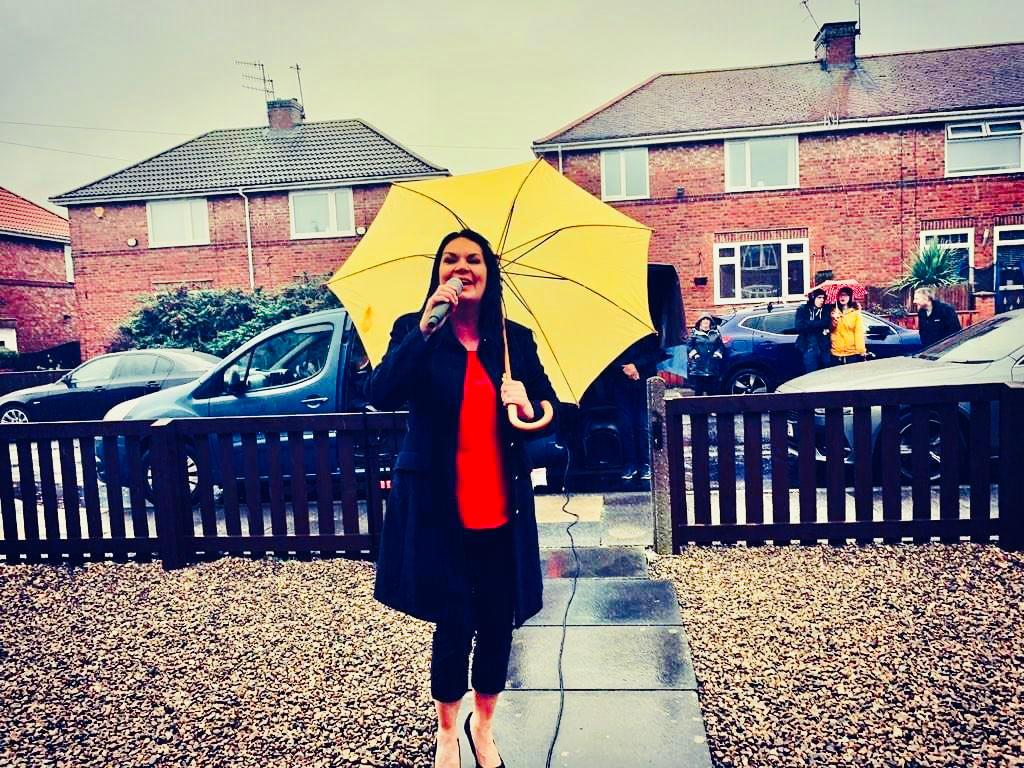
    At the same time, Reay did doorstep performances – her mic powered by a car generator and with Covid-safety checks in place like ‘keep your distance signs’. For her first ever performance Reay sang for a family who’d just lost a young girl to a rare disease.

    “To be honest I’ve never been so busy. I’ve even managed to get a mortgage from it,” says Reay.

    “It all just fell into place for me, I think because I panicked and my creative survival kicked in. Every business has had to diversify. So I thought, ‘If they can do it, why can’t we?’”

    As Reay says, she’s been “lucky” that she’s been able to “pivot” her business and adapt to the pandemic. Others haven’t. “I’ve seen musicians that have decided to hang their microphones up. It really saddens me how much everything has changed.”

  • The Poet at Work III: Christopher Hamilton-Emery

    The Poet at Work III: Christopher Hamilton-Emery

    Continuing our regular series, we spoke to former Salt director Christopher Hamilton-Emery about juggling life as a publisher, with his work as a poet.

    Christopher Hamilton-Emery was born in Manchester in 1963. He studied sculpture, painting and printmaking at Manchester College of Art and Design before taking a degree in graphics at Leeds Polytechnic, graduating in 1986. Emery has published three collections of poetry, as well as a writer’s guide, an anthology of art and poems, and pocket editions of Emily Brontë, Keats and Rossetti. His work has been widely published in magazines and anthologised. He lives in Cromer, North Norfolk, with his wife and children.

    Until recently, Hamilton-Emery was the director of Salt Publishing, and there is a sense in which he has given so much of his time to other authors – Luke Kennard, Xan Brooks and Sian Hughes are among those who much to thank him for – that his own work may be somewhat underestimated. Recently he left his role at Salt to start a new role as Director of Operations at Shrine of Our Lady of Walsingham in Norfolk.

    For Finito World, Hamilton-Emery has written a remarkable poem ‘And Then We’. By telling details we are transported to another time and place – a world of ‘bound flax sail cloth’, ‘would dyed with kermis’ and a ‘tangled feast of eels’. This poem asks us to wonder what deeper meaning our work has and it demands that we imagine our way back into the shared past. It could only have been written by a poet with a profound sense of meaning, and moral duty. It shows a poet at the top of his form, whose strength is to have found a new lease of life in his work.

    As ever, we print an interview with the poet after the poem itself.

    And Then We

    And then we embraced, sprawling on the green deck like scattered gulls.

    And then we knelt under bound flax sail cloth, stinking and making the day.

    And then we carried whom could not stand to the red chapel blithely.

    And then we walked through your pristine marsh without hours or love or trees.

    And then we drew about us buckram cloth and wool dyed with kermes and slept.

    And then we pierced cockleshells and yearned for a tangled feast of eels.

    And then we walked by sordid wolves and boars in corporal torment.

    And then we met with hirsute leather brigands and were lost.

    And then we starved, Lord, and knew concupiscence, gnawing your works.

    And then we heralded salt wind, seal routes and spectres and walked dully on.

    And then we saw your slipper chapel and spread our toes on a mile of stones.

    And then we wept. At the ruin of our bodies we wept. At our just ruin.

    And then we dressed and swayed, all the same, through the unifying street in a love queue.

    And then we bent and entered Nazareth to see her and to know her choice.

    And then we knew a high permanent land, our eyes fixed on accommodating angels.

    And then we fell in stone-sealed Walsingham, with our fiat ringing, unanchored, teeming.

    And then we left to see ice oak burials, flame drift farms, our backwards night talk blazing.

    And then we sailed on, working new bones, each a prayer to the star of the sea.

    Interview

    You’re rare in that you’ve managed to be both a high-functioning poet and businessman – two skills that don’t always go together in the same person! What is the relationship between poetry and work like for you? Is it antagonistic or fruitful?

    At one level work simply pays for my writing life, or at least the space to have a writing life, though this wasn’t always the case. I was an editor at Salt for over twenty years, and that was complex and at times bad for my writing. It left no room; though I didn’t realise this when I started out in 1999. Of course, I came to choose to give up a large part of my life to my authors – thousands of them over the years – but the sacrifice, if we can call it that, came to swallow up almost all of my life. There was a lot of collision between my sense of myself as a writer and my publishing activities, yet I came to be wholly subsumed into the publishing role. The switch back to being employed elsewhere has been liberating, and I’ve been able to separate out my business life from my writing life and, more broadly, my private life. I mean, I actually have a private life now! I’m only eighteen months into this new operational role but going back to being a general manager has been very rewarding. I’m fortunate to have a great boss and wonderful colleagues and the move into the Church has been personally enriching for me. So certainly very fruitful, and not antagonistic at all. In fact, I’ve never written so much. I’ve always believed that I needed to be in the world of business, I didn’t want to teach, I didn’t want to live through grants or patronage, I wanted to do something commercial and, don’t get me wrong, for years I enjoyed my private sector life. But everything comes to an end. All endings are beginnings.

    You decided to step back a bit from Salt in order to work for The Shrine of Our Lady of Walsingham. Can you talk us through your decision to move careers?

    I’ve touched on this earlier. However, the decision to leave Salt and move to work for a Shrine wasn’t prompted by some calculated sense of balancing my writing life. I was going through a profound personal realignment. I’d lived a successful and content secular life for forty years, I had a rather dim view of religion, when suddenly I was dislodged from my own convictions. This was in part a process of disbelief, disbelief in secular satisfactions. I came to doubt the limitations of my own world view. I also realised, and had in my own writings, the limits of science in dealing with human experience, I used to consider how we cannot live in a world without mystery, but I didn’t know quite what this phrase meant. As I was travelling through this accommodation of my past – I’m a cradle Catholic – within a matter of weeks, I was interviewed and employed by the Shrine. I shan’t bore you with the personal narrative and experiences that fed into this, but it was the right decision for me and, after two decades of publishing and running my own business, I decided to serve Christ.

    The government has recently said that poetry should be optional at the GCSE level – a significant demotion in its importance on the curriculum. What is your view on that and what do you feel the impact will be?

    Whether poetry is inherently part of a curriculum or not, it will survive as an art form, so I don’t worry about its relationship to fiction or drama in the framework of syllabus development. I don’t worry about poetry in terms of its share of the education establishment. But there’s a wider context to this and that’s the way kids come into contact with poetry, or orchestral music, or ballet, or opera, or theatre. In this sense, education is the gateway, the space that gives permission to children, and in this context there’s a political and egalitarian component to this debate around poetry. The children of middleclass parents, those enjoying private education, the rich, are afforded more opportunities for this kind of assimilation into culture, and without the rebalancing of access within state education, we end up with a form of cultural apartheid. I hope this makes some kind of sense – it’s not the qualifications or curriculum, it’s the introduction, the initiation to this cultural capital that I find disturbing. I also recognise that poetry is a pain in the arse, yet it’s meant to be awkward, tricksy, resistant to authority, dissonant – things that are hard to teach and accommodate, things that can’t easily be measured or controlled. Poetry provides a critical citizenship and, I think, helps form the unity of the person and offers a living communion today and indeed through history.

    Was there a particular teacher when you were younger who turned you onto poetry?

    If memory serves, Mr Deacon, a supply teacher or trainee English teacher at my grammar school in Manchester, who was so exasperated with the boys not paying attention to some prticular text he threw his book through a window, smashing it. The headmaster promptly turned up and invited him to step out of the classroom for a private word. This singular act made me realise that something could have so much meaning to someone that they would physically act upon it. It was the perfect illustration of genuine literary passion and it set me off on the lifelong task of trying to create beauty and rapture. Or, not getting ahead of myself, at the very least, poignancy. Anyway, I do hope Mr Deacon survived his spell at St Peter’s and went on to do great things in teaching.

    What’s your favourite poem(s) about the workplace?

    Naturally, Larkin springs to mind, though his signal contribution is rather around the comedy of drudgery – and the progress of working life to its eschatological conclusion. Working life needn’t be quite so dreary! Most of us meet our spouses in this space. Most of find friends through work. A few of us find meaning in it. Elizabeth Bishop’s ‘Filling Station’ recovers the tiny spiritual attendances of working life. Plath’s ‘The Applicant’ is a terrific feminist retort to Hughes’ ‘Secretary’. Gary Snyder, Philip Levine great on work.

  • ‘We’ll experience our own Roaring Twenties’: Hamish Jenkinson on the future of the arts world

    ‘We’ll experience our own Roaring Twenties’: Hamish Jenkinson on the future of the arts world

    Founder of immersive events company the Department speaks to Georgia Heneage about the effect of the pandemic on his company, his personal life and the state of the arts world

    When Hamish Jenkinson first launched the Department eight years ago, he was calling it “the world’s first immersive agency”.

    He wasn’t far off: the Department has worked with bestselling theatre and events companies such as Punchdrunk and Secret Cinema, artists like Banksy, and founded incredibly popular underground immersive spaces such as the Tunnels and the Vaults.

    Jenkinson and his team were riding the wave of the immersive experience trend sweeping London’s events scene; indeed, they were right at the cutting edge of it. By 2019, they’d worked with big brands like BMW to create immersive customer experiences and created the opening experience at the Women’s World Cup in Paris. The last job they did was to plan a party for Facebook for 5,000 people in a circus big top tent in Dublin. Little did they know it would be their last for some time.

    The pandemic was the great killer of many businesses and jobs. But the live events industry was one of the worst affected. Contemplating on what would become an incredibly tough year for both him and his company, Jenkinson remembers that “Rishi Sunak’s announcement in March – that £12 billion would be made available to help the arts- was the point I realised that it wouldn’t help an agency like ours. It felt like it was going to be a long time before brands would be willing to invest the kind of capital required to plan a large gathering”.

    Like so many of us, Jenkinson went home that weekend and watched Contagion: “It gave me an indication of the situation we were facing, and knowing that our last event had been for 5,000 people, I knew that large- scale gatherings would be the first to be closed and the last to reopen.”

    Things began spiralling downwards from that point, and Jenkinson says they were forced to move quickly and aggressively. “I went into the office to let half of the team know they would be made redundant,” he says. “That was an incredibly sad day, and it took its toll personally.”

    They also had to hand in their lease for their Dalston offices and skip everything in storage, which included costumes and props collected over the years. “Knowing we’d probably never go back was incredibly heartbreaking”, says Jenkinson.

    So how did he approach the near-impossible task of keeping intact a large-scale events company? Jenkinson says the furlough scheme was a saviour, as it allowed him to keep many of their team afloat and eventually bring back those who had been let go.

    The pandemic also afforded him the time to “raise investment for, and start planning, a new immersive experience”.

    Immersive theatre, according to Jenkinson, was already becoming “the dominant entertainment experience, outside of the superstar touring experiences”. So in the post-pandemic landscape he reckons we’ll see that “traditional theatre will be forced to reimagine their theatrical experience”. Experiential shows like Punchdrunk required their audience to wear masks long before the word ‘mask’ entered our vocabulary so prolifically, and social distancing is much more possible in the venues used by the Department than in a playhouse.

    “I firmly believe that we will experience our own Roaring Twenties after the pandemic is over, much like the world did after the last great pandemic, which saw an explosion of culture and creativity,” Jenkins explains. “So many great forms of art – such as Bauhaus – found their voice in that turbulent period.”

    And if the audience of traditional theatre is largely older, post-pandemic drama is likely to bring in a much younger audience who have already embraced immersive experiences and are used to interactive performances. “You only have to look back to periods when the virus was rife and people were crowding into the streets of Soho to have an inkling of the pent-up excitement which I believe most young people have at the moment”, he says.

    Another way in which the pandemic may irrevocably change the landscape of British industry at large, says Jenkinson, is a transition to a remote working culture which he believes can foster “great creativity”.  

    “As an agency going forward we will be less centralised – meaning we won’t need an office anymore,” he says. But Jenkinson also says he thinks it’s important to find ways of bringing the company together for short, intense periods. “I don’t need everyone to come into an office regularly, but I need to create moments where we can come together, think together, talk together and strategise together.”

    But we must be careful not to alienate the young, says Jenkinson, and “we mustn’t forget that so much of your early career isn’t just learnt from a zoom meeting, but those precious moments beside a water cooler, or walking past someone’s desk when you happen to see a graphic being designed or content being created,” he says.

    The key question for Jenkinson is this: as the world reimagines the workplace, how do we ensure the young don’t miss out on those crucial experiences which aren’t just about doing your job but the key moments that ignite imagination and curiosity?

    Jenkinson is an example of a businessman for whom the pandemic has been both a blessing and a curse. It has forced him to dissolve and reassemble his company in a different way, to reimagine office culture, and to reappraise the direction the arts industry must go.

    On a personal level, the pandemic also pushed Jenkinson to reevaluate what is important to him. “I had to embrace things like not drinking during the week, and I started doing yoga and meditation, which I hadn’t felt I needed before. Simple breathing in the morning can do an incredible amount to deal with stress and anxiety.”

    His final point was one which stuck with me as a binding mantra for the events of the past year: “the pandemic has taught me that when life seems difficult and the path forward unclear, look down and put one foot in front of the other and try not to get overwhelmed by what you see on the horizon.”

  • The Poet at Work II: Alison Brackenbury

    The Poet at Work II: Alison Brackenbury

    As part of our regular series which looks at the relationship between poets and the workplace, Alison Brackenbury discusses her how she has managed to juggle the need to earn a living with her commitment to her art.

    Alison Brackenbury has had an unusually interesting working life. She won a scholarship to Oxford and left with a First in English. She subsequently married and moved to a small town in Gloucestershire, where she combined writing with horse-keeping, parenthood, grassroots politics and a variety of non-academic jobs. For twenty-three years, until retirement, she worked as a manual worker and bookkeeper in her husband’s family metal finishing firm.

    Her poetry shows deep respect for tradition. It has a worked-at burnish and commitment to form which reminds us of manual labour. Brackenbury is a maker, too worldy-wise not to know that a poem must reach as wide an audience as possible. There is a streak of pragmatism in her poetry, which sits alongside – and is perhaps fed by – a rare knowledge of nature.

    For Finito World, she has produced an exceptional poem ‘Metal Finishing’ which illustrates her many strengths: impeccable technique; a knowledge of the real world; the quiet humanity of her noticing. Above all, we always feel that Brackenbury, like Larkin – another poet who did actual jobs – understands that if poetry is to have any place at all in our busy lives it must be memorable.

    And that, more often than not, will mean that it will rhyme. But the point is that it is an insight that could only have been arrived at by her having once been busy herself. Brackenbury is a great advert for the idea that in order to write you first need to have done jobs.

    Metal finishing   

    Nobody worked like the West Midlanders.

    I scrambled off my bike from one sharp frost

    to find a driver dozing in his van.

    God knows when he set off from Birmingham

    to have his tooling first in Monday’s queue,

    be ‘Just in Time’, words spat by me and you

    as by steamed vats of acid or oxide

    we plated, coated, fought off rust, then dried

    laser-cut tools in our Victorian mews.

    ‘Like Dickens!’ grinned the driver while he chewed

    three o’clock lunch, then roared down our back lane.


    We quit. Accounts and knees reported pain.

    Small margins were not hard to understand,

    for decades, we wired robot parts by hand.

    There was untarnished love in this, no doubt.

    Our buildings saved us, sold, walls razed, dug out.

    Milk bottles crash. I wake. It must be four.

    I listen while the van throbs from our door.


    Notes about the poem


    Metal finishing: processes which protect metal from corrosion. I worked for 23 years in a tiny family company which spent half a century battling with rust.

    Just in Time: a production system in which manufacturers do not hold stock. Components are delivered by sub-contractors, ‘Just in Time’. It was not popular with metal finishers..


    Finito World: Metal Finishing is a wonderful poem. Whenever I read your poems I always feel: ‘This is someone who has done something else in their life other than poetry.’ Did your career empower you to write?

    Alison Brackenbury: I think that my work – especially in industry – gave me material for poems which is rather unusual in British poetry. For example, there may not have been too many poems in the Times Literary Supplement about a van driver’s narrowly averted industrial accident…

    I have always had paid jobs which had no direct connection with poetry. This did make me aware that many people are unacquainted with or even frightened of poetry. This strengthened my own desire to write poems which attempt to be as musical as possible, and relatively clear. There’s always room for a little mystery!

    Conversely, what role did your love of poetry have in giving you confidence in the workplace?

    Like many people – perhaps, especially women? – I have had to be pretty pragmatic about what I did, simply to keep the financial show on the road.

    I have had three, very varied main jobs. When I ran a technical college library, I was regarded (rather optimistically) as a source of knowledge about literature and poetry. There was (then!) just enough spare money in the budget to buy a little poetry. I was amazed and pleased to find one day that a young woman police cadet had plucked a copy of Wordsworth’s poetry from a display and was reading it aloud to some remarkably meek male colleagues… In a public sector admin. job, I again had a rather undeserved reputation as an expert on literature and language. When consulted on knotty points of grammar, I would point out blithely, that poets simply dodged such issues and wrote something quite different, invented if necessary! In my hectic industrial job, few of our sixty customers knew that I wrote. But I was sufficiently fierce about language to be unimpressed by various waves of fashionable phrases, used in larger companies. Privately, I always referred to ‘Just in Time’ as ‘Just Too Late’. Post- Brexit, I fear that this international supply system may be ‘Much Too Late’…

    The government has recently said that poetry should be optional at the GCSE level – a significant demotion in its importance on the curriculum. What is your view on that and what do you feel the impact will be?

    I have great admiration for teachers, but I’ve never taught, and my daughter is now in her thirties. So I don’t consider myself an expert on poetry in the curriculum. But I do know that many people ONLY know – and value – those poems which they encountered at school, especially if they learnt them by heart. If they don’t come across poetry which appeals to them in their curriculum, the one chance may be gone. 

    What poetry should be on the curriculum? I can only offer three observations. First, having to study one set text which is the work of a single contemporary poet may have the very unfortunate effect of turning many pupils against that poet! I’ve heard this widely reported from university lecturers, who find that most of their students are prejudiced against the major living poets on their former school curriculum. Secondly, I think that the subject matter of a poem may be more important than its period. My daughter reported from her (very mixed) comprehensive that the boys in her class were truly impressed by the poetry of the First World War. Finally, I think there is a case for studying an anthology – possibly a themed one, with poems from various periods? There’s a better chance, in that variety, that a student will find one poem whose sense speaks to them, and whose music stays in their mind.

    Was there a particular teacher when you were younger who turned you onto poetry?

    No, although I did have some very good teachers who introduced us to a range of work. I remember poetry books being available to read in the later years of primary school. I discovered much! But I could have been put off poetry for life by my first class in that small village school. Our (untrained?) infant teacher used the dullest doggerel I have ever encountered. I don’t know where she found it. I dreaded those afternoons.

    What’s your favourite poem about the workplace?

    A Psalm for the Scaffolders’, by Kim Moore. It’s a compelling – and fiercely humorous – account of a dangerous, skilful job. Technically, the poem is entrancing, with its repetitions and powerful beats: truly, a modern psalm. Kim is much younger than me, and has so far only published one collection. She is a poet to listen out for – and she had her own skilled previous career, teaching children to play the trumpet. 

    I can reveal, after hearing her read, that the man who fell thirty feet (and lived) is her father… Here are the scaffolders:

    https://www.poetryinternational.org/pi/poem/27299/auto/0/0/Kim-Moore/A-Psalm-for-the-Scaffolders/en/tile

  • Talan Skeels-Piggins: ‘Ask yourself: how many people have you helped?’

    Talan Skeels-Piggins: ‘Ask yourself: how many people have you helped?’

    I wanted to become a P.E teacher because I am passionate about sport. In a team game I always enjoy working with others and individually. I’m a bit sad that I’m no longer teaching, but life changes and we’ve got to move with it. If you’re always looking over your shoulder at what you were then you’re never looking forward at what you could be. 

    I was in the Navy as both a regular and then as a reservist. In the regulars, I was a fighter controller in the operations room. I was only in my early twenties and there was a massive amount of responsibility placed on me at that young age. When I was a divisional officer, I would mentor a group of sailors that were in my charge, helping them along with their careers. That was very rewarding. 

    I did six years as a regular and then I was a reservist. Shortly after I joined the reserves in November 2002, I was paralysed, at the beginning of March 2003, as a result of a motorcycle accident. Initially the Navy dismissed me, but I wanted to go on my own terms. I argued my case to the medical board of survey and proved that I could carry out the same requirements an able-bodied officer would have to. I did the bleep test, the mile and a half run in a race chair, the weapons handling test, the gas mask handling test and I passed each one for my age group. I did everything that would have been expected of me if I had been able-bodied.

    Then I went to the medical board of survey and put forward all the things that I could do. I accepted the considerations and understood that I would not be going to sea again, and I ended up working with NATO. 

    My case has set an important precedent in allowing disabled people to remain in the armed forces. Back in 2003, I wasn’t allowed to tell anybody the outcome as the Navy were concerned that the floodgates would open and all those that had been previously dismissed would want to return. Then there were all the injuries from Afghanistan and Iraq, and people were able to use my ruling as a precedent to continue serving in whatever shape they could. It’s great to see that the military now do not simply give up on the wealth of knowledge that these people have.   

    We learn as we go through life; some of the learning we don’t even know we’ve got. We experience things and they remain dormant inside us. After the paralysis, I was in a pretty dark place, this massive change had happened to me and when we have change happen to us, all we can see is the change. Initially, for me, it was a space I didn’t want to be in. 

    Luckily for me, I had a chat with a guy, who had also become disabled, who had come in for a regular check-up, while I was laid up in hospital. He told me about the opportunities that were still there for him. He started to list things: he still had a girlfriend; he still drove a car; he lived by himself. Then he said he had been skiing. I couldn’t believe that; I thought it was incredible. That became my little goal: to get out of hospital and to learn to ski.  I didn’t know at the time that I would become a gold medallist in the European championships.

    In order to do that, I had to accept what had happened to me. The more I looked internally, the more I realised that we have this untapped power, resilience and energy inside of us. I call it the little person inside. I believe that we all have it. I don’t have any magical ingredient. I’m not superhuman. I’m not special. We should use ourselves as our greatest source of inspiration. You don’t need to look externally for inspiration.  

    Motorcycling would become another passion. As with the Navy, I went about getting permission to race motorbikes by looking at the arguments as to why I couldn’t do it and then I would try and show what I would do to overcome that obstacle. Gradually I worked through all the different obstacles, and jumped through all the hoops that they put me in. 

    To finally do it, it was the most thrilling thing I had ever done and it then opened the pathway to others. Since that point in time there have been quite a few paralysed motorcycle racers and all they have to do now is go to a club, get their license like anyone else and they can race any capacity bike. There are no restrictions placed on them. 

    In Great Britain you are either a motorcycle racer or you’re not, and that was what I was fighting for. It is a really fabulous thing for me as a paraplegic to go and compete with able-bodied cyclists. It’s a little bit of escapism because for that moment in time I am simply a racer and I’m not being treated any differently from an able-bodied racer. I feel free from my wheelchair, my disability and the restrictions that have been placed on me due to an accident. For my own personal mental health it is vital that I get to compete against able-bodied people. 

    I set up a charity called The Bike Experience. I take disabled people and help them to learn to ride motorbikes. We’ve taught over 400 people so far. Some people come once and it’s the catalyst for them to go off and do other things, whether that be triathlons or fly planes. Some people come back and they’re able to ride on the road again. You see someone arrive nervous; when they leave they look like they can take on the world. 

    After 13 years of being paralysed, I had a conversation with myself about what it means to be a human being. I asked myself: ‘How do I validate my existence?’. The answer I came up with was: ‘How many people have you helped?’ and I realised that since I’ve been paralysed I’ve helped more people than I would have done if I had been able-bodied. So therefore, I wouldn’t change what has happened to me. That moment was when I fully accepted the change in my life.      

    It’s a very difficult time right now, and everyone is experiencing change: they’re allowed to be upset. Sometimes when you have things that affect your life it sets off these waves or these ripples in your timeline, but it’s realising that it is only temporary and the next peak is coming. Don’t feel as though you are weak for being upset. We can all grow and learn by giving something back. I think we don’t take enough time to do self-reflection. It’s amazing what you can get from it.  Everyone is an amazing person, you just have to believe in it.

    Talan Skeel-Piggins was talking to Alice Wright

    https://www.existentialbiker.com/the-bike-experience.html#
  • Sports focus: Mayweather vs Paul and the Rise of the Freak Show Fight

    Sports focus: Mayweather vs Paul and the Rise of the Freak Show Fight

    Ben Godfrey

    In the past few years we have come to accept strange as the new normal, so perhaps it should come as no surprise when we see a YouTube star booked to fight one of the greatest fighters of all time.

    There has been much talk about whether this kind of freak show is good for fight sports or not. Does it degrade the dignity of a noble and dangerous profession? Or does it draw a wider audience to the sport that might ensure bigger pay days for real fighters in real fights in the future? Probably both are somewhat true. This, however, is not what is most interesting. What is most interesting, is why so many people find these fights so compelling.

    First, let us chart the evolution of this oh-so post-post-modern spectacle. It all began with KSI vs Logan Paul in August 2018. That fight saw two YouTube stars who had been beefing online decide to settle it in the ring; they were smart enough to monetize it.

    Eddie Hearn (Matchroom Boxing) saw the money-making potential of the event and threw his promotional weight and know-how into the cauldron. A monster was born. An 8 fight event, with a host of internet stars, who are apparently followed by a horde of hundreds of millions online. Two or three events and one unconscious NBA player later, Logan Paul signed a contract to fight Floyd Mayweather Jr. (arguably the greatest defensive boxer of all time). Meanwhile Jake Paul is set to box retired MMA fighter Ben Askren.

    So, what does this tell us about humanity? Firstly, it shows that even people with little interest in fighting excellence love a good scrap. We would probably be pretty uninterested in watching two people play an unskilled tennis game, but if a fight kicks off-at a sporting event, at a pub, in a nail salon, we can’t take our eyes off it.

    Secondly, what is even more compelling than watching two strangers fight? Watching a friend fight. Internet stars make a living out of sharing with fans, posting 2, 3, 4, 5, maybe even 20 times a day; their teenage fans see these people more often than their best friends, maybe even than their mothers.

    But what makes these fights most compelling, is the collision of the fake and the real, the constructed and the chaotic, the candy-floss simulacrum and the steak-and-eggs visceral. Perhaps nothing is more symbolic of 21st century veneers of false reality than the rise of the internet star; curating and distributing a cult of personality to millions of zombie-eyed followers, all the while getting paid for sponsored content.

    Equally, perhaps nothing is more symbolic of older, simpler times, than two people agreeing to duke it out in front of a crowd until one is proclaimed the victor and the other the vanquished. Perhaps I am sentimental, but I hope that the real wins out here. Mayweather may be twice Paul’s age and half his size, but the smart money is still on him – surely, there is no possible world in which he loses? That would be like Donald Trump winning a presidential election.