Category: Briefings

  • Out of office? Thomas Heatherwick on the future of the workplace

    Out of office? Thomas Heatherwick on the future of the workplace

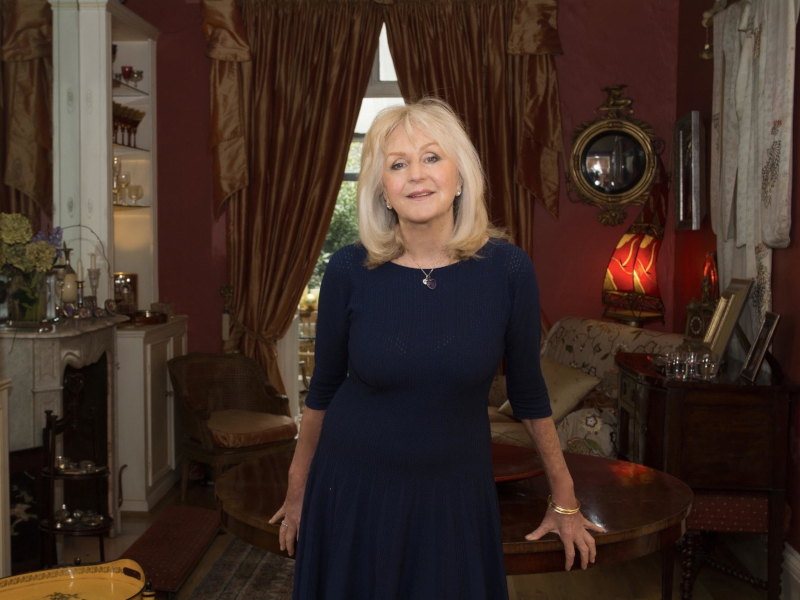
    By George Achebe

    Will we ever return to our offices? And what will they look like if we do? George Achebe talks to renowned designer Thomas Heatherwick

    Journalists I speak to lately have begun to notice a new presence within their recordings of interviews and Zoom call presentations: birdsong. Lockdown coincided with marvellous weather; our offices became our gardens.

    And the sky on our road in Islington reverberates with the sound of spanner on metal; our friends over in Muswell Hill have replanted their garden since they spend so much time looking at it; my conveyancing lawyer tells me he may, or may not, return to the office. If so, he says, it will be used primarily as a storage space.

    There is, in other words, a unanimity about lockdown: you can be sure that your own experience can be extrapolated into the general. And yet if you ever leave your cosy home and venture to the centre of town, you’ll discover the flipside of all this neighbourliness and quiet domestic improvement.

    Soho strikes me as especially melancholy. There’s the sandwich bar I used to frequent now boarded up; a new kind of silence, not so much contemplative as eerily touristless; and with around one in ten businesses open, you have a sense that this place has insufficient residential activity to last in its current form beyond the end of furlough.

    Will these businesses return? It is dependent on what decision we make about our office arrangements. This varies from business to business of course. For a more in-depth analysis of the landscape see our exclusive employability survey which begins on page 79. But what are the implications for architects?

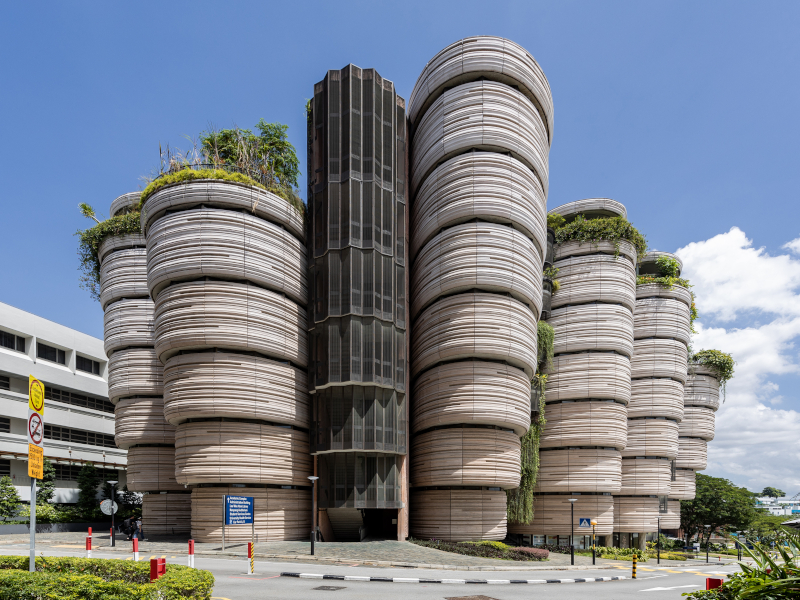
    Thomas Heatherwick, the famous founder of the Heatherwick Studio, explains that he has seen some positives come out of the coronavirus period: ‘The most interesting thing has been reflecting on what this means and how it’s going to change our lives. I’m wrestling with the sense that [preCovid 19] there was more and more sharing – of cars, workspaces and living spaces. The world was becoming more efficient because people were learning to live together in different ways.’

    In Heatherwick’s eyes, the pandemic represented a ‘retreat’ into the private space – a world of Victorian studies, and stockpiled toilet roll. But Heatherwick, who in person is infectiously optimistic and free-wheeling, is already solving the problem the world has set him: ‘The positive side is that people will be spending more time on their homes, and thinking on how their homes work for any situation.’ In the meantime, he says, businessowners have decisions to make about whether to redesign their office space.

    We are all aware that this is a sort of drawn-out inflection point, where the human behaviour that will dictate what solution we end up with is latent, and yet to be revealed. Furthermore, it will likely differ from country to country; sector to sector; and CEO to CEO.

    When I talk to Alan S – the CEO of a leading boutique creative agency, who also has the sound of birds in his garden – he speaks only on the condition that he remains anonymous. This is because he isn’t quite sure where his business will land and he doesn’t want to give any misleading or worrying information to his workforce.

    ‘As a small business we have always worked from a fixed office in central London and although we have let employees work from home when required we have never all worked remotely at the same time,’ he explains. ‘We did a trial run before lockdown was announced in order to iron out any issues that might possibly arise, so when lockdown happened we were as ready as possible.’ So how did it pan out? ‘The overriding response was that everyone found it productive, but missed the typical office interactions and camaraderie when seeing each other.’

    This will no doubt be a familiar experience for many. What changes has that made to Alan’s view of his existing central London office space? ‘It suddenly became a burden and we were realising that the more we worked from home, the benefits this gave to everyone [would accrue].’ And what are these? ‘Everyone would save on travel expenses and commuting time could be spent with partners and families.’ The perennial bugbear or exorbitant business rates has also been front of mind for the business. ‘The rent, rates and insurance saved by surrendering a central London office will enable us to invest in people, equipment and technology to increase our efficiency and service our clients.’

    So Alan S has to some extent made up his mind, and there are plenty of him.

    But it is by no means a unanimous view. In fact you’ll find some who argue that an imminent vaccine, most likely arriving in 2021, and distributed towards the end of that year or in 2022, will see a return to a world reminiscent of pre-Covid 19 office-centric life.

    Olly Olsen, the CEO of the Office Group, which has over 40 flexible workspaces across the UK, is one of these, although he admits it may be a way off. ‘I spoke to Network Rail, with whom I have a joint venture, and in a number of stations, footfall is down 88 percent. That’s catastrophic,’ he concedes.

    In addition, Olsen, whose livelihood is bound up in office life, also makes some admissions about the benefits of working from home. For him, they’re linked to wellness. ‘In the afternoon, I get tired with too much coffee and a big lunch and so I’ll lie down on the sofa for half an hour which is almost socially unacceptable to do in the office.’ Olsen sees it as a positive future driver of business that we’re now finding ourselves more attuned to what he calls ‘wellness fluctuations’ in each other. Workers with children are another example. ‘It used to be that if someone said “Can I make that meeting 11 instead of 10?’, you’d say: “Deal with your kids another time.” Now when a member of staff says, “I’m not feeling myself ”, I say, “Have a rest, there’s no problem. Speak to you later, speak to you next week”.

    All this is an indicator of how power has moved rapidly away from the employer towards the employee. For Olsen, it’s not that the office model needs to go; it’s that it needs to change and be adapted to reflect our new reality.

    What ramifications will this have for the buildings around us? Thomas Heatherwick agrees with Olsen, but he sees it from an architect’s perspective. For him, there has simply been too much ‘lazy place-making’, and the pre-Covid office was a case of ‘Stockholm syndrome where someone falls in love with their captor. Your employer effectively had you in a headlock.’ The new office space will have to ‘engender real loyalty’ and become a ‘temple of the real values and ethical thrust of an organisation.’

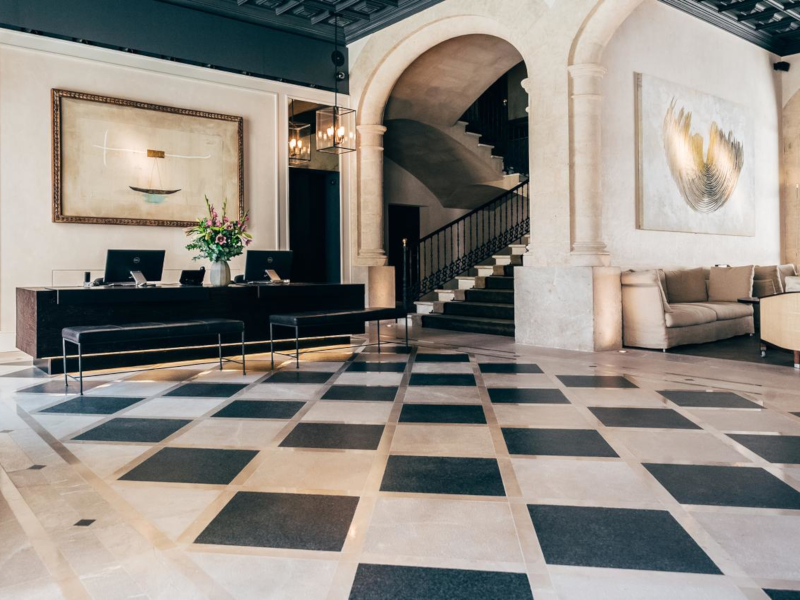
    For Heatherwick, the pre-Covid workspace ‘prioritised how [businesses] communicate to the outside world. So if you go to Canary Wharf ’ – an example perhaps of Heatherwick’s ‘lazy placemaking’ – ‘there’s a grand lobby; huge marble floors; pieces of art looking spectacular; a reception desk with great flowers, and lovely-looking people sitting looking great. But if you go inside the elevator you go up to just an ordinary place of work. The show was for the outside.’

    All this has to change now that power has moved in the direction of the employee. ‘You need to have them coming in and thinking, “Yes. I need to be here.” So the workspace will become less about being a show for the outside world. It’s about finding your voice as an organisation. The employer has to up their game which the brilliant people were starting to do anyway.’

    So how will this look? Heatherwick is a prescient artist who, it could be said, was already beginning to answer some of these questions in his previrus work. His magnificent shopping centre Coal Drop’s Yard in King’s Cross was all about creating a space which people who could internet shop in their bedrooms would still wish to visit.

    ‘Public togetherness is something which motivates me,’ he says with infectious enthusiasm. Heatherwick has always been alive to the fact that change must be built on the back of existing infrastructure: as always, the future will be built on the back of past structures. ‘We’ve got this legacy of Victorian and Georgian warehouses, which are very robust and changeable. Think how many people are living in older industrial buildings. That was the ethos which drove the Google buildings that we’ve worked on.’ Covid-19 might seem to open up onto the future, but it will also be anchored, Heatherwick argues, to what we have already.

    The first project the studio worked on for Google was the company’s offices in California. ‘Next-door to the sites we were working on there was this airship hangar – a NASA airbase,’ he recalls. ‘These are amazing spaces which are super-flexible so you can do anything you want. So our proposal to Google suggested we make really flexible space since we’re not sure whether in a decade people sitting at desks will be what we need. We’ll be manufacturing instead.’

    So in a sense the post-coronavirus requirement of flexibility might be met by the sorts of structures already around us: there shall be that element of continuity even as we change.

    But this isn’t to say Heatherwick lacks a vision of just how extraordinary the shift in architecture shall be. Round the corner from his studio in King’s Cross, Heatherwick is working on Google’s new London base: ‘It’s the biggest use of timber in a central London building. All the façades are wood.’

    What is the ethos of that building? ‘One thing we’ve spent time talking about on that is community,’ says the 50-year-old. ‘The idea that here is just a mercenary organisation doing their thing, and the employees come in eat all their food and drink their drinks, sit at their computers, and get well-paid…’

    Heatherwick trails off, then refinds his thread. ‘Given what we’re saying about really getting a deeper engagement with an organisation and it’s team: How does that really contribute to the community around? On the ground floor, you don’t just want another shop that sells ties.’

    So what would a new communityoriented architecture entail? ‘Close by King’s Cross there’s Somers Town, where there’s great deprivation and low life possibilities in terms of housing and education.’ For Heatherwick the lively pedestrianised ground floor is a way of energising the whole area.

    So while our conversation began with fears of a new individualism, perhaps we might after all find a new communitarianism emerge? Heatherwick agrees: ‘If you’re going into work two days a week you may not need to be based in London.

    Out of this may come some strong community-making away from conventional urban settings. Energy had seeped away from villages but now you could get super-villages. It’s okay to spend two hours on a train journey if you’re only doing that twice a week. I just hope we will use brownfield sites rather than consuming greenfield sites.’

    But again this seems to spell trouble for the City and, though few may lament the fact, the property development sector. Olsen admits: ‘If you ask people where they most prefer working, it’s on their own – it’s at home where it’s quiet. Not an office which is openplan with people talking, and which is smelly and so on.’

    So what’s the purpose of going to an office? Olsen is clear: ‘We’re built to connect. I can’t have guests and clients to my house and I can’t bring a team together to my home. If I do that business will fall – as it’s falling now from lack of human interactions.’

    So what kind of spaces will we see? In answering this, Olsen sounds a lot like Heatherwick: ‘It’s difficult to forecast what will happen next but I think where you choose to work will be driven by who you are and what you believe. Our places of work will become more of an extension of our social lives.

    The overwhelming impression is that we’re in a hiatus – a period of hedging, where people are living in tentative expectation of a vaccine. Olsen agrees (‘we just don’t know) but he has clarity on another point: ‘Before this happened, I would have said that all my buildings were clear, tidy, safe and healthy. Well, they’ll have to be clearer, tidier, safer, and healthier now.’

    So it seems likely we’ll be hearing the birds in the garden for a while yet. And when we get back to them, perhaps we’ll hear them in our offices too.


  • Is this the end of the boozy lunch?

    Is this the end of the boozy lunch?


    Our eyes on the restaurant industry wonders whether Covid-19 has put an end to a great institution.

    Costeau was recently talking to a grand dame of the publishing industry, publicist to a host of well-known names in the publishing world including Julian Barnes and John Banville. She recalled her first week at work in a major publishing house in the 1980s. As she told us, her start seemed to go well, but at the end of it she was summoned to her boss’ office: ‘Yes, you’ve had a good week, but there’s one problem,’ he said. ‘You don’t appear to be having enough boozy lunches with your authors. This week I want you to take yourself down to the Wolseley.’

    As much as one appreciates any efforts the publishing industry is making to rekindle that spirit, it hardly needs stating that you’d be unlikely to hear this complaint today. And the part-owner of the Wolseley, Jeremy King, acknowledges precisely a hard truth: post-2020 may well be the era when the sozzled lunch is finally put to bed.

    He told Costeau that the trend had been part-driven by America: ‘It had been eroded for a long time. I remember in LA ordering wine at lunchtime and being looked at as if I were a psychopath.’ To some extent he says, the shift was caused by an increase of women in the workplace. ‘It was always the men who would booze the most and do the least. The women were much straighter and to the point: avoid the booze, and reduce the amount of time in a restaurant.’

    This decline in wine-addled prandials was caused also by the rise of breakfast. King continues: ‘A while back, we witnessed the growth of the breakfast which was really all about avoiding the boozy lunch. It’s accepted it’s going to be 45 minutes to an hour; it’s a much more efficient way of working. And in some ways it clears space for people who do want to have a social lunch. I think there will be less business lunches in terms of Covid-19, but more boozy social lunches because people will have missed the conviviality.’

    And yet when we caught up with Sir Martin Sorrell earlier in the year, he was radiant with the thought that he didn’t need to begin his day in a meeting which he plainly views as time-wasting. ‘I actually find I’m doing more work, as there are no interruptions,’ he explains. ‘No breakfasts; no dinners; no surplus travelling. So, on balance I’m more effective and certainly learning more.’

    Of course, your future alcohol intake will depend to some extent on which industry you find yourself in. One friend who runs a recruitment business is dismayed at the thought of forgoing his champagnefuelled lunches in Bob Bob Ricard. ‘We’re still going to do it – we’re doing it now!’ he says. But there is a sense that such spirited folk represent the last bastions of the boozy lunch.

    Journalism, of course, is famous for having a few too many, and yet even here there have been some notable setbacks.

    The death of that great advocate of the alcoholic meal Christopher Hitchens at 61 to throat cancer in 2011 is set to be recalled in a melancholy memoir-cumnovel Inside Story by his friend Martin Amis, who recently in interview said he stared in the mirror and thought: ‘I look finished.’ AA Gill was another who turned away from booze – but later wished as cancer also claimed him that he had turned away sooner.

    That’s the trouble with the boozy lunch: it takes its toll, and the young, who haven’t grown up dreaming of being rock and roll stars, but of designing tech apps, are cannier about their health than their parents’ were.

    So is this a morbid culture? Jeremy King thinks so: ‘I think it is a morbid culture, and that’s potentially drained the fun, but I still think we’ll return to an approximation of what we had before.’

    It is probably a danger in any case to glamorise the whole thing. When Costeau last saw his publicist friend, the wine did indeed flow. ‘Well, this was just like the 1980s!’ she said at the end, by way of slightly slurred summary. It was, and her saying so expressed surprise as much as pleasure.

    I also think it expressed foreboding: and indeed the headache the next day made you wonder even before Covid-19 whether this old institution might after all deserve its place on the scrapheap of history.

  • Stanley Johnson: ‘Boris has been re-reading my novel’

    Stanley Johnson: ‘Boris has been re-reading my novel’

    The novelist and environmentalist on his Covid-19 novel, how to save the environment, and life as Boris’ father.

    We really enjoyed The Virus. We gather it forms the first part in a trilogy?

    Yes, Black Spring Press is kindly reissuing three of my books: after The Virus will come two environmental thrillers called The Warming and The Anomaly. We’re calling these a thrillogy.

    You wrote the book in 1980 and it seems incredibly prescient.

    When it first came out in 1980 I called it The Marburg Virus. That was about a real-life incident where everyone who got the disease died. Towards the end of the 1970s, I was working in Brussels. I went to Marburg – a small town in Germany not far from Frankfurt, and discovered the outbreak had been hushed up at the time. I was able to dig out the fact that it had involved a number of students from the university medical school.

    So this is a deeply researched novel?

    Yes, I went to the Centre of Disease Control which is the key international institution in the fight against pandemics and my hero Lowell Kaplan is an epidemiologist. He’s the one who leads the fight in finding the vaccine.

    How do you think the Covid-19 pandemic started?

    We don’t know the original source but it’s not inconceivable it escaped from a weapons laboratory. You can’t totally rule out the possibility that this was no accidental leak. In Wuhan, there is an Institute of Virology. There are still people out there interested in chemical and biological warfare: it can’t be discounted.

    With the ‘wet market’ theory we’re faced with the possibility that the environmental crisis and the virus crisis are two sides of the same coin?

    Absolutely. I go back to work done by Compassion in World Farming which has produced a really intriguing study as to how animals reared in close proximity can create infections. We have to look at intensive farming.

    Has the PM read your book?

    I happen to know he has reread it recently as I sent him a copy.

    Do you think the government’s response has been a success?

    Frankly, if you look at the government’s core objective it was to stop the health facilities being overwhelmed and they succeeded in that. We have come through this first wave, but we haven’t come through unscathed, though you’re not going to find me being critical.

    What’s the way forward?

    Well, this crisis has involved huge public spending financed by huge public borrowing. It might be that the mechanisms you need to pay off some of this borrowing have terrific relevance for the strategy needed to bring down climate change. You could have a carbon tax which applies at the border. Obviously if you died of coronavirus it would be cold comfort but it could be a fantastic opportunity.

    What would you say to young people wanting to write?

    Well for me it’s been three-pronged. I’ve published 25 books and also been a fairly persistent journalist.

    But for me that has gone hand in hand with an environmental career, so I’d say, ‘Don’t put all your eggs in one basket.’ For me it’s paid off tremendously. I’ve been lucky enough to visit far-off places. But you hope that when you travel to Australia what you write about it pays off in environmental terms.

    I was interested to see you began as a poet and even won the Newdigate Prize. That’s something you’ve obviously passed onto Boris. Do you think he’s the most literate PM we’ve had in a while?

    Well, I’ve rested on my poetry laurels a bit since then! I saw Mary Beard wasn’t polite about Boris – one classicist attracting another classicist I suppose. Harold Wilson’s wife, Mary, was keen on poetry. I’m not ready to say other prime ministers haven’t been interested in literature: people hide their lights!

    The Virus is out now from Black Spring Press for £9.99

  • Advice to a Young Restauranteur: Jeremy King

    Advice to a Young Restauranteur: Jeremy King

    by Jeremy King

    The funny thing is, I always thought 2020 might be a bit of a shakeout in the hospitality business. 2019 had been a year of the beginning of the collapse of the casual dining market and seen some very significant casualties – but of course I had no idea in what form it would come and had no anticipation about the damage perpetrated by Covid-19.

    But we were already up against it. I remain angry that we didn’t remain in the EU: I’m always immensely grateful to everybody who over the last 50 or 60 years has come to these shores and shown us how the business could be done. So many people associate restaurants with hot kitchens, swearing chefs, long hours, and not very good remuneration.

    Certainly, even as late as 1990, if you were in the restaurant profession you normally didn’t have a mortgage, you rented, didn’t fill in your tax returns, had no life insurance, and no pension. It was a transitory experience and not considered a career.

    There used to be shame and ignominy in being in the restaurant business. Now it’s as good as any there is – and in many ways even better.

    When it comes to employees, attitude is the main thing. There is no job anybody should do or will succeed at unless they have that. It’s what you make of it. If you start to think: ‘Who are these people coming in? What is the history of the building? Why do people know each other?’ that takes it all to another level. And then there’s the food, how it’s reared and grown, and the fantastic alchemy there is in cooking. By the same token, wine is an extraordinary subject. There’s a great joy in this profession – contrary to the Home Secretary’s opinion.

    And let’s not forget that it’s fun. I was always struck when Graham Norton was talking about how he had first come to London and worked in Covent Garden. He said, “I don’t think there should be National Service. Instead, everyone should be compelled to work in a restaurant. You learn about social skills interaction, disputes, reconciliation, any number of things.” He was right. For a generation which has become disconnected by the advances in technology, it really is something very special.

    People will return to restaurants. They will have missed the conviviality of community. Too many people are becoming almost entombed in their homes with the working-from-home phenomenon. And it’s interesting, having spoken to a lot of my staff over the last months, how much they yearn to return to work.

    It’s also interesting how many friends of my children – I have three all in their later twenties – have decided they don’t want to be in merchant banking or advertising. They’ve been setting up things and finding such happiness in working in restaurants to an extent that I’ve never seen before. With my generation, it was difficult to know what to do. You might have been ignorant but it was easy to find a job. This younger generation know what they want to do but it’s harder to get a job.

    I was someone who never quite knew what I wanted to do with my life. Did I want to create? Did I want to do languages? Did I want to be an architect? Thanks to the restaurant business, I’ve been able to do them all.

    Jeremy King is the co-founder of Corbin and King restaurant business

  • Is this a new era of protest in America?

    Is this a new era of protest in America?

    by Jeffrey Katz

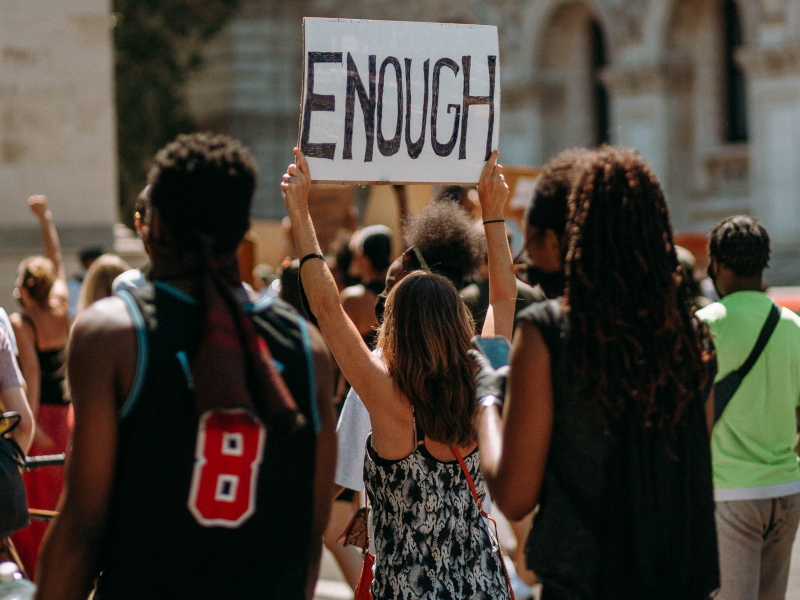
    Protest is nothing new. In the US, there were protests against segregation in the 1950s and 60s, protests against the Vietnam War in the 70s, protests against environmental damage in the 80s and 90s and now there are protests against the racism that murdered a black man in Minnesota and against all that the murder represents.

    In the UK there were protests against nuclear weapons in the 60s, protests against the racist regimes in South Africa and Rhodesia in the 70s and in the same decade protests against the murder of Irishmen during the troubles in the north. There were particularly violent protests against the British poll tax in the 80s and protests against the war in Iraq in 90s.

    What is different now is that, whereas most, if not all, the previous protest movements were in some way parochial, today’s protests are not. While we know that every country in the world has some form of ethnic discrimination to its shame, the pretence that it is historical rather than current is a fiction that can no longer be ignored.

    In the course of my lifetime I have watched white Americans shouting at black children because they were trying to enter a school that had been for whites only. I have seen signs in the windows of English boarding houses that read “No blacks no Irish.” And after 70 years of peace in Western Europe, the British people voted by a narrow majority to leave the organisation that united them with the rest of the Continent.

    I have heard Orthodox Jews say that Palestinians don’t belong in Israel because they believe the Bible says the land belongs to the Jews. I have been told by an Iranian in Canada that it is right that women should be jailed for refusing to wear a headscarf. In the great liberal city of New York there have been recent debates about whether there should be a quota for Asian students in specialist schools because too many of them do well on entrance exams.

    Underlying all those examples is ignorance and the fear it breeds. To be clear, there will be people who strongly disagree with my views who are not ignorant. There are people in America, Britain and elsewhere who honestly believe that social welfare mechanisms are wrong because they somehow inhibit personal liberty. Equally, there are people everywhere who believe that, in a civilised 21st century, a universal health care system should be considered a human right.

    On the surface those are irreconcilable positions. Except things change. What changes them are people and events. Sometimes those people are leaders and sometimes they are ordinary citizens— or even victims. Sometimes they are a Franklin Roosevelt who was considered a traitor to his class for introducing what he called a New Deal, subsidising great infrastructure projects and other government programmes to help Americans through the Great Depression of the 1930s. Or a Nelson Mandela who spent half his life in prison until the power structure of South Africa recognised that it could no longer subjugate its black population.

    But here’s the interesting thing: sometimes changes evolve because of an Adolf Hitler who lies and murders his way into office and starts a war that assassinates six million Jews, kills 20 million Russians and destroys much of Western Europe. No sane person who could change history would bring Hitler back. But Hitler created an almost universal consciousness of what horrors the human race can inflict on itself.

    Of course, it hasn’t stopped. Since the Second World War atrocities have been committed in Cambodia, the former Yugoslavia, Rwanda and Syria. Because of television and the internet we have become more aware of the crimes that are perpetrated in the name of whatever power struggle or prejudice is useful to certain people at a particular time and place.

    But every generation has the opportunity to make things better. Trump exploits social and ethnic divisions rather than addressing them constructively. In the course of his presidency he has demonstrated a contempt for others that has unleashed simmering prejudices. They are now the focus of the anger on the streets. There has never been a greater awareness among young people of our need to get up off the necks of the disadvantaged, to create safety in the world so that everyone can make the best of their lives.

    Maybe we need Trump. Maybe he is the catalyst. Not just for Americans, but for Europeans, Africans, Asians—the whole world. I don’t believe that any of us deserve him, not even the people who voted for him. But we have him. We can debate forever how and why that happened. But as one angry black protester in America recently pointed out, it’s more important to decide where we go from here.

    Jeffrey Katz is Chief Executive of Bishop Group, a London-based corporate investigations business.

  • From Covid-19 to Climate Change: Employability Special Report

    From Covid-19 to Climate Change: Employability Special Report


    It’s almost a commonplace to say that this year represents an inflection point in world history.

    If someone only with experience of life pre-Covid-19 were plucked somehow out of the slipstream of time and deposited in our virusstricken era they might not immediately notice that the world had changed utterly

    But changed it has – it’s just that the scale change hasn’t yet filtered through to our collective sense of ourselves. This matters when seeking a job; how do we know how to present ourselves unless we know what employers are looking for? It also matters when running a business: amid the helter-skelter of familiarising ourselves with the furlough scheme, we might miss the wider strategic picture.

    The enormity of the ructions creates difficulty for government. The tendency – surely a correct one – is to respond to immediate crises and tensions, but the necessity of doing so will inevitably leave others to simmer.

    Happily, help is on the way. As we compiled our second issue, Finito World asked its respondents to pause and consider some questions about the state of play as Britain heads into the autumn. The response was exceptional – and fascinating.

    DOWNLOAD THE REPORT HERE (PDF) >


  • Definitely Digital: how to improve your online presence

    Definitely Digital: how to improve your online presence

    Clair Marr

    When I was asked to write about this subject back in April, no one had any idea just how big an impact the pandemic would have on our lives.

    Businesses are already looking to redefine digital ways of working as staff continue to work from home. Graduates are naturally concerned that the current circumstances will severely impact career opportunities leading to greater competition in the job market*. How can we help to boost confidence amongst graduates impacted by the loss of opportunity, internships and work placements?

    Effective online reputation management for those starting out on their career path is about building and maintaining trust between you and your potential employer.

    Rachel Botsman, in her Ted talk, explores how the model of trust has changed historically. We began by trusting those in our local communities and that trust could be damaged or built based on our actions and reputation. As settlements grew larger, this model of trust could not scale up; living in a city, it was no longer possible to interact with every single person and our trust evolved into an institution-based model, placing our collective faith in law, government, banks and insurance.

    We now live in a digital age where our lives and decisions are played out online. Institutionalised trust models have become as irrelevant today as local trust models once were. Trust is now atomised, managed and distributed by individuals to a global audience. Wherever we go, we bring our digital presence with us. For some individuals this can be a real asset, while for others it’s a hindrance.

    Covid-19 has given us time to reflect and think about how we can present a trustworthy online profile of ourselves to potential employers. For graduates, this can be an exciting opportunity to develop new online strategies to help ensure that future stakeholders are engaged, impressed and inspired.

    Google Yourself

    The first step is to Google your name. Are you happy with the results that appear on page one? Is there enough information about you? If you have little or no Google presence, you can be vulnerable to commentary from other sources. Google bases its opinion of you from the information fed to it. It is your right to change that perception.


    Put Yourself Out There

    Holding digital assets in the major ranking positions on Google page one improves the likelihood of your personal brand acting as an antidote to any negative commentary. The more positions you hold, the more you consolidate Google’s perception of you.

    Google the names of prominent thought leaders in the industry that you would like to work in. Take a look at what is held in each position; A quick glance at Richard Branson’s Google page one results shows Wikipedia, Virgin website, social media accounts as well as Forbes contributor page. What could you learn from the positioning of a thought leader? Is there an industry publication that you could contribute to? There are many online blogs, websites, magazines and journals that are hungry for content. Boost your visibility by asking them how you can contribute. Build an association with a particular topic area. This indicates to Google the type of information that is relevant about you. Creating content offers you a solid digital footprint and gives you highly relevant or topical information to promote or share on your social media.

    How do I find out what content publishers are looking for?

    When we talk about ‘ranking’ in SEO (search engine optimisation), we refer to the relative position of a website or other web pages in the search engine results pages. For example, a natural rank in position one in Google is most desirable as users are statistically more likely to click on this. Publishers are hungry for content and keen to become the de facto resource for any subject area as high-quality, niche and high-volume output brings consistent traffic to their website. Trending topic areas can help convert new visitors to click on a website which can help to drive revenue for a publisher.

    Keywords and key-phrases refer to the actual words or phrases that you input into Google search.They’re really important as they help Google understand what that content is about. If what it sees is deemed highly relevant and trustworthy then Google will rank it well and often. These keywords should therefore be embedded into the structure of any content you create. Visit the MOZ blog for the beginners guide to SEO. This shows how to integrate these words and phrases into article content to help boost the visibility and relevancy.

    Beware!

    Pay attention to what you feed Google. If this information is not relevant, or shows several student nights out with friends, it can paint a picture of you that does not accurately represent your character. Audit your digital profile and ask those close to you to form a picture of you based on what information they find about you.

    When you think about shaping your narrative, consider whether the information already out there about you is positive, neutral or negative. By developing those positive and neutral points that already exist, Google feels that it is being fed information naturally and organically and will rank those pages favourably. Highlight charity work, host a Just Giving page, create a Facebook event, blog about your volunteering work in the local community. Ensure that there is a clear link between you (this could be for example your name or a link to your LinkedIn profile) and these projects and that it is clearly visible to Google. Tweet or post on LinkedIn, write an article about what you learned from these projects. Show that you have many different facets to your personality.

    Remember, the process of change is a gradual one and authenticity reigns supreme.

    It takes both sustainable effort and time to make an impact. Google can take three months to adequately index content so be patient and build your profile in a natural way. If you are unsure about something you have posted, delete!

    Adopt a joined-up approach across social media and websites. Try not to be everything to everyone. Focus on growing content across multiple related topics and link to each other. Opinions can change quickly on social media so regularly audit your social media presence and remove any content that you do not feel comfortable with. If the information is publicly available, revise content that needs an update in line with evolving conversations.

    Life, as we are now all too well aware, can be unpredictable; make sure that your online profile is as adaptable and flexible as you are.


  • How the travel sector handled Covid-19

    How the travel sector handled Covid-19

    By Lana Woolf

    There is a phenomenon called Stendhalismo named after the French novelist Stendhal, which refers to the act of travelling abroad and then swooning before objects of great beauty. It was in Florence where Stendhal – born Marie-Henri Beyle – first experienced an almost hallucinatory sense of awe at the Italian experience: ‘I was in a sort of ecstasy, from the idea of being in Florence,’ he wrote, ‘close to the great men whose tombs I had seen. Absorbed in the contemplation of sublime beauty.’

    Two hundred years later, we have a new version of this phenomenon – but altered to reflect our new pandemic reality. It might be too flippant to call it Covidismo, but it can entail pausing in our UK homes and suddenly having a flashback as to all the travelling we did, which we now doubt we’ll ever do to the same extent. For those of us who were lucky enough to travel widely, a rhythm we hardly knew we had established has been suddenly suspended. Never again will the airport be quite so routine; nor shall we return home to find ourselves gearing up for the next trip with quite the same regularity.

    Time is now marked in a different way. What else to do then, but sit at home and dream – of Florence, of New York, of Kyoto, of all the places that we have been to and loved. In our best moments we can feel grateful we had what we had; but it is also possible to swoon Stendhalstyle in our kitchens and feel bereft at what have been so arbitrarily deprived of.

    Balearic Blues

    But what if travel is your livelihood? Like a career in aviation it would have seemed at the start of the year the safest of all sectors – and perhaps few countries would be safer to work in than that perennial favourite Mallorca.

    Sometimes during Covid-19 I have thought back to this island of peace and lemony light, where Robert Graves lived out his years, and where Chopin and George Sand visited. It was surreal to imagine a touristless summer there.

    Miguel Feliz is the general manager of Sant Francesc, a five-star hotel in the centre of Parma. ‘It’s been a tough and challenging year for all of us, especially those in the hospitality industry,’ he explains. ‘We are extremely lucky that Sant Francesc is a well-established, year-round property and Palma is a popular destination even in the cooler months,’ he explains, adding that he ‘remains optimistic that we will begin to see some normality from September onwards, which is just in time for my favourite month in Mallorca.’

    If the guests return – and at time of writing the government’s muchcriticised quarantine policy has made travel an anxious business – then guests will find a subtly altered hotel. ‘We have put extensive new measures in place by following the recommendations and directives from the Spanish National Health Services, as well as the World Health Organisation, in order to ensure the wellbeing of our guests and team members,’ Feliz tells me. ‘These include everything from twice-daily temperature checks for all staff as well as guests on arrival, to mandatory use of masks for our team – and masks and hand sanitizer being readily available to guests at all times. Extensive new cleaning programmes have been put in place for guest rooms and all public areas and social distancing will be encouraged wherever possible.’

    As workable as that sounds, it was also a tough time for the company in another sense when the owners had to address the question of the expected opening of a sister property Can Ferrerata in Santanyí. ‘We decided to postpone until March 2021 and take our time, in order to give it the opening it deserves.’

    This hiatus has been painful – and of course Sant Francesc is just one story among thousands globally where hotels have had to pause, pivot, or just take the financial hit. The effect on the hotel industry has been seismic, as any brief walk through central London immediately attests: one thinks of the empty forecourt of Buckingham Palace, or the nowunphotographed lions of Trafalgar Square.

    But travel is a vast industry with numerous professions attached to it, which  have experienced the knock-on effects of the virus. From aviation, hotel events, to travel PR, and travel journalism, it’s a sector full of economically significant subsets.

    I catch up with Cathy Adams, who is the travel editor at the Independent. She’s on maternity leave at the moment, and says she’s grateful to have a break from breast-feeding to share her thoughts with me. For her, travel journalism was already in a state of ruction pre-Covid. ‘Even before coronavirus swept the globe, travel journalism was changing fast,’ she tells me. ‘We were working to promote underserved destinations rather than those afflicted by overtourism; and the climate crisis had made us rethink how we spoke about travel and holidays to promote more responsible tourism. Then came coronavirus, which in many ways has accelerated the issues many travel journalists have been grappling with in recent years.’

    So is travel journalism still a career you can go into? The answer is yes, but with caveats. ‘Travel journalism, when, like travel itself, it returns to the masses, will continue to become more thoughtful: expect more coverage of British holiday spots as travel restrictions drag on and we want to inject more money into our domestic tourism market. Plus, the coronavirus has highlighted just how risky travel can be – in terms of spreading the virus, and how quickly border closures can stop travel; the world will no longer be seen as a free-for-all, and journalism will take this into account when deciding which destinations to talk about.

    And will hotels still feel able to host significant numbers of journalists in order to make sure they get their copy? Adams explains that ‘editorial will remain an important part of a destination’s marketing plans, but I imagine with the focus on fewer trips and a smaller tourism market generally, they won’t be quite the all-out affairs they once were.’

    How PR went into ER

    Every one of these hotels has its marketing budget and there are many PR firms around the world earning their crust by promoting them. One of the best of these is Perowne International run by the redoubtable Julia Perowne.

    Perowne recalls for me the bizarre events of February 2020: ‘I realised in February that the situation was getting more serious and that its impact would spread outside China. In many ways the hospitality industry was one of the first sectors impacted and sadly will likely be the last.’ It was a fast-moving situation, she says. ‘We have clients all over the world and several beautiful hotels in Italy which was impacted first in Europe. We were shocked by the speed and severity of its development there and could see quickly that this would not be contained to one country. In early March we started to analyse the situation in more detail and prior to lockdown actually went to our clients and offered them significant fee reductions to help them through this tough time.’

    Overnight, the nature of the job changed: ‘The most significant thing has been the emotional support the clients have needed rather than just the practical,’ explains Perowne. ‘This has been a devastating time for the industry – businesses that have worked so hard have been hit badly and there’s definitely been a need to help people emotionally get through this. In addition, we have needed to look ahead to the future and ensure that when we come through this, the clients are looking as desirable and as relevant as ever. The consumer’s values have changed over the last few months and we need to ensure that we are prepared for that.’

    Perowne was forced to take advantage of the furlough scheme (we’re hopefully in the process of reinstating them’), though she would have liked to have seen a different scheme in place. ‘It would have been great if the government could have subsidised salaries and allowed people to still work if they could as they did in Ireland,’ she argues. ‘We desperately needed all-hands-on-deck but simply weren’t getting the fees from the clients so we had to utilise the scheme.’

    Echoing Adams’ observations about journalism, Perowne says that Covid-19 ‘will simply accelerate the changes that were happening,’ adding that ‘we have to be compelling storytellers.’

    Tricky Calculus

    Perowne praises the agility of her clients. One of these is the Cambridge University Arms, where Ian James, the general manager, approached the crisis in a highly community-minded way. Although he closed the hotel on 22nd March ‘with heavy heart’, he explains that ‘it was also important to us to help alleviate the strain on our NHS.’

    As the city’s oldest continually operating hotel, the team was minded to take the long view. ‘The property has truly stood the test of time – living through two world wars, the fight for woman’s rights and in 1665, the University Arms temporary closed its doors due to the Bubonic Plague,’ James explains. ‘Isaac Newton had to work from home and he used this time to develop Calculus and the theory of Gravity. Therefore, we remain positive that we will soon put this latest travail behind us. As Solomon said, “This too shall pass”.

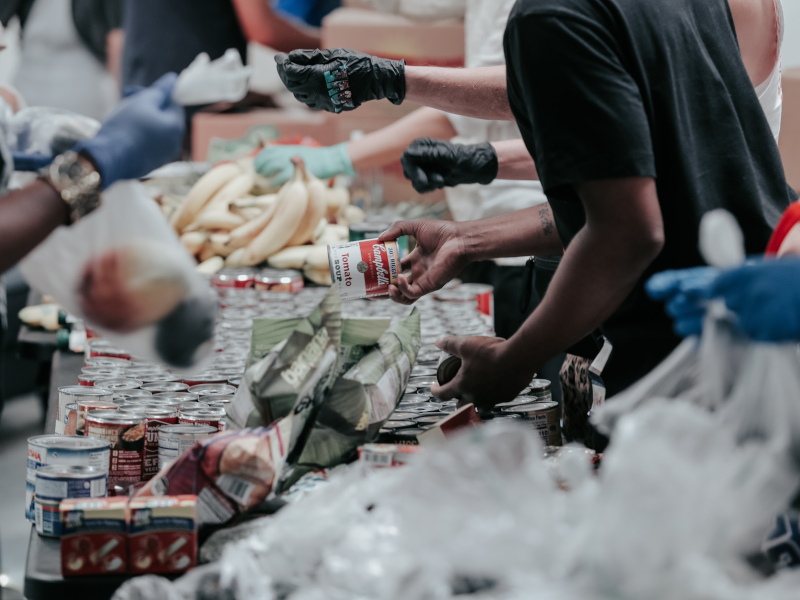
    It’s also a hotel which has been caring toward its staff and the people in the immediate locality. ‘As the hotel closed and we were heading into lock down, our main concern was the wellbeing of our team,’ he explains. ‘Our Chef Director Tristan Welch and his team coordinated care packages to keep everyone going during the difficult times of self-isolation. Our ‘Most Wanted’ packages were filled with essentials including many items that were proving difficult to come by in the supermarkets at the time. These included everything from pasta, flour and toilet paper, to oats, sugar, cereals, stock cubes, tinned goods as well as fresh fruit. In addition to this, the property has donated some key items locally to those in need. These included disposable aprons and gloves to the Papworth Trust as well as eggs, yogurt, vegetables and other food items to Cambridge Cyrenians.

    This is a sector which has experienced the severest setbacks of any. And yet it’s a hopeful sector. James is cautiously optimistic: ‘The desire people have to travel will always prevail and the industry will always need fresh talent.’

    Miguel Feliz echoes those sentiments: ‘The hospitality industry is so versatile and offers the unique opportunity to travel the world and learn about different cultures, so there is always an appetite for travel.

    Nothing will take that away from us.’ Perowne adds in respect of a career path in travel PR: ‘for those who really want to go for it, the opportunities are endless.’

    So in a sense the buoyancy of the sector comes back to Stendhalismo: a French writer broke out into a cold sweat because of the treasures of Florence, and there will always be a part of us that will long to do the same. Far-flung parts and new experiences are things we’ll always be susceptible to, and a virus will not decrease our need for adventure – indeed, in the long run it may only increase it.


  • Sector Outlook: Charities

    Sector Outlook: Charities

    By Robert Golding

    If you happened to be in Essex on a summer’s day in 1995, watching Maldon Cricket Club’s ten wicket win against Bury St Edmunds, you could be forgiven for thinking that you were watching not one but two future England cricket captains opening the batting for Maldon.

    These were Alastair Cook (known to friends as Ali) and David Randall (known as Arkle).


    Both were gifted batsmen; each possessed musical ability (Ali on clarinet; Arkle as a future founder member of Maldon band Soul Attraction) and Cook would later recall of his friend: ‘I will never be embarrassed to say he was the better player.’

    But in reality you would have been right about only one of them. Sir Alastair Cook, as the world knows, would go on to captain England, and score more runs (12,472) than any other England player. Arkle developed cancer and died in July 2012 at the age of 27.

    His death wasn’t the end of his story. Throughout his illness he never complained and continued to do the things he loved. Sue Randall, David’s inspirational mother, picks up the story of David’s last week: ‘David’s big wish was to go to Wimbledon. All the MacMillan Nurses and District Nurses kept telling us that it would not be safe for David to go here and there. But the lovely Willow Foundation had got him tickets.’

    How did Sue react? ‘That was the only time I got angry with anyone. When David was out with his girlfriend, I phoned the nurses and told them that if David did not go to Wimbledon, he would die disappointed and I thought that we should do everything possible to get him there. Worst-case scenario was he died on the way, but at least he would have known he had tried to get there. By that time, he only had weeks to live at best. It was a saga! But he got to Wimbledon, taken by his brother. He went on the Tuesday, was admitted to the hospice on Wed and died on the Friday.’

    It’s a story which takes us to the heart of life’s cruelty. Yet at its centre is something that seems to work against all hardship: David’s optimism, and intense love of life.

    Sue remembered the lesson her boy had taught her, and started the David Randall Foundation which aims to keep his spirit alive. The charity organises Great Days for those with life-limiting conditions. Sir Alastair is its patron. This is a charity with a message for our times that will resonate: as the world seems always to become more morbid, we need the spirit of David Randall like never before.

    An Uncharitable Virus

    We also need the charity sector like never before. Young people might perhaps wonder whether it’s a vulnerable sector, and even whether it’s as worth going into as it was pre-Covid. While it’s true that many charities find themselves financially vulnerable, and have been hastily furloughing like everyone else, in researching this piece we also had a sense of a sector determined to be upbeat where possible.

    Many, of course, were feeling acute financial pressures and it was not uncommon to find confessions that the person who would usually handle our query had just been furloughed. But for those who were still active, Finito World witnessed in some instances an admirable heightening of purpose.

    Variety – the Children’s Charity works predominantly with children with special education needs and disabilities by supplying medical equipment ranging from diabetes monitors to wheelchairs and specialist car seats.

    Dave King, the charity’s CEO, admits that events in early 2020 caught him by surprise: ‘By the time we became aware of the level of impact it would have, the virus was escalating quickly. This left us little time to get things in place before lockdown began. It was a period of confusion.’ Uncertainty is often a greater strain on a business than definitely dire circumstances. ‘Once the school closure had been announced,’ King continues, ‘we found ourselves in a better position. We were able to become more effective in our response once we had clear direction from government about the impact on children’s lives.’

    Variety began refashioning its processes. ‘One of our programmes involves grant-giving for specialist equipment for schools, and equipment for children,’ explains King. ‘We’ve managed to keep that running in spite of supply chains closing down and being temporarily suspended.’

    This is a major achievement especially as it was delivered at a time when the organisation’s income generation fell dramatically, primarily due to the loss of events revenue. ‘You can’t have a gala dinner with just a few people in the room. The atmosphere will be flat and it won’t be worth the outlay,’ King says.

    In sustaining itself, the charity was helped by its active golf society and golf memberships. These benefitted from that sport’s ability to be carried on while social distancing. ‘We’re looking at how we can maximise the use of our golf team and our society to generate income.’

    As difficult as these times are for generating revenue, there is something that can still pull in the money even over Zoom: stardom.

    Stars in their Eyes

    Variety has been fortunate in its celebrity ambassadors, with Len Goodman and Mark Ramprakash singled out by King for lending particular support to the charity.

    This opens up onto the wider question of celebrity involvement in charities. Dan Corry, the CEO of Think NPC – a charity which supports other charities – argues that while having a well-known patron doesn’t always make a difference ‘it can definitely help. Anything you can do to put yourself in the limelight, and get people to open that email, or look at that tweet.’

    Within the sector, there’s some debate over whether celebrity involvement increases the amount of money going to charities as a whole. Cory asks: ‘Does having a good celebrity or fundraising campaign raise money for your charity instead of one they would have given to? Does it just spread the money differently?’ A relevant example here would be Captain Tom Moore, who walked around his garden for NHS Charities Together. Cory says: ‘Some in the sector felt that people who would have given to a medical health charity gave to that. In aggregate, it’s hard to tell. Is it the right charity just because there’s a star celeb? It might be a rubbish charity.’

    Even so, the charities Finito World spoke with are deeply grateful for the assistance well-known names have given to their charities.

    Sue Randall says that Alastair Cook always comes through with ‘two tickets for the best seats’ at Lord’s for Great Dayers, adding that he ‘has never let us down.’ She adds: ‘Andy Murray also came up trumps for us last year. We had got a lady with cancer, some tickets for Wimbledon and on the day she was too ill to go. One of our ambassadors got in touch with Sir Andy and he sent her a personal note saying how sad he was she hadn’t been well enough to go, alongside a signed shirt. So he is now a hero to me!’

    Meanwhile, Ed Holloway, Executive Director of Digital and Services at the MS Society, recalls how the charity was able to pivot quickly during coronavirus thanks to celebrity generosity: ‘One of the first virtual fundraisers we did [after the virus hit] was the MS Society Pub Quiz, with the support of our ambassador and BBC Radio 1 DJ Scott Mills, who hosted a virtual pub quiz every Wednesday night, live from his living room. It was an incredible way to bring the community together at what was a very difficult time. Not only did we have thousands of people all playing along for a great cause, we had a lot of fun doing it. Together, we managed to raise an incredible £55,000.’

    In July, I zoom with Gruffalo and Zog illustrator Axel Scheffler who has had longstanding involvement with the National Literacy Trust (NLT), an independent charity committed to improving literacy among disadvantaged groups. When the pandemic came along, he was happy to help.

    He talks to me in his studio, with books ranged behind him, which themselves cede to a bright skylight. Softly spoken and matter-of-fact, it is clear that his charitable work is conducted out of a quiet and laudable sense of duty. ‘I have said yes to almost 95 percent of what I’ve been asked to do,’ he says, in his careful German accent. ‘There was one job where a big airline company wanted me to design some airline masks and I said no to that one. Overall, it’s a difficult situation and we do what we can. I can afford to do it, and so I do it.’

    Early on in the pandemic, Scheffler was asked by the NLT to provide illustrations to an online book Coronavirus intended to educate 5-11 year-olds about the new disease. Published by Nosy Crow, and narrated online by Hugh Bonneville, it was publisher Kate Wilson who persuaded Scheffler to make time for a breakneck production schedule. ‘Her argument was that many children are familiar with my style and work, and that was why I said, “Yes, I’ll do it.” Nosy Crow completed the project from start to finish in ten days: it was really, really fast.’

    Scheffler explains his motivation: ‘I’ve supported the NLT for a long time, and it’s brilliant what they’re doing. I think it’s sad that a nation like Britain has to have a charity to deal with these matters. It should really be up to schools to get children reading and it’s sad the government is failing the education of children in so many ways.’ It’s hard to disagree but it’s also surely this which makes the charitable sector so exciting.

    Nobody’s poor relation’

    The CEO of the NLT Jonathan Douglas argues that there’s never been a better time to go into the charitable sector: ‘Its vibrancy and its entrepreneurial ability comes from the fact that its funding base is always tenuous.’

    Paradoxically, Douglas explains, it’s been a good time for the sector, in spite of the challenges: ‘The most heartening thing without a doubt has been the organisations that have come through to support shielded people, support children to continue learning, and to support the victims of domestic abuse. All those social needs have been met by the charity sector. I don’t think the charity sector could ever have been written off as inconsequential – but after the way it has stepped up in the past three months it’s proved its mettle. We’re no longer anyone’s poor relations.’

    Over at the MS Society, Ed Holloway continues to feel the sector is attractive: ‘Like many charities we are relatively small and we ask a lot of our employees, but this gives them a chance to take on responsibility early in their careers, which stands them in good stead for the rest of their working lives. In return for their hard work and commitment, we work hard to provide a stimulating workplace where everyone can engage with our mission, know their voices are heard, and know they are making a difference to people living with MS.’

    Even so, that doesn’t mean that life is always easy. King says: ‘Most charities are operating on the frontline. The more we’ve got in the bank the less we’re helping kids.’

    Government Response

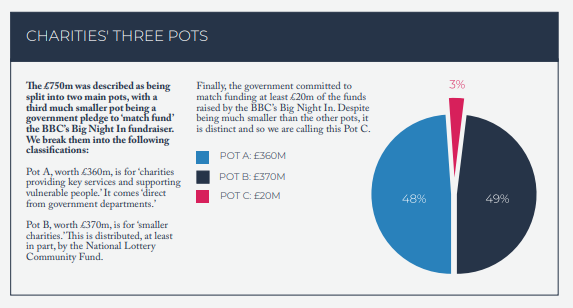
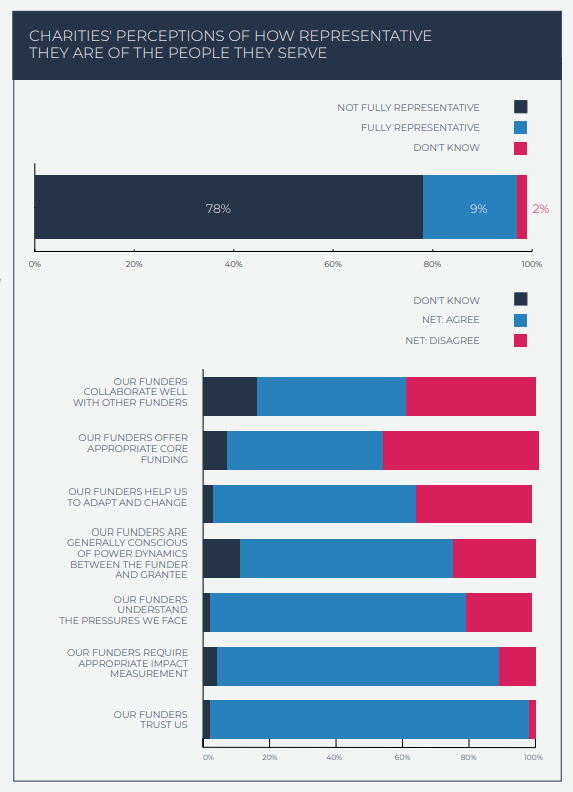
    On April 8th 2020, the Chancellor Rishi Sunak announced a £750 billion package ‘to ensure [charities] can continue their vital work during the coronavirus outbreak’. Figure A shows where the money went. Unfortunately, in many cases it didn’t go far enough.

    The picture is complicated by the fact that it is often difficult to tell what sums charities may have received from independent grant-making foundations such as the Esmée Fairburn Foundation and the Lloyds Bank Foundation. In some cases, there will have been overlap, although that can be difficult to unpick. Cory says: ‘When this crisis is over, I hope we realise that we need more data in this sector.’

    King argues that government announcements were ‘targeted at organisations already delivering government services,’ adding, ‘we don’t receive any help whatsoever.’ A few weeks after speaking with King, Finito World heard that he too had been furloughed.

    Large charities like the Family Fund received large injections of cash; other smaller organisations did not. But even at the top end, there is pain. As Dan Cory says: ‘For the big charities, a lot of funding came from big events like the London marathon. Almost all of that has been kyboshed.’ With furlough now about to wind down, many charities including the National Trust and Cancer Research UK have already talked about redundancies. In some cases, charities that relied on gift shop income have suffered, Cory explains: ‘They have no income. People aren’t rushing to the shops. They’re usually the kind of shops we like rummaging in, but now you’re not meant to touch product.’

    ThinkNPC also argues that the Treasury’s monies – though ‘pretty generous’, according to Cory – even at the high end [of generous]’ A recent report by the organisation found that 27 of the largest service-delivery charities in the UK faced a ‘£500 million shortfall’. The report also found that ‘charities fulfilling contracts for local and national government are better insulated, whereas charities who rely on public fundraising and charity shop trading are far more exposed to more significant losses.’

    Ed Holloway told us about the gravity of the situation regarding MS: ‘The MS Society faces losing nearly a third of our income this year due to Covid-19, and yet we haven’t received any support from the Treasury’s £750 million funding package for charities.’

    What matters here is the centrality of the society’s role in the fight against an awful disease: ‘The MS Society is the UK’s leading not-for-profit funder of MS research, and every year we invest millions in new projects – so sadly MS research is one area that has been affected by this shortfall. With researchers redeployed and labs closed due to social distancing, the pandemic had already affected many of the vital projects we fund. Right now, we’re doing everything we can to keep these going, but this significant loss to our income means planned research must be postponed, and we are unable to fund promising new work that is desperately needed.’

    When we wrote to the Department for Culture, Digital Services, Media and Sport to ask whether some smaller charities were falling through the cracks, we received no reply. Cory says: ‘My guess is medium-sized charities – in the £1-5 million bracket – have been suffering a lot. For the smaller ones, it’s difficult anyway. Typically, at a small charity you have two and half people with volunteers. Quite a lot aren’t going to survive this but it’s always like this down that end of the scale.’

    As grim as this is for many, if one were minded to be optimistic about anything at the moment, it would be about those who work in this difficult but noble sector: Variety, which continues to send vital equipment to children; the NLT, which is more committed than ever before to literacy in areas that need it; the MS Society, which is still a beacon of hope for those suffering from an inexplicable disease; and the David Randall Foundation, which remains committed to making people’s last months and weeks memorable.

    In my most recent email from Sue Randall, she tells me: ‘Things are still very slow with DRF. Understandably the people we organise days out for are vulnerable and nervous about going out, but requests have started to trickle in. The trouble is you just start to think it’s okay to go out and then the government starts bringing in more restrictions, so I am not surprised at people’s reticence.’

    This is a view in miniature of the sector as a whole: a sense of duty overriding anxiety; a sector which has been knocked, which remains determined to rebound; and above all an industry with an ethos which values doing things not because they are intrinsically commercial, but because they are inherently important.

    Will it all come back? Cory is cautiously optimistic: ‘Not in the same configuration. But people’s will to do good and get involved in charities to work for them or volunteer is pretty undiminished.’ In these times, we must take the positives where we find them.


  • The Finito World guide in How to Zoom

    The Finito World guide in How to Zoom

    How do you get the most out of the new technology? Finito World spoke to business leaders and society etiquette expert Liz Brewer to find out

    If you want to know the essence of an era, look at its new word-coinages. This year, which has been so seismic in every way, saw a wealth of new words enter the vocabulary. These include, of course: Covid-19, corona, lockdown, social distancing and flatten the curve.

    But the word ‘Zoom’ is perhaps the most commonly used of these. Like Covid-19, it is ubiquitous and liable to be used many times a day, as all our meetings accrue. But like social distancing it can be used both as a noun and as a verb: we are ‘on Zoom’ but we also ‘Zoom’.

    Perhaps of all the words in the language it most resembles ‘Google’ in the way a company name has so suddenly entered proverbial usage – and with gratifying results for founder Eric Yuan who has seen his company’s value skyrocket to near the $50 billion mark.

    This new technology isn’t going anywhere. So here in seven easy steps we explain how to make it work for you:

    Get the lighting right

    Liz Brewer is a world-renowned events organiser and expert in social etiquette who has thought long and hard about how to present herself in a call. ‘This is a visual medium so check how you appear on screen and adjust height,’ she says. ‘Position yourself so you’re seen not sitting too close, too far, high or low, with a suitable background.’ This rings true: we’ve all misjudged the lighting once in a while and found ourselves sitting in shadow like James Bond villains – but that’s not a good look for an important meeting or a job interview.

    Don’t be vain or distracted


    Brewer also argues that it’s ‘best to turn off self-view’. Vanity exists in most of us and it’s easy to spend an entire call sneaking views of yourself rather than engaging with the person in front of you. It is best not to give yourself the option of assessing the calamity of your Covid-19 haircut, or that special lockdown exhaustion etched on your features. In the same way, Brewer advocates turning off everything else on your computer: ‘You are on screen and will be observed so it’s important to close or minimise all other distractions, screen windows and silence mobiles,’ she says.

    Embrace the possibilities of the medium…

    Many of us have now seen the interiors of one another’s homes, and thus have a sense of how people live. ‘I enjoy the informality,’ says the MP Robert Halfon, and even encourages the presence of children on a call. For some that can create a sense of camaraderie that can progress an understanding of the person you’re talking with. For many the informality is to be embraced and might even create deeper relationships.

    But realise its limitations…

    When we catch up with the architect Thomas Heatherwick, he argues that the medium is unhelpful in at least one respect: ‘Video conferencing doesn’t create new relationships. You can sustain a connection, but you don’t grow a deep connection.’ And so while it’s important to embrace Zoom now, we should all have an eye to those we connected with during lockdown: make sure you meet face to face with people you felt you had a connection with once it’s safe to do so.

    If you’re a CEO, check in on your team separately

    ‘We’re all so tired with Zoom call after Zoom call,’ says Carol Leonard of the Inzito Partnership, and argues that we need to think beyond Zoom. ‘Think who might be vulnerable in your team. At Inzito, we have little informal social programmes to check in with people, and we do mindfulness virtually twice a week.’ Thomas Heatherwick agrees: ‘It’s amazing how stressful these calls are.’ So don’t think all the company’s HR needs have been taken care of by that one collective Zoom.

    Remember the emotions of your co-Zoomer

    Thomas Heatherwick realised after a while that he was tired of what he calls ‘flat half people’. He adds: ‘If we met people face to face I would never sit facing that person: it would be too confrontational. Instead I’d sit at a slight angle. Even before we’d begun talking, we’d have a sense of each other and the peripheral vision can see how confident a candidate is when they walk in.’ So though it feels like your talking to an avatar, always remember the humanity of the encounter.

    Remember to laugh

    Collective behaviour doesn’t quite happen on Zoom,’ Heatherwick observes. ‘it’s ping pong. You press a button and you’re next in the conversation. You don’t chuckle together or cringe together.’ Brewer says that it is up to the host to make sure this gap is closed. But she also recommends other things like running ‘speed tests to avoid freezing moments’ and ‘bluetooth headphones’ to ensure that the sound quality facilitates the conversation.

    And if all else fails…

    ‘Well then you can always excuse yourself,’ says Brewer. And for many of us that’s the best part of any Zoom call.