Category: Book Review

  • Book Review: A Life in Music by Gyorgy Pauk

    Ronel Lehmann

    I was looking forward to reading this book which charts Memories of 80 years with the violin, but publication was delayed due to the pandemic. Everyone knows that the classical music community has really suffered as many of those earning their living in the sector are self- employed and demand for their services collapsed. As for the students preparing to follow in György Pauk’s footsteps, they are anxiously wondering what the future holds for them. This book is inspirational.

    Born in Budapest shortly before World War II, György Pauk suffered the loss of both his parents in the Holocaust. He spent the remaining years of the War in the care of his grandmother in the Spartan confines of Budapest Ghetto. Showing extraordinary musical talent from an early age, he began to learn the violin and was admitted to the Liszt Academy at the age of only 13.

    After winning several international violin competitions, Pauk defected from Soviet-controlled Hungary, claiming asylum in Paris and becoming a ‘stateless person’ at the age of 22. He met and married his young Hungarian wife in Amsterdam. The couple moved to London on the advice of Yehudi Menuhin, gaining British citizenship in 1967.

    Over the course of more than 50 years, György Pauk became an international acclaimed concert violinist, appearing worldwide with the greatest orchestras and conductors, and making countless broadcasts and recordings.

    Now in his ninth decade, he is a renowned pedagogue based in London, and regarded as the foremost living ‘torch-bearer’ of the Hungarian Violin School, which traces its origins to the 19th century violinist, Josef Joachim, a close friend and collaborator of Mendelssohn, the Schumanns and Brahms.

    In this absorbing account of his professional and personal life, György Pauk tells us about many of the other instrumentalists, conductors, orchestras and composers he has known and worked with.

    Alongside his perpetual globe-trotting, Paul has been a devoted husband (for more than 60 years), father and grandfather, and retain friendships across the world stretching back as far as the 1940’s.

    György decided that all proceeds from the sale of his book will be distributed to charities supporting young classical musicians.

    A Life in Music is published by The Strad Shop and is priced £15

  • Review: Vaxxers: The Inside Story of the Oxford-AstraZeneca Vaccine and the Race Against the Virus

    Emily Prescott

    Dr Catherine Green was queueing for pizza during her holiday in Snowdonia  when she overheard a woman saying the people behind the COVID jabs couldn’t be trusted. Dr Green couldn’t let this slide so she introduced herself to  the skeptic: “My name is Cath Green and I might not look like it in my bare feet and this dress – I might not sound like it either, believe me I know – but I am “them”. You couldn’t have known this, but I’m the best person in the world to tell you what’s in the vaccine. I work with the people who invented it. It’s me and my team, in my lab, who physically made it.” 

    Overhearing this vaccine scepticism was the catalyst for the book. Professor Sarah Gilbert and Dr Catherine Green felt it was their duty to come out of their labs and put the truth into print.  “I would like people to know how we really got here and what happens next,” Green writes. 

    This is the most extraordinary story which focuses on the often surprisingly ordinary lives of the women behind the Oxford AstraZenecavaccine. Although it was ghost written,  the chapters alternate between being authored  between Professor Sarah Gilbert and Dr Catherine Green. 

    It’s hard to work out how these women found the time for this book. Not only are they working parents – Professor Gilbert is a mum of triplets.- they are having to deal with issues such as not being able to buy toilet roll, worrying about vulnerable family members, they are also busy  saving the future of humanity. At one point Green seems to lean into the working mum stereotype as she employs a baking analogy to explain how the vaccine works.  She says making a vaccine for a new disease is a bit like making a specialist birthday cake. You can get everything ready and then when the order arrives you just add the icing with the message or indeed, the spike protein. 

    Green in particular talks about the pressure of getting the messaging and explanations right and making sure the public understands what is going on. “I woke up feeling really nervous. Not because it was the day we were going to put the first shot of our vaccine into the arm of our first volunteer in our first trial: I had every confidence that would go smoothly. But because I was due to do a radio interview with LBC’s James O’Brien… I didn’t want to let anyone down by saying anything wrong.”  

    At the beginning of the book is a quote from an anonymous source: “Better to light a candle than curse the darkness”. This epitomises their message, this book is their solution to the anti-vaxxer movement. So forget your comic books, if you’re looking for superheroes you’ll find them standing among us, perhaps even in the queue of a takeaway. 

  • Review: Barack Obama’s The Promised Land

    Iris Spark asks what the 46th President of the United States can learn from the 44th –  and what can we all learn from the greatest of all presidential memoirs

    With the arrival around a year of ago of Joe Biden in the White House, there have now been 46 people who have risen to become President of the United States during America’s 250 year history. It’s only rarely that someone with the sensibility of a writer assumes the highest office in the land.

    It’s easy to see why this might be so. On the face of it, the pressure and flux of the job would appear to argue against anyone with a penchant for the sedentary life taking it on. Barack Obama did. It is one of the central facts of his life that he felt the need to. That means that in The Promised Land, the 768-page memoir we have a unique document, which has much to teach us about politics – and about Biden’s America.

    But the value of the memoir is still greater than that. In reality, things happen so quickly in the Oval Office, and with such drama, that we find in the pages of Obama’s book a condensed primer on human nature; it is a book so good it has much to teach us all.

    The former president’s eye for detail means that the reader is given a unique sense of the White House as a working environment. Here, for instance, is the man charged with a thousand problems, taking time to notice the gardeners at 1600 Pennsylvania Avenue:

    They were men of few words; even with one another they made their points with a gesture or a nod, each of them focused on his individual task but all of them moving with synchronised grace.

    So the man of many words notes straightaway the men of few. This is a book about many kinds of work – it is about the job of being president – and therefore being a leader, and it is also about preserving the dignity of work for as many Americans as possible in the face of the 2008 financial crisis. But every word reminds of you of his writer’s vocation: in bearing witness to his experience, he hopes to redeem his presidency of its faults, and to comprehend – even compensate for – his errors.

    It might be that he has less to redeem, in the wake of Biden’s win, than if we were now inhabiting the first months of Donald Trump’s second term. Biden is a different kind of president to Obama, but he campaigned on the back of Obama nostalgia, and at the policy level, though he is sometimes tugged to the left of the 44th president, Biden is pledged to a kind of Obama-ism.

    But what American president doesn’t have regrets, if only because it is a position of such power that any ugliness in the planet is sometimes held to be their fault. And so this is a redemptive book, even if Obama can hardly think of anything he could have done differently.

    But Obama, to risk stating the obvious, is more than a writer. In The Promised Land, even as he is observing with the writer half of his brain, we watch him operating in the real world. It is a rare skill. What can we learn from it?

    Obama’s book begins with a potted description of his early life, and it’s distinct from the sweep of his early masterpiece Dreams from My Father. It is always interesting to read of the early lives of presidents, or figures who we know shall prove historic, since we can see how in retrospect so much of what happened was to their advantage.

    Interestingly, Obama’s story is also marked by a strong counter-intuitive streak. At one point, having described his ascent to be the first black editor of the Harvard Law Review (‘enthusiasm makes up for a whole host of deficiencies’), we discover his contrarian spirit, which may be more marked in a man who has become famous as a consensus politician than we might realise:

    Job offers arrived from around the country, and it was assumed that my path was now charted, just as it had been for my predecessors at the Law Review: I’d clerk for a Supreme Court justice, work for a top law firm or the Office of the United States Attorney…It was heady stuff. The only person who questioned this smooth path of ascent seemed to be me.

    It’s a fascinating career progression: as the world now knows, there was a brief accommodation with corporate America when he trained at Sidley Austin a big Chicago law firm where he met Michelle Robinson. While working as a civil rights attorney, he saw an opening in local politics and rose through the state legislature – via a book deal – to Congress and then the presidency.

    What comes across is that it’s not enough to know what you want to do – you have to be on the lookout for opportunity, to react to the contingencies of the world. With Obama, we can see that he retained throughout crucial flexibility; that the urge to grow was correctly traversed alongside a need to navigate the world. Obama sought experience, but never tied himself to it, and always allowed life to teach him what to do.

    What is remarkable about Obama’s rise to the presidency is how frictionless it seems – how, once he had chosen politics, and made that ground secure, he was able to move upwards with very little acting against his ascent. The reader who knows about Obama’s story might wince at one point, when he writes of his wedding to Michelle on October 3rd, 1992: ‘The service was officiated by the church’s pastor, Reverent Jeremiah A. Wright Jr.’ That association would not turn out well for Obama, when on March 13th 2008, Obama woke to find videos of Wright’s inflammatory rhetoric playing on repeat across the live media. Some choice excerpts included him calling America, ‘the USA of KKK’, and his saying, ‘Not God bless America. God damn America.’

    It was the only moment when, the reader feels, Obama might really have lost the 2008 election; it was possible that with poor handling, he might either have found himself defeated by Hillary Clinton to the Democratic nomination, or perhaps that he might have held on but found the Reverent Wright’s remarks a millstone around his neck in the subsequent general election battle against John McCain. ‘It felt as if a torpedo had blown through our hull.’

    Obama did two things from there which are worth noting. In the first place, he shouldered responsibility: ‘I may not have been in church for any of the sermons in question or heard Reverend Wright use such explosive language. But I knew all too well the occasional spasms of anger within the Black community – my community – that Reverend Wright was channelling.’ It might be too simplistic to state that Obama strikes one as an honest person – and in fact, his time in office was marked by an almost total absence of scandal. But perhaps more important was his realisation of the importance of the moment: ‘Anyway it was too late. And while there are moments in politics, as in life, when avoidance, if not retreat, is the better part of valour, there are other times when the only option is to steel yourself and go for broke.’

    But all this was heading, as we know towards the presidency, and of course the book pivots there, just as his life altered. Obama is soon in receipt of his daily briefing and problems rush his way, anxious to be solved: there is the fact of the global economy crashing; the healthcare system he has promised to fix; the immigration system which needs absolute overhaul – and perhaps above all, a climate which needed fixing. Obama took a number of decisions. The first was to prioritise the economy; the second was to pursue sweeping healthcare legislation.

    The book is remarkable for the detailed but enjoyable way in which he describes each of these problems. Soon a pattern emerges. We repeatedly find Obama making sure he makes some progress (Obamacare, the size of the rescue package following the 2007-8 financial crisis), sometimes irritating those would desire bigger or more progressive legislation.

    His time in the White House shows a classic case of a toxic work environment and how we react to toxicity in our midst. The Republicans refused to work with him throughout his two terms, but Obama rose above it rarely stooping to their level. This approach was encapsulated by Michelle Obama’s dictum: ‘When they go low, we go high.’

    It is an excellent book, but we shall find out if it’s a great one when the next volume is published. That’s because in that volume he will have to write the words he never wanted nor expected to write: Enter Donald Trump…

  • COP 26: Emily Prescott on Bill Gates’ How to Avoid a Climate Disaster

    COP 26: Emily Prescott on Bill Gates’ How to Avoid a Climate Disaster

    How to Avoid a Climate Disaster: The Solutions We Have and the Breakthroughs We Need by Bill Gates, Penguin, £20.00 

    A climate disaster is looming and although its impact is mostly invisible in our day-to-day lives, the damage humans have done to the planet already seems dauntingly irreversible. As Bill Gates points out, “fifty-one billion is how many tons of greenhouse gases the world typically adds to the atmosphere every year” and merely aiming to reduce emissions by 2030 is not an adequate target. He explains: “The climate is like a bathtub that’s slowly filling up with water. Even if we slow the flow of water to a trickle, the tub will eventually fill up and water will come spilling out onto the floor. That’s the disaster we have to prevent.” Simply put,“if nothing else changes, the world will keep producing greenhouse gases, climate change will keep getting worse, and the impact on humans will in all likelihood be catastrophic,” Gates says. But How to Avoid a Climate Disaster focuses on the  “if” as Gates considers the changes needed and sets out an optimistic road map of how we can divert a climate disaster.  

    By his own admission, the burger-loving billionaire founder of Microsoft is an unlikely poster boy for saving the environment. “I own big houses and fly in private planes – in fact, I took one to Paris for the climate conference,” he confesses. While Extinction Rebellion seemingly sees anti-capitalism as crucial to the cause of environmentalism with many of its followers protesting by causing disruption in London’s financial district, Bill Gates is proposing a way to reduce greenhouse gases which will be palatable to big businesses. In each chapter he considers the financial implications of his suggestions. He proposes that countries should implement what he calls “green premiums”. He explains: “Most of these zero-carbon solutions are more expensive than their fossil-fuel counterparts. In part, that’s because the prices of fossil fuels don’t reflect the environmental damage they inflict, so they seem cheaper than the alternative.These additional costs are what I call Green Premiums. During every conversation I have about climate change, Green Premiums are in the back of my mind.”

    Indeed, Gates is pragmatic in his approach and is constantly aware of the feasibility of his proposals. In the chapter about eating meat for instance, he says although animal consumption causes a lot of environmental damage, it is unrealistic to stop it entirely.  He looks at meat alternatives, such as Beyond Meat, a company which he has invested in. He reasons: “Artificial meats come with hefty Green Premiums, however. On average, a ground-beef substitute costs 86 percent more than the real thing. But as sales for these alternatives increase, and as more of them hit the market, I’m optimistic that they’ll eventually be cheaper than animal meat.” 

    Gate remains optimistic throughout the book and suggests the threat of a climate disaster provides mankind with an opportunity to be innovative. He is always looking for the silver linings. For instance, he says: “I never thought I’d find something to like about malaria. It kills 400,000 people a year, most of them children, and the Gates Foundation is part of a global push to eradicate it. So I was surprised when I learned there is actually one nice thing you can say about malaria: It helped give us air conditioning.” In the most compelling chapter, What each of us can Do, he suggests we should all be hopeful. He says: “It’s easy to feel powerless in the face of a problem as big as climate change. But you’re not powerless. And you don’t have to be a politician or a philanthropist to make a difference.” Of course, we hope he is right. Gates was a coronavirus Cassandra. In a 2015 Ted Talk he warned: “If anything kills over 10 million people in the next few decades, it’s likely to be a highly infectious virus rather than a war.” “We need preparedness,” he demanded. This time, hopefully people will listen.

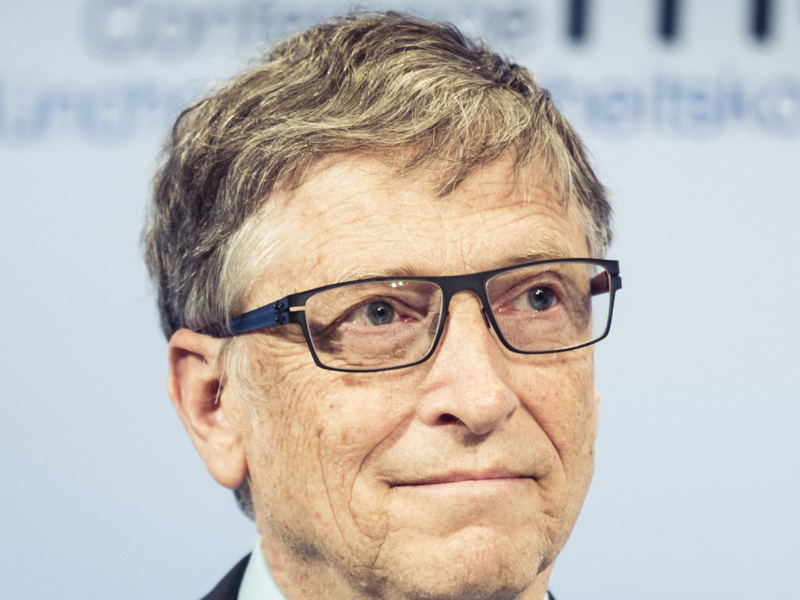
    Photo credit: By Kuhlmann /MSC – https://securityconference.org/en/medialibrary/asset/bill-gates-1523-18-02-2017/, CC BY 3.0 de, https://commons.wikimedia.org/w/index.php?curid=100184908

  • The Poet at Work II: Alison Brackenbury

    The Poet at Work II: Alison Brackenbury

    As part of our regular series which looks at the relationship between poets and the workplace, Alison Brackenbury discusses her how she has managed to juggle the need to earn a living with her commitment to her art.

    Alison Brackenbury has had an unusually interesting working life. She won a scholarship to Oxford and left with a First in English. She subsequently married and moved to a small town in Gloucestershire, where she combined writing with horse-keeping, parenthood, grassroots politics and a variety of non-academic jobs. For twenty-three years, until retirement, she worked as a manual worker and bookkeeper in her husband’s family metal finishing firm.

    Her poetry shows deep respect for tradition. It has a worked-at burnish and commitment to form which reminds us of manual labour. Brackenbury is a maker, too worldy-wise not to know that a poem must reach as wide an audience as possible. There is a streak of pragmatism in her poetry, which sits alongside – and is perhaps fed by – a rare knowledge of nature.

    For Finito World, she has produced an exceptional poem ‘Metal Finishing’ which illustrates her many strengths: impeccable technique; a knowledge of the real world; the quiet humanity of her noticing. Above all, we always feel that Brackenbury, like Larkin – another poet who did actual jobs – understands that if poetry is to have any place at all in our busy lives it must be memorable.

    And that, more often than not, will mean that it will rhyme. But the point is that it is an insight that could only have been arrived at by her having once been busy herself. Brackenbury is a great advert for the idea that in order to write you first need to have done jobs.

    Metal finishing   

    Nobody worked like the West Midlanders.

    I scrambled off my bike from one sharp frost

    to find a driver dozing in his van.

    God knows when he set off from Birmingham

    to have his tooling first in Monday’s queue,

    be ‘Just in Time’, words spat by me and you

    as by steamed vats of acid or oxide

    we plated, coated, fought off rust, then dried

    laser-cut tools in our Victorian mews.

    ‘Like Dickens!’ grinned the driver while he chewed

    three o’clock lunch, then roared down our back lane.


    We quit. Accounts and knees reported pain.

    Small margins were not hard to understand,

    for decades, we wired robot parts by hand.

    There was untarnished love in this, no doubt.

    Our buildings saved us, sold, walls razed, dug out.

    Milk bottles crash. I wake. It must be four.

    I listen while the van throbs from our door.


    Notes about the poem


    Metal finishing: processes which protect metal from corrosion. I worked for 23 years in a tiny family company which spent half a century battling with rust.

    Just in Time: a production system in which manufacturers do not hold stock. Components are delivered by sub-contractors, ‘Just in Time’. It was not popular with metal finishers..


    Finito World: Metal Finishing is a wonderful poem. Whenever I read your poems I always feel: ‘This is someone who has done something else in their life other than poetry.’ Did your career empower you to write?

    Alison Brackenbury: I think that my work – especially in industry – gave me material for poems which is rather unusual in British poetry. For example, there may not have been too many poems in the Times Literary Supplement about a van driver’s narrowly averted industrial accident…

    I have always had paid jobs which had no direct connection with poetry. This did make me aware that many people are unacquainted with or even frightened of poetry. This strengthened my own desire to write poems which attempt to be as musical as possible, and relatively clear. There’s always room for a little mystery!

    Conversely, what role did your love of poetry have in giving you confidence in the workplace?

    Like many people – perhaps, especially women? – I have had to be pretty pragmatic about what I did, simply to keep the financial show on the road.

    I have had three, very varied main jobs. When I ran a technical college library, I was regarded (rather optimistically) as a source of knowledge about literature and poetry. There was (then!) just enough spare money in the budget to buy a little poetry. I was amazed and pleased to find one day that a young woman police cadet had plucked a copy of Wordsworth’s poetry from a display and was reading it aloud to some remarkably meek male colleagues… In a public sector admin. job, I again had a rather undeserved reputation as an expert on literature and language. When consulted on knotty points of grammar, I would point out blithely, that poets simply dodged such issues and wrote something quite different, invented if necessary! In my hectic industrial job, few of our sixty customers knew that I wrote. But I was sufficiently fierce about language to be unimpressed by various waves of fashionable phrases, used in larger companies. Privately, I always referred to ‘Just in Time’ as ‘Just Too Late’. Post- Brexit, I fear that this international supply system may be ‘Much Too Late’…

    The government has recently said that poetry should be optional at the GCSE level – a significant demotion in its importance on the curriculum. What is your view on that and what do you feel the impact will be?

    I have great admiration for teachers, but I’ve never taught, and my daughter is now in her thirties. So I don’t consider myself an expert on poetry in the curriculum. But I do know that many people ONLY know – and value – those poems which they encountered at school, especially if they learnt them by heart. If they don’t come across poetry which appeals to them in their curriculum, the one chance may be gone. 

    What poetry should be on the curriculum? I can only offer three observations. First, having to study one set text which is the work of a single contemporary poet may have the very unfortunate effect of turning many pupils against that poet! I’ve heard this widely reported from university lecturers, who find that most of their students are prejudiced against the major living poets on their former school curriculum. Secondly, I think that the subject matter of a poem may be more important than its period. My daughter reported from her (very mixed) comprehensive that the boys in her class were truly impressed by the poetry of the First World War. Finally, I think there is a case for studying an anthology – possibly a themed one, with poems from various periods? There’s a better chance, in that variety, that a student will find one poem whose sense speaks to them, and whose music stays in their mind.

    Was there a particular teacher when you were younger who turned you onto poetry?

    No, although I did have some very good teachers who introduced us to a range of work. I remember poetry books being available to read in the later years of primary school. I discovered much! But I could have been put off poetry for life by my first class in that small village school. Our (untrained?) infant teacher used the dullest doggerel I have ever encountered. I don’t know where she found it. I dreaded those afternoons.

    What’s your favourite poem about the workplace?

    A Psalm for the Scaffolders’, by Kim Moore. It’s a compelling – and fiercely humorous – account of a dangerous, skilful job. Technically, the poem is entrancing, with its repetitions and powerful beats: truly, a modern psalm. Kim is much younger than me, and has so far only published one collection. She is a poet to listen out for – and she had her own skilled previous career, teaching children to play the trumpet. 

    I can reveal, after hearing her read, that the man who fell thirty feet (and lived) is her father… Here are the scaffolders:

    https://www.poetryinternational.org/pi/poem/27299/auto/0/0/Kim-Moore/A-Psalm-for-the-Scaffolders/en/tile
  • Review: And Now for the Good News by Ruby Wax

    Review: And Now for the Good News by Ruby Wax


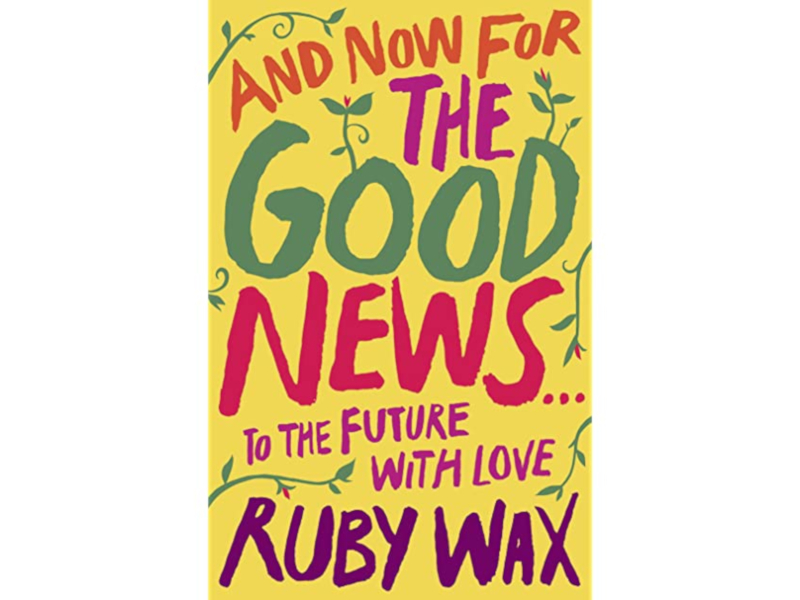
    Comedian Ruby Wax gives a new meaning to the saying that bad news travels fast while good news takes the scenic route in her rambling look at the positive side of life. In her typically sardonic tone, Wax bemoans the depressing state of business, technology and the media but at the end of each chapter she reassures her readers that good news still exists. “ I had to really hunt for positive sound bites even though they should be on the front cover of every newspaper every day of the week to replace the usual photo of a beautiful woman who is either at her film premiere or dead,” she says. While her bluntness means she can talk about the bad news very convincingly, sometimes I was left wishing she would take a quicker route to the good news.

    Her chapter on business takes a while to get to the good news as the first few pages contain generalisations and personal anecdotes despite the fact she begins by saying, “I’ve never understood business”. Although her takes are comically hyperbolic, they would be better if propped up with specific examples.

    She states “Corporations run the politicians, who obey their beck and call. If an oil company wants more oil, the government will declare a war to get more,” without referencing any real world events, for instance. The good news, when it eventually arrives, is uplifting and she focusses on the outdoor clothing brand, Patagonia. For this she describes a meeting she had with the co-founder Vincent Stanley but doesn’t include any quotes from him.

    Throughout the book, there is a frustrating lack of evidence. Due to a lack of specific examples, Wax relies on cliches. When talking about social media she says, “Let’s all agree that the happier people look on Instagram photos, the more miserable they probably are inside.”

    Or, when talking about the lack of actual human connection that blights twenty first century living, she relies on anecdotal evidence: “In the old days, if you needed a plumber, a babysitter or a shoulder to cry on, there was usually someone in your building who had those skills or at least could advise someone they knew to help. Now, we have to call agencies to get someone over and then pay through the nose for their services.” Each chapter contains a ‘My Story’ section but really there need not be discreet sections as the autobiographical style dominates throughout the book.

    And now for the good news: Wax is as funny in print as she is in real life and her final chapter on positive initiatives lifts the book. Wax herself set up the frazzled cafe, which provides a talking place where people who are feeling frazzled can meet (on zoom) to share their feelings.

    Her references to initiatives such as Samos refugee camp and The Kindness Offensive are particularly insightful. While the book is unfortunately timed, “I don’t mention Covid-19 and that’s because I finished this book around the time it broke; so mea culpa,” she laments, the book concludes with a positive message about our times: “Look how quickly we can transform ourselves, almost overnight,” “compassion also spreads like a virus,” she soothes.

    And Now For The Good News: Penguin Life, £14.99


  • Review: Tomorrow will be a Good Day by Captain Sir Thomas Moore

    Review: Tomorrow will be a Good Day by Captain Sir Thomas Moore

    Reading Captain Tom’s autobiography feels a bit like watching one of those really good X Factor auditions, you know it is a bit staged and quite formulaic but it still makes you feel warm and fuzzy. The book has a wonderfully satisfying narrative arch following the extraordinary life of a seemingly ordinary man who suffers some tragedies but finishes triumphant. Although the tone is mostly gentle, Moore is surprisingly frank in its detailing of some of the sadnesses in his romantic relationships, from descriptions of the “loveless bed” in his first marriage to the death of his wife, Pamela, “to watch someone you love decline through dementia is a slow kind of torture,” he says. It also portrays Moore’s warmth and humour, for instance, on his knighthood he writes: “I joked that I hoped the Queen wasn’t too heavy-handed with the sword.” It is this collision between the ordinary and extraordinary that captured the nation’s hearts when the 100-year-old walked around his garden to raise money for the NHS and this shines through in the autobiography.

    Tomorrow Will Be A Good Day: , £20.00


  • Review: The Serendipity Mindset by Dr. Christian Busch

    Review: The Serendipity Mindset by Dr. Christian Busch

    Dr Christian Busch makes a rather lofty promise at the beginning of his book: he will reveal how to navigate “the hidden force in the world,” he says. The force is serendipity, which he defines as “unexpected good luck resulting from unplanned moments in which proactive decisions lead to positive outcomes,” phew. Busch says he hopes to “start a journey and, hopefully a movement”. As part of his thought revolution he has created a glossary of terms such as “serendipitor,” which is someone who “cultivates serendipity” and “FOMS,” which stands for “fear of missing serendipity”. The reader can even calculate their serendipity score by answering questions such as “I tend to get what I want from life.”

    The premise of the book is rather ambitious but Busch, who teaches at New York University and the London School of Economics, grounds his suggestions in academic research. For instance, he references the statistical phenomenon, the birthday paradox – the counterintuitive fact that you only need 23 people in a room for it to be likely that someone shares a birthday – to show “we often underestimate the unexpected because we think linearly – often ‘according to plan’ – rather than exponentially (or in contingencies)”.

    In order to demonstrate how people can manifest their own luck, Busch references a study in which two participants, “lucky Martin and unlucky Brenda,” were asked to buy a cup of coffee and sit down. The researchers placed a five-pound note on the pavement outside the entrance. Martin noticed the five-pound note, picked it up and sat down next to a businessman, started a conversation and made friends with him while Brenda did neither of these things and described her trip as “uneventful”.

    Busch also employs plenty of amusing anecdotes to argue his points. To show how people can create serendipity by “connecting the dots,” for instance, he references the drug Sildenafil which was supposed to help cure angina.

    Researchers discovered that it had a surprising impact on male patients: it caused erections. While some would see this as an “embarrassing side effect” it was ultimately marketed as the very successful drug, viagra.

    While Busch occasionally slips into verbose language, the book portrays a clear and helpful message: opportunities are everywhere, seize them. I wrote this review in a coffee shop. I am a typical Londoner and strive to avoid eye contact but I thought of “lucky Martin” when I overheard a man talking about a triathlon club – something I’ve been meaning to do for ages – I spoke to the stranger. With encouragement and advice from the former stranger, I have signed up for my first triathlon and I think that is testament to Dr Busch.

    The Serendipity Mindset: Penguin Life, £14.99


  • Book reviews: October 2020 round-up

    Book reviews: October 2020 round-up

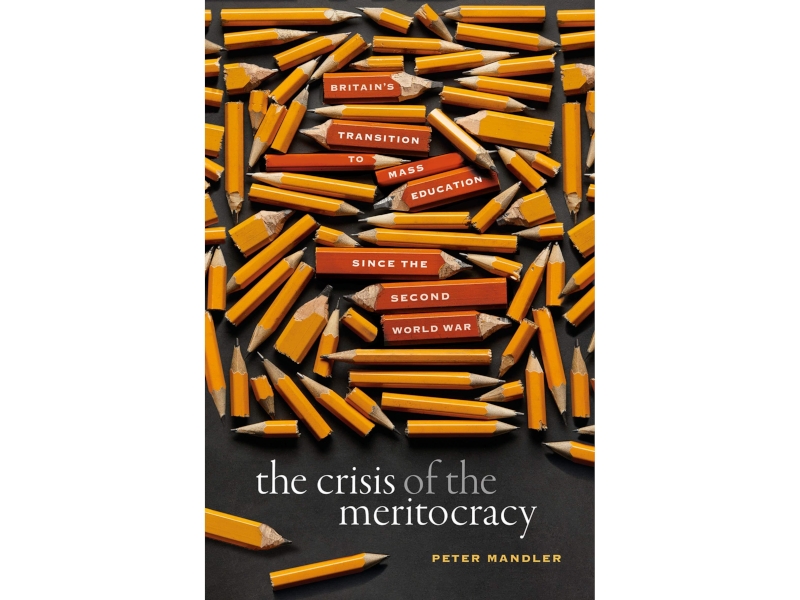
    The Crisis of the Meritocracy: Britain’s Transition to Mass Education since the Second World War by Peter Mandler

    This timely tome offers an apolitical overview of the education system and considers why so many people are attending university and the implications of this. Mandler focusses on deconstructing the legacy of the Butler Act – a piece of legislation which aimed to remove inequality from education and saw the proportion of free places at grammar schools increase by almost a third. This study is essential reading for those who want to thoroughly understand why we are still not living in a true meritocracy.

    Crisis of Meritocracy: Oxford University Press, £25.00

    What Do We Know and What Should We Do About Social Mobility? By Lee Elliot Major and Stephen Machin

    Low social mobility in Britain is an increasingly pressing issue and Professor of Social Mobility at the University of Exeter Lee Elliot Major and LSE Professor of Economics Stephen Machin consider what can be done to reverse this trend. This book documents the history of mobility since WWII and considers how family traits affect intergenerational mobility. The authors call for a shift in debates around this topic in order to establish a more just society.

    Social Mobility: SAGE Publishing, £9.99

    Is Assessment Fair? By Isabel Nisbet and Stuart Shaw

    Following the exam results debacle, fairness in educational assessment has become a major talking point. In this book Lecturer at the Faculty of Education, University of Cambridge, Isabel Nisbet and Fellow of the Chartered Institute of Educational Assessors, Stuart Shaw consider what fairness means in practice and how it can be evaluated. Drawing on international examples from the UK, US, Australia and South East Asia, this book offers a thorough commentary on fairness.

    Is Assessment fair: SAGE Publishing, £24.99

    Educating for a Characterful Society Responsibility and the Public Good By James Arthur, Julia Cleverdon, Nicky Morgan, James O’Shaughnessy, Anthony Seldon

    What is character and how can educators develop virtues such as honesty and a sense of duty? In this book, five leading figures in government and education examine the ‘character’ of the public service workers on the frontline during the pandemic and consider how the National Curriculum can develop a sense of social justice and harness the passion of young people in order to work towards a stronger society.

    Educating For a Characterful Society: Routledge, £12.99

  • Review: The Power of Learning from Dad by Dr Selva Pankaj

    Review: The Power of Learning from Dad by Dr Selva Pankaj

    While many people planned on writing a book during lockdown Dr Selva Pankaj actually did and the lessons he shares may inspire other people to achieve his level of motivation and success. The Regent Group founder reflects on the wisdom he received from his father while growing up in war-torn Sri Lanka such as “Dad said that plant springs from one seed, so every act of man or woman springs from thought” or “Dad used to say to me, ‘if you get up in the morning and find a wonderful day, be grateful for that’” or “Dad used to say in different words that you should willingly give, and sometimes giving needs to be spontaneous.” While the book bears some of the hallmarks of a self-published memoir, it can be commended for attempting to portray inspiring messages.

    Power of Learning from Dad: Regent Publishing, £10.00