Category: Arts

  • Steve Brill’s The Death of Truth: Unveiling the Web of Lies

    Book Review of The Death of Truth by Steve Brill, Finito World


    Dustin Thompson was living in Columbus, Ohio and getting along more or less fine in the pests control industry when the pandemic came along. As Covid took hold, he lost his job which led to a notable increase in time spent online. Eventually, he would be among those who perpetrated the 6th January Capitol Riots. His weapon? A coatrack.

    It’s a weird image – and perhaps it fits somehow with the sorts of weird states we can get ourselves into when we try to twist reality. Steve Brill’s book is an examination of how we got here, and it’s no surprise at all to find that the Internet is to blame. Specifically he notes that Section 230 – a 1995 law in the US allowing internet providers to police their own platforms and granting them immunity over content, no matter how far-fetched – was a landmark moment which nobody much noticed at the time.

    So what can be done? Brill suggests that Section 230 – and presumably similar provisions globally – be amended to take into account dangerous algorithms. He also argues for the scrapping of online anonymity, as well as an end to partisan primaries, which he argues create an atmosphere of resentment, which itself leads to misinformation. Of course, the title is a bit misleading in that truth itself, if it is true, can’t actually die: what happens is that individuals become severed from it en masse. Perhaps there’s hope there – and also in this authoritative and well-written book.

  • Photo essay: Career Insights from the Wildlife Photographer of the Year Awards 2024

    Insights from the Wildlife Photographer of the Year Awards 2024, Christopher Jackson


    At Finito, it is one of the most regular things we hear on the wish list from our young candidates: I want to do something to help the planet. This is always wonderful. Very often, when the wish is first formulated, it amounts to the shape of an intention, and the candidate’s journey is to find out more about what career possibilities really lie ahead.

    These can be both exciting, and perhaps a little bewildering, in their abundance. There are people out there who work in nature documentaries, who earn their living studying lion population numbers, who work for the Natural History Museum as curators, marketers, or social media experts. There are lawyers who specialise in environmental issues, and entrepreneurs who are exploring every kind of business to tackle climate change. Our concern for the planet rightly proliferates across the whole of society.

    In a sense, this is the economy now – it might even be that there will be very few jobs soon which don’t help the planet. And yet, though it’s often important to delve deeper into the sort of thing we’d actually like to do, at Finito we have tended to find that the intention is so strong that a candidate who wants to work in this area will always find a way to succeed.

    The reason for this is because the motivation is there. And the motivation is there because the natural world is always reminding us of its beauty and its fragility.

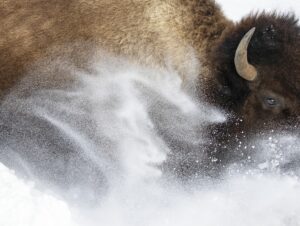
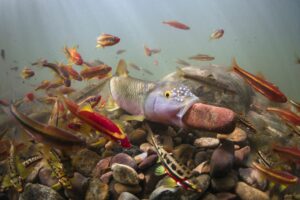
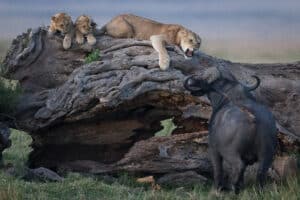
    The Wildlife Photographer of the Year, the world-famous exhibition from the Natural History Museum, has been going since 1965, and this year is returning to the Dorset Museum & Art Gallery. It consists of over 100 photographs which together form an impressive catalogue of the natural world. This is our planet, our only home. Quite frankly, it’s a knockout on every conceivable level.

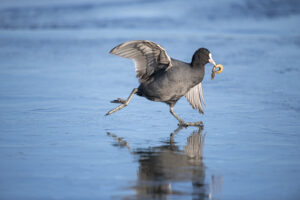
    Sometimes we see nature as vaguely comical as in Zeyu Zhai’s lovely image of a sea bird scarpering across shallows with prey dangling from its beak.

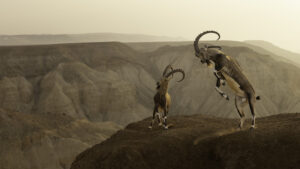
    At other times, it is full of a kind of critical dynamism: we see Max Waugh’s water buffalo, with one alert eye, splashing through water: we don’t know if it is fleeing a predator, or seeking food – but we know that his life is a struggle and that it will need that alertness every second of its life. Meanwhile Amit Ashel’s pair of fighting mountain ibexes show that a sort of balletic grace – and an astounding fearlessness regarding heights – can show itself in the fight for a mate.

    What it is doing all this for is, of course, the mystery. How do caribou know when to begin their great migration across Canada and Alaska and how do hungry wolves know they are about to embark on it? How do bears know that after hibernation there will be grass in the uplands but critical body mass to be earned from the salmon in the streams who are coming there in droves to mate? They are not told it – but they know it. Everything is in exquisite balance; it couldn’t be better.

    The glory of nature is a universal experience. Today the competition receives entries from over 90 countries. It is remarkable to consider that every second we are alive this kind of beauty is happening in every hidden square inch of the world: mountain, or ocean depth, or cave recess. If this heartening knowledge isn’t a sound basis on which to build a career, I don’t know what is. And you can also be a wildlife photographer too.

    Zeyu Zhai
    Amit Eshel
    Max Waugh


    Mike Korostelev
    Isaac Szabo
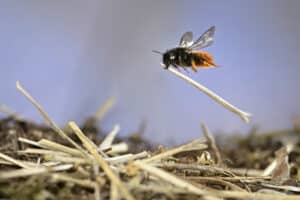
    Solvin Zanki. Two-coloured mason-bee (Osmia bicolor), the bee is building its nests in a empty snail shell. The bee provisions the snail shell with chewed balls of pollen and nectar and seals it with a layer of debris.


    Olivier Gonnet
    Alex Mustard


  • What the architect Frank Lloyd Wright teaches us about adversity in our careers

    Christopher Jackson


    When we look at the famous or the successful, graciously hosting television cameras in their comfortable homes, it is easy to assume that they have found themselves inoculated from what Hamlet calls ‘the shocks and arrows of outrageous fortune’. There is the sense that all that is difficult or troubling has been brought to heel somehow.

    One early example of this genre concerns the architect Frank Lloyd Wright approached in 1953 with the reverence with which someone in medieval England might approach a King by NBC Chicago’s Hugh Downs. This interview is in many respects a ridiculous affair. Wright is treated – and clearly regards himself – as not just a great artist but a seer and a sage.

    He may well have been all those things, but he is also plainly a self-regarding one. Throughout the interview, he sits with a large book inexplicably on his lap, like some vast Bible, which the viewer is invited to assume must be a compendium of his drawings. His answers are philosophical and one can never be sure if he is definitely looking Downs in the eye – certainly the impression is that Downs has come to Parnassus to address a higher form of life.

    Many will perhaps agree with Frank Lloyd Wright’s estimation of his own abilities while thinking he could have been more modest about them. Wright is one of those few architects who we can certainly say changed architecture, though it could sometimes be a bit tiresome to hear him point this fact out so often. It suggested perhaps that he had something to hide, and I think he did: his moral self, which was, biographers agree, by turns slippery, cunning, abusive, untrustworthy and arrogant.
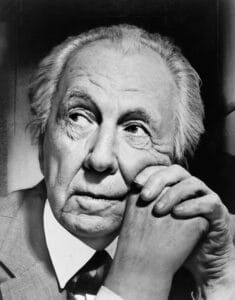
     

    This queasiness one feels about Wright is something we need to get out of the way before we discuss his genius, which is far more interesting and surprising than the news that well-known people often behave badly.

    More interesting – and it is especially worth considering for anyone who happens to YouTube the NBC Chicago interview – is Wright’s vulnerability, arising out of a lifelong familiarity with tragedy. In fact, looked at closely, Wright’s career involved a regular collision with adverse circumstances – some of them fairly typical and at least one of them unthinkable, which we shall come to in a moment. A book published in 1993 The Seven Ages of Frank Lloyd Wright, written by Dennis Hoppen, observed that Lloyd Wright had a remarkable ability to absorb reversals and over time convert them into new periods of creativity.

    It is this which makes Wright worth studying. The patrician who was never short of a word of self-praise ought not detain us. These traits probably had to do with a difficult upbringing: trauma created a sort of outer person which was secondary to the much more interesting inner creative life by which he really lived.

    In interview, we meet this outer self; in his work the far interesting central force. Regardless, his life has a fascinating rhythm to it: Hoppen’s book shows that Wright experienced surges of creativity which were routinely checked by disaster. But these disasters seem to have gone deep into him, and by some mysterious creative process, engendered over time great leaps forward in his art.

    Wright would often state that he didn’t decide to be an architect, his mother made that decision for him. She declared while Frank was still in the womb that he would grow up to create beautiful buildings and was so proactive in what was then a distant likelihood as to adorn his nursery with pictures of the great English cathedrals. Wright would later make it clear that he didn’t think anybody had taught him architecture telling Downs with his usual slightly prim arrogance:


    I’m no teacher. Never wanted to teach and don’t believe in teaching an art. Science yes, business of course..but an art cannot be taught. You can only inculcate it, you can be an exemplar, you can create an atmosphere in which it can grow. Well I suppose I, being an exemplar, could be called a teacher, in spite of myself. So go ahead, call me a teacher.


    Wright’s initial degree was in civil engineering but his ambition was to make it to Chicago; in fact, he left university just before completing his qualification. He may not have felt he needed a teacher. But a mentor, one feels, can be a quite different thing and in Louis Sullivan, of the firm Adler & Sullivan, that is what Wright found in spite of his own irascibility and the perennial failure to get on with people which would often crop up in his career.

    Though Wright would make a habit of disparaging his contemporaries, Sullivan would be remembered fondly by Wright – though by no means so fondly as to make anyone think Wright himself was anything other than number one, or in his own confident estimation, “the greatest architect who ever lived, or will live.”

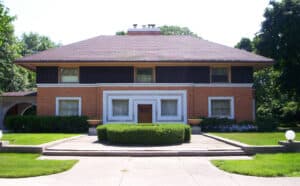
    The trouble with Wright’s arrogance is that the architecture does tend rather to bear out his own high assessment of himself. Even as a young man he had already by 1900, almost single-handedly, invented prairie architecture, with a series of four houses which showed a completely undaunted sense of the possibility of American architecture, and by association American life. The European ideal, from Wright’s perspective, was all very well, but the greatness of European art had been arrived by being true to the history and values of that continent. Mightn’t something new be possible in this vast country?

    And if something was possible, then what distinguished the American case from the European? The first thing was the sheer size of the country and therefore the space assigned to each individual. Europeans, and especially British people, have long since found themselves living on top of one another. Any visitor to the towns of America feels how different the demographics are: we feel the country’s enormity, its abundance, and tied to these things, the sense that Americans can live differently, which of course means in different buildings. Prairie architecture was Wright’s first attempt to be true to what now seems to us a fairly obvious reality. Many of these houses still stand today as he always said they would.

    The great innovation here is the horizontal line which mirrors the great outstretched nature of America. For Wright, European architecture was pre-democratic or even anti-democratic and characterised by boxed rooms, which are ideal for establishing hierarchical systems. One thinks of the servants’ quarters, or the cut-off luxury of, say, the master bedroom in a typical European castle. Wright’s houses are different: the open floor plan which would go onto dominate, in another setting, office life, is really his invention.

    But these insights were built on a deeper intuition which had to do with the need to respect landscape, making Wright the purveyor of what he called organic architecture. This meant that his architecture was meant to embody the essence of the land. Most famously, he once expounded his views on hilltop or hillside architecture: “No house should ever be on a hill or on anything. It should be of the hill. Belonging to it. Hill and house should live together each the happier for the other.”

    Wright’s architecture belongs to the land – and he accentuated this idea by building often in stone and wood. The prominent central chimneys in these houses are intended to relate to the human heart – and there is perhaps the sense that Wright’s buildings correspond not only to the landscape they’re in but to human beings themselves: they are, perhaps, attempts to create functional counterparts to the American soul.
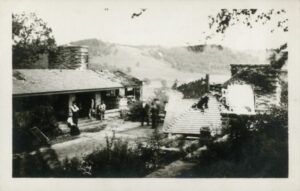
     

    It all amounted to a great vision of democracy by a man who in his life was actually rather authoritarian. It is possible to find a contradiction in his life between his sense of himself as the isolated Great Man, and his oft-stated belief that American architecture cannot thrive unless it takes into account its founding principle of democracy.

    These promising – indeed, exceptional – beginnings were soon to be upended by unthinkable tragedy. Wright, though married, had conducted a controversial affair with a married woman – and the wife of one of his clients – Mamah Borthwick. The press got wind of it all, and Wright built Taliesin in its the first incarnation in order to shield Borthwick from the press. Then on August 15, 1914, Julian Carlton, a male servant from Barbados, set fire to Taliesin, and then murdered seven people, including Borthwick and her two visiting children. It is hard to imagine what this must have been like for Frank Lloyd Wright, who happened to be away on business. But in time his reaction was remarkable:


    There is release from anguish in action. Anguish would not leave Taliesin until action for renewal began. Again, and at once, all that had been in motion before at the will of the architect was set in motion. Steadily, again, stone by stone, board by board, Taliesin the II began to rise from Taliesin the first.


    It is a splendid lesson about how to deal with setback: creatively. As Taliesin II was rebuilt, Lloyd Wright was working on a new phase in his career, when he accepted a commission to design the Imperial Hotel in Tokyo. This looks so different as to not seem to be from the hand of the same architect, but of course it’s in a different country and Wright was committed to an architecture which, to a near obsessive degree, took into account place.

    Wright had thought through the viability of the structure – although sometimes this has been exaggerated a little. The structure did survive the Great Kantō earthquake of 1st September 1923 which and Baron Kihachiro Okura sent Wright the following telegram:


    Hotel stands undamaged as a monument of your genius hundreds of homeless provided by perfectly maintained service congratulations[.] Congratulations[.]


    Wright being Wright, he wasn’t about to keep this telegram from the press and the story did a fair amount to embellish his legend. In actual fact the central section had fallen through, and several floors bulged. It certainly wasn’t the least damaged building the earthquake.
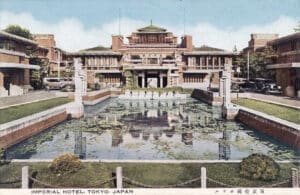
     

    But Wright had moved onto another phase, which is sometimes characterised as ‘monumentality’. His block houses such as Ennis House fall broadly into this category. One wonders whether in their scale and grandeur they reflect a growing awareness of America’s imperial destiny: they feel like houses which belong to a powerful people, and in the wake of the First World War, where American involvement had decisively tipped the scales towards the Allies, America’s self-image had shifted. It would be the world power, and here was the architecture to prove it.

    But further disaster was round the corner, in the shape of another fire at Taliesin. On April 20th 1925, Wright noticed smoke billowing from his bedroom, and though on this occasion he was on site and able to call for help quickly, it was a night of high winds, and Taliesin II was destroyed along with much of the superb art collection which its owner had acquired while working in Japan. But again he was undaunted and took this loss as inspiration for Taliesin III which still stands today:


    And I had faith that I could build another Taliesin! A few days later clearing away the debris to reconstruct I picked up partly calcined marble heads of the Tang-dynasty, fragments of the black basalt of the splendid Wei-stone, Sung soft-clay sculpture and gorgeous Ming pottery turned to the colour of bronze by the intensity of the blaze. The sacrificial offerings to — whatever Gods may be. And I put these fragments aside to weave them into the masonry — the fabric of Taliesin III that now — already in mind—was to stand in place of Taliesin II. And I went to work.


    There is something magnificent about the simplicity of that sentence: “And I went to work”. In its confident forward movement we get very close to the essence of the man. From here, Wright would go on to his so-called ‘desert architecture’ phase – it was a difficult time for Wright personally and financially and he was forced to take on smaller projects such as Ocotilla and San Marcos in the Desert. This must have been relatively humbling, and of course the 1929 Great Depression was round the corner to humble him further.

    By 1929, he could have been forgiven for thinking he’d had a life entirely comprised of setbacks. This huge decline in productivity led to another fallow period and then a period of low cost architecture characterised by his Usonian houses – small houses very private from the front and open at the back usually aimed at the middle class. The first such house is usually considered to be the Herbert and Katherine Jacobs First House.

    Though this house, with its horizontality, and little carport, was perhaps a rather humbling project for a man to undertake who considered himself the equal, and indeed the superior, to the architects who made the Pyramids, Wright couldn’t quite refrain from couching it in the grandest terms possible: “The house of moderate cost is not only America’s major architectural problem, but the problem most difficult for her major architects.

    As for me, I would rather solve it with satisfaction to myself and Usonia than build anything I can think of at the moment.” Usonia, incidentally, was Wright’s somewhat ludicrous term for America, but these houses are extremely beautiful and subtle. They feel as though they contain an earned wisdom. Indeed, perhaps as one looks at the wonderful Usonian houses, one can reflect that humility wasn’t a bad thing for Frank Lloyd Wright to get to know a little.

    But humility wasn’t to be for the architect in the long run. The second half of his life contains fewer setbacks and much of his greatest work, especially the magnificent Fallingwater was still ahead of him, and that superb office space the Johnson Wax Headquarters, with its famous lily pad columns. Wright always said that it increased productivity.

    As impediment fell away, and a greatness exactly like the one imagined for him by his mother was assured, Lloyd Wright settled into the grand and arrogant persona which Hugh Downs would come to visit in 1953, some six years before his death. But what’s more interesting than the man at the summit he became is the way in which he surmounted so many obstacles to get there.


  • An interview with incredible artist Diana Taylor: “Young artists shouldn’t get caught up in trends”


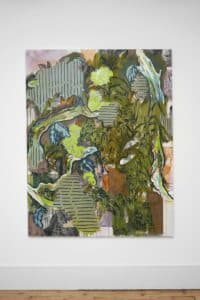
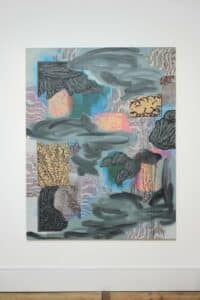
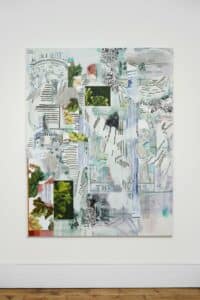
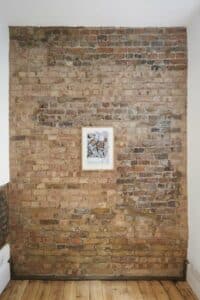
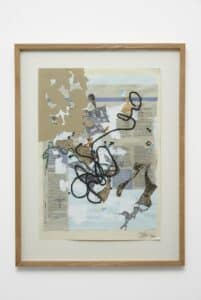
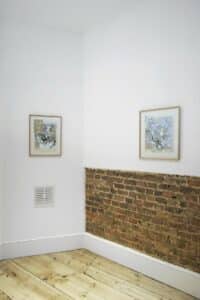
    Diana Taylor graduated with an M.F.A Painting from the Slade School of Fine Art in 2010. She studied B.A (Hons) Fine Art at Bath Spa University College and graduated in 1999. In 2011 she was awarded the Abbey Scholarship in Painting at the British School at Rome. Residencies in 2011 and 2012 include Centre of Contemporary Arts, Andratx, Mallorca and East London Printmakers. A sense of journey, both physically and through memory, and the relation this has with mass-produced images, which travel our own consciousness, are central to her practice. We caught up with her at her new exhibition ‘Borrowed Time’. at Bobinska Brownlee New River


    I really love the new stuff. How did these paintings come about?


    The new paintings began with Gustav Dore’s illustrations of Dante’s Divine Comedy. The illustrations were made in the 19th century as woodblock prints and the Divine Comedy was written in the 14th century. The book I chose the images from was published in the 1970s and my manipulations from analogue to digital were made this year so there’s oscillation between temporalities within my work. I selected small areas of several illustrations and manipulated them within Photoshop by cropping, enlarging and lowering the resolution.

    I also turned the document into bit map format to screen-print them. I always enlarge the images in screen-printing too so the image is reduced in quality even further. So, what was a woodblock print has gone through a digital process into a mechanical method of screen-printing and that’s how the paintings usually begin. There are varying levels of detail and zooming in for those images.


    So there’s a digital element and then you set to work as a painter?


    I then began painting imagery from my various illustrated books of plants and botanical illustrations some of which were important to Morris’s archive- a 16th-century Gerard’s Herbal. From my PhD research on William Morris I’ve become increasingly interested in the botanical illustrations that he was using, but I also have a real love for early print and that’s why I refer to it often within my work. My love of gardening and my interest in plants as therapeutic and medicinal has steered these new works.

    However, there’s also a more serious concern with climate change, and the idea of plants growing and becoming threatened, or in decline, started mirroring my painting process which is one of building up and breaking down the image. These new paintings in my solo show at Bobinska Brownlee gallery, ‘Borrowed Time’, therefore, are about the things that I am thinking about, looking at and doing in my everyday life- which is what my paintings are generally about anyway. The title refers to concerns in a climate crisis and also to my method of appropriation- borrowing images which already exist, to create new works.


    Has your method of composition been relatively fixed and stable over your career, or is that evolving?


    My method of composition tends to change however over the past 10 years I’d say I’ve been very much focused on using a portrait format and working on a similar size and often it’s because I want to have some kind of composition which involves cascading, a kind of cascade down the painting and alludes to the idea something falling and things falling apart. The composition is not fixed. However, I always use fragments within my work and I’m interested in the composition as appearing unfinished.

    There’s something about the tension between something that’s finished and unfinished, that interests me, so the work oscillates between many dichotomies such as fast and slow painting, graphic and gesture, old and new references, art and craft et cetera yet these binaries are always symbiotic which is why I’ve converged them because they need to be together.


    Was it always art for you? Did you ever consider some other path in life?


    Yes, it was always painting for me. My granny was a painter and I always loved drawing and painting there was never any question that I wanted to do something else, although at one stage I wanted to be an air hostess just because I love travelling so much. But I realised I could travel and do my painting and I could be an artist, and make money from selling my work and teaching, which is something I also enjoy.


    Did you have any mentor in art?


    I had several brilliant art teachers throughout my education who have inspired me and taught me so much.  I think that’s why I love teaching so much because I want to be able to give back what I also experienced in my educational journey.


    Who are your heroes in art history who have helped you on your journey?


    I think my heroes in art history include Bernini whose work blew me away in Rome. But, in modern history, I love Sigma Polke, Robert Rauschenberg, Lee Krasner, Eduardo Paolozzi, and many others. Contemporary painters I love are Amy Sillman, (I love her writing too), as well as Michael Williams, Charlene Von Heyl, Christopher Wool amongst a load of others.


    What are your tips for young artists about the business side?


    I’d say for young artists it’s just important to stay focused on being true to yourself and not getting caught up in any trends. You kind of have to be thick-skinned and resilient as an artist and to stay resolute. I find a strong daily meditation practice has helped me to stay resilient and grounded as it can be so difficult to persevere when it seems at times like not much is happening in your career.


    Galleries seem to take large percentages from artists – is that something you think will change over time?


    I don’t think the 50% commission is likely to change although I’ve no idea really on this aspect of the art world- as long as the Gallery can continue to put on ambitious exhibitions and bring their collectors to the shows then it’s a really good way for an artist to get exposure.


    What’s your experience of art fairs?

    As a visitor to art fairs, I find them quite overwhelming as there’s so much work to see but I do visit some of the bigger fairs such as Frieze so they’re understandably overwhelming but it’s a good way to get an idea of what’s going on globally in the art world. That said it’s an odd way of looking at art because you’re hardly even giving the work any time at all. It’s just a glance and then moving on to the next thing.

    Has the conversation around NFTs affected you at all, or do you think that was just a fad?


    I’m not that interested in NFTs. Although I think they could be good for some artists I have zero interest in turning my work into an NFT. I think something is lost in the reproduction of a painting or work that has a haptic quality like my textiles- it’s the aura that Walter Benjamin spoke of, so an NFT for me is kind of dead and it kills the work of the hand. However, I’m sure there’s some really interesting work out there that I haven’t seen so we’ll see how far it goes.


    Borrowed Time ran from 18th April-5th June at Bobinska Brownlee New River. For more information go to: www.dianataylor.co.uk

  • Book review: Say More: Lessons from Work, the White House and the World by Jen Psaki

    Finito World


    Jen Psaki has become a Democratic sage by virtue of having served in both the Obama and the Biden administrations, the latter for 16 months. In today’s polarised America, it was never expected to be a pro-Trump memoir, and it isn’t – but it also has a certain nuance which can be missing from the typical score-settling memoir. We get some vignettes of life at the top of politics. Barack Obama proves relaxed about her taking on the role of Director of Communications and then needing to go on maternity leave. Joe Biden is surprised to hear that he doesn’t help the grieving family members as much as he hopes to when he tries to relate their loss back to the loss of his own son Beau. ‘I thought I was helping them’. At one point, John Kerry makes a gaffe and Psaki learns the importance of quick feedback: it’s often better to speak your mind on the spot, than to pause and let a matter linger. At another point she observes, “Advising someone is not the same as appeasing them.” I suppose this is true, though, like a lot of the wisdom in this book, bordering on the obvious. Nevertheless, it’s worth a look.

  • Film Editor Meredith Taylor reviews new Donald Trump film The Apprentice: “A compulsive portrait of toxic narcissism”

    Meredith Taylor


    Dir: Ali Abassi | Script: Gabriel Sherman | Cast: Sebastian Stan, Jeremy Strong, Maria Bakalova, Martin Donovan, Catherine McNally, Charlie Carrick, Ben Sullivan, Mark Rendall, Joe Pingue, Jim Monaco, Bruce | Biopic Drama, 120′


    “You’re either a killer or a loser” is the advice a young Donald Trump (Sebastian Stan) gets from his acerbic mentor Roy Cohn (Jeremy Strong) in this polarising political biopic written by journalist Gabriel Sherman and directed by Iranian-Danish filmmaker Ali Abassi (Border) and Holy Spider (who is now perhaps best known for his involvement in The Last Of Us).

    Cohn, the lawyer responsible for putting the Rosenbergs on the electric chair and a key figure in the McCarthy witch hunts, offers up three key bits of business advice during The Apprentice – an entertaining romp that zips briskly through its two hours running time sketching out Trump’s early career as an eager apprentice trained under the high-flying lawyer, and eventually trumping him in a tale of machiavellian morals, ethics and business acumen.

    There are elements of poetic licence at play here: in other words Sherman plays slightly fast and loose with the facts in fleshing out Trump’s backstory. The result is a fairly even-handed feature that on the one hand sees the US former president as cold-eyed and devious, but on the other opines that these are the very tools of the trade for those wanting to get on in big business – or politics, for that matter. Crucially it also highlights the recent concept of the truth being a construct open to individual perception.

    The focus narrows in on Trump from a broad brush opening outlining the corruption of the Nixon years and the inherent dishonesty that is now rife in all circles of power, not least in America. It contrasts the ‘losers’ (those on welfare) with the killers, the ‘unscrupulous’ hard-working income generators during the Reagan presidency that led to the phenomenon of ‘corporate greed’.

    The Apprentice sees Trump starting out during the 1970s working for his property magnate father, Fred Trump (Martin Donovan). Dressed in a suit Donald is tasked with doing the rounds to collect rents. One disgruntled tenant throws a pan of boiling water in his face, another swears at him. The family business comes then under fire from a civil rights action alleging discrimination against Black tenants. Cohn wins the case, as his lawyer, with Trump senior claiming: “How can I be racist when I have a Black driver?”

    But Donald is determined to make it alone and sets his sights on transforming the downtrodden area around Grand Central Station where he vows to make a success in a project of urban regeneration involving the dilapidated Commodore Hotel, bringing jobs, European tourists and a facelift for Manhattan.

    Family wise we also meet Donald’s kindly mother Mary Anne (Catherine McNally), and his brother Freddy (Charlie Carrick) a failed pilot with emotional problems: Fred admits to having been tough on his boys. But Donald is hellbent on success and soon bonds with Cohn after a chance meeting at a fancy Manhattan nightclub frequented by the top flight business community. Working together they soon go from strength to strength in a business alliance with Trump styling himself in the same vein as Cohn with his fast-talking intransigence. His transformation into fully fledged killer who lives by his own standards happens almost overnight and feels a little too fast even given the film’s ample running time. But Stan grasps Trump’s essence charting his character’s transformation from reasonable business man to self-seeking  hardliner.

    Trump soon becomes a man who takes his own advice often rubbing Cohn up the wrong way, while at the same time chosing to turn a blind eye to his ‘strange way of life’ and hedonistic habits. Trump’s puritan background sees him gradually distancing himself from the lawyer who berates him for his lack of financial probity. Their relationship eventually sours during the AIDS crisis, although Trump offers an olive branch in the finale.

    The marriage to Ivana Zelnickova, against Cohn’s advice, is handled deftly and with some humour. Trump follows Ivana to Aspen to clinch their romance then falls flat on the ice after claiming to be a good skier. The Czech model is a little too sweet and sympathetic despite her purported savvy business sense, but Trump soon tires of her, claiming to find their home life ‘more like coming home to a business partner than a wife’. A shocking episode sees him beating Ivana, but whether this has a factual basis, despite his widely reported misogyny, is uncertain. Stan’s Trump may polarise public opinion in coming across as too likeable but this is surely the essence of a maverick who can charm as well as chastise and here he gives a compelling performance.

    With a killer score of hits that just reeks of the ’70s and ’80 and a scuzzy retro texture this is an compulsive portrait of toxic narcissism even more relevant now than it was back in the day.


    PHOTO CREDIT: Cannes Film Festival 2024 Première


  • Friday poem: Omar Sabbagh’s ‘Searching the Horizon’

    Searching The Horizon


    I opened my eyes and my eyes opened

    the light that helped them first to arise;

    and it was as though a window had forged another window,

    working and sculpting the light to show

    the drama of sight – how a new horizon

    glanced at me, gently, knighting me with angles,

    the emanations in a cool and slaking breeze,

    and the unmastered day ahead, like a slave still

    to each refraction of hope, each ghost

    on its way to becoming the fuller filled-out flesh

    it wants to be. Lit now, gripped by delight,

    I walk among the staple daily shadows

    and feel each one sundered below my stepping feet,

    the horizon busied now with its batch of unhurt children.


    Omar Sabbagh


  • Music review: Tallulah Rendall’s Love Carries Me Home

    Christopher Jackson

    Tallulah Rendall’s new album Love Carries Me Home is a beautiful work in many different ways: it arrives as a charmingly produced book with a CD on the inside sleeve, though it is also possible to listen to much of the work on Spotify and iTunes. The book itself consists of a helpful introductory essay by Rendall herself outlining the origins of the album which came out of a particularly difficult period during which a relationship ended, her father John sadly died, and she was also experiencing professional difficulties arising out of the impact of Covid-19 on her industry.

    The voice that emerges in this essay is of a gentle soul, capable of challenging herself to forge growth out of adversity. Rendall recalls:

    Part of my journey of Lockdown was a relationship that completely broke my confidence…yet through determined commitment, I found my way to defy the doctrine that I had begun deeply to believe; to break through the belief that I am not good enough, I am not worthy of love or care…At the time of writing what I didn’t realise was how embedded in our culture the ‘I Am Not Good Enough’ culture actually is.

    It is this last observation which, I think, sets Rendall’s creativity apart: the songs become a sort of raft which we might all climb aboard and this is possible because she has made the generous observation that her own afflictions might be used as a way of assuaging those of others. Rendall understands that art begins with an acknowledgement of our vulnerability – and that this condition is also an opportunity. This album finds her time and again equal to the task of turning the pain of life into something which gathers up that pain into new musical forms.

    The book itself prints the lyrics alongside excellent photography of Tallulah making the book a lovely object to own. In the lyrics themselves there is often the umistakeable note of an earned wisdom as in the song ‘I Am Not Good Enough’:

    We can barricade our hearts with all the armour that we grow

    Hide away from the pain, but our hearts will never know

    The beauty of life, that is wanting us to know and say to ourselves

    That I am loved and I, I am enough just as I am

    The world appears to be at a hinge point in relation to the eternal questions of religion and materialism. In these songs, the structures of Western society are revealed to be an insufficient basis on which to build a valid and meaningful life. Rendall’s vocals remind me a bit of Joni Mitchell, swooping and diving through subtle and patient melodies: she is reassuring us that it is worth the effort to reexamine ourselves.

    Of course, it’s not strictly true to say that we are enough just as we are and can sit back smug in that knowledge: Rendall in fact doesn’t think this at all. In another track ‘Be A Little Kinder’ she urges us to take the stuff of ourselves forwards into better versions of ourselves. The simplicity of the message works since it is obviously true, and always has been. Its urgency and its importance is that it is being communicated to a world in far too much of a hurry, and which too often seems to forget what once was known to almost everyone.

    In a world where everything comes to us in a packaged and predictable way, listeners will feel this album as a genuinely authentic contribution. It is very much deserved that this new multiform release has been endorsed by the likes of Shirley Bassey and Jools Holland, and there are signs that she will reach a considerable audience. Let’s hope so – the world needs voices like this.

    For more information go to tallulahrendal.com

  • Peter Jackson’s Beatles film Get Back as a study in workplace toxicity

    Christopher Jackson


    The data is mixed as to whether The Beatles have broken through to the younger generation. The band which used to make a habit of being number 1, is currently listed as the 93rd most streamed artist on Spotify, with 20 million followers. This pales somewhat predictably when set against the sort of numbers totted up by Taylor Swift (83.23 million), and who recently made headlines by greedily having the whole of the top 10 to herself; The Weeknd (79.04 million) and Ed Sheeran (76.60 million).

    Of bands people over the age of 35 will likely remember from their youth, the best performing are Coldplay, who are 12th on the list with 58.54 million, and Elton John who is 21st with just over 50 million listeners.

    However the available statistics on the Beatles, while they testify to the fact that Beatlemania itself happened over half a century ago, do show that the band’s popularity endures among the young, with over 30 per cent of downloads coming from 18-24 year olds.

    These statistics seem to assure the Beatles continuation in the culture well into the 21st century. This will include not just the music but movies, and therefore Peter Jackson’s epic three-part series Get Back.

    The film follows the Fab Four as they record an album which would become Let It Be , the last album the band would release, and  a few songs from Abbey Road, which was the last album the group recorded. As the pair meet in Twickenham it seems possible that they will shoot a new film of some kind, but as the hours go by, it becomes clear that nobody has a clear idea of what the film might entail and so it is abandoned in favour of the famous concert on the roof at 3 Savile Row. This would turn out to be the band’s last live performance.

    That’s because in this film, all isn’t quite well with the Beatles. We, the viewers, know that the band is in fact close to its terminus: the break-up which coincided with the end of the 1960s and brought that colourful epoch to its conclusion.

    In fact, in places the film turns out to be a study in workplace toxicity. Though there are passages where the magic of music-making makes you feel, though you know differently, that the band could continue, the air of tension is at other times unmistakeable.

    The dynamic of the four feels dictated throughout by Paul McCartney, sometimes to a surprising extent. We often think of John Lennon as the leader of The Beatles but there appear to have been a few factors which worked against Lennon being in charge by this point in their careers.

    The first is that Lennon at times seems disengaged. Whereas Linda McCartney accompanies Paul to the studio only occasionally, and always seems a straightforward and optimistic presence when she does, Yoko Ono accompanies John throughout, sometimes maintaining what must have been an unnerving silence and at others screaming into a microphone in an alarming way.

    One might add that it might have been especially alarming on the ears of the man who wrote ‘Yesterday.’ Even so, despite the difficulty, one notes throughout a certain tenderness, which feels heartbreakingly residual, about the way in which Lennon and McCartney look at each other, and converse. It suggests, even as that friendship is unravelling, a profound connection based on having journeyed through strange seas of song together for so long.

    But something else is clear. McCartney, certainly at this stage, and perhaps throughout, is in a leadership position because his talent feels of another kind. Lennon’s was always the stronger personality, but McCartney is the one with the preternatural gift, the writer of the melodies which we still sing around the piano today. It is notable that McCartney wrote without much input from Lennon: Hey Jude, Yesterday, Yellow Submarine, When I’m Sixty Four, and in this film he is seen writing Let it Be. These songs are standards in a way which Lennon’s songs aren’t: they have their origins sometimes in music hall or in jazz. They have a capacity to endure in any setting which you cannot say songs like ‘Strawberry Fields Forever’ or ‘I am the Walrus’, so tethered to the unusualness of Lennon’s personality, really have.

    Genius of McCartney’s kind creates imbalance. In this film it is shown in the way in which McCartney seems to be working on a huge number of songs. By my count he is writing more or less simultaneously: Let it Be, I’ve Got a Feelin’, Oh Darling, Let it Be, Maxwell’s Silver Hammer, Her Majesty, The Long and Winding Road, Get Back, She Came in Through the Bathroom Window, Carry That Weight, around half of which are songs now of lasting fame, and the other half of which are musically interesting. Lennon, by contrast, is working on Across the Universe, Don’t Let me Down, Dig a Pony, Polythene Pam, an early version of what would become Jealous Guy, and has the riff for what would become I Want You (She’s So Heavy). These songs are slight by comparison with what McCartney is working on, as well as fewer in number.

    Meanwhile, George Harrison is working on I Me Mine and Old Brown Shoe and has the bones of a song which would in time become a standard, Something. One sees here the ludicrousness of Harrison’s position: Harrison is writing a song which will reverberate forever yet there is a clear assumption that his songs are unlikely to be included in any significant number.

    McCartney is not only ahead as a composer but as a player of instruments. It was Lennon who was once asked if Ringo Starr was the best drummer. When he replied, “He’s not even the best drummer in the Beatles” he was referencing McCartney. Likewise you sense that McCartney can also play guitar better than Harrison. This knowledge leads him to micromanage and makes you realise that the band can’t function really as a team anymore.

    But there’s a paradox here because McCartney’s talent, as we know from the comparative decline of the post-Beatles years, also feels oddly dependent on the Beatles, and so you feel there is more at stake for him in wanting the band to remain together. At one point he plaintively tells everyone: “We can sing together when we’re older.”

    Ringo Starr meanwhile is worth watching closely throughout the film as he remains unobtrusive and popular. He is in fact an exemplary study in how to handle workplace toxicity.

    At times the juxtaposition between McCartney’s gifts and the others can be almost ludicrous. While the others are talking at one point, we see McCartney in the background writing Let It Be. Nobody looks up to tell him how good it is. Either they are inoculated to his genius by long exposure to it, or they do notice and suppress some feeling of envy.

    Sometimes, you feel that the horsing around is irksome to McCartney as it takes him away from the heavier workload caused by his own prolific nature. Yet he takes part anyway, as he senses that whatever else he will go on to do with his abilities, The Beatles will be the end of something important: you can taste his fear throughout.

    Then beautifully all this disappears in the final episode which deals with the rooftop concert. Here we see the Beatles perform Get Back, Don’t Let Me Down, I’ve Got a Feeling, One After 909 and Dig A Pony. We get a glimpse of the typical pedestrians on the streets of Mayfair towards the end of the 1960s: most are positive about the concert but enough people in the area have issued complaints to mean that a pair of bobbies, who seem young enough to be alive today, are sent over to ask them to turn the sound down. At one point he mutters: ‘They’re disrupting all the local business.”

    The scene is a fascinating snapshot of the police in the 1960s. On the one hand one can see the powerlessness of law enforcement in the face of global celebrity; it is all told beautifully in the delighted smile McCartney gives at the beginning of Don’t Let Me Down when he turns around to see the police have joined him on the roof: this is what he wanted.

    During the concert one feels drawn particularly to Lennon; in fact, power somehow seems to devolve to him during the live performance. Public charisma and private force of character seem to be very different things.

    What is it that enables someone to have sufficient confidence to insist on their idea of music before allcomers? As we watch Lennon, we see two things. First he is proclaiming the idiocy of the homogeneity of anything establishment. Much of the film shows us how absolutely victorious he had been in pushing back against the dullness of the post -War settlement. Many of the pedestrians are dressed in styles which emanated out of the Swinging Sixties which they themselves had to a large extent brought about. Meanwhile, everybody else has to accept their presence.

    But I don’t think Lennon would have got so far with all this if he hadn’t also had positives to offer. Throughout the songbook, love is always being proclaimed. It is the sadness of this film that that ideal couldn’t prevent the break up of a band whose music still matters today.


  • Henry Boston Crayfourd on his remarkable journey in film: “I always knew it was what I wanted to do”

    Henry Boston Crayfourd

    I think it was probably the fun of bursting a balloon full of water over my Dad’s head and filming it in slow motion on my 9th birthday that really got me hooked on film. Or possibly that my Mum let me use my underwater camera to swim after, and film, reef sharks aged 10.

    Whatever it was, I have had an obsession with film direction and production for as long as I can remember. I used to spend weekends making films with my friends (hilarious to watch now as the acting skills left a lot to be desired). There was no doubt though that I always knew it was what I wanted to do.

    Travel grew my love as I had such wonderful things to record on video. My parents invested heavily in taking me on far-flung trips to remote places like Papua New Guinea, Sulawesi and Ecuador. Places well off the beaten track, full of incredible wildlife, giant clams, pistol shrimps and marine iguanas. It was amazing. By the age of 15, I was heavily into freediving and have since been able to hold my breath underwater for 6 minutes.

    This underwater odyssey led to a second hobby of marine fish and coral keeping and it was the reason I started a marine biology degree. There just wasn’t enough camera work in it for me though… so after a year, I switched to film production and the rest is history as they say.

    Now I channel my love of film into Boss Content: a content creation company that specialises in brand aware advertising. I love what I do and I love it when I meet like-minded, passionate people who understand the power of video.

    As blogger Seth Godin says, “Marketing is no longer about the stuff that you make, but the stories you tell.”

    I am a storyteller but I tell stories in short bite-sized clips because that is how the world is today. It’s the new advertising. However, just like the old advertising, it is originality and relevance that count. That is how you differentiate yourself and how people differentiate you.

    I go to extremes to get the right shots when I am shooting live. I recently spent about two hours lying on the floor to film an advertisement for Paw Patrol. We had the dogs running round the corner time and time again. It turned out brilliantly though. We even managed to get the main pooch to put his paw on the card swipe machine.

    This year I also went to Spain to film a 1000 year old kiln. It was incredible and took 36 hours to fire up. It did mean staying up for 36 hours though but I wouldn’t have missed it for the world.

    Most jobs are far more straightforward. I produce content for top restaurants, banks, retail clients and more specialist people such as fine art lighting companies and sculptors. I’ve also been lucky enough to film some interviews with people like Dame Judi Dench and Jeremy Irons and I feel fortunate to have heard some great stories first hand.

    Of course, I have to mention the new big word, AI. People keep asking me if AI is going to do me out of job? Honestly, I don’t think we need to fear it. AI doesn’t think like advertising creatives do. It doesn’t dig to find the emotion of what makes consumers’ hearts beat … and then turn it into a campaign or story that connects. It’s not as human. Not yet anyway.  AI is amazing though and I use it to enhance production values. Give me your product and I can transport it to sunnier climates or frozen landscapes without ever leaving my office. What AI does do is bring down the cost of business, meaning that medium-sized companies can afford campaigns as good as the corporates. In that way, it’s a game-changer.

    How important is video? It’s critical. Done right, as Forbes says, “marketers who use video grow their revenue 49 per cent faster than non-video users”.

    Video is memorable and it’s vital for business growth and customer loyalty. How else today do people discover your brand, services and products? It’s the new norm. “86 per cent of businesses use video as a marketing tool.” Whether you are a one-person band, a hairdresser, engineering company or are promoting your personal brand, make sure you are one of them.

    A successful content campaign is the result of many inputs, but it is the relationship between client and videographer that can really make the results zing! When I met Ronel, the Chief Executive of Finito Education, it was a meeting of minds.

    I love it when I meet like-minded, passionate people who understand the power of video. And how original thinking and creativity combined with quality production can really excite your audience. Originality and relevance is how you differentiate yourself and how people differentiate you.

    Finito was fast on the uptake with this, and they are bold with their creative approach, believing fortune favours the brave. And it does.

    At Boss Content, we produce short advertising videos that provoke an emotional response because that is what leads to rationale action. We work with both direct clients and agencies – in other words we can create or execute.

    We are also always happy to help clients plan. After all social media and content are just buzzwords unless you have a plan of how to use them. We have a deep understanding of social and how to use it. Undoubtedly the more you plan, the more success you will achieve.


    For more information go to http://www.bosscontent.co.uk