Author: admin

  • Lee Elliot Major: ‘There’s a real volunteering spirit among the young’

    Lee Elliot Major: ‘There’s a real volunteering spirit among the young’

    The UK’s first social mobility professor spoke to Finito world on the eve of securing vital public monies for tutoring 

    I am very careful to be apolitical with my views on social mobility as I think it’s a cross party issue. This might be a naïve belief but my view is that you have to present evidence behind what you’re proposing.

    There are huge questions around why we have a social mobility problem, but what I’ve been trying to do is come up with pragmatic solutions to problems. When I was a trustee at the Education Endowment Foundation, we looked at what works in the classroom in terms of improving learning for disadvantaged pupils. What’s hard is to find approaches that can be consistently scaled up. We’ve done hundreds of trials and reviewed literally thousands of studies on what we think are our best bets for learning. One thing that surfaced was classroom-teacher feedback, the core of all good schooling.

    Alongside that, we found strong evidence of the effectiveness of one-to-one tutoring. I’ve always felt that that was something we could utilize more to help the disadvantaged learn. Tutoring is simple to scale up. The idea is that wherever people live they have access to tutoring support. We found the existence of this patchy; in some areas there are charities – as in some areas of London – but there are other areas where there’s no support at all. Then, when we turned to the question of addressing inequalities during the Covid-19 crisis, we talked about establishing a National Tutoring Service. I began observing a boom in private tutoring – surely now was the time to level up the playing-field.

    It feeds into something else I’ve noticed: there’s a real volunteering spirit among the younger generation. These are people who like to give back and have a strong sense of social justice. It was fantastic when the Johnson administration gave money to the idea.

    There’s also, of course, huge inequality in the workplace. When you look at studies about who gets on in work, you often find that someone senior and experienced champions someone junior in the organization. This tends to happen predominantly to people from privileged backgrounds: if you’ve gone to the same school, or if there’s some sort of familial connection.

    It could be possible to create a more formal mentoring program that could be part of a national service, whereby senior people could champion people from disadvantaged backgrounds. At the moment, they feel lost in the culture of the industry. For instance, I know a lot of people around the creative industries. At the moment, it doesn’t matter how talented you are, you’re struggling to progress in the early career phase. The cultural assumptions can be quite alienating if you’re not a part of that: if you’re outside London, it can be hard to get into London.

    But as ever you come up against the practicalities. The question is, how idealistic do we want to be about this? It would be difficult to deliver a national mentoring program. Another critique would be that a mentoring service would assume that in-built cultures and inequalities in industries would remain. We can so easily get caught between ideologues on left and right. On the one hand, those who say: ‘All we need is to make things equal.’ And on the other, those who say: ‘All we need is economic growth.

    One of the reasons government looks at education even though it’s become a market-led sector, is that in this area you can at least try and do something: the taxpayer is paying a lot for that delivery. Once you look at labor and economy policy you’re suddenly dealing with private companies and the levers that government have are less direct.

    But what’s interesting is that during the coronavirus crisis, that has changed. The government is now paying the salaries of a lot of people. So although this time is tragic, it’s very exciting from the policy perspective. It’s challenged the old stereotypes and preconceptions about what’s left and what’s right. This is the most interventionist government I can remember. And the question for someone like me is: ‘Do some of these things remain in five years’ time? Is it a permanent readjustment about profound social issues? Or do we slip back into the assumptions of neoliberal global politics?’

    I hope it’s the former. I think we can find a better balance and a fairer system. I think we were heading for a reckoning before this crisis. When society doesn’t give people a fair go over several generations then at some point down the pecking order, people will think there’s no way to change society other than by revolt. I don’t know whether we’re there yet, but I hope the government grabs this moment. It’s time for a branded national tutoring service.

    Professor Lee Elliot Major’s new book is What Do We Know and What Should We Do about Social Mobility? Published by SAGE

  • Sir Michael Barber: ‘Most prime ministers don’t care enough about education’

    Sir Michael Barber: ‘Most prime ministers don’t care enough about education’

    The great educationalist on Blair, the Office for National Students and lessons learned in international education

    Secretary of State for the Department for Education Gavin Williamson recently asked me to chair a review on digital poverty. We’ll publish in February and we’ll look at what universities have been doing in this area and we’ll make some recommendations both for the next academic year 2021-2 and for the long term.

    A lot of people think that ‘digital poverty’ means I haven’t got a laptop but there’s a lot more to it than that. It’s also: ‘Have you got the hardware? Have you got appropriate software? Have you got a teacher trained to teach online? Have you got connectivity and reliability and rapid repair if needed? If any one of them isn’t functional, you’ll be losing out digitally’.

    When I was working with Tony Blair, he always used to say about education: ‘This is much more important than anything, even than the Middle East.’ Most prime ministers don’t care enough about education and it was great to know when the spending review came round that the PM would want to increase the education budget. And to be fair to Gordon Brown he was also a big fan of education. It’s not their fault but the new government has been completely overwhelmed by the coronavirus crisis.

    In my most recent role as head of Office for Students, I’m always aware when I’m dealing with universities that these are institutions under immense strain because of the coronavirus situation. But because of what’s been happening with Black Lives Matter, we’ve been very careful to make sure we hold their feet to the fire on making sure the numbers stack up on underprivileged children, especially those from minority backgrounds.

    Pakistan is a country I’ve grown to love. I’ve been there 50-something times. It’s a tough place to work and I’ve grown to love the people. Delivery Associates, the firm I chair, focused on primary elementary school and on getting kids into school and making sure they’re learning. We made some significant progress. There are 100 million people including 13 million children, and we had a wide range of initiatives, including vouchers for lower income families getting their kids into school.

    Travelling around the world I’ve had the opportunity to work with some brilliant people. For instance, Barack Obama had a Secretary of State for Education called Arne Duncan. The US federal government is a relatively minor player in the US, as most is funded at local and state level. But Duncan got a big pot of money as a result of the legislation passed in the aftermath of the financial crisis. Another person might have just shared out the money by state according to population but he didn’t do that. He did a Race to the Top competition whereby any state lifting the cap on the number of charter schools and introducing an individual student level data system could play. The traditional thing would have been for the education department in Washington to pick and choose among state proposals and be lobbied endlessly by senators from states. Duncan got panels of experts to interview state teams. They reported back to him and he placed the interviews between experts and state teams on YouTube. That worked well, as it was a wholly transparent process.

    The turnover in our civil service is too high. When I was working in the Blair administration, I would typically say to the permanent secretary in the education department, on an important issue: ‘This is an important priority of the prime minister. Would you please make sure this person is a) good at their job and b) likely to be in it for a while? Otherwise, I knew nothing would get done.’

    There’s another perhaps deeper issue, which is institutional memory over a long period. People forget the history. Nobody forgets the 70th anniversary of the NHS; in 2018 everyone celebrated. Now we have the 150th anniversary of state education in this country, as a result of the Education Reform Act passed in the first Gladstone administration, and no one knows about it. But in September, after some pressure from me, the Foundation for Education Development [FED] was persuaded put on an event.

    Employability is a big issue universities need to look at.

    Too often the careers department is tucked away in some backwater of the university and nobody knows to go there. We need to take a leaf out of Exeter University’s book where the careers department is this very visible building in the Centre of campus.

    I don’t know truthfully what will happen as a result of coronavirus, but I hope some surprising and positive things will come out of it. One thing will be the use of digital techniques including not just lectures and individual tuition online – all of which happened very rapidly once lockdown occurred – but also things like virtual reality. For instance, if you’re training to be a pilot, you’re not in a plane most of the time; you’re in a simulator. Things like that will be accelerated.

  • Stanley Johnson: ‘Boris has been re-reading my novel’

    Stanley Johnson: ‘Boris has been re-reading my novel’

    The novelist and environmentalist on his Covid-19 novel, how to save the environment, and life as Boris’ father.

    We really enjoyed The Virus. We gather it forms the first part in a trilogy?

    Yes, Black Spring Press is kindly reissuing three of my books: after The Virus will come two environmental thrillers called The Warming and The Anomaly. We’re calling these a thrillogy.

    You wrote the book in 1980 and it seems incredibly prescient.

    When it first came out in 1980 I called it The Marburg Virus. That was about a real-life incident where everyone who got the disease died. Towards the end of the 1970s, I was working in Brussels. I went to Marburg – a small town in Germany not far from Frankfurt, and discovered the outbreak had been hushed up at the time. I was able to dig out the fact that it had involved a number of students from the university medical school.

    So this is a deeply researched novel?

    Yes, I went to the Centre of Disease Control which is the key international institution in the fight against pandemics and my hero Lowell Kaplan is an epidemiologist. He’s the one who leads the fight in finding the vaccine.

    How do you think the Covid-19 pandemic started?

    We don’t know the original source but it’s not inconceivable it escaped from a weapons laboratory. You can’t totally rule out the possibility that this was no accidental leak. In Wuhan, there is an Institute of Virology. There are still people out there interested in chemical and biological warfare: it can’t be discounted.

    With the ‘wet market’ theory we’re faced with the possibility that the environmental crisis and the virus crisis are two sides of the same coin?

    Absolutely. I go back to work done by Compassion in World Farming which has produced a really intriguing study as to how animals reared in close proximity can create infections. We have to look at intensive farming.

    Has the PM read your book?

    I happen to know he has reread it recently as I sent him a copy.

    Do you think the government’s response has been a success?

    Frankly, if you look at the government’s core objective it was to stop the health facilities being overwhelmed and they succeeded in that. We have come through this first wave, but we haven’t come through unscathed, though you’re not going to find me being critical.

    What’s the way forward?

    Well, this crisis has involved huge public spending financed by huge public borrowing. It might be that the mechanisms you need to pay off some of this borrowing have terrific relevance for the strategy needed to bring down climate change. You could have a carbon tax which applies at the border. Obviously if you died of coronavirus it would be cold comfort but it could be a fantastic opportunity.

    What would you say to young people wanting to write?

    Well for me it’s been three-pronged. I’ve published 25 books and also been a fairly persistent journalist.

    But for me that has gone hand in hand with an environmental career, so I’d say, ‘Don’t put all your eggs in one basket.’ For me it’s paid off tremendously. I’ve been lucky enough to visit far-off places. But you hope that when you travel to Australia what you write about it pays off in environmental terms.

    I was interested to see you began as a poet and even won the Newdigate Prize. That’s something you’ve obviously passed onto Boris. Do you think he’s the most literate PM we’ve had in a while?

    Well, I’ve rested on my poetry laurels a bit since then! I saw Mary Beard wasn’t polite about Boris – one classicist attracting another classicist I suppose. Harold Wilson’s wife, Mary, was keen on poetry. I’m not ready to say other prime ministers haven’t been interested in literature: people hide their lights!

    The Virus is out now from Black Spring Press for £9.99

  • Advice to a Young Restauranteur: Jeremy King

    Advice to a Young Restauranteur: Jeremy King

    by Jeremy King

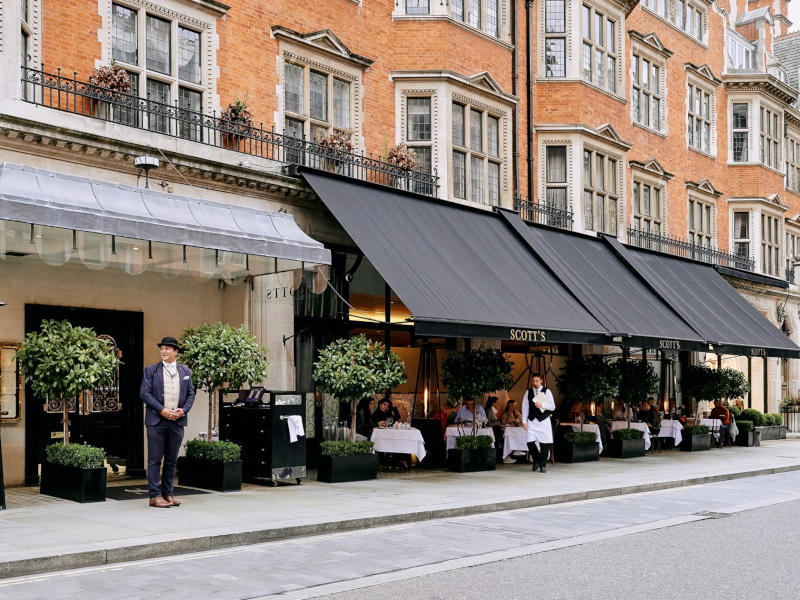
    The funny thing is, I always thought 2020 might be a bit of a shakeout in the hospitality business. 2019 had been a year of the beginning of the collapse of the casual dining market and seen some very significant casualties – but of course I had no idea in what form it would come and had no anticipation about the damage perpetrated by Covid-19.

    But we were already up against it. I remain angry that we didn’t remain in the EU: I’m always immensely grateful to everybody who over the last 50 or 60 years has come to these shores and shown us how the business could be done. So many people associate restaurants with hot kitchens, swearing chefs, long hours, and not very good remuneration.

    Certainly, even as late as 1990, if you were in the restaurant profession you normally didn’t have a mortgage, you rented, didn’t fill in your tax returns, had no life insurance, and no pension. It was a transitory experience and not considered a career.

    There used to be shame and ignominy in being in the restaurant business. Now it’s as good as any there is – and in many ways even better.

    When it comes to employees, attitude is the main thing. There is no job anybody should do or will succeed at unless they have that. It’s what you make of it. If you start to think: ‘Who are these people coming in? What is the history of the building? Why do people know each other?’ that takes it all to another level. And then there’s the food, how it’s reared and grown, and the fantastic alchemy there is in cooking. By the same token, wine is an extraordinary subject. There’s a great joy in this profession – contrary to the Home Secretary’s opinion.

    And let’s not forget that it’s fun. I was always struck when Graham Norton was talking about how he had first come to London and worked in Covent Garden. He said, “I don’t think there should be National Service. Instead, everyone should be compelled to work in a restaurant. You learn about social skills interaction, disputes, reconciliation, any number of things.” He was right. For a generation which has become disconnected by the advances in technology, it really is something very special.

    People will return to restaurants. They will have missed the conviviality of community. Too many people are becoming almost entombed in their homes with the working-from-home phenomenon. And it’s interesting, having spoken to a lot of my staff over the last months, how much they yearn to return to work.

    It’s also interesting how many friends of my children – I have three all in their later twenties – have decided they don’t want to be in merchant banking or advertising. They’ve been setting up things and finding such happiness in working in restaurants to an extent that I’ve never seen before. With my generation, it was difficult to know what to do. You might have been ignorant but it was easy to find a job. This younger generation know what they want to do but it’s harder to get a job.

    I was someone who never quite knew what I wanted to do with my life. Did I want to create? Did I want to do languages? Did I want to be an architect? Thanks to the restaurant business, I’ve been able to do them all.

    Jeremy King is the co-founder of Corbin and King restaurant business

  • Mark Padmore on what’s next for the classical music world

    Mark Padmore on what’s next for the classical music world

    by Fiona Sampson

    In July 2020 the government announced £1.5bn funding to help the arts and entertainment sector recover from the Covid pandemic. This means that the books, films, music, TV streaming and gaming we relied on during lockdown will still get made. And we’ll be able to enjoy live performance – theatre, musicals, bands, festivals, concerts – in the years ahead.

    Lockdown underlined just how much we rely on these things. We need the distraction, glamour and excitement – even, sometimes, the consolation – they offer. What isn’t necessarily so obvious is that the arts and entertainment are an industry, one which in Britain alone employs around 364,000 people and is worth £10.8bn annually to the economy. Indeed, it’s economically vital, every year generating a further knock-on £23bn and contributing £2.8bn to the Treasury. All of which means there are thousands of jobs in hundreds of different roles in the sector, and you don’t have to be either well-connected, or wildly lucky, to break in: as our inspiring interview guest shows. The world-leading tenor Mark Padmore is a musical ‘star’, used to touring internationally all year round. But, as he reveals here, he’s risen to the summit of his profession without elitist hothousing – although helped by public education structures that aren’t currently in place.

    So what does his career look like? Mark Padmore collaborates with the world’s leading musicians and directors, opera houses and orchestras to worldwide acclaim. He performs across genres, creates new roles in key contemporary work, and directs the St Endellion Summer Festival. A list of highlights includes his Artist in Residency at the Berlin Philharmonic Orchestra 2017-18; his extensive discography has received numerous awards, including Gramophone magazine’s Vocal Award, the Edison Klassiek Award (Nederlands), and the ECHO/Klassik 2013 award (Germany). Voted 2016 Vocalist of the Year by Musical America, he was awarded an Honorary Doctorate by the University of Kent in 2014 and appointed CBE in 2019. We asked him to talk us through life as a contemporary performer right now.

    Can you tell us how you got interested in music?

    I received a recorder from Santa Claus when I was four and immediately took to the excitement of learning to play. From there I was given the opportunity to learn another instrument and chose the clarinet. My parents weren’t particularly musical nor well off but they understood that I had a particular passion for music.

    Fortunately the Kent County Music Service was very strong and offered opportunities to children who showed some talent. From the age of 12 I was supported by the Kent Junior Music School and each Saturday morning was enabled to travel to Maidstone, the county town, for intensive lessons. I also joined the Kent County Youth Orchestra and each school holiday attended week-long courses. These provisions have long been reduced and had I been starting out now I may well not have become a musician.

    When did you first know you wanted to be a musician – and did you always plan to be a singer?

    Singing was always something I enjoyed but there was no opportunity to attend a choir school. Playing the clarinet and then the piano had developed my sightreading skills and it was through this that the possibilities of singing opened up. I had decided that I didn’t want to be a professional clarinet player – the competition was very tough and I was not really good enough – but someone in the Youth Orchestra suggested I try for a choral scholarship to Cambridge. Getting in to King’s College choir was the first step to realising that I could become a professional singer.

    That’s a lot of commitment from an early age. Has music ever become a chore for you?

    There are definitely moments when perseverance is necessary – courage and determination are vital. Even now there are times when I can be daunted by the task ahead and need to grit my teeth to make progress.

    What did you feel was your first big professional success?

    My Chinese horoscope sign is the ox, and I have always been a plodder. Fortunately I have plodded on and on and have caught up with a hare and even a tortoise or two! I have really tried to do my best at each stage and although there have been moments of satisfaction they are fleeting. I guess my first real experience of success was being asked to appear in Charpentier’s Medée with Les Arts Florissants at the Opéra Comique in Paris playing Jason to Lorraine Hunt’s Medée. Being on stage with Lorraine was thrilling.

    You do extraordinary work across a whole range of fields: opera, oratorio, lieder & chamber music. Could you share some favourite experiences with us?

    I have always felt an urge to escape pigeon-holes. I love moving between genres and exploring new territory. My favourite opera experiences have been Billy Budd at Glyndebourne and Death in Venice at Covent Garden along with creating roles in Tansy Davies’ Cave and Harrison Birtwistle’s Corridor and The Cure. I also loved being in two Katie Mitchell productions – Handel’s Jephtha at WNO and Bach’s Matthew Passion at Glyndebourne.

    The Bach Passions with Simon Rattle and the Berlin Philharmonic in stagings by Peter Sellars were some of the most profound and thought-provoking experiences I have had. In lieder and chamber music it is the collaborations with great musicians that have given the most pleasure.

    Can you talk about the advantages and disadvantages of such an international career?

    We live in a culture of celebrity and sometimes the performer is disproportionally the focus of attention. I have had wonderful experiences travelling as an ‘international’ soloist but I am beginning to question the desirability and viability of this way of life. I have, along with my colleagues, used up an unsustainable number of air miles and whilst I understand the huge benefits of cultural exchange I also believe that we need to engage more deeply and meaningfully with our local communities. Days away vary each year and I have tried to avoid being away for longer than about two weeks at a time.


    As one of the world’s leading tenors, you’re at the forefront of international music-making, and its disruption by the pandemic. What does it mean for performers themselves?

    Covid-19 is causing a reassessment of how we access music. Having done just two concerts in the last four months – both to empty halls for streaming services – I miss the buzz of looking out at an attentive audience.

    Music-making is essentially a communal activity that needs interaction between performer(s) and audience. This period is full of uncertainty but also full of possibility – both reassessment of what performance has been in the past and what it can be in the future. As the cancellations came in, my first instinct was to take the opportunity to reflect on what it is I do and why and to explore thoughts of how I might do things differently. Creatively,

    I have been liberated from the need to prepare a large repertoire – I normally have between 70 and 80 performances a season. This has meant I can take time to practice in my studio and go back to basics with pieces that I have known well for many years without the urgency of having them available for immediate performance. Financially, I have had to extend my mortgage and face the possibility of no significant income for many months and a realisation that I will probably have to accept that my income will remain at a much lower level than before. Emotionally, it has been up and down. The adrenalin of performing has been sorely missed.

    On what platforms do you listen to music, when it’s not live?

    Any recorded performance is in some ways mediated and therefore more distant. I find myself less engaged when listening to a performance I can interrupt at anytime to take a phone call or make a cup of tea. Music is ‘heard’ rather than ‘listened to’ – a distinction similar to John Berger’s notion of the difference between ‘seeing’ and ‘looking at’. I use all the methods above but none comes close to the experience of being in amongst an audience.


    How much does a musician get paid for a performance downloaded on a digital platform such as Spotify?

    I have received no money direct or through a record company for Spotify even though at least one track has had more than 3 million plays. I also get paid less for recording than I did in the 1980s. If musicians are to survive in a new digital era this will have to be addressed urgently.

    What does this shift away from paying for the music we listen to mean for musicians working in Britain?

    State subsidy in the UK has diminished greatly over the last ten years and all arts organisations are expected to generate something like 80 percent of their income from ticket sales or sponsorship. Without a paying public this model is unsustainable. Other countries, particularly in Europe, are much more generous. I fear for the viability of the arts unless the UK government has a change of approach. Music-making is essentially collaborative, and the better the conversation between performers and composers/writers the better the resulting work. This will be true also for innovative ways of producing performance in the future. Discussions are already happening about how best to film ‘concerts’ so as to deliver the best possible experience for audiences. One thing we have been able to do during lockdown is talk to one another and I am excited by some of the ideas that are beginning to emerge.

    What are your hopes and fears for the future of international music-making?

    Many of the models for international music-making are teetering on the brink of collapse. Will opera houses and large symphony orchestras, concert halls and international music festivals survive? These were the main producers of classical music. They initiated most of the engagements and artist agents acted as intermediaries. I think we may be looking at a very changed world in the next few years.

    The positive side may be a much greater investment in community and nurturing a local and loyal audience. Climate change and travel restrictions will also make the jet-set lifestyle much less attractive. What I hope will not be lost is the passionate engagement of performers and audiences with the wonders of the classical music repertoire

    Fiona Sampson is a leading British writer, whose latest book Come Down is published by Corsair. www.fionasampson.co.uk

    You can read more about Mark Padmore at www.markpadmore.com

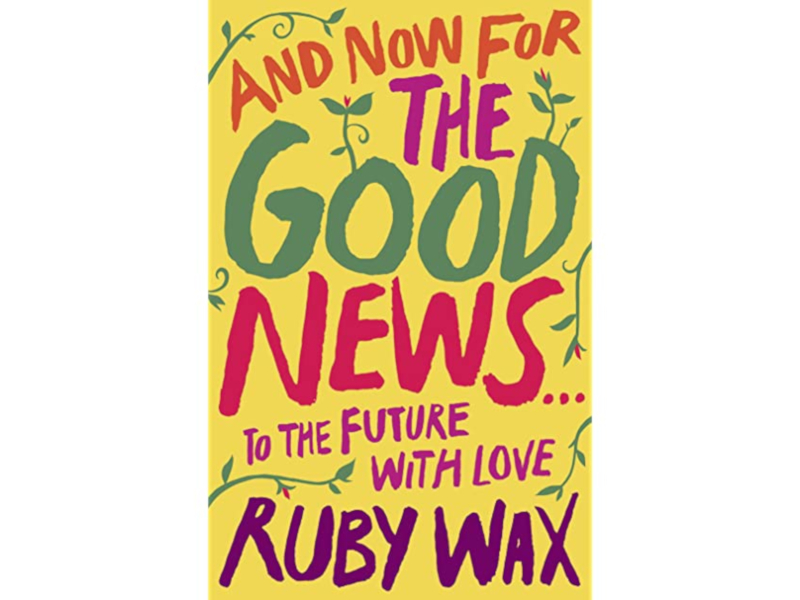
  • Review: And Now for the Good News by Ruby Wax

    Review: And Now for the Good News by Ruby Wax


    Comedian Ruby Wax gives a new meaning to the saying that bad news travels fast while good news takes the scenic route in her rambling look at the positive side of life. In her typically sardonic tone, Wax bemoans the depressing state of business, technology and the media but at the end of each chapter she reassures her readers that good news still exists. “ I had to really hunt for positive sound bites even though they should be on the front cover of every newspaper every day of the week to replace the usual photo of a beautiful woman who is either at her film premiere or dead,” she says. While her bluntness means she can talk about the bad news very convincingly, sometimes I was left wishing she would take a quicker route to the good news.

    Her chapter on business takes a while to get to the good news as the first few pages contain generalisations and personal anecdotes despite the fact she begins by saying, “I’ve never understood business”. Although her takes are comically hyperbolic, they would be better if propped up with specific examples.

    She states “Corporations run the politicians, who obey their beck and call. If an oil company wants more oil, the government will declare a war to get more,” without referencing any real world events, for instance. The good news, when it eventually arrives, is uplifting and she focusses on the outdoor clothing brand, Patagonia. For this she describes a meeting she had with the co-founder Vincent Stanley but doesn’t include any quotes from him.

    Throughout the book, there is a frustrating lack of evidence. Due to a lack of specific examples, Wax relies on cliches. When talking about social media she says, “Let’s all agree that the happier people look on Instagram photos, the more miserable they probably are inside.”

    Or, when talking about the lack of actual human connection that blights twenty first century living, she relies on anecdotal evidence: “In the old days, if you needed a plumber, a babysitter or a shoulder to cry on, there was usually someone in your building who had those skills or at least could advise someone they knew to help. Now, we have to call agencies to get someone over and then pay through the nose for their services.” Each chapter contains a ‘My Story’ section but really there need not be discreet sections as the autobiographical style dominates throughout the book.

    And now for the good news: Wax is as funny in print as she is in real life and her final chapter on positive initiatives lifts the book. Wax herself set up the frazzled cafe, which provides a talking place where people who are feeling frazzled can meet (on zoom) to share their feelings.

    Her references to initiatives such as Samos refugee camp and The Kindness Offensive are particularly insightful. While the book is unfortunately timed, “I don’t mention Covid-19 and that’s because I finished this book around the time it broke; so mea culpa,” she laments, the book concludes with a positive message about our times: “Look how quickly we can transform ourselves, almost overnight,” “compassion also spreads like a virus,” she soothes.

    And Now For The Good News: Penguin Life, £14.99


  • Is this a new era of protest in America?

    Is this a new era of protest in America?

    by Jeffrey Katz

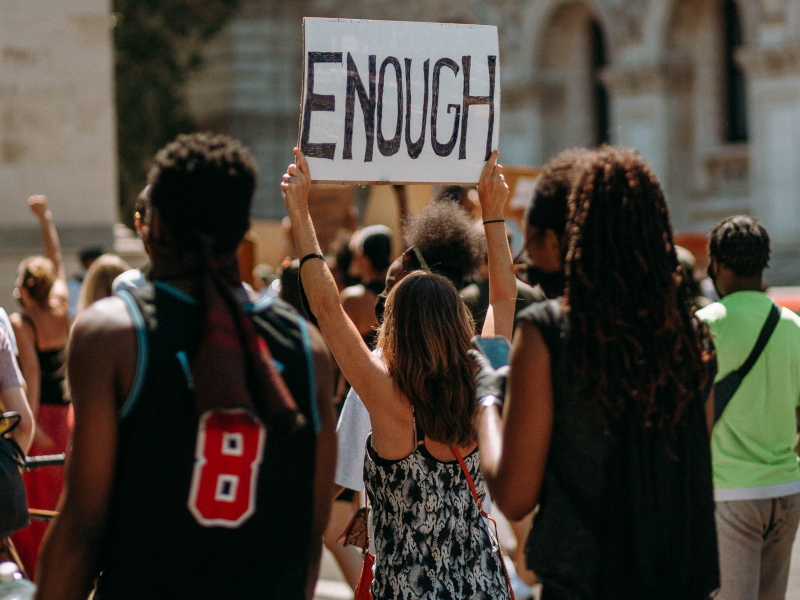
    Protest is nothing new. In the US, there were protests against segregation in the 1950s and 60s, protests against the Vietnam War in the 70s, protests against environmental damage in the 80s and 90s and now there are protests against the racism that murdered a black man in Minnesota and against all that the murder represents.

    In the UK there were protests against nuclear weapons in the 60s, protests against the racist regimes in South Africa and Rhodesia in the 70s and in the same decade protests against the murder of Irishmen during the troubles in the north. There were particularly violent protests against the British poll tax in the 80s and protests against the war in Iraq in 90s.

    What is different now is that, whereas most, if not all, the previous protest movements were in some way parochial, today’s protests are not. While we know that every country in the world has some form of ethnic discrimination to its shame, the pretence that it is historical rather than current is a fiction that can no longer be ignored.

    In the course of my lifetime I have watched white Americans shouting at black children because they were trying to enter a school that had been for whites only. I have seen signs in the windows of English boarding houses that read “No blacks no Irish.” And after 70 years of peace in Western Europe, the British people voted by a narrow majority to leave the organisation that united them with the rest of the Continent.

    I have heard Orthodox Jews say that Palestinians don’t belong in Israel because they believe the Bible says the land belongs to the Jews. I have been told by an Iranian in Canada that it is right that women should be jailed for refusing to wear a headscarf. In the great liberal city of New York there have been recent debates about whether there should be a quota for Asian students in specialist schools because too many of them do well on entrance exams.

    Underlying all those examples is ignorance and the fear it breeds. To be clear, there will be people who strongly disagree with my views who are not ignorant. There are people in America, Britain and elsewhere who honestly believe that social welfare mechanisms are wrong because they somehow inhibit personal liberty. Equally, there are people everywhere who believe that, in a civilised 21st century, a universal health care system should be considered a human right.

    On the surface those are irreconcilable positions. Except things change. What changes them are people and events. Sometimes those people are leaders and sometimes they are ordinary citizens— or even victims. Sometimes they are a Franklin Roosevelt who was considered a traitor to his class for introducing what he called a New Deal, subsidising great infrastructure projects and other government programmes to help Americans through the Great Depression of the 1930s. Or a Nelson Mandela who spent half his life in prison until the power structure of South Africa recognised that it could no longer subjugate its black population.

    But here’s the interesting thing: sometimes changes evolve because of an Adolf Hitler who lies and murders his way into office and starts a war that assassinates six million Jews, kills 20 million Russians and destroys much of Western Europe. No sane person who could change history would bring Hitler back. But Hitler created an almost universal consciousness of what horrors the human race can inflict on itself.

    Of course, it hasn’t stopped. Since the Second World War atrocities have been committed in Cambodia, the former Yugoslavia, Rwanda and Syria. Because of television and the internet we have become more aware of the crimes that are perpetrated in the name of whatever power struggle or prejudice is useful to certain people at a particular time and place.

    But every generation has the opportunity to make things better. Trump exploits social and ethnic divisions rather than addressing them constructively. In the course of his presidency he has demonstrated a contempt for others that has unleashed simmering prejudices. They are now the focus of the anger on the streets. There has never been a greater awareness among young people of our need to get up off the necks of the disadvantaged, to create safety in the world so that everyone can make the best of their lives.

    Maybe we need Trump. Maybe he is the catalyst. Not just for Americans, but for Europeans, Africans, Asians—the whole world. I don’t believe that any of us deserve him, not even the people who voted for him. But we have him. We can debate forever how and why that happened. But as one angry black protester in America recently pointed out, it’s more important to decide where we go from here.

    Jeffrey Katz is Chief Executive of Bishop Group, a London-based corporate investigations business.

  • Should today’s young still hold out for their dream job?

    Should today’s young still hold out for their dream job?


    Wondering whether to shoot for the ideal career or to settle for something you weren’t expecting to do. Emily Prescott has some advice

    Despite living in a small Wiltshire village, my four-year-old best friend had rather lofty and exotic ambitions. There was no doubt about it: she was going to be a lion tamer.

    This exciting notion was encouraged by our teacher Mrs. Turner. Reminiscent of Miss Honey in Roald Dahl’s Matilda, Mrs. Turner would never tell children that no amount of auto tune would fix their singing or that their SATS scores hardly screamed astronaut or that aspiring to be a lion tamer was frankly ludicrous. She was endlessly encouraging.

    Even so, optimism can come at a cost, and indulgence of this kind can have cruel consequences. A concerning report this year revealed that there is a major disconnect between young people’s career aspirations and jobs in the UK. Martin Rogers, who co-authored the report, told Finito World: “It’s striking that the sectors to which young people aspire are basically not where the jobs are now and in the future.”

    The study of more than 7,000 participants found that five times as many 17 and 18-year-olds wanted to work in art, culture, entertainment and sport as there were jobs available. These concerning findings have prompted the report’s authors to call for a significant improvement to career-related learning.

    It is positive that young people are aspirational but if they are not being taught the realities of the job market, it is no wonder so many graduates leave university feeling disheartened.

    We spoke to a number of students about their careers experiences; they replied on the condition we didn’t use their surnames.

    Liam, who studied architecture at the University of Edinburgh, explains: “I wanted to be an architect, before I came to university, it was my dream. Then studying it, discovering the reality of what working in architecture would be like, put me off.” That has created real anxiety. “I do feel slightly lost as I don’t know what I want to do anymore. I’m unsure how to use my degree – if I can at all. It’s strange hunting for jobs now.”

    While Kate, who recently graduated with a shiny English degree from the University of Exeter, also said she was feeling lost and let down. “We are not typically set up to succeed,” she explains. “Teachers help us follow our vague interests or whatever subject we might be good at, with no clear career path to follow. Coddling comes to mind.” Is there anything schools should be doing to improve ultimate student outcomes? “A lot of people do a degree as that is the expected next step in the life of a young person. I think the process of choosing A-levels should have been supplemented with advice on which jobs are attainable with which degrees (if indeed a degree is even needed).”

    This feeling of disappointment is likely going to be exacerbated by Covid-19. A report from the Institute of Fiscal Studies predicts that those who graduate in 2020 will suffer a decade of economic scarring as a consequence of the pandemic.

    Top jobs to which young people aspired included professional gamer and a sportsperson, according to the disconnected report. No one can predict exactly what Covid-19 will do to the job market but it is unlikely to create an enormous demand for footballers.

    Alarming as that all sounds, there is no need to lock up your dreams and throw away the key just yet. Improvements may be needed to career education in schools and universities but by setting themselves deadlines and educating themselves young people can also take steps to ensure they are not destined for disappointment.

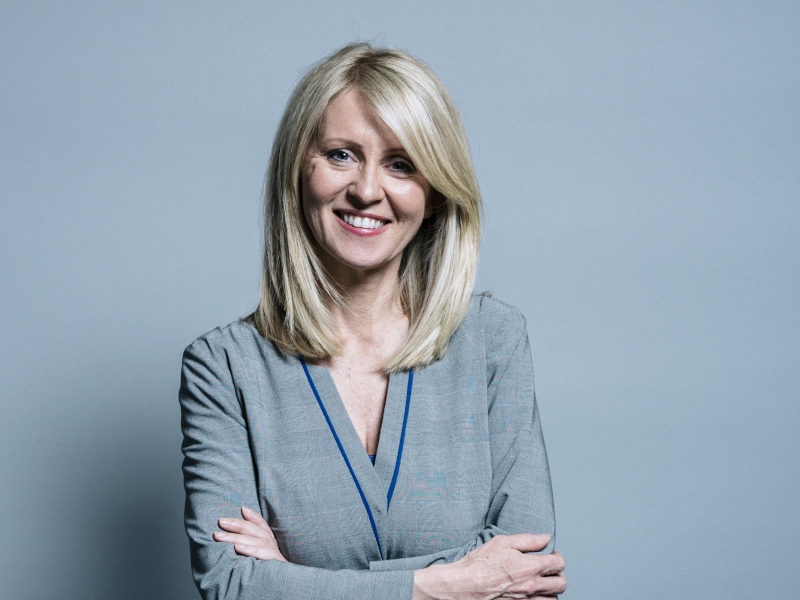
    Whatever you think of her politics, Esther McVey MP, who ran for the Conservative leadership in 2019, is an example of someone who has achieved success in multiple careers despite adversity. Although she grew up in Liverpool in the 1980s amid high levels of unemployment, McVey became the first person in her family to attend university, she became a television presenter and then rose through the ranks to Cabinet level as Secretary of State for Work and Pensions under Theresa May.

    She explained to Finito World that adversity had spurred her on and she achieved success by ensuring her dreams were always founded in reality: “I was growing up to the music of UB40, with the lyric I am the One in Ten, or to the Specials who sang: ‘This town is coming like a ghost town’. I had that in the back of my mind and I guess I used that as a fuel or as an energy. All I knew is these are the statistics and then I don’t want to be a statistic – a reminder of a world that doesn’t care.”

    While McVey was paying her way through a law degree by working as a waitress in Covent Garden, she decided she wanted to go into the media.

    McVey shares the best advice she was given by her father, who thought success would be achieved by – perhaps counterintuitively – limiting dreams. ‘My dad said: “Well, if you want to go into the media, you better put a time limit on it. Don’t be a wannabe or a could be. If you’re going to do it, you’d better give it 100 percent and put a time limit on because then you need to go back to law if these doors or this opportunity doesn’t open up.’ McVey adds: ‘The clock is ticking and there are other things you can do. I think it’s just as important to close an avenue down that isn’t for you,” she added.

    Putting a deadline on dreams also proved successful for David Nicholls. He decided he wanted to be an actor despite the fact that, by his own humble admission, he could “barely act”.

    When we contacted Nicholls, he told us he’s wary of giving advice and that his advice generally “stinks”. But his story is worth considering.

    He spent around five years being an understudy and playing bit parts. “I don’t think I ever spoke more than four lines in a play. I gave myself a deadline which was 29 and if I wasn’t playing slightly larger roles, not huge roles then I would give up,” he told Elizabeth Day’s How to Fail podcast.

    He did give up and he has since written five novels and adapted each for the screen, including One Day, starring Oscar-winning actor Anne Hathaway.

    As well as putting a time limit on dreams, it is wise to do as much research as possible on what the dream actually involves: Can you get work experience? Will it be worth the low pay? Is it really for you?

    Esther McVey said: “I always thought: “Ah, would I want to own my own restaurant chain? And then working as a waitress for three or four years I kind of thought: “Oh no, I’ve enjoyed it but this isn’t an outlet for me.”

    She adds: “Opening up your life is important and now you can do that on the internet, you can do that through research.”

    It may seem like uninspiring advice but giving up on dreams can mean finding career satisfaction in reality. My best friend didn’t become a lion tamer but she has just been offered a job as a farm vet. She says she’s more like a pig tamer. It’s not quite as glamorous but it will pay her bills and she is delighted. Vets are also listed on the Government’s occupation shortage – a good place to go for career advice.

    And I think Mrs. Turner would be pleased too.

  • From Covid-19 to Climate Change: Employability Special Report

    From Covid-19 to Climate Change: Employability Special Report


    It’s almost a commonplace to say that this year represents an inflection point in world history.

    If someone only with experience of life pre-Covid-19 were plucked somehow out of the slipstream of time and deposited in our virusstricken era they might not immediately notice that the world had changed utterly

    But changed it has – it’s just that the scale change hasn’t yet filtered through to our collective sense of ourselves. This matters when seeking a job; how do we know how to present ourselves unless we know what employers are looking for? It also matters when running a business: amid the helter-skelter of familiarising ourselves with the furlough scheme, we might miss the wider strategic picture.

    The enormity of the ructions creates difficulty for government. The tendency – surely a correct one – is to respond to immediate crises and tensions, but the necessity of doing so will inevitably leave others to simmer.

    Happily, help is on the way. As we compiled our second issue, Finito World asked its respondents to pause and consider some questions about the state of play as Britain heads into the autumn. The response was exceptional – and fascinating.

    DOWNLOAD THE REPORT HERE (PDF) >


  • Definitely Digital: how to improve your online presence

    Definitely Digital: how to improve your online presence

    Clair Marr

    When I was asked to write about this subject back in April, no one had any idea just how big an impact the pandemic would have on our lives.

    Businesses are already looking to redefine digital ways of working as staff continue to work from home. Graduates are naturally concerned that the current circumstances will severely impact career opportunities leading to greater competition in the job market*. How can we help to boost confidence amongst graduates impacted by the loss of opportunity, internships and work placements?

    Effective online reputation management for those starting out on their career path is about building and maintaining trust between you and your potential employer.

    Rachel Botsman, in her Ted talk, explores how the model of trust has changed historically. We began by trusting those in our local communities and that trust could be damaged or built based on our actions and reputation. As settlements grew larger, this model of trust could not scale up; living in a city, it was no longer possible to interact with every single person and our trust evolved into an institution-based model, placing our collective faith in law, government, banks and insurance.

    We now live in a digital age where our lives and decisions are played out online. Institutionalised trust models have become as irrelevant today as local trust models once were. Trust is now atomised, managed and distributed by individuals to a global audience. Wherever we go, we bring our digital presence with us. For some individuals this can be a real asset, while for others it’s a hindrance.

    Covid-19 has given us time to reflect and think about how we can present a trustworthy online profile of ourselves to potential employers. For graduates, this can be an exciting opportunity to develop new online strategies to help ensure that future stakeholders are engaged, impressed and inspired.

    Google Yourself

    The first step is to Google your name. Are you happy with the results that appear on page one? Is there enough information about you? If you have little or no Google presence, you can be vulnerable to commentary from other sources. Google bases its opinion of you from the information fed to it. It is your right to change that perception.


    Put Yourself Out There

    Holding digital assets in the major ranking positions on Google page one improves the likelihood of your personal brand acting as an antidote to any negative commentary. The more positions you hold, the more you consolidate Google’s perception of you.

    Google the names of prominent thought leaders in the industry that you would like to work in. Take a look at what is held in each position; A quick glance at Richard Branson’s Google page one results shows Wikipedia, Virgin website, social media accounts as well as Forbes contributor page. What could you learn from the positioning of a thought leader? Is there an industry publication that you could contribute to? There are many online blogs, websites, magazines and journals that are hungry for content. Boost your visibility by asking them how you can contribute. Build an association with a particular topic area. This indicates to Google the type of information that is relevant about you. Creating content offers you a solid digital footprint and gives you highly relevant or topical information to promote or share on your social media.

    How do I find out what content publishers are looking for?

    When we talk about ‘ranking’ in SEO (search engine optimisation), we refer to the relative position of a website or other web pages in the search engine results pages. For example, a natural rank in position one in Google is most desirable as users are statistically more likely to click on this. Publishers are hungry for content and keen to become the de facto resource for any subject area as high-quality, niche and high-volume output brings consistent traffic to their website. Trending topic areas can help convert new visitors to click on a website which can help to drive revenue for a publisher.

    Keywords and key-phrases refer to the actual words or phrases that you input into Google search.They’re really important as they help Google understand what that content is about. If what it sees is deemed highly relevant and trustworthy then Google will rank it well and often. These keywords should therefore be embedded into the structure of any content you create. Visit the MOZ blog for the beginners guide to SEO. This shows how to integrate these words and phrases into article content to help boost the visibility and relevancy.

    Beware!

    Pay attention to what you feed Google. If this information is not relevant, or shows several student nights out with friends, it can paint a picture of you that does not accurately represent your character. Audit your digital profile and ask those close to you to form a picture of you based on what information they find about you.

    When you think about shaping your narrative, consider whether the information already out there about you is positive, neutral or negative. By developing those positive and neutral points that already exist, Google feels that it is being fed information naturally and organically and will rank those pages favourably. Highlight charity work, host a Just Giving page, create a Facebook event, blog about your volunteering work in the local community. Ensure that there is a clear link between you (this could be for example your name or a link to your LinkedIn profile) and these projects and that it is clearly visible to Google. Tweet or post on LinkedIn, write an article about what you learned from these projects. Show that you have many different facets to your personality.

    Remember, the process of change is a gradual one and authenticity reigns supreme.

    It takes both sustainable effort and time to make an impact. Google can take three months to adequately index content so be patient and build your profile in a natural way. If you are unsure about something you have posted, delete!

    Adopt a joined-up approach across social media and websites. Try not to be everything to everyone. Focus on growing content across multiple related topics and link to each other. Opinions can change quickly on social media so regularly audit your social media presence and remove any content that you do not feel comfortable with. If the information is publicly available, revise content that needs an update in line with evolving conversations.

    Life, as we are now all too well aware, can be unpredictable; make sure that your online profile is as adaptable and flexible as you are.