Chutney Mary Hits the Spot: A Delightful Dining Experience Reviewed by Ronel Lehmann By Ronel Lehmann
I am always punctual. Imagine my surprise when arriving at Chutney Mary in St James’s Street ahead of my reservation, to see my Parliamentarian guest already seated and drinking a Mango Lassi.
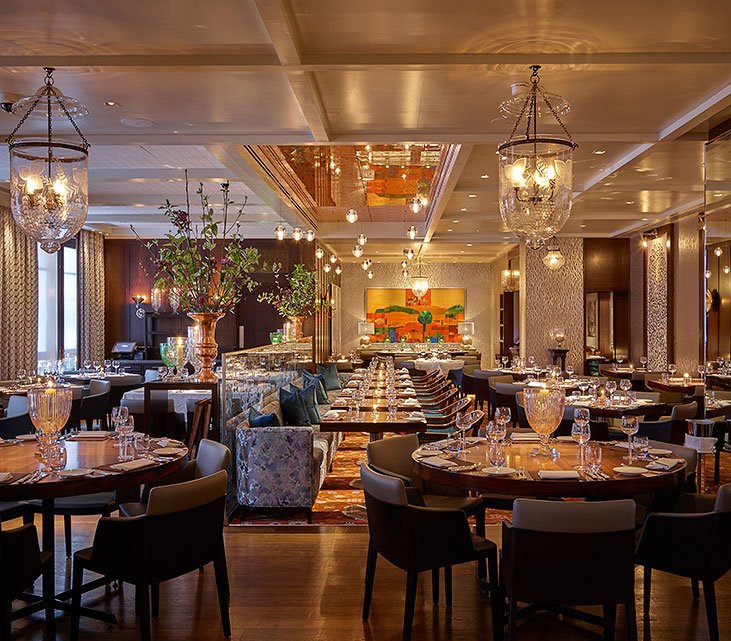
As I was led to the table at Chutney Mary, I could hear myself saying: “I did ask for a quiet table in the corner.” No matter, we were seated in the middle of a pandemic with a series of socially distanced diners. I felt that I had been here before and then realized this was the old Wheelers restaurant reincarnated. Leaving the oppressive summer heat outside, it was a quick adjustment to the refreshing cool and a dimly lit environment by which elbow greetings and pleasantries were exchanged.
The waiter at Chutney Mary arrived bearing the drinks menu. I looked at the cold beers and didn’t recognize any of the usual Kingfisher and Cobra suspects. My guest prompted me to taste one, but after a moment’s reflection, I decided to wait until I had selected my food. Sparkling mineral water was poured.
I did find the chairs at Chutney Mary particularly comfortable whilst we chatted away. After all, it had been nearly a year since we last conversed in person, and there was much to catch up on. The ambiance of the surroundings at Chutney Mary was peaceful, and you could hear yourself speak, something of which other notable eateries should take note. I suggested that we order. I always find that the moment you begin a deep and meaningful conversation, you immediately find yourself interrupted by attentive staff, to make gastronomic choices.
To get some food quickly on the table, I requested a Tray of Papad, miniature Poppadoms, and Crudités to share. They arrived very promptly. It was a meal in itself, with tasty vegetables and an assortment of exquisite dipping flavors. We deliberated further about the menu at Chutney Mary. My guest selected a small plate of Afghani Chicken Tikka cooked with fennel, cardamom, mace, and mint.
I elected for the Crispy Naan Salad, which had a chili oil dressing, paneer, gem lettuce, rocket, roast tomatoes, avocado, and asparagus. The salad rested on the Naan, which was divided into pizza slices. It was delicious but not the easiest dish to eat with cutlery, so I used my hands and endured finely chopped items falling from my palate onto the plate.
Next up, we enjoyed the Lamb Shank Nellore, Welsh lamb dum cooked for six hours to achieve a smooth and intense taste. The Royal Rajput White Chicken Curry at Chutney Mary, which was spiced chicken thigh, cinnamon leaf, mathania chili, and melon seeds, was also a highlight. I hesitated to order the Goa Green Chicken Curry with herbs, green chili, and tamarind as my guest had ordered a separate bowl of hot green chilies as a side dish. He was eating hot raw chilies!
At the same time, I was thinking about a few days ago when I cooked dinner and nearly blew my head off adding Scotch bonnet chilies to a dish, so you might say, I retired on this occasion from this latest experience. There were additional side orders of garlic Naan, basmati rice, and Green Peas with Paneer. We had requested another vegetable side dish, but the chef at Chutney Mary suggested the peas would make a suitable replacement.
Back to drinks. My guest had a couple of American pale ale craft beers, made near Enfield. I didn’t fancy the German or Cornish lager and decided to order a glass of the Chateau Beaulieu Rose, Cuvee Alexandre, Provence, France 2019. It was served extremely cold and a perfect accompaniment to the main meal at Chutney Mary. I couldn’t, however, see the pale pink wine in the colorful surroundings.
The dessert menus arrived. Persian Kulfi with saffron, pistachio, and rose chikki was quickly consumed by my guest, leaving me to enjoy Delicious Fresh Mango with vanilla bean ice cream. I am a great fan of the other Vanilla Tonka bean ice cream, but the latticework in the presentation of the mango really stole the show at Chutney Mary.
I never grew up eating Indian cuisine, not at home, school, or university. It was only when, as a young man, a client introduced me to Tamarind in Queen Street, Mayfair. There, I found myself immersed in flavors and tastes. I had never experienced anything quite like it until that very moment. Every time that I have visited, it is like leaving a special place and reliving the original moment again and again, still able to savor extraordinary fragrant food hours later. It was magical and mesmerizing.
It is a tough benchmark to measure by, and yet I can never not think back to that first meal and remember where I was, who I was with, and what I was eating.
And so it is. Just because you might be a Saab driver doesn’t mean that you won’t drive another vehicle or allow yourself to be a backseat passenger in another car. It won’t stop you from thinking about what you like about sports mode, turbo thrust, and safety.
It is the same with a favorite restaurant. Sometimes you have to venture outside somewhere different. Chutney Mary was a completely different and enjoyable experience. Outstanding food, beautifully served to boot. I just cannot be sure that my feet won’t try to walk me elsewhere.
This week we feature the brilliant Welsh poet Gareth Writer-Davies. Gareth was a Hawthornden fellow in 2019 and has been repeatedly recognised for his rich, witty and reliably enjoyable poetry. As ever, we produce his work poems, kindly written for Finito World, after the Q&A.
Tell us about the relationship between your work and your poetry.
I would say that my various careers have given me structure, an ability to hit a deadline. Serious artists and writers know that you need to “turn up” so that if inspiration hits you have the tools to hand whether that be an easel and brushes or pen and paper. And of course the workplace provides material, not only in the people and tasks but also in the idiosyncratic jargon and sometimes the locales. I’m a big fan of poets keeping themselves engaged in other work, it makes the brain take diversions and supplies contrasting stimuli. Whether the work be a library or bank or steel mill (all places where poets have earnt their money whilst continuing to write) a writer should be part of the world wherein the people dwell.
Conversely, what role did your love of poetry have in giving you confidence in the workplace?
I always felt confident in my written work and that I can make myself understood. It also helped me to put the workplace into perspective in a way that perhaps a deeply religious person might also. Work is not nothing; it takes but it also gives and to have something beyond what might be quite a mundane series of tasks provides motivation as well as ptting food on the table!
The government has recently said that poetry should be optional at the GCSE level – a significant demotion in its importance on the curriculum. What is your view on that and what do you feel the impact will be?
I don’t think is a good idea. Especially when we are surrounded by so much poetry in the form of lyrics, rap and even advertising; whilst not everything in a poem should be studied to death (the feel of a poem, something that is not quite defineable is part of its purpose and charm) these forms need to be unpacked and understood in terms of motivation and where they are leading us. These are good brain tonics, experiments in form that enhance structural thinking and teach us empathy for others. These are important in all jobs and are too important to discard.
Was there a particular teacher when you were younger who turned you onto poetry?
I did not come from a bookish household, so I had to be something of a self starter. I had relatives who as working class Welshmen would take their turn at a family gathering to recite poetry they had written, my Uncle Edwin being particularly good. He was a milkman and a teacher to me. In school there were several teachers who inspired, introducing me to Eliot, Shakespeare and Milton; their example of keeping the faith in poetry was important to me.
What’s your favourite poem about the workplace?
Filling Station by Elizabeth Bishop
WORK
I’ve made up mortar and laid bricks I wrote a poem in couplets
I’ve torn down trees and planted seeds I plucked a metaphor from weeds
I’ve tried journalism I used my imagination
I’ve been a salesman of many things I know meaning
I’ve taught class and been taught a lesson I continue my education
I’ve worn uniforms and three-layer masks I stick to my task
These are a few of my occupations They gave me this poem
GARDENING WITH A CHAINSAW
I wanted to tell her that chainsaws rarely work spending ninety per cent of their time
being fed oil, the torque strengthened
the plug scraped free of soot and the chain adjusted
only then do the wood chips fly like confetti
as trees kiss the vertical goodbye waving, swaying, then crashing to the shagpile forest floor
the desire to cut and chop, make something from the wild lingers
we gather cabbage tops, think on the big gesture of a copse projects
passed on
like a half-built shed or a thrown bouquet
the chainsaw bides its time as it leaks upon the shelf teeth grinding
upon the oily tongue of blade like a bull who’s just seen a cow
I curate a smile, turn the key in the lock
walk out into the sudden garden of quiet devastation
My best way of illustrating to you where we are with labour and skills at the moment is to tell you about Carl.
We recently employed builders to undertake a kitchen extension at our home in the Midlands, and I’m happy to say they did an excellent job. We now have a large, light kitchen space which both myself and my husband love to spend time in. It was the result of hard work – and also of skill on the builders’ part.
During the building process, I had a conversation with one of the builders. Carl told me he was heading to Scotland next to work on a house renovation. He had secured this work through his employer networks in Scotland. How had he achieved that? By having qualifications which were recognised in Scotland and therefore enabled mobility in the skills market. For his employer, the qualification gave confidence that Carl had the right skills to deliver a quality job to the expected standards.
In what follows, I will use the term skills market rather than labour market. I prefer the first to the second even though the second is normally used by commentators in this area. That’s because I believe skills are the real currency which has value in the jobs market. Particularly in this fast moving world of work where portfolio careers and flexible working are increasingly the norm, skills are the asset which will support employment, career progression and social mobility.
Back to Carl. Unfortunately, devolution in the UK has meant that policy on skills has diverged and whilst Carl easily attained work in Scotland with his current qualifications, as the pace of devolution builds, the predicament for people like him may get harder. Additionally, Brexit has meant that we can no longer can the overseas skills we need to service economic growth. An ONS statistical release reported in June 2018 that latest figures indicate that 10% of all workers within the construction industry are EU nationals. Within the London construction industry, this proportion increases to 33%. Much will depend on how many of the existing UK-based EU workforce chooses to stay.’ This isn’t all. It will also depend on sensible immigration policies which recognise that the UK will still need to import some skills post Brexit which it is not able to home grow.
Worryingly, prior to Brexit, employers across the UK were reporting significant skills shortages and gaps despite access to overseas skills. The fact is that unless we have sensible immigration policies and agreements across the UK and its governments which continue to support the free movement of skills, those challenges will only get worse.
Arguably, devolved systems work on the assumption that labour markets are geographically static and can be served adequately by local provision. The reality, however, is that the workforce needs to be mobile to meet changing skills demands – both positive and negative – across geographies.
For example, the car manufacturing sector in the UK has many skills in common with the food manufacturing sector and both are reliant on the transfer of skills between the two sectors to meet changing demands. We must be able to anticipate and proactively address those changing skills needs through effective use of research and skills analysis. We also need a training and education system which prepares people for flexible, mobile careers not just for a job.
This does not, however suggest that one size fits all. Devolution on skills and employment policy allows for local contextualisation in terms of qualifications, education and training and will be better placed to serve local skills demands. But there are skills which everyone, wherever they live, choose to work, or be compelled to work, will need and it is important that education and training provision puts these skills at the heart of its offer.
The World Economic Forum in 2017 set out those skills which will be crucial to the careers of now and in the future. Whilst it is unclear what the jobs of future will look like, The World Economic Forum believe there are generic skills which all individuals will require. By having these skills individuals will have greater resilience and longevity in the skills market allowing for transferability and mobility.
So, whilst Carl is an example of how the system does work now, we cannot lose sight of the changing demands of the skills market and encourage governments to develop skill policies which are mutually beneficial for the economy, the individual and society as a whole.
If you happened to be in Essex on a summer’s day in 1995, watching Maldon Cricket Club’s 10 wicket win against Bury St Edmunds, you could be forgiven for thinking that you were watching not one but two future England cricket captains opening the batting for Maldon. These were Alastair Cook (known to friends as Ali) and David Randall (known as Arkle).
Both were gifted batsmen; each possessed musical ability (Ali on clarinet; Arkle as a future founder member of Maldon band Soul Attraction) and Cook would later recall of his friend: ‘I will never be embarrassed to say he was the better player.’
But in reality you would have been right about only one of them. Sir Alistair Cook, as the world knows, would go on to captain England, and score more runs (12,472) than any other England player. Arkle developed cancer and died in July 2012 at the age of 27.
His death wasn’t the end of his story. Throughout his illness he never complained and continued to do the things he loved. Sue Randall, David’s inspirational mother, picks up the story of David’s last week: ‘David’s big wish was to go to Wimbledon. All the MacMillan Nurses and District Nurses kept telling us that it would not be safe for David to go here and there. But the lovely Willow Foundation had got him tickets.’
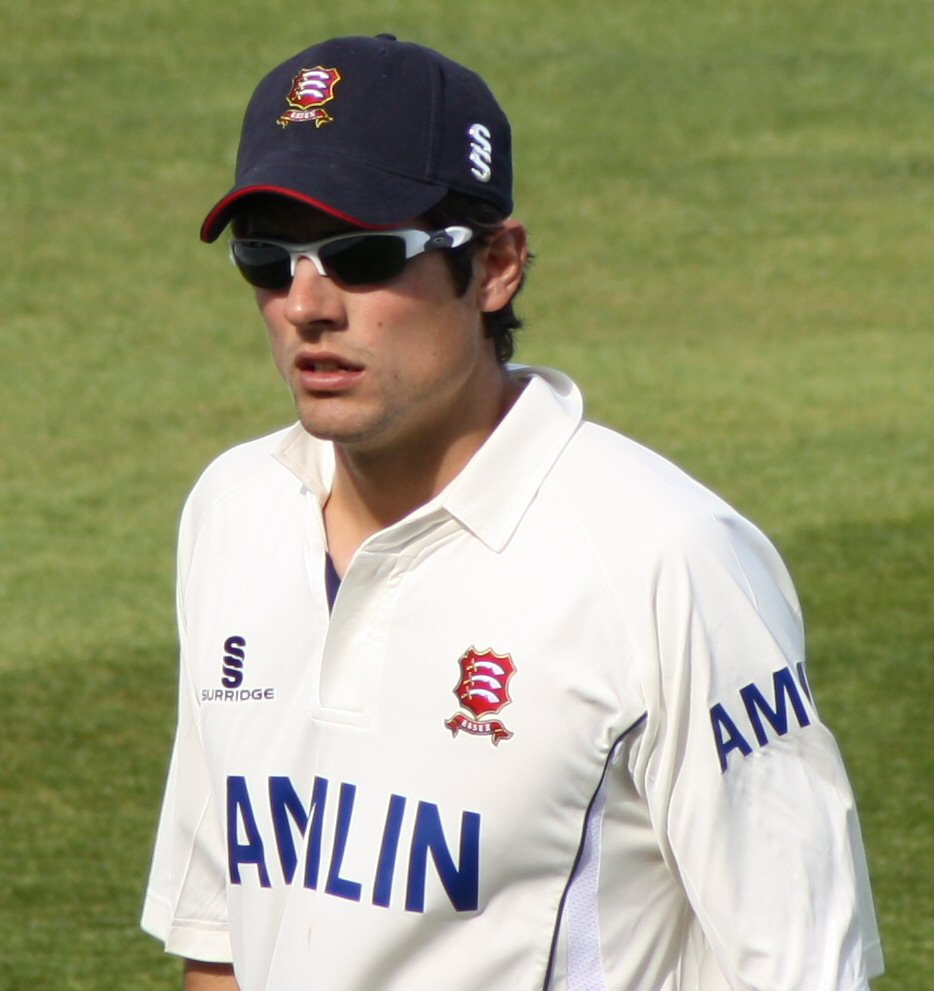
Sir Alastair Cook is one of many patrons who came to the aid of his charities during Covid-19. Photo credit: By Harrias – Own work, CC BY-SA 3.0, https://commons.wikimedia.org/w/index.php?curid=10180837
How did Sue react? ‘That was the only time I got angry with anyone. When David was out with his girlfriend, I phoned the nurses and told them that if David did not go to Wimbledon, he would die disappointed and I thought that we should do everything possible to get him there. Worst-case scenario was he died on the way, but at least he would have known he had tried to get there. By that time, he only had weeks to live at best. It was a saga! But he got to Wimbledon, taken by his brother. He went on the Tuesday, was admitted to the hospice on Wed and died on the Friday.’
It’s a story which takes us to the heart of life’s cruelty. Yet at its centre is something that seems to work against all hardship: David’s optimism, and intense love of life.
Sue remembered the lesson his boy had taught her, and started the David Randall Foundation which aims to keep his spirit alive. The charity organises Great Days for those with life-limiting conditions. Sir Alastair is its patron. This is a charity with a message for our times that will resonate: as the world seems always to become more morbid, we need the spirit of David Randall like never before.
An Uncharitable Virus
We also need the charity sector like never before. Young people might perhaps wonder whether it’s a vulnerable sector, and even whether it’s as worth going into as it was pre-Covid. While it’s true that many charities find themselves financially vulnerable, and have been hastily furloughing like everyone else, in researching this piece we also had a sense of a sector determined to be upbeat where possible.
Many, of course, were feeling acute financial pressures and it was not uncommon to find confessions that the person who would usually handle our query had just been furloughed. But for those who were still active, Finito World witnessed in some instances an admirable heightening of purpose.
Variety – the Children’s Charity works predominantly with children with special education needs and disabilities by supplying medical equipment ranging from diabetes monitors to wheelchairs and specialist car seats.
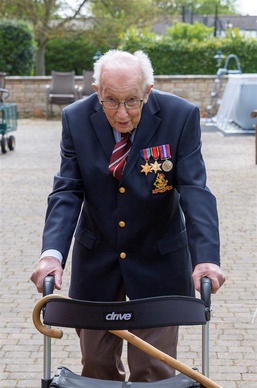
Captain Sir Tom Moore became the face of charitable endeavour during the Covid-19 pandemic
Dave King, the charity’s CEO, admits that events in early 2020 caught him by surprise: ‘By the time we became aware of the level of impact it would have, the virus was escalating quickly. This left us little time to get things in place before lockdown began. It was a period of confusion.’ Uncertainty is often a greater strain on a business than definitely dire circumstances. ‘Once the school enclosure had been announced,’ King continues, ‘we found ourselves in a better position. We were able to become more effective in our response once we had clear direction from government about the impact on children’s lives.’
Variety began refashioning its processes. ‘One of our programmes involves grant-giving for specialist equipment for schools, and equipment for children,’ explains King. ‘We’ve managed to keep that running in spite of supply chains closing down and being temporarily suspended.’
This is a major achievement especially as it was delivered at a time when the organisation’s income generation fell dramatically, primarily due to the loss of events revenue. ‘You can’t have a gala dinner with just a few people in the room. The atmosphere will be flat and it won’t be worth the outlay,’ King says.
In sustaining itself, the charity was helped by its active golf society and golf memberships. These benefitted from that sport’s ability to be carried on while social distancing. ‘We’re looking at how we can maximise the use of our golf team and our society and to generate income.’
As difficult as these times are for generating revenue, there is something that can still pull in the money even over Zoom: stardom.
Stars in their Eyes
Variety has been fortunate in its celebrity ambassadors, with Len Goodman and Mark Ramprakash singled out by King for lending particular support to the charity.
This opens up onto the wider question of celebrity involvement in charities. Dan Corry, the CEO of Think NPC – a charity which supports other charities – argues that while having a well-known patron doesn’t always make a difference ‘it can definitely help. Anything you can do to put yourself in the limelight, and get people to open that email, or look at that tweet.’
Within the sector, there’s some debate over whether celebrity involvement increases the amount of money going to charities as a whole. Cory asks: ‘Does having a good celebrity or fundraising campaign raise money for your charity instead of one they would have given to? Does it just spread the money differently?’ A relevant example here would be Captain Tom Moore, who walked around his garden for NHS Charities Together. Cory says: ‘Some in the sector felt that people who would have given to a medical health charity gave to that. In aggregate, it’s hard to tell. Is it the right charity just because there’s a star celeb? It might be a rubbish charity.’
Even so, the charities Finito World spoke with are deeply grateful for the assistance well-known names had given to their charities.
Sue Randall says that Alastair Cook always comes through with ‘two tickets for the best seats’ at Lord’s for Great Dayers, adding that he ‘has never let us down.’ She adds: ‘Andy Murray also came up trumps for us last year. We had got a lady with cancer, some tickets for Wimbledon and on the day she was too ill to go. One of our ambassadors got in touch with Sir Andy and he sent her a personal note saying how sad he was she hadn’t been well enough to go, alongside a signed shirt. So he is now a hero to me!’
Meanwhile, Ed Holloway, Executive Director of Digital and Services at the MS Society, recalls how the charity was able to pivot quickly during coronavirus thanks to celebrity generosity: ‘One of the first virtual fundraisers we did [after the virus hit] was the MS Society Pub Quiz, with the support of our ambassador and BBC Radio 1 DJ Scott Mills, who hosted a virtual pub quiz every Wednesday night, live from his living room. It was an incredible way to bring the community together at what was a very difficult time. Not only did we have thousands of people all playing along for a great cause, we had a lot of fun doing it, Together, we managed to raise an incredible £55,000.’
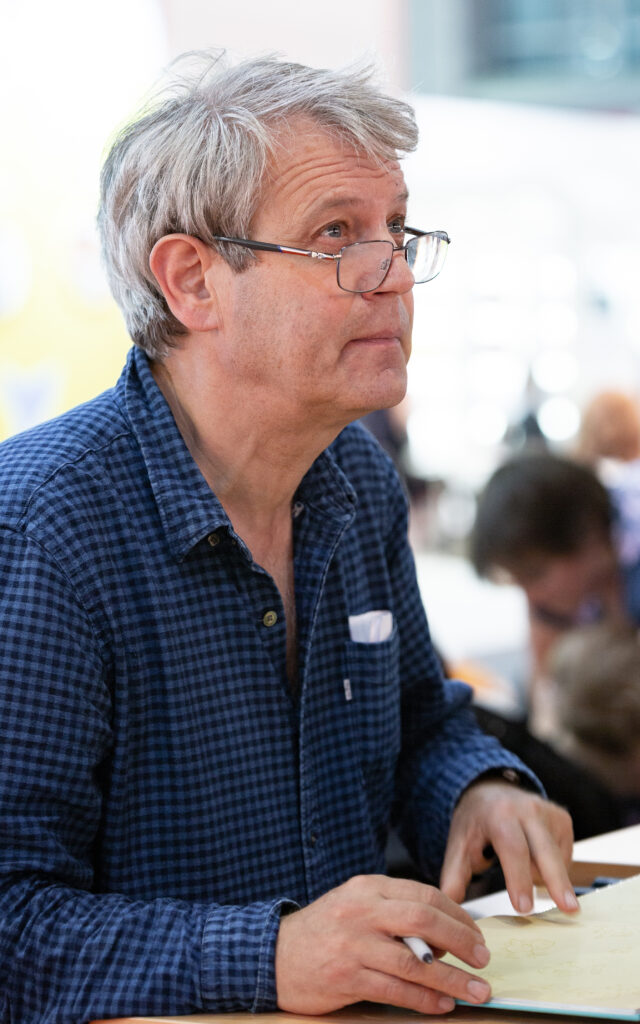
In July, I zoom with Gruffalo and Zog illustrator Axel Scheffler who has had longstanding involvement with the National Literacy Trust (NLT), an independent charity committed to improving literacy among disadvantaged groups. When the pandemic came along, he was happy to help.
He talks to me in his studio, with books ranged behind him, which themselves cede to a bright skylight. Softly spoken and matter-of-fact, it is clear that his charitable work is conducted out of a quiet and laudable sense of duty. ‘I have said yes to almost 95 per cent of what I’ve been asked to do,’ he says, in his careful German accent. ‘There was one job where a big airline company wanted me to design some airline masks and I said no to that one. Overall, it’s a difficult situation and we do what we can. I can afford to do it, and so I do it.’
Axel Scheffler has been highly active for the National Literacy Trust during the pandemic.
Early on in the pandemic, Scheffler was asked by the NLT to provide illustrations to an online book Coronavirus intended to educate 5-11 year-olds about the new disease. Published by Nosy Crow, and narrated online by Hugh Bonneville, it was publisher Kate Wilson who persuaded Scheffler to make time for a breakneck production schedule. ‘Her argument was that many children are familiar with my style and work, and that was why I said, “Yes, I’ll do it.” Nosy Crow completed the project from start to finish in 10 days: it was really, really fast.’
Scheffler explains his motivation: ‘I’ve supported the NLT for a long time, and it’s brilliant what they’re doing. I think it’s sad that a nation like Britain has to have a charity to deal with these matters. It should really be up to schools to get children reading and it’s sad the government is failing the education of children in so many ways.’ It’s hard to disagree but it’s also surely this which makes the charitable sector so exciting.
‘Nobody’s poor relation’
The CEO of the NLT Jonathan Douglas argues that there’s never been a better time to go into the charitable sector: ‘Its vibrancy and its entrepreneurial ability comes from the fact that its funding base is always tenuous.’
Paradoxically, Douglas explains, it’s been a good time for the sector, in spite of the challenges: ‘The most heartening thing without a doubt has been the organisations that have come through to support shielded people, support children continue learning, and to support the victims of domestic abuse. All those social needs have been met by the charity sector. I don’t think the charity sector could ever have been written off as inconsequential – but after the way it has stepped up in the past three months it’s proved its mettle. We’re no longer anyone’s poor relations.’
Over at the MS Society, Ed Holloway continues to feel the sector is attractive: ‘Like many charities we are relatively small and we ask a lot of our employees, but this gives them a chance to take on responsibility early in their careers, which stands them in good stead for the rest of their working lives. In return for their hard work and commitment, we work hard to provide a stimulating workplace where everyone can engage with our mission, know their voices are heard, and know they are making a difference to people living with MS.’
Even so, that doesn’t mean that life is always easy. King says: ‘Most charities are operating on the frontline. The more we’ve got in the bank the less we’re helping kids.’
Government response
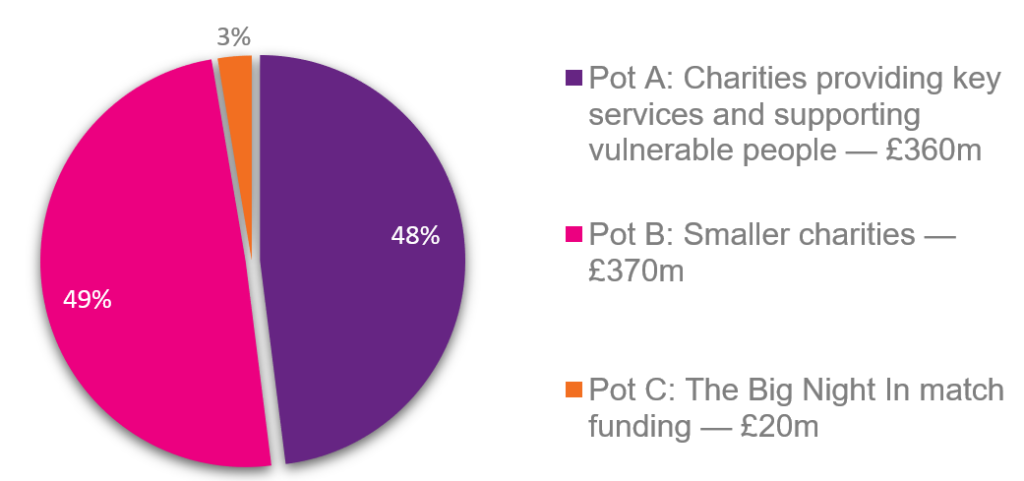
On April 8th 2020, the Chancellor Rishi Sunak announced a £750 billion package ‘to ensure [charities] can continue their vital work during the coronavirus outbreak’. Figure A shows where the money went. Unfortunately, in many cases it didn’t go far enough.
Figure A. Where did the £750 million from DCMS go? Credit: Think NPC
The picture is complicated by the fact that it is often difficult to tell what sums charities may have received from independent grant-making foundations such as the Esmée Fairburn Foundation and the Lloyds Bank Foundation. In some cases, there will have been overlap, although that can be difficult to unpick. Cory says: ‘When this crisis is over, I hope we realise that we need more data in this sector.’
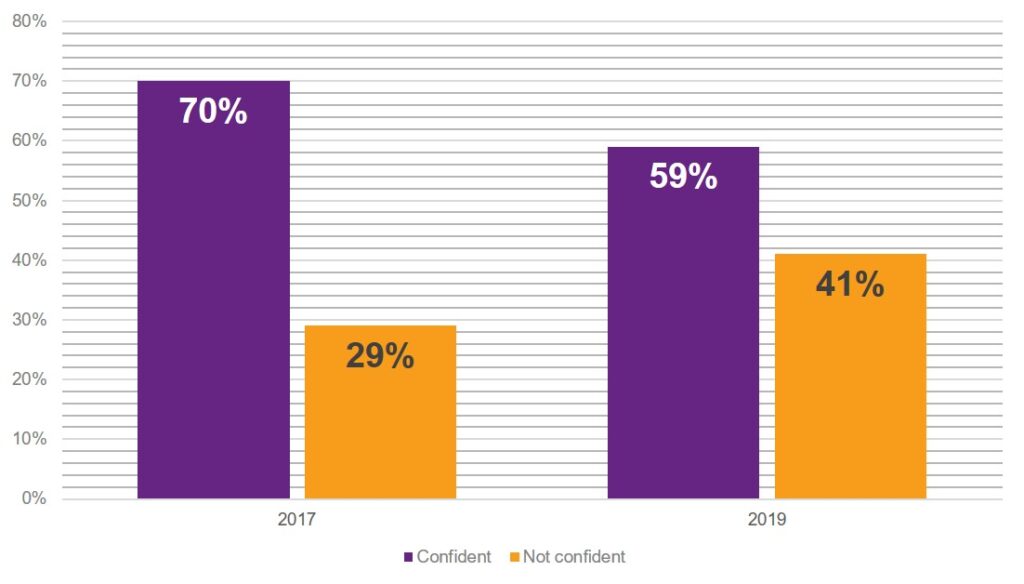
Here charities were asked whether they were confident they were making the best use of digital. Credit: Think NPC
King argues that government announcements were ‘targeted at organisations already delivering government services,’ adding, ‘we don’t receive any help whatsoever.’ A few weeks after speaking with King, Finito World heard that he too had been furloughed.
Large charities like the Family Fund received large injections of cash; other smaller organisations did not. But even at the top end, there is pain. As Dan Cory says: ‘For the big charities, a lot of funding came from big events like the London marathon. Almost all of that has been kyboshed.’ With furlough now about to wind down, many charities including the National Trust, and Cancer Research UK have already talked about redundancies. In some cases, charities that relied on gift shop income have suffered, Cory explains: ‘They have no income. People aren’t rushing to the shops. They’re usually the kind of shops we like rummaging in, but now you’re not meant to touch product.’
ThinkNPC also argues that the Treasury’s monies – though ‘pretty generous’, according to Cory – even at the high end’ A recent report by the organisation found that 27 of the largest service-delivery charities in the UK faced a ‘£500 million shortfall’. The report also found that ‘charities fulfilling contracts for local and national government are better insulated, whereas charities who rely on public fundraising and charity shop trading are far more exposed to more significant losses.’
Ed Holloway told us about the gravity of the situation regarding MS: ‘The MS Society faces losing nearly a third of our income this year due to Covid-19, and yet we haven’t received any support from the Treasury’s £750 million funding package for charities.’ What matters here is the centrality of the society’s role in the fight against an awful disease: ‘The MS Society is the UK’s leading not-for-profit funder of MS research, and every year we invest millions in new projects – so sadly MS research is one area that has been affected by this shortfall. With researchers redeployed and labs closed due to social distancing, the pandemic had already affected many of the vital projects we fund. Right now, we’re doing everything we can to keep these going, but this significant loss to our income means planned research must be postponed, and we are unable to fund promising new work that is desperately needed.’
When we wrote to the Department for Culture, Digital Services, Media and Sport to ask whether some smaller charities were falling through the cracks, we received no reply. Cory says: ‘My guess is medium-sized charities – in the £1-5 million bracket – have been suffering a lot. For the smaller ones, it’s difficult anyway. Typically, at a small charity you have two and half people with volunteers. Quite a lot aren’t going to survive this but it’s always like this down that end of the scale.’
As grim as this is for many, if one were minded to be optimistic about anything at the moment, it would be about those who work in this difficult but noble sector: Variety which continues to send vital equipment to children; the NLT, which is more committed than ever before to literacy in areas that need it; the MS Society, which is still a beacon of hope for those suffering form an inexplicable diseases; and the David Randall Foundation which remains committed to making people’s last months and weeks memorable.
In my most recent email from Sue Randall, she tells me: ‘Things are still very slow with DRF. Understandably the people we organise days out for are vulnerable and nervous about going out, but requests have started to trickle in. The trouble is you just start to think it’s Ok to go out and then the government starts bringing in more restrictions, so I am not surprised at people’s reticence.’
This is a view in miniature of the sector as a whole: a sense of duty overriding anxiety; a sector which has been knocked which remains determined to rebound; and above all an industry with an ethos which values doing things not because they are intrinsically commercial, but because they are inherently important.
Will it all come back? Cory is cautiously optimistic: ‘Not in the same configuration. But people’s will to do good and get involve in charities to work for them or volunteer is pretty undiminished.’ In these times, we must take the positives where we find them.
In many ways, the UK is now suffering from what I call a morbid culture, and there’s no doubt the pandemic has potentially drained the fun and positivity out of interaction. Despite all that, I also continue to feel we will return to an approximation of what happened before in the 50s – that whole sort of Mad Men having two or three martini lunches. We’ll congregate again.
I’d argue that there’s a big difference between moaning and complaining. Complaining is a good thing within reason, whereas moaning is a negative and the British propensity to moan is very strong.
The human capacity to adapt is massive. I was talking recently to a large group of people about Brexit, a policy which I’ve been vehemently opposed to. I remember it well: it was all doom and gloom from the audience but I found myself saying that we’ll find a way through it. The British are really poor when they don’t know where they are, and that’s really been the issue with Brexit. If we don’t know what we’re up against, we as a country tend to descend into a morose state of moaning. I’d argue that there’s a big difference between moaning and complaining. Complaining is a good thing within reason, whereas moaning is a negative and the British propensity to moan is very strong.
Where we’re really good is when we know what we have to deal with – that whole Blitz spirit people talk about when we adapt quickly and innovate and reorganise, as with the vaccination programme. Everyone was saying at this talk that Brexit is going to be a disaster and I said to this large group, “No, we’ll get used to it.”
So if you’re at a hotel in London today, and there’s this massive blast half a mile away, or closer, and the windows rattle and possibly break – clearly there would be pandemonium. People would be screaming, shouting, panicking, rushing for the door. But go back 70 or 80 years in London during the war and we would all have looked out of the window, and turned to one another and said, “That was close. Let’s carry on.” You’d’ve adapted and made the most of it.
Pre-Covid, there was a danger we had become complacent in the restaurant business
My mother said that to a degree the war was the happiest and most fulfilled time of her life. Adversity stimulates, and I suppose, pre-Covid, there was a danger we had become complacent in the restaurant business. But everything that’s happened has made an impact on how we go ahead, and how it is for the staff -but I have a feeling people will adapt.
Sometimes I think of my regular customers, the amazing people I’ve met. Lucian Freud was an example – he would always dine with us at the Wolseley. Lunches tended to be near his studio at Clark’s. For dinners, he’d frequent other restaurants, or he’d stopped going because people were overfamiliar. For me, he was one of the types I like the most: he didn’t care who you were, he was interested in you as a person, and how people look. Yes, he spent a lot of time with aristocracy but he was also a very natural warm and caring person.
He would work of an evening and then come afterwards – often with the person who was sitting for him. As with the most prestigious tables in restaurants, it was easily protectable because you could always tell if anyone was heading towards a high profile person, and keep an eye on him and make sure he was looked after.
We are fortunate that there is a long list of people who come very regularly to the Wolseley. We’ve had many a person who over the years we’ve seen eat a business lunch five days a week – the reason being people want the security and comfort of knowing what you want, that you’re not going to be troubled, and that things just happen. I always remember talking to Lord Norman Foster about a hotel, and asking him why he particularly liked it. He said: “After the first time I liked it, and I expressed to the staff what I liked about it. And from then on it just happened. There was no fuss, no self congratulatory acknowledgement.” I suppose a lot of us are creatures of habit. Personally, I like ritual, and I like habits. It builds a better contrast when I’m doing something completely different.
I feel sorry for Jamie Oliver, because he was doing it from the floor – and then the boardroom took over.
I often wonder if we did a Venn diagram of our restaurants, how much overlap there would be between customers. The Colbert for example, in Sloane Square, is a very interesting place. It’s quite a particular crowd, and at the hub of that community. When we won the bid for that lease – the most hotly contested there’s ever been in London – we weren’t offering us much money as Richard Caring. We won it on our pitch.
But I realised making it a sort of Wolseley-lite would be a mistake – it would be almost imperialist. It would be much better if we created a restaurant just for Chelsea. Sometimes I create an invented history for our restaurants. For Colbert, I imagined a Frenchman chased out of Paris because of an indiscretion with the owner’s daughter and setting up. He started with the bar as the first room, where he just served drinks and food. Then when the corner room became available, he took that one over, and then the next one, and did up all the rooms in a different décor. That’s why it feels so authentic.
Where restaurateuring goes wrong is when it’s done from a boardroom. I feel sorry for Jamie Oliver, because he was doing it from the floor – and then the boardroom took over. I feel very sorry for Pizza Express and Prezzo too: a lot of the problems they have, have been generated by the investors rather than the people running it: the need for expansion has forced them off a precipice. Pizza Express has been a dearly beloved brand and I think if it hadn’t been caught up in merger and acquisition, it would still be doing well. But then of course, we all have to adapt.
Photo credit: By Jhsteel – Own work, CC BY-SA 3.0, https://commons.wikimedia.org/w/index.php?curid=35121735
Everybody has got to work towards achieving their dreams in life. Most people have ambitions. There are people in this world who are very comfortable doing a nine to five job, and never do any work at home. Their evenings and weekends are for relaxation and family and whatever.
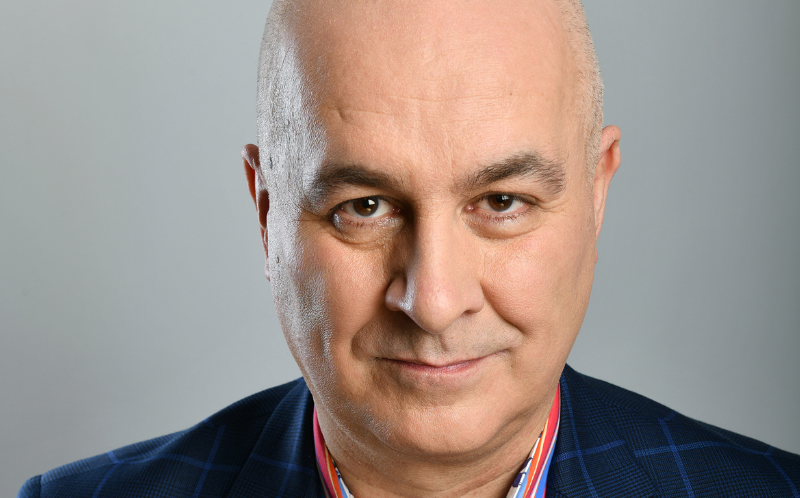
Then there’s the other sort of person, which is what I am: somebody who never really switches off. I’ve always had ambitions – and my two ambitions when I was at university, were either to be a member of parliament, or to be a radio presenter. Now I had a good go at being a member of parliament, but there was a bit of electoral pushback so that didn’t happen.
But in respect of my second ambition, I would I say one of the lessons is: it’s never too late. I was 48 when I got the gig on LBC – and I thought I’d had it, and that I wasn’t going to achieve that as well. But I just happened to take the initiative at the right time.
The guy who was running LBC ten years ago saw something in me that others hadn’t. I always knew that I could be a good radio presenter but, of course, you’re always reliant on getting the opportunity. I didn’t get that job because of who I knew. But I got an opportunity to do an audition at LBC, and I thought it had gone terribly but clearly hadn’t. I’d gotten imposter syndrome! I started doing some cover programmes in 2009, and then they offered me a five day a week show in September 2010, and I’ve been there ever since. It’s the best job I’ve ever had.
So don’t think everybody is automatically ever going to be able to achieve what they want to achieve in life. Life isn’t like: it can throw a lot of hurdles in your way. But application, persistence and patience can get you a long way.
Of course, radio presenting is a very precarious profession. You’re not employed – except insofar as you’re taken on a fixed contract. That contract can finish at any point and it can come when you least expect it. It has a finish date, and I’ve always assumed that they wouldn’t renew it. I’m 58 now. I’ve had 10 years. If it all finished tomorrow I could have absolutely no complaints. And I’m not going to be one of those radio presenters who flounces off. You know at some point, you will be got rid of. your contract won’t be renewed you haven’t been sacked, they just haven’t been able to contract. At some point, they will decide that they want to put some new blood into the daytime schedule, and one of us will be the unlucky one. Now, it may be me – who knows. I hope to be there for some time to come.
Of course, there are other career routes within radio, and I’m sometimes asked whether it’s possible to make a living producing radio programmes. That’s now very different to what it was. It’s a lot more difficult to get into now than it was 20 or 30 years ago. You have to have a broadcasters degree, and it’s very rare that you get taken on if you haven’t got a professional qualification. Though there are exceptions to that, they are very rare exceptions.
There’s a guy at LBC now who hasn’t got the traditional qualifications, but he literally came in at the age of 18. He just came in, shadowing one day, and somebody saw something in him – and he made himself indispensable. He’s now producing for Nick Ferrari at a very young age and you think, “Well, good on him!”
I always remember in about 1994, I took on a politics student – and he had something. I like to talent spot. He said, “I really want to get into political broadcasting.” I said, “Well, Sky News Milbank studios are literally 400 yards down the road. Go, and just turn up a reception. Say you want to see Adam Bolton and tell him that I sent you”. And he ended up effectively making Adam Bolton’s tea for a couple of weeks, and – to cut a long story short – ended up as the editor of Tonight with Trevor McDonald, and This Morning. But this was in 1994 – I don’t think you could do that nowadays. But maybe you could.
Here the poet and critic Merryn Williams recalls her first job at the Open University.As ever, we publish her poem after the interview.
FW:So what jobs do you recall with particular affection?
MW: I had a job at the Open University which was temporary, but then I got married and lived in the wilds of Bedfordshire and was fully occupied with bringing up children. That did give me time to write when they were a little older and I found that working from home was what I preferred. I went on teaching OU summer schools for several years, until they changed the curriculum, but I was teaching the nineteenth-century novel, not poetry.
Do you think poetry is being demoted in our society today?
It certainly is the case that poetry is being demoted, if children no longer have to do it at GCSE, but I had doubts about the kind of poetry that was being taught, when I occasionally coached my own children or the children of friends. They were forced to study ‘Poetry of the 1930s’, or Sylvia Plath. They found it difficult! I see the use of teaching the work of living poets, and asking these poets into schools, but it’s not usually the best of them who are selected.
What were your experiences of being taught poetry at school?
My own experience was very different. I have fond memories of Miss Margaret Smith from Hastings High, who took us to London to see Shakespeare, and I was excited by the poems in our ancient set books. ‘Beeny Cliff’, ‘Summertime in Bredon’, ‘The Wild Swans at Coole’, and all sorts of delightful Georgian pieces about moonlight or ice carts or London snow. So you will see that I have rather traditional tastes! My favourite workplace poem is Charles Causley’s ‘School at Four O’Clock’.
FIRST JOB
When the Open University opened, people
said it could never work, and was a mad
idea; there were only two real universities anyhow.
It was my first job and I was terrified.
I got there, knowing no one. A field of mud
surrounded lovely Walton Hall, the ancient church and cedars;
not far off emerged a new city, Milton Keynes.
There was much that I had to learn fast. Then there was summer school,
teaching the great English and Russian novels to students
all older than myself. I stayed awake
and heard them celebrating through the small hours.
I agonised at the thought of public speaking.
I didn’t know how vast it would become, but am grateful
for all the interesting people I met, the skills that I discovered;
We at Finito World were all deeply saddened by the sudden death of Jeff Katz in December 2020. Here we publish his last piece, submitted to us only a few days before his death. We shall publish our full tribute to him next week.
Truth, lies; facts, alternative facts; news, fake news; information, disinformation; reality, conspiracies—how and why did our views of the world get so divided?
Joe Biden won the US election, but not without accusations of fraud from Trump and his supporters. It was mostly likely the coronavirus pandemic that gave the Democrats the edge, but not by as much as they expected. Trump’s effort, in the words of New York Times journalist Will Wilkinson, to sweep “a medium-sized city’s worth of dead Americans under the rug turned out to be too tall an order.”
When facts and truth become casualties of deliberately created social and political confusion, we all suffer. And that extends to our day-to-day dealings with each other. As someone once said, you start off by committing murder and end up being late for appointments.
One of my abiding lessons about facts occurred during my high school years in New York. In a school of 5,000 boys I found my niche in the English Department’s journalism class, taught by one of my first mentors, a teacher named Louis Simon.
Lou was the advisor for the school newspaper, a broadsheet that came out four times a year. He also taught the journalism classes. By my second year I was in the advanced class and was a reporter for the paper.
One day Lou asked me to assist him with an experiment for the new intake of the journalism class. After the class settled, I came in and Lou told me to distribute textbooks. I dropped the books noisily on the desks. He first admonished me and, when I ignored him, sharply reprimanded me. I then muttered something that sounded like “*uck you,” but wasn’t. He ordered me out of the room. Then he told the class that he intended to report me for bad behaviour and wanted them to write an account of what happened to back him up.
About half the class wrote that they didn’t want to get involved. A quarter of the class quoted what they thought they heard—but hadn’t. The final quarter wrote that they weren’t sure what I had said, but that my behaviour had been disagreeable.
At that point in my life, the fact that half the students didn’t want to get involved surprised me. But that the other half either reported the events incorrectly or couldn’t decide what they heard taught me that at best many people will be unsure of the facts. More importantly, many people will simply be wrong because they hear what they are programmed to hear.
Forty years later I was invited to make a presentation to pupils at the City of London School. This time I was in the teaching role. I began by making an offer. Everyone who gave me a £1 coin would get two back at the end of the session. There was a flurry of activity as pupils who didn’t have a coin borrowed from their mates. As each person contributed a pound into a bag, they signed their name so there was a record of the transaction.
I put the bag of coins and the list of signatures into a briefcase and began explaining to the class how fraudsters work, how con men and women rely on the gullibility of people who want to believe in opportunities that that promise rewards, regardless of how unlikely.
After half an hour or more of my explanations and examples of how such things happen, the teacher hosting the event thanked me and there was a nice round of applause. As I picked up my briefcase and prepared to leave the room there was a murmur among the pupils. I asked if there was something the matter. They asked about their investments that were supposed to double at the end of my talk.
“Oh that,” I said. “No,” I told them. “That was just speculation. If I manage to double your money, I’ll let you know.” And I began to leave the room. Of course, I didn’t. All the pound coins were returned to their rightful owners, but I suspect that those few minutes at the end taught them more than anything I said during the preceding half hour.
“Dishonesty, greed, double-dealing,” wrote Professor Churchwell in The Guardian, “are symptomatic of entrenched maladies.” The only remedy is education. And that will take time.
I began my ministry during lockdown and compared with the sufferings of the world, having to move at that time is a small thing. Nevertheless, it’s not the way anyone would choose to leave on job and start another.
A little maxim which has helped sustain and guide me through my working life has been that good decisions arise out of good relationships. You want people to share your vision, and ask them to help you design it. Zoom has been very good for sustaining existing relationships – and even for transacting business – but it’s not so good for making new relationships. Actually, if you think back to before the pandemic, it’s the things that happen in the car park after the meeting, or over coffee, which are really valuable to oil the wheels. In that sense, it’s been a challenge.
The Christian way of ordering the world has got terribly out of sync. We’ve become frantic and evermore busy. Although you know there’s nothing good about COVID, it doesn’t mean some good can’t come out of it. Perhaps it will cause all of us to reflect on the very unhealthy ways in which we were living and working – and not just unhealthy for us, unhealthy for the planet. So my great hope is that as we emerge from this, we won’t just go back to how we were, but we’ll think about patterns of living and working which are much more life-giving.
Work is good – we are made for work. Work itself can be an offering to God. So we need to use our time purposefully and creatively, but we need to do it in a way that is healthy. That requires us to see that the first thing we should consider is time for refreshment and prayer. That should be our first consideration, not our last.
Some people ask what an archbishop does, if I am perhaps the equivalent of a CEO of a business. Well, not really. The business of the Church is the business of the Gospel of Jesus Christ, so an Archbishop is much more like a pastor than a CEO. The Church is fundamentally a community.
Of course, I have responsibilities for the leadership and oversight of that community because it’s a large community which also needs organisation. And there’s all sorts of infrastructure organisation that goes with it. We employ a lot of people, but we have lay officers who help and support with that. So my day-to-day work is to care for the clergy and to be a voice – and sometimes a face – for the Christian faith, particularly in the Diocese of York, where I serve. As an archbishop, there’s also a national responsibility to guide the vision and hold us to these values. So there are of course parallels with leaders of other organisations – but I don’t see myself in that way.
Of course, there are hundreds and hundreds of clergy across my diocese, so I can’t meet with them all regularly. On a normal Sunday morning, I will be joining in with the life of a parish or local church. Much of that, of course, in the past year has been online and the church has done amazing things in transferring its life online. But of course, we’re now beginning to meet in person again. Yesterday morning, I was in a place called Loftus which is near Saltburn-on-Sea on the North-East coast with a local church, joining in their life. This evening I’m meeting with a whole group of clergy, and lay leaders, to discuss the life of the church.
For me the piece of scripture which has spoken to me most in the last year is the story of the woman with the haemorrhages who comes to Jesus. As readers will probably recall, she doesn’t touch him directly – and of course the reason she doesn’t touch him is a kindness. In her understanding of the cleanliness laws, if she as an unclean person touches him a clean person, she makes him unclean. But nevertheless she believes that he has the power to heal. So she touches just the hem of Jesus’ garment.
But we’re told Jesus feels the power go out of him. He says to the disciples: “Who touched me?” They say, “You’re having a laugh. You know the great crowd of people around you – everyone’s touching you.” But he notices.
The reason I found that story so helpful is because we have lived through a year without touch, and without embrace –and without the familiar things of the Church which usually sustain us. Particularly in the Anglican tradition, without being able to receive Holy Communion, which has been the kind of staple diet of Christian worship. All those things have been taken away from us. Does that mean Jesus is not present with us? No, he’s still just as absolutely present. I feel we’ve had a year of touching the hem of His garment.
When it comes to publishing, the problem these days is getting your foot through the door in the first place. You can publish Jordan Peterson now despite the controversy surrounding him because has already broken through. That’s the obvious example. The thing I worry about here is: “How are young people at the very of beginning of their career, allowed to say what they think?”
I remember when The Strange Death of Europe came out, I was face to face with a very nice lady at a drinks party who said she was in the publishing industry and working for one of the major publishers. She said she’d said to her boss: “Have you seen how well Douglas Murray’s books are selling?” And he said: “Yes.” She said: “Didn’t I tell you we ought to do something in that area?” The area, I suppose, would have been immigration. And apparently her boss said to her: “We wouldn’t those readers.” So I said: “You must tell him at his next shareholders meeting that they are not a for-profit organisation, but rather a sort of weird NGO of some kind.”
So the publishing industry – like every industry – is susceptible to this same strange problem of wokeness. I was with an academic recently, who was gay, and had got into terrible trouble because he’d been pro-Brexit. I found myself saying at one point: “Why is it such a terrible sin to be in agreement with the majority of the public?” I don’t want academics to be pro- or anti-Brexit; I just don’t particularly want this kind of conformity which a vociferous minority seems to want.
One thing we have to think about seriously as a nation in the years ahead is where the talented people go. I spent a certain amount of time in Silicon Valley in recent years researching The Madness of Crowds so this has been on my mind a lot. Would a smart person today go into politics? Would they seek to be an MP? Would they seek to be an academic? Probably not – and that accounts for the impoverished nature of this moment in both politics and education.
My friend Christopher Hitchens used to say that he couldn’t write fiction, and he knew why. He knew people who could – like Martin Amis and Salman Rushdie – it was because they were always interested in music. Well, I enjoy music, and I play the piano every day. Sometimes people try to get me to do fiction. First of all, I don’t think you should force it on anyone. Secondly, my view is that for the last 20 years we live in an age of reflection and that has made fiction feel secondary – it’s rather like trying to write the book of the age in heroic couplets. For example, if you wanted to read about the Vietnam War, for instance, would you do better reading a novel about it or a great book like Nothing and So Be It by Orianna Falacci. I would suggest the latter. There’s this feeling that fiction is not where the action is. But it does feel that to me that poetry on the other hand, always has such a small audience that somehow it never becomes irrelevant.
When prose-writing is exceptionally bad, as with for instance Judith Butler, it can be for one of two reasons. One possibility is that that person simply has nothing to say. But the second thing is rather more alarming – that they know that what they’re writing simply isn’t true. And there’s a lot more of the latter kind of literature around than you might think.
What happens in academia is that impenetrable language is used as a screen. You’re meant to think that if it’s unreadable that must be wisdom there somewhere. That’s why you can’t just critique these books, you also have to offer an alternative reading list. In that sense everything begins with Plato – and also with the Judaeo-Christian tradition.
Photo credit: By AndyCNgo; cropped by Beyond My Ken (talk) 00:23, 8 May 2020 (UTC) – Own work, CC BY-SA 4.0, https://commons.wikimedia.org/w/index.php?curid=89983788