Author: admin

  • Highest-paying areas near tube stations revealed

    New data from Reboot SEO Agency has revealed the tube stations across London with the highest and lowest average salaries. By analysing job listings on Indeed, we can see which stations are situated in high and low pay areas.

    Unsurprisingly, the highest-ranking station is also the busiest. The area surrounding Waterloo Station, with around 651,000 passengers passing through per day, boasts an annual salary of £32,247 on average. The job sectors around the station include operations administration, retail support and software development.

    Reboot’s methodology involved starting with a list of 270 tube stations and then cross-referencing job adverts on Indeed.com within a mile radius of each station. Only Bond Street was emitted from the research due to lack of data. The survey was compiled in August-September 2021.

    The close runners up to Waterloo were Mansion House and London Bridge, with average salaries around £32,000 as well. Both these stations are well connected with other lines, experience high footfall and are situated in the City.

    The lowest average salary was found at Hainault at £18,568 a year on average. High property prices in the area also mean that it may be difficult to make rent near Hainault, assuming average price to rent a one bed flat and average salary. Other lower-paying stations found included Fairlop and Edgware, with average salaries of £18,929 and £28,000 respectively.

    The highest paid sectors from all of the tube stations researched were technology, finance, and legal occupations. Near Hainault, the highest average salaries were found in construction and extraction.

    Top 10 Highest Average Salaries Around London’s Tube Stations

    RankingStationAnnual Salary
    1Waterloo Tube Station£32,247
    2Mansion House Tube Station£32,092
    3London Bridge Tube Station£32,076
    4Borough Tube Station£32,018
    5Liverpool Street Tube Station£31,922
    6Barbican Tube Station£31,582
    7Bank Tube Station£31,471
    8Aldgate Tube Station£31,468
    9Cannon Street Tube Station£30,000
    10Farringdon Tube Station£30,000
    https://www.rebootonline.com/seo-company/
  • How A-levels lost their meaning

    How A-levels lost their meaning

    Over the summer, as pupils across the UK received their A-level results, many breathed sighs of relief. The algorithm which incorrectly marked down many students in 2020 was abandoned, switching to a teacher-assessed approach. They did not sit exams this year or the last year, with grades instead being determined by in-class tests, essays, and other work throughout the year.

    The pandemic has meant that educational institutions at all levels have taken more lenient approaches to marking. For students this year, it has meant that 44.8% of them have achieved either an A or A*. While this may seem good to students in the short-term, in the future those marks will lose their meaning as nearly half of their peers will be at the same high level.

    This grade dilution means that students will have to do more in order to stand out in the crowd. When grades skyrocket, rapidly-filling universities will need to rely on other metrics to decide who to admit. This could also affect their job prospects as the high number of qualified applicants will make it difficult to be noticed by potential employers.

    Medical schools are among the worst affected, with many more students than usual achieving the required results. Professor Malcolm Reed, Co-Chair of the Medical Schools Council (MSC), describes the issue.

    “This year, we have seen applications to medicine courses rise by 20 per cent, and many more applicants have met the terms of their offers than forecast,” Reed says.

    To combat this issue, the Medical Schools Council is offering £10,000 to any student who must change medical school due to oversubscription. Professor Reed also emphasises the need to continue training large numbers of medical professionals in the UK.

    “Medical schools recognise the need to bolster the future NHS workforce,” Reed said, “and by supporting this brokerage programme have committed to ensuring that expansion considers the need to maintain high quality medical education and training for all future doctors.”

    There is already talk of scrapping A-levels completely, instead switching to a numerical grading system. While he agrees that something must be done to preserve the meaning of A-level marks, Education Secretary Gavin Williamson has said that he is looking at other less drastic options.

    Whatever change is made to the marking system in the future, one thing is clear – the graduating class of 2021 is going to have to get creative to stand out in a sea of excellent marks.

    ————————————————————————————————————————–

    409 words

  • Technology focus: Nicolas Croix on why companies must consolidate business applications

    Technology focus: Nicolas Croix on why companies must consolidate business applications

    Nicolas Croix

    With the massive proliferation of business productivity tools and applications designed to streamline processes and boost productivity, many businesses have a tough time deciding which apps to use. Ironically, in an attempt to make life easier for employees, companies are adding layers of complexity by signing up to several platforms, many of which aren’t integrated and ultimately have the opposite effect.

    The consumerisation of business technology has made access to applications accessible and has taken ownership away from IT departments. For example, Chiefmartec.com’s 2019 Martech 5000 report found that, in marketing technology alone, business applications grew from just 150 to more than 7,000 since 2011.

    In another recent study, Deloitte found that 33% of companies use more than ten individual pieces of HR software. Inevitably, this leads to inefficiencies. Despite how clever each app is in isolation, by adopting different platforms, you create siloes, replacing one long process with many shorter ones and adding zero benefits to the business. 

    According to IDC, over 80% of executives who responded to a recent survey said most of their problems come from a lack of systems integration – meaning their disparate solutions don’t “talk” to each other. In the same study, 43% of workers said they often have to double enter or rekey information, adding time and effort to the process rather than streamlining it.

    We frequently see companies spending time and money moving information from one software to another, investing in the latest, most excellent recruitment, HR and payroll software – but failing to consider integration. In the HR industry, controlling the flow of operations across every platform and channel is critical, and there is no easy way to achieve seamless interaction between tools and applications without a consolidated solution.

    Yet, the same IDC study revealed that executives across 1,500 different sectors and lines of business, including sales, HR, and procurement, estimated that resolving their inefficiency issues would generate 36% increased revenue, 30% lower costs, and 23% reduction in compliance risks.

    The ability to automate core recruitment, HR and payroll have enormous benefits. The earlier companies consolidate, the better equipped they can compete in a fast-moving business environment and become better companies to work for. In very few circumstances, it makes sense to have several applications doing the job of one consolidated solution.

    First, by consolidating HR business tools into a single platform, you can effectively streamline your operation without shifting from one application to the next, inputting the same data repeatedly, or having to check system after system to find the correct information. 

    Second, you can increase productivity by reducing the time and resources required to complete routine processes. At the most basic level, you will save a significant number of hours by using one or two platforms instead of many. 

    Third, it helps eliminate stress from slow, unresponsive systems due to needing too many apps running at once. This is worsened by the requirement to share data sets between platforms, which is not only tiresome and a waste of valuable time but could have serious security repercussions.

    Fourth, there is also the cost of running several applications when one will do. Consolidating platforms can increase your return on labour costs and increase employee satisfaction, with employees spending less time performing mundane tasks and being freed to focus on making a better contribution to the business.

    Finally, business applications should be easy to use and scalable to achieve a high adoption rate by end-users, namely your employees. The more business apps you use and the bigger your business grows, the longer and more complex it becomes to onboard new people and trains them on each of the tools they will need to do their job. There is no doubt that a modern and seamless application stack can drive a better employee experience and increase retention, but a more complicated one can have the opposite effect. 

    Simply put, more apps create more work; less is more; consolidation is key.

    The writer is the CEO of Moonworkers

  • Education interview: University of Buckingham Vice-Chancellor James Tooley

    Education interview: University of Buckingham Vice-Chancellor James Tooley

    by Patrick Crowder

    Professor James Tooley worked in the world of academia for years before becoming Vice Chancellor of Buckingham University. He has strived to raise the standard of education in developing nations through low-cost private schools since 2000. We asked him to share his story and give some insight into the future of education, in the UK and abroad.

    “I’ve been an academic for 25 years in Russell Group Universities. I came to Buckingham two years ago as a great believer in the proudly independent university, and became Vice-Chancellor 10 months ago,” Tooley recalls.

    He did not originally come to Buckingham for the role of Vice Chancellor. Instead, he wished to continue his long-term educational work in developing nations.

    “My work has been about low-cost private education in developing countries. I’ve worked in some of the poorest, most difficult countries in the world – South Sudan, Somalia, Sierra Leone, Liberia, Northern Nigeria, as well as India, Pakistan, Bangladesh, Nepal, and South Asia,” Tooley continues. “Most of my life has been researching and developing from the higher education platform, but working in low-cost primary and secondary schools.”

    Prof. Tooley has been described as the “Indiana Jones of education policy” for his travels. We asked how he decided to make low-cost private education his life’s work.

    “I found that these schools existed – that’s the first thing – so I was in a sense an explorer. And then I found this low-cost private school phenomenon.”

    Once he found that these schools existed, a large part of Tooley’s job involved documenting and researching the education systems in place across many countries and comparing the achievements of low-cost private schools to those of government schools.

    “During my years in academia, I took five years of unpaid leave from the university so that I could actually go and live in these countries and take part in a much bigger way,” Tooley remembers.

    There are 450,000 private schools in India alone, and Tooley has spent years running teacher training programmes to raise the standard of learning in schools like those around the world. He has taken what he’s learned through years of research and experience and allowed that knowledge to inform his approach to university.

    “One of the lessons I’ve learned from my work overseas is the importance of affordability and accessibility. I want education -and education at the University of Buckingham – to be affordable and accessible to as wide a range of people as possible.”

    Tooley adds that he is looking at two ways to facilitate affordability in university education. “We’re looking at the possibility of decreasing fees in certain areas to make it more affordable both domestically and internationally,” he explains. “The second possibility is to look at income share agreements. The university takes some of the risk – perhaps it doesn’t charge a fee to a student arriving – then the fee equivalent is paid by the student once they’re in a job.”

    With more people getting degrees and as additional emphasis is placed on internships and apprenticeships, the role of the university is changing. We asked Tooley about the difference between pure academia and employment-focused learning.

    “Of course employability is important, but some students come to university to develop their minds and understanding for the sake of that, and there’s nothing wrong with that. It’s very clear that in some ways we are only wanting to transmit the best that has been thought and known over the generations, and we do that irrespective of changing fashions and the desires of employers. That said, a lot of what we do is very employment focused. We have vocational courses in medicine, law, business, psychology, computing, AI, and many of our courses are tailored based on what employers want.”

    Professor Tooley’s main objective is to allow people from any background to access quality education. He believes in learning for learning’s sake, while recognising the need for employability programmes in university as well. We asked him for a piece of advice directed at a student who is entering university now.

    “Students should be aware of what they love doing and try to pursue that as much as possible, both in extracurriculars and in terms of their curriculum. They should recognise the dual purpose of university – both for employability and to immerse themselves in the best that has been thought and said across the generations.”

  • Philip Mould on his early education in art

    Philip Mould

    Mine was a strange upbringing in some respects. We ended up in Wirral because my parents are southerners, but they moved north. My mother contracted polio, and my father had come out of the Marines; it was very difficult to have a disabled wife and travel the world. He inherited from my step-grandfather the running of a printing works in Liverpool – and so rather like the beginnings of a sitcom this southern family relocated.

    As a result, I was brought up in the school system as it was presented to us on the Wirral, which was a number of prep schools – one of which was called Kingsmead, and that was the one I went to. I left when I was 13 and went 250 miles away to Sussex to a Christian monastery called Worth, which is not a school I was particularly happy with.

    But during that period from when I was ten to around 14, I would buy things from antique shops. This was my start. If you’re interested in historical objects as I am, the most glorious opportunity for a young enthusiast – and that’s especially so if there’s someone who can initially guide them – is the understanding of hallmarks. These are like hieroglyphs. One time, I went into an antique shop at the behest of my mother, and there was this woman called Xena Roberts, a retired schoolteacher.

    It changed me. I remember the atmosphere in there, particularly the smell of silver dip and sulphur – the smell of hell in fact. There was also the sweet smell of furniture polish and fags. Xena smoked endless No. 6’s. In a sort of hectoring way, she got me to pick up a spoon, making me forget why I had come in there. I turned it over, as one does, and she asked me what I saw there. With hallmarks, the first thing you sometimes notice is the head of the King or Queen who is on the throne. And then you see the so-called lion passant – that magnificent thing which goes back to Richard the Lionheart.

    That’s not all. Then you’ve got the initials of the person who made it, whose name you can look up – as well as the city where it was smelted. Then there’s usually a letter of the alphabet relating to the year in which it was made. There would be different alphabets as the years went on and combining that with the head of whoever’s on the throne, you could know a lot about that object. It was a glorious set of insights – an education in itself. It was a portal into transforming objects with knowledge, and it was the starting point of me getting interested in art.

    I was terrible at school. I was precocious in as much as I could speak well, and my parents taught me some very nice words, but my exams sort of collapsed on top of me. I went on kids’ TV when I was 15. It was an equivalent of Blue Peter called Magpie, and by that time I had a collection of silver shoe buckles. That day they became my performing seal. After that, I started writing about them and doing a bit of freelance journalism. It was great to be able to wow people with knowledge as a kid and transform things. I felt like a magician.

    East Anglia University gave me time to grow up a bit, meeting people and trying new things. I probably didn’t need to go to university, but what it does give you is an environment where the company you’re in tests you a bit more. It’s a bit like a Grand Tour, going off somewhere. I had a clear idea of what I wanted to do after. I was completely confident holding works of art, looking at them, smelling them – the connoisseur side of things. So university, though it wasn’t essential for me, gave me an opportunity to enrich what I wanted to do. It also gave me confidence and life skills.

    But it was at local auction houses where I got my teeth into things. I’m sad to say I also had my first taste of the dark side of the art world when I was in university. His name was Cyril Paston. He ran a shop which specialised in the works of Sir Alfred Munnings, the horse painter. I befriended him, and he had several Munnings paintings which he said were good quality. I hired a car and took them to London to show a friend of my brother, who knew about these things.

    Once I’d pulled up, he looked through the car window, and I didn’t even have to take them off the back seat before he said “fakes”. As it turns out, Paston was painting the things himself. I then realised that there’s this whole other dark underbelly of the art world that one has to be aware of. The opposite of beauty is deception, I suppose, so when you know you are being deceived the beauty disappears.

    So if I look at my early education I find that I was always learning when I least expected it – in a chance visit to an antiques shop, and even thanks to that scam. That’s how the world is: always teaching you – at educational institutions, yes, but perhaps more importantly, when you’re nowhere near them at all.

  • Sir David Amess showed why politics can be a meaningful career

    By Finito World

    Everyone at Finito has been saddened by the senseless murder of Sir David Amess MP.

    All accounts agree that he was a kind and gentle soul, who used his position in Parliament to promote animal welfare, his campaign for his beloved Southend to be recognised as a city, and to argue for a permanent public memorial to Dame Vera Lynn. In the dog-eat-dog world of Westminster, there was something innocent about him – he seemed perhaps of another time, and to hark back to older traditions.

    Amess represented the antithesis of the here-today-gone-tomorrow nature of British politics. He eschewed the drama of resignation and appointment, and all the talk of who’s-up-and-who’s down which so delights the mainstream media. He quietly got on with it.

    A typical Cabinet reshuffle, like the one Boris Johnson conducted in the autumn, showed us what Amess was not. It would have been unseemly to Amess to be caught up in the speculation, and even the indignity, of the careerist side of politics.

    Sir David Amess preferred staying power to power itself, and carried himself throughout his remarkable life with a quiet diligence. He aimed to make a difference by dedication and hard work, preferring that unsung progress to the pomp and circumstance of power. It’s true he had his high-profile moments, especially winning his seat in the close 1992 General Election, when he became an emblem of the Conservative Party’s surprise win.

    But more generally, he worked tirelessly – not for a Cabinet position – but for the privilege of serving his constituents. It was this noble task which he died doing.

    Young people are therefore shown two versions of what being in politics entails. It can be carried out at the highest level, amid the Shakespearean drama of the acquisition and loss of power. Writing for the BBC of the reshuffle, political editor Laura Kuenssberg remarked: “With no one strong ideology other than a desire to win, it begs the question of what it’s all really for.”

    In Amess’ death we had the answer. Politics is about helping others, on the back of having been elected to do so; it is about minding whether your community is improving or not; and then, if you have time leftover, it is about advancing the issues which you believe in. At its core, politics should be about making people happier – or at least, trying to do so.

    At Finito, we have many students who ask for help in their political careers. We would always hope that this route is embarked on with a commitment to principle. “Those are my principles and if you don’t like them – I have others,” as Groucho Marx once joked. In fact, a firm commitment to bettering the lives of others is the only thing which makes the uncertainty – and now the danger – of top level politics bearable. 

    It is this which we mourn when it comes to the loss of Sir David Amess. After his death, it might be said that only the most dedicated public servants will now put themselves forward for the job. Its dangers are all too plain.

    There is a world of difference between success which is meaningfully tethered to some good, and success which opens up only onto itself. If you pursue the former you can’t fail; if you pursue the latter, failure is inevitable, because it will all have been for nothing in the end anyway.

    Sir David Amess’ life, though it ended brutally, could never have its meaning taken from it. In fact, its value was increased, held in sharp relief by the appalling circumstances of his murder. Rest in peace, David.

  • How to get hired in a flooded job market

    Kim Streich from Debut talks with Patrick Crowder about applicant numbers, and how to stand out from the crowd

    There are over 1,000,000 job vacancies in the UK, according to the Office for National Statistics, but graduates are still struggling to find employment in a flooded market. Debut is a networking application which focuses on connecting qualified graduates with employers across the UK. Marketing Director Kim Connor Streich spoke to us about the app, the graduate job market, and how to stand out from other candidates as a graduate.

    So what problems to graduates face now? “Recent university graduates are facing strong competition from those among the previous year’s cohort who are still actively looking for jobs,” Streich explains. “Applicants for graduate jobs still outnumber the available graduate positions despite the massive growth in vacancies.”

    The pandemic has led to a two-year pileup of fresh graduates as opportunities dwindled, and many were left directionless. It has also led to hesitancy to work in the industries hit hardest by the pandemic, including hospitality, despite a significant number of vacancies.

    According to Streich, searches for entry-level graduate jobs have increased by 350 per cent since March 2020. So what can applicants do to stand out from the crowd? Streich says that it could simply come down to how and when you apply.

    “When sending out your application, you should aim to be the first in their inbox when the job goes live. Anyone who works on a computer will know the struggle of email overload. You need to avoid the competition by sending your application early in the day – you want it to be the first thing the hiring manager sees.”

    Putting aside time of day, even the time of year can affect the success of a job search. Internal data from Debut suggests that the best month to apply for a job is November, when an average of 14 per cent of a year’s jobs are posted. October and December are the second and third best months, making the end of the year a better time to apply than others. According to Streich, this is because hiring is often not a priority for companies during the Summer.

    “From experience, many companies spend their human resources budgets well before the Summer hits,” Kim said, “Not only does this mean hiring managers and recruiters stop searching during these warmer months, but resources could be lacking and many will spend summer months preparing reports and trends.”

    Debut currently hosts 10,504 graduate roles and saw over 20,000 jobs go live between July and September of this year. For graduates today, the job search is not easy. However, the good news is that there are roles available, and more will continue to become available as we recover from the pandemic.

  • New recruitment platform places diversity at the forefront

    A conversation with ‘Diversifying’ CEO Cynthia Davis about equality, what’s being done, and looking to the future.

    Diversifying is a recruitment platform which places diversity at the forefront of their model. They work with some of the biggest brands including Sky, Aldi, eBay, Metro Bank, and even the Royal Household.

    CEO Cynthia Davis has worked in recruitment for 22 years. She has seen the way that diversity is handled in the jobs market and is unimpressed. She founded Diversifying as a way to go beyond the “tick-box” or tokenistic approach to diversity she has seen over the years, towards a more genuine, holistic approach.

    “When I started my career, diversity and inclusion weren’t really talked about at all, so I wasn’t seeing people like me from an ethnic minority background,” Davis says. “There weren’t women of colour who I could relate to working in the environments that I was working in, and it was really hard being in the minority.”

    Davis describes being passed over for a promotion, then being required to train the less-qualified person who got the job, while she was never considered for the role due to her race and gender. She also mentions the toxic environment in her workplace which she had to face.

    “There was a lot of banter which could be deemed to be inappropriate – racist jokes, misogynist comments, and micro-aggressions as well which I was subjected to,” Davis explains. “And all those things led me to think ‘there’s got to be a better way of working’.”

    Since then, she has strived to create a means to find employers who are committed to workplace equality and diversity. In the past, companies released blanket PR statements against racism, sexism, and homophobia while the internal workings of the company did not reflect those statements. Now, Davis sees how people are no longer satisfied with hollow messaging, instead looking for evidence of real change.

    “Especially in light of the Black Lives Matter movement, people have been calling for change. They’ve realised that we can’t keep going in this vicious circle where there’s so much inequality,” Davis continues. “Some of these are deep-rooted systemic barriers which we need to start dismantling to allow this talent to come through.”

    Davis created Diversifying to bridge the gap between diversity-focused employers and people searching for a workplace with equal-opportunity practices, providing evidence of the way a company is run, what support they offer, and their hiring practices.

    “I wanted to move beyond that outward statement of ‘we’re an equal-opportunity organisation’ to really showcase what’s going on behind the scenes, to see that change, and measure that to hold people to account.”

    Many people feel the need to hide parts of themselves in the application process, be it their names, backgrounds, sexual orientations, or other parts of their identities. Davis realised that the companies which were making real strides towards equality and inclusion didn’t have a platform to find people from these different backgrounds.

    “If you’re going to recruit from us, you know that you’ll be getting people from all walks of life, from all different backgrounds, and we’ll never hide that,” Davis explains. “It’s about flipping the process on its head to say ‘right, for those companies that are genuine, here’s a platform where you can reach people where you know who they are, their names, where they went to school, and you’re hiring that person because they’re the best for the job’.”

    In order to ensure that the companies advertising positions on Diversifying are genuinely committed to the mission, each company must create a profile describing what diversity means to them as an organisation. This also involves showcasing things like employee resource groups, flexible working hours and childcare for parents, mental health and wellbeing policies, and other real changes the company has made towards equality. By making diversity the main focus of the platform, candidates are able to see immediately if a job is doing enough to support them.

    “There are no recruiters on the platform, it’s direct communication between candidates and employers, giving them that access to liaise together,” Davis says. “The first thing that anybody sees when they land on a company is the essential information about culture, benefits, and that’s at the forefront before anybody is applying for a job.”

    With low retention rates and a finite amount of talent in the jobs market, employers must consider things like diversity and inclusion if they want to attract new employees. In this new work environment which can be seen following the pandemic, people are no longer tolerating sub-par practices in the workplace. Davis believes that Diversifying can help facilitate this change.

    “People have found their voice. They’ve learned how to stand up for themselves, and people are demanding action and holding leaders to account,” Davis says. “For me, that’s the beauty of the mission and purpose of what we’re trying to achieve.”

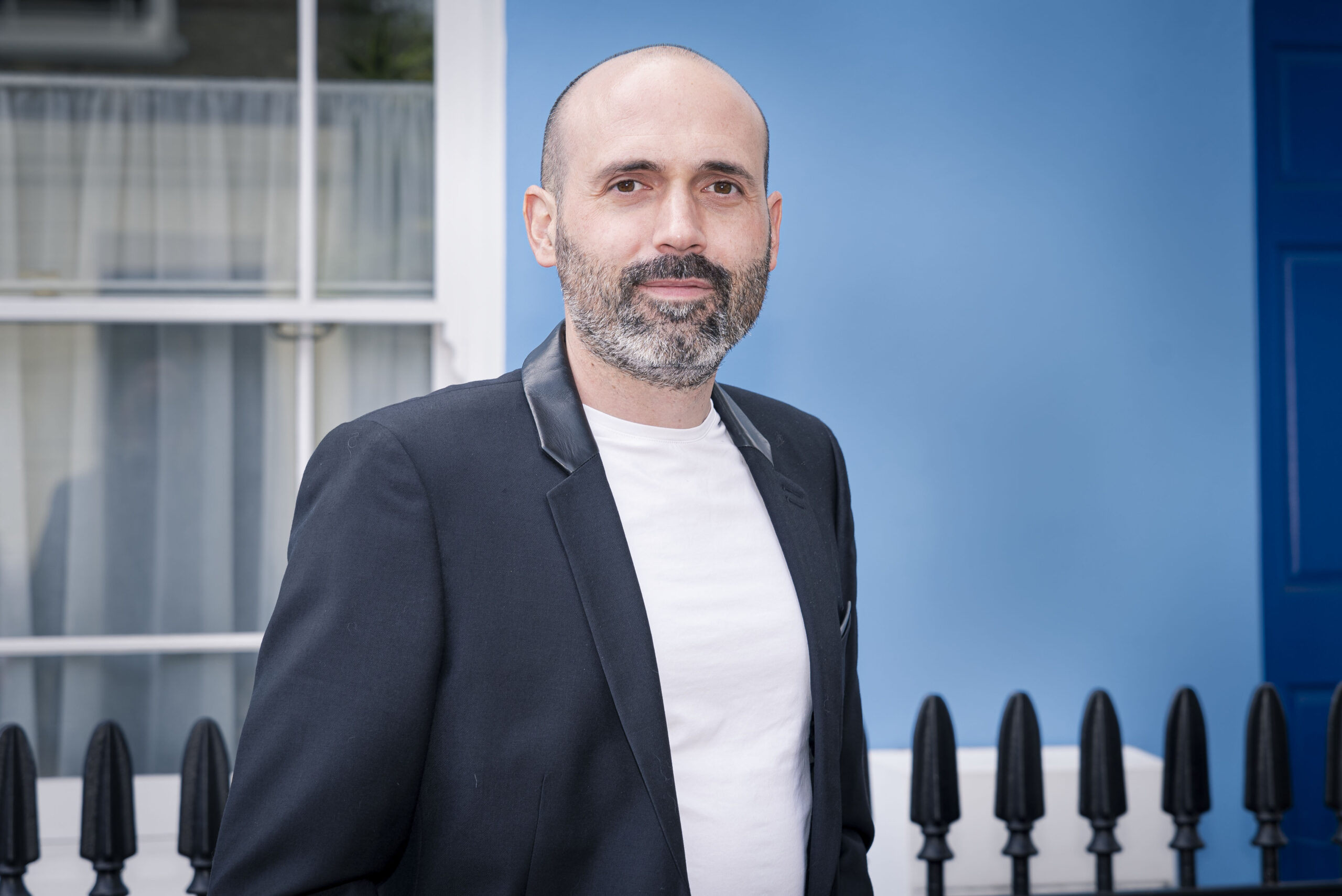
  • Gina Miller: ‘We need a fourth school term devoted to non-academic aspects of education’

    Gina Miller: ‘We need a fourth school term devoted to non-academic aspects of education’

    Before Covid-19, education was being neglected but I think the pandemic has really shone a light on our underfunded education system. It’s a hard truth, but we haven’t really thought enough about how we’re going to educate our kids in the future.

    The biggest conversation now is about catch up – but it’s about catching up to back to where we before. What we’re not doing is thinking of this as an opportunity to really rethink. We need not just to modernise education, but to rethink the curriculum, rethink our schools architecture, and look again at teacher training. What’s needed is a commission to look at the entire system. If I look at where we are now as a country, we’re a long way away from where we were when I was growing up in Guyana. In those days, British education was the gold standard everywhere in the Commonwealth. I was brought up by English nuns in a convent in British Guyana and we all understood that education is the most precious thing you could give your children. That was because whatever happened in life, they would have the skills, resilience, heart and brain to deal with what came next.

    My fear is we’ve lost that thinking about education as being about building mental and physical agility and resilience. Instead we’ve become obsessed with assessment.

    And of course this series of missteps has had ramifications. If you look at us now on the global index, we’re nowhere near the top – we’re actually in the bottom, and our reading skills have dropped dramatically. This is especially astonishing when you consider that economically we’re a country that’s doing well. Added to that, we’ve got problems with our approach to teaching which seems to be based on the notion that the future will be much like the past. But the world isn’t where it was, and we’ve got to look at the warning signs.

    One thing we have to focus on is the Fourth Revolution, and what’s happening with digital technology. We know that this has its mental health aspects. Sadly, it’s especially prevalent among teenage children that too much exposure to technology creates this sense of depression and sadness. There are emotional consequences to learning remotely which have been accelerated through Covid. There’s an analogy with work here – where we’ve learned that we’re social animals, and that some tasks are far better conducted face to face. Likewise, we need to realise that there’s a sensory aspect to learning – you’ve got to engage the five senses.

    And if we’re to keep all our senses healthy what does that mean? It means art, music and literature – it can’t all be about the academic curriculum so I think we have an opportunity here if we can find the courage and imagination to think radically. For instance, we have three terms in the UK at the moment – and that’s based on the rather outdated notion that kids used to need to go and bring in the harvest in summer. That’s what the long summer holiday is based on – and it hasn’t happened for hundreds of years!

    I would propose that part of the review is to look at the possibility of a fourth term. I would dedicate that term to things that are not necessarily academically led, but which have an academic element: the environment, gardening, cooking, community service, sports. It would be a term where children aren’t in the classroom, but they’re in the community and they’re learning a different skill set, which would keep them in good stead for the future.

    That would be good not just for mental health and mental agility but for coping against adversity in a world which we know will be radically different to what we know now. Look at some of the up and coming countries and how they’re coping with education, and there’s a huge amount for us to chew on there. It’s really quite remarkable the subjects they’re teaching. In Singapore, or in Rwanda or in Ghana, they’re focused on handing down entrepreneurial skills to the coming generations. They’re learning about their environment and the challenges facing their countries.

    So we’ve not yet made that leap into understanding that we need to invest in our education – that it’s the best investment we can make. I’d argue it’s one we need to make now.

  • Why personality now plays more of a role in the workplace than ever

    Why personality now plays more of a role in the workplace than ever

    Patrick Crowder

    When we go to work, we are putting on a front. Oftentimes we strive to appear professional and alter our persona to convey that impression. It can be subconscious or deliberate, and research from the team behind the job networking app Debut suggests that it’s probably not a bad thing.

    The team at Debut consulted with occupational psychologists to find out what these workplace personas are and to see how managers can alter their strategies with the different personas in mind.

    Dr. Meredith Belbin suggests nine different team roles. Each one has a set of attributes assigned to it, such as “introverted”, “high-standards”, “focused”, “creative”, and so on. These personalities work together in different ways. One employee may be skilled at seeing projects through to the end, while another may thrive in the formulation of the initial idea or concept for the project. Ensuring that people are the right fit for the company is a concern for hiring managers, which has led to the use of personality tests in the workplace.

    Jessica Alderson has experience with compatibility based on personality types through her dating app Sosyncd, which finds matches based on Myers-Briggs test results. She suggests that compatibility considerations in the workplace should go beyond personality tests alone.

    “It can help for managers to know the personality types of their team, whether that’s using Myers-Briggs, DISC, Enneagram or other personality type frameworks. They can then consciously tailor their communication style to individuals,” Alderson explains. “Personality frameworks are a great starting point but you also need to observe and listen to your staff. Take a step back and think, ‘Is this communication style working for this person?’ Managers can also simply ask their team members what’s working for them and what isn’t.”

    Everyone works differently. Some prefer the WFH life, and some can’t wait to get back to the office. Even so, many people have some ritual, known to them or not, which helps put them in “the zone” to work. This shift can happen during their commute, when they step through the office door, or even just after that first cup of coffee. The pandemic has seen many of those rituals interrupted or altered, which can contribute to a loss of productivity and foster disdain for a once-loved job.

    Debut’s Marketing Manager Avantika Vaishnav believes that the effects of remote working will require employers to look at the personality types of their employees to ease the transition back to traditional work.

    “Working from home has really changed everyone. Whether you are an introvert or an extrovert, it has shifted our perspective of working and most importantly our priorities,” Avantika explains. “It’s been a tough year and the transition back to office life and working around others may be the toughest part for many. Back-to-office anxiety is real and many people will suffer, so be sure to know your employees’ personality traits and how you can make this change as comfortable as possible.”

    The pandemic has shown employers the need to view their employees as unique individuals with specific needs. Now more than ever, an understanding of personality traits and how they work together is crucial to maintaining a healthy, productive workplace.