Dr Catherine Green was queueing for pizza during her holiday in Snowdonia when she overheard a woman saying the people behind the COVID jabs couldn’t be trusted. Dr Green couldn’t let this slide so she introduced herself to the skeptic: “My name is Cath Green and I might not look like it in my bare feet and this dress – I might not sound like it either, believe me I know – but I am “them”. You couldn’t have known this, but I’m the best person in the world to tell you what’s in the vaccine. I work with the people who invented it. It’s me and my team, in my lab, who physically made it.”
Overhearing this vaccine scepticism was the catalyst for the book. Professor Sarah Gilbert and Dr Catherine Green felt it was their duty to come out of their labs and put the truth into print. “I would like people to know how we really got here and what happens next,” Green writes.
This is the most extraordinary story which focuses on the often surprisingly ordinary lives of the women behind the Oxford AstraZenecavaccine. Although it was ghost written, the chapters alternate between being authored between Professor Sarah Gilbert and Dr Catherine Green.
It’s hard to work out how these women found the time for this book. Not only are they working parents – Professor Gilbert is a mum of triplets.- they are having to deal with issues such as not being able to buy toilet roll, worrying about vulnerable family members, they are also busy saving the future of humanity. At one point Green seems to lean into the working mum stereotype as she employs a baking analogy to explain how the vaccine works. She says making a vaccine for a new disease is a bit like making a specialist birthday cake. You can get everything ready and then when the order arrives you just add the icing with the message or indeed, the spike protein.
Green in particular talks about the pressure of getting the messaging and explanations right and making sure the public understands what is going on. “I woke up feeling really nervous. Not because it was the day we were going to put the first shot of our vaccine into the arm of our first volunteer in our first trial: I had every confidence that would go smoothly. But because I was due to do a radio interview with LBC’s James O’Brien… I didn’t want to let anyone down by saying anything wrong.”
At the beginning of the book is a quote from an anonymous source: “Better to light a candle than curse the darkness”. This epitomises their message, this book is their solution to the anti-vaxxer movement. So forget your comic books, if you’re looking for superheroes you’ll find them standing among us, perhaps even in the queue of a takeaway.
The legendary commentator on not retiring, his Eton education, and why the BBC wouldn’t look at him today
My new book Ten to Win…And the Last Man In isn’t so much a reflective pandemic book, as a book which has to do with the importance of Test Match cricket. If Test Match cricket were to stop, the game would pall alarmingly. The fact that it’s still there, to some extent keeps T20 and the Hundred honest in a funny way. The game which bores me is the 50 over format, particularly when play sags a bit in the middle. T20 and The Hundred are both fine – provided you don’t make the mistake of calling them cricket. It’s showbiz.
I write my books on my iPad on my knee – the last eight books have been done like that and I must say I find it very easy. When I write a long paragraph on the iPad I might correct the prose there and then – but when I really have corrections to do, I print it out and make my alterations from the hard copy. I find if I sit with a computer or iPad, it has a nasty habit of cutting it and disappearing, meaning I must spend 25 minutes typing it again.
Right into my eighties now, I’ve worked very hard. I suppose I’m driven by the fear of boredom and the fear of waking up and not doing anything. Fortunately, I have a fantastic Italian wife, and we prefer to be on the road. Besides, you hear of lots of people who retire at 60, and by 65 they’ve become not only the worst bores you’ve ever met, but alcoholic bores. I have a brother who was a High Court judge for 35 years, and though he might try to deny it, he hasn’t really done anything since he was about 75 and he’s now 89: he still champs at the bit rather as if he’s in the High Court. They force them to retire, and in one or two cases it’s a good thing, but it probably wastes quite a bit of good brain power, because experience is important.
I grew up in a farming family – the Hoveton Estate has been ours since about 1520. My father wasn’t interested in cricket, it was something I picked up at Sunningdale, where I was in the first XI for four years. I was completely nuts about cricket from the age of seven. When I arrived at Eton, I was quite a good cricketer. I loved my five years there, and all my ten years at boarding school. It gave you the confidence to look the world in the face.
During my last year at Eton, I had a terrible accident and I felt I had the whole of my life taken away: for a long while, life and cricket wasn’t what they’d been before. It took me a while to reinstate the confidence which I might have had had I left Eton unscathed. I have no idea if I would have played Test match cricket had I not had that accident.
If I arrived today at the BBC and asked for trial commentary, they wouldn’t look at me. For a start, my voice would be a grave handicap. And the way I did it – with the assumption that the whole scene needed to be described, and the picture should be painted – they wouldn’t want that now. I don’t think John Arlott or Brian Johnston would get a look in either, any more than Neville Cardus would get a look in at a newspaper today.
The ex-players aren’t commentators in radio; they’re summarisers. But of course, commentators on television are the equivalents of summarisers on the radio, because the commentator on television is the camera. Whereas the commentator on the radio is the equivalent of the camera on the television. On the radio you say, “He comes in and he bowls”. You don’t say that on television because you see it.
If a young person came to me and said they wanted to commentate, I’d recall the advice of Johnny Woodcock, who was the reason I became a journalist in 1971. I said, “I want to write about cricket,” and he said, “I wouldn’t advise that”. But if they persisted, what l’d do is ring up Henry Moeran who’s the assistant producer at TMS and I’d say, “Over to you.” And from there it’s anyone’s guess what he’d say.
Iris Spark asks what the 46th President of the United States can learn from the 44th – and what can we all learn from the greatest of all presidential memoirs
With the arrival around a year of ago of Joe Biden in the White House, there have now been 46 people who have risen to become President of the United States during America’s 250 year history. It’s only rarely that someone with the sensibility of a writer assumes the highest office in the land.
It’s easy to see why this might be so. On the face of it, the pressure and flux of the job would appear to argue against anyone with a penchant for the sedentary life taking it on. Barack Obama did. It is one of the central facts of his life that he felt the need to. That means that in The Promised Land, the 768-page memoir we have a unique document, which has much to teach us about politics – and about Biden’s America.
But the value of the memoir is still greater than that. In reality, things happen so quickly in the Oval Office, and with such drama, that we find in the pages of Obama’s book a condensed primer on human nature; it is a book so good it has much to teach us all.
The former president’s eye for detail means that the reader is given a unique sense of the White House as a working environment. Here, for instance, is the man charged with a thousand problems, taking time to notice the gardeners at 1600 Pennsylvania Avenue:
They were men of few words; even with one another they made their points with a gesture or a nod, each of them focused on his individual task but all of them moving with synchronised grace.
So the man of many words notes straightaway the men of few. This is a book about many kinds of work – it is about the job of being president – and therefore being a leader, and it is also about preserving the dignity of work for as many Americans as possible in the face of the 2008 financial crisis. But every word reminds of you of his writer’s vocation: in bearing witness to his experience, he hopes to redeem his presidency of its faults, and to comprehend – even compensate for – his errors.
It might be that he has less to redeem, in the wake of Biden’s win, than if we were now inhabiting the first months of Donald Trump’s second term. Biden is a different kind of president to Obama, but he campaigned on the back of Obama nostalgia, and at the policy level, though he is sometimes tugged to the left of the 44th president, Biden is pledged to a kind of Obama-ism.
But what American president doesn’t have regrets, if only because it is a position of such power that any ugliness in the planet is sometimes held to be their fault. And so this is a redemptive book, even if Obama can hardly think of anything he could have done differently.
But Obama, to risk stating the obvious, is more than a writer. In The Promised Land, even as he is observing with the writer half of his brain, we watch him operating in the real world. It is a rare skill. What can we learn from it?
Obama’s book begins with a potted description of his early life, and it’s distinct from the sweep of his early masterpiece Dreams from My Father. It is always interesting to read of the early lives of presidents, or figures who we know shall prove historic, since we can see how in retrospect so much of what happened was to their advantage.
Interestingly, Obama’s story is also marked by a strong counter-intuitive streak. At one point, having described his ascent to be the first black editor of the Harvard Law Review (‘enthusiasm makes up for a whole host of deficiencies’), we discover his contrarian spirit, which may be more marked in a man who has become famous as a consensus politician than we might realise:
Job offers arrived from around the country, and it was assumed that my path was now charted, just as it had been for my predecessors at the Law Review: I’d clerk for a Supreme Court justice, work for a top law firm or the Office of the United States Attorney…It was heady stuff. The only person who questioned this smooth path of ascent seemed to be me.
It’s a fascinating career progression: as the world now knows, there was a brief accommodation with corporate America when he trained at Sidley Austin a big Chicago law firm where he met Michelle Robinson. While working as a civil rights attorney, he saw an opening in local politics and rose through the state legislature – via a book deal – to Congress and then the presidency.
What comes across is that it’s not enough to know what you want to do – you have to be on the lookout for opportunity, to react to the contingencies of the world. With Obama, we can see that he retained throughout crucial flexibility; that the urge to grow was correctly traversed alongside a need to navigate the world. Obama sought experience, but never tied himself to it, and always allowed life to teach him what to do.
What is remarkable about Obama’s rise to the presidency is how frictionless it seems – how, once he had chosen politics, and made that ground secure, he was able to move upwards with very little acting against his ascent. The reader who knows about Obama’s story might wince at one point, when he writes of his wedding to Michelle on October 3rd, 1992: ‘The service was officiated by the church’s pastor, Reverent Jeremiah A. Wright Jr.’ That association would not turn out well for Obama, when on March 13th 2008, Obama woke to find videos of Wright’s inflammatory rhetoric playing on repeat across the live media. Some choice excerpts included him calling America, ‘the USA of KKK’, and his saying, ‘Not God bless America. God damn America.’
It was the only moment when, the reader feels, Obama might really have lost the 2008 election; it was possible that with poor handling, he might either have found himself defeated by Hillary Clinton to the Democratic nomination, or perhaps that he might have held on but found the Reverent Wright’s remarks a millstone around his neck in the subsequent general election battle against John McCain. ‘It felt as if a torpedo had blown through our hull.’
Obama did two things from there which are worth noting. In the first place, he shouldered responsibility: ‘I may not have been in church for any of the sermons in question or heard Reverend Wright use such explosive language. But I knew all too well the occasional spasms of anger within the Black community – my community – that Reverend Wright was channelling.’ It might be too simplistic to state that Obama strikes one as an honest person – and in fact, his time in office was marked by an almost total absence of scandal. But perhaps more important was his realisation of the importance of the moment: ‘Anyway it was too late. And while there are moments in politics, as in life, when avoidance, if not retreat, is the better part of valour, there are other times when the only option is to steel yourself and go for broke.’
But all this was heading, as we know towards the presidency, and of course the book pivots there, just as his life altered. Obama is soon in receipt of his daily briefing and problems rush his way, anxious to be solved: there is the fact of the global economy crashing; the healthcare system he has promised to fix; the immigration system which needs absolute overhaul – and perhaps above all, a climate which needed fixing. Obama took a number of decisions. The first was to prioritise the economy; the second was to pursue sweeping healthcare legislation.
The book is remarkable for the detailed but enjoyable way in which he describes each of these problems. Soon a pattern emerges. We repeatedly find Obama making sure he makes some progress (Obamacare, the size of the rescue package following the 2007-8 financial crisis), sometimes irritating those would desire bigger or more progressive legislation.
His time in the White House shows a classic case of a toxic work environment and how we react to toxicity in our midst. The Republicans refused to work with him throughout his two terms, but Obama rose above it rarely stooping to their level. This approach was encapsulated by Michelle Obama’s dictum: ‘When they go low, we go high.’
It is an excellent book, but we shall find out if it’s a great one when the next volume is published. That’s because in that volume he will have to write the words he never wanted nor expected to write: Enter Donald Trump…
A while ago I wrote a book about Roger Federer. During my researches, I recalled a story of a friend of my father’s. This was Mike Eaton, who had been a formidable tennis player in his day, playing Junior Wimbledon. He subsequently fathered a son, Chris Eaton.
Chris, as some readers might remember, had an impressive run to the second round of Wimbledon in 2008. Chris was one of those players, a sort of early male prototype of Emma Raducanu, who relished the big occasion. He didn’t win his second round match that year against Dmitri Tursonov, the then 25th seed, but it was close for a while: “the Eaton rifle” as he had once been known at school lost 6-7, 2-6, 4-6.
Chris reached a career high singles ranking of 317. Thinking back to 2008, in retrospect Eaton was never likely to take a set off Tursonov. But if Tursonov had any temptation to gloat about it, it was swiftly removed: he lost in the next round to Janko Tipsarević. And Tipsarević at that time, as he would now admit, wasn’t realistically in the position of taking a set off any of the likely winners – then, as now, one of Roger Federer, Rafael Nadal and Novak Djokovic.
The Raducanu rise means that tennis continues to be a pretty reliable bet for any young person thinking of entering sport
Why do I bring this up? It’s because of a simple fact that Eaton’s father once relaid to me. Namely, that he had never once managed to return a single serve of his son’s. Let’s remember that Mike was a brilliant player in his own right. And let’s remember how easily Chris was dispatched from Wimbledon.
In a story like this we begin to gauge the sheer level which the best players are at. Most of us don’t need a reason to feel more admiration for the so-called Big Three: we feel it already. But it is sometimes difficult to know quite how good they are. The story of the Eaton family tells us.
The continued popularity of tennis seems assured, even though there must soon come a time when Federer and Nadal must retire, their bodies finally succumbing to decades on the tour. Djokovic will likely following suit in time, and surely will be the most gilded player of them all when he does so.
The success of the game hasn’t always seemed as certain as all that. I am old enough to remember the big serving nadir of men’s tennis in the early 1990s when people like Michael Stich and Richard Krajicek could win Wimbledon seemingly while possessing one shot. I remember the 1991 final, between Stich and an ageing Boris Becker, as an unwatchable fiesta of boredom, where one wondered whether equipment had begun to chip away at skill: the battle went to the biggest serving, which really meant it kept going to the tallest.
It was part of the magnitude of Federer’s achievement to change that, more or less on his own. People forget that in 2003, we felt excitement at the brilliance of his play – but also relief that we were now allowed to watch rallies again. And though Nadal and Djokovic both brought different styles to the game, they eventually learned to beat Federer on terms of Federer’s own making. It’s probably this which makes Federer fans so ardent: they remember what went before.
Looking ahead, there is a natural trepidation about any era where Federer, Nadal and Djokovic aren’t playing anymore. But if anyone had any doubts about the future of tennis: enter Emma Raducanu.
Raducanu’s success remains the most extraordinary story – and may even have been made more so by her subsequent decline in form, which I’m willing to bet, has nothing to do with core motivation, but all to do with her inherent instinct for the big occasion. The real test of Raducanu won’t be how she does in Transylvania but how she does in Melbourne in early 2022. After the dizzying heights of her US Open victory, it may take Wimbledon to get her fully motivated again.
The Raducanu rise means that tennis continues to be a pretty reliable bet for any young person looking to enter sport. Of course, nowadays, with prize money as it is, you can earn a decent living as a player even without lifting many trophies. To take a random example, the current world number 99 Henri Laaksonen – not a player I had heard of until Google turfed him up – has career earnings in prize money alone of $1,849,304. That approaches financial security. To put this into perspective, it surpasses the earnings of one of the true greats of the game Rod Laver, who is estimated to have earned around $1,500,000 in the 1960s.
So the money keeps pouring into this most gladiatorial of sports: and some of it trickles down into other career options. Some of these are advertised on the Lawn Tennis Association website which has a helpful Live Vacancies tab. A Tennis Relations and Events Manager at the National Tennis Centre can command £45,000 pa plus, although the ads also stipulate that you need to be at the office in Roehampton three days a week. The job is seeking candidates who will “provide and implement strategic event development opportunities across our Events business and support with the delivery of our Athlete Plan.”
Other jobs abound on the web. There is an ad for a seasonal gardener at Wimbledon – an idyllic-sounding job if, like me, you feel that Wimbledon fortnight is somehow elevated above all the other fortnights the calendar year has to offer. This is advertised as a “flexible role across the whole Horticultural Department’ and in the ad at least sounds like a great opportunity to see how those lawns look so immaculate year in, year out – and join a dedicated team to boot.
Sometimes, there are also marketing initiatives which need staffing. The LTA’s current project is called “Tennis Opened Up” and its mission is to make tennis Relevant, Accessible, Welcoming and Enjoyable.”
There is just a hint here that tennis has fallen behind other sports – most notably football – in terms of appealing to those outside the fee-paying school system. But it also means that more and more, having taken part in Wimbledon fortnight isn’t necessary in order to have a fulfilling career in the sport.
Of course, as with every sport today there are a range of careers which touch on tennis: from sports agent to sports journalist and sports PR and sports charity, the major sports now touch every area of life. At Finito we have mentors with sports specialty and welcome all candidates seeking a career in the sector.
And Eaton? That’s easy, he now works as a tennis coach. He joined the Wake Forest men’s tennis staff as an assistant coach during the 2016-17 season before being elevated to associate head coach prior to the 2018-19 season. When I last saw his father, he still hadn’t returned one of his son’s serves.
Patrick Crowder sat down with violin teacher Georgina Leach to discuss the value of musical education, the industry, and new ways of teaching music.
Georgina Leach teaches violin to secondary school children at All Saints Catholic College and to primary school kids at John Ruskin School. A fiddle player herself, Leach makes every effort to engage all of her students through diverse repertoire, opportunities to play for the class, and a new style of teaching notation which she developed.
“For me, it’s about the children who don’t really excel in other areas, and music class can be a place where they really get something from it which helps them find their own voice and meet set goals,” Leach says.
Music education is often sold as a way to help children excel in other areas in school, and while there are studies which suggest that link, Leach prefers to focus on music as a means of expression and confidence-building.
“There’s a lot of focus on the STEM subjects, which in some ways I understand, but it’s incredibly sad I think if they’ve never been exposed to the arts and had a go to see if they have a flare for it,” Leach says, also emphasising that music can also help increase confidence. “One kid may not feel comfortable to speak in front of the whole class, but they’re comfortable playing in front of the whole class,” Leach adds.
Traditionally, music education focuses on Classical music, but many children feel more connected to other genres and familiar songs. That is not to say that Classical music has no place in the classroom, and much work is being done to introduce Classical to a wider, younger audience. Wigmore Hall, for example, offers £5 tickets at selected concerts for anyone under the age of 35. Additionally ,the Youtube comedy duo TwoSet Violin produces funny, light-hearted videos based on their love on Classical music which draws in viewers who might not have experienced the genre before. Leach explains how, in today’s music industry, money often comes from non-Classical sources.
“I have friends who are in string quartets who are amazing players, and I know that they face the same struggles that my friends in bands face,” Leach says, “Their top-paid gigs may end up being the weddings they play rather than their concert venue performances.”
An excerpt from “Dynamite Strings” showing Leach’s teaching style
There are a variety of opportunities for practiced musicians to find employment, but Leach’s job is to foster a love for music in the first place. Children can be put off by complicated notation and unfamiliar songs, so Leach has written a book entitled “Dynamite Strings” which is designed to be accessible, fun, and engaging for her students.
“Generally when I start them off I try and do lots of simple tunes, because the violin is a really technically hard instrument for beginners to master and you have to drill a lot,” Leach says.
Her new book is designed to make the often-repetitive learning process more digestible and engaging for her students through the use of colour-coding, modified notation, professionally recorded backing tracks, and illustrations by children of the same age group which the book is intended for.
Another variation of Leach’s new method, associating names of notes with the finger used to play them
“I’ve gotten my friends to record the backing tracks for all of the songs,” Leach says, “This illustration was done by my friend’s son,” she says, pointing to a colourful drawing, “and these ones were done by kids at school.” Turning to her form of modified music notation, she says, “The younger ones that I teach can be put off by notation, so this method which I call ‘colour tab’ is really helpful to get them playing with musicality as early as possible.”
Leach’s colour tab uses a colour code system which links a music note to its corresponding letter, then finally to which finger is used to fret that note on the violin. This is similar to the way that guitar players can avoid traditional notation by using tablature, which replaces notes on a staff with fret numbers placed on a representation of the guitar’s strings. The difference is that, with Leach’s system, her students are learning traditional notation as well by making a connection between a note, its name, its sound, and the action required to produce that sound.
“I’m hoping to cause a little revolution,” Leach says, “I really wanted it to be diverse and fun, so we have everything from reggae to grunge rock, and my friends have smashed the backing tracks.”
Teachers like Leach keep the love of music alive in students across the world, and the confidence children foster from musical performance can stay with them for a lifetime, even if the music itself fades away with the years. Georgina Leach’s new book “Dynamite Strings” released on December 1st, 2021, and is available for purchase on Amazon here:
Finito World meets the remarkable founder of the brilliant Netherlands treatment centre – and also discovers directly the positive impact it has had on young people
Kindness is an underrated trait in business. I blame Gordon Gecko. Since Wall Street came out in 1987, it posited the notion that to be successful you need to be ruthless. I never thought this needed to be true, and I especially don’t think it’s true after having Zoomed with Jan Willem Poot, the founder of Yes We Can Clinic in Holland.
Zoom journalism can be a tricky business; to gauge the person you’re talking with in 2D is sometimes impossible. The screen throws up too much distance. But with true kindness, the difficulty falls away: that’s because it dissolves all barriers. Generosity of spirit is essentially transparent, because what does it have to hide?
Poot is like this: engaging, thoughtful, eager to tell you his story. He is the polar opposite of arrogant.
But I’ve also noticed that true empathy often has its origins in hard experiences. This is also the case with Poot. He tells me: “To give you the story of the why of Yes We Can, I have to go back a little to my own story. My parents got divorced back when I was four or five. My Dad was happiest when he was around the world; and my mum raised me and I soon realised she was a little different to other mums: she was a heavy drinker – an alcoholic. She also took medication and never learned how to deal with her emotions without it.”
If that sounds hard, it was just the beginning. “My stepfather came to live with us, and he was also an alcoholic. From the age of 12-13, my home was an unsafe environment – a toxic place.”
Poot began spending less time at home, and more time on the street, hanging out with people in similar situations. “We had an unspoken bond. I found marijuana and gambling and became quickly addicted. I realised if I was stoned all day, or at a slot machine, I didn’t have to think or feel. By the age of 18, I was using cocaine and alcohol; by 19, I was using five grams of cocaine and a bottle of vodka just to feel alive.”
Luckily, one day a careworker found him in the street and picked him up and took him to an institution in the Hague. From 19 to 27, Poot moved around and didn’t find the right psychologist during that time. “They were saying the right things theoretically but they couldn’t get into my heart,” he recalls.
At 27, Poot went to Scotland to Castle Craig Hospital in Blyth Bridge, Scotland. “It was a beautiful clinic in the hills of Scotland. They took my hand and said they wouldn’t let me go until I had changed and was in recovery. Somehow, I trusted them.”
Poot is now 17 years without drugs or alcohol: “I am having the most beautiful life I could have.” That’s because he has purpose – perhaps more purpose than I’ve ever encountered in anyone.
Back in the Netherlands, Poot began apologising (“I had 200 people I had to say sorry too”) and also paying back clinics to whom he owed money. He finally made the last payments two years ago. He then joined a sports company, which helped young people and Poot began to feel a burgeoning sense of vocation; he would give back, and help those people similar to the person he had been. “By seeing those kids and working with the kids – and seeing the beauty of that programme – I was fascinated and I could also see the group dynamics and how positive and beautiful it can be,” Poot recalls.
Poot had been there for two years when his boss came to him and asked for him to be his partner. The company grew over the next years, but during that time Poot began to realise that he craved more connection with the children, which formed a smaller part of his role than he felt he needed. These feelings were compounded by the national situation in the Netherlands. “At that moment there were 200,000 kids getting a form of youthcare. They weren’t really getting better – they were just in the system. 20,000 children had been in the system for multiple years. I knew I could start something small to see if I could change, or help. It was a dream I had.”
Poot sold the sports company and started Yes We Can in 2011; almost immediately, he began achieving real results with children. “After two years, the Dutch government, the insurance companies, the councils, they were all coming to us and saying: “Please, grow and make this bigger because we have thousands of kids dying because there isn’t any right care.” In 2011, there were 25 beds; in 2013, they moved to a place with 85 beds; and four or five years ago they moved to a clinic with 160 beds. That means that every year they now treat a thousand young people. It hardly needs saying that this is an astonishing achievement.
Yes We Can is now an international clinic, which makes a real difference to people’s lives all over the world, but I am keen to know more about what that impact looks like in real terms. With this in mind, I Zoom with a fellow of Yes We Can, who understandably asks to remain anonymous. For the purposes of this article, I shall call her Eve.
When I meet Eve, I know I am going to like her, and warm immediately to her candour, gentleness, and intelligence. What I don’t expect is that I will spend a portion of the next hour fighting back tears as I get to know her story.
Eve’s is – at least to some extent – a pandemic story. “In February 2020, I was diagnosed with anorexia nervosa,” she tells me. “I have struggled for my whole life with eating, and my behaviour around eating, but nothing was working. I was very, very stubborn and verbally abusive towards my family and not wanting to change. I became this selfish person completely compelled by my eating disorder.”
Eve entered something like a parallel universe where the good in life seemed to her a thing almost impossible to access; her only reality was her eating disorder. “I would shout that I wanted to die, that I didn’t want to be here, and all that stuff. I completely ruled the house; I was being just disgraceful and making my family cry.”
Curiously, COVID-19 gave her a trigger. “I was so afraid because nobody knew what it was like and I knew I was frail and what COVID could do to people. I didn’t want to die that way.”
This shows, as only a casual remark can, a shocking fact: for Eve, death was very much in the equation at this point. Fortunately, Eve’s mother had heard about Yes We Can. She checked Eve in on 19th May 2020.
I take a moment to imagine how this might have been for Eve’s mother, who joins her daughter on the call. She has one of those kind faces which have also known suffering – but there is also something else written there, the perennial strength of a mother’s duty. It is the look of someone proud to be a mother, and proud to have suffered for love of her daughter, and who would do it again a thousand times. It is in itself, to use one of Poot’s favourite words, ‘beautiful’ to see.
There is always in the stories I have heard of addiction this almost unspoken toll on the nearest and dearest. And as Eve continues her story, my mind reverts back to Jan Willem Poot, who didn’t have a mother like this. Later, I also find myself contemplating the way in which the world gropes its way to good. It seems as if for all the pain that percolates in the world, we sometimes discover a secret remedy being administered. But this too is often an offshoot of suffering. The world has contained many people who hit rock bottom and didn’t survive. But others find that their nadir is the essential ingredient of the spiritual power they will appropriate in life. Yes We Can is an emblem of this.
And so it would prove for Eve. But she is at pains to point out that her life didn’t change rightaway. Slowly, as the weeks passed she began to reconnect with that other self which had seemed to have gone to sleep: the one capable of being happy and taking pleasure in the simple things the world has to offer. In fact, these things had been there, now and then, all along, even during the hardest parts of her struggle. “What I realised when I was actually in my active addiction, and in the clinic – and since I’ve left – is that nature is a massive thing for me – that I love the stars. I love going on walks.”
Even during the low point of her addiction, there were these little signs of another life – a life beyond her current predicament. “One of the things that I did during addiction was to look at the stars. That was one of the things that I did love: before bed, I’d go outside and look up to the stars with my dad. It would be really magical, but then as soon as I went back inside, everything would be rubbish again. When I went to the clinic, it was one of the things that I would do to remember my parents and say goodnight to them. Dad would always say: “If you see the moon, and I see it, we’re looking at each other. To me, that puts everything into perspective and I say it’s part of my higher power which is something that we discover in the clinic.”
So what was it like going into the clinic? “I was just in my own self-pity, crying and constantly homesick,” Eve recalls. “It felt very, very scary. There were people who were in their later weeks and who were in recovery. I was afraid of judgements. But it was different to places I’d been in before. The clinic is there to confront you, but it also has a feeling that this is the right place to be and I knew instinctively it was going to help me.”
Eve’s biggest changes didn’t occur until around Week 5. “I was still in my old behaviour. At other places it would be, “Just eat”. At Yes We Can no one made me eat. I was put on a meal plan, but the clinic understands that you’ve got to want it. I knew before I went that I wanted to change, but it was scary to take that step away from the safety of my addiction into something else. In a way, my anorexia was still a little high which would distract me from my relationships. But at the clinic, I began to understand why I was behaving in the way I did.”
One important moment was when Eve, who was used to being weighed blind, was weighed and showed her weight. “When I saw the results, I swore and cried. I was confused as I felt a hundred times better, but I had lost weight. Then I went to my therapist and cried and then said: “Right, I’m going to do it.” My first meal was unbelievable. I thought: “Wow, this is incredible. How have I been missing this?”
Eve continues to stay in touch with other fellows from Yes We Can, and is now set for a future which is immeasurably brighter than what she faced a year and a half ago. But what does she think would have happened had she not gone to the clinic? “That’s easy,” she says. “I would have died.”
We have heard a lot these past years about mental health, and I have sometimes begun to wonder if it’s an unhelpful buzzword. One reason for this is that our current conversation seems to skim over the life and death aspect of real struggle; it can elevate difficulty to the realm of real suffering which in turn may make us turn a blind eye to those who are really in danger.
Willem simplifies the whole thing for me: “We follow the same mission for all the kids who come here, and say to us: “I’m dying.” The end result is so beautiful. You can change behaviour. You can change thinking. Young people can start to believe in life again. That gets you motivated. This is the thing I want to do for the rest of my life.”
And you can see that he will – that he will never forget the motivation which his own redemptive story has given him. He wants that redemption for other people – and perhaps with a passion so heartfelt and true that one half-suspects him of saintliness – even over Zoom.
Saint of not, it strikes me that the scale of Willem’s achievement is to make his story not just his own – it is also Eve’s story and thousands of others we won’t be able to hear about in this article. But take a moment now to consider all the others, and try to imagine all the good that a person can do if they have the determination and the vision. If the pandemic teaches us nothing else, let it teach us this.
Christopher Jackson is News Director at Finito World
Finito World meets the remarkable founder of the brilliant international mental health treatment centre in the Netherlands– and also discovers directly the positive impact it has had on young people
Kindness is an underrated trait in business. I blame Gordon Gecko. Since Wall Street came out in 1987, it posited the notion that to be successful you need to be ruthless. I never thought this needed to be true, and I especially don’t think it’s true after having Zoomed with Jan Willem Poot, the founder of Yes We Can Clinics and the international Yes We Can Youth Clinics in Holland.
Zoom journalism can be a tricky business; to gauge the person you’re talking with in 2D is sometimes impossible. The screen throws up too much distance. But with true kindness, the difficulty falls away: that’s because it dissolves all barriers. Generosity of spirit is essentially transparent, because what does it have to hide?
Jan Willem is like this: engaging, thoughtful, eager to tell you his story. He is the polar opposite of arrogant.
But I’ve also noticed that true empathy often has its origins in hard experiences. This is also the case with Jan Willem. He tells me: “To give you the story of the why of Yes We Can, I have to go back a little to my own story. My parents got divorced back when I was four or five. My Dad was happiest when he was around the world; and my mum raised me and I soon realised she was a little different to other mums: she was a heavy drinker – an alcoholic. She also took medication and never learned how to deal with her emotions without it.”
If that sounds hard, it was just the beginning. “My stepfather came to live with us, and he was also an alcoholic. From the age of 12-13, my home was an unsafe environment – a toxic place.”
Jan Willem began spending less time at home, and more time on the street, hanging out with people in similar situations. “We had an unspoken bond. I found marijuana and gambling to numb myself and became quickly addicted. I realised if I was stoned all day, or at a slot machine, I didn’t have to think or feel. By the age of 18, I was using cocaine and alcohol; by 19, I was using five grams of cocaine and a bottle of vodka just to feel alive.”
Luckily, one day a careworker found him in the street and picked him up and took him to an institution in the Hague. From 19 to 27, Jan Willem moved around and didn’t find the right mental healthcare during that time. “They were saying the right things theoretically but they couldn’t get into my heart,” he recalls.
At 27, Poot went to Scotland to Castle Craig Hospital in Blyth Bridge, Scotland. “It was a beautiful clinic in the hills of Scotland. They took my hand and said they wouldn’t let me go until I had changed and was in recovery. Somehow, I trusted them because these people were real.”
Jan Willem is now 17 years without drugs or alcohol: “I am having the most beautiful life I could have.” That’s because he has purpose – perhaps more purpose than I’ve ever encountered in anyone.
Back in the Netherlands, Jan Willem began apologising (“I had 200 people I had to say sorry too”) and also paying back people to whom he owed money. He finally made the last payments two years ago. 15 years ago he joined a sports company, which helped young people and Poot began to feel a burgeoning sense of vocation; he would give back, and help those people similar to the person he had been. “By seeing those kids and working with the kids – and seeing the beauty of that programme – I was fascinated and I could also see the group dynamics and how positive and beautiful it can be,” Jan Willem recalls.
Jan Willem had been there for one year when his boss came to him and asked for him to be his partner. The company grew over the next years, but during that time Poot began to realise that he craved more connection with the children, which formed a smaller part of his role than he felt he needed. These feelings were compounded by the national situation in the Netherlands. “At that moment there were 200,000 kids getting a form of youthcare. They weren’t really getting better – they were just in the system. 20,000 children had been in the system for multiple years. I knew I could start something small to see if I could change, or help. It was a dream I had.”
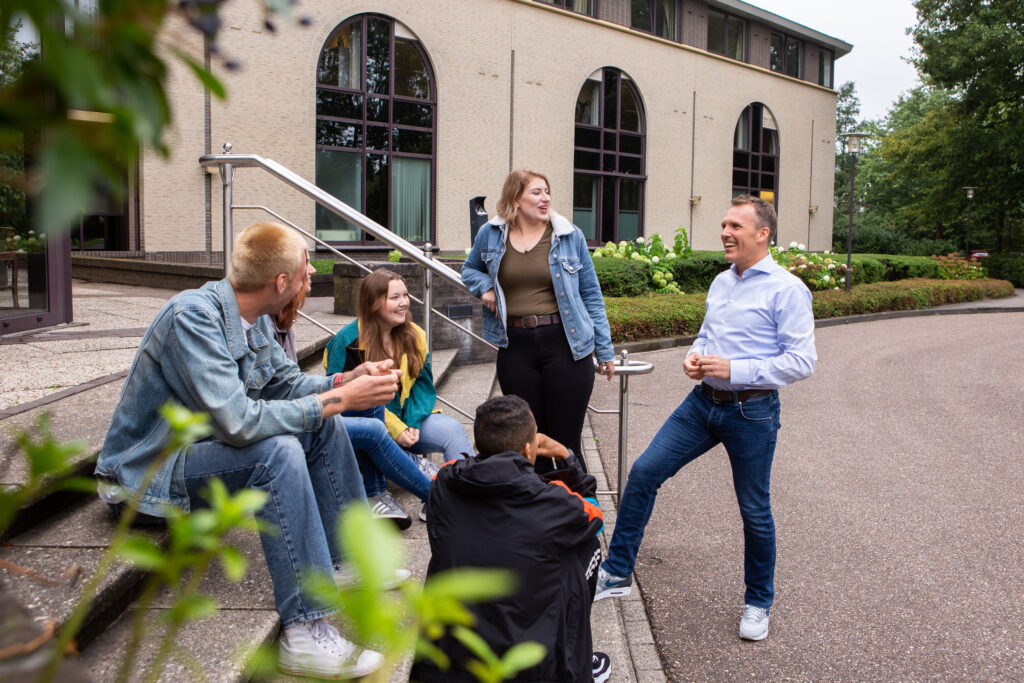
Poot sold the sports company and started Yes We Can Clinics in 2011; almost immediately, he began achieving real results with children. “After two years, the Dutch government, some insurance companies, the councils, they were coming to us and saying: “Please, grow and make this bigger because we have thousands of kids suffering because there isn’t any really effective care.” In 2011, there were 25 beds; in 2013, they moved to a place with 85 beds; and four years ago they moved to a clinic with 160 beds. That means that every year they now treat a thousand young people who stay for 10 weeks of residential care. It hardly needs saying that this is an astonishing achievement.
Yes We Can is now an international clinic, which makes a real difference to people’s lives all over the world, but I am keen to know more about what that impact looks like in real terms. With this in mind, I Zoom with a fellow of Yes We Can, who understandably asks to remain anonymous. For the purposes of this article, I shall call her Eve.
When I meet Eve, I know I am going to like her, and warm immediately to her candour, gentleness, and intelligence. What I don’t expect is that I will spend a portion of the next hour fighting back tears as I get to know her story.
Eve’s is – at least to some extent – a pandemic story. “In February 2020, I was diagnosed with anorexia nervosa,” she tells me. “I have struggled for my whole life with eating, and my behaviour around eating, but nothing was working. I was very, very stubborn and verbally abusive towards my family and not wanting to change. I became this selfish person completely compelled by my eating disorder.”
Eve entered something like a parallel universe where the good in life seemed to her a thing almost impossible to access; her only reality was her eating disorder. “I would shout that I wanted to die, that I didn’t want to be here, and all that stuff. I completely ruled the house; I was being just disgraceful and making my family cry.”
Curiously, COVID-19 gave her a trigger to seek recovery. “I was so afraid because nobody knew what it was like and I knew I was frail and what COVID could do to people. I didn’t want to die that way.”
This shows, as only a casual remark can, a shocking fact: for Eve, death was very much in the equation at this point. Fortunately, Eve’s mother had heard about Yes We Can Youth Clinics. She checked Eve in on 19th May 2020.
I take a moment to imagine how this might have been for Eve’s mother, who joins her daughter on the call. She has one of those kind faces which have also known suffering – but there is also something else written there, the perennial strength of a mother’s duty. It is the look of someone proud to be a mother, and proud to have suffered for love of her daughter, and who would do it again a thousand times. It is in itself, to use one of Poot’s favourite words, ‘beautiful’ to see.
There is always in the stories I have heard of addiction this almost unspoken toll on the nearest and dearest. And as Eve continues her story, my mind reverts back to Jan Willem Poot, who didn’t have a mother like this. Later, I also find myself contemplating the way in which the world gropes its way to good. It seems as if for all the pain that percolates in the world, we sometimes discover a secret remedy being administered. But this too is often an offshoot of suffering. The world has contained many people who hit rock bottom and didn’t survive. But others find that their nadir is the essential ingredient of the spiritual power they will appropriate in life. Yes We Can is an emblem of this.
And so it would prove for Eve. But she is at pains to point out that her life didn’t change rightaway. Slowly, as the weeks passed she began to reconnect with that other self which had seemed to have gone to sleep: the one capable of being happy and taking pleasure in the simple things the world has to offer. In fact, these things had been there, now and then, all along, even during the hardest parts of her struggle. “What I realised when I was actually in my active addiction, and in the clinic – and since I’ve left – is that nature is a massive thing for me – that I love the stars. I love going on walks.”
Even during the low point of her addiction, there were these little signs of another life – a life beyond her current predicament. “One of the things that I did during addiction was to look at the stars. That was something that I did love: before bed, I’d go outside and look up to the stars with my dad. It would be really magical, but then as soon as I went back inside, everything would be rubbish again. When I went to the clinic, it was one of the things that I would do to remember my parents and say goodnight to them. Dad would always say: “If you see the moon, and I see it, we’re looking at each other. To me, that puts everything into perspective and I say it’s part of my higher power which is something that we discover in the clinic.”
So what was it like going into the clinic? “I was just in my own self-pity, crying and constantly homesick,” Eve recalls. “It felt very, very scary. There were people who were in their later weeks and who were in recovery. I was afraid of judgements. But it was different to places I’d been in before. The clinic is there to confront you, but it also has a feeling that this is the right place to be and I knew instinctively it was going to help me.”
Eve’s biggest changes didn’t occur until around Week 6. “I was still in my old behaviour. Before it would be, “Just eat”. At Yes We Can no one made me eat. I was put on a meal plan, but the clinic understands that you’ve got to want it. I knew before I went that I wanted to change, but it was scary to take that step away from the safety of my addiction into something else. In a way, my anorexia was still a little high which would distract me from my relationships. But at the clinic, I began to understand why I was behaving in the way I did.”
One important moment was when Eve, who was used to being weighed blind, was weighed and showed her weight. “When I saw the results, I swore and cried. I was confused as I felt a hundred times better, but I had lost weight. Then I went to my therapist and cried and then said: “Right, I’m going to do it.” My first meal was unbelievable. I thought: “Wow, this is incredible. How have I been missing this?”
Eve continues to stay in touch with other fellows from Yes We Can, and is now set for a future which is immeasurably brighter than what she faced a year and a half ago. But what does she think would have happened had she not gone to the clinic? “That’s easy,” she says. “I would have died.”
We have heard a lot these past years about mental health, and I have sometimes begun to wonder if it’s an unhelpful buzzword. One reason for this is that our current conversation seems to skim over the life and death aspect of real struggle; it can elevate difficulty to the realm of real suffering which in turn may make us turn a blind eye to those who are really in danger.
Jan Willem simplifies the whole thing for me: “We follow the same mission for all the kids who come here, and say to us: “I’m dying.” The end result is so beautiful. You can change behaviour. You can change thinking. Young people can start to believe in life again. That gets you motivated. This is the thing I want to do for the rest of my life.”
And you can see that he will – that he will never forget the motivation which his own redemptive story has given him. He wants that redemption for other people – and perhaps with a passion so heartfelt and true that one half-suspects him of saintliness – even over Zoom.
Saint of not, it strikes me that the scale of Jan Willem’s achievement is to make his story not just his own – it is also Eve’s story and thousands of others we won’t be able to hear about in this article. But take a moment now to consider all the others, and try to imagine all the good that a person can do if they have the determination and the vision. If the pandemic teaches us nothing else, let it teach us this. Christopher Jackson is News Director at Finit
Christopher Jackson meets divorce lawyer Jeremy Levison, the co-founder of Levison Meltzer Pigott, and finds the art collector on top form
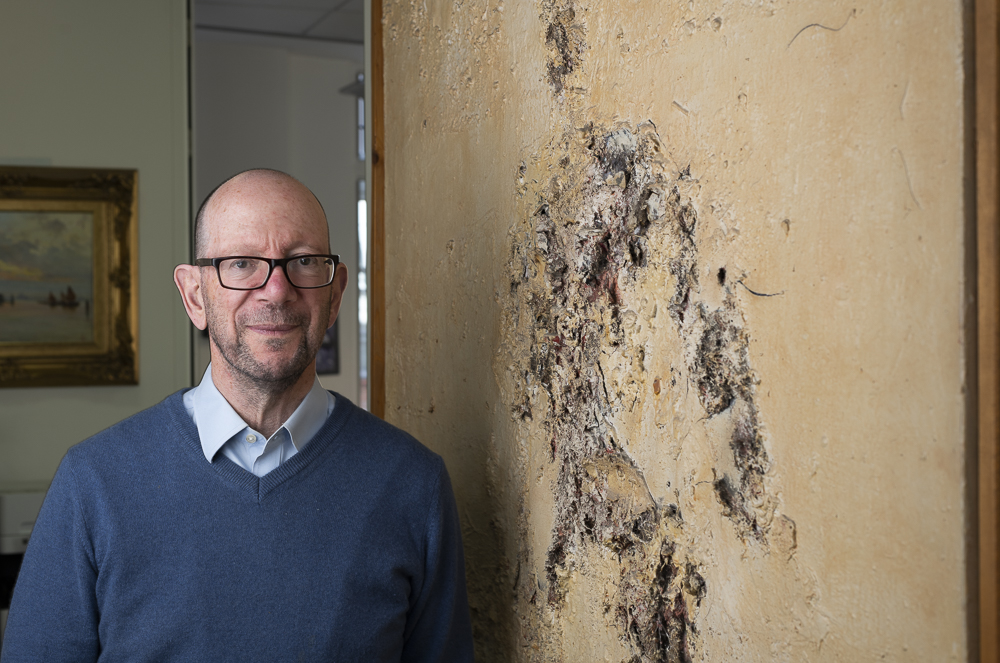
If I were starting out my legal career again, I’d be a divorce lawyer. But I wouldn’t be doing it specifically for the pay, or for the ringside seat on marital breakdown. I’d be doing it with a more specific intention: I’d be aiming to work in the offices of Levison Meltzer Pigott.
There again, I’d have a particular reason in mind, other than the quality of the firm. This, incidentally, is beyond question. Jeremy Levison and Simon Pigott (and later Alison Hayes) have been a regular fixture among lists of top family lawyers since founding the firm – their partner Clare Meltzer sadly died in 2003. Even so, I’d be going there for the art.
Many workplaces have fine art collections. One thinks particularly of Deutsche Bank (‘the art collection probably keeps the bank afloat for liquidity,’ says Levison), and I recall stumbling out of a meeting at UBS once to be standing in front of a sea of Lucian Freud sketches. But Levison’s collection is different.
For one thing it’s personal. It’s also part of a smaller business and so feels more special. So does he paint himself? “At school, I had no artistic ability whatsoever,” Levison tells me. “A couple of years ago, I went on a two-day oil painting class in Sussex. I absolutely loved it. However, the experience convinced me not to give up the day job.”
So when did he first start collecting? “It started in the 1970s. I met a chap who was doing prints; he had created a print and I liked it so I bought it. The next major purchase was in 1979. I had a broken heart at the time and there was this beautiful painting of a woman by an artist called ‘Molinari’ in a very ordinary shop window in Rome. That day my worldly wealth was 32 pounds, and this cost me 29 pounds then. I couldn’t resist it, and I still love the work to this day.”
Over time, art collecting became an aspect of travel. His full success as a solicitor was in the future, and at that time he couldn’t have begun to realise how his collection – which now stands at around 500 pieces – would expand. “Whenever I went away anywhere I would buy a piece of art as the souvenir from that trip,” he recalls. “It just sort of went on from there. I was very fortunate, in that I became friends with someone who came into the office from off the street. He wanted to change his name from Christopher Holloway to Christopher Bledowski. He was not able to pay me, but he gave me a drawing. He was very influential in introducing me to various artists and the infinite creativity of the art world.”
Bledowski is an intriguing figure in his own right and deserves more attention. Bledowski would kill himself in Switzerland some time later, and Levison maintains that the quality of the work, which he has come to appreciate ever more over the years, might well have led to world fame.
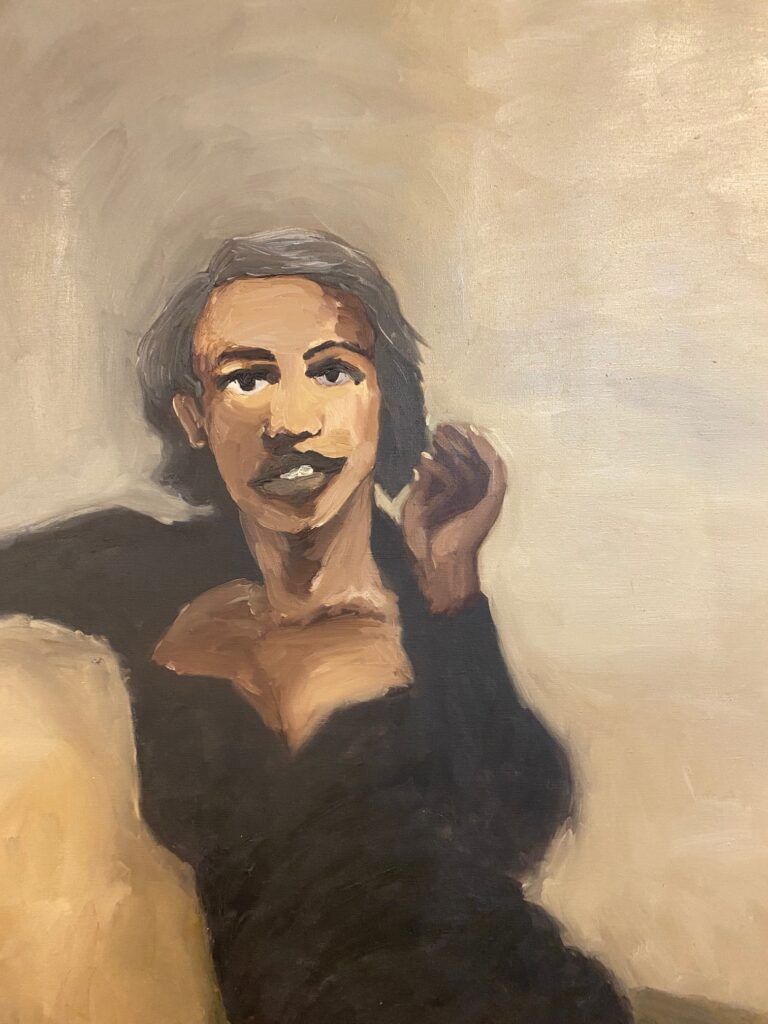
Lynette Yiadom-Boakye, Case
But Levison’s art collection is a legacy of sorts for Bledowski. In time, Levison joined the firm Collyer Bristow and his art collecting continued. “We had all these bare walls,” Levison recalls, “and we had lots of artistic clients. I thought to myself, “Well, why don’t we give the clients an art exhibition on our walls. We did and it was great fun.”’
The idea of a more formal art gallery at Collyer Bristow was born. This was based on a belief that there is far more talent in existence than the art market – always caught up in the almost random anointing of the ‘next big thing’ – has time to recognise. In fact, Levison regrets the notion of the art market, preferring to talk instead about the art world. “The art world has morphed into the art market,” he explains. “I have a lot of time for the art world, but I don’t worry about the art market.”
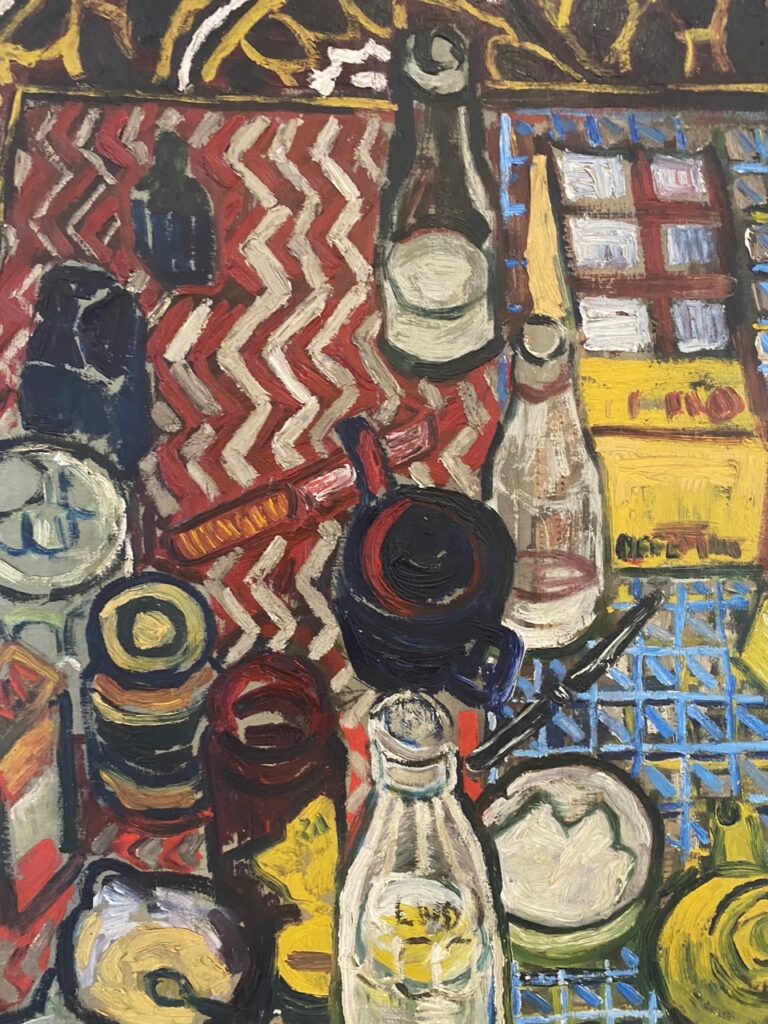
J. Bratby, Still Life
It’s this essentially generous estimate of the talents of those who aren’t famous – or in some cases, aren’t famous yet – which informs Levison’s approach to buying art. “I love living with art, so it’s never worried me if a piece becomes valuable or not. If it does, that’s an added bonus, but if it doesn’t, it doesn’t matter in the slightest because of the joy of living with it.”
There is always generosity at work in Levison’s collecting. “At Collyer Bristow, I thought, ‘Well, we’ve got an acre of wall space here, and within 100 miles of London you’ve got probably 5,000 artists of real talent. Let’s do something to put them together.” The resulting space was a great place to work, and it began to alter the lives of clients and employees. “From an initial sort of quixotic curiosity among the members of staff, suddenly they all became more involved and began to look forward to the various shows. For instance, we had this young secretary and she began to take an interest. There came a time when she found herself needing to make a choice between whether to go on holiday for two weeks in southern Spain or whether to buy this little sculpture. She chose the sculpture. That sculpture over the years will have given her so much more joy than those two weeks of Sangria-fuelled sunshine would have done.”
For Levison, art continues to be a no-brainer. “At some restaurants in London you can go out to dinner with four of you and it’ll easily cost you £1,000 and we all know how that ends up the next day. Or you can go to any number of artists, and buy any number of works for up to £1,000, and enjoy them forever.”
So has the pandemic altered his approach to collecting? “Well, the one thing I did do was to buy a much larger house in order to have more wall space. The problem with my collection is that as it’s grown so has my ability to display it, so I lend a lot of it out.”
I mention that my first stop in New York is always the Frick Collection, just as my first stop in Cambridge is always Kettle’s Yard. Would he ever consider a Levison Collection somewhere in the UK? “I mean my collection is very modest compared to those. But I own this building down in Bermondsey and I wonder whether at some point that might become a home for the collection. I think my collection is an example that quite a lot can be achieved by someone who doesn’t have a great deal of money.”
It certainly does. I recall my own training at Stevens and Bolton LLP in Guildford – a perfectly decent firm but notable mainly for its blank walls. To some trainees, especially if you’re not sure if you want to be a lawyer, life at a law firm can seem like the end of the world. I say I hope the staff realise how lucky they are. Levison replies: “I think they do. And the clients love it as well. It gets constantly talked about, and a lot of clients ask for tours around the gallery.” Levison also concedes that it can be ‘quite a useful PR exercise because we can do evenings where outside organisations come in, and I can talk about how the collection came about.”
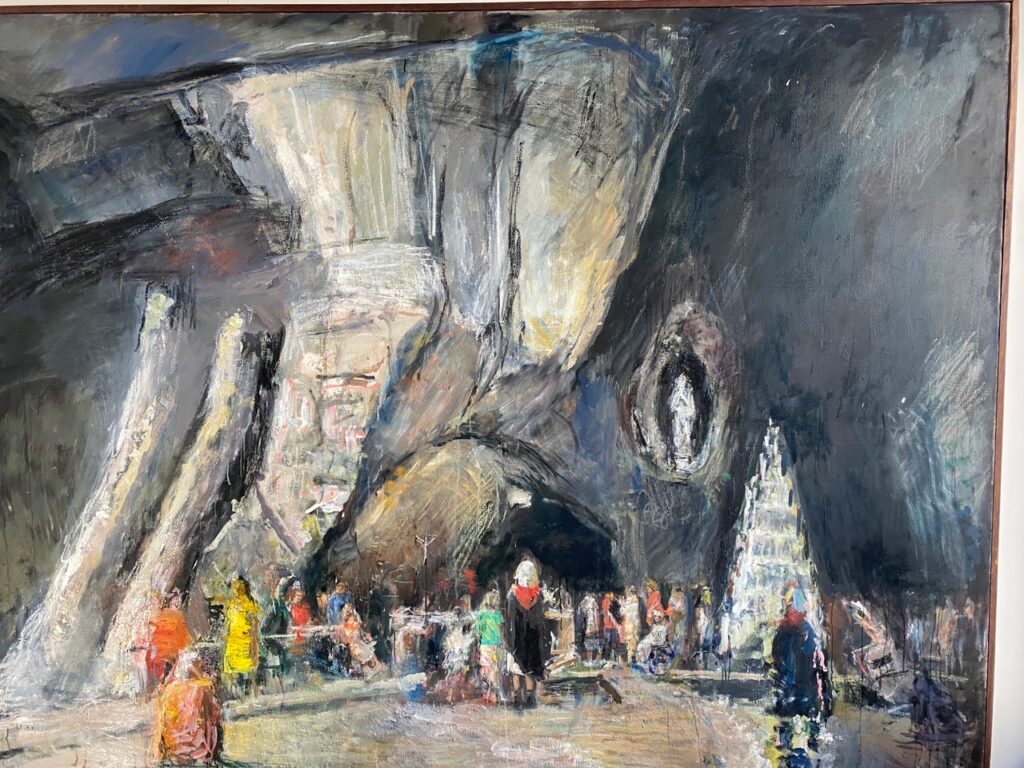
A. Eyton, The Grotto, Lourdes
And of course, when you’re getting divorced it must be something to see such a collection on the walls – to know, in effect, that there are other narratives beyond your own, especially if the divorce is contentious.
Levison laughs. “Yes, I think coming to see your divorce lawyer is ten times worse than going to the dentist. It’s the moment when you’re admitting that your marriage is definitely over. I often think of myself as being, to a certain extent, a doctor. Some just can’t think about anything other than their predicament. But for others, the art collection is a relief – it’s something else to talk about.”
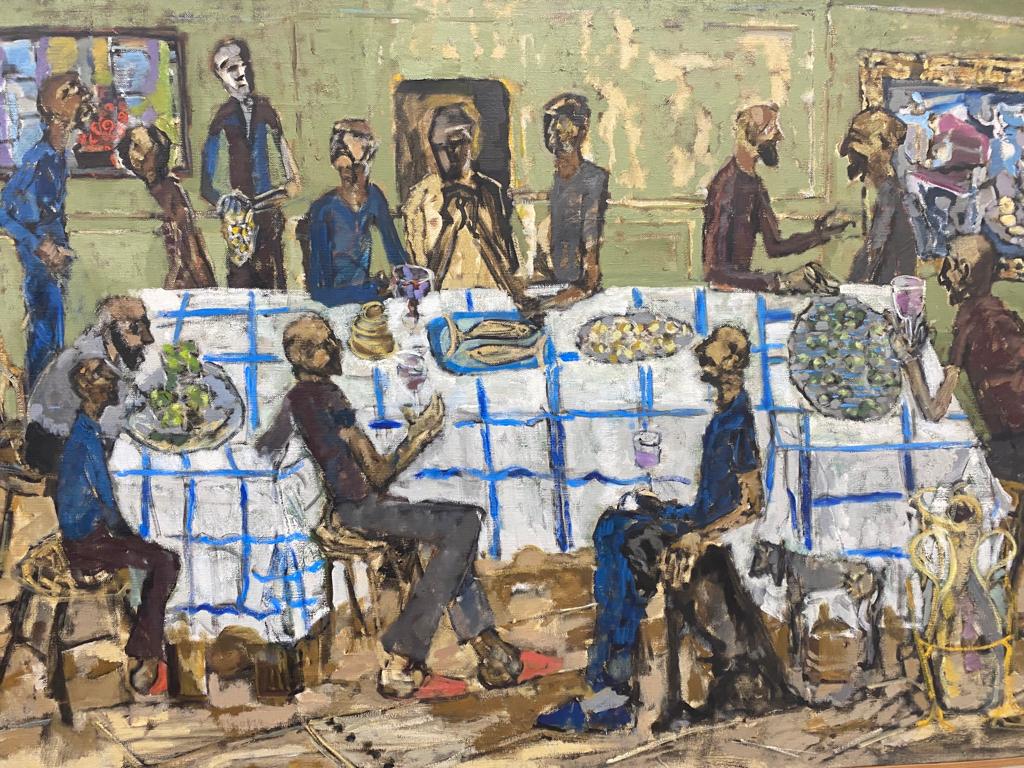
Conrad Romyn, The Last Supper
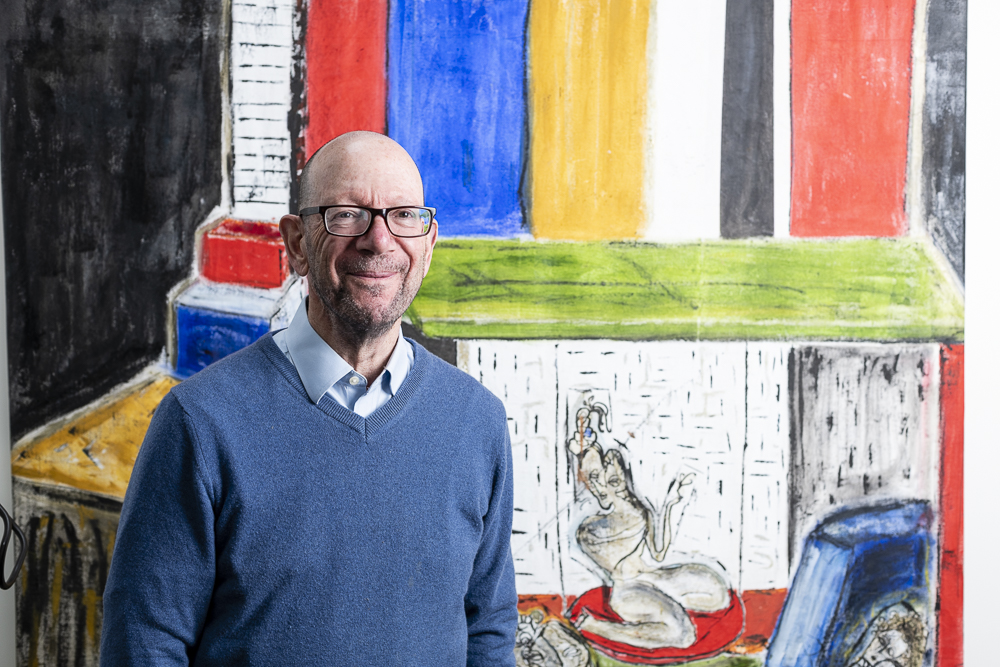
I’ve done the tour many times with Jeremy, but I am always ready to do it again. I happen to know that some of the best works – the Rose Wylies, a Lynette Yiadom-Boakye and a truly wonderful Ollie Epp are now at his new house. But the disappointment of that can easily be met by the fact that what’s here is still remarkable. There’s an Andrew Marr over a photocopier (“I’m not sure how good he really is, but I like it”), a wonderful picture by Anthony Eyton called “Our Lady’s Grotto at Lourdes”, a superb Still Life by John Bratby, various Eileen Coopers, a host of Stanley Spencer drawings, a Last Supper by Conrad Romyn and many, many others.
With the possible exception of Spencer, Bratby and Cooper, who feature in most surveys of 21st century art, all the artists here deserve more recognition – but each has also met with a superb champion in Levison. As always I return out into the street, not exactly regretting my decision to leave the law, but thinking that things might have turned out differently had I had the good luck to train at Levison Meltzer Pigott.
The first thing to learn before you talk to Islay Robinson – the brilliant founder of Enness Global, a finance and mortgage brokerage firm with a rarefied client base – is how to pronounce his name. “It’s Isle-a,” he says, generously waving away my faulty pronunciation. “Don’t worry, it happens about a thousand times a day.”
If Robinson has had any headwinds from his difficult-to-pronounce first name then he hasn’t let them affect him. Enness Global is a remarkably successful business which handles only the very high-end mortgages, for an international client base. I say that I thought the very wealthy mightn’t need mortgages. Robinson smiles: “A lot of people think that, but it’s a misconception. The thing which really drives us is fixing problems for our clients. Often, with the kind of people who come to us, it’s not that they so much want the financial instrument that comes with the house, it’s that the mortgage enables them to do something.”
So what might that be? Robinson continues: “They might wish to buy a house, start a business, or make some investments, and the mortgage is the thing which allows them to do that.”
So how did Robinson find his way into the field? He had, he says, an unpromising education. He grew up at first in Islay in the west Hebrides – where he gets his name from – but when his parents separated when Robinson was eight, he was suddenly presented with the reality of a state school education in London. “It was quite a culture shock; I think our school was the first in London to have a metal detector,” he recalls.
It’s a testament to his resilience and his character that he found a way forward, attending a college in Kingston to do his A-Levels. “University wasn’t a concept which was ever discussed at home.” He subsequently attended Sheffield Hallam (“it was just a general business course which didn’t really have a purpose to it”), and then studied law at the University of London.
But crucially, although he was doing well, he took a job in Foxtons in Chiswick at the same time. Speaking in the aftermath of not only the Osborne tax hikes during the David Cameron administration, but the hits to London property which have attended both Brexit and Covid, you have to squint to remember what an exciting time it was for the industry. “In those days if you wanted a mortgage you just had to ask for one,” Robinson recalls.
There was little regulation, and the market was booming. Robinson had happened on his vocation. “I had the option of being a good lawyer in a good firm – or maybe something a bit less exciting like a conveyancer – or this industry which was already exciting and earning me an income.”
He chose the latter, though the law has been helpful to him since. “The law is hidden to a lot of people, but the law underpinning contract and the relations between people – that’s the framework everything sits on,” he explains.
To begin with Robinson accrued experience at Foxtons and Alexander Hall in the middle of the market. “It was bankers and professional people getting their first houses in Putney for £600,000.” But over time, Robinson and his business partner Hugh Wade-Jones decided the high end might prove interesting.
They had their timing right. London was beginning to attract exactly the kind of clients who would require Robinson’s services. “You had complex people coming in – Chinese, Americans, Russians.” These clients needed a different kind of service; Robinson and Wade-Jones saw their opportunity, founding Enness Global on the day Northern Rock went bust.
Today Enness Global remains an excellent port of call for graduates wanting an interesting experience involving client relations. “Some of our commercial brokers come in as graduates without any experience. We’ve had huge success in hiring people and giving them opportunity.” Robinson understands what young people need in their careers: not the 2am misery of photocopying which often characterises entry-level work at the PwCs and Clifford Chances of this world, but real training, and real interaction with clients.
So what does he see as the future of the property market? Robinson is betting on London. “Since the borders have reopened after Covid, it’s clear that international people want to buy and live and invest in London, and I can’t see any evidence of that changing,” he explains. “There’s ten buyers for every property,” he adds.
Christopher Jackson is the News Director at Finito World
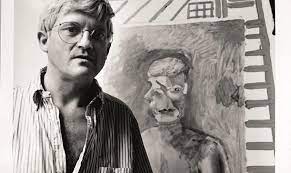
When people ask me as a photographer what my tip is, I say, “Follow and chase the light.” It’s a thing my old friend David Hockney told me: when the day is beginning to close and the sun is on the last buildings – go to those buildings. That’s what Van Gogh did. If you look at his early Dutch paintings, they’re dark interiors, and everything’s grim and brown. Then you get the wonderful Yellow Period, and it all changes.
My subjects vary, but I’ve come to learn that celebrity has its dangers. I remember Elijah Moshinsky, who was a very fine theatre director, and who died of Covid recently, saying of Placido Domingo that he’s totally isolated from the world. Everything was done for him – he’s cut off. He never talked to ordinary people, or mixed with them.
I’ve always photographed my subjects out of an artistic need. The only commissioned portrait I did was for Condé Nast and was of Ruth Prawer Jhabvala, the writer of Heat and Dust – a wonderful Indian lady. I took one of the worst portraits I ever took in my life and Condé Nast and I agreed it shouldn’t be published. Why was that? It was because I didn’t choose her. Even though I admired her, I couldn’t do anything with that face. You have to have the admiration for the work, and also a sense that the face is going to tell some kind of story.
So I could never be David Bailey. I have a story of David Hockney being photographed by Bailey. Hockney was told to go to the studio and was waved in and shown his way to a white background. And David Hockney said: “Where do you want me?’ Bailey says: “Against the background.” David stands there. Bailey gives him a scarf and he says, “Make like a bat!’ And Hockney says, “What?” Bailey repeats: “Make like a bat!” And David waved his arms. Click, thank you – and that was it.
Samuel Beckett was wonderful. I’d tried various careers including banking and estate agency, and not got anywhere. This was before film schools. They were trying to establish a National Film School. Also there was a rogue organisation called the London School of Film Technique which occupied a building in Charlotte Street which subsequently was occupied by Channel Four. The Greater London Council began to give grants, and they’d send you some money to help make films. I sold my MG, my golf clubs, banked the cheque and made a film.
I’d seen the Royal Shakespeare Company used to do readings rather than full scale productions on a Sunday, and one was by Beckett called Act Without Words II, which was about 15-20 minutes long. I thought it was great, and I set my version on a rubbish dump. I didn’t have the rights to the film. I finished the film and didn’t know what to do. I showed it to Harold Pinter and Pat McGee, one of the great Beckett actors. The word got out to Sam I’d done this, and to John Calder, who was his publisher. They summoned me to Calder’s house.
I set up a screen and a projector, and I went to Beckett’s Harley Street apartment. I went up, and there in the corner was this figure with a Guinness: Sam. “Oh Sam, this is Mr. Joyce,” said Calder. I set up. Beckett pulls his chair up and sits about two feet from the screen meaning all you could see was his shadow. I started the film, and I was nervously waiting by the projector. I noticed that his shadow was shaking. I thought: “Oh God, he’s seething.” But I went closer and he was laughing – shaking with laughter.
At the end, he said: “What do you want to do with it?” Calder interjected: “You own it, Sam! This is where you negotiate.” Beckett said: “Well, Mr Joyce, what would you say to 50p?” I said: “Yes”. He said: “Would you like some Guinness?”
As a frustrated drama director, I turned to photography as a way of surviving. You’re treated suspiciously if you wear different hats. I miss theatre directing – I’d love to do Chekhov now.
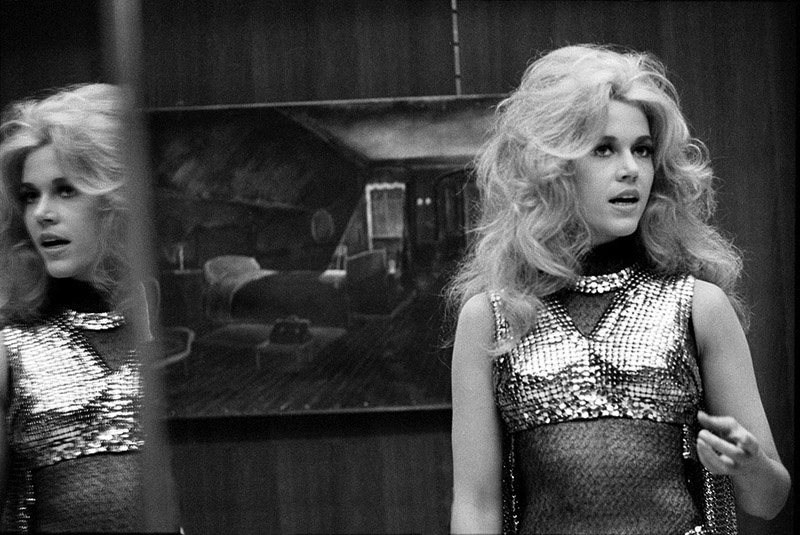
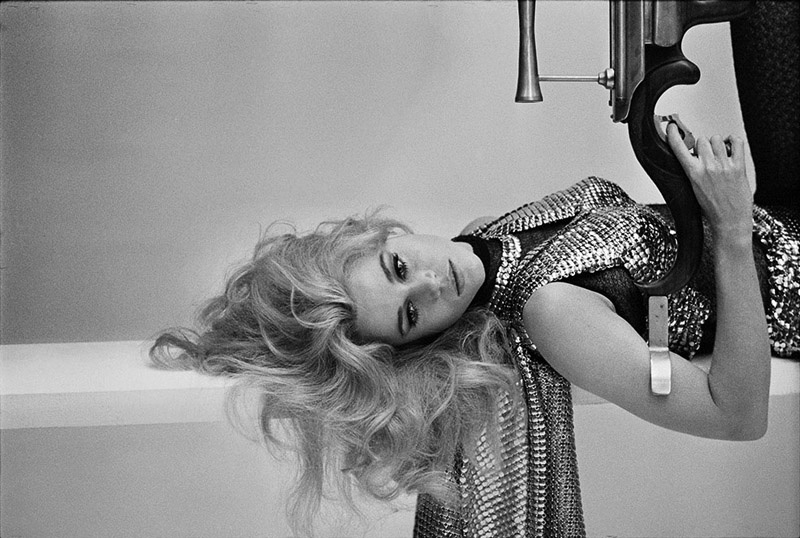
I think back on the people I’ve photographed and it does seem unreal. Jane Fonda was wonderful. I was a callow youth on secondment to Paramount to do a documentary. I remember the Rolling Stones arrived, and looked like ruffians – that was an eye-opener.
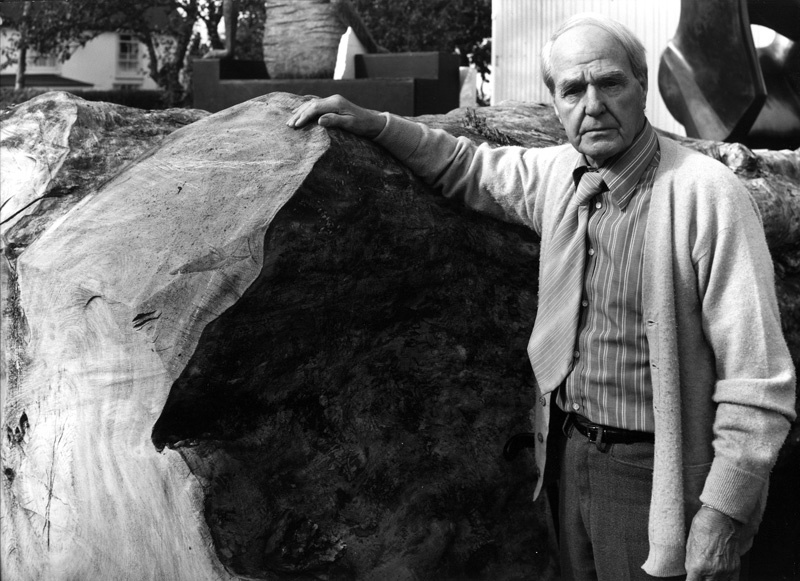
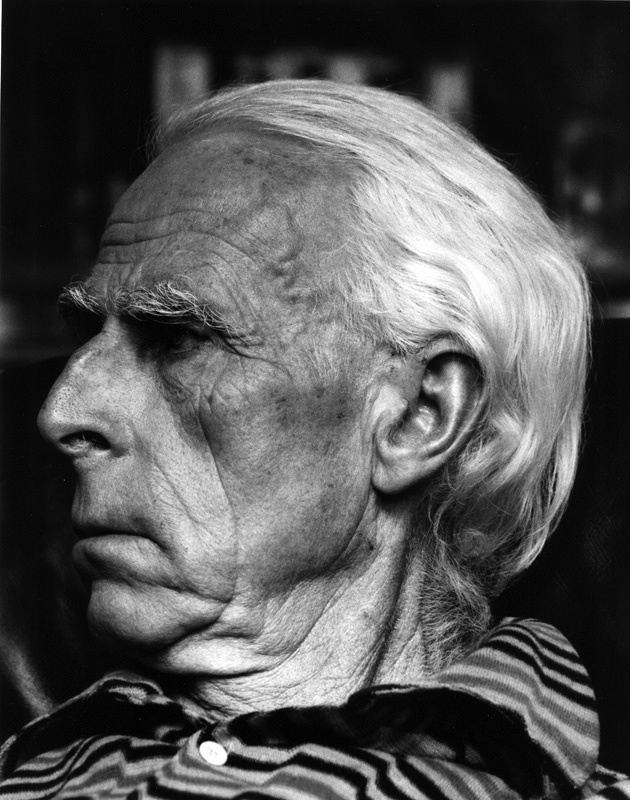
Henry Moore was a pretty tough, short Yorkshireman. He didn’t suffer fools. He also told me something I never knew: you can’t do decent sculptures in wood if the wood is from a tree that’s died. You have to have fresh, green wood and when I was there, there were huge lorries of wood delivered just for him. I don’t understand sculpture really. Either it’s realist or it’s not but I suppose you could say the same about painting.
Quentin Tarantino – we don’t keep in touch now, but I knew him earlier in his career, and he owns one of my paintings. I saw Reservoir Dogs before anyone else. He’s pretty sparky and very opinionated. Years ago, before Groundhog Day became a classic we agreed it was a classic. I think we disagree a bit about the value of such as Bollywood and horror!
As you get older you realise, we all have feet of clay. There was only one saint I met and that was Cesar Chavez. He represented Mexicans workers who were exploited in gathering the grape harvest. He campaigned long and hard. I met him through Kris Kristofferson who did concerts for Chavez’s cause. He was in danger constantly of assassination. He was disrupting this system of relying on cheap labour.
We have a need to deify and the need to imbue someone with the power of celebrity. It’s as if we will it on them so we can help them in some way. If they’re not powerful, what’s their use? With artists, they have a vision to transmit which is beyond what we have. It’s not saintliness, it’s not goodness, or grace or anything like that– it’s a vision, a way of looking at the world which changes our own way of looking at the world. Let that be enough.
I met Johnny Cash through Kris Kristofferson. I never met Dylan. I think he’s one of the great authentic geniuses. I had my doubts about the poetry – but the lyrics are finally amazing poetry.
Spike Milligan I got to know – he was lovely, difficult and mad – as you can see in this photograph. He’d come to dinner and tell us stories about how during the Second World War, they’d paint on the bombs: “Good luck boys, up yours!”
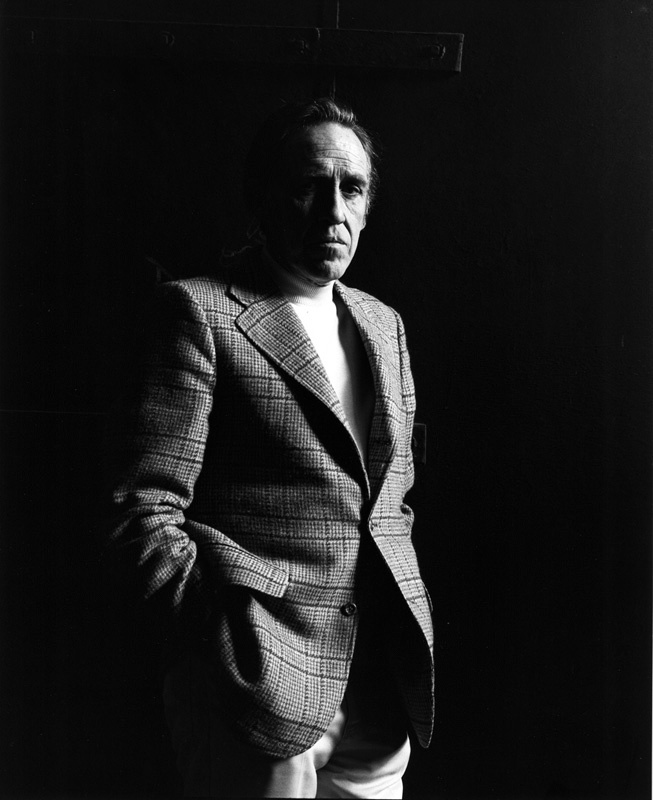
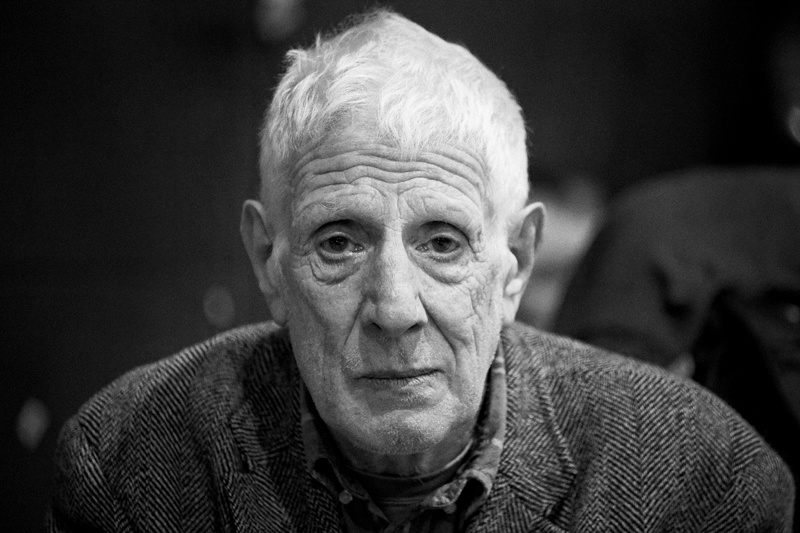
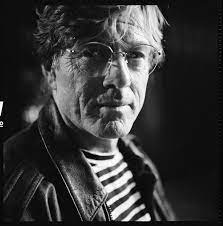
Jane FondaHenry MooreJohn PiperJane FondaJason RobardsJonathan MillerRobert Redford: “At the 1994 Sundance Film Festival, I asked Robert Redford, its director, to sit for a portrait. I jammed my camera up to his face to get a sense of his middle aged visage. He wanted approval before I released the picture, but he never got it!”Dennis HopperDavid Hockney