Small to medium enterprises (SMEs) are facing increasing costs, issues with the supply chain, and staff shortages. A survey of 2,000 UK businesses conducted by MarketFinance shows the ways that SMEs are handling these issues and staying afloat.
According to the research, 79 per cent of SMEs have seen rising costs from their suppliers over the past six months, with the most affected companies being those in the North West of England. Only 32 per cent of the affected SMEs have been able to avoid passing these increased costs onto customers, with two out of five saying that they could increase prices up to 10 per cent in the period approaching Christmas. MarketFinance CEO Anil Stocker weighs in on the situation.
“The current economic environment with rising costs is presenting some headwinds and headaches for SME owners, but they are proving to be as resilient as ever,” Stocker explains. “The vast majority have been thinking ahead and accounted for the longer term scenario, which will hold them in good stead to do business.”
It’s great to see that SME owners are taking the long view and preserving their customer relationships and managing suppliers by having a finance facility in place to deal with the overhead for now.
The British Business Bank announced in November last year that it will extend its Recovery Loan Scheme to June 2022. This extension will give SMEs easier access to more affordable finance they need to continue running and growing operations in the face of ongoing challenges such as staff shortages and supplier price increases.”
While price rises are obviously not ideal for customers, evidence shows that they are understanding of and knowledgeable about the situation SMEs face. Only 10 per cent of customers surveyed said that they would challenge businesses over increased costs. Despite customers’ apparent understanding of the situation, Anil Stocker believes that avoiding price increases through early planning is essential to maintaining a customer base.
“It’s great to see that SME owners are taking the long view and preserving their customer relationships and managing suppliers by having a finance facility in place to deal with the overhead for now,” Stocker says.
For SMEs which do not have the rainy-day fund needed to cover the increasing costs, there are other measures in place to ensure that they can stay afloat.
“The British Business Bank announced last week that it will extend its Recovery Loan Scheme to June 2022,” Stocker continues. “This extension will give SMEs easier access to the more affordable finance they need to continue running and growing operations in the face of ongoing challenges such as staff shortages and supplier price increases.”
These measures, as well as what appears to be an easing of the pandemic’s effect on the economy, has led to increased confidence from SMEs. The research shows that 48% of SMEs expect their turnover to stabilise or increase over the next year, and 68% expect their businesses to grow over the next three years.
“It’s clear that the business environment has shifted and SMEs are looking ahead with a quietly confident and cautiously optimistic view. UK businesses intend to ramp up growth through domestic and international expansion, digital transformation and even M&A activity,” Stocker says, “But as they reset their post-pandemic goals for a post-pandemic, they’ll need to be confident of their funding base.”
During the height of the pandemic, many businesses froze their investments and went into ‘survival mode’, but now it appears that 70% of SMEs are planning on increasing their investments over the next year, with 25% of them even considering hiring on more staff. This growth will largely be funded through borrowing practices, though 71% of SMEs surveyed do not believe that the best way to borrow is through traditional banking. Stocker believes that the Recovery Loan Scheme will play a major role in helping SMEs invest and thrive.
“We expect to see a large number of SMEs taking advantage of the scheme over the next 6 months as their growth and expansion efforts gain momentum and they invest in ambitious plans for 2022 and beyond,” Stocker says.
Though it appears that we are now past the worst of the pandemic, it is clear that the economic impact is far from over. But for now, SMEs are finding ways to carry on.
Working from home is rapidly becoming more accepted, and for many people it is a good change. However, a 1,000-employee survey conducted by Fellowes Brands suggests that more than half don’t have the equipment they would have in a traditional office.
Of the employees surveyed, 58 per cent said that they do not work from a home office, instead opting to work from the kitchen, living room, or bedroom.
Not having a dedicated home office can lead to problems. Desk chairs are designed ergonomically for long-term use, unlike other chairs around the house which could encourage bad posture and cause back issues down the line. Additionally, lack of an enclosed office space can allow all manner of distractions to creep in causing a loss of productivity. Productivity expert Martin Geiger explained the issue: “Throughout my career working with some of the world’s biggest companies, one thing I’ve come to notice is that the most productive people all seem to have one commonality: satisfaction. To successfully transition to this exciting hybrid working future, employers must implement practical strategies that allow their employees to be satisfied with the setup within the corporate office, as well as within their home working environment.”
While a temporary home set-up may have been suitable as a stopgap measure to ride out the pandemic, more permanent solutions must be found if WFH is going to continue to succeed. Seven out of ten employees believe that their employer is responsible for giving them the tools they need to work from home, and 81 per cent say that the ergonomics that come with a proper home office are essential to productivity.
“The future of work is hybrid. No longer is working solely relegated to the company office; the modern workspace now involves employees splitting a portion of their time working from within the corporate office, and a portion working from the home office,” Geiger continued. “Employees who are well equipped and thus satisfied with their working conditions in both locations will lead to outcomes of higher productivity.”
As the transition to remote working continues, there will surely be issues to iron out. Providing the tools needed to be productive will solve one of these problems, and based on the evidence, it looks like investing in equipment for WFH employees is a small price to pay.
London had the most cases of redundancy per 1,000 people in 2021, according to a study conducted by UtilityBidder. 19,095 people face redundancy in the capital, which is a miniscule increase in numbers of redundancies since 2011, when the study’s data begins. The rest of the UK has seen a decrease in redundancies, including Northern Ireland which has seen a 333% decrease over the last ten years.
The research also examined disparities between industries, showing that administrative and support services were most prone to redundancy. The manufacturing industry also showed a high number of redundancies, with 15,117 cases in 2021. These industries, however, both saw decreases in redundancy overall since 2011.
The only industries which showed an increase in redundancy over a ten-year period were agriculture, fishing, energy, and water, which saw an 80% increase in redundancy. The information and communication industry also saw a 7% increase.
Raymond Havel takes his son to Paris – and finds a city with more than enough resilience to prosper post-Covid
Before the Covid-19 pandemic struck, I used to go quite regularly to Paris. I was always happy to go, but a small part of me would always think, as the Eurostar pulled out, “What a shame it’s only Paris. Wouldn’t I rather go somewhere new?”
But then the thought came to me: “You’ll pay for that one day.” And so I did. Confined to my home like the rest of us for the best part of two years, there were many times when pacing the familiar floor of our smallish London flat, I’d think: “I really, really want to go to Paris.” And so when I got the opportunity to go again, I decided I would make amends.
The Dorchester Collection has long been a favourite and on this occasion I was lucky to go to two hotels: Le Meurice and the Hotel Plaza Athenée. The first is right by the Place de Concorde, and enjoys a remarkable history. It was here that Salvador Dali would stay when in Paris (the breakfast ceiling is painted by him). Pablo Picasso even celebrated his wedding here. As usual in Picasso’s life, his wife would go onto to feel there was less to celebrate than she would have liked, but even so, from Bob Dylan to Andy Warhol, the place has the nack only an impeccably located and luxurious hotel can of attracting the very famous.
But if you ask yourself what the famous are coming for, it turns out to be quite a democratising thought because Paris, as the world knows, has its hold on all of us at one time or other. For myself, I must admit it’s a city which has grown on me over time. When I first began coming here, I found its layout too strict, and missed – without my quite being aware of it – the mess of London if I couldn’t have the greater history of Rome or Florence.
Of course, the other thing which subsides over time, is the sense of rush which you only stop feeling in a great city on your fifth or sixth visit. It is unthinkable, after all, on your first visit to Paris not to go to the Louvre, but quite thinkable and even desirable not to do so on your eleventh time.
This more relaxed approach to sightseeing has its potential disadvantages. I recall on my last but one visit in 2019, walking under cherry blossoms near the excellent bookshop Shakespeare and Company, and thinking very deliberately to myself: “Well, I won’t go into Notre Dame this time, as I know it’ll be there next time.” A few months later I was watching on television as that beautiful interior was destroyed by fire, and as French billionaires pledged to restore it. “It hurt,” says the Le Meurice receptionist simply when I give my belated condolences.
What sets Le Meurice apart from the many other hotels which claim an affiliation with a spate of historical figures is the genuineness of the history on the one hand, and, on the other, the sense that this is a hotel living in the present. The designs by Philippe Starck amount to a brilliant reimagining of the place’s past. There’s a mirror of frost on the right in the lobby as you go in which guests can draw on: it is, says Starck, based on “Dali’s playful spirit and love of mineral water”. It’s great fun. A marvellous picture above reception welcomes you, but you have to tilt your head to see it – and may not notice the warmth of the welcome at all: a Dali-like joke at odds with the essential seriousness of many high-end hotels.
Out in the city itself, Paris felt to me lighter than London – and far happier in itself than Italy would feel a few months later. It had had, like the UK, a miserable summer weather-wise, but even so it felt in its stride somehow: the crowds in the Tuileries seemed to be claiming for all time these last days of summer. It is a great thing stand than in the middle of the Place de Concorde, looking towards the Louvre in one direction and the Champs Elysees in the other. The benefit of an organised city is that you always feel oriented, while also enjoying the typical urban pleasures of being dwarfed by scale and beauty.
Around this time, my five year old began to complain about the idea of walking anywhere at all under the power of his own legs. This led to happy memories of walking down the Seine, with him perched on my shoulders, pointing in joy at a world which for him was suddenly a thousand times the size of what he’d thought it was. But then he’s now a pandemic child, and had been briefly labouring under the illusion that East Dulwich and the universe are somehow synonymous.
To see a city through the eyes of a child is to see it again. Besides, the cities we visit regularly become palimpsests where we are always experiencing the latest layer of our lives while also peeling back the previous ones – we get to know who we used to be by encountering who we are.
The little hut-like shops along the river, previously things to walk past, were now regular pauses along our journey to buy little trinkets, mini Eiffel Towers, and a welter of little gadgets. The funfair on the Place de Concorde was a place to glory in: my son tried most of the rides. But the best ride of all is the Eiffel Tower itself which I hadn’t been up since I was 18 – ten or so visits to Paris ago. From our second hotel – the magnificent Hotel Plaza Athenée – we had a view of it from our balcony overlooking the Avenue de Montaigne.
The French cubist Robert Delaunay used to paint the Tower from somewhere around here and the point he was trying to make is you never completely see it; glimpses are all you get. That’s true if you climb it too – but perhaps the precise detail of human experience is never as important as the fact that human experience is exhilarating. It certainly is to one five-year-old who’s not stopped talking about it since. Nor has he stopped talking about the Plaza Athenée. We were given a marvellous suite of rooms, and fell in love with the location of the hotel, its kindly staff, and its magnificent chandeliers in the breakfast rooms, now presided over by 39-year-old Jean Imbert, who recently took over from Alain Ducasse. (Ducasse’s exemplary food, and immortal hot chocolate are still a feature of Le Meurice).
Work-wise, Paris’ is an economy which reminds us a lot of London; it’s home to international companies such as BNP Paribas, Orange and Air France-KLM. Reasonably strong in banking and financial services, there were hints that it might make a play for London’s preeminent place post-Brexit, but that’s proven overblown. The place is probably stronger in luxury goods: Christian Dior is based here, it’s Tracey Emin-ish lights dominating one end of the Avenue de Montaigne, where the Plaza Athenée is located. There’s also a vibrant start-up ecosystem: Paris has the second highest start-up investment in Europe, attracting £2.5 billion in 2020, although in this it is dwarfed by London at £7.75 billion.
The art galleries of Paris remain arguably its biggest draw. I would recommend the Musée de L’Orangerie if you wish for an enjoyable experience which isn’t too beset by crowds. It’s also small enough to be doable without feeling you’re missing something. The Monets there are one thing – and quite a thing – but downstairs are masterpieces by Cézanne, Picasso and numerous others. You can do it in an hour and feel you’ve seen wonders, or spend much longer and not get to the end of it.
That’s in marked contrast to the Louvre, which is arguably the most intimidating building in the world. It is infinite. You could spend your life in it – but to add insult to injury if you’re there you’re not in the Musee d’Orsay, a museum almost as rich.
Paris then is incapable of being defeated, and Notre Dame is a symbol for that. One piece of advice I have is that if you ever go back to Paris, don’t wish it away. My other piece of advice is to go back to Paris. Go now.
Hotels might be said to fall into a number of categories. There’s the magnificent one-off like Domaine des Étangs in France which feels like it shouldn’t belong to anything chain; Villa La Massa on the outskirts of Florence is another. Then there’s the chain where you’re constantly aware that you’re in a brand which has a life – multiple lives – elsewhere. We can take our pick: the Four Seasons, the Taj, the Belmond, the Aman, the Rocco Forte and a myriad others. There’s nothing wrong with those places; they’re some of my favourites.
But then there’s those places which feel like they are and aren’t: they have developed very cunningly, with a certain something in their DNA, but also a strong individuality at each location. The Red Carnation Hotels is just such a chain. There is a subtlety about the whole enterprise which suggests the presence of private passion.
The Milestone Residences are just off the Kensington Park end of Hyde Park. If you had a good throwing arm you could probably throw a ball into Kensington Palace Gardens. Inside, it’s old school with a n equestrian theme. An attractive bar is squirrelled away beyond the lobby; downstairs, there’s an excellent spa and gym.
This last turns out to be a feature. It has a small pool with powerful jets which in these Covid times – which hopefully will have lapsed by the time this reaches print – you can book out for an hour or so at a time. It’s the perfect way to begin the day; breakfast too is a quiet and civilised affair in a small drawing room, which looks like it wants to be a set for an Austen adaptation.
But really I am continually reminded of Dickens in hotels like this. London has always been put together higgledy-piggledy and there is always something ingenious about the architecture, the way they fit an idiosyncratic space, like someone ingeniously finding their way into an incongruous suit – and somehow pulling it off.
I sit down with the likeable general manager Andrew Pike and hear how things have been during the pandemic. He notes that Americans are beginning to return – but it’s a particular kind of American. “It’s a lot of Texans at the moment, who are happier to travel than people on the East and West Coasts,” he tells me.
It’s a glimpse of how divided America has become, told through the lips of an English hotelier.
Even though I technically inhabit London, coming from the suburbs there’s a new perspective on the capital to be had by staying up here for a few nights. You feel drawn into the action somehow – but in the era of Covid, you simultaneously realise that there’s a lot less activity than there ought to be.
The chief attraction of Kensington is its museums: this is especially the case with young children. The Natural History Museum is so popular as to be hardly worth plugging, but the Science Museum is just as good, and doubles up as both an education of all the wonderfully curious people who have made life so much easier today and a good physical workout if your principal goal in life is to tire out tiny legs: it’s a vast cathedral of a place, but here we’re not worshipping God, so much as the tribulations and successes of the human mind.
For art-lovers, the Victoria and Albert Museum continues to develop; it has been extensively renovated and is another reminder that London, at least its major attractions, has an inner resilience which has all to do with the fact that enough wealthy people want it to remain the same for it to do so.
Where it has been hit particularly is in the small businesses and chain outlets. I am sure I see far fewer Pret-a-Mangers and Eats, and all the surviving independent sandwich shops look bereft at the thought that their customers have retreated into the suburbs. If – as looks likely – we reconstitute around the three-day working week Tuesday-to-Thursday then the infrastructure here will have to adapt, and attract families up from the country somehow for long weekends: a shortfall from revenue from work meetings needs to be plugged somehow.
If this is the future, then there’s hope. The Milestone is brilliantly located and has the some of the best service I’ve ever encountered anywhere in years of reviewing hotels. Like the Chesterfield, which we visit next, it’s owned by the Tollman family, a dynasty of South African extraction. The patriarch of the family, Stanley Tollman, died of cancer in September 2021 at the age of 91.
His autobiography Recollections of a Lucky Man is on sale behind a glass case in the foyer. His is indeed a remarkable story of grit and determination. Tollman came from humble beginnings growing up in a South African fishing village, but used his wedding money to buy a hotel, and soon built a remarkable Empire. In time he would consort – as his memoir says – with politicians and rock stars. More impressively, he did so without forgetting who he was.
Stanley Tollman, who died in September 2021 at the age of 91
By the time of his death he chaired The Travel Corporation, and had over 10,000 employees, across 40 brands, and 70 countries. He did all this while being liked and even revered by the industry. He refused, for instance, to accept apartheid in his homeland, and was insistent on accepting black guests into his hotel. He didn’t stop there, but also insisted on a series of landmark employment programmes designed to get black people into the hospitality industry. His courage and kindness are spoken of in a heartfelt way throughout his hotels.
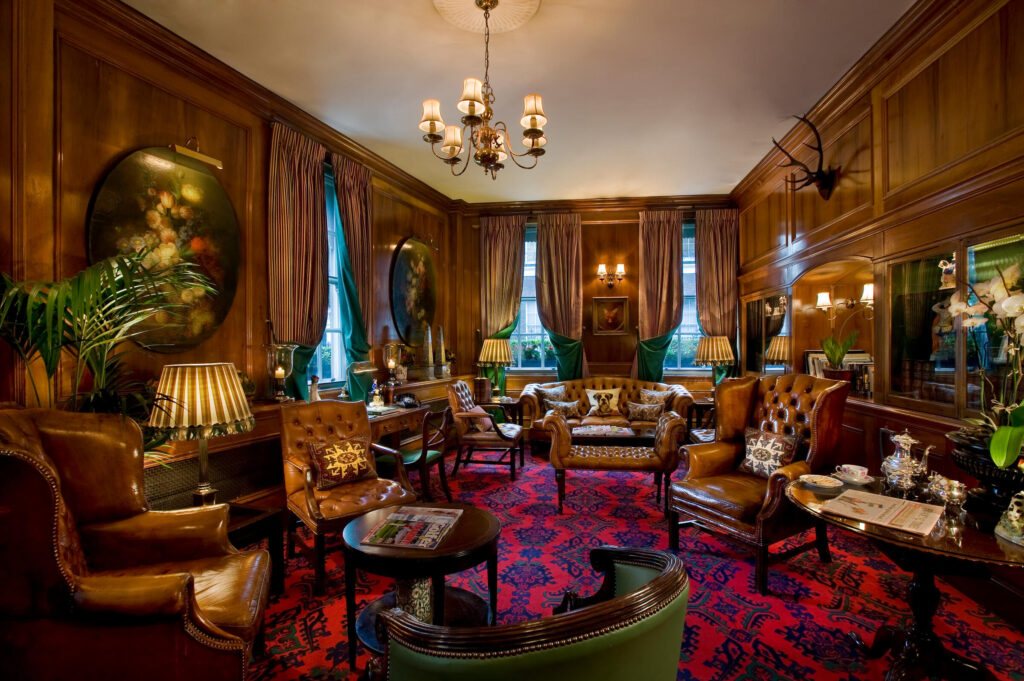
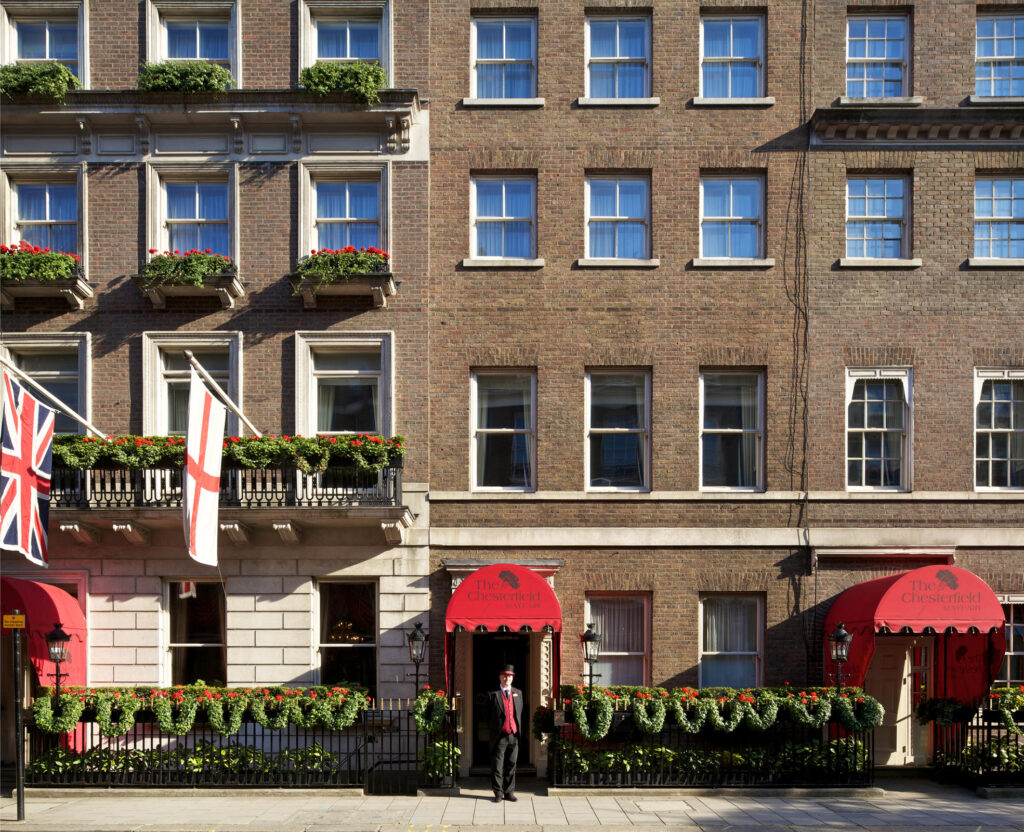
The Chesterfield is a wonderful little hotel, right in the middle of Mayfair, not far from 5 Hertford Street, and just down from the Royal Academy. Green Park is within walking distance – a possible morning run for those who like such things. At the heart of the private client industry, it’s also a good place for the genteel sort of meeting such people like to have: especially good is the discreet library, suitable for an afternoon tea or a swift coffee.
In the evenings, its bar area has some excellent jazz. The rooms themselves are spacious and comfortable, purveying that kind of understated luxury which is the only kind which really matters in London. These hotels are all performing a tough balancing act, but I suspect it will all depend in the end on service – the extent to which we really want to be in these hotels. On that score, the Red Carnation hotels score very highly; everybody is brilliant, and the spirit of Tollman lives on where he would have most wanted it to: in the hearts of his guests.
Ever thought you might like to live and work abroad? Patrick Crowder’s guide to the best cities to work in is designed to help
If you are like many people in the world right now, you may be in a time of flux when it comes to your career. Some were furloughed, many were let go, and others have decided to make a career shift with their eyes open to new priorities following the pandemic. Now that the UK has fully scrapped the Amber List and the world is opening back up, travel is back on the menu. So if you’re looking for a guide to working in some of the best cities across the globe, you’ve come to the right place. We cannot, of course, tell you where you want to live – much of it will come down to personal preference. What kind of work environment do you enjoy? Do you know another language, or are you willing to learn? What sector do you hope to work in? Do you like the big city life, or is being close to nature important to you? We cannot answer these questions for you, but we can provide the information needed to make an informed decision.
It is impossible to capture all of the diverse characteristics of these cities in relatively brief profiles, and that is not our aim. Rather, the main purpose to this list is to give our readers a starting point which considers specific crucial factors when considering where to work around the world. We mostly chose capital cities to profile, however there are a number of other cities which are not capitals that hold too much economic and cultural relevance to exclude. When ranking the cities, we examined five factors: Work-life balance, cost of living vs. average salary, health of the start-up ecosystem, number of major companies, and diversity of opportunities within the city. All of these come together to form a city’s score. Beijing, for example, is an excellent city for start-ups and has a wide range of major companies located there. However, the high cost of living coupled with the infamous “996” work culture brings down the city’s score. We obtained the average salaries from the online salary comparison tool Payscale, and the cost-of-living information from Numbeo’s internet database.
The written profile at the beginning of each city’s entry is written with a prospective employee in mind – someone who has never been to the city before and does not understand the expectations and culture surrounding life there. Therefore, we have also included information about the major industries of the city, expectations in the working world and cultural considerations, as well as opportunities to experience the unique architecture, art, music, nature, and cuisine each city has to offer.
Throughout our research into these cities, we have noticed a number of trends which are important to understanding the trade-offs of working in various places. In general, large cities such as New York and Beijing tend to have a high level of opportunity in a variety of sectors, but with that comes harsh competition and less of an emphasis on work-life balance. They also tend to have higher costs of living than smaller cities. On the other hand, smaller cities tend to boast a better work life balance and less competition, but often have less developed start-up ecosystems and few major companies there. Honolulu shows these characteristics, though with a population of around 900,000 it is not a truly “small” city. Honolulu also suffers from the issue of a lack of varied opportunities. Because most of the industry there is based in defence and US military bases, funding which would have been funnelled to a variety of start-ups and other industries is not available meaning that your options for employment are narrow. This is also a great example of why these rankings may not mean the same thing to everyone; if you work in defence, then Honolulu could be your number one city – but quite likely not if you don’t.
Scandinavia stood out on this list as an excellent place to work and live, with Copenhagen taking the top spot. The Scandinavian cities we have profiled all place extreme emphasis on work-life balance, have major companies in a variety of sectors, and pay well. This does, however, come at the cost of high-living costs and expensive property prices.
The vast majority of these cities excel in some aspects and leave a bit to be desired in others, which is natural considering the effects that size, location, and economy have on business. In the end, it comes down to what your priorities are, and we hope this list will help you make an informed decision on your journey through the international world of work.
Copenhagen
Copenhagen is the capital of Denmark, known for its architecture, canals, and title of “happiest city in the world”. It has a population of 602,481 people according to a 2017 count. Historically fishing was vital to the economy of the city, but now Copenhagen’s main industries are life sciences, transport, construction, and smart city development. The work culture in Denmark is known for being informal and focused on achieving a good work-life balance. There are no dress codes, and office hierarchies have been mostly replaced by democratic discourse. Skill and initiative are just as essential in Copenhagen as any other city, but you may find this informal work life to be a nice break from the ‘rat race’ of more fast-paced cities. A one-bedroom apartment in the city centre will cost £1,254 per month according to Numbeo, which means that someone making average salary can expect to put about 33% of their income towards rent. The public transport system in Copenhagen is excellent, as it is in the rest of Denmark, making owning a car unnecessary.
Minimum Wage: While there is no blanket minimum wage in Denmark, lobbying by various unions has led to an average minimum wage of £12.65 (110 Danish Krone)
Average Salary: £45,985.55 (DKK400,000) according to Payscale.
City Centre Apartment Price: £6015.51 per sq/m (DKK52,267.78) according to Numbeo.
Start-ups: Copenhagen has a healthy start-up ecosystem with opportunities in tech, real estate, and finance. According to Startup Genome, it has £471,227,945 in total early-stage funding. Non-profit funds and frequent start-up events make Copenhagen an exciting place to launch a successful start-up. Food delivery giant Just Eat got its start in the city before going worldwide.
Major Companies: Copenhagen was called the easiest place to do business in the world by Forbes in their 2021 Global Business Complexity Index, so it makes sense that many powerhouse companies have headquarters in the capital. The most valuable Copenhagen-based companies are Ørsted (utilities), Maersk Group (transportation). Carlsberg Group (beverages), Danske Bank, Lundbeck (pharmaceuticals), and ISS A/S (services), according to the 2019 Forbes list.
2. New York
New York is America’s largest city, with a population of 8,336,817 according to the 2019 US Census. Life and work in NYC is fast-paced, and ample competition brings ample opportunity. This environment can be exciting for many, but some who move to New York will find themselves slipping on the big city life if they are not accustomed to it. Home to the New York Stock Exchange (NYSE), the finance sector dominates the city, and many of the top employers are banks and tech companies. NYC property is always at a premium, and it has some of the highest property costs in the country. Average rent on an apartment in Manhattan, for instance, was £3,110.20 ($4,210) according to Rent Café’s 2020 National Rent Report. While average salaries in New York can be quite high, this is balanced by the cost of living which is equally terrific. If you plan to rent, you can expect to spend at least 30% of your income on keeping the lights on, according to that same report. Many choose to live outside the city and commute in, which is made possible by New York’s well-developed public transit systems.
Minimum Wage: £11.08 ($15)
Average Salary: £59,112.40 ($80,000) according to Payscale.
City Centre Apartment Price: £575,607.00 ($779,000) according to Zillow.com
Start-ups: New York City is well-known as being an excellent city for start-ups to flourish, particularly in the tech sector. NYC ranked second behind Silicon Valley in the 2021 Global Startup Ecosystem Report.
Major Companies: New York City is home to many international powerhouse companies, which is unsurprising considering it is also the home of the New York Stock Exchange. According to the recruitment company Zippia, the top ten largest employers with headquarters in NYC are IBM, Bank of China, Healthfield Operating Group, Deloitte, PepsiCo, JP Morgan/Chase, Citigroup, Citicorp, Moscow Cablecom, and Sheraton Hotels and Resorts. IBM tops the list at around 350,600 employees.
3. Amsterdam
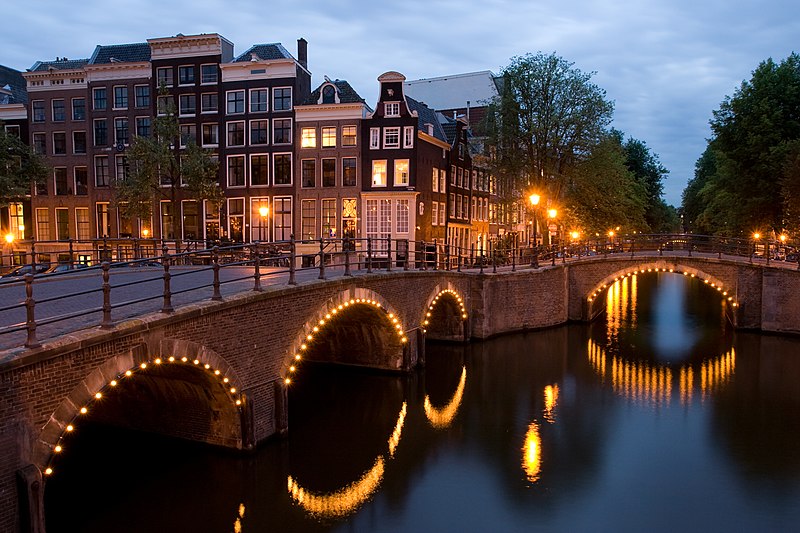
Amsterdam is the capital of the Netherlands, famous for its canals, museums, and rich art history. The capital has a population of 1,157,519 people according to World Population Review. Amsterdam’s main industries are tech, automotive, chemical, electronics, and of course, tourism. Living and working in Amsterdam will mean being part of a casual, inclusive, team-building atmosphere mostly free of the social pressures of the more traditional workplace. A one-bedroom apartment in the city centre will cost £1,306 per month, according to Numbeo, so someone making an average salary will have to put 37% of their income towards rent. Public transport in Amsterdam is famously good, as is the peoples’ penchant for riding bicycles. You will not need a car and may find two wheels to be a more comfortable option.
Minimum Wage: The Netherlands has a sliding scale of minimum wage based on age and hours worked. Someone who is 21 years old or over working full time must make at least £1,479 per month.
Average Salary: £41,528 per year (49,000 Euros) according to Payscale.
City Centre Apartment Price: £6,542 per sq/m (7,712 Euros) according to Numbeo.
Start-ups: Amsterdam is a powerhouse of start-ups, ranking 13th on the Global Startup Ecosystem Report. It has a massive £806,635,500 in early-stage funding, according to Startup Genome, with many opportunities in agricultural technology and life sciences.
Major Companies: Amsterdam has many opportunities in finance, telecommunication, and retail. According to the Forbes 2019 list, the largest companies in Amsterdam by value are ING Group (banking), Heineken, Adyen (finance), AkzoNobel (chemicals), Exor (finance), and Steinhoff International (retail).
4. Helsinki
Helsinki is the capital of and most populous city in Finland, with 1,316,757 residents as of 2021, according to World Population Review. Helsinki Port is a major trade hub which holds the title of busiest passenger port in the world. The city’s location on the tip of a peninsula also means that there are nearby beaches to enjoy, so long as you can brave the chilly climate. Helsinki’s economy is mainly based on the manufacture of electrical devices, automobiles, food, textiles, and paper, but large financial and governmental agencies also operate in the city. Work culture in Finland consists of a formal dress code and traditional hierarchies in most workplaces, but it also offers flexible working hours, straightforward communication between co-workers, and a focus on honesty and trust. A one- bedroom apartment in the centre of Helsinki will cost £859 per month according to Numbeo, so someone making average salary will have to pay about 25% of their income towards rent. You can live comfortably in Helsinki without a car, providing that you do not stray too far from the central, more populated areas. If you plan to make journeys beyond the suburbs, then a car is your best bet.
Minimum Wage: Finland has no national minimum wage, so wages are negotiated in collective bargaining agreements which employers are required to agree upon.
Average Salary: £41,430 (49,000 Euros) according to Payscale.
City Centre Apartment Price: £7,318 per sq/m (8,687 Euros) according to Numbeo.
Start-ups: Helsinki is a major hub of start-ups in the healthcare, AI, gaming, and tech industries, with £399 Million in early-stage funding, according to Startup Genome. Helsinki was also ranked within the top 10 emerging start-up ecosystems in that same report.
Major Companies: Helsinki is home to major companies in a wide range of sectors, including oil and gas, technology, manufacturing, retail, the pulp and paper, or packaging industry, and more. According to the 2019 Forbes list, the top companies in Helsinki are Kone (industrial), Sampo Group (finance), UPM (pulp and paper), Wartsila (industrial), Stora Enso (pulp and paper), and Kesko (retail).
5. London
London is the capital of the United Kingdom with 9,425,622 residents according to World Population Review. The city is the centre of UK government and trade, home to the Houses of Parliament, Buckingham Palace, and the London Stock Exchange. People who live in London enjoy countless museums, many of which are free, along with world-class theatre and music performances. London is a very multicultural city and is seen as the “melting pot” of the UK. London’s economy is mainly based on finance, but tourism, tech, and healthcare are also major industries in the city. London’s work culture can be as intense as that of New York, but things like dress codes and office hierarchies will vary widely between employers. There is a lot of competition in all fields in London, so what Frank Sinatra once said about a very different American city holds true in London – if you can make it there you’ll make it anywhere. A one-bedroom flat in the city centre will cost £1,685 per month according to Numbeo, so someone making an average salary will have to pay about 51% of their income towards rent. You will not need a car in London as the busses, trams, and tubes are efficient, and the easiest way to get around the city.
Minimum Wage: Minimum wage is based on age, with all workers over 24 making £8.91 per hour. 21–23-year-olds will make £8.36, 18-20s will make £6.56, 16-17 year-olds will make £4.62, and under-16s will make £4.30.
Average Salary: £39,000 according to Payscale.
City Centre Apartment Price: £12,189 per sq/m according to Numbeo.
Start-ups: London is a major location for start-ups, with major opportunities in tech. London ranked 2nd in the Global Startup Ecosystem Report, and has £6.3 Billion in early-stage funding, according to Startup Genome.
Major Companies: London has all sorts of major companies in a variety of sectors due to the size and diversity of the economy. According to the 2020 Forbes list, the largest London-based companies are Rio Tinto Group (mining), HSBC (banking), GlaxoSmithKline (pharmaceuticals), British American Tobacco, Diageo (beverages), BP (oil and gas), RELX (services), National Grid (utilities), Prudential Plc (insurance), London Stock Exchange, and Lloyds Banking Group.
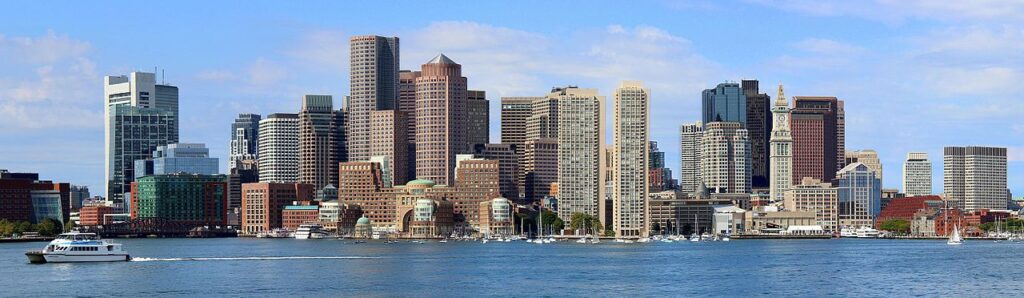
6. Boston
The City of Boston is the capital of and most populous city in Massachusetts, home to 4,314,893 people according to World Population Review. Boston is known for its rich American history, which can be seen on a walk down Freedom Trail. It is also home to Fenway Park, where the Boston Red Sox play America’s oldest game. If baseball doesn’t interest you, then there are also a variety of historical, scientific, and artistic museums in the city (though a game at Fenway is worth it even just for the hot dogs). The city is a major college town, with Harvard, Boston University, Berklee School of Music, Northeastern University, and 31 other educational institutions operating within its bounds. Apart from higher education, manufacturing, healthcare, and financial institutions are also key to the economy of Boston. Work culture is much the same as any large American city, except in the sense that Boston can often feel more like a town than a city. A one-bedroom apartment in Boston will cost £1,908 per month according to Numbeo, so someone making an average salary will need to pay about 39% of their income towards rent. Transport in Boston is very good within the city, and you will be able to easily navigate without a car. You will need one, however, if you would like to visit New York, or any other part of America, on anything other than a Greyhound bus or a plane.
Minimum Wage: £9.88 ($13.50)
Average Salary: £58,584 ($80,000) according to Payscale.
City Centre Apartment Price: £8,322 per sq/m ($11,366) according to Numbeo.
Start-ups: Boston ranked 5th on the Global Startup Ecosystem Report, due to its fast growth and innovation in biotech, robotics, and life sciences. Boston has £4.7 Billion in early-stage funding according to Startup Genome, with a number of accelerators and tax incentives in place.
Major Companies: Boston has a number of major companies mainly dealing with financials, tech, healthcare, and education. According to Glassdoor, the top employers in Boston are HubSpot (computers), Massachusetts Institute of Technology, Harvard University, MathWorks (computers), Boston University, Northeastern University, Fidelity Investments, and Dana-Farber Cancer Institute.
7. Tokyo
Tokyo is a modern, metropolitan city with lights and high-rises galore. It is both the capital and most populous city in Japan, home to 13,520,000 people as of 2015 according to the Japanese Statistics Bureau. Work life in Tokyo may be different to what a Londoner is used to, as more traditional hierarchies and values commonplace. Most jobs in Tokyo will require a dark suit and tie or other professional clothing, and your superiors will often expect to be referred to by their rank within the company as a sign of respect. The work culture can sometimes place work over family, with long hours and missed vacations an expectation, even if they are not technically required. Of course, start-ups can have more lax work environments, and there is a movement amongst younger people to create a less strict, lower pressure workplace. Rent on a one-bedroom apartment in the city centre will cost £964 per month, according to Numbeo, which means rent will cost someone making the average starting salary about 12% of their income. The public transport in Tokyo is modern and efficient, and any costs incurred on your commute will be covered by your workplace.
Minimum Wage: £6.19 (930 Yen)
Average Salary: £33,235.09 (5m Yen) according to Payscale.
City Centre Apartment Price: £7,449.91 per sq/m (1,120,570 Yen) in 2020, according to Statista.
Start-ups: Tokyo has a flourishing start-up community, ranking 9th in the2021 Global Start-up Ecosystem Report. It boasts £2.1bn in early stage funding, and focuses mostly on advanced manufacturing, AI, robotics, and sciences. Many foreign investors look to Tokyo as a good place to start their businesses.
Major Companies: Tokyo is home to many major companies, mainly in the automotive, banking, and manufacturing sectors. According to the 2020 Forbes list, the top ten companies based in Tokyo by value are SoftBank Group, Nippon Telegraph and Telephone, Sony, KDDI (telecommunications), Mitsubishi UFJ Financial Group, Recruit Holdings (electronics), Shin-Etsu Chemical, Honda, Sumitomo Mitsui Financial Group, and Japan Tobacco.
8. Vancouver
Vancouver is a picturesque city nestled between the North Shore mountains and the sea. It is the capital of British Columbia and has a population of 631,486 people, according to the 2016 census. Vancouver’s beauty makes it a popular place for the tourism industry, and Agriculture, Education, and Manufacturing are all major parts of the city’s economy as well. Working in Vancouver is much the same as working in other Western cities, but you may find that it’s a bit more laid back than London or New York. Hierarchies in work are not considered that important, but getting a job done right and on time is paramount. A one-bedroom apartment in the city centre will cost about £1,194 according to Numbeo, so someone making an average starting salary should expect to pay about 38% of their income towards rent. Getting around Vancouver on public transport is easy, and if you don’t plan to leave the city often, a bicycle could be the best vehicle to own. If you plan on making frequent trips outside Vancouver, you will need a car.
Minimum Wage: £8.85 (C$15.20)
Average Salary: 37,267.20 (C$64,000) according to Payscale.
City Centre Apartment Price: £6,745.27 per sq/m (C$11,538.47) according to Numbeo.
Start-ups: There are many start-up opportunities in Vancouver, which was ranked 2nd best start-up ecosystem in Canada by StartUpBlink. Start-ups in Vancouver took a hit during Covid-19, meaning that the environment could currently be undervalued when start-ups make a comeback as Canada returns to normal. Vancouver was not featured in the 2021 Global Start-up Ecosystem Report.
Major Companies: Vancouver is home to many major companies, mostly in the Tech, Education, Energy, and Manufacturing sectors. According to the 2019 Forbes list, the four biggest Vancouver-based companies by value are Lululemon Athletica, Telus (telecoms), Teck Resources (mining), and Goldcorp (mining). Microsoft, Apple, and Intel all have a major presence in Vancouver as well.
9. Oslo
Oslo is the capital city of Norway, home to the Government and Parliament of Norway, as well as the Royal Palace. It is also the largest city in the country, with a population of 1,056,180 according to World Population Review. Oslo’s main industry has always historically been oil and gas, but the service, banking, and tourism industries also thrive within the capital. Working in Oslo is comfortable – if you can handle the cold. Most businesses will not have a formal dress code, and hierarchies are not hugely important in the workplace. Punctuality is a must, however, as is at least a basic grasp of the Norwegian language. A one-bedroom apartment in the city centre will cost about £1,185 per month according to Numbeo, so someone making an average salary will have to set aside about 27% of their income for rent. You can rely on public transport within the city, and it will most likely be more comfortable to avoid driving unless you plan to commute into the city from rural areas.
Minimum Wage: There is no official minimum wage in Norway, so wages are decided through agreements between employers and unions. This can vary by sector, but workers in the hospitality industry earn a minimum of £14.48 per hour (167 Norwegian Krone).
Average Salary: £52,649 (607,000 NOK) according to Payscale.
City Centre Apartment Price: £7,808 per sq/m (89,912 NOK)
Start-ups: Oslo is the top-ranked city for start-ups in Norway, coming in at 99th globally according to Start Up Blink’s rankings. The city is home to many successful start-ups, including the browser Opera and the game-based learning programme Kahoot! Oslo received £174,393,625 in start-up funding in 2019.
Major Companies: Oslo is an innovative city which is home to many major companies. According to Glassdoor, the top employers in Oslo are Microsoft, Cisco Systems, DNB (banking), Universitetet I Oslo (university), Yara (chemical), NTNU (education), Schibsted (publishing), Accenture (consulting), and Telenor (telecommunications).
10. Paris
Paris is a city which evokes emotions of romance, hope, and idyllic metropolitan living. It is the largest city in France, with a population of around 2,140,000 in 2019 according to the National Institute of Statistics and Economic Studies. The French work culture differs from that of the UK in a few ways, including longer and more frequent breaks, with lunch often becoming a social occasion accompanied by glasses of wine. France has a long, complicated labor code, which enshrines in law an 11-hour rest period between work-days. Property prices in Paris are high, so many have taken to the suburbs which are also seeing a spike in prices. Rent for a one-bedroom apartment near the city centre can run you around £600 (695 euros) according to numbeo.com, which means that someone making an average salary will spend around 15% of it on rent. Paris boasts a solid public transport network, which means you won’t need a car to get around unless you plan frequent longer commutes.
Minimum Wage: £8.65 (10.03 euros)
Average Salary: £39,670.11(46,000 euros) according to Payscale.
City Centre Apartment Price: £408,561.48 (€473,598) according to Guy Hoquet Immobilier
Start-ups: Paris is a city of many opportunities for start-ups, especially in the healthcare, finance, and tech sectors. The city ranked 12th in the 2021 Global Start-up Ecosystem Report. Paris boasts the second highest start-up investments in Europe, netting £2.5 billion in 2020, beaten only by London which netted around £7.75 billion.
Major Companies: Paris is home to many huge international companies, including BNP Parabas, Orange, and Air France-KLM. The top ten Parisian companies include telecommunications, insurance, banking, fashion, and retail companies. In order, the largest companies with headquarters in Paris are AXA Insurance, Credit Agricole, BNP Parabas, Electricite de France, Societe Generale, Christian Dior, Finatis, Groupe BPCE, Orange, and CNP Assurances, according to the 2020 Fortune list.
11. Berlin
Berlin is the capital of Germany, famed for its art scene, nightlife, and modern urban design. It had a population of 3,645,000 when the last count was taken in 2019. In Berlin, evidence can still be seen of the second world war in the form of the Holocaust memorial, and the remains of the Berlin Wall are a reminder of the Cold War division of the city between East and West. Berlin’s work culture is characterised by bluntness, focus, and clear expectations while also maintaining a strong separation of work and home life, as well as excellent employee benefits. Dress codes are not often set in stone, but it is best to dress professionally, and a formal tone with your superiors can be a good idea when starting a new job. A one-bedroom apartment in the city centre will cost £812 per month according to Numbeo, so someone making an average starting salary can expect to pay about 22% of their income towards rent. Berlin’s public transport is unrivalled, so a car is unnecessary unless you plan on taking to the famed Autobahn.
Minimum Wage: £8.18 (9.60 Euros)
Average Salary: £42,579.80 (50,000 Euros)
City Centre Apartment Price: £5,546.70 per sq/m (6,500.93 Euros)
Start-ups: Berlin is a hot start-up ecosystem in Europe. German start-ups received £5,070,706,500 of investments in 2019 from the US alone, according to Startup Genome, and has many opportunities in Financial Tech, AI, and Software Engineering. Berlin’s open-minded, modern business approach makes it a good choice for starting a company.
Major Companies: Berlin is not the centre of business in Germany, but the capital is still home to many major companies. Deutsche Bahn, the German rail company, is the largest Berlin-based company with 22,156 employees. According to the Berlin Chamber of Commerce and Industry, the top ten largest employers in Berlin are Deutsche Bahn, Charite (health), Vivantes-Netzwerk für Gesundheit (health), Berliner Verkehrsbetriebe (traffic), Siemens (electrical engineering), Deutsche Post DHL, Daimler (automotive), Edeka (retail), Paul Gerhardt Diakonie (health), and Zalando (digital economy).
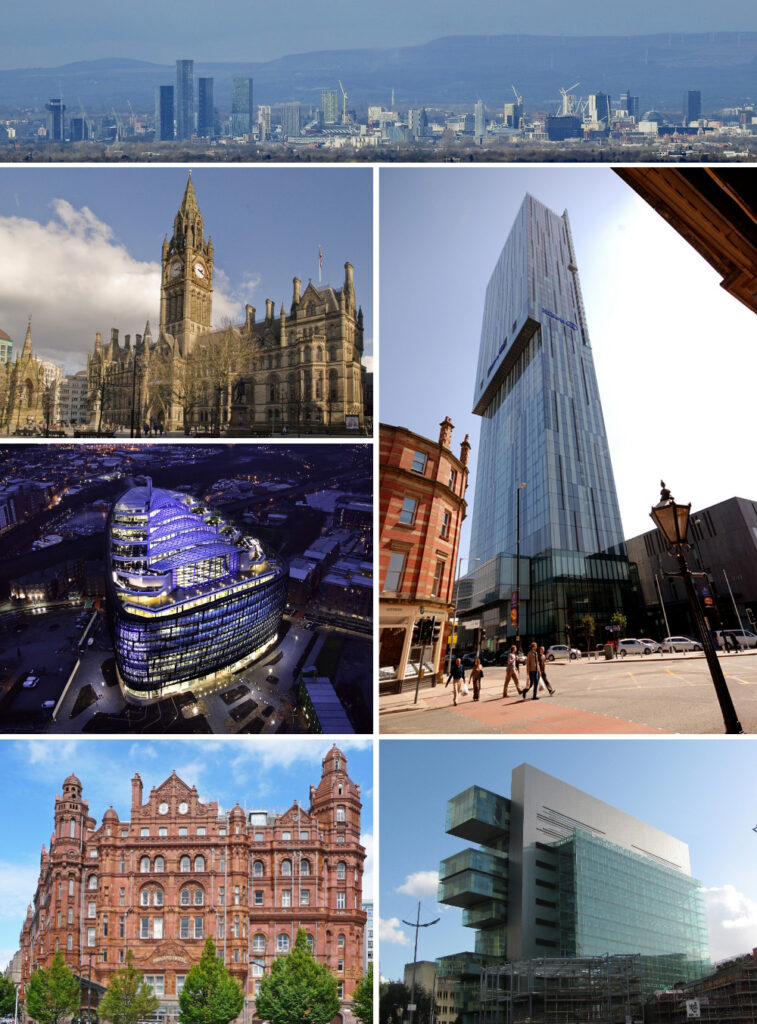
12. Manchester
Manchester is a large city which has slowly transformed from a manufacturing-based economy to a major cultural hub, with opportunities in finance, travel, tech, and more. 2,750,120 people call Manchester home, according to World Population Review. They enjoy a city with excellent nightlife, a rich history evidenced by the surrounding architecture, and years of tradition in sport. The BBC also have a large presence in Manchester’s Media City. Manchester is certainly more laid back than London, however there is still plenty of competition and prospective employees should be looking to impress. A one-bedroom flat in the city centre will cost £863 per month according to Numbeo, so someone making an average salary will have to pay about 35% of their income towards rent. You will not need a car in Manchester, as the trains, trams, and busses will take you anywhere in the city.
Minimum Wage: Minimum wage is based on age, with all workers over 24 making £8.91 per hour. 21–23-year-olds will make £8.36, 18-20s will make £6.56, 16-17 year-olds will make £4.62, and under-16s will make £4.30.
Average Salary: £30,000 according to Payscale.
City Centre Apartment Price: £3,951 per sq/m according to Numbeo.
Start-ups: Manchester has a growing start-up ecosystem, with opportunities mainly focused on tech. The city was ranked 1st in the UK on Startup Genome’s emerging ecosystem list, and 9th worldwide.
Major Companies: Manchester has many big players infinance, healthcare, and higher education. According to Glassdoor, some of the top employers in Manchester are Capita (consulting), University of Manchester, Barclays, Deloitte (accounting), Network Rail, the NHS, and Vodafone. Unilever, Kellogg’s, and Amazon all have offices in Manchester.
13. Seoul
Seoul is the capital of South Korea, famous for its rich history mixed with modern architecture and design. 9,967,677 people live in Seoul according to World Population Review, making it the most populous city in South Korea. The economy of Seoul is largely based in manufacturing of textiles, ships, electronics, steel, and, due to the automotive giant Hyundai, cars. However, Seoul has a booming start-up scene, so finding jobs in tech is also possible in the city. The work culture in South Korea can be intense, with dress codes and office hierarchies in place. Like some other cities, there is an unwritten rule that you will need to stay after work for long hours to get the job done, so work-life balance is a difficult thing to manage in Seoul unless you are working for a start-up with more lax policies. Knowing at least some Korean will help you get by in Seoul, but it is not necessary to be a fluent speaker when considering jobs that are open to international employees. A one-bedroom apartment in the city centre will cost £652 per month according to Numbeo, so someone making an average salary will have to pay about 25% of their income towards rent. You do not strictly need a car in Seoul, and certainly not as a tourist, but you may find it convenient to own your own vehicle if you plan to settle there.
Minimum Wage: £5.75 (9,160 Won)
Average Salary: £30,759 (48,940,242 Won) according to Salary Expert. Payscale’s average salary for Seoul had a factor of ten error making its number unreasonable, so Salary Expert’s figure was used.
City Centre Apartment Price: 15,770 per sq/m (25,260,050 Won) according to Numbeo.
Start-ups: Seoul is a major start-up hub with over £1.8 Billion in early-stage funding, according to Startup Genome. Seoul ranked 16th on the Global Startup Ecosystem Report, largely due to the financial support accelerators and the South Korean government have given to bolster the AI, life sciences, and gaming sectors.
Major Companies: Seoul is home to major companies dealing with everything from construction and steel to IT and technology. According to the 2020 Forbes list, the top Seoul-based companies by value are SK Hynix (technology), LG Chem (chemicals), Hyundai Motor, LG Household and Health Care (consumer goods), Samsung SDI (automotive), Samsung C+T (construction), Hyundai Mobis (automotive parts), and SK Telecom.
14. Dallas
Dallas is a large metropolitan city famous for the Texas State Fair and its football team the Dallas Cowboys. 1,331,000 people lived in the city as of 2019, when the last count was taken. The Dallas economy is mainly based in technology, defence, transport, and financial services. Work culture in Dallas is a fairly typical 9-5 but can be more laid back than bigger cities like New York. The good weather makes it a great spot to enjoy the outdoors, with many lakes, parks, and golf courses nearby. Renting a one-bedroom apartment in the city centre will cost about £1,105 per month, according to Numbeo, so someone making an average salary will have to put about 25% of their income towards rent. You can get around downtown Dallas without a car, but beyond that you will need one to travel and work, as in most American cities.
Minimum Wage: The minimum wage in Texas is £5.32 ($7.25). However, there is a push for higher minimum wage in Texas, and Dallas County recently increased the minimum wage for construction workers employed by the city to £11 ($15).
Average Salary: £52,790 ($72,000)
City Centre Apartment Price: £2,306.65 per sq/m ($3,146.35)
Start-ups: Dallas has many start-up opportunities in healthcare technologies, AI, software design, and more. It ranked 31st on the 2021 Global Startup Ecosystem Report, scoring 10/10 for market reach and knowledge, but 1/10 for funding.
Major Companies: Dallas is a major city with some of the biggest names in retail, technology, transport, and defence. According to Destination Dallas-Fort Worth, the top ten largest employers in the area are Walmart, American Airlines, Dallas ISD (education), Texas Health Resources, Baylor Scott & White (healthcare), Bank of America, Lockheed-Martin Aeronautics, the City of Dallas, Texas Instruments, and JP Morgan Chase.
15. Geneva
Geneva is a central hub of global politics, home to the Palace of Nations, the UN headquarters. It has a population of 620,131 according to World Population Review, and it is home to the largest European alpine lake. Banking is a huge industry in Geneva, with a long history of secrecy. In the office, formal attire is the norm and traditional hierarchies are in place. Punctuality is essential. Work-life balance is seen as very important, and it is normal to do outdoor activities with your co-workers. A one-bedroom apartment in the city centre will cost around £1,568 according to Numbeo, so someone making an average salary will need to put about 24% of their income towards rent. The public transport in Geneva is excellent, and owning a car is unnecessary if you wish to remain within the city.
Minimum Wage: £19 (23 Swiss francs)
Average Salary: £77,579 (98,000 Fr.)
City Centre Apartment Price: £10,732.33 per sq/m (13,589.46 Fr.)
Start-ups: Geneva has a variety of startup opportunities in financial technology, ecommerce, and health, ranking 4th in Switzerland in a study of the ecosystem by Startup Blink. It was ranked 118th worldwide.
Major Companies: Geneva is well known for being a powerhouse of the banking industry, but there are opportunities in technology and administration as well. According to a 2017 top 500 list from Dun and Bradstreet, the largest Geneva-based companies by revenue are the commodity trading companies Vitol, Trafigura, and Cargill International SA, as well as Mercuria Energy Trading (petroleum), Gunvor (commodity trading), Mediterranean Shipping Company, Richemont (luxury goods), SGS (services), Manor (retail), Pargesa Holding, and Firmenich (pharmaceutical).
16. San Jose
San Jose is the largest city in California’s Silicon Valley, and the third largest city in California with a population of 1 million, according to World Population Review. Silicon Valley is famed for its status as an international tech hub, and many opportunities are available in both established companies and start-ups. San Jose is known for its historic district downtown, as well as its varied architecture representing many traditional and international styles. Work culture in Silicon Valley is famously intense, with many employees working 70-hour weeks or more, having little time off. Work-life balance is beginning to be a consideration, however there are still many workplaces that will expect you to be on-call, ready whatever the hour. Dress codes and office hierarchies are not a major part of work life in San Jose. A one-bedroom apartment in San Jose will cost £1,871 per month according to Numbeo, so someone making an average salary will need to pay about 30% of their income towards rent. You will need to have a car in San Jose in order to navigate Silicon Valley.
Minimum Wage: £11.31 ($15.45)
Average Salary: £75,405 ($103,000) according to Payscale.
City Centre Apartment Price: £7,727 per sq/m ($10,552) according to Numbeo.
Start-ups: San Jose is a major hub of start-ups, and Silicon Valley itself has over £16 Billion in early-stage funding, according to Startup Genome. Most opportunities are, expectedly, in computer tech, but there are myriad opportunities in financial tech, AI, pharmaceuticals, and healthcare as well. Silicon Valley ranked 1st on the Global Startup Ecosystem Report.
Major Companies: San Jose’s location in Silicon Valley makes the city a great place to find major tech companies and more.According to Glassdoor, the top companies in San Jose are Google, Apple, NVIDIA, SAP, Intuit, Microsoft, Adobe, Service Now, and LinkedIn, which all deal in computer hardware, internet networking, and software.
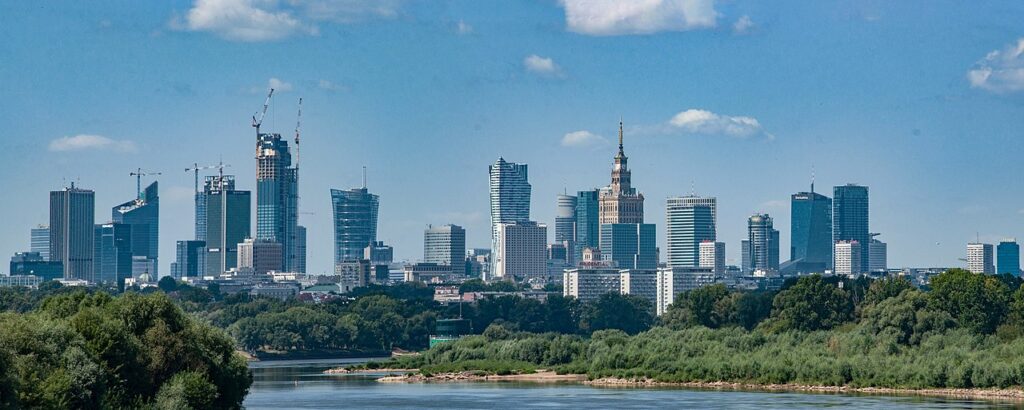
17. Warsaw
Warsaw is the historic capital of Poland, known for the Old Town, which was reconstructed after WWII, the Palace of Culture and Science, and the beautiful Vistula River which runs through the city. 1,780,620 people live there currently, according to World Population Review. The main industries of Warsaw are tourism, finance, and services, though there are emerging opportunities in tech and healthcare as well. Work culture in Warsaw is traditional in the sense that punctuality is paramount, and most business is conducted in formal attire. However, work-life balance is also valued highly in Warsaw. A one-bedroom apartment in the city centre will cost £606 per month, according to Numbeo, so someone making an average salary can expect to pay about 40% of their income towards rent. Public transport in Warsaw is good, so you will not need a car to get around unless you want to live outside the city and commute frequently.
Minimum Wage: £3.37 per hour (18.3 Polish złoty)
Average Salary: £18,403 (100,000 Polish złoty)
City Centre Apartment Price: £3,518 per sq/m (19,060 Polish złoty)
Start-ups: Warsaw’s start-up economy has grown massively in recent years, with developments being made in the tech sector. There are many start-up hubs to assist this growth, including Campus Warsaw which was opened by Google to provide education and a place to network. There are also opportunities in healthcare, AI, biotech, and more.
Known as the “Windy City”, Chicago is the capital of Illinois and one of the largest cities in the American Midwest. Chicago residents enjoy the shopping and dining along the Magnificent Mile, breeze on the shores of Lake Michigan, and old-fashioned baseball at Wrigley Field. Chicago’s economy is based on a mixture of manufacturing, financial services, and publishing, though tech and healthcare opportunities are also available. Work culture in Chicago follows the standard Western work week. Dress code and level of formality will depend on your employer, but business casual is usually a safe bet. A one-bedroom apartment in the heart of Chicago will cost £1330 per month according to Numbeo, so someone making an average salary will have to pay about 30% of their income towards rent. Chicago has good public transport within the city, but the rest of Illinois does not. If you want to leave the city without taking a Greyhound bus, you will need your own vehicle.
Minimum Wage: £10.88 ($15)
Average Salary: £52,959 ($73,000) according to Payscale.
City Centre Apartment Price: £3,587 per sq/m ($4955) according to Numbeo.
Start-ups: Chicago is a great city for start-ups, ranking 15th on the Global Startup Ecosystem Report. The city has £941 Million in early-stage funding, and has opportunities in AI, data, and financial tech, according to Startup Genome.
Major Companies: Chicago is a major hub of the American Midwest with many major companies operating there. According to Zippia, the top ten largest companies in Chicago are Walgreens (pharmacy), McDonald’s, Boeing, Caterpillar (construction equipment), Abbott Laboratories, United Airlines, Sears Holdings, Harrisburg Medical Center, Mondelez International (food production), and Veolia Environmental Services.
19. Cardiff
Cardiff is the capital city of Wales situated on the scenic Cardiff Bay. 481,082 people call Cardiff home according to World Population Review, and those that do enjoy living near the sea, visiting the many world-class museums and historic places in the city, as well as shopping in Cardiff’s various markets. The economy of Cardiff is based on finance, tourism, and media, but there are also opportunities in tech, healthcare, and government within the city. Work culture in Cardiff will be significantly more laid back than in London or New York, but dress code and office hierarchies will depend on your employer. A one-bedroom apartment in the city centre will cost £697 per month according to Numbeo, so someone making an average salary will have to pay about 30% of their income towards rent. You will not need a car in Cardiff as there is ample public transportation, but many parts of Wales are only served by infrequent busses and request-stop trains.
Minimum Wage: Minimum wage is based on age, with all workers over 24 making £8.91 per hour. 21–23-year-olds will make £8.36, 18-20s will make £6.56, 16-17 year-olds will make £4.62, and under-16s will make £4.30.
Average Salary: £28,000 according to Payscale.
City Centre Apartment Price: £2,657 per sq/m according to Numbeo.
Start-ups: Cardiff has a fast-growing start-up economy mainly focused on financial tech and AI solutions. Recently, Cardiff-based biotech and genomics start-ups received a boost from the accelerator Illumina, strengthening the sector.
Major Companies: Cardiff has a number of major companies in a variety of sectors, including education, tech, retail, and finance. According to Glassdoor, the top Cardiff-based employers are Cardiff University, Admiral Group (financial analytics), Deloitte (accounting), the NHS, Lloyd’s Banking Group, Tesco, Toolstation (retail), CarShop (automotive dealers), and Companies House.
20. Los Angeles
Los Angeles is a large, sprawling city on the coast of Southern California, with around 3,983,000 residents as of 2021, according to World Population Review. Famous for its place in the film and music industries, LA is home to Hollywood, the Sunset Strip, Universal Studios, and Capital Records. Beach-goers will enjoy the short trip to Malibu’s picturesque beaches, and art fans will appreciate the Getty Museum and the Walt Disney concert hall. Work culture in LA is much like it is anywhere in the USA, but dress codes may be less strict than New York, for example. Because LA doesn’t have a well-defined city centre, it can be difficult to meet new people and network in the city if you don’t already know people living and working there. A one-bedroom apartment in central Los Angeles will cost £1,583 per month, according to Numbeo, so someone making an average salary will need to budget about 33% of their salary for rent. While public transport does exist in Los Angeles, it is confined to a limited part of the city, and if at all possible you should own a car. Note that American streets are not often designed for walking or cycling, and while it is not impossible, LA is no exception to this.
Minimum Wage: £10.16 ($14)
Average Salary: £56,536 ($78,000) according to Payscale.
City Centre Apartment Price: £6,619 per sq/m ($9,123) according to Numbeo.
Start-ups: Los Angeles is a great city for start-ups, ranking 6th on the Global Startup Ecosystem Report 2020. The city has £3.6bn in early-stage funding, according to Startup Genome, with major opportunities in science, entertainment, and advertising.
Major Companies: Los Angeles is famous worldwide for its domination of the film and music industries, but there are many major companies from a wide variety of industries operating in the city. The largest public companies with headquarters in LA, as reported in the Los Angeles Almanac, are Walt Disney Co., CBRE Group (real estate), AECOM Technology Corp. (construction engineering), Molina Healthcare, Farmers Insurance, Edison International (utilities), and Live Nation Entertainment.
21. Tel Aviv
Minimum Wage: £6.14 (26.88 Israeli New Shekel)
Average Salary: £45,886 (INS201,000) according to Payscale.
City Centre Apartment Price: £10,568 per sq/m (INS46,292) according to Numbeo.
22. Brussels
Minimum Wage: £1,373 per month (1,625 Euros)
Average Salary: £39,695 (47,000 Euros) according to Payscale.
City Centre Apartment Price: £3,087 per sq/m (3,661 Euros) according to Numbeo.
23. Detroit
Minimum Wage: £7.14 ($9.65)
Average Salary: £53,279 ($72,000) according to Payscale.
City Centre Apartment Price: £974 per sq/m ($1,319) according to Numbeo.
24. Krakow
Minimum Wage: £3.37 per hour (18.3 Polish złoty)
Average Salary: £18,062 (97,000 Polish złoty) according to Payscale.
City Centre Apartment Price: £3,317 per sq/m (17,809 Polish złoty) according to Numbeo.
25. Frankfurt
Minimum Wage: £8.09 (9.60 Euros)
Average Salary: £48,056 (57,000 Euros) according to Payscale.
City Centre Apartment Price: £6,715 per sq/m (7,938 Euros) according to Numbeo.
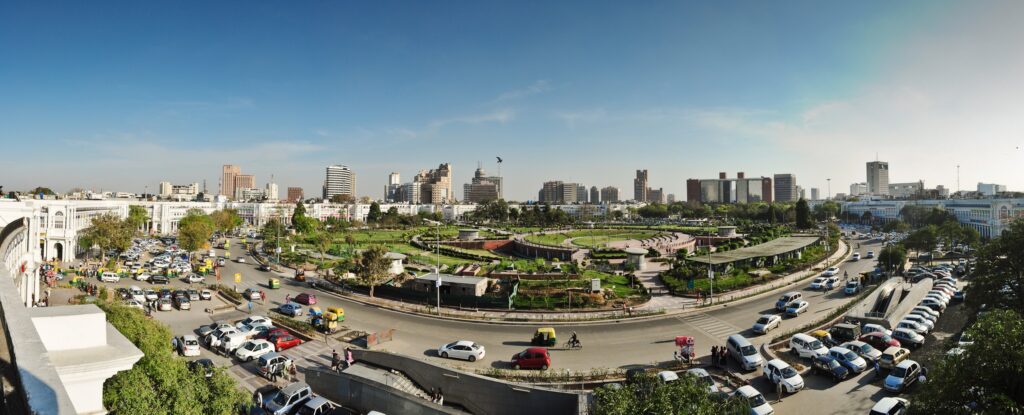
26. New Delhi
Minimum Wage: Minimum wage varies based on type of labour, so work which is considered unskilled pays a minimum of £149 per month (15,492 Rupees), while supervisorial roles which require a degree will pay a minimum of £197 per month (20,430 Rupees). The Variable Dearness Allowance has added around £5 per month to the minimum wage.
Average Salary: £4,754 (491,000 Rupees) according to Payscale.
City Centre Apartment Price: £2,206 per sq/m (228,203 Rupees) according to Numbeo.
27. Birmingham
Minimum Wage: Minimum wage is based on age, with all workers over 24 making £8.91 per hour. 21–23-year-olds will make £8.36, 18-20s will make £6.56, 16-17 year-olds will make £4.62, and under-16s will make £4.30.
Average Salary: £30,000 according to Payscale.
City Centre Apartment Price: £3,609 per sq/m according to Numbeo.
28. Madrid
Minimum Wage: £963 per month (1,125.8 Euros)
Average Salary: £32,502.64 (38,000 Euros) according to Payscale.
City Centre Apartment Price: £4,242.46 per sq/m (4,929.92 Euros) according to Numbeo.
29. Rome
Minimum Wage: While there is no minimum wage in Rome, many job salaries are controlled by unions which set wage at around £6 (7 euros).
Average Salary: £29,323.87 (34,000 euros) according to Payscale.
City Centre Apartment Price: £1,482.73 per square metre (1,719 euros).
30. Edinburgh
Minimum Wage: The minimum wage in Edinburgh is based on an age bracket system. People 23 and over qualify for the National Living Wage of £8.91. 21-22 year-olds make £8.36 an hour, 18 to 20 year-olds make £6.56, under-18s make £4.62, and apprentices must make a minimum of £4.30.
Average Salary: £31,000 according to Payscale.
City Centre Apartment Price: £3,872.51 per sq/m according to Numbeo.
31. Shanghai
Minimum Wage: £264 per month (2,280 Yuan)
Average Salary: £31,856 (275,000 Yuan) according to Payscale.
City Centre Apartment Price: £13,054 per sq/m(113,125 Yuan) according to Numbeo.
32. Bangkok
Minimum Wage: £6.80 (313 Thai Bhat)
Average Salary: £16,417 (756,000 Thai Bhat) according to Payscale.
City Centre Apartment Price: £3,693 per sq/m (170,354 That Bhat) according to Numbeo.
33. Beijing
Minimum Wage: £2.75 per hour (24 Yuan)
Average Salary: £28,157.38 (246,000 Yuan) according to Payscale.
City Centre Apartment Price: £12,988 per sq/m (113,913 Yuan) according to Numbeo.
34. Melbourne
Minimum Wage: £10.90 (AU$20.33)
Average Salary: £39,255 (AU$72,000) according to Payscale.
City Centre Apartment Price: £5,017 per sq/m (AU$9,143) according to Numbeo.
35. Ottawa
Minimum Wage: £8.42 (14.35CAD)
Average Salary: £36,358 (62,000 CAD) according to Payscale.
City Centre Apartment Price: £2,977 per sq/m (5,068 CAD) according to Numbeo.
36. Singapore
Minimum Wage: There is no minimum wage in Singapore, and salary must be negotiated with your employer.
Average Salary: £28,709.57 (53,000 Singapore Dollars) according to Payscale.
City Centre Apartment Price: £13,729.67 per sq/m (S$25,381) according to Numbeo.
37. Sydney
Minimum Wage: £10.90 (AU$20.33)
Average Salary: £40,745.50 (AU$76,000,000) according to Payscale.
City Centre Apartment Price: £755,695.03 (AU$1,410,133) according to Domain
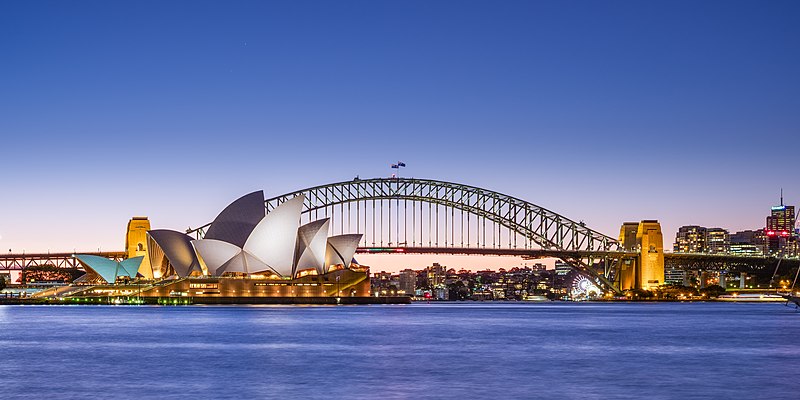
Jørn Utzon’s Sydney Opera House, and the Harbour Bridge, two of Sydney’s most famous landmarks, taken at dusk. The Sydney Opera House is one of the most iconic buildings built in the 20th century (1973) and is UNESCO’s world heritage.
38. Moscow
Minimum Wage: £207.79 per month (20,589 Russian Ruble)
Average Salary: £10,094 (RUB1,000,000) according to Payscale.
City Centre Apartment Price: £4,546.15 per sq/m (RUB448,378) according to Numbeo.
39. Milan
Minimum Wage: There is no minimum wage in Italy. Instead, pay is agreed upon sector by sector through National Collective Bargaining Agreements. On average, workers in Italy will make a minimum of £5 – £8 an hour.
Average Salary: £31,360 (37,000 Euros) according to Payscale.
City Centre Apartment Price: £6,558 per sq/m (7,730 Euros) according to Numbeo.
40. Johannesburg
Minimum Wage: £.97 (20 Rand)
Average Salary: £13,225 (R272,000) according to Payscale.
City Centre Apartment Price: £690 (R14,136) according to Numbeo.
41. Mexico City
Minimum Wage: £5.21 per day (141.70 Mexican Pesos)
Average Salary: £13,487 (MX$380,000)
City Centre Apartment Price: £1,637.70 per sq/ft (MX$46,341)
42. Reykjavik
Minimum Wage: There is no national minimum wage in Iceland, so your salary will depend on the price that your union has agreed upon. Normally, you will be paid at least £1,033.91 per month (180,000 Icelandic Króna)
Average Salary: £3,945.60 per month (687,000ISK) according to Salary Explorer.
City Centre Apartment Price: £3,796.61 Per sq/m (662,154.52ISK) according to Numbeo.
43. Dublin
Minimum Wage: £8.62 (10.20 Euros)
Average Salary: £34,639 (41,000 Euros) according to Payscale.
City Centre Apartment Price: £4,990 per sq/m (5,914 Euros) according to Numbeo.
44. Mumbai
Minimum Wage: Minimum wage will depend on what kind of job one works, and if it is classified as “skilled” or “unskilled”. Generally minimum wage is about £100 per month.
Average Salary: £5,498 per year (552,000 Rupees) according to Payscale.
City Centre Apartment Price: £5,207 per sq/m (523,361 Rupees)according to Numbeo.
45. Cairo
Minimum Wage: £93.40 per month (2,000 Egyptian Pounds)
Average Salary: £4,529 per year (E£97,000) according to Payscale.
City Centre Apartment Price: £645 per sq/ft (E£13,817) according to Numbeo.
46. Lima
Minimum Wage: £137.97 per month (750 Peruvian Nuevo Sol)
Average Salary: £7,173 (39,000 Sol) according to Payscale.
City Centre Apartment Price: £1,359 per sq/m (7,409 Sol) according to Numbeo.
47. Honolulu
Minimum Wage: £7.35 ($10.10)
Average Salary: £48,818 ($67,000) according to Payscale.
City Centre Apartment Price: £5,569 per sq/m ($7,671) according to Numbeo.
48. Cape Town
Minimum Wage: £1.07 (R21.69)
Average Salary: £11,896.65 (R242,000) according to Payscale.
City Centre Apartment Price: £1,699.92 per sq/m (R34,622.77) according to Numbeo.
49. Rio de Janeiro
Minimum Wage: £142.34 monthly (1,039 BRL)
Average Salary: £13,171.20 (96,000 BRL) according to Payscale.
City Centre Apartment Price: £1,348.59 per sq/m (9,785 BRL) according to Numbeo.
50. Dubai
Minimum Wage: There is no minimum wage for non-UAE nationals in Dubai.
Average Salary: £21,512 (109,000 UAE Dirham) according to Payscale.
City Centre Apartment Price: £2,428 per sq/m (12,294 Dirham) according to Numbeo.
Epidemiologist is one of those words that has unfortunately been thrust into everyday parlance. Along with, ‘furlough’, ‘coronavirus’ and an ‘R number’, in 2019 you would be forgiven for not knowing the respective definitions. Of course, you can’t get away with that now. In fact, many of us have even transformed into epidemiologists from our armchairs. But other than looking concerned on the television, what does being an epidemiologist actually involve and how do actual epidemiologists feel about the public discourse surrounding the virus? We caught up with three epidemiologists – a PhD student, a doctor and a professor – to find out.
Epidemiologists could colloquially be termed ‘disease detectives’ as they investigate public health problems. They will search for the cause of a health issue, identify people who are at risk and then determine how to control the spread or prevent the problem from recurring. But PhD student Florence Walker says that despite the pandemic, many people still don’t understand what an epidemiologist does. “I thought at least now everybody will know what an epidemiologist is and actually it’s still the case that I’ll tell people, ‘Oh I’m an epidemiologist’, thinking they will go ‘oh that’s so cool, that’s amazing,’ and instead I get a ‘What’s one of them then’ or an ‘Oh, I’ve got a problem with my skin, let me tell you about it’.”
After graduating with a Masters in epidemiology from the London School of Hygiene and Tropical medicine, Florence has been looking into the consequences of people not taking medication properly as part of a PhD at the University of Edinburgh. As a student epidemiologist, she admits she finds some of the conversations around lockdowns frustrating. “Some people say the restrictions are ridiculous but you know, we have 75% fewer cases of flu this year which means that the lockdown is working.”
She adds: “It’s been a long time since anybody thought that the miasma theory (the theory that bad air is the main cause of every disease) was correct. We’ve got germ theory. We know that you can’t get infected unless you are able to transfer pathogens.”
Florence Walker: ‘We have 75 per cent fewer cases of flu this year which means lockdown is working’
“People say oh well it’s just like a cold, well it is just like a cold for a lot of people but the problem is the percentage of the population for whom it will not be like a cold, it will be a life threatening if not life taking illness, is enough to overwhelm our national health service. We have to protect the NHS,” she sighs.
Florence herself has had coronavirus and as a consequence, she lost her sense of taste. “I put a spoon into a bottle of Colmans mustard and ate it and it just tasted like powder.” Thankfully it is back now.
For people who are considering getting out of the armchair and doing a PhD in epidemiology, Florence says: “The only bit of advice I could give anybody who wanted to go and do a PhD is “find your supervisor”. “PhDs are really lonely and I know lots of students who speak to their supervisor just twice a year, I have a call with my supervisor three times a week,” she says.
But Florence warns the pandemic has caused a sharp spike in the amount of people looking to do similar PhDs. “When I got mine my supervisor met me at the school and she was just asking everybody ‘do you want to come and do a PhD?’… But this year she advertised for a PhD student and there have been well over 100 applicants. It’s getting fierce.”
Dr Thomas Churcher, who teaches at Imperial College in London, also told us about the spike in interest in studying epidemiology amid the pandemic. “Clearly epidemiology is very fashionable at the moment but that will clearly wane.” He says that an older colleague recalled the wave of interest in epidemiology surrounding the HIV epidemic. “Don’t be attracted to it because you see a lot of epidemiologists on the news. All the hard graft is done between those events,” he says.
Dr Churcher was drawn to epidemiology through an interest in disease after he caught malaria while travelling. He says: “The thing I like about epidemiology is you have to get to a broad understanding of everything that’s going on. It’s the really holistic approach that I find interesting.
Dr. Thomas Churcher explains that epidemiology in involves a holistic approach. “You have more diverse experiences coming in.”
“In the past epidemiologists were very much born from the kind of maths and stats background but as understanding of the discipline has increased you have more diverse experiences coming in which is exactly what it needs. It doesn’t need to be just hardcore mathematicians doing it, it needs to be social scientists, it needs to be everything because it is a society based problem.”
Since the pandemic, Dr Churcher has focussed on the impact COVID is having on malaria, to avoid “a double pandemic”. He says while he is pleased the public has a greater awareness of epidemiology now but is frustrated that there’s still an “awful lot of rubbish being talked by an awful lot of people” when it comes to the virus.
Meanwhile, Professor Sarah Lewis, who is a Professor of Molecular Epidemiology at the University of Bristol, says she worries about the relationship between Twitter and epidemiology.
“I keep getting sucked into Twitter. I should stay away from it really but it’s a very good one for finding out new information because obviously data’s generated so fast at the moment. Normally in epidemiology, it will take us months to write a paper and then it will go out to peer review and that can take several more months and then you’ve got to wait for the publication.
“Because policies are being based on the research, everything is coming out so fast and lots of it hasn’t been peer reviewed and it’s posted up on Twitter and you find the latest information there really or in press releases which is quite different. Some of it has dubious quality but before anyone has had a chance to assess the quality it’s gone round hundreds and thousands of people,” she warns.
Professor Lewis says aside from the obvious frustrations at the moment, working in epidemiology is a very satisfying career path. “If you get involved in epidemiology you can apply the methods across a whole load of different subjects.”
“I normally work on using genes to identify risk factors for cancer but also cleft lip and palate and mental health, as well. So that’s quite diverse already. But then, with the pandemic, a lot of the methods that I’m familiar with apply to analysing data relating to COVID as well,” she explains.
She concludes: ”It’s a fantastic field if you’re broadly interested in health and you want to make a big impact on populations. Obviously a doctor will treat a single patient but an epidemiologist could identify a risk factor which could have an impact on thousands of people.”
As the world comes out of COVID-19, Iris Spark looks for lessons from art created during the Spanish flu pandemic about where we go from here
Edith Schiele, Egon Schiele, 1918
Consider this woman above. Unless we were to look closely at her, we might not know that she is set to die tomorrow. It’s true that her gaze is melancholy, but we might miss that her sadness has a leaden weight to it, distinct from the sadness we see in many romantic portraits. The clue to her condition is her gnarled and crooked hand, which tells the rapid encroachment of death more than her face, which still – heartbreakingly – has youth on its side. The more you look, the more signs of the seriousness of her condition are brought home. There are the strokes of discoloration on her cheeks. The lips are thin, a sign of the cyanosis which accompanied a deadly case of influenza.
The woman’s name was Edith Schiele, and she was married to that brief star of the modernist period Egon Schiele, whose works today can fetch as much as $40 million. Egon himself would die three days after drawing this picture. He was 28. It was an unhappy end to a life about to take off. As inauspicious as this story might seem, as we seek to emerge from the other side of the pandemic, it is a useful place to start if we wish to consider what can be learned from a study of the last pandemic about our current direction of travel.
We all know the statistics about the pandemic: the numbers dead or infected; and the jobs lost. But the data does not tell the full story.
Modern Family
Statistics blur over time; what’s left is the poetry and the art which a society creates. If we consider the so-called Spanish flu pandemic, which raged from 1918-1919, and which killed 100 million people, and infecting 500 million, we can see clearly in the era’s painting a trajectory which might well prove relevant for our times as we implement our vaccination programmes.
We have to start with an acknowledgement of the enormity of what has happened to us with the pandemic. This was evident too during the Spanish influenza. It can be seen, for instance, in the pictures Schiele made towards the end of his life. One is The Family (1918) – one of his last, and it would remain unfinished. This is a picture which in its mood is capable of placing us back in February 2020. It contains the foreboding of a vitality about to be stymied.
In this picture, two things alert us to the tragic state of affairs about to engulf the family: the first is the artist’s decision to depict his unborn child as if he wished to personify a child who would not survive the womb. The second is his painting of his own expression as blank and melancholy, his skin as jaundiced.
The baby might stand as a symbol for all the unborn projects which are stymied by the arrival of disease. But the definition of the musculature and the solidity of the forms make one feel uncomfortable about calling this an entirely pessimistic picture: there is will to endure here, and we can’t say it is any the less important simply because, in this instance, nobody in the picture survived.
Schiele, The Family
The picture is a reminder that the sheer oddity of what we have come through needs to be reckoned with and assimilated.
Fever Pitch
But surveying the art which arose out of 1918 pandemic, the most noteworthy thing is how difficult it is to depict illness. In pandemics we seem to enter a disjointed dreamscape. Illness isolates us, cuts us off from the solidity of the world. It partakes of the insubstantial, and can only be communicated in kaleidoscopic colours and the pictorial language of dreams.
In 1918, those artists who did experience a brush (or worse) with the Spanish flu, had already begun to intuit life as being at its core somewhat feverish and strange. This means we cannot always see how the influenza affected artists – they were, in some sense, feeling rather fluey about life beforehand.
Most notable among these was Edvard Munch (1863-1944) who also contracted the flu and produced two portraits (see opposite) about the experience Self-Portrait with the Spanish Flu and Self-Portrait After the Spanish Flu. In the first, Munch is depicted in a seated position with a blanket over his knees. The sheet beside him seems to be developing into a face, as if artist or sitter is hallucinating. The detail of his face is subservient to a swirl of colour. But how different is this picture philosophically to 1893’s famous picture The Scream?
When I talk to art specialist Angelina Giovanni she explains: ‘It’s very interesting that in the case of Munch – probably because themes of loss and death had already been present in his work – the way he depicts himself is no different in terms of style. Instead, it has a certain linearity within his existing body of work.’
Giovanni explains that it is as if Munch found some sort of confirmation of his prior experience by falling ill. The world had seemed disjointed before; and it continued to feel so when the influenza struck him. Giovanni continues: ‘Munch can so effortlessly depict himself within his predicament that were it not for the historical information that tells us that the work was painted when he had contracted the Spanish Flu, we might not have been able to place it in a particular point in time.’
While pandemics might illustrate our vulnerability vividly, they might not fundamentally change our method of vision. The world is elastic, and will return to its former shapes and structures.
But there is also no doubt that pandemics create an atmosphere of reflection which can be harnessed in future years. When I catch up with Fake or Fortune star Phillip Mould, he says: ‘When you’re locked down, and you remain in your own habitat, it’s a more meditative cultural experience and you think about the outside world in a different way.’ Mould even wonders whether we shall have more full-length portraits in future, now that we are all looking at each from six feet away.
For Mould this meditative spirit is best captured by Lorna May Wadsworth’s superb still lives painted during lockdown, in which mere things – cups and vases – attain a meditative quality which, in his view, supersedes her previous work as a portrait painter.
Edvard Munch, Self-Portrait with the Spanish Flu, 1919.
It was the American novelist Saul Bellow who once wrote that ‘Death is the dark backing a mirror needs if we are to see anything.’ The Spanish flu and COVID-19 pandemics caused a widespread awareness of mortality: what appears to happen is that our relationship to death is placed again under the microscope.
In 1919, the experience of finding oneself so suddenly vulnerable expressed itself visually.
Death Becomes Us
Egon Schiele was not the only major artist to be claimed by the influenza. The other was Gustav Klimt, who suffered a stroke and died as a result of catching the infection. He was famous at the time for his painting Death and Life (1916). Here we have a close approximation of what death meant to the early 20th century mind – albeit through the prism of an individual of genius.
Death hovers to one said of the main grouping, his clothing patterned with crucifixes. These religious symbols act as a reminder that as radical as we think him, Klimt inhabited a world where Christian imagery was more prevalent than it is in our time.
Gustav Klimt, Death and Life
How are we to feel about the figures on the right? Are they detached from death – in a kind of legitimate bliss of colour, and shared bodily warmth? Or are we to feel that they are failing to be awake to the menace of death as shown by the Reaper on the left-hand side of the painting? It’s likely that the picture contains both interpretations.
For Philip Mould the art of this period presents a problem in that ‘it is always hard to be sure what devolves from the First World War and what from the flu pandemic.’ What is clear is that with death more prevalent, something like a medieval acquaintance with death had been transposed into a modern setting. This can connect us with primitive political instincts – as was shown in the 1920s rise of fascism and as may be evident also in the riots in the Capitol, Washington D.C. on January 6th 2020.
Of course, in our own times, death has been depicted somewhat differently. Whereas death is still symbolised in Klimt by the medieval figure of the Grim Reaper, today death is represented with scientific diagrams such as the one opposite. Such images give a different sense of death. Here the virus appears has something spherical but prickly, but undeniably alien: an intruder. The Klimt picture shows death is demonic – which is to say almost human. It is an indicator of how our society has shifted.
Russell Paterson, Where There’s Smoke There’s Fire
Cocktail Hour
But what happens in the 1920s once society has recovered from a pandemic and we are able to interact confidently again? In the visual arts of the 1920s, we see the return of the line. The Art Deco style, as shown by the superb Russell Patterson illustration ‘Where there’s smoke there’s fire’ couldn’t be further from the blur of the Munch paintings. Society has returned to health. The owner of this body is again confident not just in herself but also in the bodily pleasure of smoking. Likewise, a renewed bodily confidence is again suggested in the cover of Life opposite which shows the joy of dancing – and again, all told in a strong line and healthful colours.
So might we find that once the world returns to normal we shall see the meditative aspects of our art today cede to something more dynamic, more fitting to the partying spirit?
That remains to be seen, of course, but as everyone knows the 1920s are not the end of the story. We find a move towards health and life in the art of the 1920s, but it is a fine line between this development and excess. In literature, the crucial text would be The Great Gatsby, in which F. Scott Fitzgerald’s own ‘crack-up’ is prefigured. His friend Ernest Hemingway would soon find his work affected by the excesses of drink – alcoholism would also lead to suicide.
In the visual arts, it might be said that the artistic world bifurcates along two vectors of greatness: towards Henri Matisse (1869-1954) and Pablo Picasso (1881-1973). Both were active at the time of the Spanish flu, though neither experienced a sufficiently severe case for us to say with certainty how it impacted their creative output.
Picasso’s own commitment to the line was always, with the invention of Cubism, synonymous with the notion of fragmentation. He seems in his pictures from 1906 onwards to see round things – to intuit time and meaning at work within the appearance of a given object.
But by the time we reach Guernica (1937), his vast oil painting depicting the Spanish Civil War, we can see how he is no longer depicting the complexity within objects as some fundamental fracture in society. Here, we find the sort of visions which might be intuited in the work of Schiele and Munch with which we began. It is as if we are now confronted with their worst fears enacted.
Pablo Picasso, La Guernica, oil on canvas, 1937
So what had happened in the intervening time? The short answer, of course, is fascism and there will be few who have witnessed developments in America these past years who can be certain that once the deprivations of coronavirus have passed, we might not head in that direction.
But the art of Henri Matisse shows a more hopeful story. In old age, he became a celebrator of simple colour, simple pattern, and graceful movement. If Picasso’s nightmarish canvas shows the fears of Schiele and Munch more than realised, then we might argue that Matisse’s scissor art in its childlike delight at colour and shape shows what they’d have liked to go on living for – they indicate something of the joy we all feel about the life which we all fear departing one day.
Perhaps all this is encapsulated in his great late cut-out The Snail, which he worked on after his stroke from 1952-3. It is an exercise in chromatic colour but it is the title which might strike us: since there is no sense in which this a realistic depiction of a snail we are liberated into feeling that Matisse is here showing us something of the feeling he gets from looking at one of nature’s humbler creatures.
Henri Matisse, The Snail, 1953, Gouache on Paper
In 2021, we should hope for just such an arrival in ourselves. Locked down in our homes we have seen the world at a slower pace, with more centredness, than we had been used to doing during our frenetic pre-pandemic lives. Matisse reminds us that we must retain what we might call the joy of the sedentary.
Like this, the art of the past has its messages. We must never forget what happened to Schiele, and to Klimt – and pay it appropriate respect and remembrance. But we must realise how superior a life of activity is, as shown by the advent of the Art Deco, while not forgetting that an abundance of energy, especially if it is misdirected, can lead to the horrors that Picasso depicted in La Guernica.
And if we look at Edith Schiele again, it is possible to look at her eyes and imagine that all this is somehow contained in those nearly hooded eyes. She sees us and doesn’t see us – just as we see and do not always recognise ourselves. But this is the help art gives us, as there is one sitting across from her – an artist who happens to be her husband – who gauges her with unusual intensity.
This is the privilege of art – to come from us, and yet somehow to know more than we do. When the art galleries open again post-pandemic there shall be wonderful things to see.
Young people and experts on climate change, diversity and arms sales reveal the significance of the new Biden administration for the UK
Georgia Heneage
There has been much hype around what the new Biden administration signifies for a politically divided country infected with issues of social inequality, racial injustice and a deadly virus which has killed over a million of its people.
In his first month in office, Biden seems to have already conducted (or at least promised) a systemic upheaval of many of the unpopular and controversial policies in place during the Trump administration, such as its sceptical approach to climate change, immigration and foreign policy. With Kamala Harris as the first female vice president of colour, there is a new mood around questions of diversity and inequality which were largely ignored under the Republican regime.
But the impact this seismic shift for America will have on the UK is yet to be seen: will it really be that seismic? And, if it is, will the effects be negative or positive?
The view of those working in these key areas in the UK is that the large scale shake-up which Biden is promising should urge us to follow suit, but the likelihood that it will is less than certain.
‘We want to fight for change’: the view of the young
For 21 year-old Connor Brady, Staffordshire University’s Labour Student’s society manager, the “tone” and “conversation” in the UK changed immediately following Biden’s inauguration.
Though he is unsure that “policy-wise” much will change in America for young people, Brady believes that Biden’s environmental policies will play a large part in emphasising the UK’s thin approach to climate: “His new policies highlight the fact that we’re not really having that discussion in the UK. I don’t think that we are going to make the changes necessary to save the planet, whereas in America the thought process is at least there”.
The fault, says Brady, lies with a media system in the UK much less attuned to climate worries than across the pond, and a political culture “defined by indecision”.
“I’d love it to be the sort of example that we’d follow,” says Brady, “and say that we need to take it seriously because they are. But I don’t think we really have a political class that are ever going to really take notice of the way other countries are doing better: we’ve seen it with Covid.”
Staffordshire’s society’s communications officer Jagdeep Jhamat, 20, said Biden and Harris’ appointment was “a sigh of relief; the moment we found out the results we realised that a saga had just ended in American politics, and it was not a good one”.
For Jhamat, though, the appointment of Kamala Harris does not signal a substantial benefit for people of colour in America or the UK. “Just because she has credentials of being the first woman of colour doesn’t excuse the fact that she was a judge who sentenced people of colour to prison with insufficient evidence. It’s not the best representation of minorities in America.”
And Jhamat sees a parallel in this respect with UK politics: “I have nothing in common with ethnically ‘diverse’ MPs like Rishi Sunak or Priti Patel: all I see is them selling out to the interests of a ruling white international capitalist class.”
Despite this, Connor Brady says the Black Lives Matter protests which started in America last year had a hugely positive affect on young people in the UK who are increasingly “politically disenfranchised”.
“The movements that we’ve seen over the past year have shown that young people are ready for change, and they are going to fight for change,” says Brady. “They aren’t going to wait five or ten years. They are willing to stand up and say no: we need change now, and we’re going to take it. That’s what I’m really excited about.”
His worry, though, is that “if Biden and Kamala don’t follow through on their promises, or if their policies aren’t radical enough, then it’s going to increase the disenfranchisement of young people in the UK who look up to them”.
‘Embarrassment is a useful tool’: Natalie Bennett on environmental policy
One of the areas most transformed by the Biden administration to date is his climate policies. After years of climate denialism and environmental destruction under Trump, the White House has now recognised global warming as an “emergency”: they’ve rejoined the Paris accord, promised new opportunities for clean energies and green technologies, and signed an executive order to freeze new oil and gas leases on public lands and double offshore wind production by 2030.
These are just a few of hundreds of ambitious executive decisions established in an effort to position climate change as an essential part of all American foreign and domestic policy going forward.
Biden’s extensive environmental policies show his awareness that beating climate change requires systemic change; a scooping out and refilling of the American economical and political systems rather than a sprinkling on top.
So where does this all leave the UK?
For Natalie Bennett, former leader of the Green Party from 2012-2016, Biden’s appointment signals a golden age for the global fight against climate change.
More importantly, she says it puts a huge amount of pressure on the UK as the chair of COP and highlights what a mess the UK is in. “Embarrassment can be a very useful tool”, says Bennet. “If a country like the USA, which has so many similar problems to us like poverty, inequality and the dominance of giant multinational companies, are doing better than we are, that makes us look really bad.”
Bennett says the US’ Green New Deal is far more sophisticated than the Ten Point Plan for a Green Industrial Revolution announced by the UK government in November last year.
“The Biden administration has come in with a very clear plan of action on whole areas of key policy, whereas our plan looks like something written down on the back of an envelope then hastily sketched up into something. It’s not long-term thinking,” she said.
Bennett sees these issues with making long-term executive decisions in the UK as part and parcel of a binary, first-past-the-post electoral system which means that “we are terrible at decision-making”, and the “last significant change in Westminster was women getting the vote 100 years ago”.
It’s also down to our deeply centralised political system, where power and resources are concentrated in Westminster and local government’s ability to make independent decisions has been “slashed to ribbons, to the point where most local governments have their hands tied”. Bennett says the rhetoric of the Green New Deal is, by its natural structure, locally based: it’s about doing things in communities, whereas “our industrial strategy is about what the top level decides and what companies invest in.”
Despite the UK government’s promise to create 250,000 jobs in the green sector, Bennett says Biden’s new policies are far more rooted in a recognition that climate change should be rooted in the labour movement, technological progress and job creation. His “just transition” policy “suggests change everywhere”, whereas in the UK there’s a sense that everything needs to level up to the status quo set in London.
“What we are talking about here is business as usual with added technology. Biden is talking about transformation,” says Bennett.
Lee Pinkerton on Kamala Harris and diversity
One of the most predominant issues brought to the international stage last year was racial injustice: these were voiced in mass Black Lives Matter protests which started in America, a country for whom racial discrimination is a daily reality for millions and is deeply embedded in the political and justice system.
Biden’s appointment signals a shift in this area, partly because of his pledge to tackle social and racial inequality in America, partly because of the sheer weight lifted by expelling a president who many deem openly racist, and partly because America is now enjoying the first woman of colour as its vice president.
Though some see Kamala Harris as an exciting new change in political black representation for women, Lee Pinkerton, communications officer for ROTA (Race on the Agenda), a leading social mobility think tank, agrees with student Jagdeep Jhamat that Kamala Harris’ appointment will “in truth have very little real effect on people of colour around the world”.
“They had a short feel-good moment, but it will have very little real impact on the quality of black people’s lives in America in terms of things like employment or criminal justice”, says Pinkerton, “especially because Harris wasn’t all that popular among black communities when she was a judge”.
In the UK a similar kind of “superficial” diverse representation can be seen in government. “The Tories are boasting of the most racially diverse cabinet in UK history- which is factually true- but it hasn’t improved things for black people at all. If you look at the back story of MPs like Home Secretary Priti Patel or Chancellor Rishi Sunak, they come from the same privileged, privately-educated backgrounds as their white peers. They are cut from the same cloth, and in terms of diversity of thought- there’s little to none”.
‘Our blind spot’: arms sales to Saudi Arabia
The ethical, political and economic impact of the UKs involvement in the war in Yemen, in part a result of us being the second largest exporter of weapons to Saudi Arabia, has long been a source of controversy.
This week tensions intensified as the new Biden administration announced its intention to freeze all arms sales to Saudi Arabia and work towards a lasting peace agreement to end the war that has now killed around a quarter of a million people and placed at least 4 million on the brink of famine.
When asked its response the day after Biden’s move was announced, the UK government were clear on one thing: they are not going to alter their approach towards selling weapons to Saudis, many of which reportedly end up killing innocent civilians.
The UK’s arms export licensing information reports that licenses worth £5.4 billion for sales to Saudi Arabia have been issued since March 2015, though they also consider this an underestimate. According to the Stockholm International Peace Research Institute, since 2015 Saudi has been the largest importer of arms in the world, with the UK accounting for about 15% of these exports, and the US around 75%. Saudi Arabia represented 40% of the volume of UK arms exports between 2010 and 2019.
So will America’s decision to roll back from its heavy involvement in Yemen have any impact on the UK?
For Dr David Blagden, senior lecturer in International Security and Strategy at the University of Exeter, Biden’s decision will “potentially leave the UKs tacit support in Yemen even less tenable”.
But Blagden says following suit may be unlikely, since the key difference between the UKs involvement and the US’ is that, whilst America “is less and less dependent on gulf hydrocarbons and it doesn’t really need gulf oil anymore,” in the UK we still rely on Middle-Eastern oil and gas and have in fact been “doubling down on gulf commitment over the last few years with the new base in Bahrain and Oman.”
Blagden says the UK previously used the US’ involvement in the Gulf as “cover” and because America was so involved the UK didn’t really stand out. “But the US revising its position on that will, I think, produce some even starker tensions for the UK.”
Blagden suggests that our continued support may be rooted in the fact that the arms sales contributes to so many “highly paid and highly trained jobs” in manufacturing and munitions sales. But according to Oliver Feeley-Sprague, Amnesty International UK’s Military, Security and Police Programme Director “the jobs argument is overstated in terms of the impact. Yes of course big contracts would suffer, but in the overall scale of things, Saudi is only one of many destinations we sell to and we’re not talking about stopping every sale of equipment to the Gulf.”
Feeley-Sprague also doubts the validity of the argument that arms sales contributes so much to our economy: “If you look at the economies of scale, the UK is the second largest arms supplier after the United States. But the US is by far the largest: 75% of all weaponry over last 5 years that Saudi has imported in terms of monetary value has come from the USA.
“Yes we are the second, but the US is by far the largest, so if we flip that argument on its head it’s a much more valuable market for the US than for the UK. If the US have said they’ll stop, that puts the UK in a very isolated position”.
Feeley-Sprague says the biggest impact of the US’ decision for the UK will be felt on individual companies: “In a globalised market the arms trade is intrinsically linked to international supply chains. US restrictions will have practical implications on companies reliant on US defense companies for their own sales.”
This should never be a reason not to take the ethical path, though. “We always say you should never allow strategic, economic, political factors to override the pure principles of international law which is the protection of innocent civilians in armed conflict,” says Feeley-Sprague.
For Paul Tippell, Constituency Coordinator for UNA-UK Yemen, the UKs leading source of analysis on the UN, the biggest issue in the UKs position with regards to Yemen is not arms sales but it’s failure to play a part in the ceasefire of a war which has been called the biggest humanitarian crisis of our time.
“Our job is to set the agenda and come up with resolutions; we have a big responsibility and there’s a real opportunity to work with the new administration in the US to try and secure peace. The UK has been singularly lacking in this respect.”
So why have we been so ‘singularly lacking’? Feeley-Sprague says the UK has had a “blind spot” for Saudi Arabia for decades, and are prepared to tolerate more issues than almost any other “customer”, because they are seen as “a key market for money and a strategic partner in the UK’s foothold into the wider region”.
But Brexit has placed the UK in a precarious position on the international world stage, and we must be careful: “If ever there was a way of announcing on the world stage that we were a major power who considered human rights and the rule of law to be important, now is the time.
“Because the UK hasn’t done that, I think it puts a question mark in the post-Brexit role that the UK wants to play in the world,” says Feeley-Sprague.
Brexit and an indecisive government may place the UK in an isolated or precarious position on the international stage, but the entrance of Biden means the return of America as a neoliberal international economy with one eye always turned outwards. It signals a golden dawn, full of hope, for young people.
Gone are the days of protectionism and reckless international policies which governed America under Trump; the age which a new Biden administration ushers in appears to be one of global consensus, free trade and rigorous attention to the key issues. Let’s hope he achieves what he promises to.
The Chancellor’s recent Budget provided a very welcome boost for skills and training. But whatever Government does, it doesn’t replace the personal responsibility we all have as well.
As the Chancellor stated in his speech, the announcements were designed to deliver an “economy of higher wages, higher skills, and rising productivity”. All Chancellors and Budgets take skills seriously but for this Government they are not just part of its economic agenda but also fundamental to the success of levelling up. Skills development is a valuable tool to ensure that economically the whole can grow.
The Chancellor said that the Budget “invests in the most wide-ranging skills agenda this country has seen in decades” including an increase in skills spending, by £3.8 billion over the lifetime of this Parliament (an increase of 42 per cent), expanded T Levels, building Institutes of Technology, rollout of the lifetime skills guarantee, an upgraded FE college estate, a quadrupling of the number of places on our skills bootcamps, and increased funding for apprenticeships. Whilst this is all important, others have criticised the paucity of catch-up funding across education.
But regardless of the work done by Government, the measures introduced, and the level of priority given to skills development, there remains an onus on the individual to consider their own issues as well.
That is particularly the case for those in work and those entering the workplace. It can sometimes feel that you are left to flounder or need to work out a path all by yourself. But help is out there. Many membership bodies offer advice on continuous professional development (CPD) and often run their own schemes as well. This means that they have done much of the identification of relevant courses, reading, events etc.
For those in work or entering work, we must remember that skills development is not just about opportunities in the workplace and training courses. Skills development come in a whole range of different guises; we don’t just have to think about taught courses even if they too play a valuable role.
The membership bodies will doubtless run courses, but they will have specialist groups, networking opportunities, and run webinars. All can help in delivering improved skills.
Many employers too will run in-house training or support external training. Again, there it is too easy to be put off by the perception that external training costs lots of money which some employers may be reticent to pay. There are though free options around as well, especially in these days of ever greater online resources. So be prepared to do your homework and look around for the opportunities. Training doesn’t always have to incur costs.
Be prepared to take advice as well. Ask colleagues what training they have done and found useful. Also, ask friends and contacts in similar roles elsewhere. You don’t always have to be a pioneer.
There is also a lot to be said for thinking not just about your immediate role but expanding your horizons and thinking about where you want to go as well. Do you need to know more about leadership, finance, strategy, reputation etc.?
Training and skills can also be about being seconded as well. Have a think about exploring those potential options with your employers as well.
The opportunities are out there but they need to be grasped.
The writer is the Head of Public Affairs at BDB Pitmans