This column hasn’t so far made a habit of reviewing children’s books, but it mustn’t ever be said we don’t celebrate the achievements of our mentors and so an exception has been made here. Besides, this short book by Talan Skeels-Piggins is a pleasure to read and is also splendidly illustrated by Natascha Taylor.
The books takes the form of a potted autobiography and Skeels-Piggins really does have an extraordinary story to tell: it contains lessons about resilience and creativity which apply as much to the adult reader as to children. The book resembles the hit series Big People, Little Dreams – except that it is a book about Skeels-Piggins written by Skeels-Piggins himself.
His story is heartbreaking and heartwarming all in one go. Talan has been many things but he began as a teacher, not knowing at that stage that his life would be all about the wider lessons he has learned to impart. He writes: “He was always happy to teach others how to play. And so, he joined a big school and became the PE Teacher.” This need to impart knowledge would stand him in good stead, when the terrible tragedy of his life hit. Skeels-Piggins was the victim of a car accident, and the experience of this is described in simple terms for the young reader: “Talan was very sad. He thought he would never play again. This made him cry.”
What makes Skeels-Piggins remarkable isn’t just that he did find a way to play again – becoming both a Paralympic skier, and famous motorcycle racer, but also learning that his own story doesn’t have to exist in isolation. Especially during the pandemic, it can connect to all stories – and shed a light on situations utterly unlike his.
This book therefore celebrates two things – firstly it celebrates resilience, and insodoing implies that life is a thing infinitely worth being resilient about. By telling the story at all, it also celebrates our interconnectedness. As one page has it: ‘Sometimes we all feel lost.’
This has never been truer than in our bewildering post-pandemic world and it’s this which makes the book so relevant to all of us.
Skeels-Piggins gives his readers here what he also gives Finito candidates: that affirmation that difficult times are where we really find out who we are – and that they might have a surreptitious value secreted in them. Perhaps, we may even arrive at the astonishing position of being almost glad of the hardship we suffered, as it was only by experiencing adversity that we learned what we had in ourselves to traverse it.
Rebecca Walker talks to the Who Singer and Teenage Cancer Trust patron about his new craft ale, the music industry and his new solo tour
RW: So tell us about your new beer?
RD: It was something that I started with my son-in-laws and my son during lockdown because we were all sitting on our hands and unlike the civil service we got off our butts and did something. Beer is the new wine. There’s so much wine in the world you could bathe in it. Everybody’s doing vineyards but the craft beers they are fantastic and we’ve managed to find a really great brewer. We’re wiping our nose every week. We haven’t made any profit yet but you know, it’s exciting to do it. I never realised how good beer could be when you’re drinking he mass produced stuff it’s not like a craft beer at all. It’s totally different it’s like a really good claret.
RW: You’ve been quite vocal about the state of the music industry. Do you have sympathy for young musicians.
RD: Musicians were very poorly treated in lockdown, most of them are self-employed. They couldn’t be furloughed: They were being crucified. I planned to put it together last year and I could smell the way the wind was blowing with a new wave of Covid and our so called scientists and their models which are so inaccurate. If you bought a car with that many faults you would take it back immediately and never buy another car of that model but there you go.
RW: It seems as though streaming services preclude musicians from earning a proper living?
RD: They do. It’s a huge problem. The whole record business has been stolen by overseas huge conglomerate record companies and the streaming companies and of course they’re all working on the model that was made when they were taking sensibly or reasonably 75 per cent of the income because they had to produce it they had to distribute it, they had to you know promote it so the artist was quite happy to take a very small cut. The streaming companies pay so little per play that what’s left for the artist is you can have a billion streams and you’ll earn about 200 quid. That ain’t fair. If that’s your yearly take home play you might as well be a welder.
RW: Is there anything Parliament can do?
RD: They are examining it but the trouble is they don’t understand about the music business – they’ve never understood it. We’re always a pain in their ass. This country leads the world in popular music and that claim now is not coming to this country, it’s going abroad. Our industry it’s all going abroad.
RW: What’s your take on social media?
RD: The younger generation want to be careful of the world they’re creating. All of this micro brain management – I don’t think it’s very good for us. I’ve never been a fan of the internet: I think Twitter and social media has got its good points but it seems to have brought out the worst in sections of society. It feels like it’s the end of civilisation to me.
RW: You don’t strike me as very impressed with the state of science behind climate change?
RD: One thing you have to remember: All these scientists doing all this stuff –whether they’re right or wrong I’m not commenting on that – all I’m going to try and say here but all the scientists giving out all of these predictions are the same kind of scientists that gave out the Covid predictions. How wrong were they. Is there enough scrutiny going on?
RW: Back to music, you’ve been vocal about the government needed to come up with coronavirus insurance schemes?
RD: We’re not asking the government to pay anything: we’re asking for the standard insurance which we would pay for. We would be covered for the expenses we incur in starting a tour: by the time we go on tour this time we’ll be about a million and a half dollars in debt and if they say we’re locking down again, that’s a huge problem. All we’re asking is that if they closed us down they would cover our costs. I think that’s fair.
RW: And how are you healthwise?
RD: I’m as deaf as a post, eyes are going, ears are going but the voice is alright. I haven’t quite gone the full Tommy.
As Costeau was hunkered down on lockdown eating another sushi Deliveroo, it suddenly came unbidden that the marvellous documentary Jiro Dreams of Sushi is now 10 years old.
This proves a useful excuse to discuss what is not only the greatest movie about sushi, but perhaps one of the great movies about work. The film follows Jiro Ono, an Itamae (or sushi masterchef), in his quest to make the perfect sushi: it is a tale of waking obsession about how to get better at something. Insodoing it documents a rare work ethic, and shows us the complex business of running a great restaurant. It is a film which would be as much value to an HR manager as to a budding chef: the film shows not just how to work hard yourself but how to instil those habits in those around you.
Interestingly, Jiro is in the Guinness Book of Records as the oldest chef to win three Michelin stars. Part of what the film shows is the importance of bedding in for the long haul. Even an apparently small corner of life like sushi turns out to be endlessly intriguing if you only look at it with the right degree of curiosity. As Jiro says at the beginning of the film: ‘Once you decide on your occupation, you must immerse yourself in your work.’
In one sense, this feels like a peculiarly Japanese lesson. It was the Japanese painter Hokusai who said: “At 90, I will enter into the secret of things. At 110, everything – every dot and dash – will live.” Jiro is like this with sushi. Jiro is 85 in this film, has since made sushi for President Barack Obama, and is 96 at the time of writing.
Behind every great career, there is clarity of thinking: to make a good choice, and then come in behind that choice with years of graft. This film also reminds us that at the start of our lives, we face a simple choice about whether to seek excellence or to coast. As Jiro points out, to change the world, you need to have talent. And then it’s just a question of whether you work hard.
This film shows not just Jiro’s work ethic, but the effect of that ethic on his sons, who must struggle to follow in his footsteps. Each admits that in the beginning, they hated their apprenticeship, since their father took such a hard line, in the belief that graft is ultimately meaningful, even in its way liberating. There is the occasional hint of generational disparity as young Japanese people fail to take on the heritage that Jiro has created.
There are amusing moments. Jiro says young people want a lot of spare time and they want a lot of money. But for Jiro, this is not the way to live: he has stated that he dislikes holidays because it makes him itch to get back to work. Some of the apprentices in the film have reportedly left Jiro’s tutelage after a very short period – sometimes after only one day.
We are left in no doubt that it would have been better for them to stay. In one marvellous moment, we hear from Jiro’s apprentice as he learns how to whip tamago (egg sushi) after four months of continually getting it wrong. Finally, Jiro tastes his latest effort and says approvingly: “Now, that’s how it’s done,” causing the apprentice to burst into tears. The master-apprentice relationship works only if it is respected by the apprentice: it is an anecdote which shows that equality in the workplace can sometimes be profitably balanced with hierarchy.
This is a film with much to tell us as we resume life after the pandemic, having enjoyed or endured a period of pause. Costeau is aware of a certain pent-up energy within all of us. Sometimes we don’t know quite what we should strive towards with it. This film tells you. It’s called excellence and it’s in each of us.
As the Astronomer-Royal, I would argue that it’s a great luxury to look at the stars – but then the cosmos is part of our environment. It is the unique part of it which has been observed and wondered at by all human beings everywhere in the world’s large history. They’ve all gazed up at the same vault of heaven.
To be more technical, every atom in our bodies was made in a star which lived and died some 5,000 years ago. I think the public is fascinated by this, just as they are about dinosaurs – which I suppose some people might say are irrelevant now. So I’m not apologetic for trying to understand space.
Besides, space technology is used for practical purposes. By observing things in the cosmos we can study the laws of nature under far more extreme conditions than you could ever simulate on earth: more intense radiation, and longer gravity and so forth, so that one can understand more deeply the laws of nature.
If people ask if there any other special perspectives which astronomy allows me to bring to everyday affairs, it is perhaps the awareness of a long future. Most people who accept Darwinian evolution, they’re aware that we’re the outcome of nearly four billion years of evolution, but I think many think that we humans are the culmination of all that and the top of the tree. No astronomer can believe that, because earth is less than halfway through its life – the sun has six billion years to go until it dies. And the universe may have an infinite future head of it. I might quote Woody Allen who said: “Infinity is very long, especially towards the end.” We are perhaps nearer the beginning than the end of more and more wonderful complexity, and although that’s a vastly longer time scale than one can easily imagine, it gives a different perspective.
We should share the mystery and wonder of the universe, but we should accept that our brains may not understand the depths of it, just as a monkey can’t understand quantum theory.
Astronomy also engenders humility. Most students find it pretty hard to understand even a single atom. Therefore I’m very sceptical of anyone who claims to have more than a very incomplete and metaphorical understanding of any deep aspect of reality. It’s why I’m suspicious of doctrinal religion, though I do support the social function of religion as a way of bringing people together.
Religion is part of our culture. I was brought up traditionally in the Anglican church, and hugely value the accretions of architecture and musicianship. But if I were born in Iran, I’d feel the same way about Islam, and in the same spirit.
As a writer, I’m very much on a computer. I have friends who write books, who start with a sheet of paper, begin at the beginning and go on. I’m not like that – I write bits and it gradually comes into focus. The books I’ve written have all grown out of having written articles and lecture notes. I would never sit down with a fresh topic and write a book out of the blue.
Most jobs involve some aspect of mathematics and some sort of skill with computers. Science should be regarded as part of our culture. Small kids are fascinated by space and dinosaurs. The tragedy is that as they get older they lose interest in that rather than broadening it to embrace the rest of science and this is partly due to the lack of inspirational teachers in secondary schools.
Everyone needs to have some feel for science. We need to know how the world works and where our food comes from. It’s sad that there are young people who’ve never seen a dark sky or a birds’ nest or never been on a farm – or couldn’t say where their liver is in relation to their stomach. One feels everyone ought to know a bit about basic numeracy too, so they can’t be bamboozled by statistics. It’s also important for responsible citizens, due to the implications in relation to climate and environment. If you want the debate to rise above the level of Daily Mail slogans, everyone needs a basic understanding of science. For science to be optimised, we need to have a public who understands it well enough to be part of democratic discussion.
Lord Rees is the Astronomer-Royal and the author of numerous books, most recently On the Future (Princeton University Press)
“What are the skills of the future?”, “how can I future proof my career?”; these are the questions I am most frequently asked. And after a decade spent decoding the digital world, I consider it my job to know. At Decoded, we spend every day trying to deconstruct the most cutting-edge technologies impacting the world enabling companies like Unilever, HSBC and Mastercard to upskill their talent. In my lifetime, there has never been a more accelerated period of technological change, nor a more pressing need to reskill for the future. But with such a dizzying array of new tech trends, how on earth can human beings catch up? Here’s my cheat sheet to the seven skills and mindsets you need to future proof your career:
Data Skills
“What’s a pirate’s favourite programming language? R.”
Microsoft estimated that there were 150 million digital jobs waiting to be filled in the US alone by 2025. This includes 98 million in software development, 23 million in cloud and data, 20 million in artificial intelligence and machine learning and beyond. All this amounts to an explosion of roles, across all companies and geographies, commonly commanding salaries upwards of $150k per year. The golden thread connecting them all? Data skills. Not all digital skills were created equally, and if there is one I would place my bets on for delivering the maximum return on investment per learner, it would be data skills. Once we have managed to wean a generation off Excel, the transformative impact of these new tools knows no limits. The application of AI to the world economy will make what was previously impossible possible. From radical reductions in energy usage and carbon emissions to innovations and breakthroughs in disease detection and prevention, data skills hold the promise to create a smarter, cleaner and fairer world. So whether it is simply learning how to use low-code, no-code tools like Alterix, Tableau and PowerBI, or mastering Python and Neural Networks, take the leap and become part of the new data democracy.
Data Ethics
“Educating the mind without educating the heart is no education at all” Aristotle
If Aristotle was alive today, he would most certainly be a student of data science. But crucially also a student of data ethics. As much as AI has the potential to create a smarter, cleaner, fairer world it also has the potential to create a dystopian one of AI warfare, surveillance states and human obsoleteness. This may be due to leaving powerful technologies in the hands of bad actors, or it may in fact be merely a consequence of putting technology in the hands of poorly educated leaders. Elon Musk and the late Stephen Hawking are amongst many leaders to express their concerns. In response, our modules on data ethics have seen a spike in demand as it appears, somewhat reassuringly, that people are now seeking not only to put powerful tools in their hands, but to use them wisely too. Because it is hard to know what we should fear more, artificial intelligence or human stupidity?
Digital Literacy
“I wandered lonely as a Cloud” – William Wordsworth
A funny thing happened at peak Covid in March 2020. At a time when I fully expected the boards and leadership teams of the world to be scrambling to respond to the world’s first global pandemic, we unexpectedly received an influx of inbound requests to decode technologies for boards and leadership teams across the world. Why? Covid accelerated the digital transformation of their businesses by as much as ten years overnight. Digital fluency went from a nice-to-have to a need-to-have with immediate effect. Were they asking us how to deploy advanced analytics across their businesses or to multiply their data skills capabilities? No. They were asking us “what is the Cloud?”, “what is the difference between AI and machine learning?” and “what is an API?” Unfortunately the business leaders of the world are often the most digitally illiterate quotient of the organizations they are in charge of. It’s lonely at the top. Who can you turn to to tell you what the Cloud is without making you feel foolish? It’s my ambition to educate the leadership teams of the entire Fortune 500. It may be one of the most underrated but high impact catalysts to accelerate the digitisation of the economy I can think of.
Apprenticeships
Alan Sugar, eat your heart out
Since the UK launched its apprenticeship levy scheme in 2018 it has caused its fair share of controversy. It is payable by all employers with an annual pay bill of more than £3 million, at a rate of 0.5 per cent of their total. This money can go towards an array of approved training schemes, spanning management and technical skills and beyond. We launched our Data Academies in 2018 to respond to this demand and are now one of the UK’s largest suppliers of levy-funded data skills.There are many improvements to the scheme being demanded for by employers and training providers alike. The deficiencies mean many employers simply send the money back to government’s coffers rather than it reaching the workers who would most benefit from the investment in their lifelong learning. Despite these challenges, the apprenticeship levy is one of the world’s first schemes of its kind. In 2021 over 600,000 apprentices were taught across the UK – and the UK’s apprenticeship scheme is being keenly observed globally. With a few tweaks, the UK may have one of the world’s best lifelong learning policies on its hands. It is time to throw out any antiquated notions of what an apprentice may look like too. Our learners range from 16 to 60 years old, from mid-career managers, to people just starting their professional lives to PHDs and people on career breaks. We are living in the greatest time of flux and change in terms of our careers and skills. We are all apprentices.
Hacker skills
Permission to feel dangerous
In 2021, the number of cyber attacks peaked, with a 40 per cent increase in attacks on the year before. Cyber crime terrifies us, just imagine the havoc one simple attack could wreak on our personal or professional lives? Despite this, we still can’t seem to change our passwords from “passw0rd” or wrap our heads around using a password protector. What an odd relationship we have with our security. Fear and utter complacency in tandem. That’s why we try to get people behind the screen as much as possible during our hacker classes. We take you behind the screen, into the dark web, delving into illegal data dumps, replicating real hacks on banks or retailers. It all sounds a bit dangerous doesn’t it? But it is, in our experience, the only way to create the interest and behavioural change needed to ward off the threat of a real life cyber attack.
Web3
90’s web utopianism is back
In a nutshell, Web3 is the dawn of a new decentralized world wide web. Built on blockchain technology it utilizes features such as token-based economics. Whether you’re a skeptic like Elon Musk and Jack Dorsey or an advocate like Ethereum co-founder Vitalik Buterin there is no denying the buzz around Web3. According to crypto VC firm Electric Capital, there are currently only 18,000 active Web3 developers in the world. In comparison, there are over 16 million plus Javascript developers. So if you want to ride the crest of a wave and fancy yourself as a bit of a tech utopian, Web3 is for you. Time to scrub up on NFTs (non-fungible tokens), DAOs (decentralized autonomous organizations) and cryptocurrencies (know your Solana from your Bitcoin).
The Metaverse Virtually impossible potential
The Metaverse is anticipated to present an $800 billion marketplace by 2025. Laugh at Mark Zuckerberg in his Ray Bans on his hydrofoil all you like, this is a marketplace not to be ignored. Brands like Nike have reaped the rewards of taking a “Just Do It” approach to the Metaverse, with the launch of Nike Virtual Studios and Nikeland last year. Today Nike Digital is the fastest-growing piece of Nike’s business, representing 26 per cent of their revenues. So whether you need to devise your organization’s Metaverse strategy or you simply want to escape the real world for a bit (don’t we all), prepare to step through the looking glass and fall down the rabbit hole of the virtual future which awaits us.
There is no silver bullet but any person young or old who develops these seven skills, tools and mindsets, is set to flourish in the economy and society of the future.
Kathryn Parsons is co-founder and co-CEO of Decoded, a technology education company delivering immersive learning experiences spanning digital and data technologies to businesses and governments across the globe.
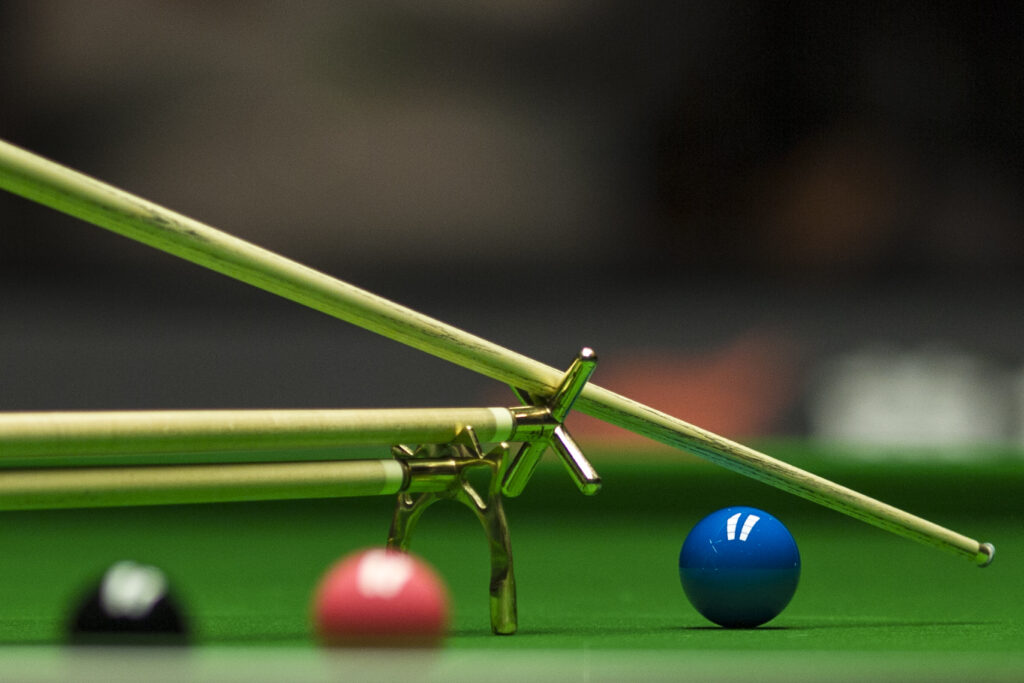
It’s a special year for snooker. Not only are crowds returning to Sheffield’s famous Crucible Theatre to see the action, but the game itself is celebrating a one-of-a-kind birthday. The cue sport which has captivated fans all over the world was first played in India in 1875, making this year snooker’s 147th anniversary.
That number (147) is important to players and fans because it represents the maximum number of points which can be scored in a single snooker frame. This incredible feat was first performed on television in 1982 by Steve Davis; many fans will also remember Cliff Thorburn’s 147 in 1983, the first time any player pulled it off at the World Championships. Since then, many players have made maximum breaks, but none faster than Ronnie O’Sullivan who cleared the table in just five minutes and twenty seconds during the 1997 World Championship.
To celebrate the long-standing tradition of snooker, we’re taking a look at the whole industry from amateur leagues to the top levels to see what lies ahead for the sport.
Local clubs – the heart of snooker
If you’ve ever played a casual frame of snooker, you’ve probably done so at a snooker hall. Though snooker halls are not as packed as they were during the height of their popularity in the 1980s and 90s, there are still many places to play dotted around the country.
The backbone of snooker today does not come from massive television viewership or pro players’ star power, but rather from amateur players who form a community of people who love the sport.
One such player is Pete Przednowek. Przednowek frequents London snooker halls playing matches with his friends while bringing new players such as myself into the group as well. For him, snooker has been a lifelong passion.
“My dad bought me a little table-top four foot table when I was around eight years old, and it was the best thing to ever come my way,” Przednowek says, “I was hooked from the start, and as soon as I was old and tall enough I started playing on full size tables in clubs.”
For most amateur players, snooker is a way to compete with friends in a friendly environment with the only goal being to have a bit of fun. For Przednowek, that’s what his relationship with the game started out as, but he soon found himself wanting to take things to the next level by entering competitions.
“I had my first experience playing in snooker tournaments at my local club in Croydon around the age of 16,” Przednowek says, “I got my ass whooped most of the time but I loved it all the same, and it made me realise that there is no better way to improve in sport than putting yourself out there and playing against random opponents who are better than you a lot of the time.”
He continued to play through his days in university where he developed an appetite for American pool. After a few years of casually playing 9-ball, he decided to return to his first love.
“I started playing snooker again more regularly not long before the pandemic struck. Then once the lockdowns were lifted, around April 2021, me and a few of my mates started playing more and more,” Przednowek says, “There were around six of us who had “caught the snooker bug”, so I decided to organise a little league between us all, with weekly matches, where we all play each other once over the course of a mini-season.”
Dedicated amateur players keep snooker halls alive, and the fine folks at Cousin’s Professional Snooker in Seven Sisters rely on players like Przednowek for business.
Cousin’s is a family business and takes a slightly different approach than other clubs. At Cousin’s, respect for other players and staff is paramount. There are the typical notices posted reminding members to keep quiet and respect other people, yes, but it is an atmosphere which fosters such a welcoming community environment.
People who come to Cousin’s feel no pressure to immediately rent a table or buy a drink. Instead, the owners view it as more of a community centre for members to come, relax, watch whatever cue sport is on the television, and feel like a part of a larger group with a shared interest. In another departure from snooker hall norms, their £30 membership lasts for life. I spoke with Paul O’Neill, who has worked on and off at Cousin’s for over 30 years, to ask him what makes Cousin’s a different sort of club.
“Cousin’s is a family-run business, which I think makes a big difference. We’ve only got two clubs in London, so it’s different from some of the chains,” O’Neill says, “It was established back in 2002 as a members club, and both of our locations are totally multicultural, we’re all different colours and creeds here. Snooker clubs have had a bad reputation traditionally as smoke-filled dens of iniquity, but we at Cousin’s had a vision to change peoples’ perspective. Our aim is to attract snooker and pool lovers of all ages and to be a meeting point for good characters from all walks of life. We’ve got fathers and mothers bringing their children here in the afternoon to play because it’s a relaxed, friendly, peaceful club.”
During the pandemic, many billiards halls struggled, and some even had to shut down. Cousin’s had to follow the same restrictions as any other place where people gather, but O’Neill says that the clientele at Cousin’s were eager to support the club and get back on the tables again.
“The last time that we reopened was a Monday, and we were full up. We had a waiting list for people to get on the tables on that day, everyone was so eager to play because it’s a very addictive sport if you like. They were missing it because they couldn’t go anywhere to play a game of pool, not even to a pub, so it was just completely off the list. So when we opened up on Monday it was absolutely packed in there – it was the busiest Monday we’ve ever had,” O’Neill says.
Not only are clubs like Cousin’s a safe, friendly environment to have a game, but they’re also places to meet people from all walks of life. In my experience, Cousin’s is more than a snooker club, it’s a way to meet people with similar interests and connect. Snooker provides the common ground, so you can always talk about what’s happening on the table, but quickly a few frames with someone you met that day can turn into a lifelong friendship. O’Neill explains how Cousin’s helps all kinds of people connect.
“There aren’t a lot of places now, in fact I don’t know any, that have so many different colours and creeds under one roof. All of the community centres have been closed down over the years, so people don’t get together anymore. But at least at Cousin’s we have all different nationalities mixing, they all meet at the club and become friends,” O’Neill says, “It really does bring people together, and that’s all we were hoping to do. There is still a lot of racism that goes on in this country, and this makes people open their eyes up and see that we all have the same personalities. Thank God for sport, it’s a great way for people to meet and understand each other.”
As a family-run and family-oriented club, Cousin’s provides a place for young people to meet in a safe environment. O’Neill has seen personally the way that having a healthy way to enjoy yourself can have a great effect on your life.
“There are a lot of youngsters who have gone the right way because of the club. They spend a couple of hours here after school and they go home instead of staying out on the streets and getting into trouble,” O’Neill says, “Without snooker I have no idea what would have happened to me because I grew up around all sorts of different people and influences, but I was in the club playing snooker instead of getting involved in anything else.”
Lessons with the pros
If you’ve never played snooker before, believe me, it’s harder than it looks. On a good day, the pros can make it look like the balls have a natural desire to find the pockets, and fly in willingly, with a good amount of pace. For a player like me, a good day is potting a few in a row, and even then, they’re rattling their way in, looking for any opportunity to bounce out. Thankfully, I’m not the only one with this problem, and coaches like John Woods are here to help.
Woods has been a snooker coach since 2010, when he passed the World Snooker Grade A coaching course in Sheffield, but he has been a snooker player for nearly his entire life. Just after leaving school, he found a job at his local snooker hall – a smart move for a young player looking to pay to enter tournaments, not to mention that snooker hall employees can normally play for free. Since then, his working life has been centred around snooker.
“I was playing in the qualifiers in the lower tier of the game – I was never full time, I went to work to fund myself,” Woods says, “It’s difficult in any sport to fund yourself I think, and it reached a point where it was just too much. There was personal stuff going on at home, so I couldn’t fully commit to it. So I went into coaching.”
He set up his business, Gone2Pot Snooker, and started finding students. Now, he is the main coach for all of Central London, providing instruction to players at more than five snooker halls. He coaches plenty of adults like me who hope to improve their game, but he also runs a kid’s club at the Hurricane Room in King’s Cross. There, he teaches total beginners, and helps them grow in both technical and mental skill, whatever their end goal may be.
“With the kid’s club we usually start off keeping it pretty fun, and you can see the ones who want to take it more seriously. We’ve got kids at the club who just want to play for fun – some kids go to football on a Saturday, some go to the cinema, and some like a game of snooker or pool on a Saturday morning, and it’s just a bit of fun and games. But obviously, you’ll get the ones who go: ‘Hold on, I think I like this’. Then, Mum and Dad will go: ‘Alright, how do we move forward with this?’ Then we work out coaching for them and see where it goes from there,” Woods says. “We’ve got a massive academy going on – players competing in National events, players close to turning pro, and they all started off at the kid’s club.”
When Woods earned his Grade A coaching badge, it was the highest qualification offered by the World Professional Billiards and Snooker Association (WPBSA). Since then, they have changed the ranking system to three levels.
“The level three is very intensive, the level two is fairly intensive, and the level one is essentially a guaranteed pass. You don’t have to be a great player to be a level one coach, you’ve just got to have a knowledge of the game, and a passion about growing the game. You can get a level one badge fairly easily as a snooker enthusiast.”
In my session with Woods, he focused on the fundamentals first before moving on to practice routines. It turns out that, subconsciously, I had been holding the cue with an odd grip which was throwing me off the line of the shot. Once corrected, I had to get used to the adjustment, but eventually it felt as natural as the way I had been playing before.
Keen to tap into the natural inclination most snooker players have to keep score of themselves, Woods showed me a practice routine which would measure my progression as I continued with it. By completing a series of exercises designed to test my potting angles, straight cuing, and technique, I was able to set a baseline score for myself based on the number of exercises I completed successfully. We found lots of room for improvement, so you’ll probably find me down at the snooker hall when I’m not writing articles for Finito World…
The big leagues
We’ve seen how people are creating careers and lives in snooker without going pro as players, but I was keen to get a look at snooker at the top levels as well. I went down to the 2022 Betvictor European Masters in Milton Keynes to see the action.
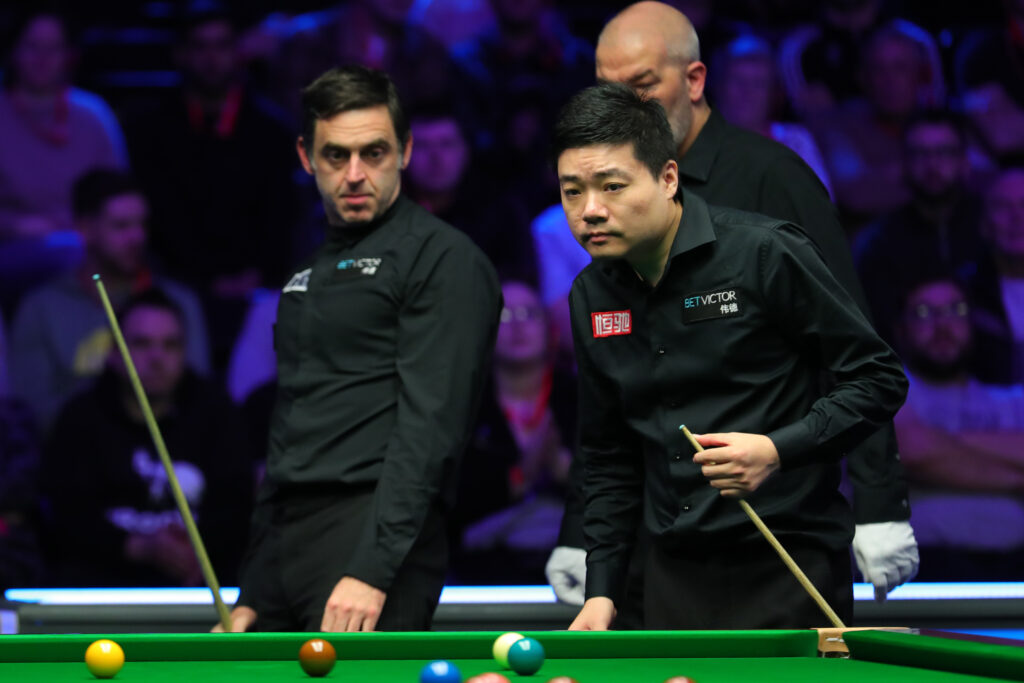
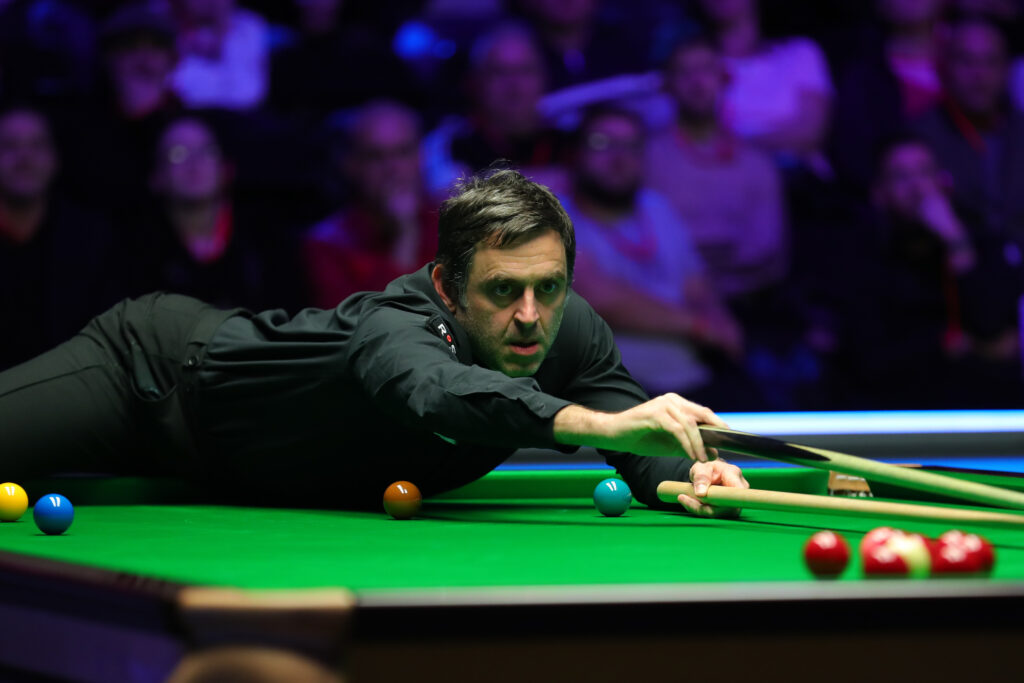
Top players faced off at the event, including veteran Graeme Dott going up against Ryan Day, Fan Zhengyi versus David Gilbert, and Liang Wenbo facing off against Scottish favourite Anthony McGill. But the main draw of the event was Ronnie O’Sullivan taking on Tom Ford. During that match, the crowd was notably more energised than they were in previous pairings, and O’Sullivan was on top form. In the first frame of the match, O’Sullivan scored a century break with apparent ease to a crowd of cheering fans – a feat which he repeated later that night.
In between the action, I was also able to get a glimpse behind the scenes. I talked to Ivan Hirschowitz, who is the Head of Media for WST, to find out about his role in growing and promoting the game around the world.
“I suppose our biggest ambition is to grow snooker as much as we can throughout the world, so from a media perspective we’re always trying to reach new people through our different platforms. And one of our biggest challenges is promoting our players – they’re the role models. We want to bring lots of young people into the sport, and people will look up to the Judd Trumps and Ronnie O’Sullivans, so one of our big priorities is to show our players’ personalities through our social media and video content,” Hirschowitz says.
The only way for snooker to continue to grow is for young children to have the opportunity to play and take to the sport, but older perceptions of snooker can damage the chances that a parent will choose snooker for their child over something like football or cricket. One of the main issues has to do with the seeming lack of physicality in snooker – parents want their children running around, exercising, and breathing fresh air, and as Hirschowitz explains, that’s not the image which often comes to mind when talking about snooker.
“I think one of our hangovers from the 80s is that perception of the smoky snooker hall, and that’s one of the things we’ve got to try to move away from and give snooker a younger, fresher feel to it. Any time there’s a snooker player who’s into fitness we’re all over it, and we’ll go and do a story about it. If we can promote the idea of snooker as a physical sport then we jump at the chance to do that,” Hirschowitz says, “The other good thing about snooker is the mathematical element, so it is quite good for kids to learn their maths and we’ve done some school programmes surrounding that. So I think we do get the fact that some people might not perceive it as a sport which has a lot of benefits for kids, but actually it does. There’s a guy named Rohit Sagoo who wrote a really good thesis on the benefits for mental health in snooker, like the fact that when you’re there potting the balls on the table it can be quite therapeutic. It’s something that you can do on your own which is quite enjoyable. To me, the other great thing about snooker is the inclusivity of who can play. It doesn’t matter your age, nationality, gender, or anything like that – anybody can play against anybody.”
As well as Hirschowitz, I also got the chance to talk with Sam Fletcher. He’s a snooker player himself, and an author for WST. He remembers the change from his early years in the typical sorts of snooker halls often portrayed in media to the futuristic training facilities such as the Ding JunHui academy today. They trade the smoky practice room for well-lit, white walled training facilities which look towards the future of the sport, not the past. Fletcher also pointed out an often overlooked draw of snooker – the game’s natural beauty.
“I think that’s one thing about snooker, with the attire, is that it can be quite an immaculate environment. You go out there and, if you’ve never been there before, it’s sort of like going to a ball or something. The tables are beautiful things in and of themselves, and I think that’s important,” Fletcher says, “It was so funny to go from a club with dodgy tables to this incredible facility, suddenly I think my mom and dad saw it as a much cleaner pursuit.”
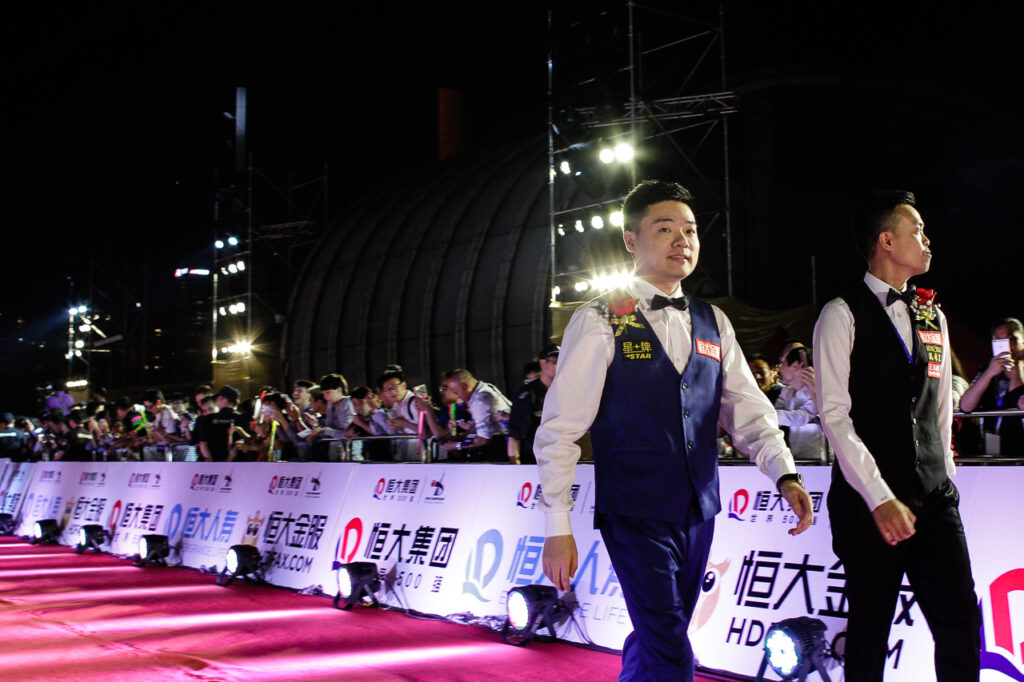
Snooker has come into the modern age in terms of training facilities, but most of the big competitions have retained the traditional dress code, which includes a button-down shirt and waistcoat. China’s influence on snooker has also greatly increased, and part of the appeal in China comes from the traditional dress code. Jason Ferguson started his career in snooker as a player, and now he is the chairman of the WPBSA and Director of WST. He gave me his view on why some things should remain traditional.
“In China the sport is seen as very high end – it’s dress suits, it’s immaculate, it’s smart, it’s aspirational, and it’s very well respected as a high level sport. And what that has done is it’s driven a much younger audience. So the audience is very young. Snooker is in schools, it’s in universities, you will find young people in clubs, and you will find clubs that are set up for a family environment rather than just billiard halls,” Ferguson says, “I think it would be a huge mistake to drop dress code in Asia, generally. The dress code is aspirational. It’s looked up to and it’s something that people aspire to wear and be part of the sport. We know that the kids are not going to go down their local club in a dress suit every day, but if you’re playing competitive, high-level events, that’s the level that we’re looking for. I think there are some things that need to be preserved.”
In addition to keeping long-time fans of the game, Ferguson also has a major interest in introducing young people to snooker. He explains how engagement with young people can change the way they see the game and inspire passion.
“I think every sport in the world is fighting to get people off of Xboxes and computer games and iPads and things. What we’ve got to do is use technology to drive participation as well, so we’re looking at various ways we can do that. We’ve got things like CueZone programmes in schools, this involves small folding tables which we designed ourselves for this purpose. If you imagine a table tennis table, you go into a school, you can put ten tables up in ten minutes, and you can create a snooker hall in the hall of the school,” Ferguson says, “They’re great fun days as well. So the audience is getting younger, and that’s very encouraging. And what comes with that is probably an audience with more disposable income, and so on, and that in turn will bring new partners, new sponsors, and new commercial partners to work with.”
Ronnie “The Rocket” O’Sullivan
After his decisive victory winning 5-1 over Tom Ford, Ronnie walked into the media room and I got a chance to talk with him. It wasn’t a long conversation, so here it is in full:
“After a great match like that, what are you doing to celebrate?” I asked.
“Just going to eat some scones,” he said, before clarifying, “You’re from America?”
“Yes I am.”
“So you’ve heard of scones, clotted cream, and jam?”
I reassured him that I knew what he was talking about, and he continued.
“Oh you have! Well that’s what I’m going to be doing tonight, I’ve got them outside. They’ve got to be good ones though, I get mine from Marksies. When you get them and they’re not great it’s just… I can’t do it, they’re one of my favourite things, you know? If my last meal could be something it’d probably be that.”
“In terms of the future of snooker, are there any young players you see coming through who impress you?”
“I don’t have opinions on anything to do with snooker, other than I wish all the guys the best of luck. It’s a great game, great sport, I hope they all get whatever they desire from it. I’m a snooker man through and through, so yeah – whatever they get, times it by twenty and I’ll be happy for them.”
“Can you tell me what makes a match enjoyable for you?”
“It’s really difficult to say, I’m not sure if I really get enjoyment out of it, it’s just sort of like – it’s just a challenge, you know, I just enjoy sort of putting myself through a test I suppose, that’s about it really. It asks questions of me, and I just try to stay on top of it which is a success in itself, you know?”
“How much of it would you say you do for the fans?”
“I’ve never really done it for the fans, but as I get a bit older in my age… you look back and get a bit more nostalgic and a bit more, probably, appreciative of stuff, and you can kind of mirror yourself with other sportsmen who have done other stuff similar to you and you can see how people react to them and think, well I have the same with the snooker fans. So listen, you know, I’ve got a great relationship with the fans and hopefully they’ve been entertained over the years.”
O’Sullivan’s attitude towards questions about snooker here is fairly typical of how he’s been answering recently, and maybe there’s a good lesson in that. His general mantra these days is that he’s not too bothered about winning or losing, he doesn’t want to get into discussions about the future of snooker, and he is playing for his own enjoyment. Especially in a sport like snooker where the mental side of the game is so important, a certain level of detachment seems like a good strategy after being in the spotlight for nearly 30 years.
Let me make one thing clear: Ronnie O’Sullivan still cares about his level of play, and he still takes snooker very seriously. No matter what he says in interviews, you can see his dedication manifest on the table when he plays. So what if we applied O’Sullivan’s mental approach to our own lives? Let’s say you’re a fresh graduate whose applications seem to be getting lost in the crowd when applying to your dream companies, as so often seems to be the struggle. Don’t stop caring, of course, but try not taking every rollercoaster ride. Just like snooker, the game of success is largely mental, and it’s easy to get bogged down with self-doubt and disappointment when something you’ve worked so hard for isn’t coming to fruition the way you’d hoped. Be like Ronnie: Keep on pushing, keep your standards high, but there’s no need to engage with every setback or stress about things beyond the scope of what you’re trying to accomplish. When O’Sullivan comes to play snooker, he plays snooker. Nothing else matters in that moment, and the best way to avoid turning mistakes into larger issues is to let anger and disappointment fall like water off a duck’s back.
There is a lot of opportunity in snooker. There is the opportunity to play at a high level and go pro, definitely, but more than that there is the opportunity to be a part of a community, to teach others, to concentrate on improving your own game and maybe even learn something about yourself in the process. Snooker has a long history, and thanks to the people who I talked to in this piece, and all others who have a deep passion for the sport, it looks like snooker has a long future ahead.
I’m proud to say I’m the granddaughter of a freedom fighter – a man who defended his country against Somalian dictatorship. I grew up with a passionate understanding of the rule of law. I was the victim of female genital mutilation (FGM) and this background has given me valuable context for my fight.
The fact is that there are 200 million people with experiences similar to mine. Some happen to be incredible writers and mentors such as Nawal El Saadawi who wrote about her experiences of FGM in The Hidden Face of Eve (1977). This book showed me that FGM was not to do with my race or my faith: it was about my gender. There are similar cultural narratives in the UK around domestic abuse. It was this realisation which helped me find my voice.
That book changed me. Being able to have the space to educate myself meant I could understand FGM as part of a broader conversation around FGM: it then became about taking the whole topic out of a cultural cul-de-sac.
What advice would I give to a young campaigner? I’d say you can talk to anyone, regardless of political affiliation. Sadly, because of our first-past-the-post system we have two political parties, and you should always be open to talking to both. I’d also say you have to make an emotional appeal built around hope and not around sadness.
I’ve found that it’s not just women who are able to hear such an appeal. My message appeals to anybody who has had a traumatic childhood experience – that, in turn, has allowed me to avoid being tribal. That’s a legacy also of my understanding of the civil war in Somalia, where tribalism was the problem. I try to find commonality with those in power.
My legal education – I studied law at Bristol – has helped me too. But I think a young campaigner should educate themselves as broadly as possible. The humanity subjects are very important too: history, drama and literature are the foundation of where things came from and where they’re going. These things can make you a better activist.
Of the 200 million women affected globally by FGM, most are on the African continent. Another 70 million are at risk between now and 2030. My message to people is that we can save those girls, but to do so we need to invest in women. That means focusing on their education and their employment opportunities; we need to create economic independence in them.
We’ve sometimes lapsed into an aid mentality which makes Africa unable to go through the Industrial Revolution. Africa mustn’t be seen as a poverty-hit continent but as a strategic partner which can elevate itself. That’s never been the attitude of the US and the UK. This has created a gap and enabled China and Russia to rob Africa of its natural resources.
As things stand, girls are being raped and murdered instead of being given the power to make choices for their communities. People often don’t see the climate change link here. Of all the places where FGM is rife, 40 per cent is hit by drought or some other global warming impact. Furthermore, if you want to save the elephant or the other big five animals, you have to slow down the population growth in Africa.
China’s wealth is built on the manufacture of things its gets from Africa. You won’t hear an African leader ever asking for aid: what they’re asking for is to change the relationship. Really, they’re asking to be a capitalist country and to work for a living and not receive handouts. The trouble is that aid makes people dependent, and that only two per cent of aid actually gets to grass roots women.
In addition to that, our foreign aid giving arm is too scared of being seen as wasting money which means they can sometimes give in a too restricted manner. Likewise, Save the Children and Oxfam have both been in positions where they hold the power in African countries, and they end up abusing that power, and stymie the people they’re meant to be helping.
So there’s a lot that needs to change. But most of all we need to not define women by their trauma. The first step is to find a new way to talk about the problem – and perhaps that alone would change more than we think.
I was born in Ludlow in 1965, and my mother died when I was five. So my little brother was five years younger than me. I also had a brother who was five years older than me, and a sister seven years older than me. Though I was one of four, it was almost like being an only child.
My father threw himself into his work when my mother died so I was pretty independent. From an early age, I’d do what I wanted. My father would drop me at school in the morning, and then I’d get the bus back. I think there’s a high correlation between people who lost a parent early on and those who become entrepreneurs: it’s self-reliance and self-belief. You just have to get on with it.
I always hated being told what to do which wasn’t great at school. One of my claims to fame is that I managed to get through the whole of Eton without calling anyone sir – that was a pretty good effort in the 1970s. In those days, you had to be subservient. That probably made me quite obnoxious but it did make me independent.
I always knew I wanted to have my own business. My father was a bit of a closet entrepreneur. He did engineering at university and then went to work for a consultancy group called TI Consulting. He moved to Shropshire because his grandmother died and left him a house. He was about 32. Ludlow is a lovely place but not the place where you’re going to forge a great career or an entrepreneurial opportunity.
He got a job there working in an agricultural machinery business called FW McConnell. It must have been 1963, and about six months after he got the job the man who owned the business got gored by a bull and killed, so my father was made managing director. He grew the business and did a management buyout of another division of the company that owned that business. He owned most of the shares and off he went. He reversed it into a shell company. After the stock market crisis in 1987 the share price never recovered.
I used to go to the business every Saturday morning and open the post with him. I’d also pack stuff on the factory floor and do funny little jobs. Every so often there’d be a cheque in the post and he’d get so excited and we’d do a little dance together around the desk. It was like magic: they’d bring in cheap steel and turn it into hedge cutters. You got paid more for the hedge-cutter than you did for the steel.
There’s a similar alchemy with shirts. I like doing things I understand: I’d not be a good Bill Gates or a Larry Page, dealing in algorithms. It isn’t tangible enough for me. It had to be physical – like a piece of agricultural machinery or a shirt.
The world is so well set up; there is such a networking of funding opportunities and support. It’s a perfectly normal and acceptable thing to be an entrepreneur today. When my father was growing up nobody started their own businesses.
I started Charles Tyrwhitt in 1986 and before that I had other businesses. I did a photography business, a Christmas tree business and a shoe business. I was trying to make money doing something I loved. 36 years on and that ethos is still very important. It’s making people feel good, and producing clothes which are great quality, and which people enjoy buying and wearing.
A business is a living entity. For me, I want the customers, the workers and the suppliers to love the business.
Fashion remains in the family. My daughter bought herself a sewing machine, and she taught herself pattern-cutting and sells them on Depop. In the early days of Charles Tyrwhitt, my wife, Chrissie Rucker, who founded The White Company, used to offer advice. It was great being in the same sort of industry but a different market.
I’m a non-exec of the White Company – she doesn’t really have time to take a similar role with Charles Tyrwhitt. She gives me a hard time and says our clothing is too formal – and she’s probably right. Actually, we’ve begun to make our clothing less formal in the last few years.
I was at Oxford University and I didn’t really know what to do with my life – I only knew I wouldn’t really fit in at McKinsey’s and places like that. I was involved in an organisation at that time which was about opening up access to Oxford and Cambridge. They would send black students at Oxford to schools with a diverse intake and say: “I’m there, and I’m doing okay.” I used to go to schools in Birmingham, Manchester and London and I could see children changing their minds in front of me. I thought: “You can really make a difference.” And I’ve never regretted my choice.
Grammar schools aren’t really the gold standard anymore. They take the best and capable kids, but they’re not necessarily the best schools. In fact, I’d argue that grammar schools don’t have to be particularly good at all – precisely because of their intake. The kids will always do well because they’re super bright. At Michaela Community, we don’t have those kids – and it’s really complex teaching your bottom sets. If you only get the top slice you don’t have to think about learning in the same kind of way. If you have a school with real diversity, you have to be doing a great many things to get those kids learning.
If a private school headmaster came to my area, they wouldn’t have a clue. That said, there are ways in which private schools can support state schools, without going in and telling them what to do. They can send some of their students over to do some tutoring of younger children, or they can offer their careers fair to the local state schools can go and join. Or they can send teachers across – these are things they can do without seeming patronising.
All universities are influenced by popular culture. And our culture now is one that’s woke – that’s the problem. Of course, you might say, “Oh, but that isn’t the case everywhere and if you go out somewhere in middle England you can find families who are not thinking that way. Yes, possibly. But the media, the establishment, and all the people who set the tone for the country, are of that mindset. And the universities are also that mindset and perhaps even further along. So it it’s not even as if you can choose: any university you go to, that’s what you’ll come across. Unfortunately, there isn’t anything I can do about that. It’s great that there are people thinking of setting up non-woke universities like Barry Weiss in Texas – but it’s still worrying. Having said that, if our students have spent seven years with us, hopefully we’ll have done a good job of grounding them and giving them certain values.
Often, I think families think that tutors are some kind of magic pill that you take families. And you can tell the tutors come by once a week, they do a bit of teaching in an hour. And it’s something but the habits of learning are created over years on a daily basis. The problem you’ve got is if you aren’t being given the correct work to learn and if you’re not being taught properly in essence, it is hard for a family to support the home with that. I could suggest to you online maths programmes that would be far better than any maths tutor because the maths tutor can only do it once a week.
I have to remind parents: it’s not just the quality of the school, but the quality of the teachers. Within one school, there is more in-house variation in one school in terms of the quality of the learning that takes place than there is between schools. So families often think: “If I just get them into good school, then that’ll be fine”. But within that good school, there will be more variety than there is between the good school and the bad school. So even in the good school, you will have teachers that are not necessarily able to teach your child in a way that helps your child learn. Now what is good is if the good school has good behaviour, then that certainly makes it easier for the for the weaker teachers in the school.