Author: admin

  • An interview with James Connor: Millwall F.C. footballer turned wealth manager

    Robert Golding


    James Connor isn’t exactly your traditional idea of a footballer – but then he’s not necessarily what you’d expect from a wealth manager either. But great businesses always have a certain generosity about them – whether that be a generosity of spirit or energy or imagination. But in the case of Connor Broadley, one senses a central kindness which comes back, you suspect, to Connor himself.

    “I come from a working class family,” he tells us. “Dad ran his own heating business and for most of his career was a one-person firm, with mum as his secretary. If the phone went when we were having dinner, it could be a new client and so you’d have to answer the phone.”

    The family business did well enough to send Connor to the Mall in Twickenham. As I get to know Connor I will note how he tends to see the best in situations and in people, and this is the case with his schooling: “I like to think I had the richest upbringing. I did have a really working class family: we used to congregate at my nan’s house every day up until the age of 13, with uncles and aunts and cousins. But Zak Goldsmith was in my class at school, and there were a number of high-profile actresses and actors who had sent their children there. That gave me a sense of self-confidence.”

    As it turns out Connor would have plenty of reasons for self-confidence – but I never get a sense while talking to him that he has a shred of arrogance. Early on, he realised he was good at sports, although initially there was scepticism from his teachers as to whether football – which in time, would be his chosen sport – would ever pay. “I remember being told: ‘James, you’re good at sports but it will never be a career for you’. This was the pre-professional era, and money hadn’t come into football then.”

    In time, Connor would attend Hampton, a former grammar school, where his passion for football deepened. Initially, after unluckily breaking his arm on the night of Republic of Ireland v Romania during Italia 90, Connor thought he had lost the chance to pursue his dream. “But as luck would have it, my nan had moved to Aldershot – which was 92nd in the football league out of 92 clubs. She heard they were doing a last chance saloon trial day, offering seven apprenticeships at the end of it.” Connor secured one, but decided after breaking his arm to do his A-Levels at the same time. When the club folded, Connor again thought a football career might not happen.

    Good fortune struck again however, when his former Aldershot manager called the Connor family while James was interrailing in Europe to say he’d moved to Millwall and he’d like him to join the trial. Connor was on the training pitch 48 hours later. “I saw the career that I could have,” he recalls. “Millwall had one of the best youth academies at the time, and it was well known for building the best youth players and selling them, and there were internationals in the youth team there. That was August. By November I had signed a five year contract, a PFA representative came to see me. Dad encouraged me to buy my first house at 18 which is where my interest in personal finance came from. Only Garth Crooks and Paul Gascoigne at that point in history had been offered a five-year contract.”

    Connor was a quiet player, and the only privately educated player on the team. Mick McCarthy was the manager at that time. “We were doing a drill – and Mick was a very strong person, and reminded everyone that I wouldn’t be shouting for the ball,” Connor recalls. In this, he also draws a parallel with his current role in wealth management: “I’m much better operating one to one, since this job is about intimate conversations and relationships: it’s not a job which involves talking to large numbers of people. I like to go about my business discretely and be respected for being good at what I do.”

    There were other skills which Connor developed at Millwall F.C. “One of the great things about football at all levels is that it attracts a real social mix. And you just love it and embrace it for what it is. Your team mates are all equals. Similarly, entrepreneurs come from all walks of life.”

    These skills meant that Connor was better prepared than he perhaps realised at the time, when his career ended through injury. You sense that this was a challenge even for someone with his innate optimism. “It was the defining point in my life,” he says. “It left me so determined to make it at something else. Football is a brutal industry and there’s no support network for people once you exit the game.”

    But again Connor would be fortunate. The then chairman of Millwall was Peter Mead – the Mead in the UK’s then largest advertising agency Abbot Mead Vickers. He took Connor under his wing. “Difficult as it was not doing what I wanted to do at 21, being thrust into the creative advertising scene was an amazing education in itself,” Connor recalls.

    Gradually, Connor’s career began to evolve. Everything kept coming back to an interest in personal finance, which had been planted in him by his father. “In my twenties, I found myself going to buy the Sunday newspaper to read the personal finance section. By the age of 27, I realised it would play to my strengths. I took a 90 per cent pay cut then but I knew it would suit me and I was prepared to do it.”

    It would turn out to be a masterstroke, and again, Connor draws a comparison with football: “One thing you have to have in sport is a good instinct. I find it eyebrow-raising when I hear people making career moves when they have no natural segue into it.”

    At first Connor was, in his own words, “just a bag carrier”. He loved the work and built an impeccable reputation, but when a fraud scandal occurred in the firm, Connor decided that he had to preserve his hard-won reputation. Though the scandal had had nothing to do with him, he started his own firm to avoid being tainted by it. “A number of people said: ‘Don’t be implicated in any way. Go and set up your own company and we’ll come with you.”

    Again, Connor’s experience in football was formative. “I’d noted as a footballer that when I was approached by financial professionals there was such a lack of integrity – and there is still is in some quarters. We wanted to be respected from day one. We didn’t try and entice previous connections over; we waited for the phone to ring. Our first client fee was £250 and we felt like we’d won the lottery at that point.”

    This commitment to integrity sometimes meant giving advice which was in contradiction of their own personal interests. “Our first enquiry was from a longstanding accountancy connection. She’d lost her husband and there was a tabled investment proposal which she didn’t think was in her interests. We were asked to take a look. We had to explain we were in our first few days of business. I took one look at the lady in question and realised she was in no fit state to make a decision as she’d been through a life-changing event – and I know about life-changing events. We told her to stick the money into a bank account to take stock of her life and to talk to us when things had calmed down. She’s now been a client for 15 years.”

    The approach has worked. Connor Broadley now has an AuM of £500 million – with an expected £100 million increase to come this year alone. But Connor insists it’s not about the numbers: “Growth at Connor Broadley should come as a consequence of looking after clients, giving them advice and underpinning it with a personal service: it has to be the right kind of growth. Word is spreading and we continue to grow: we attract nice people – people that appreciate a longer term relationship genuinely.” That word ‘genuine’ is overused but it certainly applies to Connor.

    So how do you become a client? “The entry point is £1 million of eligible longer term money if we’re going to commit to providing them with an ongoing service.” The firm has a cautious approach. “The way we invest clients’ money is geared to growing purchasing power of our clients’ money by a specified amount above inflation after fees are taken into account across a number of different risk profiles. We don’t purport to be a wealth manager that’s offering double digit returns from one year to the next. We want to look after the wealth people are dependent on to live comfortable lives.”

    This is a firm set to grow in the next years, as it brings – starting at the top – some much-needed integrity into the difficult-to-navigate world of wealth management.



  • Paracelsus Recovery founder Jan Gerber: “A lot of therapy can happen making coffee in the afternoon”

    Our collective commitment to the question of mental health might be one of the main legacies of the pandemic. Though we have now largely returned to work, the scars of Covid-19 remain, and we remain aware of our psychological fragility. This is an issue which isn’t going anywhere – and that’s good news for those clinics who are there to serve high net worth individuals in this space.

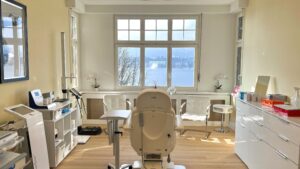
    Paracelsus Recovery was founded by Jan Gerber’s family back in 2012. “My Dad’s a psychiatrist, and my Mum’s a clinical nurse specialist,” he tells me,”so we have this boutique niche rehab clinic which focuses on the world’s UHNW population, and people in public life.” The business was founded with an important insight: “We realised there was a special need for that demographic. It wasn’t being met on the confidentiality side or on the psychological side.”

    A successful person will, of course, have a unique set of experiences – and these may amount to a specific set of struggles which need to be tackled with the very best methods. Gerber explains: “We realised that mental health is not just a question of psychotherapy or psychiatry: it’s actually much more complex than that. Treating one client at a time with the price tag we have, means that there’s budget to look at an individual from a 365 degree perspective.” So what does that entail? “We look at hormone levels, gut health, biochemical markers and so on, on top of psychological assessments and so forth. We found a lot more underlying reasons which could fuel someone’s mental health or addictive behaviour: these are rarely addressed due to budget constraints.”

    So how did the pandemic affect Gerber’s client base? “A typical CEO is an outgoing person, but sometimes with certain traits such as ADHD or bipolar which may not meet all the diagnostic criteria, but will make them very successful in the first place. But it usually also means they need direct interaction with the people around them.” Prior to Covid-19, the big meetings would still happen in person (“That’s why big corporations have private jets”) but when things changed so dramatically, it often made these high fliers struggle.

    Of course, there’s also a generational aspect to the client base. “It’s common knowledge that mental health struggles – if not addressed adequately – spill down to the next generation,” he explains. “There’s probably a genetic component to that which is still being researched but there’s definitely a component which relates to how kids are raised.”

    Of course these sorts of problems can still happen even when wealthy parents have the best of intentions. “Nannies, and boarding schools and so forth – all that can create massive problems in a child’s self-esteem,” Gerber continues. “We see it also with entertainers who are so busy with their roles that they can hardly devote time to their children. We talk about neglect at one end of the socioeconomic spectrum, but there’s neglect here too: we can call it affluent neglect.”

    In Switzerland the clinic can look after children from 14 and up; in the company’s London branch, patients begin at 18. But no matter who the clinic is treating, it always tries to bring in the whole family unit to the treatment process. “Normally after a few weeks of focusing on the person and stabilising them would be the right time to bring in family members. It’s essential that the client’s journey isn’t out of sync with the rest of the family. They need to understand the journey, and their own role.”

    What really sets Paracelsus apart is its 15:1 ratio, meaning that patients have a degree of attention which will be the envy of those who know that their problems require a deeper level of treatment than is typically possible either at the NHS-funded level or even when it comes to the sort of paid care the middle class can afford.

    “There is usually a massive cost constraint on mental health disorders,” explains Gerber. “Our patients see a psychiatrist every day for a couple of hours. We have a live-in therapist – an addictions counsellor – who stays with the client in the same residence, so they’re there for 24 hours. A lot of therapy can happen making coffee in the afternoon, or standing at the kitchen table, or going out for a walk.”

    Nutritional scientists are there to monitor gut health; bio-scientists put meal plans into place for the client. Yoga teachers, personal trainers, and massage therapists come in. Dedicated housekeepers, chefs, and drivers complete the picture. All of this is orchestrated by clinical coordinators: “It’s like Swiss clockwork,” Gerber says. “In rehab that doesn’t have that kind of close attention, often problems go by unnoticed – sometimes for many days, and sometimes forever.”

    It’s an international clinic and so I take the opportunity to ask him if he sees any national trends in the world’s mental health. Gerber replies: “One difference keeps cropping up: people from the Middle East struggle more with structure than people from the West. In the west, we tend to have meals at more or less specific hours and that puts people in the Middle East at a disadvantage when it comes to mental health recovery, as structure is very important. In some countries, such as Saudi Arabia, there’s no such thing as a schedule. You can say you have a meeting at 11am and someone mightn’t show up and that’s absolutely fine and part of life. It’s not for us to judge if that’s good or bad but it’s definitely not supportive for mental health struggles.”

    I ask if the UK’s predilection for alcohol comes up in clinical practice: “Absolutely. The biggest issue I see with alcohol is this: because it’s legal and part of our social interactions, it’s considered less harmful than it actually is. I’m not saying it should be outlawed but it can be more disruptive and destructive than many illicit drugs are. When the slippery slope starts it’s really hard to identify. If you see your friends snorting cocaine, you might think there’s an issue there, but maybe not with alcohol – even though it might actually be more harmful.”

    Gerber also points out that some addictions, like food or sex addiction, can be difficult to kick because they are part of our lives. “Sugar is quite an addictive substance and it’s a tough one to kick. Sex addiction is a tough for one as you can’t cut it out forever – you need to learn to live with it healthily, and develop a healthy relationship with that activity.”

    I ask Gerber where we are at the moment with mental health and whether there’s anything more government can do on this front. “Government has a big role and it’s a very difficult job,” he says. “It’s easy to pick on all the mistakes and lack of funding and so on, and how that’s deployed because there’s never enough, but government definitely has a role in regulating certain substances. Portugal has shown that legalisation is often the right way to go – but that doesn’t mean addictive substances should be unregulated or untaxed.”

    Gerber is clearly passionate about this issue. He continues: “There’s a big role for government in awareness work and in regulating advertising. There’s also a lot of prevention work to be done at schools and with parents. We also need to consider social media and online shopping and the way they’re designed to make people hooked in ways which can be destructive to people’s mental health. But government always lags behind because it’s a bureaucratic process, and government has a lot of things on their plate.”


    Christopher Jackson is News Director at Finito World


  • Opinion: Why human resource management deserves to be seen as a desirable profession

    Dr. Liz Houldsworth


    In the opening episode of the new drama Slow Horses, a wrongly disgraced Mi5 officer takes some comfort when he visits his nemesis and, on finding him in a room full of filing cabinets, realises that he is no longer a practicing spy and has been ‘relegated to Human Resources’.


    Such depictions in film, TV and written word are not uncommon. A well-known piece by Hammonds in 2005 heralded ‘Why we hate HR’; parodying the function for its technical jargon such as ‘internal action learning’ and arguing that it was not a role for the brightest and best, typically populated by those who were not the ‘sharpest tacks’.  More recently Douglas Murray in the Telegraph was indignant at discovering the role of HR manager to be one of the most desirable and highest paid.


    Having worked and researched in Human Resource related fields for over 20 years I recognise this as a continuing, and key, debate. With the Masters students I teach at Henley Business School, I make the point that for most organisations people are both the largest single element of operating (variable) costs and the single resource that can generate value from the organisation’s other resources. Managing any organisation cost-effectively therefore requires knowledgeable, careful and skilful human resource management.

    Put simply, for the majority of businesses it really is all about the people.  The news that HR managers might now be one of the better paid jobs perhaps suggests that organisations are finally putting cash behind the hyperbole that ‘People are our Most Important Asset.’

    For the specialists we teach, who choose to go into HRM as a profession, it is important for them to understand the kind of ignorant assumptions that they may face, but it is also important to understand the motivation of these bright and enthusiastic individuals who have chosen to invest their time and money to qualify to work in the HR profession.

    A common misbelief is that HRM Is for individuals who like working with people. As many other commentators have pointed out, HRM is not about being nice to people.  A former colleague once said to me: ‘I used to think HRM was easy, all about people, but these ‘soft’ things are really hard.’ Done well, HRM is carried out by business-focused individuals who make difficult decisions and lead effective change programmes in ways which don’t attract negative media attention. To take one recent example, a US mortgage company recently sacked 900 staff by Zoom, attracting massive negative publicity and harming the business.

    One of the reasons my students cite as a driver for selecting a career in HRM is that they want to make a difference to people’s working lives. This impact might be through the shaping and maintenance of the organisation’s culture, or by responding in a timely fashion to fast-changing needs. Such a fleet-of-foot response is not synonymous with the self-important bureaucrats seen through Murray’s distorting lens. Had HRM generally been populated by such individuals we might still be waiting for the health and well-being programmes that supported so many millions during the COVID-19 pandemic and the subsequent implementation of hybrid working.

    Of course, as with all the other functions of any effective business, production, finance, IT or marketing, HRM has a normal range of individuals from those who are naturally brilliant at it and are heavily relied upon members of the top management team, to those who are incompetent drudges.

    But for the most part serious organisations, and commentators, recognise HRM as more strategic and deserving of its seat at the table.  In the more sophisticated organisations, there is a clear understanding of the transition of HRM away from being a largely administrative function to becoming a more strategic function. Of course, there is still a bureaucracy around hiring, payroll, pensions administration, etc.  It is important that these things are handled competently and consistently (if you are not sure about that, think what would happen if people didn’t get paid the right salary at the right time).

    But there is much more to the role. To take a crucial example, recruitment is one of the core skill areas within HRM. Get the right people in and many other management problems become much easier to resolve; get the wrong ones and the organisation is building up near and long-term future problems for itself. In organisations of any significant size, recruitment is a holistic resourcing strategy and HRM specialists are expected to manage the flow of resources (people) into, through and eventually out of the organisation.

    Human resource planning may be an area which has less of a trendy image than other areas of management – and will be unknown to many casual commentators on HRM. It requires detailed data collection, analysis of changing external circumstances (most recently Covid, of course), understanding the likely availability of internal and external labour markets (think Brexit) and the organisation’s likely future demand for labour. Without effective thinking – consider the travel industry at present – businesses will swerve within weeks from being expensively over-staffed, to being desperately short of appropriately trained employees.  Anyone thinking this is a low-value activity should try telling that to the people struggling to get away for their Easter break because of a lack of baggage handlers, or to farmers unable to get their produce picked or hoteliers without chefs or waiting staff.

    Depicting the individuals who specialise in order to do this work as presumptuous dullards is perhaps what got us into these situations in the first place.  A country should indeed encourage young people to excel and be great at things that are important, and roles in human resource management are high on that list.

    The writer is the Programme Director of Henley’s MSc International Human Resource Management.


  • Jubilee weekend: royal-themed SMEs surge

    Ahead of the Jubilee weekend, there has been a 70% surge in royal-themed small businesses. According to a study by Simply Business, the most common royal words used in small business names are Queen, Royal, Crown, Princess, and Regal.

    Simply Business CEO Alan Thomas explains why the bank holiday could be a boon for small business following the pandemic.

    “This year’s additional bank holiday comes at a pivotal moment. Independent retail, hospitality and leisure businesses have been disproportionately affected by Covid-19, losing a staggering £40,000 each on average due to the pandemic – almost double the £22,000 average losses reported by UK small businesses,” Thomas says, “With almost six million UK SMEs, contributing trillions of pounds a year in turnover, it is vital to the country’s economic recovery that they bounce back. This bank holiday could provide a substantial boost to small business owners across retail, hospitality and leisure, at a time when it’s needed most.”

    East Anglia proved to have the most patriotic small business owners, with 14.7% of the national share of royal-themed business names. North West and North East England followed close behind, with 13.7% and 13.2% respectively.


    Home

  • Dr David Moffat’s career transition advice

    Dr David Moffat

    Not that long ago many young people were able to decide upon their preferred career path and predictably pursue this path. However, the developing complexity of careers today has led us to believe the need to change jobs or occupations frequently is now the rule and not the exception. Today, jobs are subject to many changes and uncertain prospects as a result of growth in automation adoption, the increasing geographic concentration of employment, the shrinkage of labour supply, remote working, the shifting mix of industry sectors and occupations, and searching for a greater work/life balance. These uncertainties require people to continuously adapt to this changing employment landscape.


    In this article, I would define career transition as the period during which a worker objectively takes on a different role and/or subjectively changes the orientation of a role. In short, disengaging from their previous work situation and engaging in a new one. Moreover, career transition can take several forms, for example, ‘organisational change’ – moving from one department or division to another within the same company, and ‘occupational change’ – a transition from one type of job to a different type of job. Whatever the kind of career transition it often requires a change of focus and direction in terms of objectives, purpose, attitude, individuality, and vocational routines. Faced with such changes, people react in various ways and no rules exist as to how they are experienced as each individual has their resources and barriers to deal with.


    Career transition can lead to new opportunities and the benefits are many, but equally, career transition can also lead to increased pressure and unwanted stress (i.e., psychological, interpersonal and financial). In other words, the consequences of career transitioning may be either stimulating (e.g., challenging oneself, identifying new opportunities) or negative (e.g., increased stress, family pressure, lack of confidence, financial risk). These consequences depend largely on the individual’s capacity to manage the different demands relating to the transition and particularly on their psychological resources (e.g., optimism, extroversion, self-efficacy, commitments, and values).  Experts have identified certain characteristics that are particularly relevant for those coping with career transitions; these can be categorised into five factors:


    1. Readiness – reflects how individuals appraise their motivation for making a career transition.


    2. Confidence – assesses how capable a person feels of completing the tasks required for a successful career transition.


    3. Control – reflects what extent individuals view the career transition as being in their control.


    4. Perceived Support – relates to how much support individuals feel they are receiving from people around them as they contemplate a career transition.


    5. Decision independence – indicates the degree to which individuals view the career transition as being an independent decision rather than a choice forced on them by the relational context.


    Having a narrative

    Career transition is a big step for you but also for those around you who are likely to doubt your decision and will ask lots of questions.  Typical questions that may be asked are “why now when you are so successful at what you do?” or  “is it not a little risky?”. To deal with answering these questions and others you must communicate your vision for the future effectively. You do this by creating a persuasive narrative explaining the utility you bring to the new venture. If you achieve this you are well on your way to winning their support. Below is a list of questions that I think everyone who is considering a career transition should answer. It will also help you construct and create your narrative. Moreover, the answers you provide will help in identifying your levels of motivation for change and your belief in your abilities to make a successful transition.


    1. Why do you wish to career transition?


    2. How do you see the career transition process unfold?


    3. What changed in your current or past work orientation to contemplate a career transition?


    4. What will improve in your life if you are successful with your career transition?


    5. What are the external forces that led you to consider a career transition?


    6. How would you describe your professional identity in your past and/or current career?


    7. How will you describe your professional identity after your transition?


    8. People may change with experience and adult development and come to find their interests and preferences change, what changes have you experienced in the workplace recently?


    9. Are you in search of a greater life/work balance? if yes why? if not why?


    10. Even though there are risks, how do you rate your chances of finding a better career choice and why?


    11. What were the key trigger events to motivate you to career transition?


    12. Some would say that career transition is a risky venture, please explain what you will do to minimise the risk of failing to transition?


    13. Even though the solution to your career transition may not be readily apparent, please explain how you will successfully work through it.


    14. Why are you ready to risk the security you have in your current career to gain something better?


    15. If people you respect say they think you can make this career transition successfully, why do you think that is?


    16. Within your social network do you have anyone who has responded negatively to your career transition? if yes, how do you deal with this negativity?


    17. Do you have a role model or any guiding figures who believe in you and can offer advice and support in helping you throughout your career transition?


    18. External relationships are valuable. Please explain how your existing networks will help you transition.


    19. While family and relationship needs are important when it comes to career transition, how do you prioritise those needs versus your own needs?


    In this article, I have aimed to granularly define career transition and activities to better understand the benefits and risks associated. Indeed, there seems to be no better time to reflect if you are on the right career path. If you are considering a move from one industry to another or starting over in an entirely different field, or entrepreneurship; these insights will help you make sense of what’s next in your journey. To chat with Dr David Moffat  please contact him by email:

    davidmoffat@hotmail.com

  • Waterfly on Liz Truss, Jeremy Clarkson and Boris Johnson

    Our round-up of the latest gossip in the education and work sectors


    Emily in Kensington

    Finito World’s own Emily Prescott has had an exciting few months, moving from her role at The Evening Standard, to become diary editor for The Mail on Sunday. At just 25 this is an impressive achievement. But this isn’t all. We also hear that she’s working on a book on the history of gossip. When she recently interviewed Michael Gove about diary journalism – Gove, who used to work as Diary editor at The Times – told Prescott that it was ‘a nice little apprenticeship.’

    But it can be much more than that. Indeed, for Prescott it’s been something of a baptism of fire. When Prescott published a piece about Jeremy Clarkson’s daughter Emily, and reported verbatim her quotes on Instagram about her ignorance of the Russia-Ukraine war, Prescott woke to find her Twitter had blown up after a fiery – and in Waterfly’s opinion, unnecessary – tweet by Clarkson himself calling her both a ‘shit journalist’ and ‘an idiot’. But Prescott’s good nature ensured that she didn’t reply, or even take it too hardly. “He’s just being protective of his daughter – as I’d be in his situation,” she says. Prescott adds with a smile: “I don’t think I’m either of those things, but at least I’ve never punched any of my colleagues.” Clarkson has 7.6 million followers on Twitter; Prescott, around 500. So from punching colleagues to punching down – there’s consistency there. 

    Spectating on Boris

    Talking of punching down, one person who doesn’t do that, according to The Spectator art critic Martin Gayford, is the Prime Minister Boris Johnson. Gayford witnessed Boris up close in his journalism days: “Boris was famous for going up to and over deadline, and certainly did make people quite cross although he probably knew by that stage that he was commanding enough readers to make people put up with it. Charles Moore certainly spiked one or two of his columns and said: ‘If he’s late, use something else’.”

    Gayford explains that he didn’t always have much directly to do with Boris when he was editor – except in one respect. “One thing I’d say about Boris is that he was unusually good at sending messages to lowly people such as those toiling on the factory floor of the arts pages when he was editor. You would get messages saying, “Boris liked that piece” and that sort of thing.” So does Gayford ever see something in Downing Street and think that’s a bit like what used to happen at The Spectator? “I’m not sure if you can compare running a country to running a little magazine in a three-storey building in Doughty Street,’ he says, chuckling. Yes, perhaps not.  

    King Richard

    Sometimes the hurly burly nature of British politics can be glimpsed in a single phone call. When Waterfly called Richard Harrington last year to ask to talk to him, he declined an interview: “You don’t want to talk to me – I’m just not interesting enough,” he said. “The person you really want to talk to is John Bercow.” Since that time, Harrington has become Minister for Refugees and Bercow has not only joined the Labour Party but been the subject of a report into alleged bullying when he was Speaker of the House of Commons. Who’s interesting now?

    An Ignob-el Mistake

    When we spoke with Gayford, we also asked him of his regrets as a journalist. He was decisive in his reply: “The worst thing is when you’re talking to someone interesting, or of historical importance, and you feel you need to contribute something to the conversation – and so you come in with your ten cents. Then you listen to the tape and wish you hadn’t interrupted. You’ve got to keep your mouth shut.”

    Waterfly would add you’ve got to be careful which day you call. Waterfly recalls phoning the Astronomer-Royal Lord Martin Rees last autumn, and found the kindly scientist in an uncharacteristically jittery mood. “I’m so sorry I just have to get off the line,” he said. When Waterfly did so, we went onto the BBC news website, and saw that that morning the Nobel Prize for Physics was being handed out. Rees had wanted us off the line, perhaps having thought we were Stockholm when we phoned. Oops.

    Goldsmiths aggrieved

    Waterfly has been in and out of the House of Lords these past few months, and in addition to receiving different appraisals of the food – Baroness Anne Jenkin holds a higher opinion of the canteen than does Baroness France d’Souza – Waterfly began to get a feel for the place. On one occasion, D’Souza passed Zac Goldsmith smoking a roll-up in the courtyard. “Ooh, I like your cigarette,” she said. “You must be the only one,” he replied, humorously but a little gloomily.

    Waterfly recalled catching up with Ben Goldsmith, who told us: “There are many professions which pay significantly more than an MP earns. I think it is a bit much for the public to expect people working in those professions to take a drastic pay cut in order to enter politics. Some may do it, many more  would not – and why should they?” And you can’t even smoke.

    An Artful Innovation

    Emily Prescott isn’t the only person in the Finito fraternity going places. Our business mentor Angelina Giovani has made an impressive step creating an innovation in the world of art provenance. “There are a lot of odd and funny requests one gets when working as an art researcher, that can be a dead giveaway as to whether someone is familiar with your line of work or not,” Giovani tells Waterfly.

    Two weeks into the first lockdown in London, an art collector rang Giovani to ask whether she could research his client’s 150 artwork collection, which he intended to sell. She tells Waterfly: “We certainly can, I responded: “What’s the time frame? “We’d like for it to be done this week.” I told him that this was like requesting the Pyramids be built in an afternoon.’

    But it was out of this exchange that the Collections Provenance Rating was born. The first of its kind – known as the CPR for short – assesses the state of documentation of a collection and offers recommendations based on the result.

    Giovani explains: “This allows collectors planning to sell, insure, appraise or use the collection as collateral and borrow money against its value, to speed up the process and have a new insight into possible problematic pieces. This does not eliminate the need for proper due diligence: on the contrary, it helps streamline and make the research process more time and cost-effective.” And that’s how they built the Pyramids.

    In Liz We Truss

    To the United and Cecil Club Dinner, an occasion which helps raise funding for marginal Conservative seats. The Guest of Honour was none other than the Foreign Secretary Liz Truss, who, after being barraged with questions about Putin, recalled her time as Secretary of State for International Trade. Once famous for her remarks about cheese, her attention has now turned to another dairy product. In that role, she found that she disapproved of the way in which yoghurt is always made in France, but not always packaged to let you know that. “What we need is for the English to manufacture yoghurt,” she said. “By the way,” she added, “I don’t like yoghurt.” In politics, as in life, it’s always important to cover your blind spots.

  • Angelina Giovani’s Letter from Greece

    ‘It is a truth universally acknowledged, that every single man or woman in possession of a good fortune or no fortune at all, must at some point be in want of visiting Greece…’
    The lure is eternal, as is the sun, the sea, the good food and the wine. In the past decade it has been more important than ever to focus on the positive and keep our eyes towards better days in the near future.

    Sadly, the positive near future that we thought would follow the initial shock of the economic downfall, was plagued by nearly all possible disasters one can think of, from natural disasters to social upheavals, to the highest unemployment rate in Europe and the devastating pressure of a global pandemic. And now, we have the terrifying global uncertainty of witnessing the devastating war in Ukraine.

    At the current state of the world, it is difficult to get one’s self motivated to write anything too positive or upbeat. But what we might have learned over the past couple of years, is that we can live with bad news day in and day out, and adapt. We went from counting the daily Covid-19 infections to counting airstrikes and tanks seemingly overnight. A mysterious disease followed by all these accounts of unnecessary evil all happening on a planet that seems to be on its last breath, might just be what we all needed to shed our old skins and re-adapt.

    Greek life is very different today than it was a decade ago, going through changes both good and bad. While the tourist sector is primed to make a full recovery this year, it remains to be seen if this will be enough to carry the country through. It is a fact that tourism income can lead to economic growth – especially in a country where tourism and agriculture wonderfully blend together and offer unparalleled agritouristic experiences. Even so, Greek agriculture now faces a manpower problem. The age of the average farmer is close to 50 and it is very challenging to recruit new blood at a time when larger cities and the life they promise hold a greater appeal. The pandemic changed this for the better but only to some extent and it’s not clear how long those changes will last.

    The two first years of the pandemic saw the starkest drop in yearly visitors since World War II. It was detrimental for the islands, the smaller ones in particular, who eagerly await for the summer to generate enough income to last them for the rest of the year. The smaller islands of the Aegean are the ones which feel the greatest strain and who are not as privy to investment and help as mainland Greece and a handful of heavily frequented island destinations.


    The Attica region in Athens saw over 40 hotels pop up in 2021 alone with another seven set to open this year in central Athens. These are providing fresh opportunities for local contemporary artists, by offering up the hotel walls for murals, exhibitions and installations. They are destined to become hubs of the local art scene. During the pandemic many of the galleries turned their eyes towards to the intentional art scene, hoping to reach the international audience themselves rather them waiting for them to visit locally. But now, things seem to have take a home-bound turn. A lot of effort has gone into bringing the contemporary and emerging Greek art scene to the forefront. Athens is an old city, with world-famous buildings and ruins, and simultaneously a cradle of incredibly talented new artists. They need to co-exist while not overshadowing each other. This is not the easiest task.

    At the same time, the startup scene has flourished compared to previous years. All start ups require an entrepreneurial spirit, and Greece offers that in abundance. Even during the height of the economic crisis and the skyrocketing unemployment rate, Greece had the largest number of self employed people in Europe. This being said, only 36 per cent of Greek startups appear to be receiving international funding, mostly below €50,000. This remains problematic, since it means many young businesses miss the opportunity to expand. The average number of new hires in Greece remains five, which is low compared to other countries. It is expected that over the next years the Greek startup ecosystem will be injected with up to €400 million, but for that to happen the focus needs to be in identifying promising young talent and well oiling the underdeveloped collaborative networks. This will also help attract international recruits and employees.

    One can draw up a very long list as to why someone should visit Greece, but people should also think of moving there. You can be very successful, and still live a slower-paced life. You can afford yourself certain everyday luxuries at a relatively affordable price. You can rent a flat with a magnificent view for a fraction of what it would cost in London or Paris. Lastly, and most importantly: you can live out the rest of your days, in the satisfying knowledge that you will never have to settle for average food or a mediocre cup of coffee. In Greece, we know no such thing.


    Angelina Giovani is the co-founder of Flynn Giovani Art Provenance Research. Go to flynngiovani.com.

  • Review: The Hotel de Russie in Rome and the Hotel Savoy in Florence


    George Achebe


    It is an aspect of the absurdity unleashed by the pandemic that work sectors experienced contraction, stability, or even expansion, according to their relationship to human touch and proximity. It is as if someone had madly gone through society punishing only people over six feet six, or those with red hair.

    But though it was a pretty safe bet being an air pilot or an events manager before Covid-19 had its way with the world, I still think the reversal experienced by the hotel sector counts as the most symbolic. Most of us never saw an empty aeroplane – we saw empty skies. And events moved online.

    But we all cancelled our holidays, and many of us can easily imagine an empty hotel. We were also all too familiar with the interiors of our own homes. Hotels are in fact symbols of power, and nothing quite so brought home the strangeness of coronavirus than their sudden lapse into emptiness, and the surrealness of furlough.

    They had a particularly powerful advocate for staying open in the shape of Sir Rocco Forte, who has been vocal in Finito World and elsewhere about government policy which he views as far too restrictive. The mask has had no greater foe, and social distancing no greater cynic than Forte. But then most people would be cynical of any government regulation which cost them £100 million overnight as this one did.

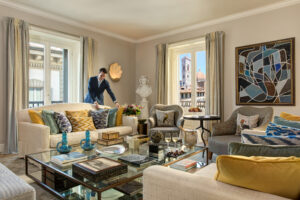
    Once the pandemic began to lessen a little, I realised it would be a missed opportunity not to return to Italy, the heart of the Forte empire, to see how his two great hotels – the Hotel de Russie and the Hotel Savoy – had fared in the interim. There was more than curiosity at work here: I’ve always loved these hotels and sometimes feel I am simply marking time in London, waiting to go back to them.

    Rome is, in its way, one of the most powerful nouns on the planet. It seems almost to have the same force as those large abstractions: love, peace, truth, goodness. It connects back to a former time – or a series of former times – which seem to contain people who were better and wiser then than we are now.

    Perhaps that’s never felt more the case than to return there now after the pandemic. Our forebears lived daily with the thought of death; it can sometimes seem as if we have sanitised it. It has also to be said that nowhere I’ve been in the world has quite such a passion for regulation as Italy. Whether this is an inheritance of Catholicism, or a more mysteriously national appetite for rules, I’ve never been able to decipher. But it’s definitely the case that if in Italy you walk into a sandwich shop and forget your mask for even a moment you run the risk of being accosted not by an owner but by a customer. This is a noticeable difference in cultural mores which no doubt must vex Forte himself.

    To look at Italy politically there is a sense that it has fallen on hard times, with debt levels not far off Greece’s, and significant poverty especially in the South, where a shadow economy may or may not be making life more supportable for young people, depending on which economist you speak to. I sometimes think that the beauty and the significance of Italy’s history somehow excuses it from doing anything in the crucial realm of the present. But I forgive it this as everything else: I’ve never been unaware in Italy that this is a country which has fallen on somewhat unhappy times since the time of Michelangelo; but then I’ve never minded much because I’m in the country of Michelangelo.

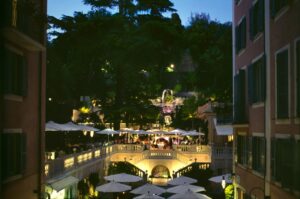
    The Hotel de Russie is right under the Borghese Gardens, next to Piazza del Popolo. That makes it reasonably near the Spanish Steps and about a half hour walk from the Coliseum and the Forum ruins. It’s a hotel so good it makes you delay your sight-seeing a little – and that’s the case even in a city where you know you’re ridiculously up against the clock on a long weekend, since there is more to see here than can be seen in a lifetime.

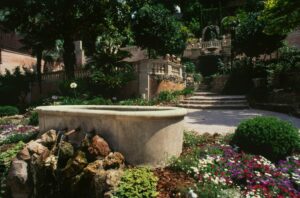
    The Hotel de Russie’s Secret Garden sweeps upwards in attractive tiers, almost as far as the Borghese. It is a place of white climbing roses, yews and palm trees. Water fountains trickle on each tier, meaning that breakfast is a calm affair. Several years ago, they used to serve delicious honeycomb as part of the buffet, but that has now been jettisoned due to the pandemic, a sad legacy.

    The hotel has a star-studded history. It was here that Pablo Picasso and Jean Cocteau stayed when collaborating on Palade, the first of the so-called Ballets Ruses, a production which counts as the first Cubist ballet. The hotel is justifiably proud of this heritage, and has a Stravinsky bar, and a Picasso suite. On the top floor there is a vast apartment with a sauna in it where the cast of Ocean’s 11 reportedly stayed.

    On our first day, exhausted by EasyJet’s tendency to demand farmers’ hours of its clientele, we were jolted into wakefulness by the magnificence of the Coliseum. Vaccine passports were on use in that attraction – and in all the others we went to – and seemed to work well.

    Inside, you feel dwarfed by the scale and ambition of what you find, and overwhelmed by the evidence of a civilisation with more intellectual force than ours. It is a strange thing that our society for all its ingeniousness seems to lack some quality which theirs had. Perhaps the Roman confidence can only come once to a species, but that doesn’t mean we can’t learn from it, and enjoy a touch of nostalgia along the way. Of course, in the process we must be careful not to turn a blind eye to the brutality of gladiatorial combat and slavery. But the fact remains: there is something about being in Rome which makes you want to do something big with your life, and why not begin that today?

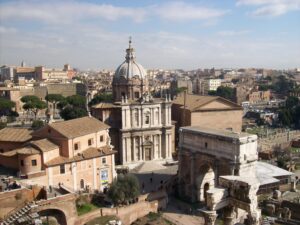
    The ruins of the forum will forever remain one of the sites of the world, especially at sundown, when they are filled with a melancholy light which knows all about the rise and fall of civilisations. It is futile, by the way, to search here for the place of Julius Caesar’s assassination since that took place around a half kilometre away in the Largo di Torre Argentina.

    What are we searching for among these ruins? It seems to relate to some lack in ourselves which is betrayed by our glass architecture, our world of consumption, our frenetic pace. It is said by John Buchan that the peoples of the past were all storm and sunshine – that is they lived next to the bad in life and so experienced a heightened sense of the good. Anyone who even glances at the Pantheon knows that it may as well have been created by aliens: nobody alive, and least of all our modern architects, seems to know how to do this.

    If Rome makes us feel as though we have become somehow pale, then this is the case too when we compare ourselves to the Renaissance. Rome isn’t necessarily the best place to understand the Renaissance, partly because Raphael and Michelangelo dominated all the commissions. Besides, much of what they did is squirrelled away in the Vatican, either in rooms the public can’t access, or in places the public accesses too much. Even the Sistine Chapel feels like the expression of one man’s slightly cantankerous achievement.

    Instead, to understand the Renaissance in its breadth and depth, you have to go to Florence, and fortunately the Rocco Forte chain have created the excellent Hotel Savoy there, this time just off the Piazza del Repubblica.

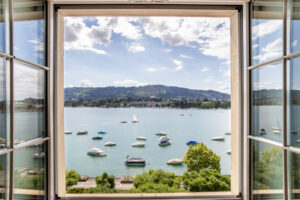
    The suites here have been enlarged and the number of them reduced since I was last here in 2017, meaning that the customer has a roomier experience. The Presidential Suite in particular is one of the finest hotel rooms in the world with excellent views of Brunelleschi’s Duomo and Giotto’s Campanile.

    Giotto didn’t live to see his bell-tower completed, but Italy is a reminder that the work we do, if it’s any good, will be taken on by others. The Renaissance is a relay-race: we think of it as a time of great individuals when really it was a team effort. This is perhaps best encapsulated by a young Leonardo da Vinci’s role in raising the great gold ball on a pulley system to cap Brunelleschi’s lantern on the cathedral. Years later, whenever he needed to summon up courage for the next big task he would recall that day: it’s for others to show us what is possible, and for us to enact that on our own terms.

    Italy asks that we summon up courage in our own lives. By hosting both the Roman Empire and the Renaissance it reminds us that a country can be great more than once – and it does so even in its present condition when so much else has atrophied.

    The great joy of Florence is in its churches. It is vital not to miss Donatello’s pulpits in San Lorenzo, and while you’re there not to forget to see the Laurentian Library whose steps were designed by Michelangelo. Tourists should also know that these are on separate tickets and by separate entrances, and not always open on the same day. If you go to Santa Croce make sure to visit the Pazzi chapel and its adjoining courtyard: they are places of rare peace and tranquillity.

    The city has suffered during Covid, as is to be expected when the country bore the brunt of the earliest part of the pandemic in Europe. In particular, a favourite restaurant Il Menagere had not yet reopened when we were there. Meanwhile, the Orsanmichele was permanently closed when we were there at the end of 2021 and still operates reduced opening hours at time of publication.

    But world historical cities like Florence have in-built resilience which stems from their perennial desirability. Boccaccio begins his book The Decameron with a description of the Black Death and how it affected his contemporaries. You can still visit today the Santa Maria Novella where that scene is set, and I hope people will still be able to do so hundreds of years from now.

    Inside the church you can see Giotto’s Crucifixion, and Masaccio’s Trinity which more or less single-handedly started a revolution in art which still governs the way we see today. When the Black Death came, few would have imagined that the world was on the cusp of two hundred years of unprecedented achievement across every area of human endeavour.

    Perhaps this is ultimately what Italy has to say to us now: that any civilisation worth its salt is in it for the long haul. And although the Rocco Forte chain has had a difficult pandemic, one senses that these magnificent hotels will bounce back also. The good things in life always do because ultimately that’s what people want.


  • Career shift: Eddie Vincent on his switch from finance to furniture-making

    Patrick Crowder

    Eddie Vincent built a 22-year career in finance after studying at Newcastle University. Now, he has left that job behind to make metal furniture in his village of Hambledon. We spoke to Vincent to find out how and why he made the switch, and how a career making physical things differs from office life. According to Vincent, the catalyst for the change was he and his wife’s separation.

    “Before this, I was doing asset management and finance as a fund manager. I’d been doing that for 22 years. I worked at Goldman Sachs for 10 years, and then then in a smaller company. At the start of the pandemic, my wife told me that she wanted to separate. So long story short, about eight months later, I moved out,” Vincent says, “I ended up with a workshop here, which I didn’t have before, so I bought a welder. I was doing some little hobby jobs and stuff like that, but when the lockdowns came in around Christmas I started making fire pits. I probably sold around about 12 fire pits, which is not a huge amount, but this is when I was first starting out.”

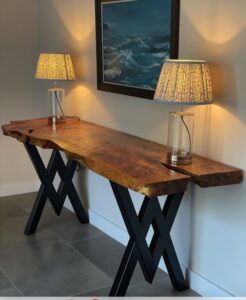
    In the beginning Vincent viewed his newfound skill as a hobby, but he quickly saw that there was a market for his work and started posting his projects on Instagram. Facing competition from large companies such as Amazon, he has branched out from fire pits and now makes custom furniture which cannot be bought elsewhere online. His current speciality is making fender seats, which are the upholstered rails which go around the sides of a fireplace.

    “I realised quickly that fire pits weren’t really the thing that I wanted to do because you can buy them on Amazon, and trying to compete with Amazon is virtually impossible of course. All these companies have huge economies of scale. So I sort of started thinking ‘I need to do something that’s a little bit more niche and a bit more bespoke’, and I’m still kind of there at the moment,” Vincent says, “This week I made a big upholstery table for someone who makes curtains, and you can’t buy that online. I mean, it’s a huge table, it’s over three metres wide when it’s fully extended, and it was a big learning process to try to get that right. But really where I’m going at the moment is making fender seats. There aren’t many people who make them. You can buy them online, but every fireplace has totally different measurements so you need to get them custom made.”

    By producing metal goods which either need to be custom made or which are not mass manufactured, Vincent has been able to find niche markets for his work. Having no prior experience in the field, Vincent has learned many of his skills on YouTube, including how to price his work. Because he is currently a one-man operation, Vincent has to factor in not only his time and cost of materials, but also the cost of powdercoating, upholstery, and delivering his pieces.

    “Trying to work out how to charge for things you can’t really find online is actually quite tricky. You can work out what your shop rate is, and I tend to look at a lot of YouTube videos that are really helpful for that kind of stuff. I don’t have any overheads apart from my utility bills, because my workshop is at home, so from that perspective, apart from buying tools and things like that, I don’t have any other sundries that I have to pay. I’ve ended up doing a lot more driving than I thought I would, so that’s one thing which I’m starting to factor in,” Vincent says, “I’m still kind of undecided about which way the business is going to go. I love making the fender seats. I basically like doing anything that combines materials, whether it’s with metal, wood, or glass. These are things where I feel that you can charge a design fee on top of it, whereas if you’re doing something like fixing someone’s vents or doing some railings, it’s very easy to try to get competitive on that, and I don’t really have any interest in doing that. Most people seem to always say yes to my prices, which probably means they’re a little bit low. And that’s another part of the learning curve. I think, in a way, you want to have a few people say no to your quotes, rather than everyone saying yes, because it probably means you’re being a little bit cheap on yourself.”

    Many people dream of leaving the office life behind for more tangible work, and the pandemic has made many of those dreamers take the leap. For Vincent, the choice to make a change has proved to be the right one, and he says that the satisfaction he gets from his new job makes up for the pay cut he had to take to start his new venture.

    “I think the catch of it is that I’ve taken a massive pay cut at the moment, and I don’t imagine I’m ever going to get up to what I was earning before. I found that in my old job you had thousands of people doing the same thing, whereas with this, yes I’ve taken a pay cut, but when I dropped that table off the other week the client’s face lit up and they said ‘Oh, I just love this, this is amazing!’ and that’s a huge thing,” Vincent says, “I commuted for eleven years three or four times a week, so I was getting up at 0530 and not getting home until 1930 at night. And I’ve seen all these people well into their 60s still doing that, and I knew that’s not what I wanted to do.”

  • Finn Sheehan reviews Sky Portrait Artist of the Year at Compton Verney

    Finn Sheehan


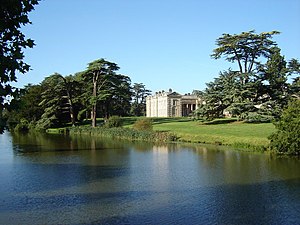
    Nestled cosily and luxuriously in a cleft within the gently undulating Warwickshire countryside, surrounded by farmland and not much else, Compton Verney is an interesting choice of location for a premier art gallery. On public transport, it requires a 45-minute taxi ride from the nearest train station at Banbury. So, whilst accessibility is not its USP, it boasts an array of permanent works and temporary exhibitions the equal of many of its more metropolitan cousins. It’s well worth the trip, especially as the collection includes to my particular delight a fabulous collection of Chinese works in bronze dating back to 1200 B.C, amongst a broader Chinese collection spanning 3000 years.

    The home of the Verney family for some 200 years until hard times led to its sale and later on its descent into disrepair, it was bought in 1993 by the Peter Moores foundation and transformed with a vision of it as a home for great art. Abigail Viner, the Head of Exhibitions, Creative Programme & Audience Engagement, speaks passionately and knowledgeably about this vision, and the mission of the gallery: “It’s all about the audience, and how we work with artists and collections to engage with an audience and provide a high quality yet accessible experience. It’s about the intersection of art, nature, creativity and science.”

    In terms of the nature angle, its remote location affords Compton Verney large surrounding grounds to play with. And the composition of this nature – the physical building, the gentle slopes down from it to the picturesque lake and the soaring Cedar trees the eye encounters on its way there – can seem as carefully curated as the art inside.

    As I listen to Abigail speak, I crane my neck to look at a portrait of a young Verney scion high on the wall above me. Captured indulging in what was the standard – if much more exclusive – Instagrammy careful-image-curation of its day, the teenager features a solemn expression of gravitas whilst gently resting a noble hand on a wooden globe: a worldly teenager with international concerns. Of course he was. We’ve come a long way since then, yet not so far at all perhaps.

    Anyway, it’s easy to be distracted by art at Compton Verney, but I’m here to see a retrospective of Sky Arts’ Portrait Artist of the Year, curated by Kathleen Soriano (who also happens to be one of the show’s three judges), and to hear about the effect the programme has had on the art scene and budding artist behaviour in the UK.

    Art, like fashion and music, is notoriously hard to make a living from. “Most artists I know have to work, often teaching in art school,” says Kathleen. A compelling element of PAOTY is its ability to launch the career of a complete unknown. In this way it has become an important fixture in parts of the art community.

    Many of the painters are already seasoned professionals, but as many are not, and there are several examples of amateur “contestants” who have successfully bridged the gap into the professional world. Nic Lord, the first ever winner, was working in the family business of model railways when he entered the show, painting the trains. Now he’s a commissioned portrait artist. Likewise, Tom Meades, who was just out of art school, has managed to make that step. And there are others. Kathleen acknowledges that the exposure of the program no doubt helped their careers, but TV exposure is by no means enough.

    She emphasises that as with much in life, to make a career in art you have to work as hard to sell yourself and your art as you work on making it. “There’s no point making something unless you’re ready to shout about it. Art needs to be seen. Networking in the art community and the social side are critical. If you’re going to sit in your garret and make pictures and show them to no one else, maybe you’ll be discovered in 200 years! But if you want to be known in your lifetime you have to get out there and work it.”

    And yes, Instagrammy careful-image-curation is key, all the more so during the pandemic. “Artists these days have to be really good at social media. Instagram is where it’s at. They work really hard at their Instagram accounts and getting their images out there.”

    For a portrait painter it also pays to be personable, give a great customer service and get to know your subjects, to tease out their hidden narratives. Kathleen tells of how, to achieve the intimacy of his commissioned portrait of Graham Norton, previous winner Gareth Reid spent two weeks with him in West Cork, apparently making excellent use of the local pubs to develop a relationship with the subject, and even discovering that they were distantly related! This may or may not be unusual for that particular neck of the woods but certainly didn’t harm the chemistry or the output it led to.

    Clearly though it’s not all about off-canvas talent. Kathleen stresses that it is equally important to be contributing to the development of art and pushing art forwards. “Be inspired, but don’t copy. Emotionally the viewer wants the same impact. Making us notice your work and feel something. Tantalise us about what you’re trying to tell us. But use innovation in the style you use to achieve this”. This is a mission that PAOTY tries to reward, and which a viewer of this exhibition will benefit from.

    So as you might expect given PAOTY’s potential for an artist, and its stated intentions to reward innovative art, there is something of an Observer Effect in action, where the existence of PAOTY has changed the approach and styles of many budding artists who watch it, as they attempt to crack into the show and boost their career. There are websites that give advice on what type of paint to use and how to handle time constraints. For what it is worth Kathleen’s summarised advice for getting on is threefold: “do something standout (here she points to Phil Tyler’s painting of himself in a toilet, done soon after his father’s death), have a powerful narrative, or just paint a good, solid head”.

    Interestingly, she explains how the most recent winner Calum Stevenson (whose glorious final commission of the violin prodigy Nicola Benedetti is sadly not here, though his beautifully observed, pastel-shaded portrayal of his girlfriend – which foreshadowed his precocious talent for the suggestion of light – is) altered his painting style in order to suit the shows constraints. Lord knows how precise and painstaking his work must have been beforehand (his submission apparently took 80 hours).

    So, whether you like it or not (and I happen to), PAOTY now occupies a central role in the UK art scene. Now in its eighth year, it attracts a weekly audience of around 1.5 million and is repeated endlessly (such is the fate of all the finest or most popular shows nowadays). Each year amateurs and professionals from an entry pool of a thousand or more vie for the prize of a paid commission for a national art institution and a chance at national recognition.

    It’s also notable for the fame of its sitters. And walking through the exhibition, the celebrity-infused presence of some of them is palpable, yet often not in the way that you expect. In the Graham Norton portrait Reid manages to capture a calmer, contemplative side to the Irishman known to millions as the genial chatterbox of his eponymous BBC, here at rest amongst the green fields of his homeland. Inhabiting a quieter power than the pure social energy he is famous for. You walk away from it minded that you know Norton a little better.

    This kind of fresh take on a persona you felt you knew, similarly seen in portraits of Tom Jones, Kim Catrell, and many others, makes one realise that a benefit of using celebrities as sitters is how the televised painting process and outcome often acts to deconstruct the carefully curated public images of these people and, with only few exceptions (Nile Rogers remains indisputably Nile Rogers) show us something new of them. The power of the painter-subject dynamic – and no doubt the forgivable egotistical pleasure of being painted – can lower defences, and through the resulting artistic alchemy they can be humanised and at the same time elevated.

    So yes, the exhibition is good. On an individual basis there is much to admire, and sometimes you can see where PAOTY’s mission to reward innovation in style – to “push the boundaries of what portraiture can do” – succeeds. Those who see Samira Addo’s take on Dame Zandra Rhodes will see bold, highly suggestive and powerful use of colour, teetering gloriously on the edge of abstraction.

    The show is chock full of portraiture, and so whilst the quality of portrayal, clarity of narrative or distinctiveness of style doesn’t always hit the highest notes, that’s not really the point. The main triumph is to be found in experiencing it as a depiction of the sheer variety of expression possible. Like the TV show itself, it is a celebration of the discipline of portraiture, the humanity of its subjects, and of the unique voices that the artists, and ultimately all of us, have. An accessible moral, and a USP worth travelling for.


    Sky Portrait of the Year runs until 5th June 2022