Author: admin

  • Burnout: what is it, and how can we manage it?

    Patrick Crowder

    We’ve heard a lot about ‘burnout’ recently, but it’s more than just another word for the stress and anxiety which sometimes comes with a job. The World Health Organisation describes burnout as an “occupational phenomenon”, recognising the condition as a diagnosable syndrome since 2019. The NHS distinguishes between stress and burnout, stating that burnout is the feeling “that there is ‘not enough’ time, energy, enthusiasm, and ability” to get through day-to-day life, while stress is the feeling of there being “’too much’ – too many demands, too much to do, too many decisions to make…”

    Burnout cases are on the rise following the pandemic, according to a study by Glassdoor, and many of us will have felt that sense of being mentally and emotionally drained by work and social relationships ourselves. Performance Psychologist Stuart Kelly has been researching the impact and effects of burnout with the leadership development consultancy Impact International.

    “The three things that cause us the most stress are uncertainty, uncontrollability and unknowns,” Kelly explains.“Humans are highly resilient but sometimes the best thing to do is to sit down, put on Netflix, have a takeaway, turn off your phone, and take a deep breath.”

    Taking time to one’s self can help relieve pressure, and it is not something that people should feel guilty about. However, according to Kelly, resorting to full-on escapism is harmful.

    “We should have the ability to take a break before we really need one,” Kelly says. “Sometimes self-care is tough, but it shouldn’t be something we resort to because we are so absolutely exhausted that we need a reprieve from our own relentless internal pressure. It needs to be a habit that we do without thought and effort.”

    The idea is to relieve the pressures of everyday life by living life, not by escaping from it. Empty means of escape such as drink, drugs, overeating, Netflix bingeing, and social media are all harmful in excess, regardless of the way these activities are perceived by society. The best way to avoid going too far, according to Kelly, is to recognise the signs of burnout early.

    “It should never get to the point of wanting to collapse on the couch and escape from reality,” Kelly continues. “Place a frog into boiling water and it will jump straight out, but place a frog into cold water then slowly heat the water to boiling point and the frog will not realise it’s in danger until it’s too late. This can easily happen to us.”

    Handling burnout is something that will vary in difficulty from person to person, but everyone is capable of finding a solution. For some, it could be as simple as reconnecting with a long-forgotten hobby or setting aside more time for meaningful relaxation. Others may feel like they don’t know what they enjoy doing anymore, and that’s okay too.

    The specific situation of someone suffering burnout will determine what course of action they should take, and there is no universal solution. However, burnout is a serious issue, and options such as therapy, taking a leave of absence, or making a big career change should not be discarded as ‘too extreme’.

    Following the pandemic, many people have begun to feel dissatisfaction with their work-life balance and are taking steps to put their wellbeing first, so there is no need to feel alone in taking action.

    Credit: Impact International

  • What Do You Want From The Office?

    Stuart Thomson


    All organisations are trying to work out what the future of the office looks like. But without your input, the final decisions may not help your career. Now is the time to speak up.

    Office environment

    It has become somewhat of a cliché to talk about the ‘new normal’ post-Covid office but the reality is that many organisations are still trying to work out what suits them best. The trouble is that such decisions can focus on the needs of the decision-makers themselves, often senior leaders, or the financial realities involved in running a physical office. There is a danger that they do not accurately reflect the needs of all those across the organisation, not least newer entrants to the team. The additional complication is that those newer members of the team may lack the channels to input their thoughts into a decision that will fundamentally impact on the shape of their future careers.

    Speaking up though is often easier said than done.

    Personal priorities

    In the first place, it is important to work out what your office priorities are. Going through this process will mean that you input is meaningful. Think about how you work, what you enjoy and, if you worked in an office environment before, either in your current role or previously, what did you like or dislike? Be honest with yourself and think about what you are missing out on.

    It may be useful to consider the office as having two main function – productive and social – both of which are hugely important.

    The productive side may dominate thoughts but the social aspect, especially for those starting off in a career, is just as important. It is everything from making the office an enjoyable place to be through to being relaxed enough to have the space to ask questions, and it starts to build your networks. Many of those I feel closest to personally and professionally are the people I met in my first job.

    It is also important to recognise that there is such a concept as ‘proximity bias’ that some carry with them. This bias suggests that senior leaders, and others in leadership roles, treat those who are physically closer to them better. Quite simply they favour them. This may be something to challenge or embraced if behavioural change is unlikely.

    However, what is clear is that new entrants to a team will lack everything from name recognition through to facial recognition with leaders. They simply don’t know who you are and that obviously limits opportunity. It reinforces the proximity bias. Think about how you would challenge that scenario.

    As an aside, I enjoyed listening about ‘proximity’ bias on the FT’s Working It podcast (Isabel Berwick, ‘How To Win The War For Talent’, 15 November 2022). I would recommend Working It along with The Nowhere Office, and This Working Life if you want podcast listening to help think more about your working environment. They can be really helpful in considering what you want from work.

    Your needs

    In the professional setting I would also be considering how can you continue to gain experience from across an organisation and make sure that this is not your only example of speaking up. What shape does the office take that allows you to secure a seat at the table in future as well? Once you have gathered your thoughts then you need to work out how to convey that information and to who. That may be more straightforward in some organisations than others. Many are running consultations to elicit information but if not then ask your line manager. If it is possible to make the case yourself, rather than going through others, then I would take that opportunity. I have personal experience of someone passing on my ideas but failing to say where they originated….

    Then try to make the engagement part of an ongoing dialogue rather than simply a one-off.

    Organisational benefits

    Fundamentally, speaking up allows you to help develop the type of future organisational culture that you want but it is also beneficial for the organisation as well. Try to put your feedback into that wider setting otherwise some dismiss it as merely personal pleading.

    Such input protects an organisation’s talent and allows for better people retention. There is also a positive story to tell in terms of addressing skills issues as well.

    By being pro-active and speaking up, you are helping your organisation react to the uncertainty they face and making them better prepared for the future. They will recognise the value in your contribution and that can only be a good thing for your future as well as theirs.

  • The Power of Music: Building mentally stimulating and thriving workspaces through sound

    Alexandra Livesey, COO of Clockwise, leading flexible workspace provider across the UK, talks about their experience in using music to create productive spaces across their spaces.

    “Post-COVID hybrid working policies are now standard across most industries, and we have seen a steep rise in the need for flexible workspaces. At Clockwise, we give businesses and individuals the opportunity to come together on a flexible basis, in line with this new working model. For the days that the team do come together in an office environment, it’s important to have the right spaces to do so. We pride ourselves on creating environments that inspire and generate a sense of community, drawing together people from different industries and market sectors, while also providing spaces without distraction. We consider all senses across key member touch-points; the look and feel, the scent, the temperature and of course the music; which all impact how people experience the space. We then optimise these to support productivity.

    We have recently been focusing on the sounds of our work spaces in particular, for which we have partnered with music specialists Music Concierge, who use science to help with their curation process. They have created bespoke playlists for our buildings that drive productivity, motivate and inspire our members throughout the day.

    We have considered many elements including the changing mood of music across our spaces at different times of the day and different days of the week. We want to not only support our members in their working life, but in their social life too, and create spaces where they can connect and create with fellow Clockwise members, something that is hugely important to us as a host to many entrepreneurs and start-ups. For example, on a Monday morning it’s all about getting your head down and into gear as opposed to a Thursday or Friday afternoon, where music can aid us by stimulating social connection.

    We have also ensured that the mental wellbeing of our members has been considered and prioritised in our work with Music Concierge, and we have investigated ways that we can enhance the mental health of our members throughout the workday through music.

    It’s fantastic to be working with Music Concierge and manipulating music in a way that creates another medium through which we can look after our members and improve their lives.”

    Rob Wood, Creative Director and Founder of Music Concierge, dives deeper into the science behind office music choices.

    “We have been working closely with Clockwise to bring their flexible workspaces to life in a way that focuses, excites, motivates, connects and calms members depending on the time of day. Clockwise offices are multi-dimensional spaces that hold a buzz of activity in so many different forms, and we use music to support this. A working day often promises meetings, solo work, reading, talking on the phone, socialising and so much more.  Spaces, times, days, specific moments and moods all come into play as we curate and streamline one of life’s greatest pleasures, to create an uplifting working environment.

    One of the first things we did when we started working with Clockwise, was to look at their different layouts and zones and how music would mirror their uses in sound format. For example, quiet workspaces require linear music that doesn’t change in pace or tempo too much, doesn’t have hugely prominent vocals, and doesn’t have too many different verses and choruses. This keeps the brain from becoming distracted, and actually stimulates our ability to focus and hone in on a task.

    In contrast, their reception area required welcoming but calming music that makes its members feel at ease as soon as they walk in door, and likely ahead of stepping into a meeting space. Whereas within a meeting room, music must be linear but can be slightly more enthused to forge a creative, collaborative environment amongst colleagues.

    Our work hasn’t just been confined to space but also the time of day is a hugely important factor to consider when curating music for a workspace like Clockwise. From the morning coffee to the afternoon cuppa or occasional glass of wine, our workdays alter in mood and activity, and we work on creating a space where music not only reflects this but supports the flow.

    As Clockwise members stroll in to embark on their day, we fill the communal spaces with invigorating music that brightens and awakens the mind, getting us ready to take on the day. As the day goes on, we fade into productivity stimulating tracks and calming tunes. When five o’clock comes around, and we begin to wind down after a hard day’s work, we start to feed in a more vibrant vibe, allowing members to decompress and let go of stress as they move into their relaxing evenings. For those connecting on a social level in the early evening, we pump connecting upbeat music through the Clockwise social spaces.

    We all know that Fridays are a whole different ball game to Mondays, and we must reflect that in the sounds we channel into the office space. We want to promote that end of the week feeling ahead of the weekend when Thursday or Friday afternoon come around.

    Music brings people together, creating a sense of community and promoting solidarity, friendship and trust. There is nowhere more important to nurture these values than the working environment, as teams work to foster a group dynamic. We ensure to choose music that motivates and connects while dropping in familiar favourites to bring people together.

    Social interaction is hugely important in a job, but it is just as important a creating an environment that stimulates and calms in equal capacities and makes for a mentally and emotionally fulfilling workday. One strategy we implement to promote this is by providing pockets of stimulation throughout the day, by creating meaningful moments. We disperse widely unknown songs throughout playlists, allowing members to discover something new that they enjoy and can revisit. It breaks up heads down work and allows a moment to decompress and step back into the moment.

    Self-care and mental wellness are instrumental to what we aim to do at Music Concierge, as we orchestrate music to work for our clients and their clients alike. This has become a large part of our work with Clockwise with it being a key value of theirs also. Motivating mindsets are a huge part of what we strive to create through our work. We also want to help people to understand ways in which they can tap into inspiring themselves through music. The next time you’re knuckling down for a hard day’s work (whether it be in the office or at home) and need that extra push, our recommendation is to queue some contemporary classical, instrumental electronica and relaxed jazz styles of music for ultimate productivity.

    Clockwise are implementing motivating music across their workspaces up and down the country and they are blazing the trail in the workplace industry, setting the standard for how offices should be run. We hope to see more businesses in the industry follow their practises to promote individual and team wellbeing.”

    Founded in 2017, Clockwise provides contemporary private offices, shared workspace and meeting rooms with flexible membership plans in key business locations across the UK and Europe. They have 13 sites across the UK and recently launched their newest site in Bromley, which is their first mixed-use site alongside a restaurant and hotel offering. Their most recent site in Europe also opened in Brussels which aids their expansion plans as they hope to grow to over half a million square feet of office space in total by next year.

    For more information, please visit https://work-clockwise.com/.

    For more information about Music Concierge please visit www.musicconcierge.co.uk.

  • Opinion: Afghanistan is a case study in why education matters

    Garrett Withington

    Looking at photos of Afghanistan during the 70s induces melancholy. You see the faces of smiling women, liberated in their dress, books in hand, with a demeanour seemingly unaltered by decades of war. Afghanistan’s liberal period may not have been as hedonistic as its American counterpart, without the free love and drugs, and the skirts not hiked quite so high, but old photos show a happier liberalising society. For those that grew up following the War on Terror these images have never been within your psyche.

    The recent past shows an astonishing fluctuation when it comes to freedoms in regards to women’s educational rights. It is a sad cycle of improvement, followed by repression, improvement – and now, following Biden’s decision to withdraw, the return of that repression.

    During the years of monarchy, before the existence of the Taliban, there was hope which we need to learn from now. Reformist kings such as Abdur Rahman Khan, followed by his son, Amir Habibullah Khan, drove through reforms that would liberalize not only Afghanistan’s education system, allowing women to study, but also abolish other long held customs such as forcing a woman to marry her deceased husband’s next of kin.

    Afghanistan’s sprawling and mountainous landscapes, however, have not only been the bane of armies who have sought to conquer the country – earning it the title of ‘the Graveyard of Empires’ – it has also made it difficult to form coherent governments to exert control over all territories. Due to its mountainous terrain, Afghanistan has tended to be split between its urban progressive centres, and the rural tribal Mullahs which favour tradition. The Mullahs see liberal reforms in regards to women as a threat to their culture, where the state’s interference within education and marital institutions are interpreted as a challenge to their power-base which is ultimately based on a patriarchal system.

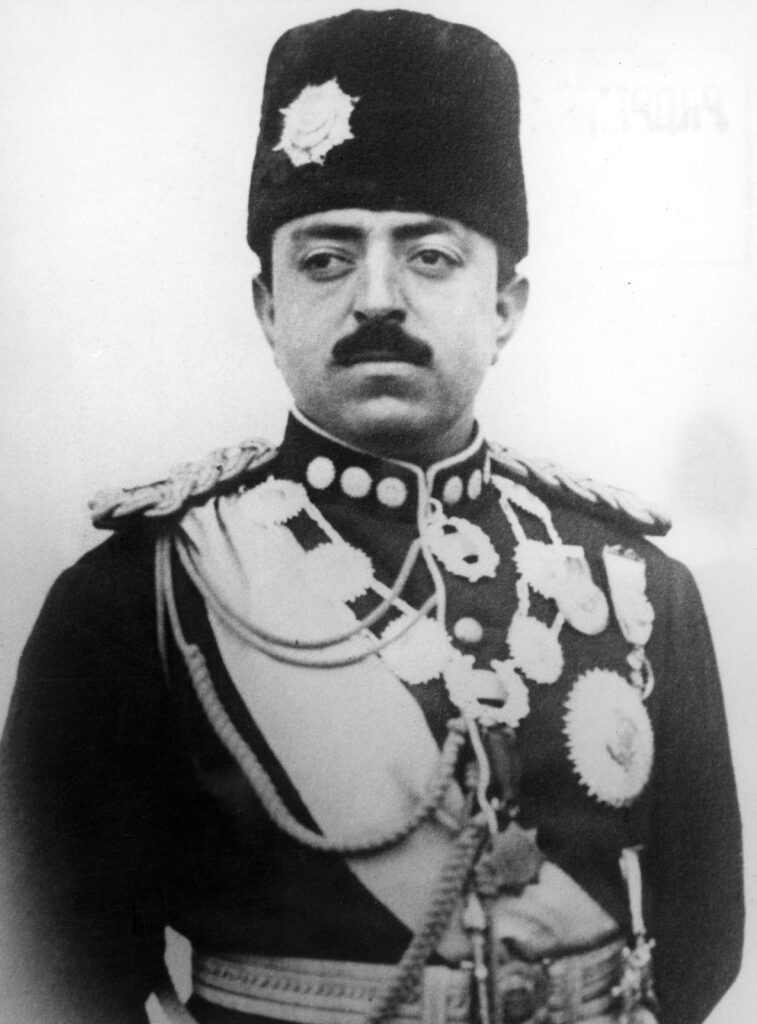
    It is easy to forget how long this oscillation between the two has been going on. A period of liberalisation was begun by Habibullah Khan until his assassination in 1919. Before his death he achieved much, bringing modern medicine and technology to Afghanistan. His son, King Amanullah Khan continued the liberalisation in 1919 as sovereign of Afghanistan, but then was forced to flee the country in 1929.

    King Amanullah Khan fled the country in 1929

    Khan’s reign is a reminder of the uneasy relationship Afghanistan has always had with modernity. There is, for instance, the story of Queen Soraya ripped off her veil following her husband’s suggestion that Islam did not require women to wear a face covering, inspiring other dignitaries wives to follow suit. A trip to Europe and Turkey inspired the royal couple who had taken many of their initiatives from the west, but images which made their way home proved too much for the rural tribal leaders who once again felt their power being diminished, and a new culture forced upon them.

    It is telling that many of those who sought reform were well travelled, inspired by their visits to Europe, understanding the benefits of the most basic rights in liberal societies. It was those that were threatened of their own position that clung to archaic notions of the bride price and iron clad control over women.

    So it was both a story of East v West, but also a story of urban v. rural. Kabul became a cultural centre, and developed modern notions from other cultures, but these developments have never been popular beyond the cities. Despite reforms, education remained far less common in rural areas than it ever did in the capital. Regardless, in the 1920s, schools for women once again closed across the country.

    It would not be until the Soviet installed puppet government in the 1970s that a programme of mass literacy for women encouraged education to the extent that women might contemplate joining the workforce. But again, progress was piecemeal. Women were stalked and threatened, with reports of women in western clothes being shot as tribal chiefs saw compulsory education, especially for women, as not only going against the grain of tradition, but also as an essentially irreligious challenge to male authority.

    Following the Soviet invasion in 1979, the mujahideen gathered forces, forming the revolutionary army, with the main purpose of preserving their traditional culture. Backed by a Coalition led by the United States, they would be installed in government only to later be overthrown by the same coalition due to their barbarity. As the world now knows, their successors – the Taliban – would prove to be worse. Here began the true apartheid of women within Afghan culture that we are all familiar with. Radio Sharia played in the streets; face coverings and beard lengths were enforced. Worse, all educational facilities were shut to women. That now included secret private institutions.

    The 2001 invasion and occupation by Allied forces would again see a reprieve and much progress was achieved during that time. But in 2021, when the Afghan army disintegrated, images soon flooded the news sites showing the Taliban enacting brutal reprisals on all those who worked against them. What will happen to women’s education? Who knows, but you can have a pretty good guess.

    The sound of silence has once again swept across Afghanistan with the banning of music and the closing of music shops. There have been reports of intimidation as well as reports of murder of artists. The well-known folk singer, Fawad Andarabi was executed in the Baghalan province. Meanwhile, comedian Khasha Jawan was murdered in Kandahar. This makes any predictions – such as those put forward by Boris Johnson – that the Taleban have changed hollow indeed.

    In addition, according to UN High Commissioner for Human Rights, Michelle Bachelet, beheading have returned. This shows that the Taliban are flagrantly willing to break their promise not to enact reprisals against those who worked against them. Thieves who are caught are treated with medieval justice, having their hands cut off. 

    Despite promises of respecting women’s rights, Sharia law has returned. Women have been told that they can only have ‘low-level’ jobs in government, within the civil service. Female students must now cover their faces again, and classrooms are now segregated again in classes.

    Afghanistan’s women’s cricket team have been disbanded with Ahmadullah Wasiq, the deputy head of the Taliban’s cultural commission saying that women’s sport was not considered necessary or appropriate, and would be banned.

    It is a miserable situation, but one which reminds us of the importance of education. Why is it that we feel such grief for those who are excluded from it? It is because education allows to develop the skills of independent thought. It is surely fromthis that the deeply patriarchal Taliban society fears: female education is a challenge to their dominance.


    In some ways, America created the conditions for this reaction. According to US government reports, $787 million was spent on gender studies. This didn’t lead in and of itself to the fall of Afghanistan but it certainly demonstrates how America operated in way antithetical to the traditional beliefs which governed much of Afghanistan. 

    So the situation in Afghanistan demonstrates not only the necessity of education for women but for all. Though the Taliban have promised some educational rights for women, early reports suggest that they are to be limited to religious teachings -making it more akin to indoctrination. This will not be as General Sir Nick Carter called it “an Afghanistan inclusive for all”. Afghanistan has never been like that – and it’s only now that we can gauge the grief of the Biden’s administration’s botched evacuation.

  • Exclusive: Matt Hancock on what he learned as Health Secretary

    As Matt Hancock emerges from the jungle, he recalls his time as Health Secretary and offers lessons to the next generation 

    In the global fight against Covid-19, there has been one group of people who have sacrificed so much and yet received such little praise – young people. I understand how difficult it has been for young people during the pandemic. From not being able to study, to not being able to see friends in person and missing out on so many exciting opportunities, Covid-19 has been extremely difficult.

    As Health Secretary, I was so grateful to young people for playing their part in the wider national effort. Because the virus is so much more deadly with age, the sacrifice made was all the more generous the younger you are. Without that sacrifice though, we simply wouldn’t have been able to suppress the virus and save lives. So from the bottom of my heart, I want to thank everyone who played their part.

    As I look back over the pandemic, some of the greatest highs I felt were when I saw young people queueing in their swathes to get vaccinated. At sports stadia, at local pharmacies, or in places of worship, we saw individuals making the conscious decision to come forward to protect others. While some said it wasn’t worth the risk for them, the vast majority of young people have been vaccinated. Speaking to some University students who got their jabs, I was struck by the sheer selflessness of this generation. I was told that while they felt it was important to protect themselves from issues that come from long Covid, the main reason why they were getting vaccinated was to protect their friends, loved ones and the wider community. The generosity and open-mindedness of these students gave me huge confidence for the future of our country.

    So, young people have sacrificed formative parts of their childhood and got vaccinated to protect others. I will not accept the failed argument that young people are lazy and selfish. In fact I think it’s quite the opposite. For me, young people have been the quiet heroes of the Covid war.

    Now it’s fantastic to see 12 to 15 year-olds coming forward to get their jab in such large numbers. Recently, we reached the impressive milestone of over one million 12 to 15 year-olds having had their jab. I urge all children who are offered to come forward and get theirs, to protect themselves, their educations, and people that they love

    Continuing in the spirit of selflessness, it shows the spirit of this generation that last year, there were record levels of applicants to medical schools, and nursing qualifications, in the UK. This is so promising for the future of our NHS, but also for the possibilities that this brings for future scientific discoveries.

    We’ve seen as a country just how valued our scientists and healthcare workers are.  For instance, a YouGov poll this year showed that scientists and doctors were the most respected professions in the UK. I was also very emotional when I saw the video of Professor Sarah Gilbert from the Oxford vaccine group receiving a standing ovation at Wimbledon. From seeing closely how hard Sarah and her team worked to create their vaccine, I couldn’t imagine someone who deserves the whole world’s gratitude more than her.

    Think about this team of scientists at Oxford University who dedicated their lives to creating the global cure for the pandemic. I gave them the ambitious mission of creating a vaccine in ten months that we were told would usually take up to 10 years. Their hard work, creativity and perseverance working alongside the great team at AstraZenea, has given the whole world the security it needs against this deadly virus – at cost price. With further improvements in technology and more funding going into scientific research, British science has fast become a cornerstone of our economy and society.

    It’s an incredibly exciting time to be working in the field of medical research. Everyone knows about vaccine development, of course. But in the UK we’ve also seen incredible scientific discoveries of drugs and antivirals for Covid-19. British scientists in the Oxford-led DISCOVERY trial found that Dexamethasone was clinically proven to save lives against Covid-19. Dexamethasone has now been estimated to save well over a million lives across the world. We’ve also seen more recently how the Antivirals taskforce, set up just in April this year, is making great progress in securing antivirals to protect people after they catch Covid. 

    As we grapple with this pandemic, with new variants as they emerge, it is the medical science that will help us through – as it has done so often in the past. 

    This is the main reason why I’m writing this piece. I hope that the brilliance of British scientists throughout the pandemic will encourage the next generation to enter into medicine. Working in medicine brings such benefits to society, but also to yourself. In very few jobs can one say that they experience both the best times and worst times in peoples’ lives. From births to deaths, those in the NHS are there for us when we need them most. Speaking to NHS workers, the principle they all have in common is the sense of reward for helping others.

    When the public were told to stay at home to save lives, they did so because they wanted to protect our precious NHS. At the same time, NHS workers and at one stage, over 35,000 medical students stepped up in the face of adversity to help look after others in their time of need. I was delighted when Her Majesty The Queen awarded the NHS the George Cross to reflect just how important their contribution was to the UK’s collective fight against Covid-19. The George Cross is awarded for “for acts of the greatest heroism or for most conspicuous courage in circumstance of extreme danger”. I can’t think of anyone more deserving of this award in peacetime.

    But working in medicine is not only about public service. Our caring professions have never been more highly thought of. While the rest of the public sector saw a pay freeze in the face of the pandemic, that was not extended to the NHS. More excitingly, medicine is at the cusp of groundbreaking changes unlocked by the insights of modern data. From genomics to the use of wearables, data is transforming how we care for people as much as it has transformed so many other areas of our lives in the past decade or more.

    So, if you are debating your career progression and want a rewarding opportunity that will give your life variety and fulfilment, I couldn’t recommend a job in science or healthcare more. You’ve got to be up for the challenges – because they are significant and tough. But the rewards are also huge: they are those of a mission-driven fulfilling life.

    One of the many lessons of the successful vaccine roll-out is that when people with passion, precision and purpose come together, we can achieve great things. That’s what happened so conspicuously in the pandemic – but it’s what happens every day and every night in medicine. With British medicine and life sciences so demonstrably a global superpower, there has never been a more exciting time to go into the world of medicine.

  • Review, Belfast: a tale about how work changes us

    by Christopher Jackson


    The stature of Kenneth Branagh isn’t in doubt, though I have sometimes heard people prepared to whisper in tiny voices their slight doubts about his acting. For some, this began with his slightly self-indulgent and extraordinarily long turn as Hamlet in 1996. I will always remember his adolescent delivery of the famous line ‘Words, words, words’ with embarrassment.

    But Branagh is a particularly complicated figure if you happen to be a fan of David Suchet’s Poirot. It is very hard to think of a better performance in modern television. Given that Suchet only finished the role recently it is evidence of alarming ego that Branagh has recently felt the need to take on the role himself in two bizarre offerings: Murder on the Orient Express (2017) and Death on the Nile (2022). We didn’t need another Poirot at all, but what we got was a bad one to spoil the memory of a marvellous one.

    Writer/director Kenneth Branagh on the set of BELFAST, a Focus Features release. Credit: Rob Youngson/Focus Features


    Even so, a cultural figure of Branagh’s sway will always attract funding for new films and it must be said it’s very good news that those who provided funding for this didn’t hold his role as the Belgian detective against him. Partly because the film is a tender reckoning with his own past, and partly because he has eschewed vanity by wisely deciding not to be in it, Branagh has rebounded from his Poirot nadir to produce something superb. The film makes you wonder what Branagh might have achieved if he’d only been an author and a director. Perhaps his stature would have been even greater.

    All the promotional material for Belfast is in black and white. So it comes as something of a surprise to find that the first shots in the film are in colour.

    This is contemporary Belfast, not Belfast as you might have expected from the posters: a collage of shots of a very modern city. These opening scenes are beautifully shot but they make the viewer feel that Belfast today is a city whose optics are like any other. It is a place of neoliberal prosperity, in thrall to the automobile: another weekend destination where might expect our museums and galleries, a zoo, bars and restaurants and so forth. Only once Belfast today is shown, does the film shed colour and then we travel back in time to the August 1969 riots.

    It’s a clever but not showy device – a way of establishing at the outset that this isn’t just a story about an Ulster Protestant family – Kenneth Branagh’s family, as it happens – but about a collective people. Belfast aspires to be a tale of historical dimensions. In being a story about a city, it is also a tale about a city’s economy and the way in which our work changes us, and how we change as a community according to economic need.

    Caitriona Balfe (left) stars as “Ma” and Jamie Dornan (right) stars as “Pa” in director Sir Kenneth Branagh’s BELFAST, a Focus Features release. Credit : Rob Youngson / Focus Features


    Of course, it’s also many things besides. The story is told predominantly through the eyes of Buddy (Jude Hill), whose family includes Ma (Catríona Balfe), Pa (Jamie Dornan), Granny (Judi Dench) and Pop (Ciaran Hinds). The film begins with the harrowing scenes of August 1969: a group of Protestant loyalists attacking the houses of Catholics who live on Buddy’s street.

    We are brought straight into the stress and flux of history: this is a film which insists on the instability of life, and celebrates whatever it is we can do to push back against that – primarily, the family and the community. Buddy will grow up then in a world seemingly defined by tribalism, but a world also of incipient globalisation. This is the conflict that makes the film, and with the rise of various nationalism around the world, it is also one of the defining aspects of our current lives. This isn’t one of those films that aspires heavy-handedly to be relevant, but by being true it does speak to the present moment.

    The tribal aspect of the Belfast Branagh grew up in is told primarily through the figure of Billy Clanton (Colin Morgan) who turns up menacingly on Buddy’s street to threaten Buddy’s father about his refusal to join in with the persecution of Catholics. “We’re looking to cleanse the community a wee bit,” he says. “You wouldn’t want to be the odd man out in this street. You saw what happened to your neighbours on the other side.” Pa’s refusal to do so is connected to his decency and the sense he has of himself as being a person beyond the clashes of the past. He wishes instead to attach himself to the global economy: he already works in England, but dreams also of far-flung places like Sydney and Vancouver. Ma is a little horrified by this though, and feels she would miss the Belfast they would be leaving behind.

    This then is a film about Belfast becoming an unsafe place, one defined by sectarian religious conflict. The story is really a simple one about whether the family should leave or not. As the world knows, Branagh’s destiny was to seek remedy in departure. He became a global star, and I suspect has been to Sydney and Vancouver, and everywhere else many times.

    But he is too smart, and has too good a memory of what he left behind, not to leave us with this elegy to the Belfast that was. This Belfast is told primarily through Judi Dench’s wise performance as Granny and Ciaran Hinds’ equally thought-provoking turn as Pop. This was the generation whose destiny it was not to leave the country; it wasn’t always their destiny to go to the cinema in which Branagh would make his career.

    The cinema is a repeated theme. Every time a new film arrives in the cinema it is a temptation to give up Belfast and join the future. I suspect the choice of Christian name – Buddy – was chosen as a nod to Buddy Holly, and that whole world of Americana which was already alluring to the Pops of that world.

    But what would that globalised world replace, and what did we lose by discarding it? This film tells us, and it can seem like a lot. The Belfast of 1969 was more complicated than ours: the religious conflicts were complex, and still to some extent linked to a far more nuanced reading of the Bible – and of theology and history – than people tend to attempt today. And yet it was also simpler insofar as everybody was closer to nature, and free of the distraction of multiple streaming services and the addiction of the Internet. This in turn meant that an oral family culture was still possible. One day in a street party, Pa shares an Irish joke worth repeating in full:


    So the doctor says, “Listen John, I’ve got some bad news and worse.” And John says, “Oh no. What’s the bad news?” And he says, “Well, you’ve only got twenty-four hours to live.” John says: “That’s awful. What could be worse than that?” Doctor says, “Well, I’ve been trying to get hold of you since yesterday.”


    It’s a very Irish joke: the sort of thing you hear and repeat, and above all which you hand down to your children for them to tell their children. Our world by comparison looks desperately fragmented and Branagh knows this without wagging his finger at the viewer.


    Throughout this film, Dench serves as a disquieting emblem of loss. She silently knits, or watches, or tells the old stories. Her humour feels timeless, tethered to the past. She knows it is her destiny to stay, and also that it is her destiny to be alone.

    That’s the case as she is destined to outlive her husband, but also because she must watch the global economy happen to her children and grandchildren without being able to take part in it herself. History is cruel like this.

    We never leave the past behind with full confidence and we are never wholly right to do so. We lose something even as we seem to gain so much and it is strongly implied in Branagh’s film that one thing we lose as we enter the modern economy is a true sense of family. The family in the film live on top of one another, always in hearing distance of each other’s doings, and sharing the same outside toilet. This is sort of close family life is no longer likely once wealth has atomised society. And yet in their shared lore, and their links to the deep past, they seem richer somehow.

    This richness is shown not only in the film’s depiction of family, but also in what it says about community. Branagh’s Belfast is a more intimate world where children are able to walk around the streets safe in the knowledge that everybody knows who they are. It is a world where surrogate parents who will watch out for the moral condition and the well-being of the children in the neighbourhood. We’re too busy to do that today.

    Judi Dench star as “Granny” in director Kenneth Branagh’s BELFAST, a Focus Features release. Credit: Rob Youngson / Focus Features


    In such a world, we’re more likely to do what our parents did for a living or what our grandparents did for a living. In our new world, we have more options – in Pa’s words ‘a better chance’ – but we might drift eternally not sure what that ‘better chance’ entails for us. Blessed with talent, Branagh did not experience that, but I think he can see that globalisation was one thing for him and something else for countless others. The decision to leave Belfast wasn’t easy and it still isn’t: in making the film at all, Branagh is no doubt admitting that the past still isn’t clear to him. The film is dedicated to those who left and to those who stayed: Branagh is saying that both decisions are valid.

    This is a film which preserves so much that needed to be preserved. I will never forget the wisdom on the face of Judi Dench as she watches the family leave on the bus towards the end, to go to the airport to start their new life.

    She knows much about life, but she knows all that from having lived in one street among a small number of people. She will never leave her country. She will not travel all over the world as her grandson will do. She will not win awards, or be feted by crowds. She will not live in large houses with swimming pools. She will not know the inside of an aeroplane. She’ll not log onto a computer. She’ll not have a mobile phone.

    She may not do all these things, but she may still be wise. She may be even wiser than we are. That is what this film has to say. It reminds us that shiny newness is often inferior to what we might have come to think of as shabby and outdated. And our choices have a terrible finality about then: we can never go back to what the world was before.

    As the film moves towards its head we see again the bright technicolour images of modern Belfast return. We now know that it didn’t have to be this way: but it became this way because millions of people made the same decision as Pa. They wanted a ‘better chance’ for themselves and for their children.


  • Photo essay: The Data in Our Midst

    Iris Spark


    Very possibly, if one had to pick a word of this century so far you’d come up with ‘data’. We all receive data, examine it, worry about the data we’re not receiving, and question the data we have, wondering if its bona fide or in some way false.

    But data, by its very nature, feels invisible. It’s this which gives it its power – the sense of something both powerful and intangible.

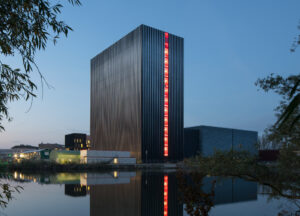
    Yet a recent exhibition at Roka in Imperial Wharf showed that this isn’t the case. In actual fact, the need to store data has created a new and varied architecture. Facts which at first seem like they might belong to the ether – such as the fact that Google processes around 5.6 billion search requests per day – turn out to have ramifications in the real world around of us.

    Sometimes data centres are housed in our midst in sheds and buildings – in precisely the sort of non-descript architecture you’d expect. But sometimes they are in the world around of us – for instance, in the former department store Macy’s. This fact alone might be taken as an emblem of the way our world is going: people used to go to this place physically to buy clothes, but now it is a place committed to housing the data by which we can do so online.

    Meanwhile, former print works in Chicago, which used to produce Sears Catalogues and Yellow Pages, is now the Lakeside Technology Centre. In these instances, it can be surprising to find that the usage of a building has changed right before our eyes. The sense is then not so much of the pace of change, but of its surreptitiousness, even its secrecy.

    This new architecture can also surprise by being housed underground as is the case at Pioenen Bunker in Sweden, which formerly hosted Wikileaks and can only be accessed deep below 30 metres of granite. But if data lies beneath our feet, it also now inhabits the skies: in 2016, NASA created the New Solar System Internet to communicate with its Voyager and Mars rovers. It’s the first space-based data centre – another sign of the times.

    But if one looks at the question of the energy it takes to create the architecture which houses our data then you realise that it is in a head-on collision with the question of climate change. Put simply, these places have gigantic carbon footprints. Some architects have come up with renewable solutions. Lefdal Mine Centre, for instance, is 85 feet underground and surrounded by solid limestone. It is 100 per cent renewable and is cooled by water from nearby fjords.

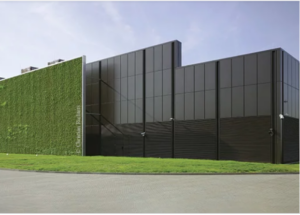
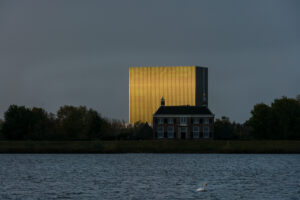
    But often in these designs, we find a knowing juxtaposition between the sheer amount of energy used to fuel our online lifestyles and prevailing climate anxiety. At Gak Chuncheon in China, trees planted on the roof reduce the amount of electricity used for air conditioning, as well as blocking the glare of the summer sun, protecting the site from heat island effect. At AM4 Equinix in Amsterdam, a moat intervenes between the public and the enormous data centre to take into account public awareness of the amount of energy these buildings use.

    This is how the world changes – almost imperceptibly, and never without anxiety or regret. It would be tempting to say that the buildings in this essay represent our future, and perhaps they do to some extent. But really they represent something much more complicated: our restless, ambitious present.


    Aecom

    AM4 Equanix


    AM4 Equanix

    Arup


    Benthem Crowell


    Amazon Tallaght Aerial Thermographic

    Belvedere Data Centre, London


  • Special report: Tim Fitzgerald’s deep dive into the personal assistant sector

    Tim Fitzgerald


    My LinkedIn bio and Masterclass website blurb says…


    For 20 years, I have been assisting successful and busy HNW individuals and families as a private assistant.


    I represent those who need highly experienced and flexible support – someone to represent them confidently, discretely, and efficiently in all matters relating to their private lives.


    To my principal(s), I am a personal Swiss Army knife.


    I have been featured in The Financial Times, I am consistently approached for the top PA roles, and I am considered one of the best in the market.


    All the while, being part of an industry that is only 4% male.


    Sounds pretty good, right?  What is doesn’t say it that I fell into the industry by fluke – and that I blagged and bullshitted my way into one of the most high-profile roles in London at one point. It doesn’t say how A/B testing various approaches to things like job applications, CV structure, and interview techniques eventually resulted in success. Nor does it say how personal development and private study led me to some of the winning formulas and ideas that are now part of the one-to-one courses I give to aspiring assistants, 2nd jobbers, and the experienced PA’s and EA’s out there..


    Would you like to know how I did it?…. One word: Mindset.


    In my first interview as a PA I only asked one question at the end; more for clarity than anything else. “So, you tell me what you want, I go do it, you’re happy and you pay me for doing that. That’s it?!”.  It sounded too good to be true. What I didn’t understand back then is that it can be a nightmare on multiple levels for some people. Many people get stuck on the question of: ‘What if’.  What if I can do it?! What if I can’t find it?! What if I can’t arrange it?!  But to me that was easy-peasy.  My mindset was already in a place: I believe there is a way around everything.


    In that first job, it was made clear to me by my principal that, “it is not about you, it’s about me”.  I made her laugh when I replied, “I grew up in an all-female household, so I’m used to being a second class citizen”.  That was partly a joke, but there was also truth to it. I was already accustomed to not being the centre of attention in a house of two older sisters. The mindset was already there. What I had to learn was the actual job.


    I should have been fired at least once a month in that job, but I was fortunate that my principal wanted to mould her PA. She wanted it done in her way. Fast forward ten more years and two more principals and I thought I knew it all.  I did not. But what I took with me into new roles was the starting point of ‘it’s not about me’. That gave me the chance to study the new Principal and find out how to perform. It wasn’t about my ego and who I was. That would’ve only got in the way. I learned to focus on them and to figure out the rest out as I went.


    After 21 years in the sector, I can now be found working for a lovely family and using all of my know-how and every single one of my skills to make sure they have smooth sailing in their lives.


    The Job Itself


    Wikipedia:  A personal assistant, also referred to as personal aide or personal secretary, is a job title describing a person who assists a specific person with their daily business or personal tasks


    I agree.  That is what a personal assistant does. What it doesn’t tell you is who a personal assistant is, or what makes you succeed or fail as one. It also doesn’t tell you which innate abilities lead to doing the job well, or which character traits translate into being a PA. Finally, it doesn’t tell you what mindset is required to perform at the top level and earn the top money.


    What I discovered in just three short phone calls over the course of a weekend at the end of Summer ’21, changed not only my understanding of the sector but what it was most definitely lacking.


    ThePAmasterclass.com  


    I was messaged by three contacts of mine asking for help with various arrangements.  These were highly successful people within their respective industries, all with their own assistants.  Why on earth did they have to ask me for help?  This was especially odd as what they needed in each instance was easily accomplished. Clearly, they didn’t feel their own assistants were capable.


    Out of a sense of frustration I jumped onto LinkedIn on the Monday morning and told everyone that I was going to upgrade anyone who wanted it. I would lift the veil, and tell the truth, and hand over all the tips and tricks of my trade, and instil a new way of thinking.  I would launch a closed-door Masterclass for 20 people with one of London’s leading personal assistants.


    72 hours later I was sold out! This was a surprise. I didn’t have a website, venue, or even talking points. I spent the next week building a shoddy site, putting together a curriculum, and begging for venue space among my contacts.


    What I anticipated being a four-hour session turned into eight hours. I thought it would just be listening ears, but the day turned into a deep dive workshop and lengthy Q&A. Each attendee had their own needs and wants.  I realised that there was no one-size-fits-all formula for upgrading an executive assistant / personal assistant. That then became the first and last group Masterclass.


    I have since moved to one-on-one sessions where I cater to exactly the areas the pupil wishes to focus on or needs the most. I have FaceTime and IRL sessions with self-funding individuals, have been booked by employers wanting a tailor-made session for their existing assistant (minus the ‘job hunting’ part of the curriculum).  I have conducted group sessions for a company’s team of assistants with a focus on mindset. I have also become part of an HR onboarding package for new assistants joining the firm; it is a way to iron out any creases and make sure assistants are at their best in their first week.


    Whether corporate or private bookings, my intention has stayed the same; to not only provide valuable an abundant content but also the opportunity to benefit from my support and advice after the Masterclass.


    The Sector as a Whole


    There a two main job titles that ultimately make up the industry.


    An Executive Assistant is someone who typically supports in a business capacity in a 9-5 office environment.  The role involves diary management, travel arrangements, expense reconciliation, call handling, and some light personal arrangements.  It tends to attract those who have an interest in business to some degree and who like structure and a team or office environment.


    A Personal Assistant is a broad term but typically revolves around the lifestyle and personal requirements of the principal. No two days are ever the same; just as no two days are ever the same for anyone’s personal life. Social, travel, family, extended family, medical, household, and research and procurement can be just some of the items that feature in the assistant’s day. Those who do well in this role enjoy being of help and have a genuine love of variety.


    The support sector is large.  According to a longstanding and well-known recruitment agency, 18,000 people are new to the sector each year.  The average personal assistant salary in London is £37,134. This is 24.6 per cent more than the average national salary for personal assistant jobs. Personal assistant jobs in London have gone up 37.7 per cent year-on-year as have the job vacancies. As of writing, there are currently 6,236 London personal assistant vacancies.


    By comparison, executive assistant salary average is only slightly higher at £38,704.  Vacancies in London however have only gone up 1.0 per cent year-on-year. As of writing, there are 1,588 London executive assistant jobs. This would go to suggest that there is a growing demand for personal assistants and that the pandemic affected the number of EA’s required in office spaces. Maybe.


    The top executive assistants in London can earn £70,000 pa and a top earning personal assistant can pull £85,000 pa.  With longevity and generous employers, these roles can see six-figures when bonuses are factored in.


    Who’s Hiring?


    With the advent of the remote working Virtual Assistant, even relatively low earners can get business or personal support of some kind.  I have seen all walks of life advertise for an assistant. Old money, new money, celebrities (from A-D), foreign wealth, new to London, occasional visitors, relocators, musicians, authors, start-up entrepreneurs, overwhelmed single parents, the list goes on. In general, it is the overwhelmed who seek private support.


    The Future of the Sector


    10 years ago, before Open Table or Seven Rooms, to get a seat at a top London eatery took connections and savvy.  Equally, the reservations desk needed to be diary magicians to fit all the VIPs in. Now, and even more so since the pandemic, these apps are not only the interface for the diner but also for the restaurant. The availability you see, is what they see.


    My point? I don’t see a time when the principal will login to something in order to make all the arrangements they need when they can pick up the phone to someone who knows them personally; who knows what they like and how they like it done. Only so much can be done by the principal themselves before the overload happens again.


    In short, the assistant isn’t going anywhere.  It doesn’t matter who is reading this – if I gave you me for the day, I would be rushed off my feet with all the to-do’s you have in your life.  Wealth or success just adds to the list.


    What’s next?


    I am writing a guidebook based on my sessions of The PA Masterclass.  It distils the curriculum into the essential information to help those who are considering the industry or getting back into it after time away.  It’s also geared to help the move from 1st to 2nd job.


    Unfortunately, I can’t see everyone who requests the Masterclass as I’m in a live role and short on spare time.  Also, not everyone can afford the Masterclass but I want to be able to give advice to anyone who needs it in whichever way I can.


  • An interview with HR professor Chris Brewster: “Dealing with people is an attractive option”

    Patrick Crowder

    Professor Chris Brewster, who teaches International Human Resource Management at Henley Business School, believes that there are no universal truths in Human Resources Management, and that one-size-fits-all solutions are often detrimental in the industry. He specialises in the changing world of work and teaches his students to be versatile. We asked him what he thinks about the leading theories in HRM, and what the key is to managing people successfully.

    “I have a friend who says that every new idea that’s ever come up about human resources management he can already find on his bookshelves if he looks at Plato or Aristotle or St. Augustine or Machiavelli. Lots of these guys have said a lot of things much better. And there’s a reason for that, which is that basically people haven’t changed over the last several thousand years,” Brewster says. “And it seems to me that basically, if you treat people properly in the way that you think they would like to be treated, you’ll get a better result than if you treat them just as digits or artefacts.”

    A variety of factors can affect the strategy which must be taken when managing people – this can have to do with the country you’re working in, the size of the company, and which sector you’re in. Brewster explains the hierarchy of these differences.

    “The most important thing is country. No matter which country you’re in, you have to follow the laws and the expectations of that country, and they vary pretty considerably. The second thing is size. Because obviously, if you’re running a small mom and pop corner shop with three people, you don’t manage it in the same way as if you’ve got 3000 people, that would be pretty crazy. So size actually makes a big difference. And that’s very important because most of what we know from the academics and from the consultancies and so on comes from large, well-funded companies with HR departments and things like that,” Brewster says.

    So what’s the outlook for those who study HR at university or at a business school? “Most people who are doing HR courses are probably going to end up in fairly small to medium-sized businesses, so they’re not going to be able to do what they’ve been told the big companies are doing.”

    Are there any other distinctions? “Thirdly, of course, there is a difference between managing people in the public sector or the private sector. There’s a difference between managing people in, let’s say, an office cleaning business and managing people in a laboratory. For example, there’s a big thing at the moment about big data and using fantastic algorithms to show where your most and least productive people are. If you’re running a small cafe somewhere, that really is not going to be a help to you, is it? So it’s a case, I think, of getting some kind of perspective on these things.”

    Many people are under the impression that human resource managers have a lot of power within a company to make changes and to optimise productivity, but Brewster says that the idea of human resource managers as all powerful is a misconception. Oftentimes, decisions about how to manage people will come down to line managers or other officers, so it is important for human resource managers to not overestimate their power and promise undeliverable items.

    “I’ve got some good stories where firms got taken over and the HR director was given a series of promises, and in good faith made these promises to the workforce, and then those promises were just blown out of the water after the merger took place. So I think you’ve got to understand the power situation that you’re in. Human Resource Management departments can be influential departments, but they’re never really going to be powerful departments,” Brewster explains. “The powerful departments are going to be the ones that control the money. There’s a task there for us to think about – how do we influence people? How do we understand what our influence and our power position is? How do we influence people to get a bit more power? There’s a lot of sort of loose talk by consultants about making the HR department more powerful and more strategic and so on.”

    Oftentimes, human resources officers are seen as unnecessarily bureaucratic, existing only to protect a company from liability and weed out the unproductive. The views that Murray expressed in his Telegraph piece are an example of an opinion which has floated around about HR for decades. We put this opinion to Brewster, who was keen to point out the difference between human resources and human resource management, and also to highlight the fact that just because a job is sometimes unpleasant does not mean that it is unnecessary.

    “Human resource management is used in two ways, and we have a problem because people don’t distinguish those two ways. I would argue that all organisations manage their people: you have to do that. It’s one of the things like managing your markets, your money, and your equipment, that all businesses have to do. But that’s not necessarily the same as the human resource management department. And I think a lot of people fairly casually talk about human resource management, when what they’re actually talking about is what the HR department does, rather than how the business manages its people,” Brewster argues. “And I think that’s one of the concerns – we have to be clear about what the HR department does. And at that level, yes, at universities for example HR departments are very concerned with making sure you’ve filled in the forms. I’m going to New York for a conference in May and I’ve got to fill in all sorts of forms about insurance and about health and safety. And only then can I actually book the flight – and I can’t book the flight myself, I have to book it through the HR department’s system. All of this is designed, of course, to make sure nothing bad happens to me. But it does look a lot like cop work, stopping me doing what I want to do until I’ve filled in all the forms. It’s a necessary task, but it’s not an exciting one, you know?”

    Despite the view of HR as bureaucratic and dry, there are many people who want to be human resource managers and are genuinely excited about human resources. We asked Brewster why he has a passion for HR. The industry is much more than filling in forms and ticking boxes – and as he explains, even the duller side of the profession is essential to the function of a business.

    “Lots and lots of people aspire to be human resource managers, and I think partly that’s because for a lot of individuals dealing with people is a more attractive option than dealing with numbers or dealing with bits of machinery or whatever. It’s a question of weighing these things up. There are parts of the human resource management function which are genuinely gratifying. I mean, I’ve been involved in things like training and so on myself, when you can actually see people grow in front of you, and that’s really good to do. But there’s a lot of other stuff that has to be done as well. I guess that’s the same for pretty much every job, and it’s about being careful not to oversell one thing at the expense of the other. There are good things and bad things about almost every job,” Brewster says. “These people who say, oh, let’s get rid of the HR department, it’s just a drag – you go ‘well, so who’s going to do those things?’ I mean, you can’t just let people do whatever they want. Firms can’t afford to keep breaking the law, for example, or to keep upsetting trade unions,. Somebody needs to look after that kind of stuff. If there are huge problems at work between individuals, it really helps to have somebody neutral who can actually look at that and deal with the problem.”

    Above all, Brewster teaches students how to be adaptable, which is an essential trait in HR considering the wide range of differences in the profession we’ve already discussed. We asked him what his number one piece of advice would be for someone looking to break into the world of HR, and more generally, how to succeed in an ever-changing world.

    “Look on everything as a learning opportunity,” Brewster says, “Try and learn as much about the business as you can. Try and learn as much about everybody as you can. Try and learn from your colleagues and your friends. There’s lots and lots of learning opportunities in every job, and the more we think of each job, not so much as an end result, or something we’ve got to plough through, but as a learning opportunity, the better. You’ll get better results both now and in the future.”

  • The University Arms, Cambridge: “Grand but not oppressive”

    The University Arms, Cambridge: “Grand but not oppressive”

    George Achebe visits the University Arms in Cambridge and finds a hotel ready to thrive post-pandemic

    Whenever I go to Cambridge, I feel as those who didn’t go there tend to do – that I should have done so. The missed privileges amass about ten minutes from the station: here, Watson and Crick cracked DNA; here’s where Milton might have sat, or Marlowe got into a brawl, or Wordsworth had a thought or two; here are the streets where, in his twilight years, Stephen Hawking used to be seen, motoring in his wheelchair, a symbol of what’s possible for the human mind.

    It’s a city of ghosts in other words – but clever and consequential ones. The initial impression is that whatever else might be going on the world, Cambridge will continue on its intellectual way, helping us understand the world better. And it does all that while being beautiful.  

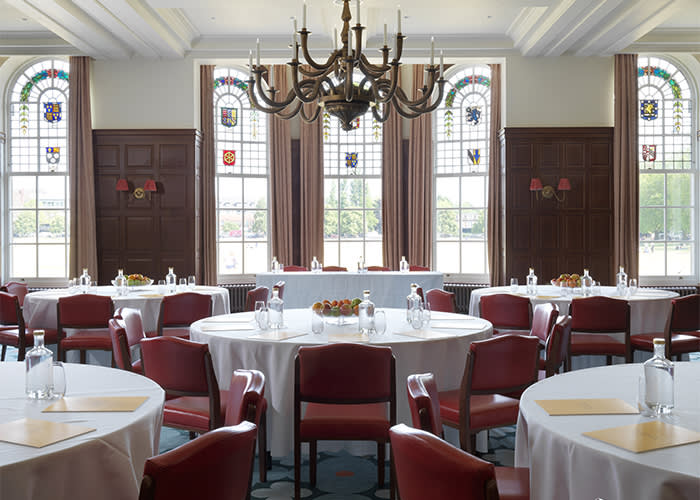
    The ballroom at The University Arms. Now a venue for literary lunches.

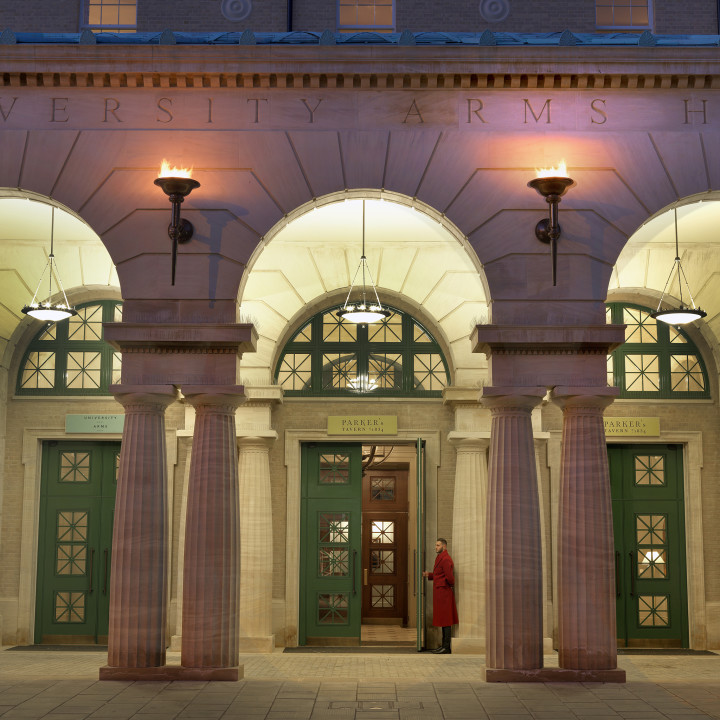
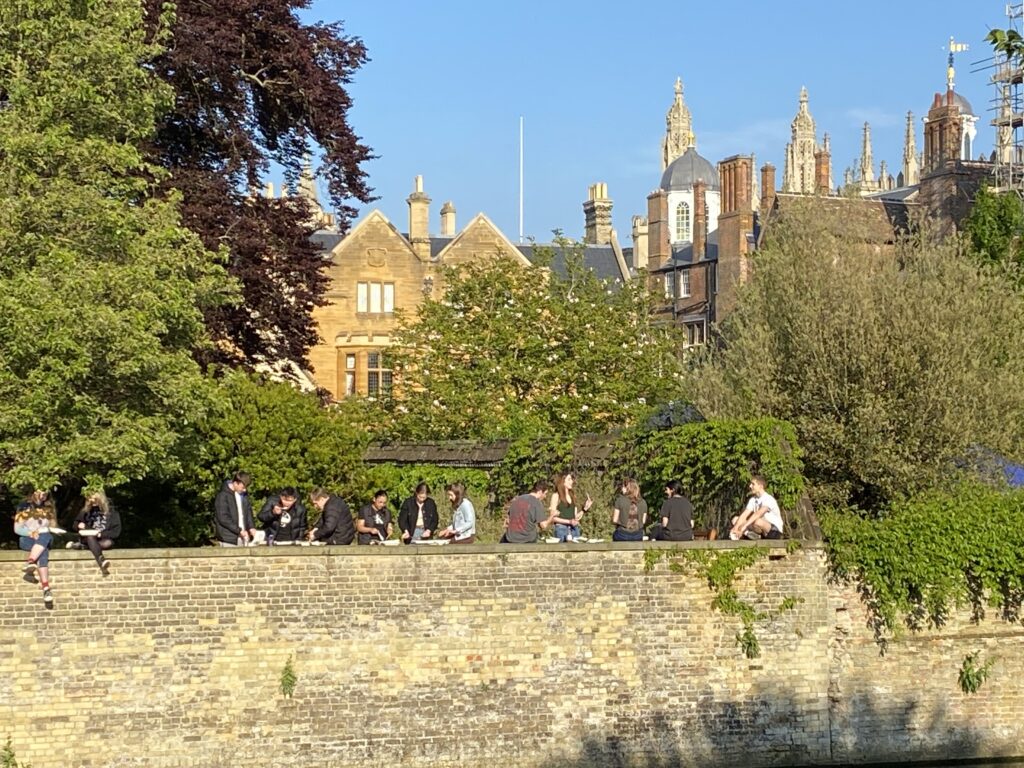
    The University Arms has a good claim to be the best hotel in town – a stone’s throw from the Tudor and medieval architecture, and a short walk from the Cam too, where students still punt the summer afternoons away, as if this were an Evelyn Waugh novel. King’s College, with its marvellous ceiling of perpendicular Gothic, would be worth coming here for, even if there was nothing else to see at all. 

    The hotel has a grand but not oppressive feel. The rooms on the top floor are spacious, and have relevant books by past luminaries. The views over Parker’s Piece show a wedge of grass where students mill and loll, and look reluctant – especially on a gorgeous summer’s day – ever to let any day end. When I return from dinner, I find many hanging on in the dark, peeling away only when the very last light has departed.

    Cambridge has made a supreme contribution to world history – and done so while remaining beautiful.

    Work-wise, Cambridge is already far more than the satellite of London it used to be; in fact it’s regularly found to be the UK’s fastest growing economy, and benefits from industrial parks which house global leaders in wireless technology, display technology, and mobile telecommunications.

    And the city knows it. I attend an interesting dinner and find myself sat next to BBC Cambridge presenter Chris Mann, whose every syllable of talk breathes a love of the area. ‘Everybody here is on TV – a lot of the TV executives either went to the colleges or else they come here in honorary positions of academia,’ he explains.

    A case in point is Tristan Welch, who heads the offering at Parker’s Tavern, and who cooks us a mean Spaghetti Bolognese – he is now the beneficiary of various TV deals, although he gives no indication of its having gone to his head. ‘He’s quite famous now, but he’ll be a lot more famous soon when Cooking with the Stars airs,’ Mann explains. 

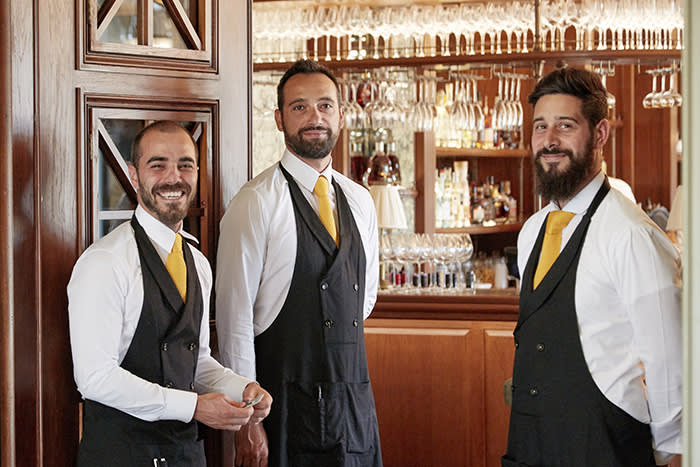
    The staff at Parker’s Tavern.

    This trend for celebrity continues beyond the walls of the University Arms. When I mention the need to bring home a gift to my family, Mann directs me to Fitzbillies in Cambridge, world famous for its Chelsea buns. Its owners Tim Hayward and Alison Wright are also television personalities. Fitzbillies, founded around 100 years ago, was nearing closure a few years back, when this predicament was tweeted into submission by Stephen Fry, that other Cambridge alumnus. The place stayed open. Today, the buns, soaked in maple syrup, are indeed memorably delicious. 

    But Cambridge isn’t only about the university. The longer you spend there, the more you sense another life – perhaps a truer – weaving in and out of the streets. It might be an intellectual city and one which is experiencing its own tech boom, but there’s also poverty here, and not a single Conservative councillor on the City council. So that as a visitor, there’s the sense that you’re not seeing the whole story. 

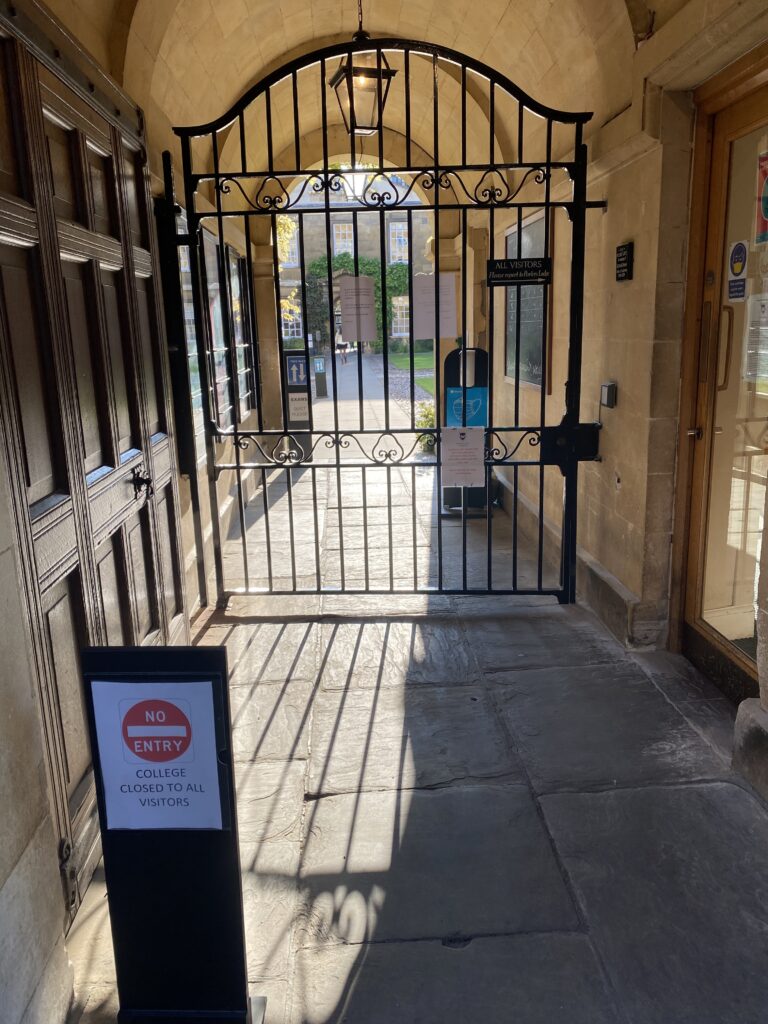
    Sometimes in Cambridge the visitor has a sense of being barred from the action

    While the university is there, as an energy to be drawn from, it is also continually shutting you out. There is, for instance, an increased number of Do Not Enter signs barring you from the culture of the place; it used to be easier to walk in and see the splendid gardens behind King’s, or Pembroke, always one of the loveliest colleges. 

    But as a visitor it all feels so forgivable – a feeling which in itself probably perpetuates the inequality. But what Florence is to Italy, Cambridge is to the UK – a place where nostalgia is permitted free rein, and where the mood is aspirational in the highest sense: it makes you want to be a world-historical figure immediately.

    It has an astonishing amount for a little town. The art collections at the Fitzwilliam Museum are richer than one expects one has a right to, even here. There’s a renovation taking place in one of the impressionist rooms but still there’s a superb selection of Renoir, Monet, Degas and Cezanne. The Renaissance rooms house Titian, Brueghel and others. 

    Meanwhile, Kettle’s Yard, the house of Jim Ede, always one of the best art experiences in the world, has renovated itself recently – bringing more jobs with it. 

    So yes, although the visitor will likely think they should have gone to Cambridge for their degree, there’s considerable solace to be found in the next best thing: going there at all. 

    https://universityarms.com/

    https://parkerstavern.com