Author: admin

  • 2022 Highlights: New Finito Head of Admissions Georgina Badine on what makes a good mentor

    Patrick Crowder


    At Finito, we continue to believe that effective mentoring is the one thing which can really make a difference to someone’s life chances. One of the joys of the work the organisation does is to receive testimonials after an assignment. In these we see the numerous ways – both big and small – in which one-to-one mentoring can alter lives.

    But it’s also an interesting question as to how mentors are made. What is it which inspires people to give back? And how do we at Finito make sure our service adds value to every mentee which comes through our doors?

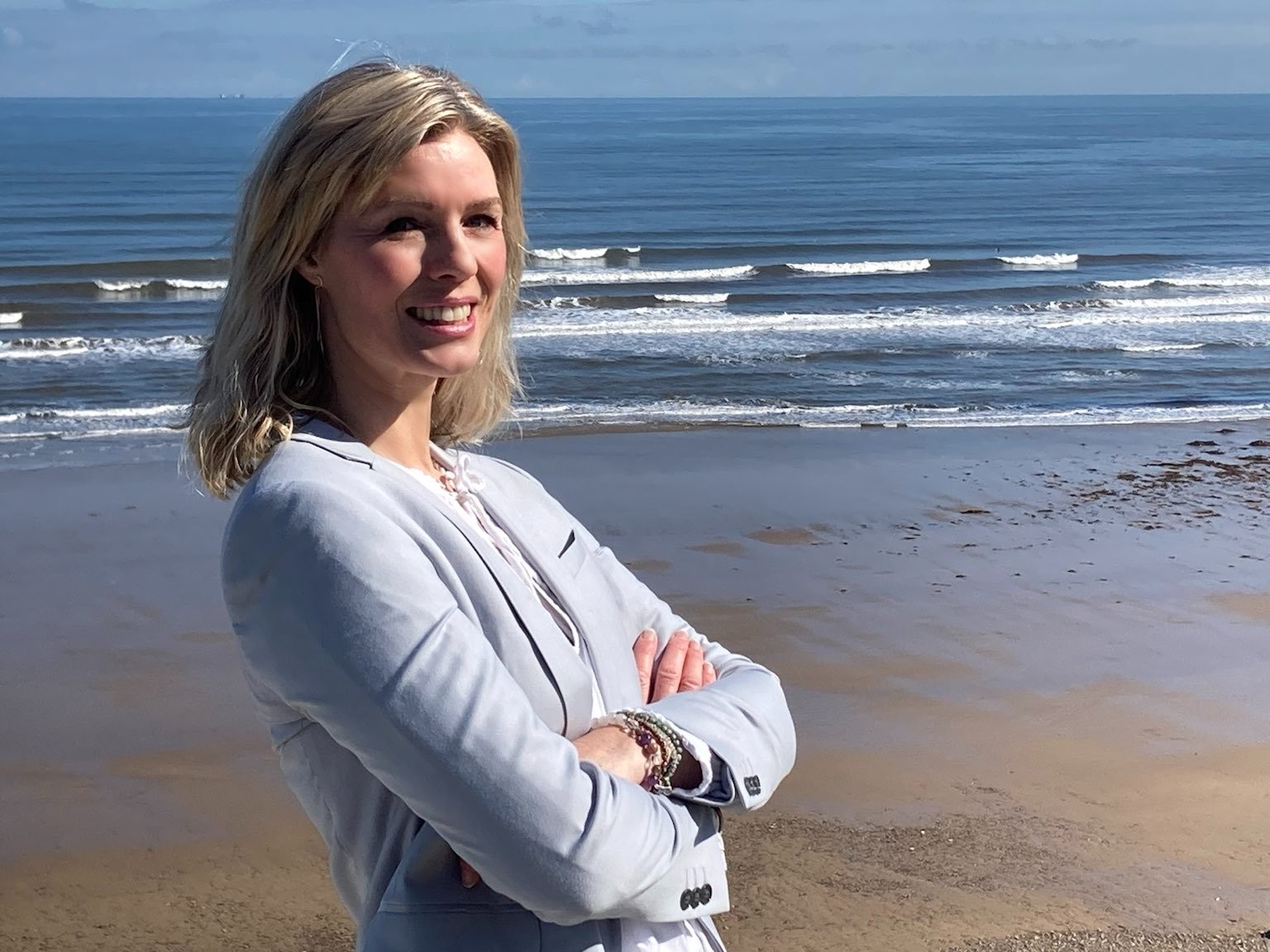
    Georgina Badine has just been appointed Finito’s new Head of Admissions. She will be responsible for recruiting new mentees and guiding them through their journey towards employment and a fulfilling career. She oozes passion about her new role and is passionate about driving up student intake, and helping to manage the journeys of Finito candidates.

    Badine has had a fascinating and varied career, with extensive experience in finance at Barclays, and then in business, recently setting up boutique commercial property business Treio, which recently paired with Finito World. Georgina has the knowledge and network to guide Finito mentees to success. But even before assuming the role, she had already proved herself a skilled mentor, having tutored students and adults from all walks of life in both French and English.

    Ronel Lehmann, Chief Executive of Finito Education Limited, welcomed the appointment, and referred to Badine’s recent client relationship with the business: “We are fortunate that a former client of Finito was so impressed with the work that we do that she immediately wanted to join us. As with all our student and career change mentoring candidates, we always help to make things happen.”

    So how did Badine become interested in mentoring? “My passion for mentorship started when I was in school,” Badine recalls. “I was a member of the National Honor Society and, within that, you would be expected to mentor and tutor other students. I got involved and I saw that I really enjoyed it, and then I started helping my friends and children of friends with different issues.”

    It is this passion which marks out a mentor: very often Finito mentors will have been doing their own mentoring, sometimes as a kind of private volunteering, before they join us. Recent testimonials show that Badine’s mentoring can be truly transformative.

    One mentee, Matthias Alvarado-Schunemann, tells us: “I have been mentored by Georgina from Finito for about six months now. Having her as a mentor has helped my confidence greatly as I prepare for the next chapter of my education with university. She helped me to write a well-presented personal statement for university as well as practicing my interview skills by doing various mock sessions. Her mentoring helped me decide which course I wanted to study and how to best articulate this to the various universities I decided to apply to.”

    Badine’s mentoring also has another focus: “I’m very passionate about helping people who are being bullied either at school or in the workplace, and I feel that nowadays, a lot of people might be afraid to speak up,” she continues.

    Some of what drives her, then, is personal experience: “I’ve also experienced quite a lot of adversity myself being a young woman in the finance world, when the treatment of women is often not what you would hope or expect. I know that I would have benefited from having a mentor to support me and stand up for me. I think too often people stay quiet if something is happening in the workplace or at school, and I think more needs to be done to help these people.”

    Badine’s new role will also involve public speaking and organising events for Finito mentees. When it comes to bolstering the Finito network and creating opportunities to learn from top-level speakers, Badine’s wheels are already turning.

    “I have quite a few ideas,” she says. “For example, I’m looking to organise an event within a restaurant, as I have a few connections in the hospitality space. It’s all about getting the word out about what we’re doing and inviting the right types of people to these events,” Badine continnues. “In addition to that, I am thinking about Geneva and Paris, where I have connections – as well as the US. Finito is a unique and trail-blazing organisation and I feel now is the time, with over 60 business mentors, for it to deepen its global ambition, like its magazine Finito World.”

    So what kind of events will Badine be running? “We’ll get engaging speakers to come in, and I’ll speak as well, but I’m also really interested in getting people who are being mentored to come. Candidates who are considering joining Finito will want to hear that side of things. My main plan is to organise events, meet with my network, and find the best way to spread the word about our mentorship.”

    Badine is also keen to stress that everybody is welcome in the Finito family. When a candidate comes to Finito for help, often they will have an idea of what it is they would like to do. However, Badine points out that this is also not always the case, and it’s certainly not a prerequisite. “We never turn a candidate away and we never let them go until we succeed,” she says.

    She also offers some closing advice for those about to enter the world of work: “It’s important to do various internships in different industries because I know what it’s like; I initially wanted to be a journalist. I was convinced that was what I wanted to do, and I did various internships, but when I found that internship in banking I was surprised by how much I enjoyed it. I saw a different side to it, and had I not done that internship I wouldn’t have realised what that side was,” Badine explains.

    Badine, then, brings a profound passion for mentorship, a global outlook, and a unique network to the business. She also illustrates the need for businesses to be dynamic coming into a period which few observers of the global economy expect to be plain sailing.

    But perhaps as much as any of these things, she brings compassion and empathy to her role. “It’s very difficult to know what you want to do when you’re 18, so I think getting different experiences is very important,” she explains. “I would also say that it’s not just about the firm you’re going to work for, it’s who you’re going to work for. Look at not just what you want to do, but who you want to learn from. It should be someone who inspires you, because having a good boss is very important.”

    https://www.finito.org.uk/management_team/georgina-badine/

     

  • 2022 Highlights: Computer says no – should we welcome AI in recruitment?

    2022 Highlights: Computer says no – should we welcome AI in recruitment?

    Georgia Heneage

    As unemployment soars and the market floods with an excess of applicants applying for a limited number of jobs, the recruitment process has become swamped. Amber Shrimpton, an HR consultant at Centrica energy, says the economic situation has sparked a “loose labour market where there are more people looking for jobs than employers offering them”.

    It seems, then, that the need for technology in the application process may be more important now than ever. The role which Artificial Intelligence plays in recruitment is expanding exponentially; machine learning allows companies to filter a large number of job applicants and vast amounts of data more quickly and efficiently, which is why conglomerate companies like McDonalds, JP Morgan and accountancy firm PWC are jumping on the trend.

    According to recruiters, the most time consuming part of hiring is the initial sifting through hundreds, sometimes thousands, of applicants. This is where AI steps in. Intelligence can sort through CVs, look for the right candidate and conduct first-stage interviews with them; they can perform background research on the candidate such as income, earnings and schooling.

    According to one report, 52% of talent acquisition leaders say the hardest part of recruitment is identifying the right candidates from a large applicant pool, so on the surface AI recruitment seems like an attractive alternative.

    But, like any rapidly growing technological phenomenon, the symptoms are not all positive. A BBC article yesterday revealed the ins and outs of this digitalised process and one jobseeker’s largely negative experience of being interviewed via an algorithm.

    That our future careers may be decided on the algorithmic whim of new AI recruitment software may strike anxious jobseekers as unwelcome: doing well in an interview has traditionally been reliant on human contact, such as a firm handshake or good eye contact, and the automated nature of this process has frightened off even the most tech-savvy of companies- like Amazon, who scrapped their artificial hiring tool back in 2016 because of bias against female candidates.

    But the role that AI plays in the job process doesn’t always have to be so invasive: technology plays a large part in just assisting online job searchers, such as with ‘Chatbots’ or automated replies to applicants inquiring online about a job. Technology can also play an important role in recruiters matching applicants to the right job by using data to match applicants’ skill sets and interests with the right role.

    What’s more, the science has progressed since Amazon’s decision to ditch its hiring tool in 2016: many specialists consider automated recruitment tools to actually be a more diverse approach to hiring than humans, who have unavoidable internal (or external) bias.

    A report from IBM Smarter Workforce Institute showed the impact AI can have on remedying the systemic inequalities in the workplace by diversifying the recruitment process; machine learning can choose the right candidate for the job regardless of sexual orientation, ethnicity or background, and can help to eliminate the massive role which nepotism currently plays in the majority of job applications.

    One report even found that the gendered language of jobs ads can exclude female applicants and “maintain gender inequality in traditionally male-dominated occupations”. So data-driven, standardised language may be crucial in adopting non-partisan advertising language in order to make the job market a more level playing-field for men and women.

  • 2022 Highlights: Second Shot Coffee founder Julius Ibrahim on homelessness and entrepreneurship

    Julius Ibrahim


    Julius Ibrahim, founder of Second Shot Coffee, discusses homelessness, leadership, and finding solutions.

    When I was 16, before I started university, I was part of a leadership academy which included a two-day residential course where you learn all about problem solving techniques, local group exercises, trust exercises, and team building – it was amazing. One day I was sitting down at breakfast with a mentor, who was from Future Foundations, and he told me about the amazing things that he was doing at Enactus KCL to tackle knife crime in London. That talk left me so inspired, and it sent me on this journey.

    When I joined my Enactus team it was day one of freshers so I was super excited, and I was lucky enough to join immediately as a project leader of a consultancy project where we were helping a local community centre restructure to enable them to become financially resilient and continue all of the amazing things that they were doing. Thankfully, within a few months, we were able to turn them around. Straight away from there, I became team president. In that role I was facilitating impact, so I was advising team leaders, and doing that kind of work more than being actively involved in the day to day running of the projects. Sometimes I found it super frustrating because I wasn’t involved in the actual day to day activities, and we had so many projects that I wanted to have a handle on, but I wasn’t quite able to. For me, it was always a priority for myself and my team to have an impact within homelessness. We had a few projects that didn’t quite reach our desired impact level, so I decided to take it upon myself to see what kind of solution I could come up with.

    I am of the belief that whatever solution you’re coming up with, whatever social enterprise you want to launch, you personally have to be able to execute it. It doesn’t matter how innovative or revolutionary it is if you can’t personally put it up, so place your strengths. For me, I’ve always loved hospitality. I worked in restaurants from the ages of 12 to 17, and I was that kid at school who would bake cookies and brownies to sell. I was also the head chef at a street food place when I was at university, so I felt comfortable that I could launch something in the hospitality space and make it successful. While going through the planning process, I realised that I could open a coffee shop which retrained and employed people affected by homelessness, and that idea became Second Shot Coffee.

    There is no such thing as a homeless person, only people who are experiencing homelessness, and it can happen to so many of us at different points in our lives. Victor was 51 years old when, five days after moving to London, he found himself alone sleeping on the street. He didn’t have great English skills, and he was one of those people stuck in that unenviable position of isolation. He was homeless. But what Victor did have was an unrelenting belief that he could really improve his life, and that he deserved better than what life had given him so far. Victor was someone with an incredible work ethic, a super warm personality, determination, and perseverance. He was able to find temporary housing, and then he found Second Shot. When he started working with us, he stopped being all these negative things in other people’s eyes. He became a barista. He became a hub of his community, a person that people could look forward to seeing and sharing a conversation with every single morning.

    Our concept, and the concept of our logo is that we’re trying to help people who are on one path get to a higher, more prosperous path. But there’s always this overlap between when one journey ends and another begins. It’s up to you to decide how you want the next phase of that journey to kind of pan out.  Whether you’re working on projects now, thinking about launching a social enterprise, or working in an industry, you must know how to place your strengths, trust the process, show your resilience, and know that you can create amazing things and create an amazing impact.

    Julius Ibrahim speaking to Enactus students at the ExCel Centre, London

  • 2022 Highlights: Finito event Report – Chair of the Education Select Committee Robert Halfon MP at the East India Club

    The much-loved Conservative MP discussed the issues facing education in the country covering everything from the legacy of Covid to the skills deficit

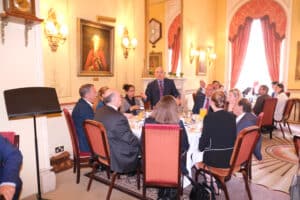
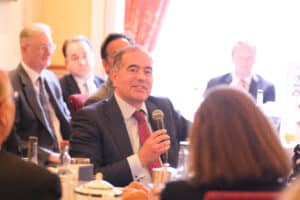
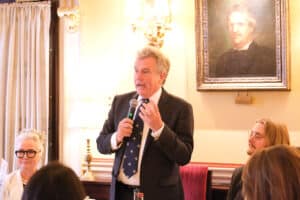
    Finito friends and mentors were treated to breakfast at the East India Club and a morning talk by Conservative MP for Harlow, Robert Halfon. As the current Chair of the Education Select Committee, Halfon is always in a perfect position to discuss the best way to help young people looking forward. He has so far used his role to promote the importance of apprenticeships, and has often had some frank criticisms of Russell Group universities.

    The finely decorated room made a suitable place for discussion, with its intricate moulding which frames ceiling and floor, and historic portraits dating back to the club’s foundation in 1849. Those in attendance included Finito CEO Ronel Lehmann, Baron Gold of Westcliff-on-Sea, Myles Stacey, the Special Advisor to the Prime Minister, Professor of Social Mobility at Exeter University Lee Elliot-Major, Chair of Capital Economics Roger Bootle, and numerous other high-profile business and thought leaders.

    Finito Education welcome Robert Halfon, MP, Chair of the Education Select Committee, as a special guest of honour at a Finito business breakfast at The East India Club, St James, London. 29.6.2022 Photographer Sam Pearce

    Amidst a turbulent time for national politics, Halfon  accepted the gravity of the cost of living crisis affecting so many across the country. “One of the reasons why there’s so much anger is because of the cost of living,” Halfon explained. “The Chancellor of the Exchequer [at the time of the event the position was held by Rishi Sunak] has just spent £37 billion in terms of energy rebates and is providing up to £1,200 to 8 million vulnerable families. But the fact is people are struggling to  afford to pay £2000 to £3000 on energy, even with the rebates. They can’t afford to drive to work. And that is the reality for millions of our countrymen and women.

    Halfon was speaking not just as Chair of the Education Select Committee, but also as the popular MP for Harlow, and he repeatedly turned the conversation back to the issues facing his constituents. Though Halfon has often been tipped for frontline politics, and has launched numerous successful campaigns during his time in Westminster, the prevailing sense was of a man who has never forgotten the constituents and their concerns.

    Halfon continued: “The second issue we face is that there is a view that government isn’t working. I mean you try to get a GP appointment, it’s virtually impossible. You try and get a passport. A constituent of mine paid £150 for a fast-track passport. They were told on the day before that they couldn’t get it, and they were told to refresh the website all the time as if they were trying to book an Ed Sheeran concert.”


    Halfon spoke here not so much as a critic of the government but as a supportive voice who realises that all administrations are incomplete and that there is always more to do to support people who need that help. It was in this spirit that he raised an issue which has been close to his heart throughout his parliamentary career: “The fourth and final thing is social justice. Now I’m a conservative, I believe in the free market – and, of course, I believe in capitalism. But we haven’t mentioned the term ‘social justice’ as a party for quite a long time.”

    Again, Halfon’s remarks were measured and he took the opportunity to give balance to his remarks: “The government does some very important things, most of which the public don’t know about, such as individual measures to help with domestic violence and to help troubled families – but we need to put forward a coherent narrative.”

    Halfon argued that a major part of the social justice issue begins with education, and he continues to argue that Covid has damaged education at all levels greatly. He spoke movingly too about the role of chairing the Education Select Committee, one which he obviously relishes. “This is the best job I’ve ever had because I am privileged to hold a platform where I can effect real change for our children ,” he explained.

    So what does he think needs to happen to ensure our young people are work-ready when the time comes? “We have three problems facing our education system. We’ve got the COVID deficit. I was passionately against school closures, and I campaigned against them from the beginning, day and night. I thought that it would destroy our children’s life chances, their mental health, their educational attainment, and create safeguarding hazards and that’s exactly what’s happened.”

    Halfon is an important voice partly because he has such integrity: he is always a considered and passionate voice. He continued: “And with the social justice deficit, disadvantaged groups are just not doing well in the education system, and we have this perennial problem of education-based skills deficits. To be fair to the government, they have been doing a lot of good things in terms of the lifetime skills guarantee, the reforms to the Covid Catch-Up programme (based upon the Education Committee’s report), but I think we need a real debate on our national curriculum and whether it is fit for purpose in preparing students for the future world of work and the fourth industrial revolution.”

    So what do we need to do? Halfon was clear: “It’s all about knowledge, knowledge, knowledge, and it should be about knowledge and skills. Why don’t we have a wider curriculum where we do a mixture of skills, knowledge, vocational and technical education all the way through, rather than just having the dividing line that we do at the moment? We’re doing an inquiry on that. So the Covid deficit, the skills deficit, and the social justice deficit. I would argue that those are real challenges facing education.”
    There followed a lively and passionate Q&A. Neil Carmichael, who sits on the Finito advisory board, and previously held Halfon’s post, congratulated his successor on the work he is doing as Chair of the Education Select Committee. Carmichael agreed that the issues set out by Halfon all exist but questioned why economic productivity was left off the list.

    Halfon responded: “The productivity answer for me is skills. And my first ever speech was about apprenticeships in the House of Commons in 2010. We need to do more – there are nine million adults in our country who are innumerate or illiterate. I mean, that is incredible. 6 million adults are not even qualified to level two. I do believe in the new Post-16 and Skills Act that has just passed, but we must change our curriculum, promote skills, and get more young people doing apprenticeships.”

    There was an audible intake of breath when Sarah Findlay-Cobb, the CEO of the Landau Forte Academy, mentioned that her heatings bills for her schools had rocketed from £150,000 to over £1 million in the past year. It was a vivid indicator of the seriousness of the cost of living crisis and Halfon movingly expressed his sympathies.

    This was a remarkable event which showed what can be achieved by a good-hearted man in Westminster. As Myles Stacey returned to Downing Street for his daily meeting with the then Prime Minister Boris Johnson he had much to relay.


    Read MP Robert Halfon’s take on poetry in the national curriculum here

  • 2022 Highlights: How the Finito Bursary scheme changed my life

    Tushar Kumar


    As I sat in the carriage of the train watching the Midlands countryside go by, I couldn’t believe how excited I was about my future. I had just spent the day having lunch as the guest of Finito Education in a private members’ club in London. Only a few months before, I could remember being anxious and worried about how my future would turn out.

    A year or so earlier I had been working hard at school. My A-levels of Biology, Physics and Chemistry were aimed at getting me into a career in medicine, but for numerous reasons that turned out not to be the case. As a student at the Landau Forte College in Derby I, along with a small handful of other Upper Sixth Form students, were asked to attend a briefing on Finito Education. It was there I met Andy Inman, one of the mentors from Finito. He was there to describe the service that they give in mentoring and networking on behalf of their clients and mentees. Normal clients of Finito have to pay for this significant advantage in life, and here we were in an inner-city school in central Derby being offered the opportunity to become the first bursary mentees of Finito.

    Knowing that it would be daft not to take the opportunity, I volunteered along with a number of my school friends and was later introduced to my first business mentor Robin Rose. He had been mentoring for many years, and he was very patient and kind while taking me through regular Zoom video call sessions explaining how recruitment would work as I left education. Robin set up a number of opportunities for me. However, because of distractions that I was facing at home I didn’t make the most of them. Sadly, one of my A-level grades meant that my aspirations for a career in Medicine were not going to happen, and floundering around a little I grasped the idea of becoming a pilot.

    Finito works with a broad network of mentors, and because of my pilot career suggestion I was handed back to Andy Inman who had briefed me and several of my school friends a few months beforehand. He had 30 years’ experience as a military pilot, and over the course of several Zoom sessions he opened my eyes to the possibilities of becoming a pilot while also being realistic about the harsh realities involved in getting there, both financially and in how long it would need my concerted effort. He introduced me to several people, from the Senior Instructor at a local airfield to newly qualified pilots working towards airline jobs. He also put me in touch with the head of the Royal Air Force pilot training system at RAF Brize Norton. I was amazed at the breadth of the network that Finito was able to introduce me to, and even more so by the time and effort that those I was introduced to were willing to spend on helping me.

    Tushar Kumar on the Finito Education Bursary Scheme

    “Finito took time to work out what was making me tick.”


    It was at this point that I really started to lose hope about what the future might hold for me. A serious medical condition as well as family disruption at home meant that I dropped out and stopped returning the calls from Andy. I remember the last message from him via WhatsApp saying he would give me some space for now, but the door would always remain open for getting back into the mentor scheme.

    After a few months my home life became more stable and I decided it was important to re-engage with Finito, so I contacted Andy and asked if it would be possible to start afresh. It was clear from his response that he was delighted I was coming back to the fold, and we started regular chats about how to progress things while I was applying to go to Nottingham University later in the coming year.

    Finito took time to work out what was making me tick. It was clear that I had an entrepreneurial spirit – a couple of years earlier I had made a successful business from selling sneakers online. I had a strong work ethic and Andy dug down into what I enjoyed, where my skills lay, and how that would fit into a future working career. I was shown how to craft emails to companies, how to conduct myself in an interview and how to best come across in a telephone call.

    At the same time, the wider Finito system kicked into action. I was introduced to a professional CV writer who helped me craft the most amazing CV, and I was invited to London to have my photo taken by a professional photographer to put on that CV, all as part of the bursary scheme.

    As part of that visit I was invited to lunch with Christopher Jackson, News Director at Finito, at the House of St Barnabas. The private members’ club is invested in creating a fair and equal society, but I was still nervous as I arrived. I remember looking at the door and thinking it was like something from Harry Potter. The interior certainly was; there were so many rooms it was like a maze, all with separate personalities and themes. I met Christopher in a lounge room near the garden. My hands were sweating, knowing this was another massive opportunity to gain knowledge and experience. We chose to start with lunch but only after he showed me around some of the different rooms.

    I remember walking into a room that looked like a church hall, another that was warm with colours and paintings, and the corridors were narrow and brimming with art.

    John Cahill

    “I will be forever grateful to The Stewarts Foundation, and in particular its Chairman John Cahill.”

    Everything was out of my norm – a peaceful professional environment that was not like anything I had experienced in my normal life in Derby. We arrived at the restaurant, a hall again adorned with art with polite guests and staff. Christopher asked me about my interests and where I see myself going with Finito. I was interested in his story too, and I learned about his experiences and work. After lunch Christopher walked me through the bustling streets of Central London back to the station. The weather was perfect, and as we walked and discussed more deeply each other’s stories, Christopher was drafting ideas in his head for experience placements for me. That day was more than just a trip to take photos. I was generously given the chance to see London, learn so many new things and create contacts with two lovely people at no personal expense – something that would never be possible without Finito.

    It was from that meeting that Christopher approached a contact within his network, Daniel Whomes, the Chairman of the Oyster Partnership, who organised an interview for me to join the company for some work experience in the Summer. Recruitment wasn’t a career that I knew anything about, but it was the experience
    and wider knowledge of the Finito mentors that married my salesmanship, entrepreneurial desires and my hard work ethic to the idea of becoming a recruitment consultant. Having just had the interview I’m delighted to report that I will be spending time with that company soon. The opportunities that I know this work experience will bring would not have been available to me without the help of the Finito Bursary scheme, and I will be forever grateful to The Stewarts Foundation, and in particular its Chairman John Cahill, for their financial contribution towards my work journey. I’m excited for what the future holds for me and will always know, wherever life takes me, that I received a life-changing opportunity just when I most needed it.

  • 2022 Highlights: Opinion – What does the business leader of the future look like?

    2022 Highlights: Opinion – What does the business leader of the future look like?

    By Bianca Robinson

    In my role as CEO of CEO Sleepout UK – a charity whose mission is to unite business leaders around a call to end homelessness for good, I see all kinds of leaders who want to make a difference, who want to see a fairer, more equitable society, and a kinder, more compassionate world. 

    They come to a CEO Sleepout for one night, sleeping out on the hard ground, braving the noise and cold at Lord’s Cricket Ground, or Emirates Old Trafford in Manchester, or St James Park in Newcastle (and many more venues across the UK) – and we unlock a deeper understanding of what it means for a person to be homeless.

    My message for each and every business leader or exec who takes part is that they have an immense power and the opportunity to use it to help create the world they want. They can choose to lead with purpose. 

    Leading with purpose means bringing your personal values, particularly those that relate to environmental and social responsibility to the heart of the organisation and embedding them with baked-in policies, procedures and activities that allow them to live and breathe through everything you do.

    This type of leadership – or stewardship – means you assume responsibility for your patch and to make sure that it leaves a robust and thriving footprint that enriches society rather than depletes it.

    So why is it so crucial that we see leaders with purpose emerging now? I always make a point of letting my business audiences know that it’s fantastic to enjoy the fruits of their hard work, blood, sweat and tears – and savour every success. But I ask them to challenge the definition of success: if success has come off the backs of low-paid workers, or at the expense of the environment, then can you really call it success?

    Leaders like Dan Price, the CEO who cut his pay by a million dollars so all workers could make at least $70,000 per year is one of a cohort of leaders demonstrating a collaborative version of success – success that returns value to a number of stakeholders: the workforce, the families of those workers, the community, society and the environment.

    Right now, we’re seeing a convergence of market forces conspiring to make a step-change in the way we do business. Of course we have the global climate emergency, but the pandemic has also highlighted the question of front line workers, who are traditionally the lowest paid, but are now more highly valued than ever before. We’re also seeing global growth rates peaking and AI on the cusp of obliterating a swathe of traditional jobs.

    All this is taking place as a new generation – the first to be digital native, comes to the fore. Young people born between 1995 and 2000 (Gen Z) make up 25 per cent of the workforce. They are natural problem-solvers. They are socially conscious and values-orientated having grown up with the world’s problems, causes, disruptions and social movements surging through their veins via the device at their fingertips.

    Coming of age during the global financial crisis of 2008, Gen Z has a healthy dose of scepticism when it comes to how businesses interact with society. They have higher expectations for the businesses they support and work for than any previous generation. 

    Gen Z is already spending and their spending power is growing rapidly:. They are looking for leaders who model honesty, accessibility, accountability and transparency. This means our leaders must use the power they have to rise to this opportunity. Young people are a vital market force driving a fairer, more equitable and more sustainable world.

  • 2022 Highlights: Essay – How did universities become a money-making industry?

    2022 Highlights: Essay – How did universities become a money-making industry?

    By Alice Wright

    The UK is home to a high concentration of world-leading universities. Our venerated institutions offer higher education qualifications from bachelor’s and master’s degrees to PhDs that are designed to equip the country with a skilled workforce as well as produce researchers to contribute to the advancement of academic knowledge and the betterment of society. 

    Yet the idea that students and staff at these establishments aren’t getting “a fair deal” is never far from the headlines. So when did the pursuit of higher education and academia become part of the industry-speak of cost-benefit analysis, and what might be the long-term ramifications? 

    On the surface the shift can largely be attributed to the introduction of tuition fees in 1998. Over the next two decades fees snowballed and now top £9,000 a year with maintenance grants largely converted into loans. 

    One increase after the Browne Review in 2010 led to large scale protests, some of which turned violent. Despite the unpopular nature of tuition fee policy, there are no signs that it will be reversed any time soon. 

    The commercialisation can be seen in how universities have become increasingly reliant on international students who pay much higher fees than their UK counterparts. In 2017−18, 14.4 per cent of undergraduate students and 35.8 per cent of postgraduate students were from outside the UK, according to a 2019 study from Universities UK

    In 2017−18, the total reported income of UK higher education institutions was £38.2 billion. £21.1 billion of this was related to teaching activities (fees and grants from government). Thus government sees universities as a prudent investment, even though government expects that only 25 per cent of current full-time undergraduates who take out loans will repay them in full, according to the Commons Library. The value of outstanding loans at the end of March 2020 reached £140 billion. The Government forecasts the value of outstanding loans to be around £560 billion by the middle of the century.  

    Continued government investment is in part down to the fact that the higher education sector has tangible benefits to the economy. In 2014–15, universities across the UK generated £95 billion in gross output for the economy. The UK university sector contributed £21.5 billion to GDP, representing 1.2% of the UK’s GDP. The sector also supported more than 940,000 jobs in the UK. 

    The pandemic has further brought university finances into mainstream conversations and thrown more attention on the matters affecting their performance for both academics and for their fee-paying students. 

    The government paid out £2.6 billion in tuition fees early instead of a multi-billion bailout for universities that the institutions requested in May 2020. Then in December 2020 and February 2021 new funding worth £20 million and £50 million respectively was announced. This is expected to indirectly support industry revenue growth in 2020-2021. 

    Universities pivoted to remote learning as government restrictions were implemented in March 2020. However, whilst there has been consistent coverage of the dissatisfaction of students with remote learning, both student applicant and UCAS acceptance numbers have hit record highs. 

    Indeed, according to Ibis World “rising unemployment and increased competition in the jobs market in the short term as a result of the economic effects of the COVID-19 (coronavirus) pandemic is expected to drive a higher number of both young and mature applicants to enter higher education.” 

    The pandemic has brought about serious concerns about mental health on university campuses. In 2017−18, around two-thirds (65.5%) of UK higher education institutions had an annual income of £100 million and yet a lack of funding for services means vulnerable and struggling students are not adequately supported on many campuses. Students feel that their high fees are not being fairly exchanged for academic teaching and students services such as counselling. The pervasive feeling amongst students is that they feel ever-more neglected by the onset of remote learning. 

    Students are not the only ones, however, that feel disaffected by the increasing commercialisation of higher education. There are around half a million staff employed at UK higher education institutions. 

    Career trajectories of academics often involve precarious nine-month contracts with staff usually moving around many different institutions in their working life. The University and College’s (UCU) decision to partake in a series of strikes over pensions has left a bitter divide between students paying for teaching they feel they are not receiving, and academics that feel that the commercialisation of institutions has left them short-changed too. 

    David Mathews outlined in a report for Times Higher Education the issue of academics no longer being able to spend enough time on their research and how this will put the industry in trouble. 

    Mathews argues that the essence of academia is to be given the time and resources to think deeply about a subject and hopefully as a result contribute to the wealth of recorded knowledge upon it. Yet he states that “progression in academia is often progression away from why you got into it in the first place” as those that climb up the ladder from junior scholars to professors end up doing more admin and management work than actual research or even teaching. 

    A 2020 report produced by Bethan Cornell at the Higher Education Policy Institute (HEPI) shows that 67 per cent of PhD students want a career in academic research but only 30 per cent stay in academia three years on. Some of the report’s findings support the idea that the long hours dedicated to activities other than research and precarious work contracts are among the factors limiting retention of academics. 

    Among the PhD students that were interviewed included one quoted as saying that “the requirement to move around in pursuit of short term postdocs is terrible for social and family life”. Another claimed they did not wish to pursue a career in research and teaching as “the academic culture will be detrimental to my mental health.” 

    Nick Hillman, the Director of HEPI, said that postgraduates are “crucial to the whole country, as postgraduate students provide the pipeline for academic, commercial and charitable research. If we are to cure diseases, improve productivity and improve people’s lives, that is likely to come via original research. So it is vital that, as a society, we look after our researchers”. 

    As with many industries, the higher education job market has been in flux and left many employees and those trying to break into the sector in an anxious state. However, Professor Charles Stafford, Vice Chair of the Appointments Committee at LSE, argues that although the academic job market has been affected by the pandemic it is important for academics and those looking to enter the field to understand the situation in their own subject area, and not to over generalise the situation. 

    Stafford also stated that the increase in student numbers may correlate to an increase in teaching based rolls, though it is too early to see any conclusive data confirming that this will be a long term trend.  

    Whilst the commercialisation and industrialisation of academia has clear drawbacks, there are also arguments for stronger links between industry, universities and government – as the collaboration between pharmaceutical company AstraZeneca, Oxford University and the NHS has shown in the successful roll out of a covid vaccine. 

    Chief knowledge officer of Times Higher Education, Phil Baty, states in a November 2020 report on university-industry collaboration that universities “cannot fulfil their limitless potential without collaboration – collaboration between institutions, with industry and across borders […] In particular, partnerships between universities and industry will be vital as nations seek to rebuild their economies after the devastation of the pandemic – reskilling the workforce and rebooting the knowledge economy.” 

    So it’s clear that universities have a role to play – but equally there is an urgent need for these institutions to adapt both to continue to attract students and to make sure that staff are retained. As former Chicago mayor Rahm Emanuel put it: “Never let a crisis go to waste.”


  • 2022 Highlights: Sir David Lidington – ‘History trains the imagination’

    2022 Highlights: Sir David Lidington – ‘History trains the imagination’

    Sir David Lidington, the former de facto No. 2 in the May administration, talks about how a history degree has helped him in his political career

    Certain traits define an aptitude for elected politics, and I’ve tended to find they can be aided by a study of history. One useful aptitude would be fascination with human beings – what makes them tick, and how power is exercised. Secondly – regardless of whether you come from the left, right, or center – almost everyone I’ve met in politics starts with a commitment to changing things for the better in their country. To do that, it helps to know what injustices have existed in the past.

    There’s a third thing, and I would say it also separates the natural politician from the civil servant: a certain zest for the theatre. Politics involves a willingness to take risk, and to be prepared to stand on the stage at the end, and not know whether you’ll have a standing ovation or a bag of rotten tomatoes slung at you. The natural civil servants shy away from that but what’s interesting is you sometimes see a politician who’s really a civil servant – and then a mandarin who’s really a politician. The thespian is striving to get out there.

    The wonderful thing about history is that it trains the imagination: when you start to really delve into history – and read deeply as well as widely in a particular era – you find people in the past had various assumptions and moral codes that can be very different from how we operate today. For example, for people living in 1800 or 1850 the idea that there was going to be this industrial revolution, and transformative migration of people to cities, and a growth of urban conurbations – that’s something which some might have predicted, but by no means everyone. Training of the imagination is important.

    History also teaches you how to use and assess evidence. Particularly in postgraduate study, you have to go back to original source material and assess the reliability of it. You look at state papers, which by and large deal with high politics and the people at the top. But if you go to legal records, there you find out about yeomen and merchants – the people who went on Chaucer’s pilgrimage to Canterbury all crop up as plaintiffs or defendants.

    Another applicable aspect of history was borne in on me when I was Europe Minister. I visited about 40 countries from Russia and Turkey, to the South Caucasus and Iceland. If you want to understand today’s political outlook you have to understand what happened in the past. What are the demons they still fear? What are the experiences that have shaped the outlook of a particular society today?

    For instance, I have long felt that the tension that has always existed between the UK and the EU derived in large measure from contrasting experiences and lessons in the mid- 20th century. For most of Europe this was a period of disaster when national institutions all failed in the face of tyranny, invasion and ethnic hatred. From the EU perspective, therefore you have to build up those institutions to stop anything happening again.

    Another example would be China. I remember a few years ago, I met Xi Jinping’s number two, and he started out with this recital about the Opium Wars and how China had been attacked in the 19th century because it was weak and the European powers had exploited her. Hearing that, I began to understand why they see the world as they do today. They feel a need to put right the century of humiliation and to restore China’s place as a global power. One needn’t necessarily agree with that – but you have to understand how the other side thinks.

    So history is a real asset in politics because you learn how human beings interact with each other, how relationships and power is mediated through institutions, and what lies behind the motivation of countries and individuals. How a Tudor court operates is good for understanding all about access in No.10 Downing Street. Now you have your special advisers rather than Grooms of the Stole or royal pages. Think about Elizabeth I. Who was it who could actually get in to see the monarch and be sure you got your bit of paper in front of her? Likewise, today – who can get something in the prime minister’s box? Patterns reproduce.

    One of the most difficult things for government or for the man or woman who’s prime minister is finding time to regenerate yourself and your government while in office. There are always things pressing in. For me the great prime minister of the 19th century was Robert Peel: he was prepared to change his mind when the facts had changed. If you look at how he moved on Catholic Emancipation and on the Corn Laws and trade you can see that he took decisions based on what he thought was right for the country even at the fatal cost to his own political fortunes. Disraeli was vastly entertaining, but Peel was the greater man and the greater prime minister.

     David Lidington was deputy prime minister under Theresa May and is now Knight Commander of the Order of the Bath

    Read Sir David Lidington’s advice on handling the stress of a high-pressure job here

  • 2022 Highlights: Stuart Thomson on the Crucial Role of Public Affairs

    Stuart Thomson


    All organisations come with their own jargon, language, and structures. Understanding all that can be a full-time role. Public affairs can play a critical role, but it may not be talked about or can be a small part of a larger practice area. So, what it is all about and why should you take it seriously?

    The work a public affairs team focuses on involves influencing public policy outcomes. That means fundamentally knowing their way around policy making including politics, politicians, and Parliament. They are the people who know how government works.

    The foundation of any good public affairs operation should be to use the information, insight and intelligence gathered to play an active role in an organisation’s operations.

    An effective public affairs team, for instance, uses their political knowledge and understanding to inform an organisation’s assessment and management of risk. Politicians and government can bring attention to an issue but, crucially, also have the power to inflict operational damage.

    But it is not all down beat, good political insight can bring potential market and commercial opportunities with government as well.

    The public affairs operation may stand alone or can sit within a wider communications department which may itself be called external affairs. It can be part of a marketing function. For other organisations, it reports into the head of legal. There is no right or wrong organisational structure as long as its voice can be heard. It should all be about the constructive role it plays and how best it can engage and feed into the work of other parts of the organisation.

    In particular, that means having a role in the wider reputation management of an organisation. Having a strong reputation is critical with a range of audiences, not least political ones. Developing a strong reputation takes time, effort and resources and the public affairs team should have a critical role. Not least, it needs an organisation to consider all aspects of its delivery against the standards expected of itself. That can mean difficult and challenging conversations but unless any gap between ‘saying and ‘doing’ is removed then there is a potential for reputational damage.

    Any public affairs role is also well positioned to help grow a reputation through, for instance, thought leadership which can be tied into political and policy development. There are obvious ways in which a public affairs team can work closely with different parts of an organisation.

    Let’s take the HR function, for instance. Public affairs may have a role in the internal communications of an organisation so there is a direct relationship with HR. Public affairs will be very aware of the need for employees to act, sometimes vocally, as champions for an organisation. They are your best advocates. Employee relations and governance are also critical elements of an organisation’s reputation.

    Government and politicians always want to know how well run any organisation is, but employee relations are often an area where a ‘say-do’ gap can emerge, and rhetoric and reality diverge.

    So, whilst HR and public affairs fulfil different roles they often need to work together. This can also happen if something goes wrong. If someone on the management team were to misbehave then HR obviously needs to lead but the communications and reputation management are critical as well.

    So, what about the skills needed to be part of a good public affairs team? Firstly, it is about being a policy navigator and understanding how policy is made and what the processes are, as well as the audiences.

    Secondly, you need to be a strategy developer – that is, able to develop a public affairs strategy, pulling in the information and knowledge needed to do so. Thirdly, it helps to be a communications expert. That will include, everything from message development through to being able to work with the channels needed to get out to audiences.

    Other things are important too. You need to be an audience engager, and have the ability to know and understand stakeholder audiences so that you can identify what drives them, how to communicate with them and how to work with them over a potentially prolonged period. It’s also key to be a risk analyser, and possess the ability to consider a raft of information, as well as knowing and understanding politics, to identify potential risks. But also, how they should be addressed as well.

    That’s not all. You also need to be a networker – both inside and outside of the confines of work. It also helps to be a partnership developer, with the ability to work with a range of audiences, outside of politics as well, to build appropriate coalitions of interest.

    So look out for the public affairs in your organisation, you may wish to work with them. They can be hugely useful.

  • 2022 Highlights: Meet Melanie Walker – fashion designer turned artist

    Patrick Crowder

    Melanie Walker discovered the world of art at a young age, but it took the pandemic for her to return to her first love of drawing. She worked in luxury fashion with big names, including Victoria Beckham, Roland Mouret, and Jonathan Saunders for fifteen years. Now, she has turned her attention back to fine art, launching a new website to promote and sell her works. We spoke with Walker about her passion for art, her time in the fashion industry, her unique style, and how young people can get a start in the industry.

    “When I was at school, I always loved art, and I always loved to draw. In my A-level art, I then had an opportunity to think ‘what do I want to do next’, and I’d heard about art foundation courses. I applied to Wimbledon College of Art, and I got a place on their foundation course, which was phenomenal. And really, that was the first time in my life where I felt like I was surrounded by like-minded people. I loved school, I found academia okay, but my strengths were always in the arts. So suddenly to be surrounded by so many like-minded people who loved creativity, who loved visual arts, it was just fantastic,” Walker says.

    Though Walker had a passion for fine art, she feared that it would be a solitary career, so she decided to go into fashion, specialising in the subject in college.

    “I then had a deferred entry from school to go and study History of Art at Nottingham University,” Walker says, “I chose that, and I went to Nottingham University after my foundation course, and then very, very quickly, I realised I had made the wrong decision.”

    At Nottingham University Walker found that art history has more to do with the people in the paintings than how they were actually created, which is what she was interested in. So she took a year out to reapply.

    “I ended up going to Bristol UWE and started studying fashion design there for three years,” Walker says, “And that summer that I took out I did an incredible summer course out in Florence, which was at the Charles Cecil studios. And that was phenomenal. It really trains your eye and it’s an intensive drawing school right back to plumb line drawing from Leonardo da Vinci. So that for me was a phenomenal experience where I was solely life drawing.”

    After leaving Nottingham, Walker was determined to make the most out of her time at Bristol. She left with a first and quickly found an internship with Roland Mouret. There, she got her first real taste of the fashion industry working on their development team.

    “I could see everything from the start of the conception of a dress, right through from development to production, and then on to sales, and then shipping. We had in-house press as well. So for me, as a youngster coming out of university, that was a phenomenal experience,” Walker says.

    Walker worked in development with Mouret for three years. She enjoyed her first job outside of university, but she realised that she was missing the design aspect of her work, so Walker decided to change course.

    “I decided to leave there, and I freelanced for a while with Jonathan Saunders, who’s a print designer, helping him out on development and production. And then I got my first design job, which was with FREDA at Matches,” Walker says, “So I freelanced on the two jobs for a while, and then they became too much. I chose the Head of Design role at Matches designing for FREDA purely because it was a design post. So then I worked there full time for a year as a designer.”

    Throughout her years working in fashion, Walker kept up with Mouret. When she was ready for a change, he was there to help her into the next step of her journey with Victoria Beckham.

    “I remember I saw him at a show one year and I said, ‘you know, I think I’m looking to move on’, and it was he who put me in contact with Victoria Beckham. I helped Victoria set up her label, and I ended up working there for, gosh, I think it was nine and a half years,” Walker says, “I was building the team, working with her, starting from such a small unit. It was an amazing experience, incredible experience. I’ve never been in a company that grew so quickly, and I felt like I was really being challenged, I learned so much.”

    Many people face the same uncertainties in university that Walker faced at Nottingham, and a shift in direction during study is often stigmatised. Walker credits her conviction of will and the support of her parents with making the transition from art history a smooth one.

    “I think my parents were perhaps concerned how I would earn money in fashion, just because it was such an alien area for them. But they were both extremely supportive, and I think that’s what enabled me to have the confidence. And I felt so strongly about it. It’s difficult when you’re young, you know, you have to get into an environment and understand whether it’s the right thing for you, but I really, really knew after a term that it was not the right area for me, and I really missed creating and making that tangible art, essentially -whether it’s drawing or whether it’s making clothing. So for me, it was a no brainer, and thankfully, I had the support of my parents to make that that change,” Walker says.

    Walker’s time in the fashion industry led her to many amazing experiences and opportunities, but it also left little time for her passion of life drawing. After fashion, she went into consulting, which allowed her to make time for her children and her art.

    “For me, life drawing, and drawing of the figure has been something that I’ve always loved. But once you get out into the work environment, I always found it so difficult to get to any life drawing classes. The hours in fashion are very long, I would be working late into the night most often, and I could never really make the classes,” Walker says, “So it was always just a hobby that I’d sort of parked to the side. Once I left Victoria Beckham I was consulting, and I have three kids now. So for me consulting was a way that I could work near my children, and fit work into my family lifestyle, it’s been great.”

    Walker’s style is characterised by minimalistic, thoughtfully placed lines which imply the full shape of a figure while leaving some to the imagination. When she does use colour, it is usually only a splash to emphasise the most important elements of her artworks.

    “I’ve always loved a pure line,” Walker says, “I’ve always been immediately drawn to really minimal charcoal sketch. So if you can imagine all of Picasso’s drawings that he does of a minimal bird or a figure, if I’m in an exhibition, I go straight to those. There’s also Giacometti – he creates phenomenal sculpture, but also really beautiful quick line sketches of figures or portraiture. So for me, it’s always been something I’ve been quite obsessed with. And I think it’s so beautiful when you see an image that is just drawn, and it’s the right line. It’s hard to do, but when it works, I think it’s really beautiful.”

    Now, Walker is focusing on her new art venture, but she did give some insightful advice for young people hoping to break into the fashion industry.

    “Don’t be shy about approaching people. If you’re trying to get an internship, write to ten different brands that you love, ask if there are any internships or apprenticeships open and be prepared to graft – you have to work really hard – be prepared to do anything from making the coffee, taking out the bins, or whatever might need to be done. I think if you’re open minded, and you work hard, and you have a good attitude, you turn up on time, anything’s possible,” Walker says, “I think people think that the fashion world is elite, and it’s a closed book, and you have to know somebody. But more often than not, it’s really easy to find email addresses on websites and just write to brands and ask if they have any openings, don’t be afraid to chase. And now that we have platforms like Instagram, it’s much easier to be able to reach people.”

    A degree can go a long way towards success in fashion, but according to Walker, it is not the be-all and end-all you might find it to be in other professions. Rather, opportunities may come from internships, or simply talking to the right people and demonstrating passion.

    “I think degrees are fundamental, to learn technical skills of making clothing and to progress as a designer, but they do not prepare you for the outside world in the fashion industry. So I think an apprenticeship is equally valuable. So for example, if you come out of school or art college, and want to gain an apprenticeship within a design studio, and then grow within that, that’s equally valuable. But a BA course or an MA obviously is held in high regard, and you do learn a lot on those courses. But I think gaining internships and insights into companies and experience is invaluable as well,” Walker says.


    Go to www.melaniewalkerillustration.com/pages/portfolio