Author: admin

  • Dinesh Dhamija: The Hydrogen Revolution is Here

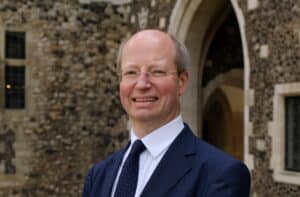
    Dinesh Dhamija

    Within a few years, the gas that fuels your central heating could have changed to hydrogen, without you even realizing.

    Further into the future, hydrogen could power everything from household electricity to fertilizer and industrial steel production.

    According to a report from the US Geological Survey, there are billions of tonnes of untapped but accessible hydrogen beneath the earth’s surface, enough to supply the world’s needs for hundreds of years.

    “A gold rush for hydrogen is coming,” said Mangli Zhang of the Colorado School of Mines at a conference in February this year. “Geologic hydrogen represents an extraordinary opportunity to produce clean hydrogen in a way that is not only low carbon, but also low land footprint, low water footprint and low energy consumption,” added Paul Harraka at energy start-up Koloma. Geologic hydrogen is simply extracted from the ground, in contrast to ‘blue’ hydrogen, made from natural gas, with carbon emissions captured, ‘grey’ hydrogen, without carbon capture, and ‘green’ hydrogen made from water using electrolysis from renewable energy sources.

    Now that its potential for replacing fossil fuels is becoming clear – and the imperative to decarbonize has increased – hydrogen’s time has come. In a similar way that natural gas was once viewed as a useless byproduct of oil extraction, hydrogen exists in vast quantities, but has largely been ignored so far. In the central African country of Mali, a steady stream of hydrogen has jetted out of the ground in a village called Bourakébougou since 2012, providing their first electricity supply. At a chromite mine in Albania, an estimated 200 tonnes of hydrogen per year , researchers discovered earlier this year.

    In Australia, the government plans its own version of Joe Biden’s clean energy subsidies to stimulate hydrogen production and transform its industrial base. One major energy developer, with backing from Danish and British energy firm, expects to begin commercial hydrogen production in 2025.

    India and China have both announced ambitious hydrogen production developments, partly based – like Australia – on their ready access to solar energy, as a means of creating green hydrogen. In the UK, where sunshine is less abundant, plans for hydrogen plants have flared and dimmed, as doubts over government subsidies and relative costs compared with natural gas power have delayed investment. UK chemicals company Ineos, Indian-owned Essar Group and US company Phillips 66 have all published plans for hydrogen-based facilities but haven’t yet green-lighted them.

    I’d say it’s only a matter of time before this revolution properly kicks in. The economics of creating clean fuel from water and sunlight, or extracting it from the ground, are compelling.

    Dinesh Dhamija founded, built and sold online travel agency ebookers.com, before serving as a Member of the European Parliament. Since then, he created the largest solar PV and hydrogen businesses in Romania. His latest book is The Indian Century.


  • An Indelible Mark: Terence Cole 1933-2022

    Friends and family remember the great and charismatic investor and party guru Terence Cole who touched many lives.

    Ronel Lehmann, CEO, Finito Education

    I often find myself in, and around, Marble Arch for meetings and can be seen bowing my head as a mark of respect to Terence Cole outside his Upper Berkeley Street office. It was there thanks to Liz Brewer’s introduction, that we first met.

    Terence founded MARCOL with Mark Steinberg in 1976 and together they created a multi-billion international investment group. Terence was a true visionary and a creative genius. He was not afraid of sharing his politics and utter disdain for Sadiq Khan, Mayor of London, who he hated with a vengeance for destroying the road infrastructure and transport network. He was a man who understood the importance of retail customers and championed Chelsea Harbour, following its acquisition in 2003.

    I remember our many conversations during the pandemic. He shared our passion for inspiring the next generation and adored our work helping young people to find meaningful careers. He loved this magazine and was responsible for coming up with an improved mentoring business strapline, The Employability Experts, for which we will always be grateful.

    Before he died in December 2022, he told his staff to ensure that his mobile phone was fully charged and buried with him just in case he could make a call from the other side. Whenever I meet his colleagues, we do ask each other, “Have you heard from Terence?” He must have known that he will be remembered by us all with a smile.

    He impacted many lives through his generosity of spirit and leaves an incredible legacy which his family continues, as patrons and benefactors, to many of the charities that he supported.

    Mark Steinberg, co-founder and joint CEO, MARCOL

     

    Terence and I worked together as partners for 46 years from 1976 until he passed away. There was a substantial age difference between us – about 25 years – but that never mattered. It just worked. Having faith in each other and having trust in each other was fundamental to a relationship which lasted over 40 years, longer than most people’s marriages. When a business relationship lasts that long, you know how to finish each other’s sentences, and you know what your partner is thinking. In meetings, you intuit who should take the lead. Our roles were very merged together. I tended to deal with more of the financial side – the fundraising and the debt-raising. But strategically we worked very closely.

    In 1976, we bought a ten-year lease on a property – a stone’s throw from the offices we still have today. That was £10,000 and it was the start of MARCOL: the name was made up of part of my first name and part of his second name. We worked from his dining room table to begin with and then from a basement windowless room in South Audley Street. We had a part-time secretary coming in and working with us and we built the business up, literally from zero, working with The Portman Estate. We had no capital but we were tenacious. Soon we were working with other estates like Cadogan, Eton College and Grosvenor.

    Over 40 plus years, MARCOL grew from nothing into quite a substantial pan-European operation that wasn’t just real estate in the latter years: we went from being a small residential real estate developer to being commercial as well. In time, it grew beyond London across the UK. We went into Europe and invested in Germany, Poland, Romania, France, the Czech Republic, Hungary. Soon we were involved also in operational businesses with real estate foundations such as hotels.

    Terence was intensely private, but charismatic, a maverick, a lateral thinker. He had very strong views about how he saw things. He had very leftfield views that really added a lot of gravy and sauce to what might otherwise would have been quite straightforward. There was nothing linear about him. You’d go into a meeting with him with other people and he would come from a complete tangent, and confuse them to begin with – but by the end of it they had bought into the idea.

    Terence engendered very strong loyalty from people working with him from his staff. One of his PAs worked for him for 60 years. She also passed away last year but she worked for him way before we were together in a previous life and then left him for a few years and then she came back again. He created this very professional business but which had a family kind of atmosphere. Whether it was dealing with people’s health issues or personal issues he would always be the first to say: “We are going to send them away on holiday” or “We are going to pay their medical bills or whatever it might have been.”

    Mentorship was very important to him. Terence was a very good judge of character: when we were interviewing people for roles or looking at businesses, he had a kind of sixth sense about people and was able to take a view on whether we should take somebody on or not.

    Of course we had our ups and downs. We have been through numerous recessions: the late 70s property crash; the 1989 property crash; Lehman Brothers; Covid. He was a real personality – a bear of a man, who loved his food and loved people, loved to entertain, and loved to investigate something new.

    Claire German, CEO, Design Centre Chelsea Harbour

     

    It was almost as if he’d been here before. It’s been strange since Terence died, not having him involved in my life. He played such a huge role ever since I arrived here 13 years ago – and I knew him before. He was this fabulous mixture of incredible business brain and great vision, who seemed able to predict what could happen. For instance, during the pandemic he said: “Darling, this is the easy bit, the pandemic. It will be post-pandemic with everyone trying to return to normal that will be the hard bit.” He was already thinking about getting people back into the office while everyone else was getting used to lockdown.

    Terence had these intense business meetings where he would really put you through your paces. He would not suffer fools gladly: you had to know your stuff – bring in energy and have ideas. He had a twinkle in his eye; this made him quite mischievous. If a situation was getting out of hand, he would immediately see that and disarm it and then bring a lighter tone to it. He had great emotional intelligence.

    Sometimes when Terence went off on a tangent, I would start off by thinking: ‘I’m not quite sure where this is going’. But you always had to believe in the journey because you knew the journey was a very well-thought-through one and you had to trust in that.

    Every day at the Design Centre Chelsea Harbour, I can hear him in my ear. He would say: “We’ve got to stick to the concept”. He would drill that into me. The space would have to feel lively and create reasons for people to come. Right down to the food, the attention to detail was incredible. The Design Centre Chelsea Harbour is the jewel in MARCOL’s crown: they are very proud of what they achieved and rightly so and they had the vision to create this centre. It’s not just a landlord-tenant relationship: it’s bricks and mortar and beyond.

    He was also the party maestro. He wasn’t particularly easy-going about it because he would be very critical if he didn’t like something. He would say that a party had to have the right atmosphere: a heartbeat.

    It doesn’t quite seem real that he is not here. I keep expecting him to burst in at any moment asking for food. Food was always a big thing in the meetings. He would arrive; we would be in a meeting and he would always arrive after everyone else and say: “Darling, can you get me an egg sandwich?” I was learning at the feet of the master.

    Nigel Lax, Director, MARCOL
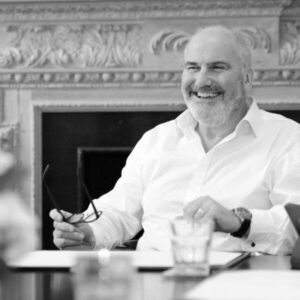
     

    I first met Terence in 1994. I was in my late 30s, and had been through a fairly institutional career.  I qualified as a chartered surveyor, and spent 10 years in private practice post-qualification in various parts of the UK. Then I came down to London to work for a developer in the late 80s. This was an inauspicious time to come to London: the developer I worked with was going down the tubes like a lot of developers at the time. I had a respite at the Halifax Building Society again very traditional financial institution – and then I met Terence.

    He came into my office on the Strand. He was always a larger-than-life character and very self-confident. He said: “I believe you have got an asset in Docklands that you are trying to sell for the Halifax. I would like to buy it.” We weren’t even marketing it at the time. Cutting a very long story short we negotiated a sale of this asset over a period of no more than probably 3 or 4 weeks. I didn’t know MARCOL from a hole in the wall. It was before the internet so you couldn’t check anybody out. There then ensued a long torturous negotiation with Terence in the Churchill Hotel where he would turn up two hours later than scheduled.

    After that he made me a job offer. I realised I didn’t want to spend the rest of my life at the Halifax. 30 years later I am effectively still working for the Cole family office and for Mark’s family office: it’s gone in a flash. Terence took you outside your comfort zone beyond the boundaries that you were comfortable with.

    That’s the best thing you can do in your career: to be tested all the time is to learn all the time. Now, in my late 60s, I am still looking for new intellectual stimulation. I have also developed other interests which I don’t think I would be doing but for Terence: he was so mind-expanding in the way he approached things.

    Nobody was a better litigator than Terence: he loved a fight. If he thought somebody was trying to get one over on him he would be tenacious. I remember we were suing a firm of valuers, a matter which gone on for probably two and a half years before Terence really got involved. We were getting to the final stretch in negotiations with the valuers’ insurers. On a Friday afternoon, we got them up to a plausible number but Terence wasn’t impressed. In meetings, he never had notes. He never wrote anything down. In this one, he got up and walked out and said: “When you see sense come back and talk to us but we are not accepting that offer.” He just walked out and nobody knew what to say. That was the end of the meeting. During the course of the weekend he got them to go up another 10 per cent on where they were on Friday afternoon. He rang me on the Tuesday and asked what I thought. I said: “I’d have been happy to take the number they offered us on Friday but clearly you have done a much better job than I’ve done.”  He replied: “I’m only doing it for you.”

    He also had this extraordinary attention to detail. My wife worked with him on one of his refurbishments which was hugely frustrating for her but she learned a huge amount. Specifically, don’t put up with second best if you know it can be done better: particularly if you are paying for something, criticise it. My wife is very like him now. We are doing a project up in Yorkshire and for the contractors it’s frustrating at first, but if they get it, people can lift their game.

    Parties were Terence’s hobby: that was what he lived for. The Coles always used to throw a party on Boxing Day. On one occasion they took a suite in the Savoy but we turned up at the allotted time and were held on the ground floor in the lobby of the hotel because the room wasn’t ready. We then discovered that 30 minutes before the party was due to start, Terence had decided he didn’t like the layout of the room so he literally got them to take the doors off the hinges so that the space flowed better.

    It was certainly never dull. MARCOL isn’t the same without him. There are youngsters in the office who will never experience that. With Terence there were no airs and graces: no aloofness. He wanted to be looked after and respected by people but at the same time he would give that respect and care back.

    Victoria Boxall-Hunt, Group Operations Director, MARCOL

     

    I shall never forget the first day I met Terence. He made me laugh so much in my interview that I snorted! It makes me go red at the thought even now – 18 years later. On my second interview, he sent his car and driver to collect me and bring me to Upper Berkeley Street to meet him and Mark. This was no ‘normal’ company and so began my journey with MARCOL, a journey that has shaped my life and given me many experiences that I would never have had. It has taught me a huge amount, introduced me to some incredible people and has tested and delighted in equal measure. There is also no doubt that we have laughed a lot and had a lot of fun over the years.

    I genuinely think they broke the mould when they made Terence Cole. He didn’t do things that people expected, in fact quite the opposite. I learned a lot from him, particularly to be patient, stay quiet, listen intently and to stand up for myself and fight my corner. He had an innate understanding of people and a way of asking questions and getting things done that astounded. What seemed utterly preposterous at the beginning of a meeting would seem totally doable (somehow) by the end. He had the most incredible way of talking people into doing things and making people think it was their idea in the first place. He helped me plan my wedding and took great interest in all things. He even said I must have his car and driver to take me to the church and that he would get a taxi.

    I have witnessed so many unbelievably kind and thoughtful gestures over the years that genuinely made a positive impact on peoples’ lives. He was driven by making a difference and an impact, which he did. I think of him often an ask myself regularly: “What would TC have done?”

    Niki Cole, Terence’s wife

    I was married to Terence for 48 years. When I met him, I was a young actress who had just done a movie in LA. I was doing publicity and was asked to go to a fabulous European men’s shop to sign autographs. I saw a big giant limousine pull up outside the shop, and Terence got out with two guys. He looked around and was soon trying on clothes. At the end of that, he said: “I’m going to take all these clothes on the condition that that lady over there delivers them to the Beverly Hills Hotel.”

    When I was informed of this proposal, I said: “I’m not doing that.” But he had this power about him and this presence. I went with the driver there, and said: “The clothes are here” and I was asked in for a drink. I stayed him with a week at which point he said: “If you play your cards right, I’m willing to marry you.”

    Terence knew it all – he had no lack of confidence in what to say or do in any situation. He was very relaxed and brought people down to earth, and attracted them: he brought them along.

    I’ll never forget the party he threw for my son Alex and his wife after they were married. The theme was Hollywood glamour. It was at a venue outside London, with 500 guests. Every single one of them had their own chauffeur and their own car and were taken to the country. The party finished at 5am. There were different-themed rooms and all sorts of music: the Royal Opera; the Black-Eyed Peas, Shirley Bassey. My son and his wife knew nothing about it. There was a Doctor Zhivago-themed room where there were ice sculptures dispensing vodka and Russian soldiers on horseback. There was another room for period films, with ladies dressed in Jane Austen-style costume. We went downstairs and there was a sheet of raining ice, and suddenly everything went ‘Boom!’ and opened like a curtain and Alex and his wife were standing there. Jools Holland sang; José Carreras sang; breakfast was served at five in the morning.

    Perhaps it could be daunting sometimes. If I said, “I’m not doing this,” he’d reply. “We are doing this – I know what’s right.” The secret to staying married to him was to know how to challenge him back.

    When he died – in London at the Cleveland Clinic, I wanted him to be buried in America. It’s the most beautiful place. On one side you have the sea, on the other are mountains. He is buried in his tuxedo jacket, his pink open-neck silk shirt, white trousers and green velvet carpet slippers. My husband danced to his own tune in life.

    Alex Cole, Terence’s son, founder of Elevate Entertainment

    My father was a man who created his own destiny: it was his way or the high way. He was a man who’d built something from the ground up in business, and didn’t apologise for it. Why should he? He could humble any mighty person – no matter how powerful you were, he could always teach you something. He had this way of speaking in a low voice, of taming people, and drawing people into his wisdom. I knew if I went into property development and private investment, I would never get close to what he was doing: I didn’t want to interfere with the master. My path in life was a little to his chagrin: “There’s no money in that,” he’d say.

    So I now produce and develop big TV shows: that’s very different to what my father did. There were things we each had to navigate in relation to each other’s choices. My father wanted me to always admire what he did, but I could never achieve what he had done in business, even though he would have liked that. For me, it would have been disrespectful to step into those shoes.

    I was going to stand on my own two feet. While he was around you knew everything was going to be fine; he was going to see to that. He needed to control the family – and not in a bad way. I felt secure in my family; you knew you could always go to this wise man for help, whether it to be personal or to do with business. If you were under his watch, you were taken care of.

    When he went we all felt lost: me, my mum, Mark. Because my sister had health challenges, I had pressure to keep the legacy of the Cole name going. That created a wonderful bond, but it also created a pressure. When my dad passed away I wanted to keep that security nearby, and have him close to me: I arranged to have him buried about 15 minutes away. He liked the sunshine of America: he liked getting out of England – he found the mentality to be: “You can’t do that”. My father would always say: “Well, I’m doing it anyway.”

    As I proceeded with my career, he really became interested in films. He decided he wanted to tell me how to produce films. He would say I should host a talk show and so on. He was proud: it was a creative job, dealing with celebrity and a bit more glamorous than property – or at least it seems that way until you’re in this world. He would say to me quietly under his breath: “You know, I’m proud of you, right?” When he gave compliments, you knew they were valuable – more so than with people who shower you with affection and praise.

    When it came to the parties, I’ve been to the Oscar’s – and they’re boring compared to what my father could produce. He planned things but never wanted to be the man of the moment when they would happen – his kick was to stand in the corner as people took the journey through the party.

    When it came to work, he never had to behave in a certain way: he was the meeting. Everyone had to pause while he did his things. But the theatrics encouraged people to want to do business with him; he wasn’t conventional. And he loved everyone: the team, the staff, the doorman. If you were part of his group, you were part of his group. It created company morale. He didn’t waste his life in any way. When he died he was 90 years’ old. His mind was strong, that mind could have gone on to 105 in the office. But his body gave up on him which makes the loss of my dad harder to stomach.



  • Saison Review by Ronel Lehmann: “If only our politics could be as sweet as this’

    Saison Restaurant Review, by Ronel Lehmann


    It was absolutely bucketing down. There was only one thing for it. My guest was coming from the Palace of Westminster, and it seemed sensible to book a table with the shortest stroll to the Old War Office. This is one of the great buildings from the Edwardian Age, originally completed in 1906 and recently reincarnated as Raffles, with an eye watering refurbishment.

    Having parted with my umbrella, I arrived a few minutes early in this Mediterranean all-day dining atrium. The waiter was quick and attentive and sparkling mineral water was immediately served. I decided to use the wine list to cover the uplighter spotlight which was beaming from the floor right in between me and my companion.

    The first thing that I noticed after my retina had adjusted was my side plate appeared to be used. On closer inspection, the waiter explained that this was the design of the plate to incorporate the yellow splashings of citrus. After the reassurance that it wasn’t uric acid, I felt able to place my freshly baked focaccia on the plate. The focaccia was so airy and melted in the mouth with a dunking of olive oil.

    Over the years, my surname has been refashioned as lemon, layman, leeman and lenor, and the table theme continued with a fresh lemon and lime decoration in keeping with the celebrated Argentine Chef, Mauro Colagreco’s philosophy, and approach to seasonal cuisine.

    We elected to have a main course only. Parliamentarians are under pressure to be able to vote at short notice and the ravioli dish was hastily ordered. The presentation of the Pumpkin Ravioli was exquisite, small wheels of patterned pasta, roasted chestnut, more lemon confit, and winter black truffle. We were hungry and didn’t notice that parmesan wasn’t offered. The seasonal leaves described as a Crate to Plate Salad with herb vinaigrette was a colourful accompaniment to the ravioli.

    By this time, we had looked at the other tables and had begun to recognise other notable Members of Parliament and strategists deep in conversation.

    Rather than be distracted further, we decided to share the Citrus Tart and lemon leaf ice cream. When it arrived a reduction of fruits and herbs were gently poured over the pudding. I was thinking if only our politics could be as sweet as this, and then why did we share, when overcome by such a rich and divine lemon taste. The espresso cup was served in a cacophony of colours together with a small freshly baked biscotti.


    Before we left the Attrium, there was time for a photograph. This place is Instagram heaven and I suspect that the waiters are getting used to being paparazzi. If there was a criticism after the faultless cuisine and service, the piped music didn’t match the grandeur of the establishment. I am reminded of the famous quote “Winter passes and one remembers one’s perseverance.” It is a bit like that, I might visit Saison again in the Spring.


    To book go to: https://www.raffles.com/london/dining/saison/

  • China’s Looming EV Dominance

    Dinesh Dhamija


    It’s now a decade since Tesla launched its Model S in the UK – the first battery-powered luxury car to reach the market – and there are now just over 1 million all-electric models, of all brands, on British roads. EVs are a common sight.


    What’s coming next? Rather than more Teslas, Nissan Leafs, VW ED-3s and Kia e-Niros, a new wave of cheap, mass-produced Chinese EVs is on its way. The highest number of electric vehicles produced by any company in the world is no longer Tesla, it’s the Chinese manufacturer BYD, which sold three million vehicles in 2023 and already has the capacity to make four million per year. It’s developing a new factory in Hungary to serve the European market, alongside others in Brazil, Thailand and Uzbekistan, with further plans for Mexico (to attack the vulnerable US market) and Indonesia.


    Just a couple of weeks ago, BYD launched a new plug-in hybrid model that had a good all-electric range and costs just £10,000. The company now plans to flood global markets with its vehicles, just as low-cost Chinese toys and electronic goods have proliferated for years. “The price will make petrol car assemblers tremble,” said BYD on the Chinese social media platform Weibo, as it launched its new model.


    It is not just the traditional carmakers that are trembling. Apple just announced this week that it is discontinuing its electric car making efforts, after spending billions on development and promising in 2020 to launch a model in 2024 or 2025. Even Tesla has scaled back its investment, faced with rising interest rates and softening demand. Things are even tougher at the traditional automakers: Ford reportedly lost more than $64,000 on every EV that it sold in 2023 and has delayed opening new battery plants, while GM has also had a troubled EV production history. All the big US manufacturers make their profits from selling pick-up trucks and SUVs. They are desperately trying to create EVs to compete with Tesla and the coming tide of Chinese electric vehicles, but it may already be too late. The same applies in Europe.


    Looking at the big picture, more EVs should be a good thing. They will hasten the spread of charging infrastructure, bring down the overall costs for consumers and make electric transportation available to the general public. But for the next few years, there could be a virtual bloodbath in the auto industry, as conventional market models are turned upside down.


    Dinesh Dhamija is a renewable energy investor and entrepreneur. He owns a solar energy and hydrogen business in Romania. Earlier, he founded, built and sold ebookers.com and served as an MEP. His latest book The Indian Century has just been published.


  • Sir Philip Rutnam: ‘The state of our churches is the biggest crisis facing our national heritage – by far’.

    Christopher Jackson

    I have always been very fond of Philip Larkin’s poem ‘Church-Going’, where Larkin stops at a countryside church and takes off his cycle-clips ‘with awkward reverence’, walking around, until he decides ‘the place was not worth stopping for’. He ends up wondering ‘when churches shall fall completely out of use, what we shall turn them into.’ It’s a lovely poem for an England Larkin felt to be vanishing. The only line in the poem I think is definitely false is the line about it not being worth stopping for – not least because it gave him the poem itself.

    I thought of the poem a lot after talking with Sir Philip Rutnam, until recently the permanent secretary at the Home Office, and now the Chairman of the National Churches Trust, a laudable organisation which seeks to help preserve the 39,000 or so places of worship in the United Kingdom.

    So how did Rutnam acquire an interest in our churches and chapels? “My parents weren’t from a church-going family, though there was a lot of emphasis on education. It was a modest household in terms of income but it was a rewarding environment for me,” he tells me. “I was interested in history going as far back as I can remember. And buildings are one of the most tangible and engaging ways of seeing how the past continues to have an effect on us.”

    Rutnam went on to study History at Trinity Hall, Cambridge: “I really loved it because it’s so varied,” he recalls. “You’re looking at everything from the origins of Europe after the fall of the Roman Empire through to neo-contemporary history of the United States with all sorts in between. It was a vast field – not just in terms of subjects but also in terms of ways of thinking about the past.”

    So when did he become interested in churches? “When I became a teenager and had more freedom, I realised I could use that freedom to explore historical buildings. I would cycle off sometimes with friends, taking a copy of Pevsner, through southern England. I spent a long time exploring the churches of Kent, and Buckinghamshire.” It was the discovery of a love which continues to this day: “Just about everywhere one went, one could discover something unexpected, beautiful or extraordinary. It might be an amazing medieval chancel, or a Georgian monument or a Victorian sculpture. Scattered through the countryside and the towns of this country, are extraordinary buildings, and they’re too often underappreciated.”

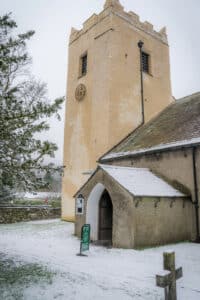
    St Oswald’s, Cumbria

    “The state of our churches is the biggest problem facing our national heritage – by far.”

    So why are they not better known? “The first thing is that these buildings get taken for granted; they become familiar. And familiarity can lead to lack of inquisitiveness or curiosity,” explains Rutnam. “Secondly, they’re often not well understood. If any one of the 15,000 Listed places of worship in England – and there are thousands more in Scotland, Wales and Northern Ireland – were in America it would be regarded as utterly extraordinary. The abundance of these buildings makes them their own worst enemy.”

    So what can we do to redress that? Rutnam is clear. “We need to help people to recognise how exceptional it is that in this country there’s such an amazing collection of historic churches.”

    Obviously, the challenge is doing this in an era of distraction – of memes and AI and and Taylor Swift and a million other things. But Rutnam is optimistic: “The decline in church-going has had an effect, yes, but actually very often you find that these buildings, even if the number in the congregation is less than it was 50 years ago, the building is still the centre of the community and regarded as such. It typically provides a wide range of activities beyond worship. Our challenge is to jolt people out of this sense of taking these places for granted.”

    And how do you do that? “One thing is to make the buildings more accessible. That might not jolt but it will encourage. If we don’t, some people might hesitate metaphorically at the threshold and not go into the building because it’s unfamiliar and they haven’t been inside before. You need to make sure it’s got wheelchair access, as well as toilets and a kitchen. My church in North London has a nursery in it and holds Alcoholics Anonymous meetings.”

    I think back on the role the church used to play, remembering how in Cartmel Priory in the Lake District, there is a loaf of bread behind one of the pillars, a memorial to the church’s traditional role in feeding the poor. Rutnam explains that this work continues today in ways we might not realise: “Many of our churches are hosts to food banks. There are more food banks hosted than there are branches of Macdonald’s in the country. There’s a modern version of the loaf of bread at Cartmel Priory at the food bank at Blessed Sacrament Church at Copenhagen street in North London, or Maryhill in Glasgow – and thousands of other examples.”

    But we shouldn’t stop at simply making these magnificent buildings more accessible, Rutnam explains. “We also need to bring out the stories, and discover ways in which people can easily engage with the history behind the buildings. For instance, I went to the Parish Church in Ross-on-Wye a few weeks ago and they had a very cool bit of technology, which meant if you downloaded a QR code, and then raised your phone, you could see the medieval rood screen restored. The same thing could be applied in lots of different buildings. It’s to do with bringing up the variety of history there.”

    Has the pandemic improved churches’ technology offering? Rutnam replies: “Covid-19 had a whole range of impacts. It’s now common for services to be online at the same time as they’re happening physically. But more generally technology’s quite a challenge for parishes, as these are by their very nature small organisations. We have 39,000 places of worship open for use, half of them listed buildings, and each one of those is effectively a small organisation – and, as with any small organisation – helping it to have the skills is a big challenge. One of the things organisations like ours could do is provide more of the common resources needed for technology to be adopted.”

    When I think of my own experiences of visiting churches, I find that one reason that I might not stop is because it’s not always clear if the church itself will be open. One fears the rigmarole of parking up, trudging up to the steps and then finding the door locked. Sometimes it’s worth it – the door delightfully gives yielding the inside of the church, and the secrets within – but more often than not it doesn’t and you have to trudge back to the car. Larkin might have thought his church not worth stopping for, but he lived in an era when doors weren’t closed due the perception that otherwise they’d be ransacked by vandals.

    Rutnam strongly agrees: “We would encourage churches to be open to the public regularly and indeed the standard advice from the main insurers for church buildings is to be open to the public regularly – it’s not to be closed, there are other risks to be associated with that. I understand it’s a challenge. Definitely at the minimum churches should advertise the hours they’re open and to be open not just on Sundays but for some point during the week. We run a website which is the largest source on this called Explore Churches.”

    Of course, every church is unique, and each incumbent must choose a strategy. Not all churches can be like, say, St Bride’s off Fleet Street in London which has its famous relationship with the journalism profession. But Rutnam points out that every church has something to offer. “The main identity which churches have is a geographical one,” he says. “Everyone of us lives in a locality, whether we’re there for a month or for 30 years. Churches have an extraordinary role and potential.”

    When it comes to the crucial business of maximising that potential, a lot currently seems to depend on the get-up-and-go of the individual incumbents. I can think of a range from the vigorous Dr. Alison Joyce at St Bride’s to the rather indifferent vicar at my local church in South-East London. Rutnam is sympathetic to the plight of clergy and eager to help: “Clergy are not generally trained as the operators and manager of buildings – understandably. It’s not a standard part of the theological training, but it has ended up being an important part of their job. One of our roles is to support not just clergy but also the small groups of volunteers, the church wardens, the church councils, and the people who end up involved in the running of the buildings, and to support them with easy to use advice and training about how to manage the difficult problems which come up.”

    So how many volunteers are there exactly? “We’ve estimated there are about 400-500,000 volunteers. One of the things we try to do is make sure their role gets recognised. We have awards each year for volunteering. We provide some support and training on how to work with volunteers. You’ve got this incredible network of churches and chapels, and local organisations and what we seek to do is provide the best support we can for them.”


    So there’s a lot of work to do, and I realise afterwards that I’d been talking to Rutnam for nearly an hour, and because of his soft-spoken, knowledgeable and gentle demeanour not really intuited the scale of the crisis. But now it begins to hit home: “We’re a relatively small organisation. We’re a national charity for this extraordinary group of buildings. We have about 5,000 members who support us each year. We also have regular donors, some of whom are individuals who have a strong alignment affinity for the cause, recognise the role churches play and some are from foundations and trusts such as The Pilgrim Trust which has been supporting this cause since we were set up in 1953.”

    But here’s the rub: there’s far more support required than the NCT can currently provide. Rutnam sets it in context: “We’re able to distribute around £2-5 million a year on projects. That’s an appreciable sum but only part of the overall funding of projects which need to take place.”

    So what sort of grants do they give? “We don’t give more than £50,000 to any one project, and in a typical project we fund about 200-300 a year. But each year we’re oversubscribed by a factor of three or four. There’s far more demand for funding to restore these buildings than there is funding available. As a result, the backlog of works is growing, and the threat to keeping these buildings open is also growing.”

    To anyone who loves history – let alone anyone who loves churches – this is a dystopian vision of a country losing its connection to its past – exactly as Larkin feared.

    “It’s very serious,” agrees Rutnam. “We need more donations. This is the single biggest issue by far facing our national heritage. Stately homes were an issue after the Second World War when the families who owned them didn’t have the money to keep them running; now the biggest problem is our churches and chapels. There are buildings which have closed recently because of major repairs which the congregation can’t fund but there are others which are in danger of foreclosure. The National Churches Trust has a role but so does Heritage Lottery Fund – and so, of course, does the government. These are fundamental public buildings which have been here for hundreds of years.”

    So what is the UK government doing? The answer is shocking. ““Apart from being able to reclaim VAT on repair work, there is no regular funding from government. There was some funding during the pandemic as part of the Culture Recovery Fund and that was very quickly used to fund a whole range of major repairs of churches which urgently needed. That too, of course, was massively oversubscribed.

    It’s a hard one to get up the agenda, he explains. “Scotland may provide us with a warning of what could happen in England, Wales and Northern Ireland. The Church of Scotland is going through a process of trying to reduce its church building estate by 40 per cent and a whole range of buildings, some medieval, have been identified for closure. Some are for sale at the moment on the Church of Scotland website.”

    Of course, what happens to those sites will depend on the acquirer. Some will no doubt become housing, others will house retail store.

    So how can the NCT connect with young people? “Sustainability is important and strikes a chord with many young people. As we deal with the huge existential challenge of climate change we have to make better use of our existing stock of buildings. We have to move away from a culture of demolishing buildings when we think they’ve finished one use and building something new – usually out of glass and steel. That’s not going to be sustainable in terms of their impact on the environment. Churches have overwhelmingly been here for hundreds and hundreds of years, and they have a huge amount of life left in them. It’s our duty to make the best of those structures, and adapt them for worship and for serving their communities. It’s eminently possible to do this in a way far more sustainable than the alternatives.”

    Rutnam also makes another point: “The other thing for young people to be aware of  is that there are opportunities – really rewarding opportunities – to work in the field of conservation. There’s a huge shortage of people with the skills needed to look after ancient buildings, working with your hands to carve stone, to repair wood, to the craft skills and there are some really good programmes available for apprenticeships at universities and degree programmes.”

    It’s a remarkably clear case for action, made passionately by someone with a great deal of intelligence and quiet knowledge. Larkin ends that poem with a stanza that must be quoted in full:


    A serious house on serious earth it is,
    In whose blent air all our compulsions meet,
    Are recognised, and robed as destinies.
    And that much never can be obsolete,
    Since someone will forever be surprising
    A hunger in himself to be more serious,
    And gravitating with it to this ground,
    Which, he once heard, was proper to grow wise in,
    If only that so many dead lie round.


    It is that surprise of churches which we must preserve – and preserve it for as many generations as possible.


    To find out more about and support the work of the National Churches Trust, visit nationalchurchestrust.org

  • Heidi Mallace on the potential impact of AI on democracy in 2024

    Heidi Mallace


    2024 is poised to be the largest election year in history. There will be 74 elections and an estimated 4 billion voters globally, half the world’s population. Countries such as the USA, UK, India, Russia, South Africa, and Nigeria are among those involved. With over 25 years in the communications and reputation management industry, I’ve witnessed the crucial role of effective communication in achieving success. Communication not only shapes opinions and reputations but also influences beliefs. This is a pathway to power for political leaders. 2024 marks a pivotal moment where AI generative communications and democracy converge.


    The radical evolution of communications in the 21st century

    Throughout human history, communication has been a remarkable fabric of society. Prehistoric humans relied on verbal means—spoken language, storytelling, and gestures—to share information and coordinate group activities. The development of written language around 3200 BCE marked a significant leap forward in recording and sharing information. Johannes Gutenberg’s invention of the printing press in 1440 enabled the mass production of books and pamphlets, facilitating the widespread dissemination of knowledge and transforming access to information.

    The invention of the Telegraph, over 400 years later, introduced long-distance communication through Morse code. Alexander Graham Bell’s invention of the telephone allowed real-time voice communication over long distances. The 20th century witnessed the rise of electronic communications through radio and television. In 1989, Sir Tim Berners-Lee’s creation of the World Wide Web revolutionised global communications.

    In the past 20 years, social media and smartphones have dominated our communication landscape. According to Kepsios, 61.4% of the world’s population uses social media, with Facebook alone boasting +3 billion users. AI generative models like ChatGPT represent the latest frontier, capable of understanding and generating human-like text, enabling advanced conversational interfaces, content creation, and personalized communication. Upon its launch in November 2022, ChatGPT acquired 1 million users in 5 days. By December 2023, it had 180 million active weekly users, with 1.5 billion website visits in October 2023 alone. The scale and pace of AI development are almost unimaginable. Its impact will potentially influence democracy this year.

    Alerting all communications professionals and voters


    Communication strategists and campaigners are poised to integrate AI like never before. However, a recent report by Golin has analysed the impact of AI tools on crisis management and issues. The research reveals that nearly 60% of communications professionals have yet to adapt their reputation management strategies to account for AI. This poses a concern for prominent figures, businesses and politics.

    Jessica Shelver, Managing Director at Digitalis, a firm specialising in digital risk and online reputation, expressed concern, stating, “There’s a significant risk of miscommunication or misinterpretation. Generative AI might produce responses that are inaccurate or not aligned with the intended messaging, potentially leading to misunderstandings, reputational damage, and privacy breaches.”

    This holds considerable implications for elections. It will be as poignant as Barack Obama’s 2008 presidential campaign, a turning point in leveraging social media for political purposes. James Hann, Managing Director and Head of Risk at Digitalis, whose Government Practice assists governments in understanding and navigating the digital landscape and managing its risks, highlighted, said: “2023 has been characterised by the widespread and accessible use of generative AI tools, especially in the online landscapes surrounding conflicts. These tools bring unique challenges, and with some social media platforms actively cutting back on moderation and safety teams, we are looking ahead to the obstacles we expect clients to face next year.”

    The threat posed by misinformation and disinformation to our societies is now well-acknowledged. Recent geopolitical events have underscored the growing nature of this threat with the use of AI. Hann said, “Mis and disinformation are often used interchangeably, but there’s a subtle difference. Misinformation refers to false or inaccurate information spread unintentionally, whereas disinformation involves deliberately spreading false information to deceive people.” He further expressed concern about the use of deepfakes in the Slovak elections. It illustrated how AI technology can be used to manipulate public opinion and undermine democracy. It’s a worrisome trend in today’s landscape of rapid AI and social media advancements creating fresh challenges for governments.


    Understanding AI’s Perils, Pitfalls, and Potential


    The interplay between human influence and AI technologies has reached a critical juncture. Navigating these AI-driven communications requires a prudent approach. The dynamics between humans and AI in shaping reputations and political landscapes call for careful scrutiny and vigilant oversight.

    As we navigate this terrain, it’s crucial to acknowledge the immediate risks, concealed threats, and opportunities brought forth by AI in communication and democracy.

    Tackling these challenges demands a multifaceted approach involving policy frameworks and media literacy. Strong AI governance, ethical guidelines, and transparent AI-generated content can mitigate misinformation risks and uphold the integrity of democratic processes.

    Despite the risks involved, AI harbours immense potential to enhance human capabilities and drive positive change. Utilising AI for swift and accurate content creation can expand information accessibility. However, in this era of hyperconnectivity, discerning between genuine human-generated content and AI-generated narratives has grown increasingly complex. As we step into this year, we should adhere to three golden rules.

    Perform a Digital Audit: Since ChatGPT gathers information from online sources like Wikipedia, websites, and digital media, consider conducting a digital reputation audit. Companies like Digitalis use proprietary technology to trawl the internet and social media to source information about you or your organisation. This enables you to identify potential threats and inaccuracies, which you can then potentially correct or request to be taken down.

    Be Cautious with Information: Human psychology heavily influences trust in AI-generated content. Trust builds when AI communication aligns with human expectations of authenticity and reliability. Algorithms cater to preferences, so fact-check and don’t blindly trust all information generative AI produces.

    Explore and Learn: Take the time to comprehend how AI can aid effective communication for you or your organisation. Understanding your audience and crafting a compelling narrative is key to utilising AI effectively.
    Knowledge is power, but remember, you control what you see, hear and read. Human brains got us this far. Now, it’s time to use our brains to manage AI tools and our votes wisely.


    Heidi Mallace is the Co-Founder of Curayio, a communications consultancy which advises, coaches and trains individuals, teams and businesses for success.


  • “So, What Do You Do?”: Carter-Ruck lawyer Katherine Hooley on a career in the law

    Katherine Hooley


    “So, what do you do …?” That ubiquitous and seemingly simple question intended to glean insight into one’s life, can carry unexpected weight for a lawyer. We often find ourselves navigating preconceptions about our profession. You might recall Shakespeare’s much-quoted line from Henry VI Part II “let’s kill all the lawyers”, a sentiment amusingly echoed during an encounter with a stranger who inquired if I belonged to the “blood sucking” variety of lawyers!


    As a lawyer, we are bound by professional obligations such as client confidentiality. This restriction can significantly limit our ability to discuss specifics of our day to day work and our clients’ identities, making the answer to “What do you do?” even more complex.


    I am a Senior Associate at the law firm Carter-Ruck and work in the media law team, which specialises in reputation management, involving (among other areas of law) defamation, privacy, data protection, copyright and harassment law.

    We are known for our 40-year history of being at the forefront of the development of law within our practice areas, particularly privacy and reputation, which can be seen with the cases of NT1 & NT2 v Google LLC and a leading Supreme Court decision in PJS v News Group Newspapers Ltd, which, while perhaps not immediately recognisable to laypeople, have been pivotal in shaping privacy law including the ‘Right to be Forgotten’. Only a few weeks ago my colleagues were in the Supreme Court against the Home Office, in what is likely to be a landmark judgment on important issues of defamation law.

    Despite our firm’s association with claimant litigation and advisory services, our practice is multifaceted. We represent both Claimants and Defendants.

    Our clients are global and include governments, heads of state, Members of both Houses of Parliament, multinational companies, corporate and commercial entities, entrepreneurs, shareholders, directors, private family offices, celebrities, sports personalities, private individuals who find themselves temporarily in the public eye, academics and academic institutions. The scope of work is incredibly varied and ranges from litigation to advisory work (including advising on Parliamentary investigations and complaints) across our different practice areas. We also act for global broadcast and media entities, which involves both pre-publication work and dealing with legal and regulatory complaints post publication. Our recognised international law practice spans human rights issues, international arbitration and sanctions work.

    For me, one of the most fulfilling aspects of working at Carter-Ruck is that the client base and work is as broad and diverse as it is interesting and although my mainstay is media law the diversity of our practice presents a variety of opportunities. My recent heavy involvement in a commercial law case centring on an unfair prejudice claim against our client, as well as having the opportunity to work with the International law team on a high-profile international arbitration matter, exemplifies this. Additionally, our internal team structures offer unique benefits when it comes to opportunities for juniors at all levels, even trainees and paralegals, to work closely with Partners, benefitting from their experience and guidance and gaining invaluable experience and responsibility.

    Daily life as a media lawyer requires good time management and communication skills. These are key. Any one Associate will be working across multiple matters, with different partners, balancing client expectations and court deadlines. In litigation, deadlines are mostly set by the court, and although extensions can be obtained in certain situations, often they are immovable. On media matters, at pre-publication stage, my schedule can be dictated to some extent by the media’s publication deadlines, which can be unpredictable. We might get an enquiry on a new matter on a Thursday or Friday to which we need to respond within a short timeframe ahead of a weekend publication deadline.

    As with all law, the media law landscape is an evolving one and so it is also important to keep up to date with case law. The media law blog Inforrm provides great insight and updates on cases and current issues in the field. Barristers’ chambers like 5RB and Matrix, with which we work closely, also publish regular case updates and host conferences and roundtable events which encourage active discussion on case law and developments within our practice areas. These types of events are invaluable for junior lawyers to forge connections within the profession.

    Defamation law cases have traditionally involved individuals challenging print media publications over allegations about them that they contend are untrue, not in the public interest, private and/or confidential and causing harm to their reputation. The legal landscape has had to expand and evolve in response to the internet and the consequential boom of publication of material online (both by traditional media and, increasingly, by the general public). It remains the case (by virtue of them being of interest to the public) that legal complaints often still involve high profile individuals, from celebrities to politicians, about whom something has been published which cases serious harm to their reputation. When these cases go to trial they often attract significant press coverage. The recent “Wagatha Christie” case transcended the media law legal circles and became a topic of national interest and debate. Unusually, I found I was being asked for my professional view by family, friends and even acquaintances on what had by then turned into an almost globally talked about trial. The same was true with the Depp trials.

    Ordinarily when litigation is brought, this means the case and key information about it, including the parties’ names and the basis of the claim and any defence, are put on the court record which means that that information becomes publicly available. Any court hearings and the trial are usually held in public, which is consistent with the “open justice” principles we have in this country. However, some of our cases involve private and confidential information, which can require deviation from the usual open justice principles. This can mean that even the identities of the parties are protected (usually through anonymised ciphers), let alone details of the private information itself, as further dissemination of that information is likely to harm the parties and/or undermine the case. This can be the case even if the matters involve high profile individuals and court hearings, although it is up the court to decide what measures it considers proportionate in the circumstances, which will involve it balancing the competing rights of the parties and also what is in the interests of the public.

    In recent times, social media has become a source of information and news for many of the population in competition with traditional print media. The democratisation of social media allows anyone to become a commentator or ‘citizen journalist’. However, while trained journalists might be expected to take a course in legal issues journalists face, such as defamation and privacy law and data protection, and the steps they need to take to ensure that their work is responsible and legally defensible and avoids infringing other people’s rights, no such tests apply to the populations of Twitter, Instagram, Facebook and TikTok. The recent Online Safety Act tries to grapple with some of these issues in its creation of new communications offences aimed at those sending false or threatening messages online or encouraging self-harm. In addition, case law enables the law to evolve and adapt as society changes.

    AI is the latest frontier, with its impact on various industries, including law, being a topic of much debate. In some industries, the use of generative AI technology looks likely to be game changing, but while its abilities are undoubtedly impressive, it has also already courted controversy. There has been more than one instance where generative AI has won a photography or art prize, which has caused some debate around the threat it poses to those trying to make a livelihood as a creative. As lawyers, in addition to our professional obligations of confidence, we have obligations and duties of honesty. Generative AI’s ability to have “hallucinations” (i.e. create new information that is false, which it can attribute wrongly to a source or insist is correct) makes it necessary to treat the technology with a high degree of caution. I think this is a particular concern for lawyers, where we need to be certain of the veracity of the information we are presenting. There is also the risk that using generative AI could breach duties of confidentiality where the information provided to the platform might be accessible to the platform provider. It raises extremely interesting questions from a media law perspective as well. If hallucinations involve false and defamatory allegations against individuals, which they repeat to multiple users, this raises questions as to whether ChatGPT could be held liable for defamation. One such case has already been brought in Florida by a radio host called Mark Walters whom ChatGPT alleged, falsely, had committed financial crimes. It is very much a case of ‘watch this space’ in the world of ‘AI Law’.

    Looking ahead, the fast-changing world in which we inhabit will require an ever changing and evolving legal system. This shifting legal landscape offers lawyers the opportunity to shape and adapt our legal system to keep pace with societal and technological advancements, which is quite something to be a part of. Perhaps I should lead with that next time I am asked ‘What do you do?”…


  • Book review: Rory Stewart’s Politics on the Edge

    Christopher Jackson


    This is a fabulous book written by a man who thought he might be prime minister but who has instead become Britain’s premier political podcaster. It always used to be said during the Cameron years that Stewart was the easiest man to get an interview with – perhaps he has always been a creature of the media.

    But this book tells us what it’s like to be a person of real interest and imagination caught up in Westminster and ministerial life. “Stop being so interesting,” as Liz Truss, then environment secretary, had said to her junior minister. Skilled at taking her own advice, it was never to be expected that Stewart would be able to follow suit. By the time he arrived in Parliament he had already walked Afghanistan on foot.

    Anybody who can do that might not particularly enjoy being reined in by parliamentary whips. Stewart was always an unlikely MP – and an especially unlikely Conservative MP, not least because he had voted Labour in his teens. He was a man whose life had already attained filmic proportions by the time he was representing the lovely constituency of Penrith and the Border. Brad Pitt had taken an option on one of his books.

    This book, an important work of historical documentation, won’t cause a deluge of applications from would-be candidates to Conservative HQ. Here we meet the lordly and embedded civil servant who thinks he knows better than the prisons minister. We see Theresa May – to whom Stewart would be admirably loyal over the ill-fated Chequers agreement – ‘with some of the monarch’s stiff authority’ – offering him a Cabinet position. Overall he would hold six ministerial roles during that turbulent time.

    Stewart is still by turns baffled and angry at Boris Johnson’s premiership and is especially good at pointing out the absurdity of Johnson as a Foreign Secretary: “A man who enjoyed the improbable, the incongruous and the comically over-stated had been trapped in a department whose religion was tact and caution,” he writes.

    Johnson’s ascendancy would turn out to be far briefer than he expected. Stewart would probably have stood a good chance of becoming leader under different rules; he was certainly the best debater in the field in 2019. It wasn’t to be – in this book Stewart alikens his predicament against the European Research Group as being like a book club at a Millwall Game. He was up against those who had spent a lifetime thinking about the perfidy of Europe – and, in the case of Sir Bill Cash, thinking about nothing else.

    The final verdict is a grim one: “Nine years in politics had been a shocking education in lack of seriousness. I had begun by noticing how grotesquely unqualified so many of us were for the offices we were given,” Stewart writes. This book will also not do the impossible and rehabilitate Britain’s shortest-serving PM: “I had found, working for Liz Truss, a culture that prized campaigning over careful governing, opinion polls over detailed policy debates, announcements over implementation. I felt that we had collectively failed to respond adequately to every major challenge of the past 15 years: the financial crisis, the collapse of the liberal ‘global order’, public despair and the polarisation of Brexit.” So back to the media then – where politicians increasingly seem happier in any case.


  • Chelo Review by Ronel Lehmann: “the welcome doesn’t live up to the quality of the food”

    Chelo Review by Ronel Lehmann

    I was invited to Jin Kichi, a Japanese restaurant in Hampstead. I always like on such occasions to drink hot saké, wine made by fermenting rice which has been polished to remove the bran. During our discussion about the cuisines that we most enjoy, my host mentioned another restaurant which I hadn’t heard of: Chelo, which serves Persian food. I made a note to try it.

    Chelo is based in Maida Vale, it can just about at a squeeze seat 13 people on four tables inside and has a buzzing community which doesn’t seem to mind sitting outside under heaters adjacent to the pavement. I had made a reservation for two and managed to park right outside the restaurant.

    There was only one available table inside and after having confirmed our name, we were seated by the window. Then came a warning that the table was required within 90 minutes which was suddenly discourteously downgraded to one hour and telling us that we had booked outside.

    I explained that we were expecting to be seated inside and wouldn’t be moving from our comfortable chairs. The waiter did apologise for any confusion and the menus were provided somewhat in haste. Looking at the other diners’ table spreads and the continuous barrage of takeaway drivers collecting food, we were clearly in for a freshly prepared treat.

    We ordered Zeytoon, marinated mixed olives and they didn’t disappoint. As soon as these had arrived, our other chosen dishes followed in quick succession, including Mast Khiar, yogurt, cucumber and mint dip, Truffle Olovieh, potato salad with chicken, pickled cucumber and mayonnaise, Shirazi Salad, chopped cucumber, tomato and onion with lemon and oil dressing, hummus, chickpea and tahini dip with extra virgin olive oil, Kashk Bademjian, grilled aubergine, caramelised onion, yoghurt, walnuts and mint, and naan bread.

    I must admit the hummus was delicious, but I found it a bit over drenched in olive oil. No sooner had we finished our starters, Tahchin Morgh was served, a chicken fillet de-skewered with saffron rice. We elected not to have the dish baked and topped with Zereshk, silvered pistachios and almonds.

    There was no room for desserts, in fact we had run out of time. The bustle of collections and new hungry diners queuing outside, meant that we could not really overstay our allotted time slot. This is a wonderful restaurant. The food is prepared with a good deal of care, and I could see why it is so popular. It isn’t a place where you can have a leisurely meal. The accommodation is completely outstripped by demand.

    I think that the staff are under extreme pressure to ensure that as many people can get served as possible. This means that the welcome doesn’t live up to the quality of the food, which is a shame. I couldn’t fault what we ate or the service, but just wish that we hadn’t been so rushed. You couldn’t move away from the front door which reminded you when ajar with a cold draft blowing, that you would soon have to be on your way. As we left, my mind raced back to Jin Kichi and the warmth of the carafe of hot saké.

  • To Read or not to Read: Paul Joyce introduces his new music column

    Paul Joyce


    If I were to introduce myself to you as a gambling man, then I would be willing to bet you a pound to a penny that your reaction to the statement I will shortly make would be one of the following: a) a sharp intake of breath; b) a quick gaze heavenwards; c) a short swearword or lengthy blasphemy d) “You’ve got to be kidding me!” or “thanks for the warning!”.

    So here we go: I am about to present my credentials to you as a reviewer of the latest releases of classical CDs, and I do not read a single note of music. There, and yes that’s indeed what I said, and once the smoke clears I will try and explain why I still feel this is a task I am not only willing to do, but possibly well suited for as well. Oh, and by the by, I worked alongside the wonderful opera director Jonathan Miller (on his mighty BBC Shakespeare series, and as his assistant on his final La Boheme at English National Opera) and he couldn’t make out a single note of music either!

    Despite the fact that my prep school instilled in me a dread of music classes where small groups of children wielded reedy recorders to little visual or certainly audio effect, it was only a little later when I attended Dulwich College that one of those legendary teachers (we can all name one) provided me with a proper introduction to the language of Music.  And here I really do mean Music with a capital “M”, and as to its unique language, for surely it is the only one that speaks without the need to master a foreign tongue (of which there are over 7000, I am reliably informed, spoken and signed.)

    Once played and experienced, its universality becomes immediately understandable, and most significantly, a direct means of communicating all important human emotions: joy, sadness, pain, loss, regret, nostalgia, sentimentality, but above all (and this is why I own three thousand CDs), pleasure. In ideal circumstances a musical fanfare would announce our birth, then marriage, together with many highlights in between, and some previously selected individual track {“My Way”?} would finally see us into the oven or the ground. In other words, although we rarely think of it as such, we spend much of our lives within a musical envelope of some kind. Yes, even in the now infamous lift, so thoroughly despised by composer Peter Maxwell Davies (muzak, that is).

    My job now is to help those of us with a traditional bent towards classical compositions, but who do not have a sea anchor to cling on to, to appreciate the wealth of recording both existing and yet to be laid down, which hopefully will now start arriving on my desk every month. I hope too that you will learn to trust my judgement, at least in part, flawed though it may be considered in certain circles, in at least dividing wheat from chaff.  At the end of the year I will compile, like the venerable “Gramophone” magazine, a list of what I consider to be the finest new (or re-issued) recordings. Believe me there is a deep vein of musical masterpieces waiting to be mined, recorded and re-recorded, and then humbly presented by me for your future enjoyment.

    I am thrilled to be asked to reach out to you every month or so with my strongest and best recommendations, and in return would urge you to communicate your own thoughts and experiences within the contemporary classical music market place back to me; for it is one which has regained its strength, curiously aided by the individual isolation during lockdowns, and is now thriving in a way unseen for some decades. I also have some tips on how to obtain CDs even on a tight budget.  What I will not be able to help with, is the matter of streaming and downloads. I’m afraid I am locked into the notion of physicality of what I own, which is why I quickly abandoned Kindle nonsense and returned with a sigh of relief to my modest library. Who would have thought that expensive reference-quality vinyl  pressings would be walking off the shelves, along with first, HDCD (High Definition Compact Discs) then followed shortly thereafter by SACDs (Super Audio Compact Discs). Sound frequencies are being captured that defy the human ear and only bats in belfries would understand. Enough of these boring technicals, so now, music maestro please!

    David Fray is a comparative youngster (born 1981) at least compared to other older and possibly more easily distinguished pianists. He burst onto the scene in 2008 being named as Newcomer of the Year by BBC Music Magazine, and was immediately snapped up as a potential star by Virgin Classics. (Although Warner Classics now seem to be releasing his recent albums). Already his collaborations have involved many of the most prestigious names in the classical music scene; conductors Marin Alsop, Kurt Masur, Riccado Muti and Christoph Eschenback amongst others. Thus far he has recorded Bach, Mozart and Schubert and it is his interpretation of the latter’s works that I want to comment on today.


    David Fray

    I will return to Schubert (1797-1828) quite frequently I suspect in this column, as he ranks toward the top of my “favourites” If not actually planting his flag on the summit already.  Other contenders would of course be that legendary lion, Beethoven, carefully guarding the gates to a musical nirvana, with Mozart closely behind and Dvorak managing a spirited sprint towards the finish line. And with dear Franz who died at the frankly ridiculously early age of 31, we encounter, especially in his piano work, a soul-searching and maturity quite belying his few years on earth. It is funny (strange) how, if one survives long enough oneself, that likes and dislikes, passions even, come and go with the passing decade. For instance, when I first read Ernest Hemmingway’s “Across the River and into the Trees” in I guess what might have been my early twenties, I thought it immediately a masterpiece. Returning to it in my forties I considered it to be a cliché-ridden tract of an old man with nothing left to say. Now, as I exceed the age of the dying hero in this wonderful novel, I come back to hailing it as a much underrated masterpiece again. In other words, our own unique experiences in life mounds the way we respond to the world’s ability to wound us or transport us in the most unlikely ways. (Remember it was Hemmingway who said that one becomes strong in the broken places.) So it is with Schubert’s sublime sonatas and moments musicale. These seem to me to be the pinnacle of a genius who understands that ultimate sadness, and feeling of reluctant surrender to the enfolding arms of inescapable loss that we all experience as we trudge towards that inevitable darkness; the big sleep. At a later date, as I say, I will try and summarise my view of the great Schubert pianists, Radu Lupu, Sviatoslav Richter, Wilhelm Kempff, Imogen Cooper, Paul Lewis, Maurizio Pollini, Alfred Brendel, Murray Perahia , Mitsuko Uchida and many more dead and alive. No barrier to age or sex, each brings his or her individual talents to bear on Schubert’s timeless music.


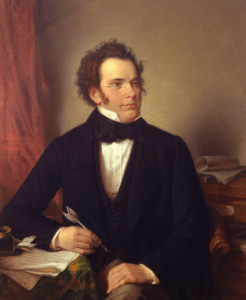
    Franz Schubert

    So now to young (ish) David Fray, and I will discuss and address his two Schubert recordings which I note are about seven years apart (2008-2016). Fray approaches Franz with a deal of caution, which I feel to be only appropriate. Comparing Fray’s interpretations of say the moments musicale 1-6, with one of the piano’s grand masters, Wilhelm Kempff and his recordings stretching as far back as the 1960s, the timings between the two are completely different.  In each case, Fray is drastically slower, in one case up to nearly three minutes behind Kempff, and the longest of moments is only just over seven minutes! Now there are musicians in the past who have seemed to wilfully adopt much slower musical tempi than others (including often the composers themselves) such as Otto Klemperer for example. And it is true that other great conductors, and here I am thinking particularly of Toscanini, have set records in brevity.

    Thus, I am reminded what Sir Thomas Beecham quipped when questioned about the speed he adopted in a final concert piece, so saying “that’ll get the buggers home!” Sometimes speed can generate a direct emotional response in an audience, for example The legendary Hollywood Quartets’ version of Dvorak’s American Quartet, in my view the very best available. Something is clicking in my memory that Bernstein laid down a Mahler symphony where one movement doubled in acknowledged length in his hands.

    But I digress, back to Mr Fray. He clearly divides critical opinion. At a live recital at Wigmore Hall more than a dozen years ago the Guardian critic Andrew Clements wrote: Fray certainly looks the part: bent low over the keyboard as if intent on drawing something personal and highly wrought from the instrument. But the slackness of his playing and its strange discontinuities were far from convincing…..and a little later in summary:  Some fierce, almost brutal octaves in the finale of the Waldstein seemed surreally out of context, like a sudden fit of temper. Perhaps Fray was as disappointed with his performance as some of the audience. Hardly a ringing endorsement.  And here is Hugo Shirley in “The Gramophone”:  Fray’s approach is supremely seductive but it does occasionally sound as though he’s about to nod off… Well I would certainly not go that far but there is a tendency of his, in my view, to over-extend notes and chords to a point where some would find more than a hint of sentimentality emerging.

    However, if I have to deliver a verdict on his Schubert, I think it is masterly, imaginative and the occasionally extended time he takes strikes me as being entirely in concert with the music itself. This to the point that, when I returned to old favourites (as in the list above) some sounded frankly hurried and pedestrian. Although in relation to my own age, many would assume any vote from me would go to Kempff, in fact my own X rests firmly on David Fray’s forehead, surrounded by his beguiling Franz Listian locks.

    I shall be scouring the record label’s catalogues for upcoming new releases from Fray, whose talents at the keyboard stretch over many compositional centuries and musical styles. But I have a feeling that he is far from done with Schubert, and personally I can’t wait to hear his interpretation of the three final sublime works of Schubert’s genius, piano sonatas D958, 959 and 960.


    Paul Joyce is an internationally renowned director, painter, photographer and writer.